Yasmeen Lari, the 2023 RIBA Royal Gold Medallist, left conventional practice to build with bamboo, mud and lime among Pakistan’s poorest rural communities. In Auckland for in:situ 2026, she talked about donor money, building codes, the colonised mind, and why an architect should aim to make herself redundant.
More coverage on In:Situ 2026
On first meeting, Yasmeen Lari professes to be perplexed as to what she is doing here, and whether anything she has to say is of any relevance. It is not clear whether she means ‘here’ in New Zealand, in this interview, or the larger incongruity of addressing a room full of architects in the ‘Western world’, a geopolitical behemoth from which she has spent many years seeking to separate her practice.
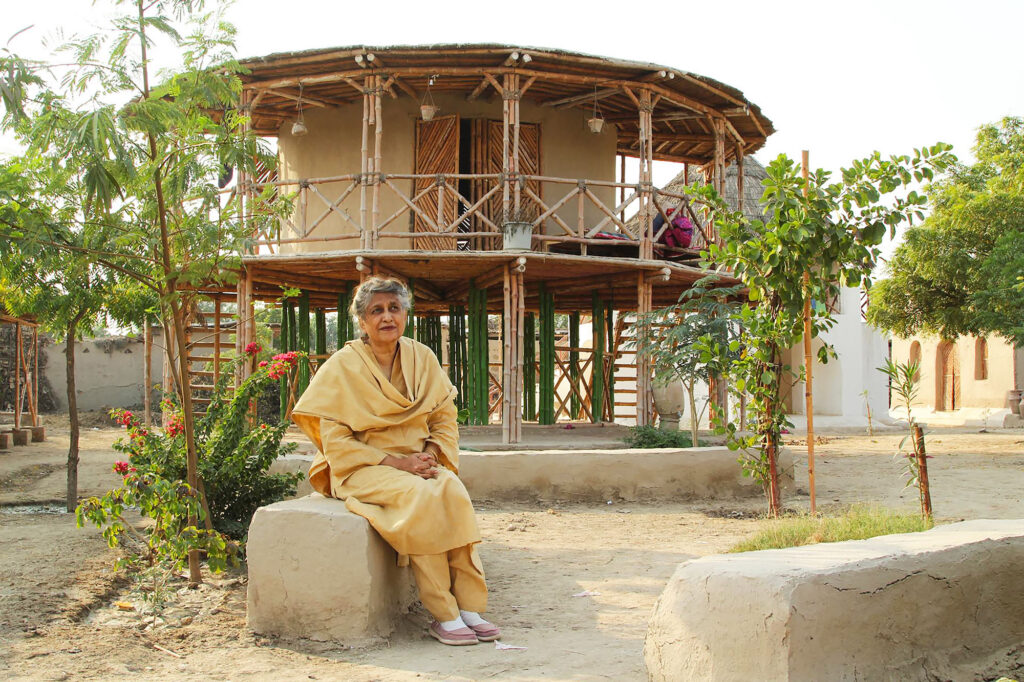
Her record does sit a long way from the concrete and glass of central Auckland. The first woman in Pakistan to open her own architecture practice, and the 2023 RIBA Royal Gold Medallist, she left ‘conventional’ practice in 2000 after several projects for wealthy clients left her wondering whether that was truly what she wanted to do with her craft. Since then, she has reoriented her practice towards flood and earthquake relief among some of the most marginalised rural communities in Pakistan, building with bamboo, mud and lime, through projects such as her prefabricated Lari OctaGreen (LOG) bamboo shelters, the Zero Carbon Cultural Centre at Makli, by her account the largest bamboo structure in Pakistan, and women’s centres raised on stilts in Sindh villages so that floodwater can pass beneath.
Her politics surrounding the architectural self-sufficiency of the Global South are uncompromising. Wealthy countries, she argues, should stop acting as donors. “It’s like making people into beggars,” she says. What they can do instead is “stop being so wasteful”, and turn to the disparities within their own borders: “There too is a huge area that they could be working with architects.”
Where money does cross borders, it should come with conditions that it is spent on low-carbon, locally appropriate buildings. If donor nations are serious about net zero by 2050, she says, they need architects “trained in doing the right thing. Don’t give out funding just like that to poor countries like mine, just saying, okay, do what you want, and [then the] World Bank comes and does the worst possible thing.” It is a message she delivers to the diplomats she meets. “I say, why are you wasting your taxpayers’ money? Whatever you send goes into I don’t know whose pockets. It doesn’t go to the poor.” Pakistan has absorbed vast sums in disaster aid, she notes, and yet poverty keeps rising.
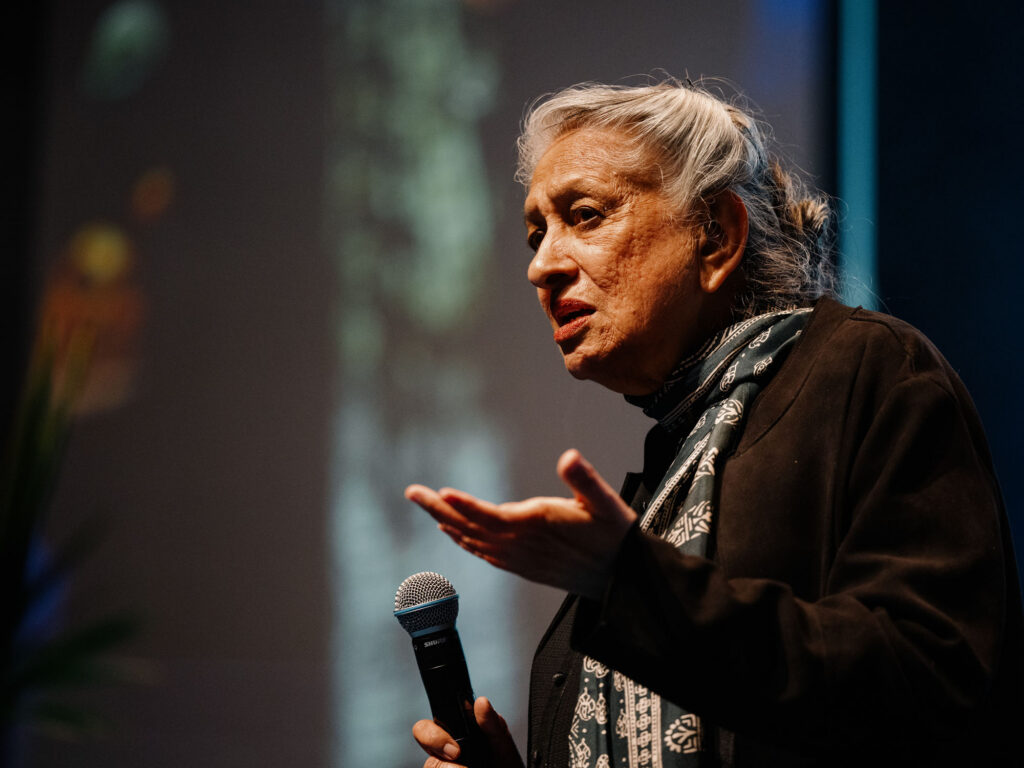
Her own model is “zero carbon, zero waste, zero donor”: communities trained to build for themselves, and building knowledge shared freely rather than owned. “When you’re talking of common good, then there are no restrictions,” she says. “If we put a restriction on knowledge, how will they ever be able to do anything?” she says, blaming capital-driven norms on the perpetuation of poverty.
The same logic shapes the economics of building. Lari works with around 18,000 villages, organised into clusters of ten, each of which specialises in what she calls ‘barefoot products’: lime and mud bricks, roof thatching, bamboo panels, terracotta pavers and organic soap among them. Together they form what she describes as a ‘barefoot ecosystem’, in which the materials and skills of construction are produced, traded and taught within the villages rather than bought in from outside; bamboo once sourced from markets is now grown at the edges of villages. Within that system, she has helped set up Sunday barter markets across ten clusters, so that communities can trade without money. “We don’t need any money. They’re exchanging goods themselves.”
She refuses to work with the government, religious groups or anyone with influence, arguing that the powerful have a vested interest in keeping the poor dependent. “There’s a conspiracy in all our countries to keep the people as far down as possible, by the rich and by the ones who are powerful,” she says. “They will always want them to remain subservient, always dependent. Again, the colonial mindset. That is the problem.” The alternative is the grassroots: “Get them to do it themselves, [and] bring about social transformation. There’s no other way.”
Even though she has worked in zones that are repeatedly affected by flooding, she would rather villages were made safe from floods than relocated, a position at odds with managed retreat. “This is where their ancestors have been. That’s what they’re used to. There’s a whole bond there among them, which we don’t realise,” she says. “Whether you give them the most beautiful stuff, it makes no difference. Emotionally, it doesn’t help.” Protection, she argues, is a design problem. The communities she works with have planted three million trees as a barrier against flooding, and are now growing bamboo as another.
Concrete and steel she regards as the most deadly of materials, pointing to the collapse of concrete buildings in the Turkey earthquakes. “For me, it’s not saving buildings; it’s about saving lives,” she says. Her lightweight bamboo structures “have not collapsed so far, but supposing they did, at least people will be safe. Just putting more steel in a building is not going to help us.”
Bamboo, lime and earth have little traction in New Zealand, and building codes are a part of the reason. Lari is unsympathetic. The codes in many countries, she says, “are totally antiquated”, and they stifle innovation based on what they see as ‘alternative’ materials. For homes and low-rise construction, the requirement is simple, she says: “make them resilient, so that if the flood or earthquake happens, they move, but they don’t collapse. That’s all. And that can be done with very simple, natural materials.”
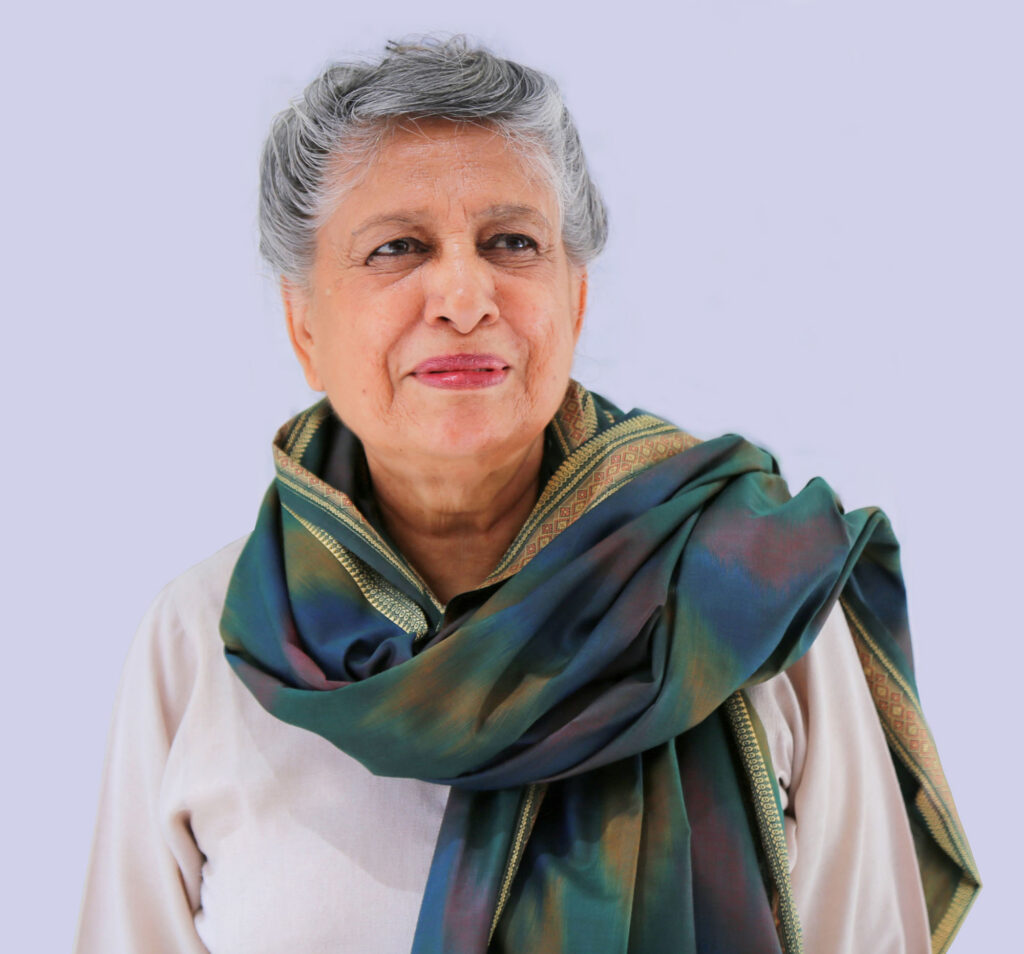
She has seen that the tide can be turned. Her bamboo frame, which draws on a local form of timber construction with cross-bracing, has become the most popular of her designs, so much so that communities offered cheaper, equally safe mud designs asked for the bamboo instead. “That has become a status symbol,” she says. Performance has helped: where a mud masonry wall gave a temperature difference of eight degrees, the bamboo frame lined with mud on both sides gives more than 10.
None of this, she insists, should run on goodwill alone. Architects are needed in the field, and few are there, partly because there is no funding. “Everybody thinks building for poor communities should be free, but it should not be free,” she says. “The young people need to be paid. Everybody needs to be paid if you’re a professional. How will you sustain it otherwise?”
In her keynote she cited Hassan Fathy, the Egyptian architect who chose early in his career to learn from traditional ways of building, and whose book Architecture for the Poor made the case at a time when, as Lari puts it, “architects never thought about it”. She met the same disdain when she changed course. “Even when I started, everybody thought I was practising non-architecture,” she recalls. “The root of it,” she says, “is about a colonised mind. Because we all thought that following the pattern of the Medicis was better than doing it for the poor people.”
Many of the rural women Lari works with, and employs across several projects, are experts in mud. They have proven the best builders of the Pakistan Chulah, her smokeless, low-cost cookstove of mud and lime plaster, which counters the environmental and health consequences of cooking over open fires; more than 50,000 have been built across rural Pakistan since 2014. Their skill, she says, comes from a lifetime of making flatbreads. “They have this dough that they know how to [work]. They are the best workers in anything to do with mud.” So Lari does not need to teach them to build, only to build safely. “The only thing we really have to tell them is, when they are putting things together, how to make it so that everything is safe.” It is a small observation, but it captures her method: find the skill that is already there, and add only what is needed.
As for her own role, her stated ambition is to become redundant as an architect once the communities she works with have assimilated the knowledge she feels she can impart. “I want the message to cascade now among communities, so that they learn that they can do it themselves,” she says. “That is why I want to be redundant: because I should not have to go [and] tell them.” Design still matters; her LOG bamboo framework works, she says, “because it’s well designed”. But the architect becomes a facilitator, doing enough to ensure that what is built is safe, and leaving communities to add on, co-build and co-create. “Architects have to understand: you have to lose control. I lost my ego. You have to lose your ego. You cannot work otherwise.”
Her advice to architects born in the West, often in relative comfort is equally direct: find a neighbourhood with a problem, and help fix it, or simply advise. “The only thing they need is probably just advice. Don’t keep knowledge to yourself. Spread it as much as you can,” she says. “Why should knowledge be commodified?”
New Zealand has little of the poverty Lari has worked among, but her message of self-reliance, and of building as a political act, seems to have its parallels here, if the audience reaction is anything to go by. Her keynote at in:situ 2026 drew effusive cheers, and even a loud ‘chee-hoo’, suggesting that her ethos resonates well beyond Pakistan. Perhaps the early puzzlement she expressed at being here… was entirely unnecessary.