A trip to the Mediterranean brings up some questions about timelessness, the pressures of globalisation and rapid expansion, and the inherent dangers of greenwashing architecture.
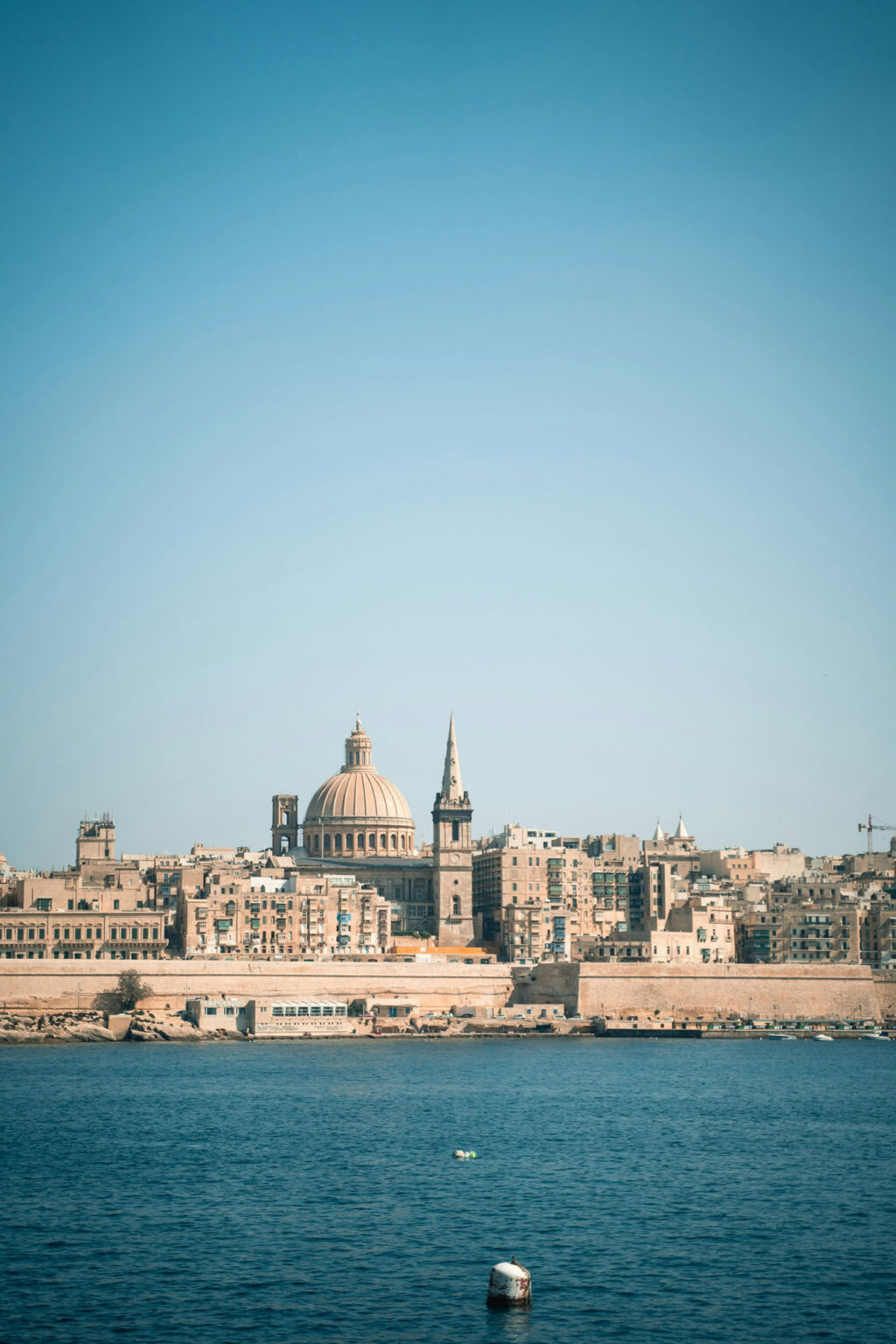
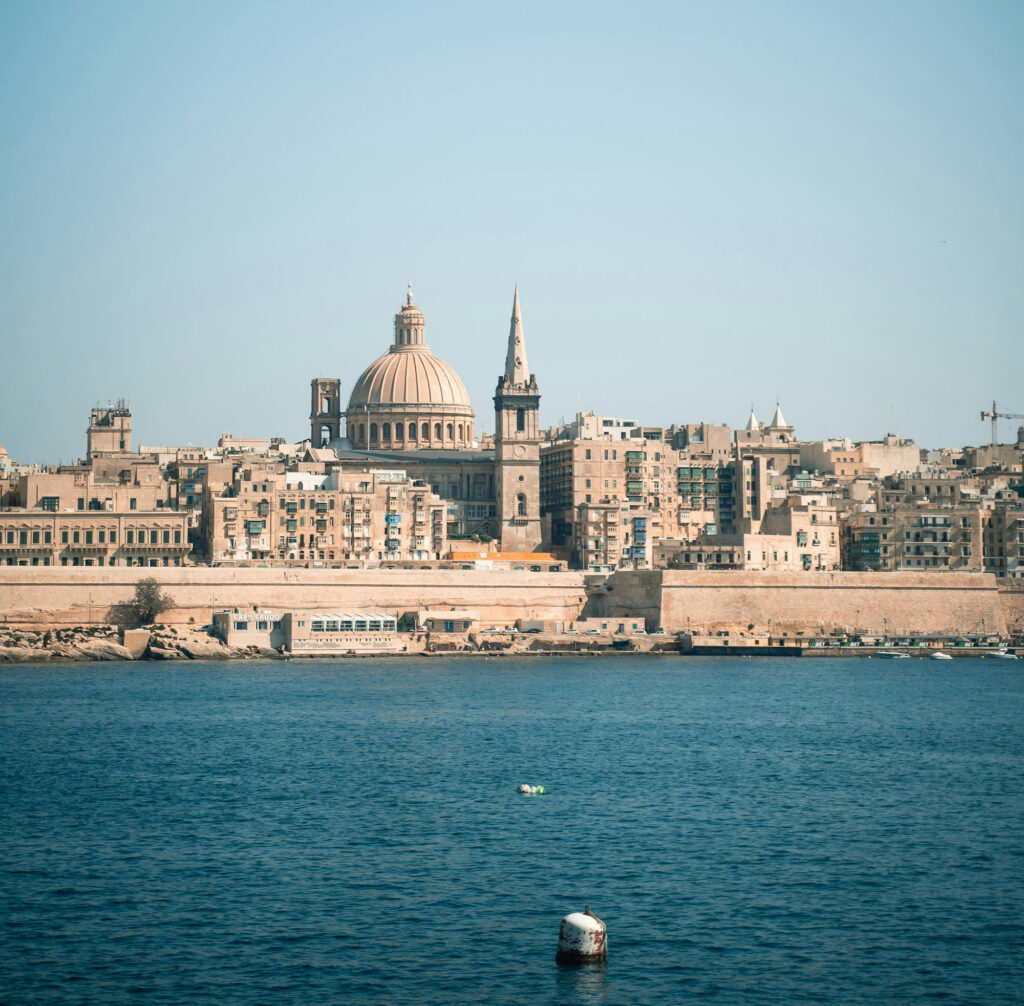
Yellows and blues don’t seem to mix in Malta. Somehow, the stone luminously holds light against a canvas of azure and layers a portrait of honey on a sea of Serenity Blue ink — a heady saturation that captivates today’s Insta-ready tourists just as it must have for so many pilgriming here in the past. Yet, with the stone up close and the Mediterranean projecting itself out of the background, the composition is more than photogenic; it’s spatial. There’s primary depth in the layering. Those other colours seem almost immaterial and to desaturate naturally.
Consider that people have been inhabiting this space between yellow and blue for more than 5000 years, and that today’s rapid urban densification has few parallels in Europe, and it raises a timely question. If Malta is to keep its yellow and blues, where does it find green?
Sustainability is a Ġgantija-sized question to a country floating around in the Mediterranean between the continents of Africa and Europe, with a combined land area of only 316 square kilometres. Size establishes some immediate resource limits to what’s local. Malta is only 27 kilometres long by 14.5 kilometres wide. Gozo, where stone buildings date back to before the pyramids and Stonehenge, and which many consider to be the Ogygia of Homer’s The Odyssey, is a smaller 14 by 7, and Comino, with its famous Blue Lagoon, is a miniature 2.5 by 1.5. But small resolves through necessity, and there’s no shortage of colourful local questioning here in response to change.
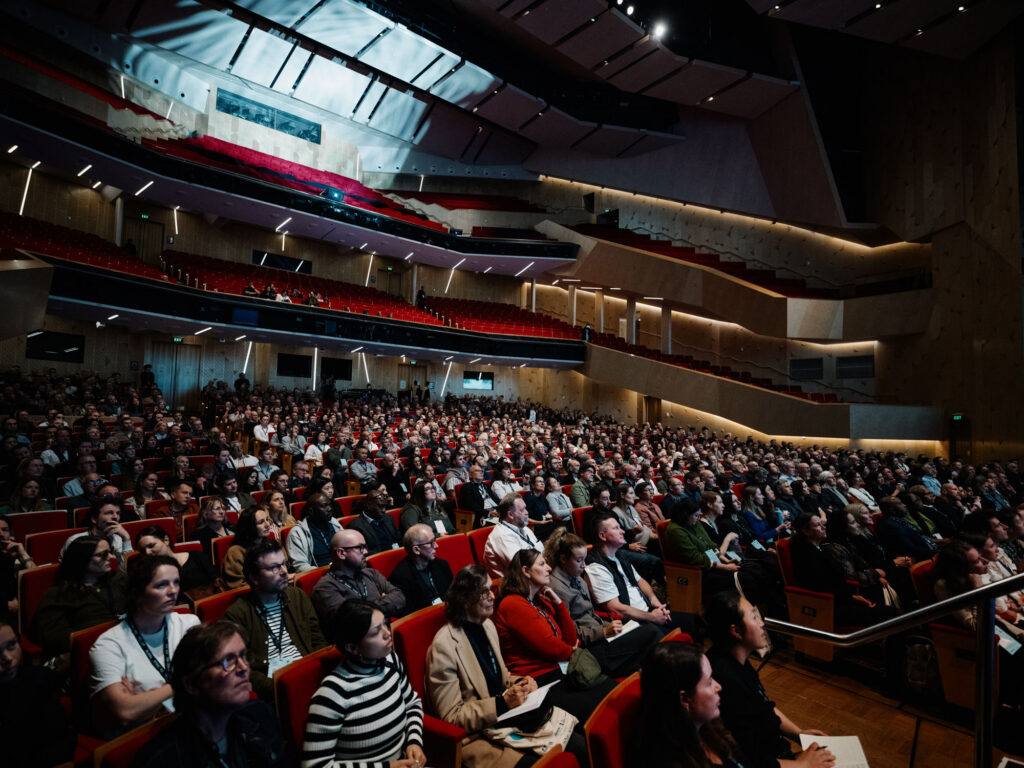
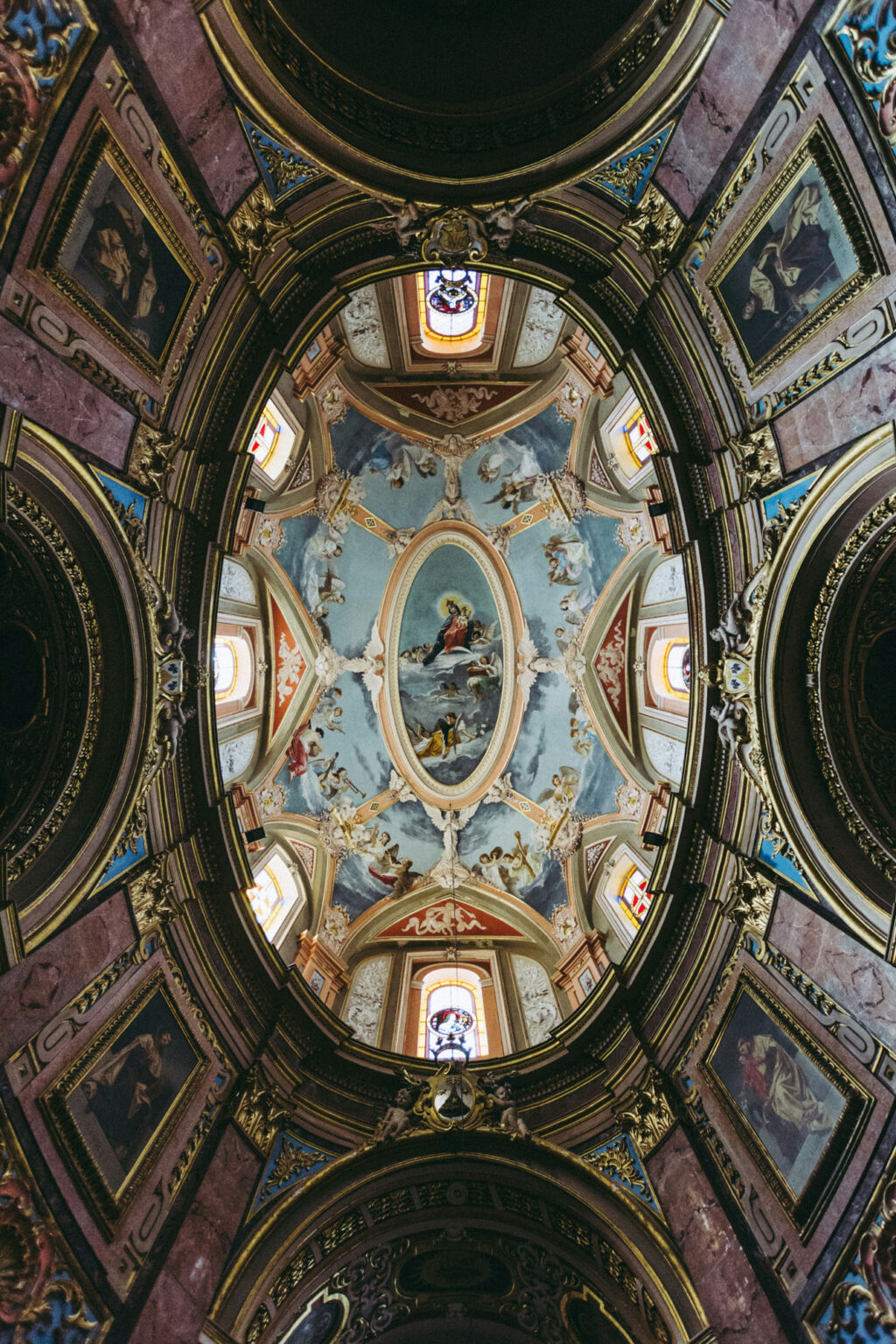
I’m here courtesy of Share Malta to provide a concluding keynote to Maltese architects in a conversation entitled “Beyond Greenwashing”. There are some astute local architects and practices here talking about buildings in relation to time, spearheaded by André Pizzuto, president of the Kamra tal-Periti, Malta’s Chamber of Architects and Civil Engineers, and AP Valletta, whose new Tapestry Hall extension at St John’s Co-Cathedral in Valletta looks a timely setting to display the 300-year-old tapestries gifted by Grand Master Ramon Perellos y Roccaful in 1708. There are also some big-time architectural internationals here, including ZHA, BIG, LAVA, 2Portzamparc, and Emre Arolat from London, Barcelona, Berlin, Paris, and Istanbul respectively, and some fresh practices — for me at least — such as Kosovo’s archiEDU, Romania’s Unith2b and Tunisia’s Ajmi Mimita International, to broaden the discussion.
However, as someone who has travelled from the far, far away islands of the South Pacific, which face serious climatic threats born from distant industrial activities, it’s not the questioning I find most interesting but the expanding terminology. In the day’s discussions, the word ‘timeless’ is repeatedly mooted as both an aspiration and an architectural fortification.
A look out from the old walled cities of Valletta and Mdina quickly reveals the rapidly urbanising perimeters, which are visibly growing outwards as a result of Malta’s population increasing by around 50 per cent since the country joined the European Union in 2004. With the expansion comes the current concern that the yellows and blues might be overpainted or even mixed into some kind of internationally formulated green-coloured response with fewer of Malta’s time-honoured apparencies and more of everywhere and everything else.
When I’m asked about sustainability during the on-stage questions after my lecture, I answer without exaggeration, “I’ve never heard the word ‘timeless’ more than I have here”.
Being old simply isn’t the same as timelessness, and building castles isn’t an architectural methodology to outlast time — not even here amongst real castles. Ironically, given pioneer geographer Richard Hartshorne’s establishing definition to the theory of landscape that we successionally make and therefore control the landscape, no one actually believes that landscapes, or, for that matter, buildings, last forever.
Yet, it is not these Maltese architects who hyperbole the terminology in questioning where sustainability fits in their country. ‘Timeless’ Malta is everywhere amongst tourist media. It’s romantically applied to places to stay on your honeymoon, by restaurants to their cuisine, to cruise ship itineraries and even to the city of Valletta, which was first constructed in 1566.
Surely that is old enough to be considered ‘timeless’? Why not, then, extend the exaggeration to include buildings constructed in 2013 or 2014? After all, Barrakka Lift in Valletta is, as the architect, Konrad Buhagiar, puts it, successfully “to look like an old building”. Even better, the nearby Valletta City Gate, designed by Pritzker Prize–winning architect Renzo Piano to replace an ageing 1960s structure, is enthusiastically affirmed in international print for its now “timeless qualities”. Renzo himself is quick to diarize down the timescale, noting: “Every place has a story and in Malta the story was stone”, but the epoch stretching is done, for the difference between ‘timeless’ as an optimistic at best adjective and ‘timelessness’ as a qualitative noun is critical to our collective climate emergency response.
The problem with exaggeration is that it compounds. Anybody who has actually attempted to count all the carbon embedded in and released through a building’s construction quickly concludes, as Snøhetta’s Harvard HouseZero demonstrates, that tallying all the math is nigh on impossible. There are simply too many columns to trace on a spreadsheet. What of that extra cup of coffee drunk on the building site? What of the coffee? What of the coffee cup? Amid such endlessness, the realisation that sustainability can never rely purely on calculations as an answer to being green is as obvious as a school kid’s realisation that there is no exaggeration in maths. Timelessness doesn’t exist any more than certificates or products aspire to signify certainty in sustainable outcomes. Some are more sustainable in their counting than others, but they are all just part of the equation.
The Maltese architects’ concern about a metaphorical overpainting is certainly ticking. The cruise ships are a daily alarm as large as they are white; the new towers seem as reflective as they are tall. There’s a car jam in Valletta’s gridded city streets — which I am told at the conference ironically served as some sort of precedent for New York’s city planning — a freeway is being built over a piazza, and palazzos are being ‘boutiqued’ into hotels.
Out there in the garigue, beyond the current stretch of urbanisation, the thyme that seasonally flowers each summer has been legally protected. What perhaps started as a reminder not to miss the purple blooming now ‘hourglasses’ an architectural test-pot to where Malta might find its colour green. Just as you can’t just keep uprooting thyme to decorate Christmas cribs, so the landscape can quickly turn grey with endless building.
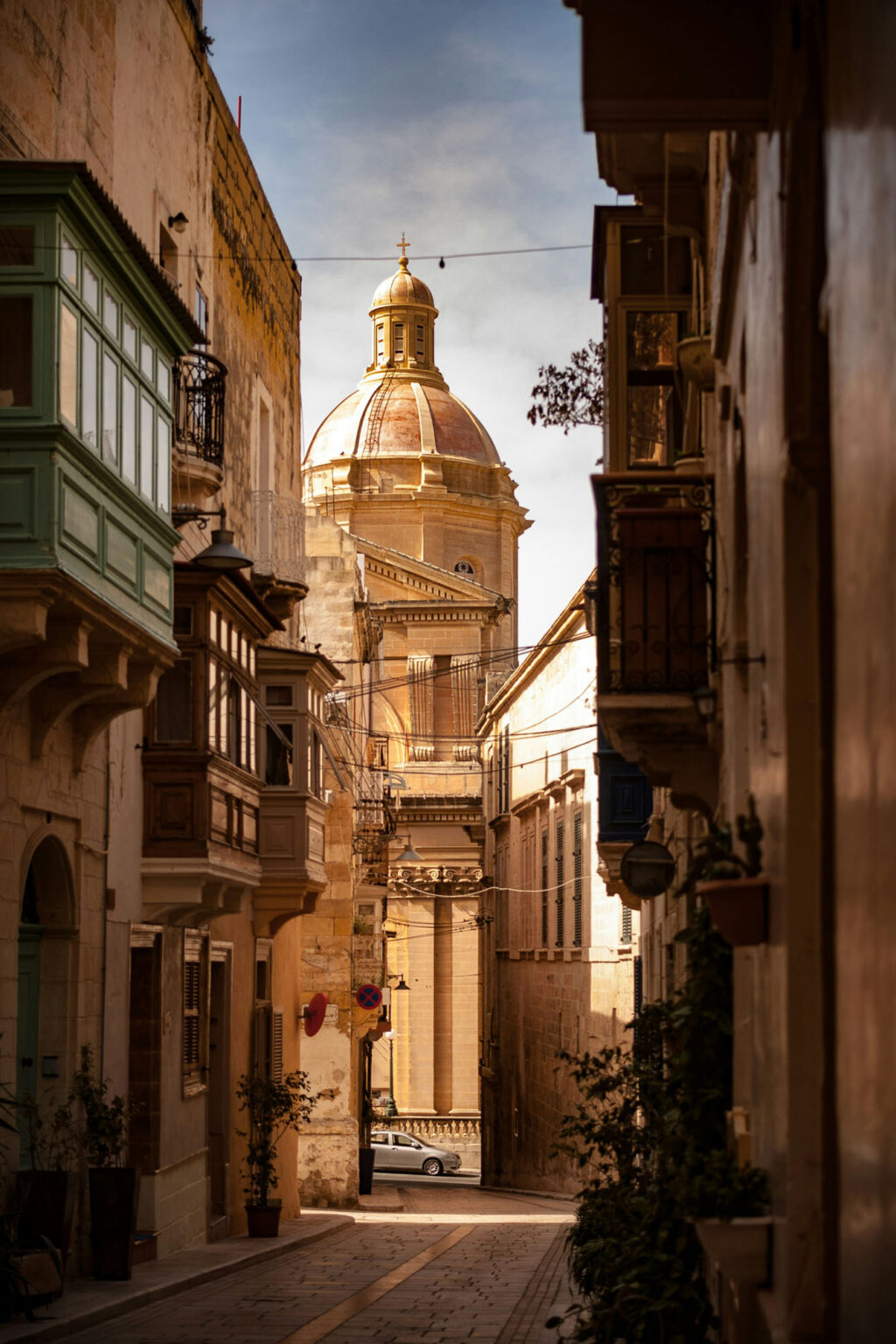
So, from Renzo’s stone but not yet timeless gate in Valletta, I board a bus towards Mdina, which was established sometime around the eighth century BC, and go looking further back into history. Fortune favours the lucky, and I sit next to the greenest-clothed Maltese local I can find. Mario Gerada is one of the few hundred people who still live inside the walled city of Mdina, by day queuing amongst tourists and in the evening having the ancient walled city almost to himself. Mdina is pedestrian only, and has no roads as we might call them today, so Mario walks me off the bus at Rabat and down the old Roman road. Along the way, he talks and points to histories of godly and mortal comings and goings that now rest within the yellows and blues.
Malta, I learn, may be an isolated country, but it has long considered itself at the centre of things through its sea connections — similar, perhaps, to what we in the Pacific understand, so I read Mario a quote from Aotearoa New Zealand architect, Julie Stout.
“What Europeans see as linear distance, void, emptiness, Oceanic peoples see as a network of islands, connectivity, spatial and social relationships.”
Mario, it turns out, is researching social migrations and posits that from centring and connecting itself in the middle of the Mediterranean, amongst the fiscal successes of joining the European Union, Malta now finds itself geographically on the periphery to Europe.
“It’s all part,” he suggests, “of a current requestioning to what is central to Malta today.”
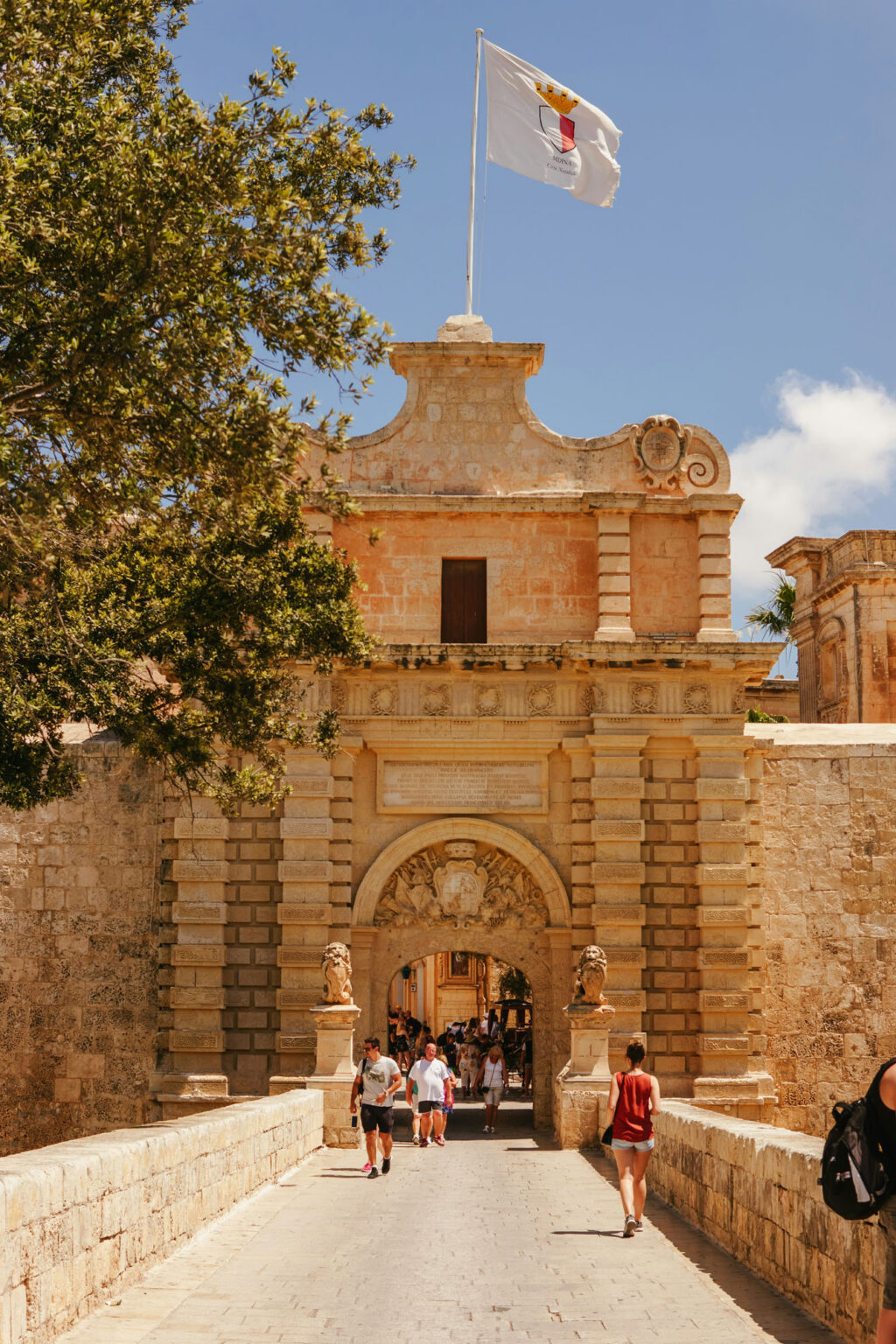
Nothing truly lasts for ever. When we reach the gates of Mdina, he points to an infilled wall, where the goddess Astarte, who was later called Juno, stood in statue to welcome previous arrivals to the city, beside the new, but now 300-year-old, Vilhena Gate. Today, the goddess can be found museumed outside the city’s walls at Domvs Romana, which was actually the set for Game of Thrones–styled conquests.
“We have so many layers,” Mario explains. “We can be anything on any day.”
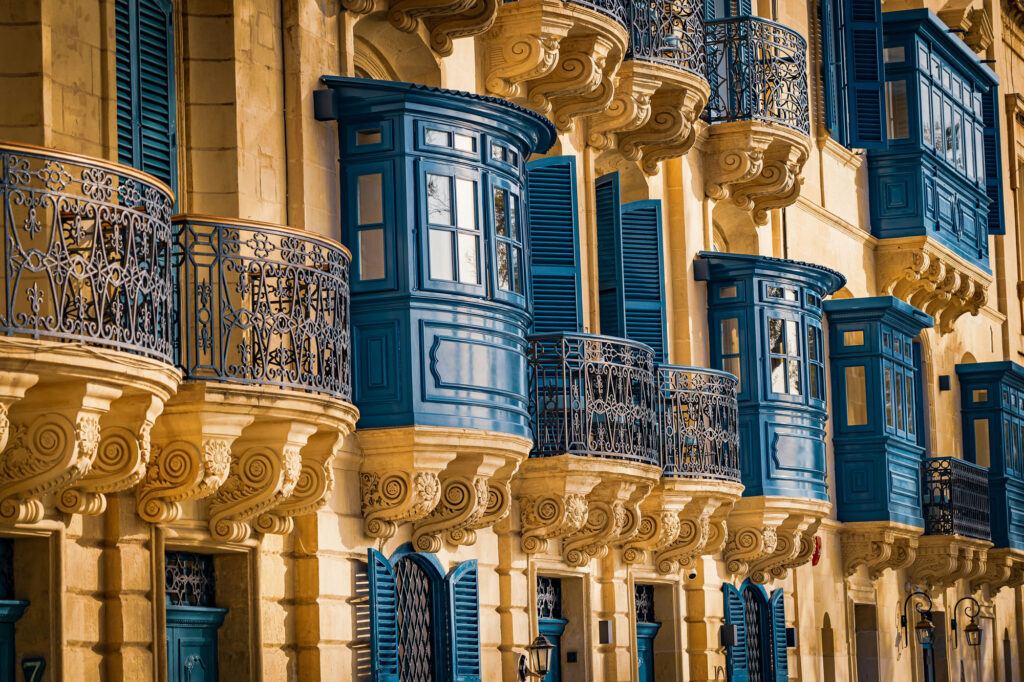
Even without going into the successes and failures, the layering to some of the ins and outs visibly sails, and even shipwrecks in the case of St Paul, through pagan temple builders, Phoenicians, Carthaginians, Romans, Christianity, Arabia, Aragon, Castille, the Knights of St. John, Napoleon, British colonialism, World War II, 1964 Independence, Republic status in 1974 to joining the European Union in 2004 and today’s urban expansion. Buildings accrue, and through it all materials have been put up, taken down, altered, adapted, reused and replaced. So, too, with religions, languages and the names by which the cities are known. Mdina is also Maleth, Malitah, Melité and Madīnah. It is also malita, melita, meli and melitta and the colour of honey.
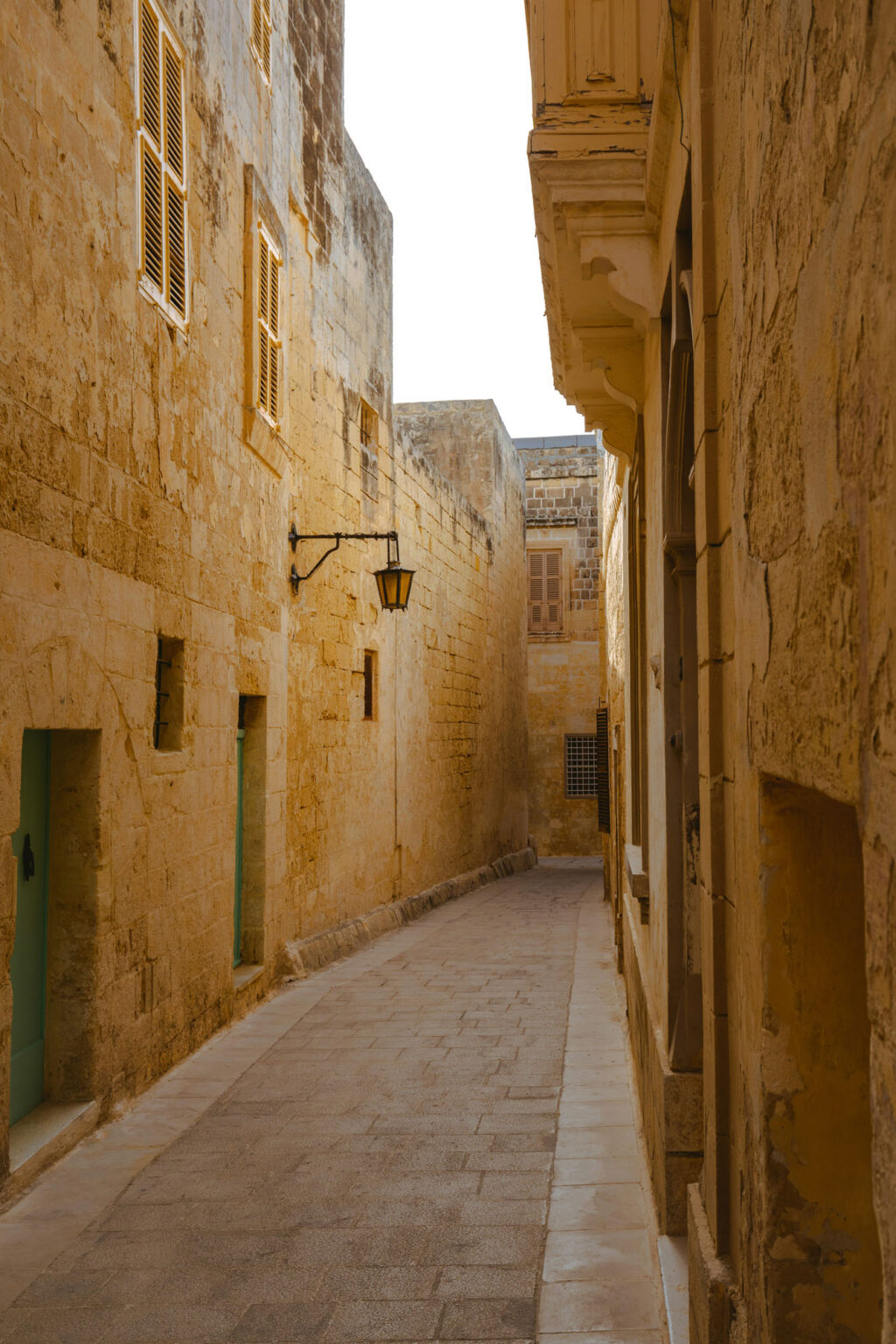
Yellow and blue runs through it all, just as the local limestone weathering continues to dictate that hard stone be used down low and softer stone up top. The stone’s luminosity runs through the untold generational learnings of how to intricately place buildings to capture rather than reflect the light. It runs to the romance of the Juliet balconies and the gallariji bay windows that project over the street to enable a private view to the street below without complicating the planning. The knowledge still airs to the ocean breeze that continues to cool those tight, shaded streets without requiring an electric socket.
Of course, not everyone can build in stone, but, by staying honest, Malta can colour its own answer; for, while what’s local isn’t timeless, it is proven by time. The answer isn’t about size, for the space between yellow and blue here is small. Malta can stand on the shoulders of its own giants by understanding that small remains a central part of big.
There are lessons in this for all of us, for we collectively face time together. Perhaps a Maltese sustainability can be found by not mixing the yellows and blues, but by looking for green in what they have learned. As to Malta’s architects’ question in laying out the “Beyond Greenwashing” prompt for my visit: sustainability doesn’t mean following someone else’s blueprint; green isn’t the only colour to sustainability.
Juhani Pallasmaa’s assertion that “architecture domesticates limitless space and enables us to inhabit it, but it should likewise domesticate endless time and enable us to inhabit the continuum of time” doesn’t mean that architecture is timeless, for timelessness is only achieved through change.
Kollox huwa sabiħ. You can still make beautiful change without mixing your yellows and blues. Colour it wisely, Malta, for architecture is all alteration.
Jeremy Smith travelled to Malta courtesy of Share Malta to provide a keynote conference to architects in a conversation entitled Beyond Greenwashing. He is the design director at Irving Smith Architects in Nelson.