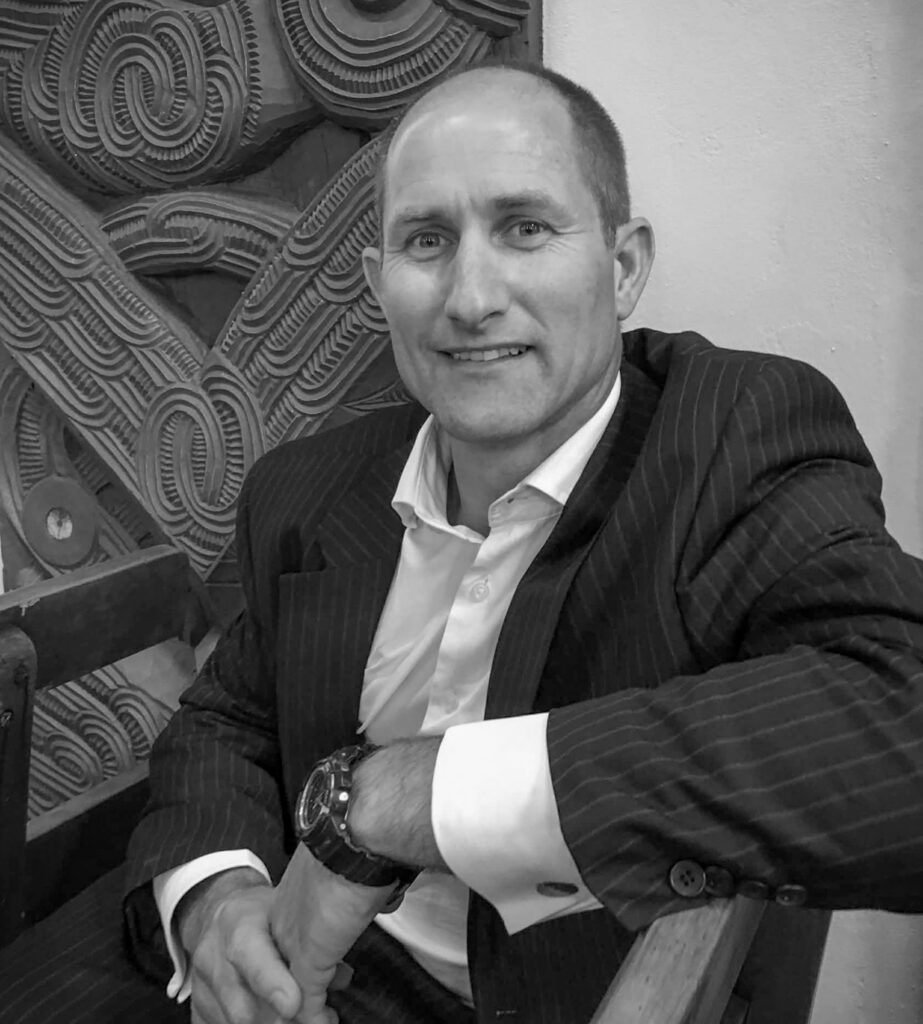
We speak to James Blackburne, founder of Gisborne’s Architects 44 and the incoming president of Te Kāhui Whaihanga New Zealand Institute of Architects.
Federico Monsalve: Congratulations on your new role. Before we get onto that side of things, tell us about yourself as an architect — materials you like, influences, etc.
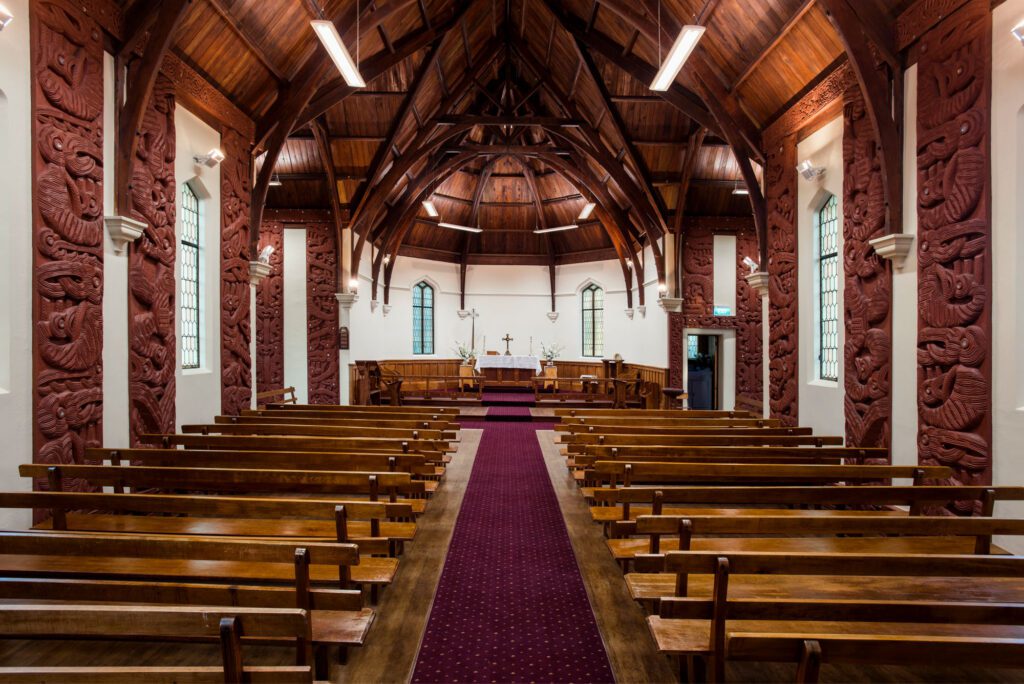
James Blackburne: My favourite isn’t really a material — it’s light. When you go into a building that has been well designed, well thought out, and the proportions are right, it has that feeling. Go into the Futuna Chapel, and it’s the quality of light in that space that gives it its real wairua; and John Scott’s visitor centre at Āniwaniwa in Te Urewera National Park — how it connects to the bush, and the quality of light in different rooms.
Light sets up so many emotions. As a thing to work with as an architect, it’s probably the most powerful tool of all.
In terms of influences: I love John Scott’s work because of how it makes you feel — almost always at a human scale. The proportions are really good, and his use of materials is honest. Going back a little further, [Āpirana] Ngata — not an architect, but what he did for the renaissance of Māori art and architecture through the building of marae and churches was extraordinary. I’ve been to his home office, which the family left largely untouched after he died in 1950. There are still chequebooks on the desk with his signature on them! His influence on art and architecture in New Zealand was enormous. Further afield, I’m going to Los Angeles in June and looking forward to seeing The Gamble House — one of the Greene brothers’ buildings, a bungalow on steroids — and the Eames House.
You’re based in Gisborne, away from the main city centres. Does that give you a different perspective coming into the presidency?
After graduation, I came back to Gisborne and worked in a very small firm — just three people — so you got a really good grounding in doing everything. You were an architect in the old sense of the word, and you were certainly thrown in the deep end early. I got registered within two years of leaving university because I’d been running jobs and been hands on right from the start of my career.
That’s probably slightly different to what happens in the bigger cities. I had friends who worked on some of the big Auckland projects and spent a year and a half detailing stairs. The other difference is that, here, you tend to have a much more team-oriented relationship with builders. Most aren’t quite so combative. There’s give and take — they’ll point out early where we’ve made mistakes; likewise, when we find theirs, they’re receptive. It’s a good, symbiotic relationship, all about working with the client, the consultants, the builders, and the subbies to get the best for everyone. Resorting to the contract is a process of last resort, because it wastes time and costs money.
Do you think that experience will bring something different to the institute?
I think it leans into my defining themes, and [that’s] going to be about relationships — building on the work that has been done beforehand, like with Ngā Aho, and developing that further. As an institute, we can’t do it on our own.
Architects, as a whole, have been our own worst enemies. When I came into this profession, project managers didn’t exist. But through the 1990s, things got tight and people got very cut-throat with their fees — doing quite big projects for very low fees. Something had to give, and I think two things gave: the quality of the work and the quality of service, which upset clients. They wanted someone policing and monitoring the architects. That was the beginning of the end — and it let project managers into the industry.
I was having an interesting conversation today with one of my staff who has come from South Africa. There, architects almost never see project managers. The architect is the engineer to the contract, runs the team, knows the contract, deals with everything. That was the grounding I had when I came into the industry. So how do we, as an institute, uplift architects to get back to doing what we were good at, and lift the profession in terms of how people think about and deal with us?
Is it about clawing back the standing that architecture once had?
Ultimately, that would be good, but the first step is reminding clients why they use an architect and what that value is. We should be the conductor of the orchestra — the ones pulling the engineers and everyone together — and there’s no reason why we can’t also be the conductor on site, given how intimately we know the project documentation.
We’ve got some projects at the moment and contractors can’t believe how often we’re on site. They’re not used to it, and I’m thinking: isn’t that normal? That’s how I was taught — go to site, be present, be part of the team.
Each NZIA president usually brings a defining theme to the role: Cheshire and the Kawenata, van Bohemen and gender equity, Melville and housing, Keith-Brown and sustainability, Taylor and professional operations, Reriti and Māori leadership. In a soundbite: what is yours?
Building and strengthening relationships — both current and future.
You’ve done remarkable work in heritage. How should heritage principles shape New Zealand as it rebuilds and densifies its cities, given the enormous pressure to demolish and replace quickly?
Heritage buildings can teach us a great deal, but it’s also about defining very carefully what heritage actually is — just because something is old doesn’t mean it’s heritage. Most older heritage buildings have typically performed very well in terms of weather-tightness over a long time. They’re not good on energy efficiency, but they can be radically improved. As an industry, there’s a lot to learn from how the old materials work, function, and last — and we lost a lot of that knowledge.
The pressure to rebuild is largely political, and it’s not as simple as demolishing and building new. New Zealand actually has more houses per capita now than it did 20 years ago. So, if we have more houses per person, why have we got the so-called housing crisis? The land is where the costs are — in my view, there’s not necessarily a housing shortage; there’s a land shortage. It probably relates more to how the tax system works. New Zealand is heavily invested in housing for capital gains; people see it as free money rather than investing in other forms of capital. What I see at the moment is people politicising the issue and scoring points.
What advocacy priorities do you feel the institute needs to drive during your presidency?
The key is the value of an architect. The outputs of a true and good architect are not necessarily the drawings — it’s the process and the problem-solving that go in beforehand. Most of the community, and the politicians, see us as people who draw and colour in pictures of buildings. A lot of politicians don’t understand what we do or what value an architect brings, and that feeds down through the whole public sector.
Should the profession as a whole be more outspoken in policy debates about cities, densification, and infrastructure?
Definitely. The only risk is being seen as advocating purely for ourselves, but we need to be that squeaky wheel. Engineers always look for the easy answer, and politicians look for the answer that will get them a vote — not necessarily the right one. I saw that after the Gisborne earthquake in 2007. The engineer’s answer to earthquake-prone buildings was to knock them down. That’s the easy answer, but you have to base those decisions on unbiased logic and real facts.
There’s also the question of property rights versus public rights. Architecture is in the public domain — it’s part of the street front, it shapes the community. Look at the building I’m in now: if I wanted to demolish it, I’d spend a couple of hundred thousand before I’d even started. Why not put that back into the building? Most owners constructing a new building will never be able to afford the level of decoration, detailing, and craft found in an old building. In the old days, labour was cheap. It’s not any more.
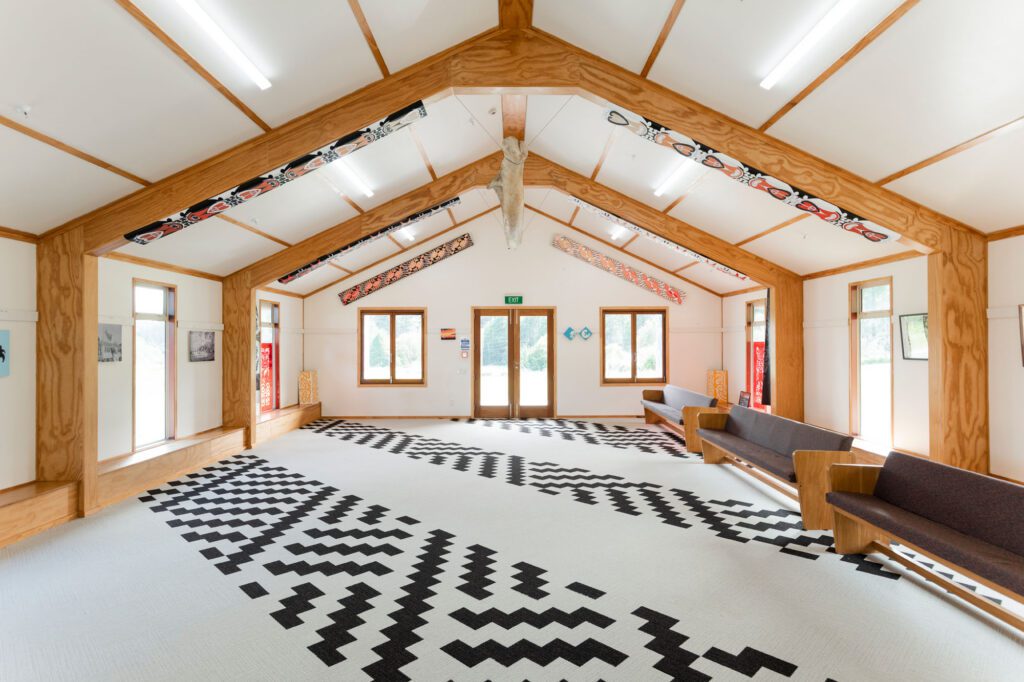
The outgoing president, Huia Reriti, deepened the relationship with Ngā Aho significantly. You’ve worked in Māori churches and on marae in one of the most heavily Māori regions in the country. How does that lived experience shape how you’ll steward that relationship?
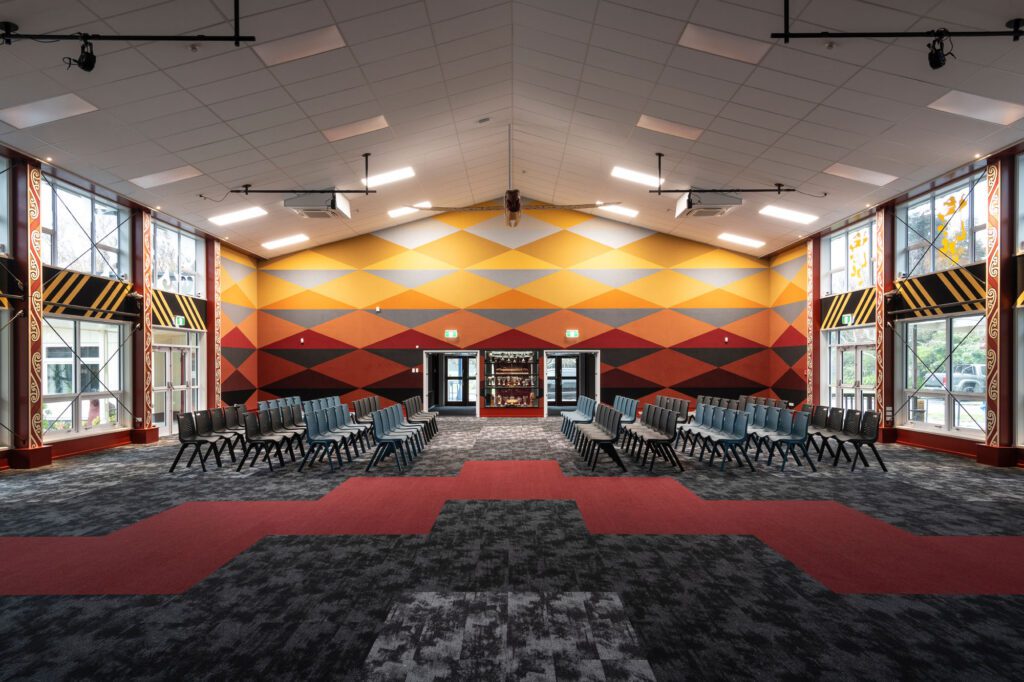
What I’ve learned through my work with Māori communities — iwi, hapū, whānau — is to sit back and listen first. I don’t go into any project with iwi with preconceived ideas. We’ve had one meeting with Ngā Aho recently, and what I want to do is have more coffees, more conversations, and build the relationship. We have Te Kawenata o Rata, which is a living document, but that doesn’t form the relationship in itself — it guides it. The relationship is built on mutual respect, communication, talking, and listening. The tangibles will come out of that foundation.
How should architects engage with communities being forced to migrate due to climate pressures, red-zoning, and the kinds of flooding your own region has experienced?
That is where the role of the architect is so important. Our job is to step back from what’s directly in front of us, look at what’s around us, and look at it holistically — then advise our clients accordingly. It’s very difficult with marae, because there is normally a very strong connection to the whenua, and all we can do is give our best advice.
But I’ve seen, and worked on, many marae that have historically moved. Even Toko Toru Tapu Church is not on its original site — it moved because of environmental problems. I’m currently working on another marae near Tikitiki that moved in the 1980s. This is not something new. Iwi have been dealing with these issues for many years, and, as architects, we need to use our skills to look holistically at every problem in front of us, whether it’s a house, a school, or whatever it may be.
You believe design begins by hand — sketch before screen. Now that the profession is accelerating towards AI-assisted design, how do you think the NZIA could position itself on that question?
Horses for courses, in a sense. I was listening to a poet recently who said you cannot write a poem by typing into a computer — you have to have a pen and paper. That really resonated with me in terms of design. Early in my career we worked on drawing boards. Because the board locks in increments of 15 degrees, you draw based on that, look at it, and think: it doesn’t look right. You put your hand sketch underneath and suddenly realise the roof’s at 22 degrees. It was amazing the difference it made.
Where AI will be hugely beneficial is in doing that more mundane work — audits, checks, and similar tasks. Whether it’s actually going to be good for design per se, I’m still sceptical. What we’ll probably have to be teaching our graduates is to think critically and to challenge what’s coming out of these systems. AI is only going to produce what it already knows. Unless you have the knowledge and experience to recognise when something doesn’t look or feel right, you can’t effectively interrogate it. Teaching that critical eye — that’s what the future of architectural education may well hinge on.
At the end of your term, what would need to have changed for you to feel the presidency was a success?
Having really strong, solid relationships — within the wider industry and internally within ourselves. We went through a period as an institute where the organisation was a little insular, not communicating well with members and not recognising their needs. So, there are two parts: the relationship with members needs to be strengthened, and what we do for them needs to improve. Two years is going to go very fast. It’s about building on the foundations laid by those before me — I can’t change the world in 760-odd days. It’s figuring out how to leave something better for the next president.
James Blackburne begins his term as president of the New Zealand Institute of Architects in late June 2026.
Words Federico Monsalve
Images Provided
This article originally appeared in Architecture Aotearoa Issue 01.