


Chinese artist and activist Ai Weiwei collaborated with Venetian textile house Rubelli during Milan Design Week, drawing together contemporary art and traditional textile craft.
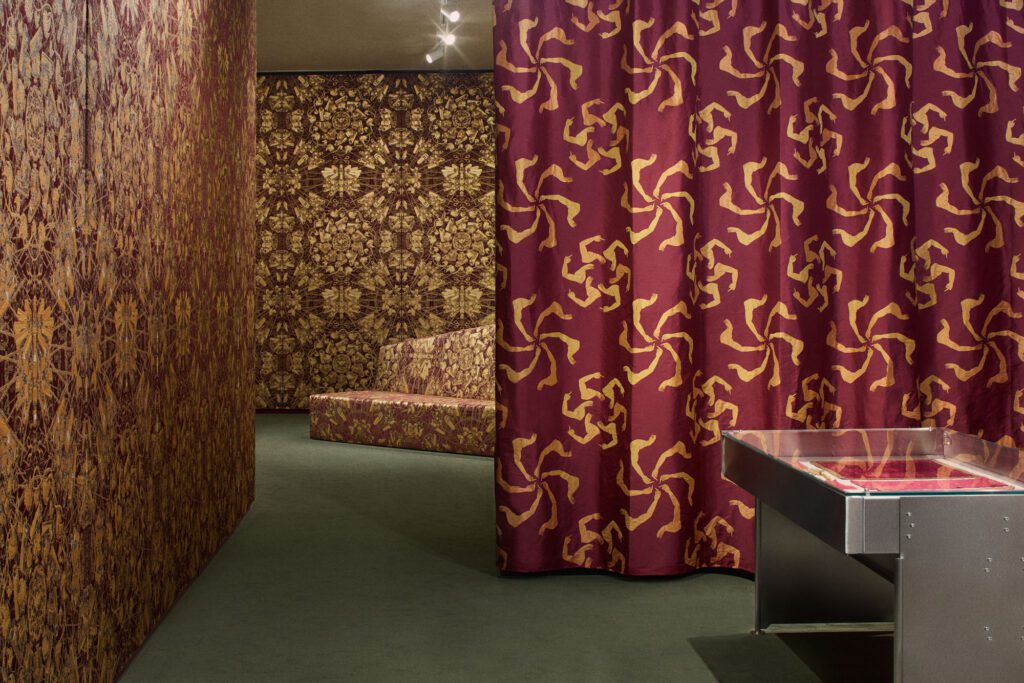
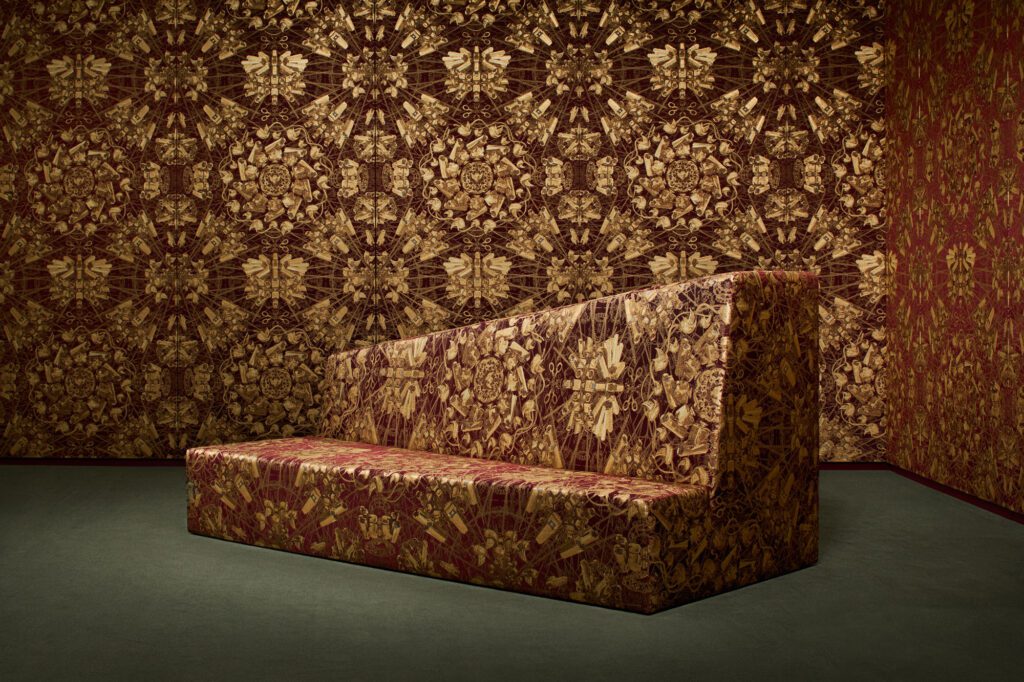
Titled Ai Weiwei: About Silk, the installation occupied Rubelli’s Milan showroom, drawing together contemporary art and traditional textile craft. Central to the space, an elaborate silk lampas carried symbols from Ai Weiwei’s visual language and political past. Surveillance cameras, handcuffs, chains, the Twitter bird, and the alpaca—each a sign of resistance—were rendered in metallic yarns and detailed weaving.
Rubelli recreated Ai Weiwei’s original artwork, The Animal that Looks like a Llama but is Actually an Alpaca, weaving 9,600 silk warp threads with metallic wefts in gold and grey. The surface moved between ornament and protest, softness and restraint.
A sculptural sofa by Ai Weiwei introduced a play on scale and proportion. Upholstered in the same symbolic silk lampas, it stood as both object and extension of the artwork.
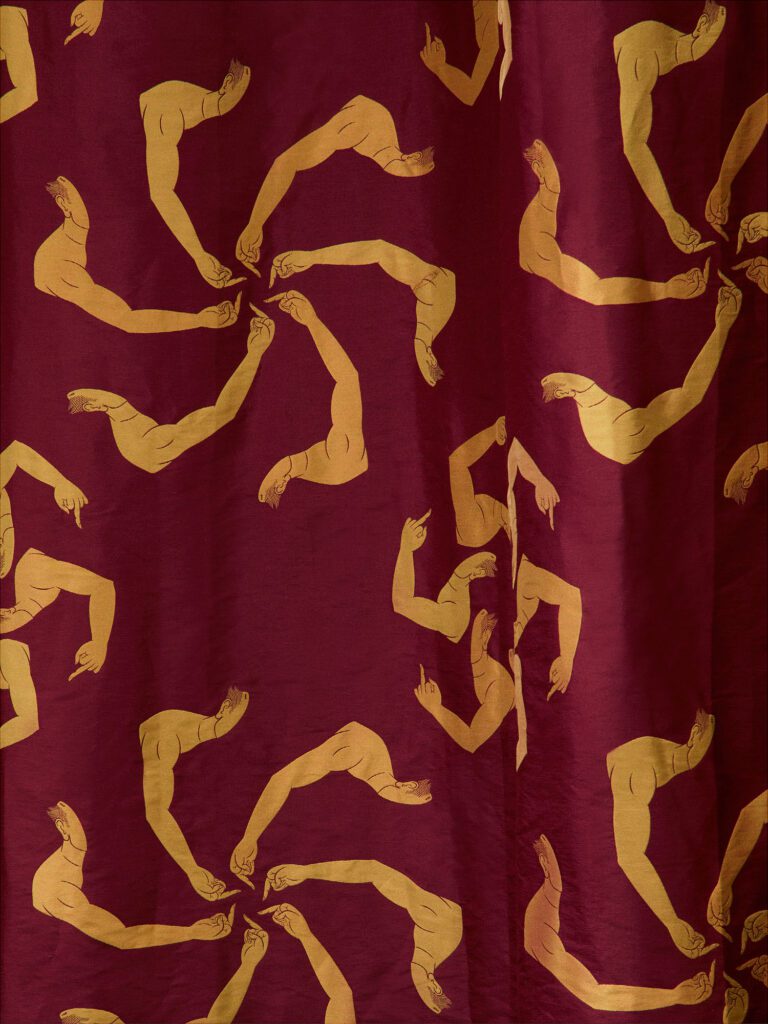
The exhibition continued with Finger, another of Ai Weiwei’s recognisable motifs. Rendered as a reversible silk-and-linen textile. Through colour inversion and graphic clarity, the artist’s gesture became a woven composition.
Historical dialogue formed a significant layer of the project. Display cases housed rare documents and artifacts from the Rubelli’s own archive, placing Ai Weiwei’s contemporary political language alongside centuries of silk production and exchange between China and Venice.
For Ai Weiwei and Rubelli, silk’s history of wealth, trade, and power is recast as a medium for ideas, resistance, and memory. The installation made clear that textiles are never only decorative; they carry stories of politics, identity, and connection in every thread.