

Sacred Geometry | St Patrick’s Chapel by Jasmax

St Patrick’s Chapel greets you at the front gate of Dilworth School in Epsom, Tāmaki Makaurau / Auckland. Working with Dilworth’s chaplain and its headmaster, Jasmax has created a new spiritual heart for the school.

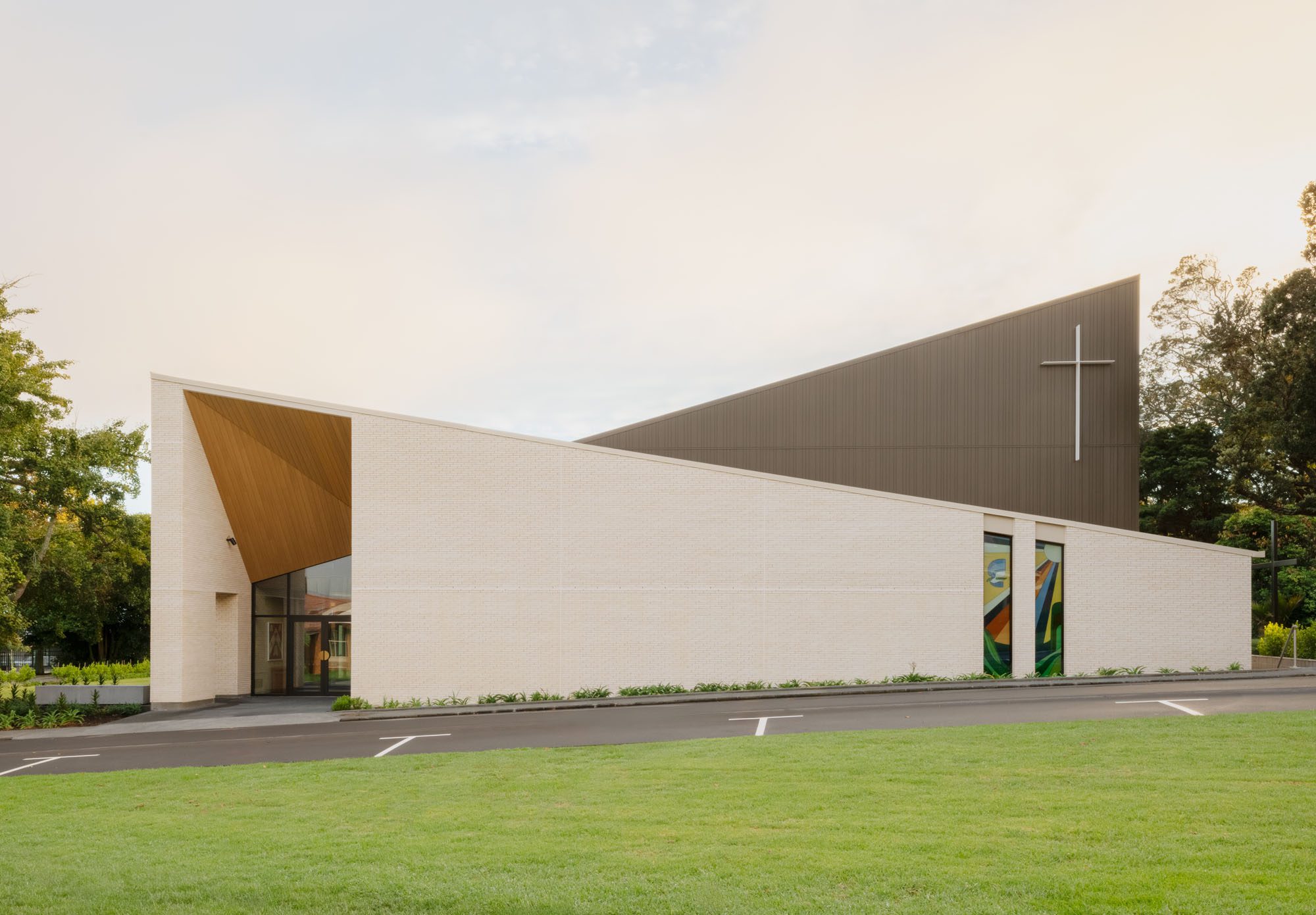
Anyone passing Dilworth School from Great South Road will be familiar with its steep A-frame roofs and flared Hinuera stone walls — signature geometries from the 1950s and 1960s, when structure was used in expressive and inventive ways.

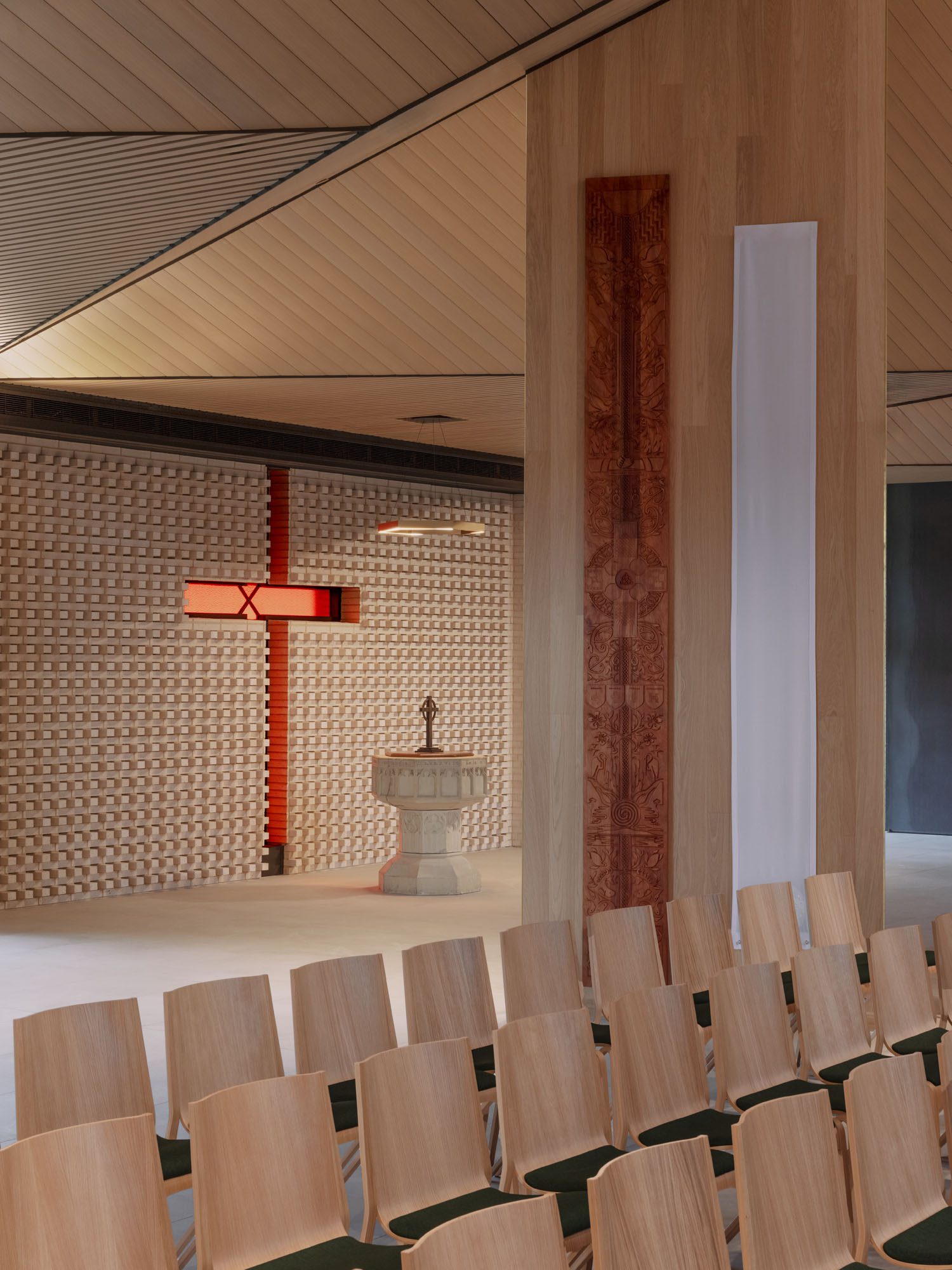
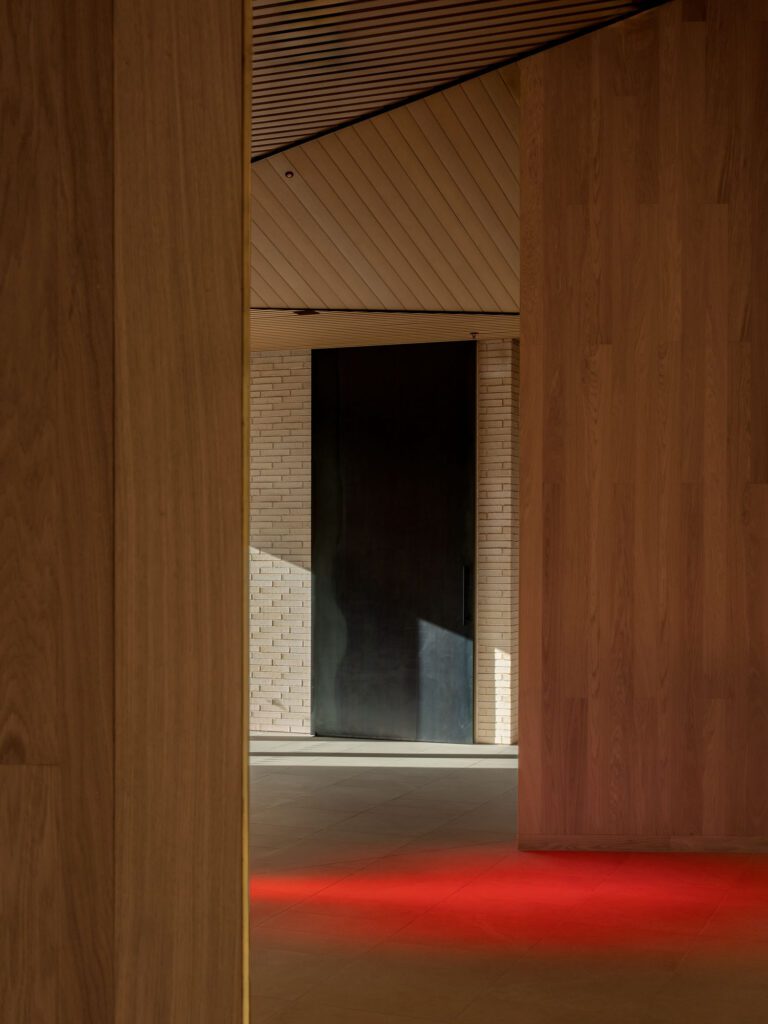
The new chapel presents subtle reflections of this past in material, tone, and outline. Colour-matched bricks reinforce the sandy tones of the Hinuera stone. Triangular profiles, inside and out, carry forward the geometries of the existing campus in a new expression. The red glass cross of the old chapel — an iconic childhood memory of past students — is recreated within a deep, sculptural wall, as a backdrop to the relocated 1850s baptismal font.

So, too, with sound. The organ from the old chapel next door was too difficult to move. In its place, a modern instrument has been designed and built specifically for the project and tuned to fill St Patrick’s with a traditional organ sound.

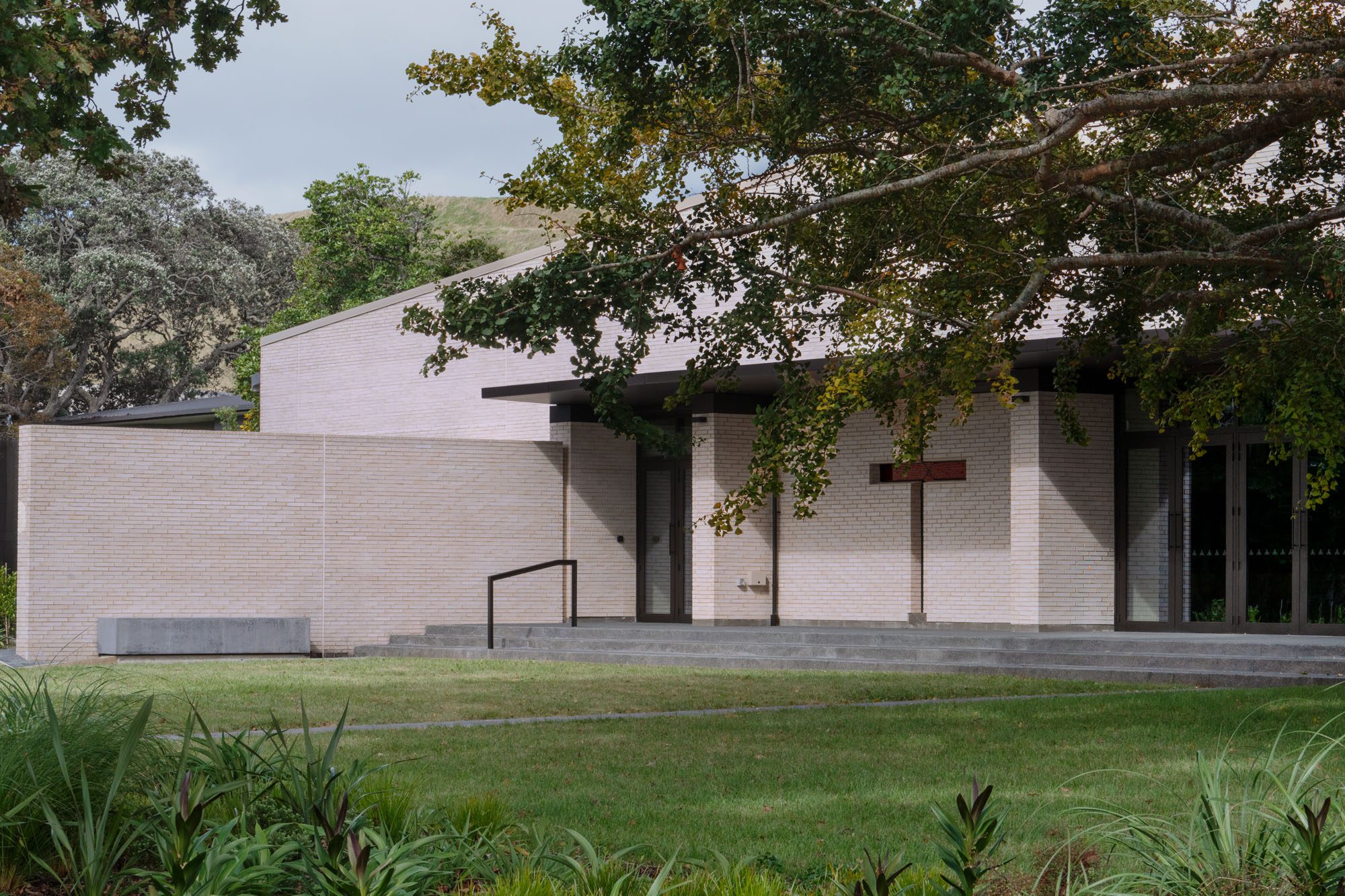
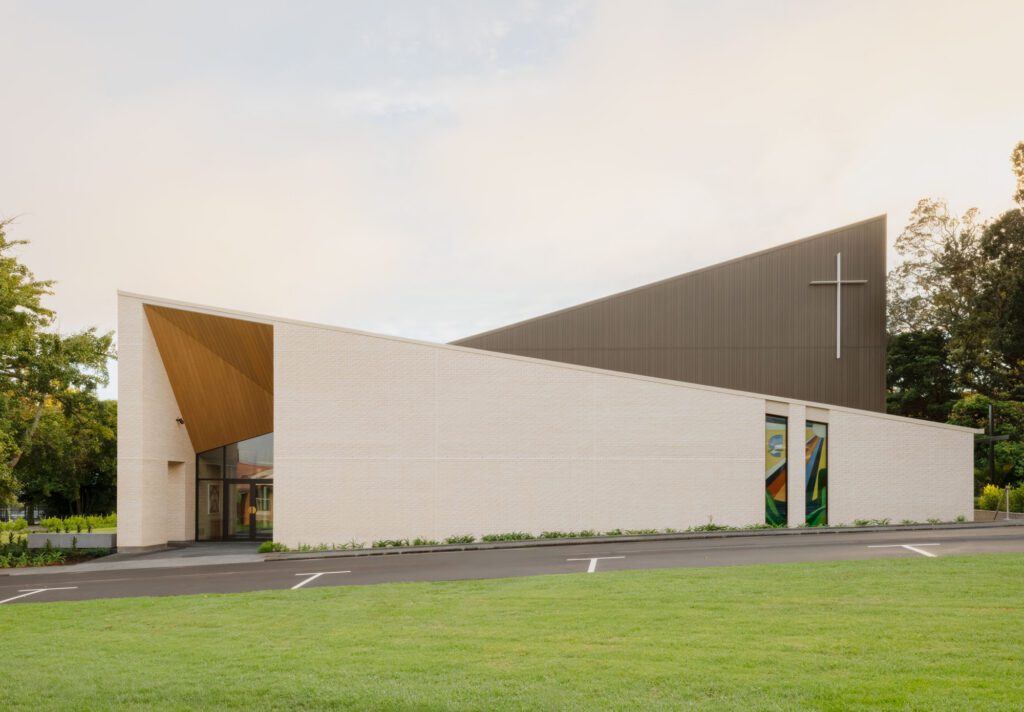
Strong geometries from the 1950s campus are reinterpreted in a more grounded, sober design, with contrasting cladding wrapping each volume.
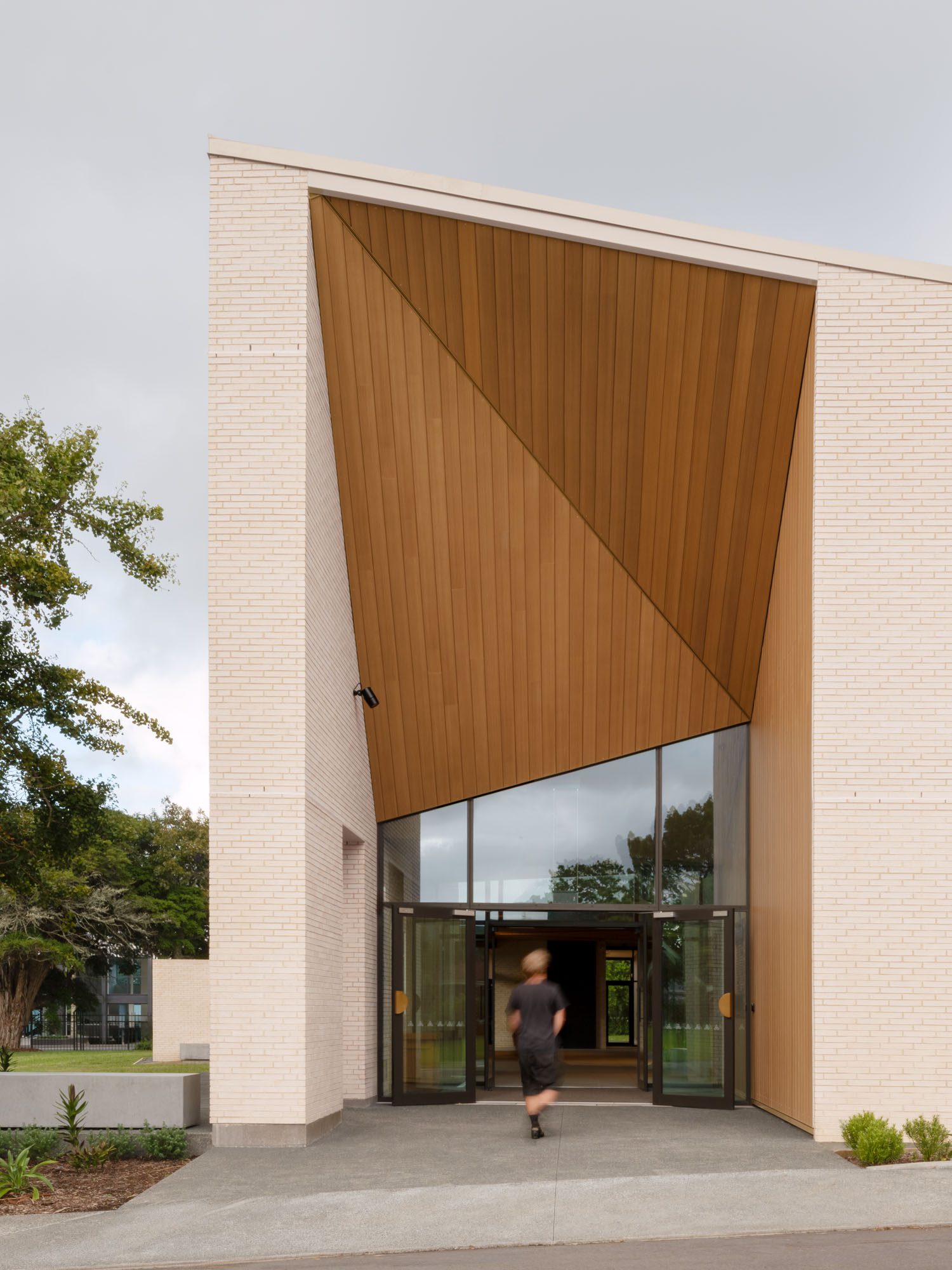
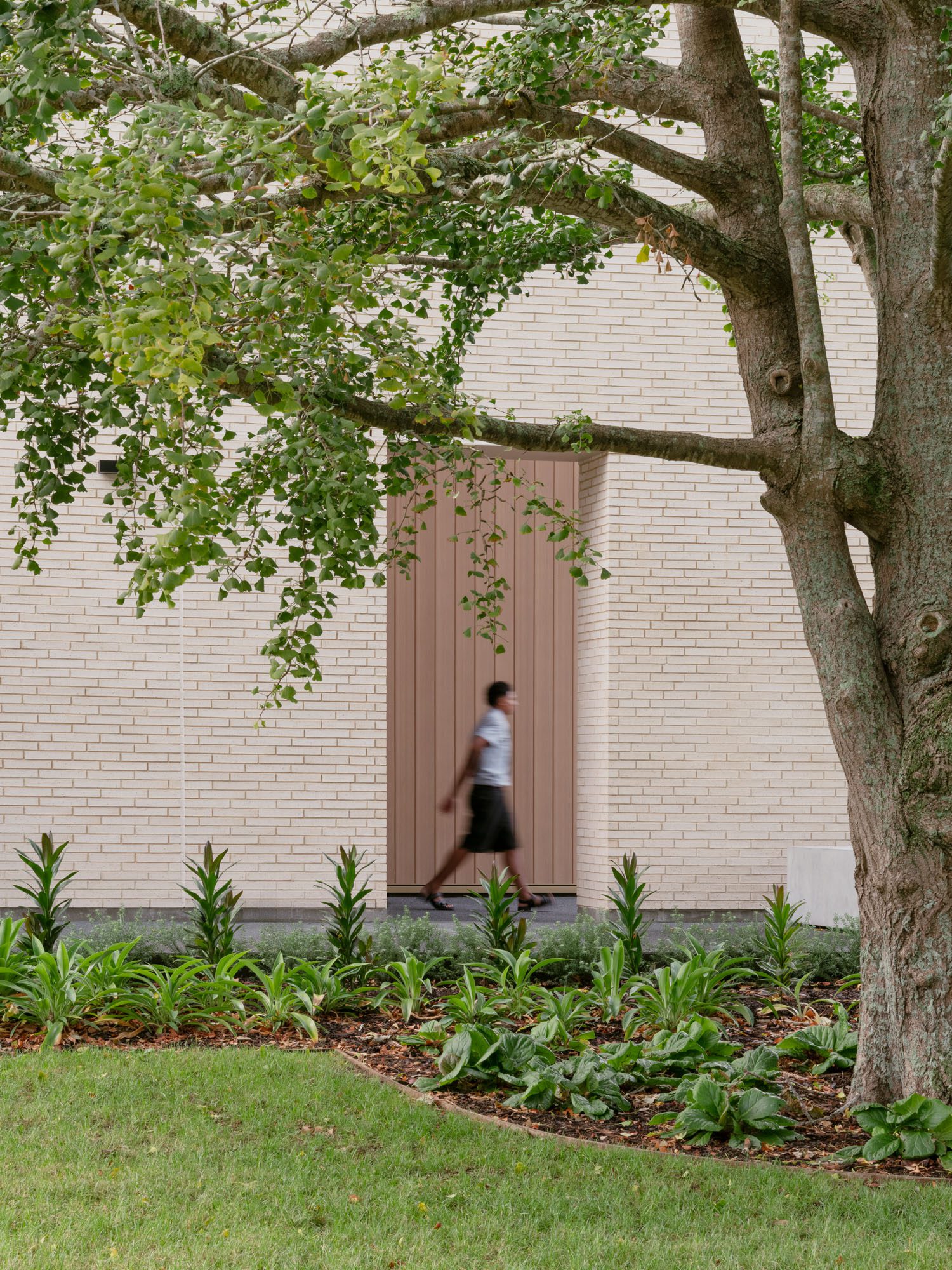
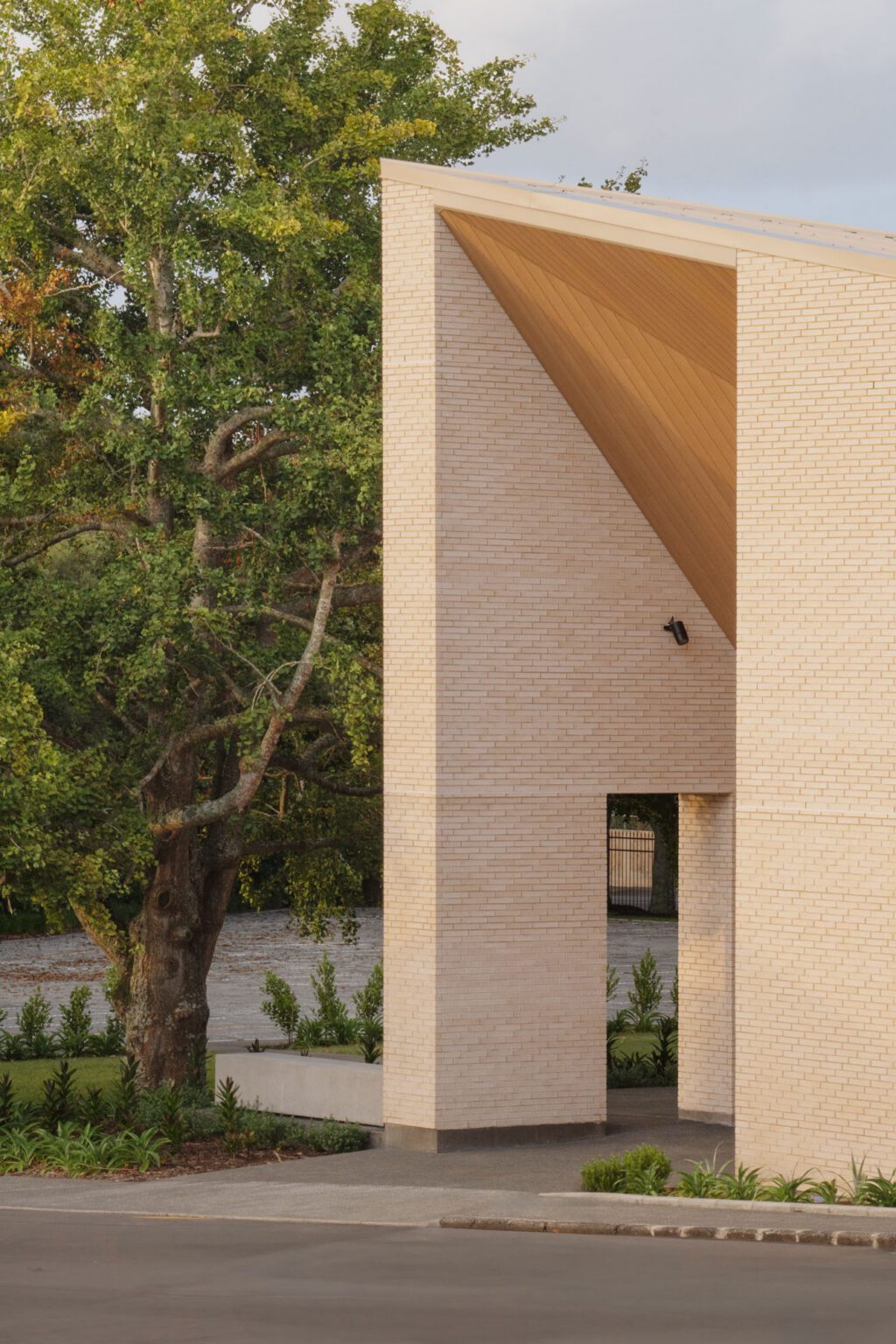
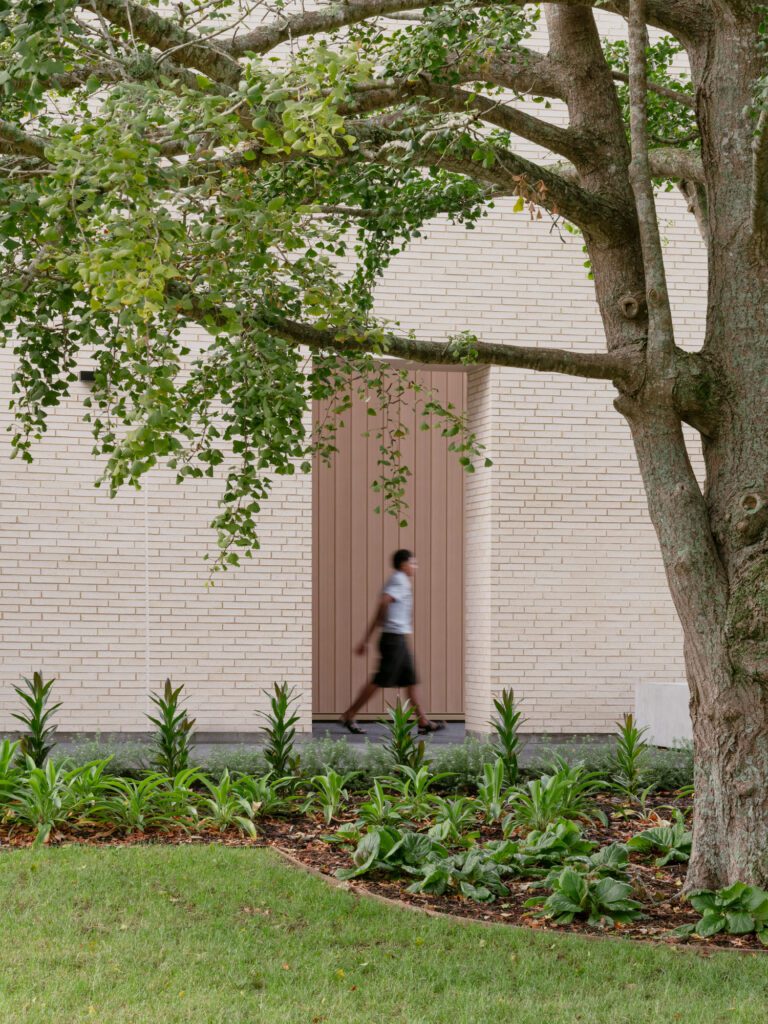
Rather than the cantilevered, floating roofs of the 1950s campus, the new building feels more grounded, with entries recessed into the brick volume.

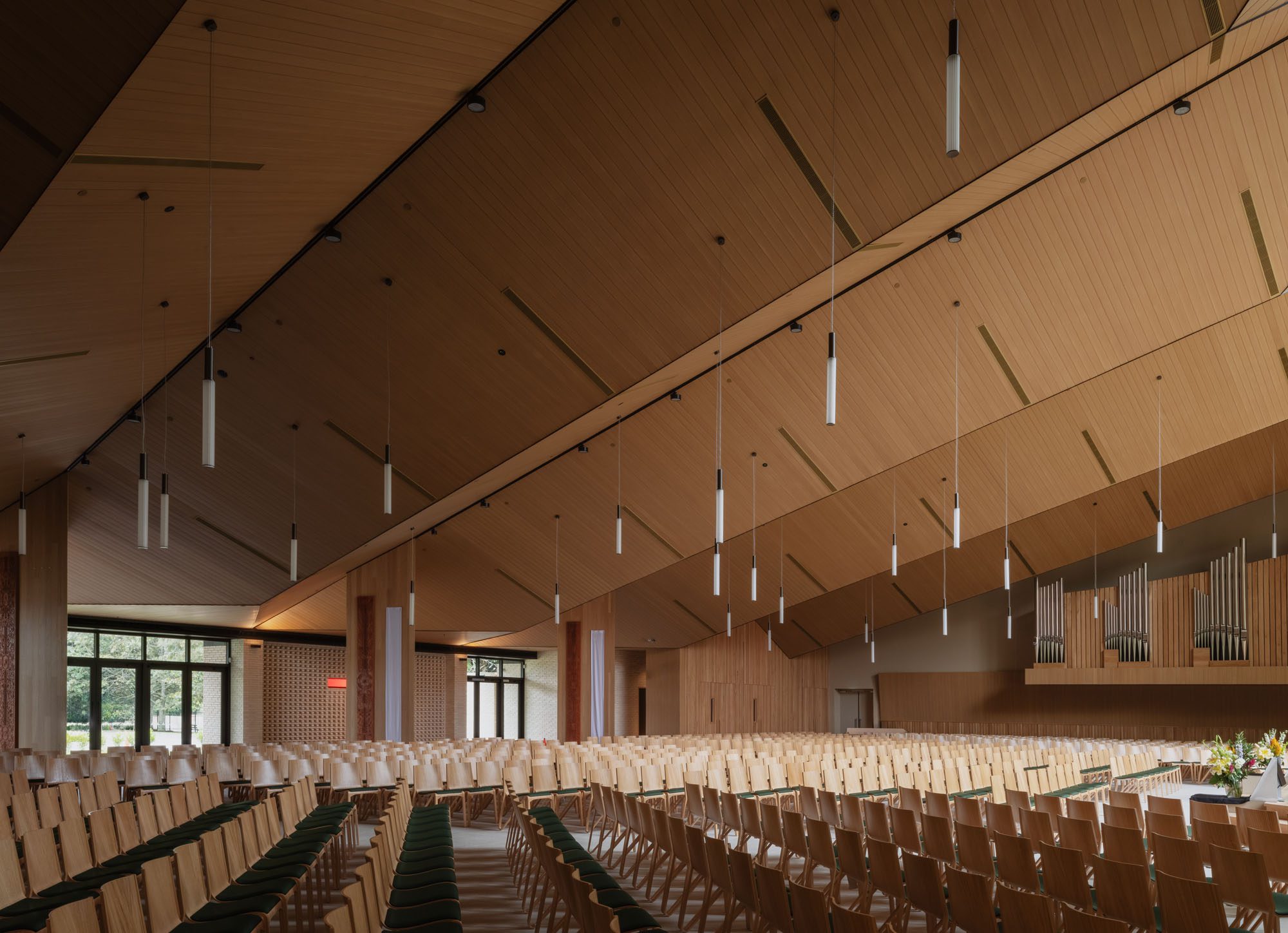
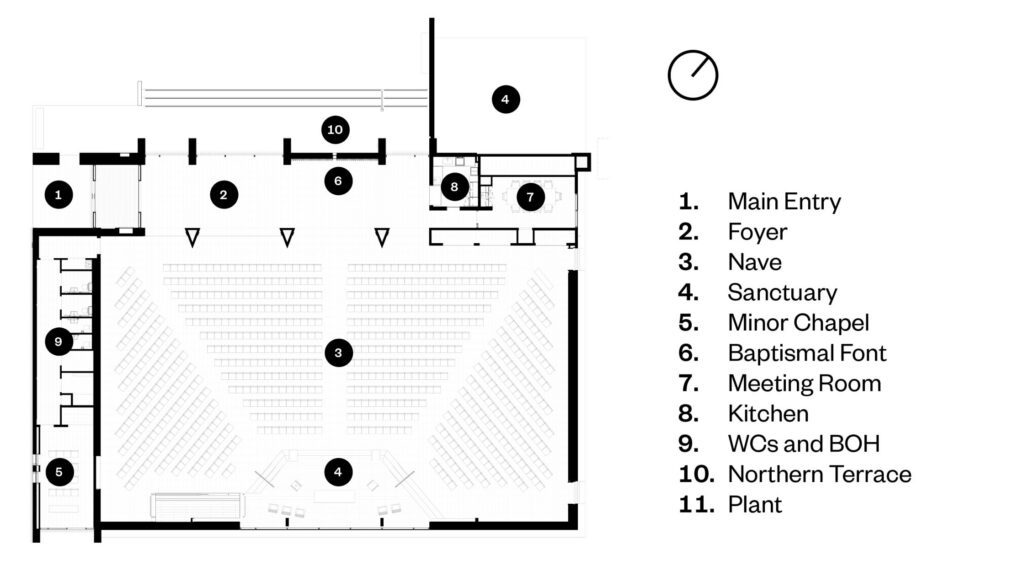
At more than 1200 square metres, the new chapel has nearly double the capacity of the old one. Its 800 seats can accommodate both the junior and senior schools, and their whānau.

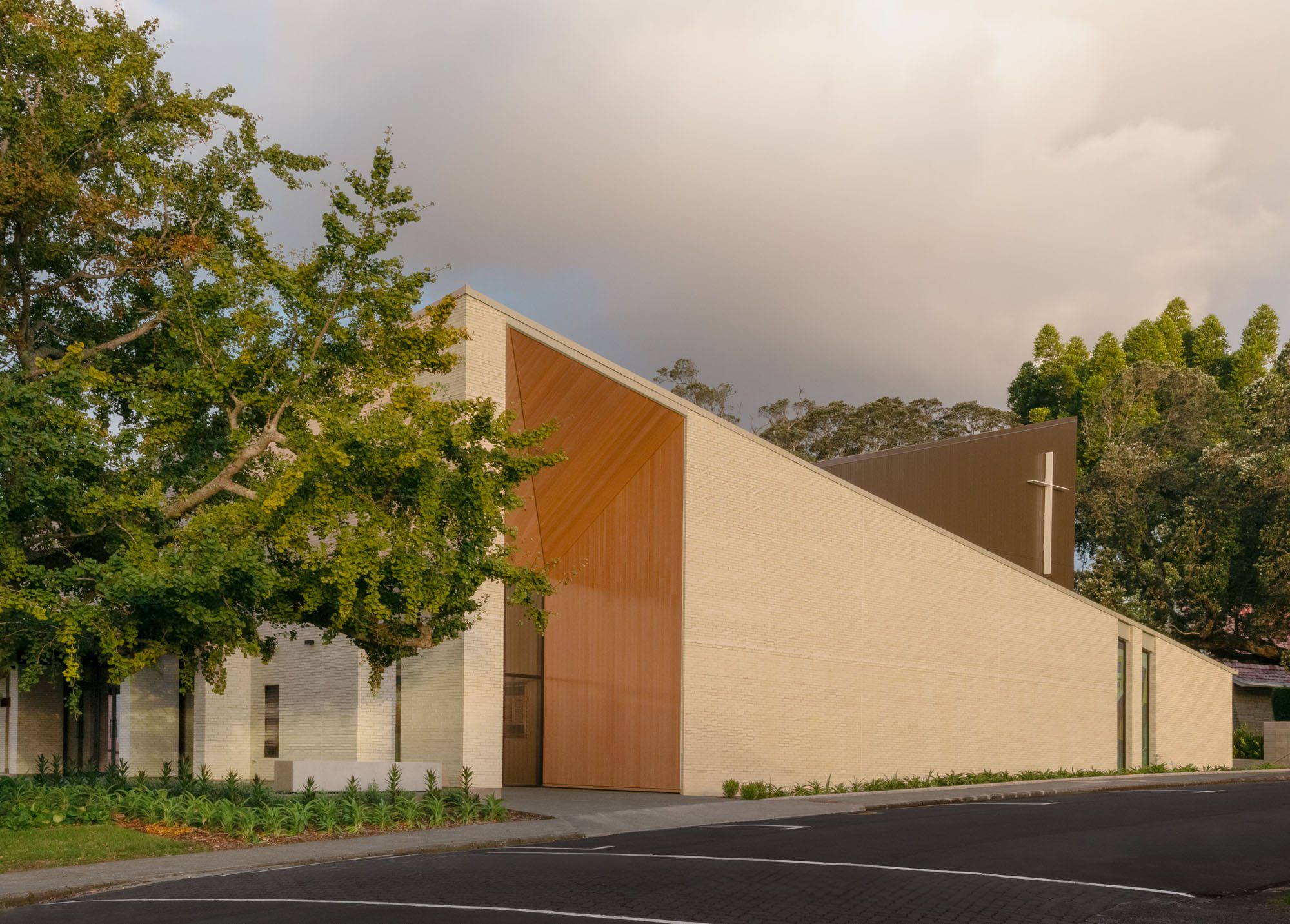
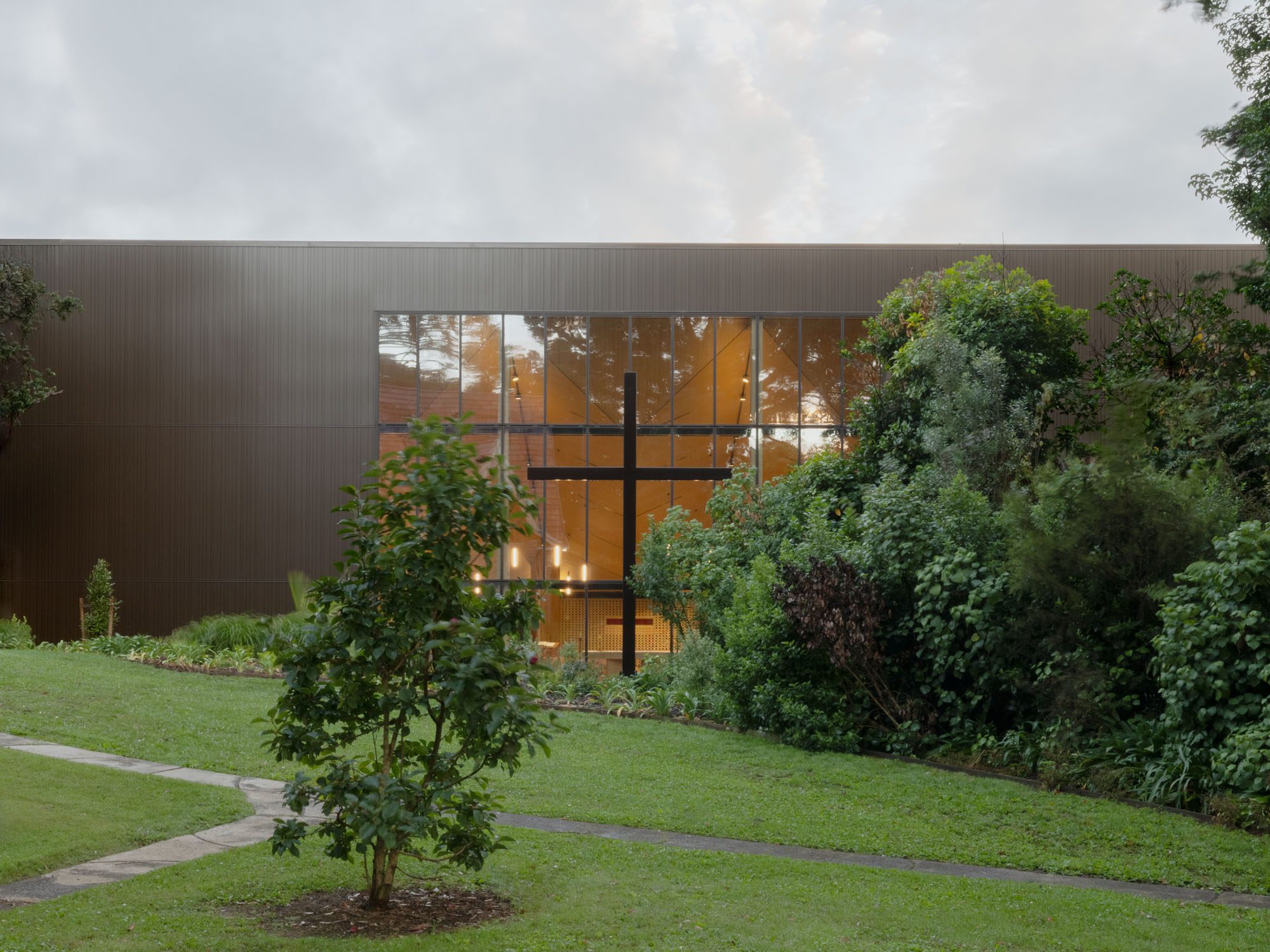
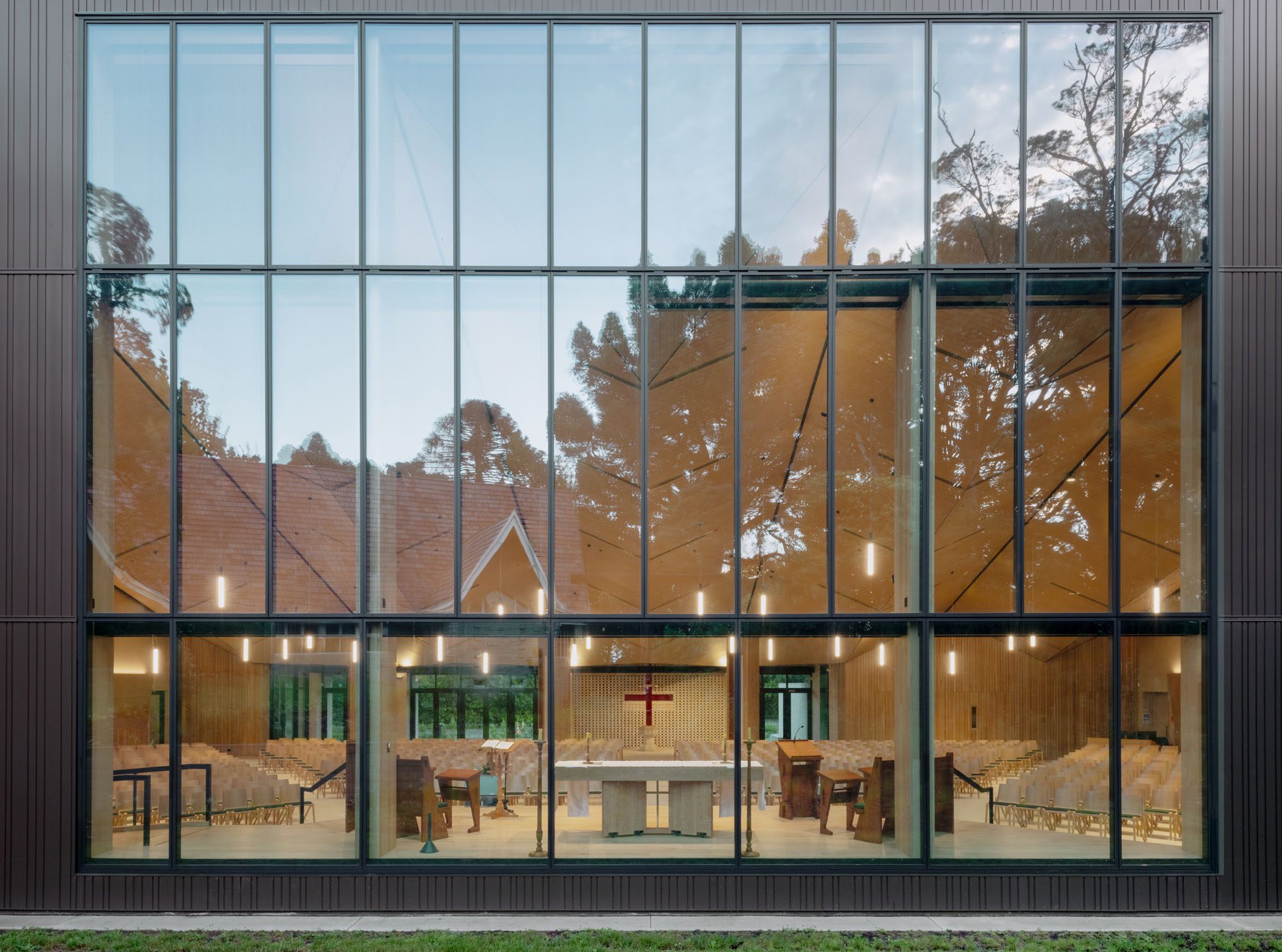
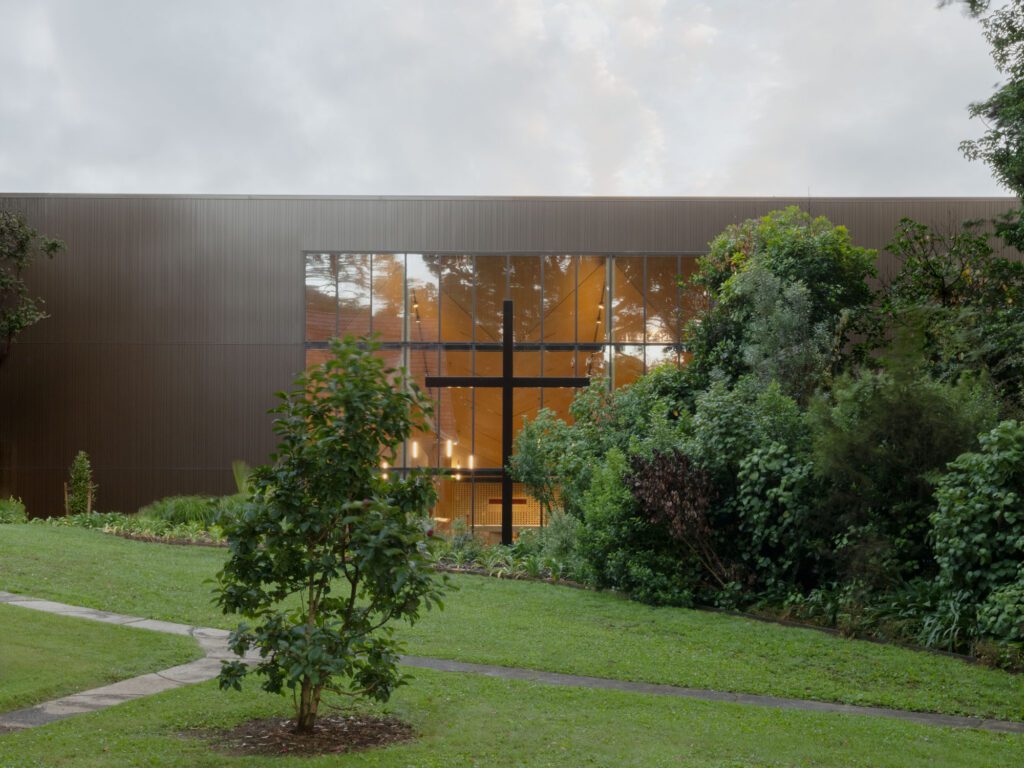
To disguise the chapel’s scale, the architects have designed two monopitch roofs. The front, stone-coloured brick elevation rises west, sheltering the main entry and a small side chapel. Behind is the main volume, clad in charcoal-coloured aluminium, its roof rising east to enclose the main chapel.

“It had to be built very economically,” says Jasmax design architect, Jun Tsujimoto. “We were very careful about the choice and selection of materials, and then were bold about how we applied them. A simple rectangular plan and steel portal frame ensured a low-cost structure; then we picked a few key moves and crafted them well, the ceiling being the biggest of those.”

Although the building’s primary purpose is for chapel service, its wide stage and excellent acoustics have been designed to host assemblies, graduations, choirs, orchestras, and performances.

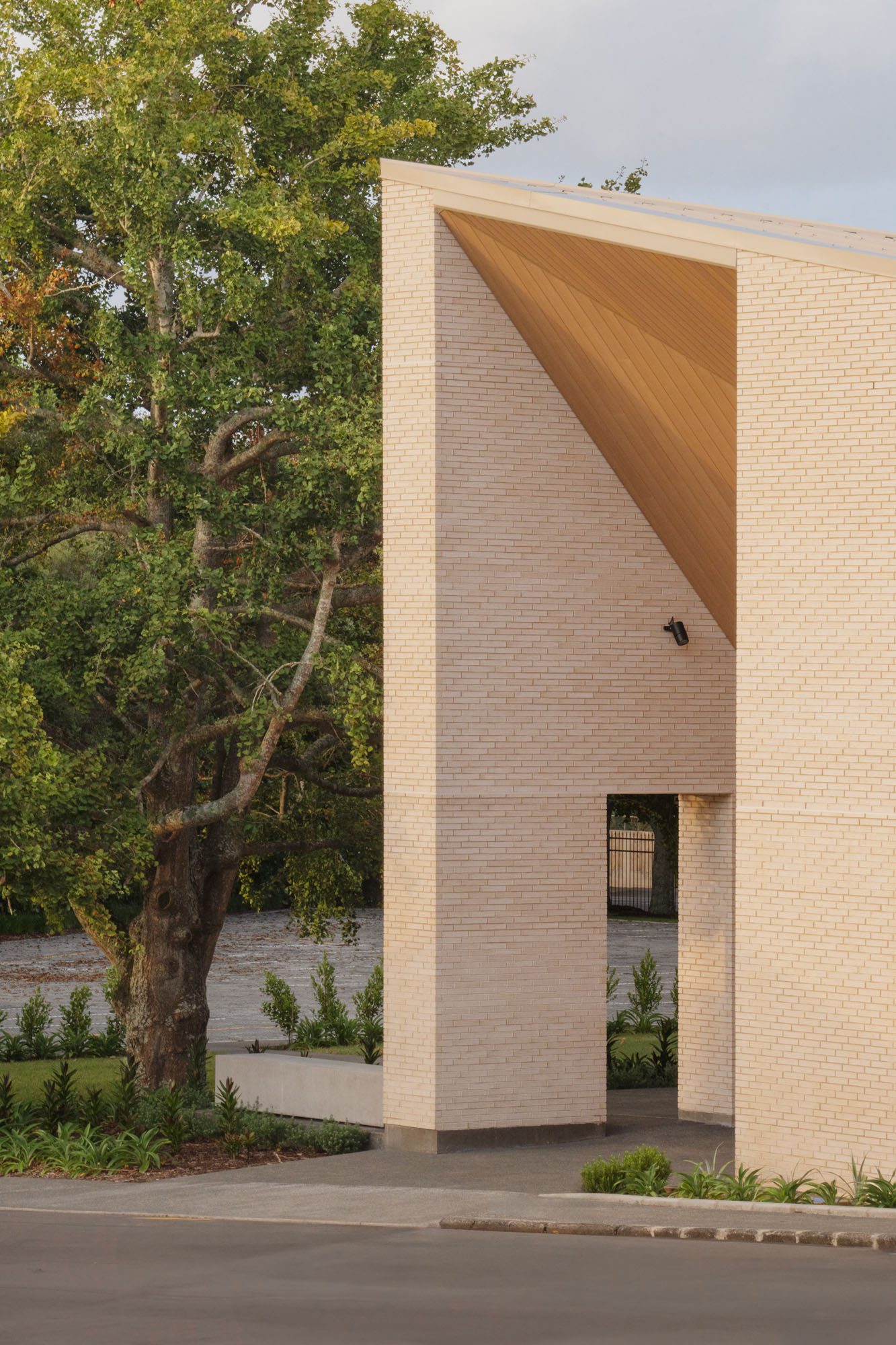
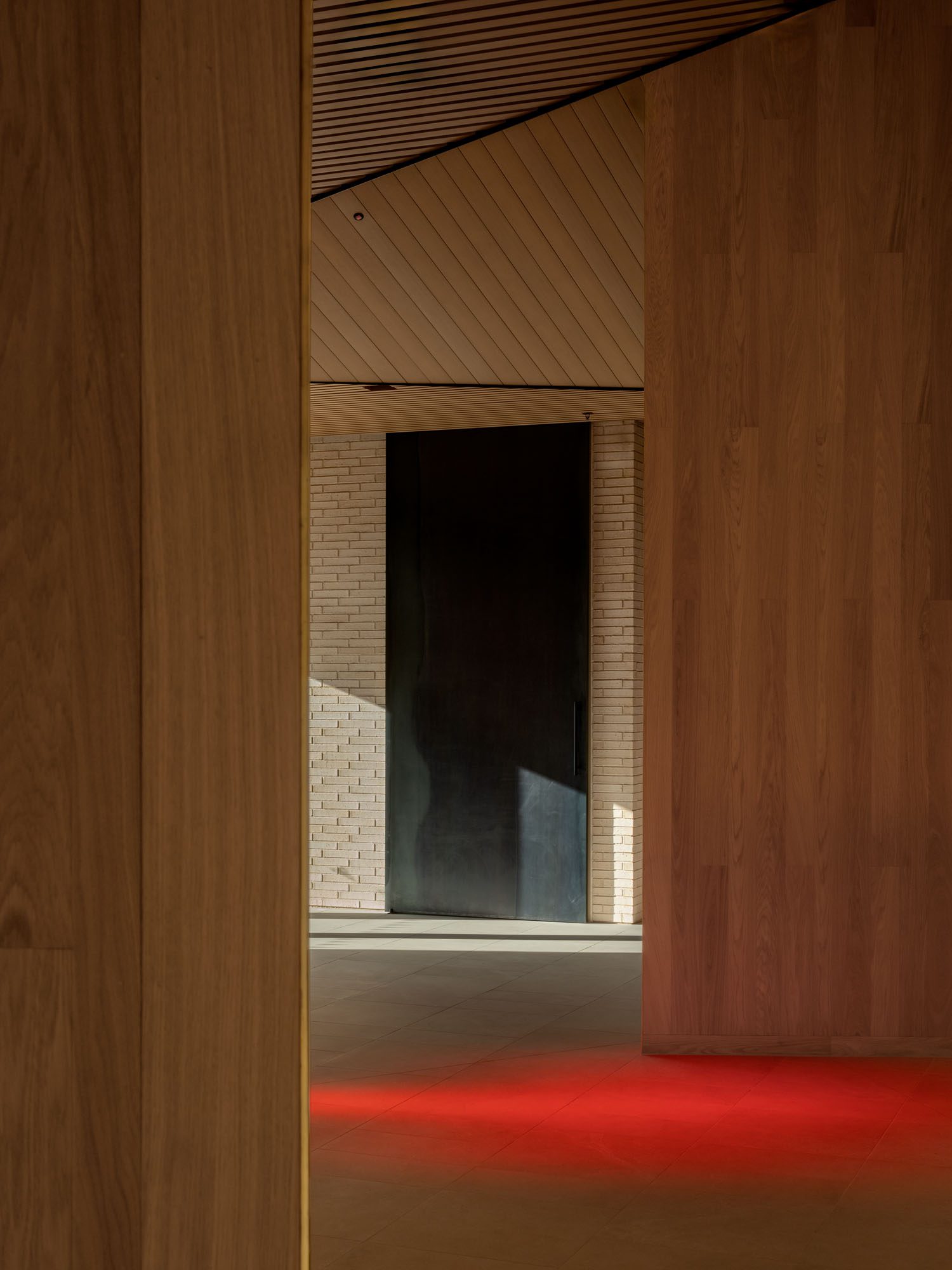
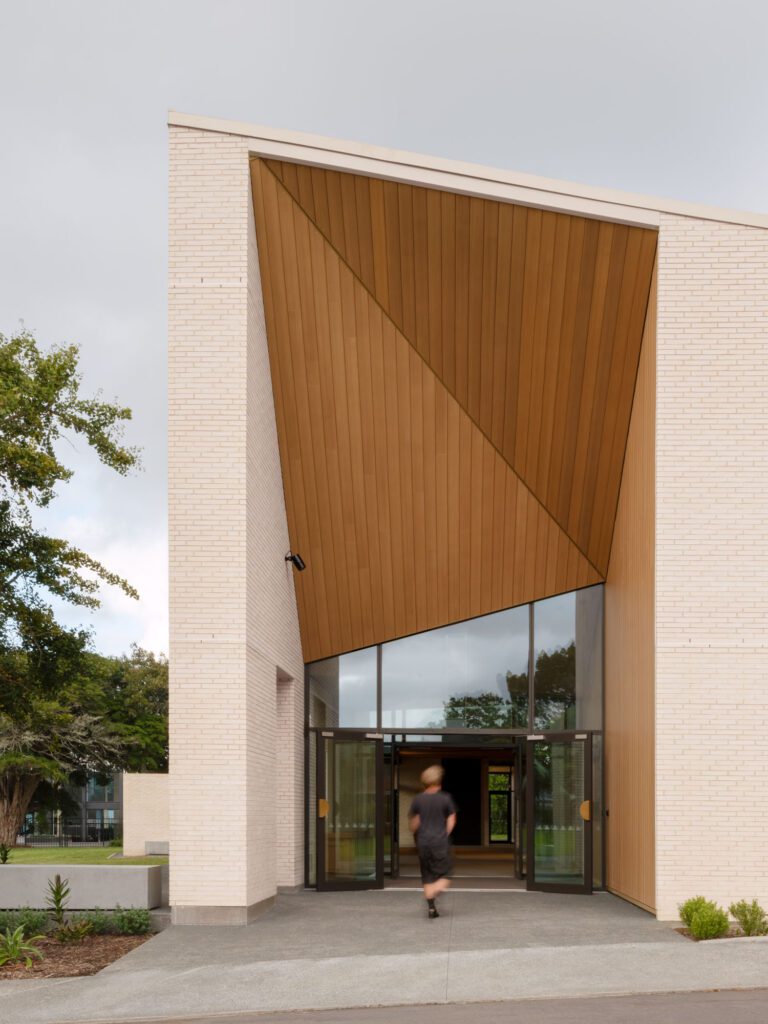
The main entry is 'carved' into the brick elevation, its soffit echoing the angular, folded ceiling of the interior.
Brick cladding signals the main elevation and entry to St Patrick's Chapel.

“The space is designed for un-miked oratory, and it’s a very beautiful space for speech and song,” reflects Reverend Greg Worboys. “From the pulpit, I can see every face, and the students are more engaged because they can see and hear me, too.”

Working closely with Reverend Worboys and headmaster Dan Reddiex, the architects assessed four potential sites and engaged with a wide stakeholder group from across the school, board, church, iwi, community, and alumni.

“Greg gave us a full understanding of liturgical movements, the flow and hierarchy of spaces, and provided feedback on every detail,” says Jun.

The Right Reverend Te Kītohi Pikaahu, Bishop of Te Tai Tokerau, guided the cultural context, and Ngāti Whātua Ōrākei provided support on process. Former students, current students, staff, and parents were all invited to share what faith, place, and people mean to them, in the context of the new building.

The overarching brief was for a new spiritual heart for the school, where the whole community could come together as one.

“We wanted to ensure it is experienced primarily as a chapel, despite it serving other school functions,” notes Reverend Worboys.

The school is selective in how it programmes the building, in order to preserve this character.

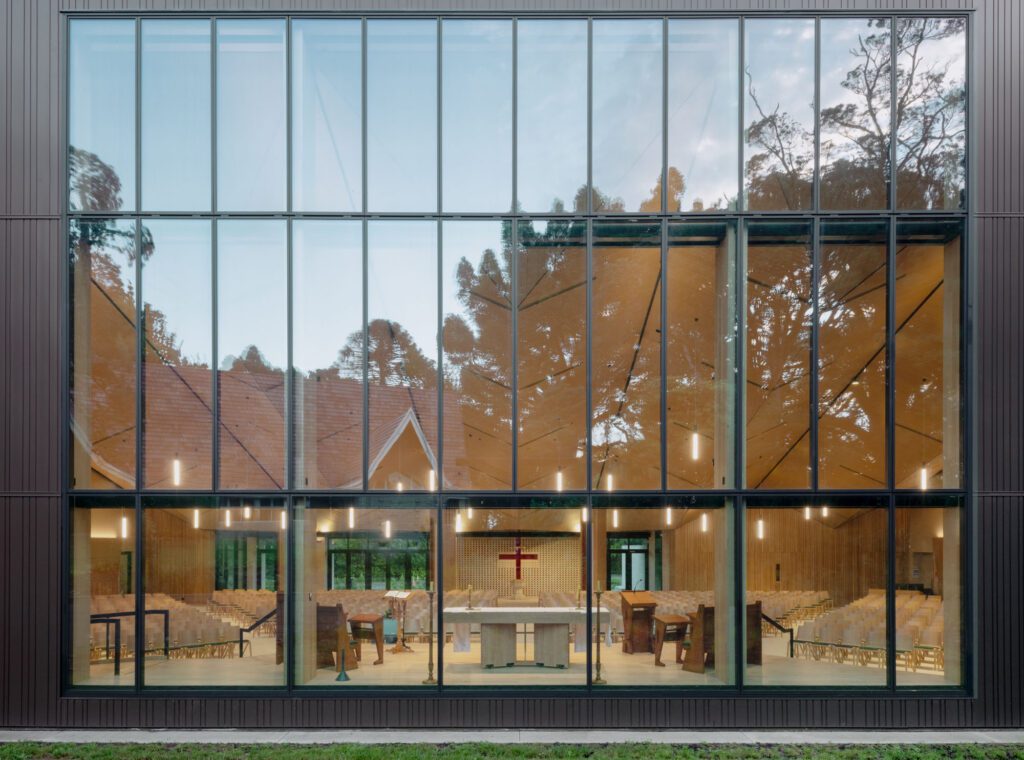
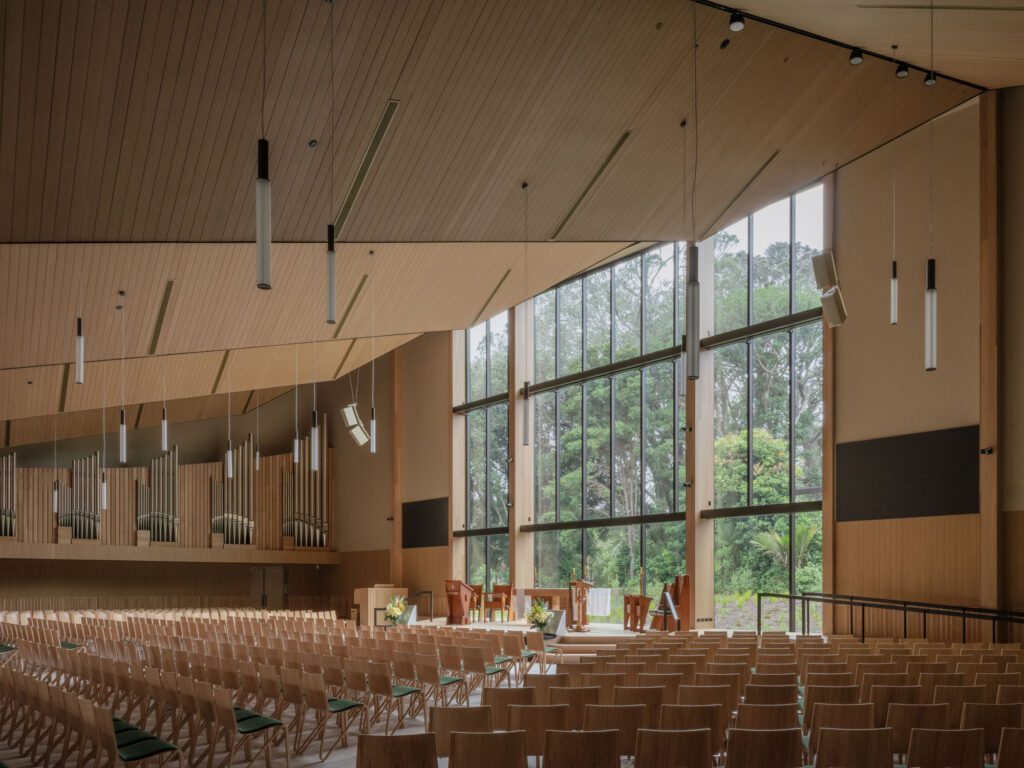
A view from outside into the chapel shows the relationship of the pulpit to the congregation beneath the soaring timber-lined ceiling.
Seen from the lawn of the old chapel, St Patrick's main chapel is wrapped in dark grey aluminium cladding that visually reduces its size.

The three tikanga of the Anglican church in the Pacific

The Anglican church within Aotearoa New Zealand and Polynesia is made up of three tikanga (customary practices): Māori, Pasifika, and Pākehā.

“It’s about cultures being not only self-governing but also able to worship God in their own language and their own cultural context,” explains Reverend Worboys. “You’ll see elements of that in the carvings, representing not only these three but also tikanga from many other cultures in our community.”

To represent this in the architecture, three large columns carry the main roof, forming a colonnade that separates the baptismal narthex from the chapel itself. They are adorned with three tōtara carvings by artist and old boy Jon Chapman-Smith, in collaboration with Aaron Troy and students.

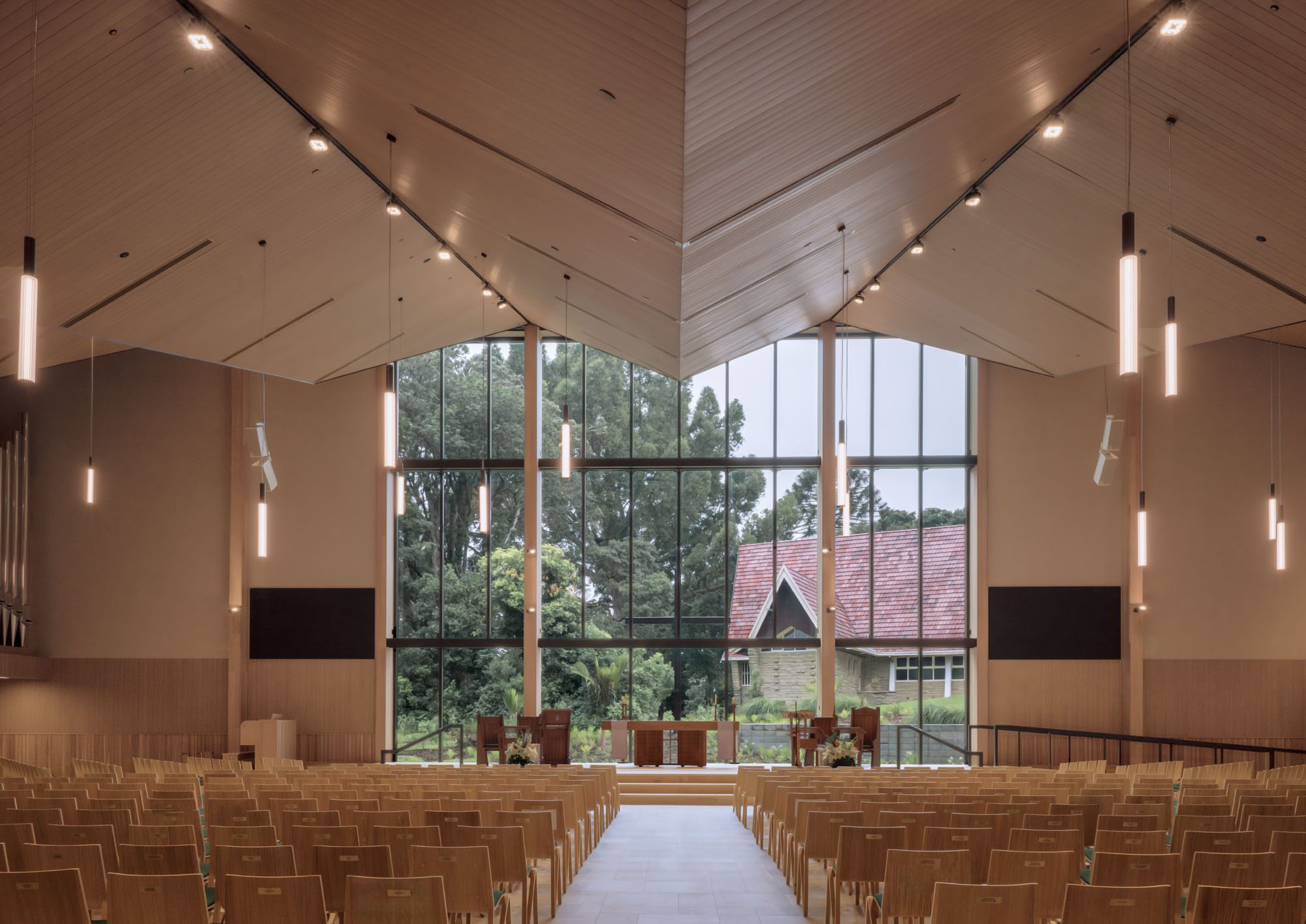
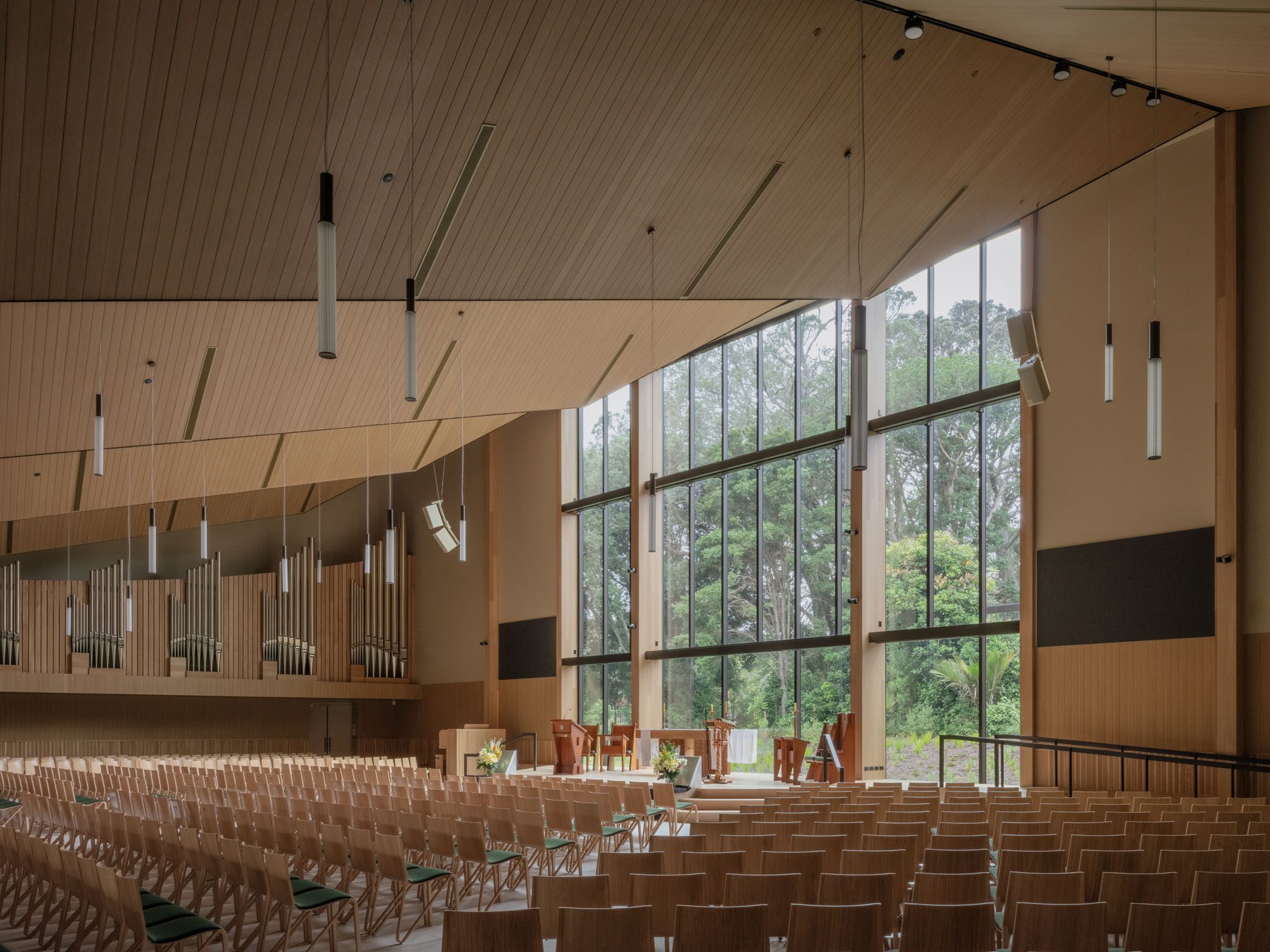
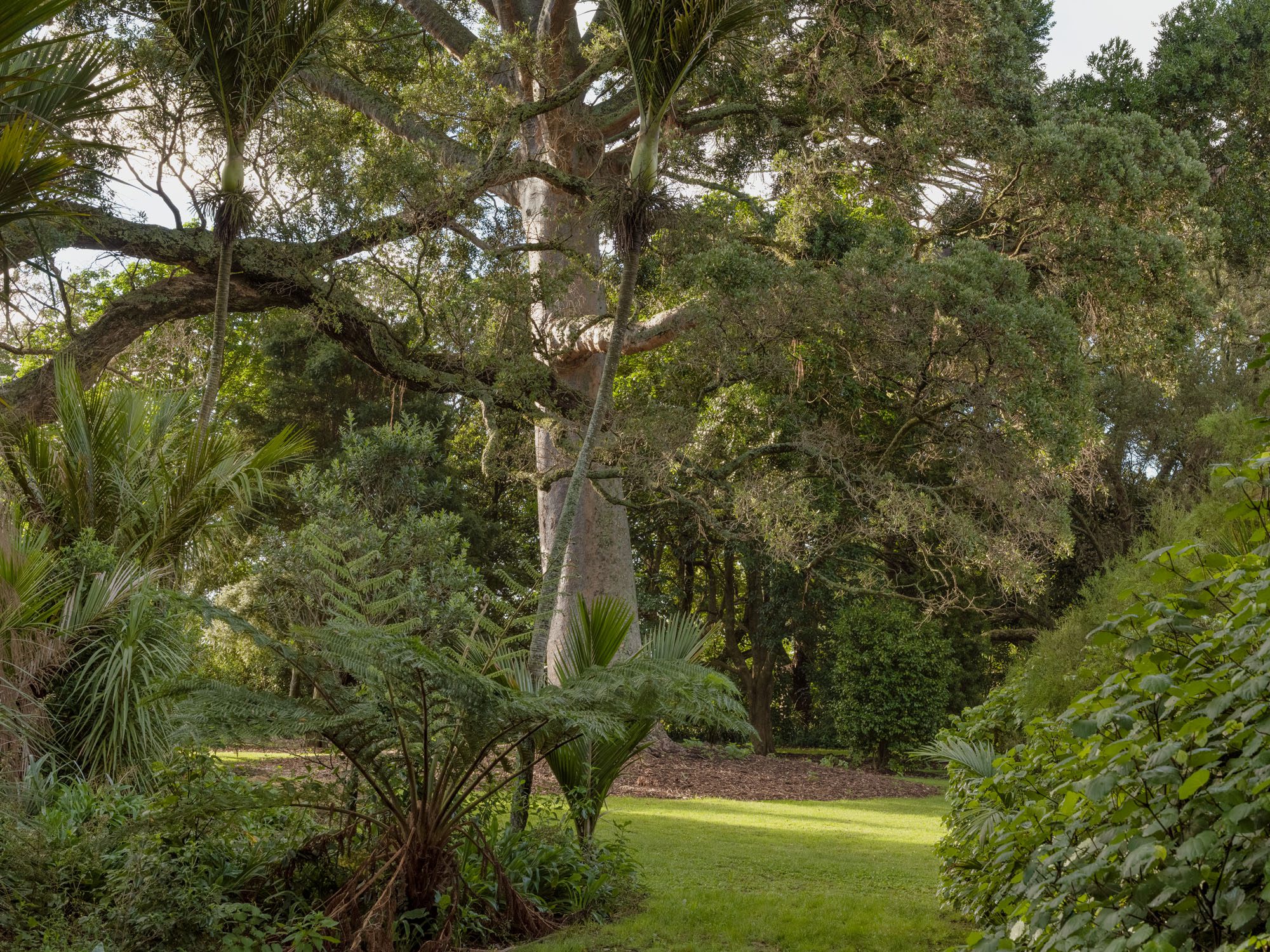
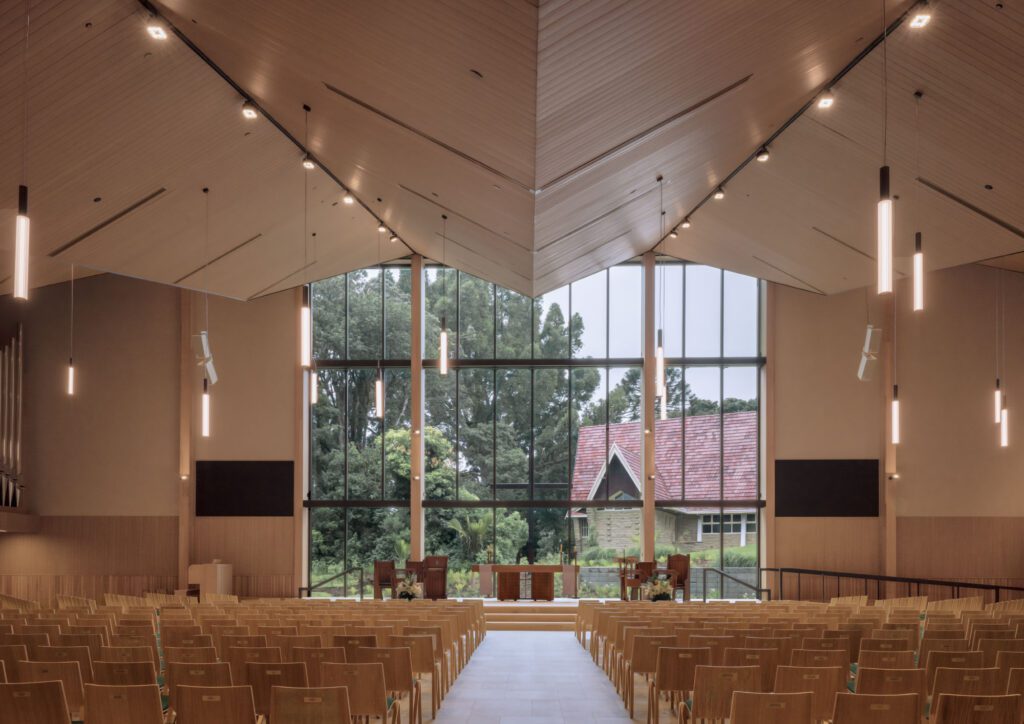
From the columns springs a soaring, triple-height space sculpted by a folding, timber-lined ceiling that draws the eye towards the sanctuary and, outside, the trees beyond. A large window behind the pulpit frames these century-old trees: a kauri and pōhutukawa grove where founders’ James and Isabella Dilworth’s farm entrance once stood. A view of the 1950s chapel links past with present, making the new space physically connected with the school’s history.

“When you walk into the building, we want it to lift your spirit, to lift your heart,” explains Reverend Worboys. “The chapel space deliberately lifts your eyes to draw you out into nature. While this is a spiritual home for us, it’s not the only place that God exists. Students are invited to see that God is out in creation, that he is out in the world.”

The 1950s chapel can be seen from inside St Patrick's, linking old with new. Based on the location and age of the trees, it's likely some were planted by founders James and Isabella Dilworth.
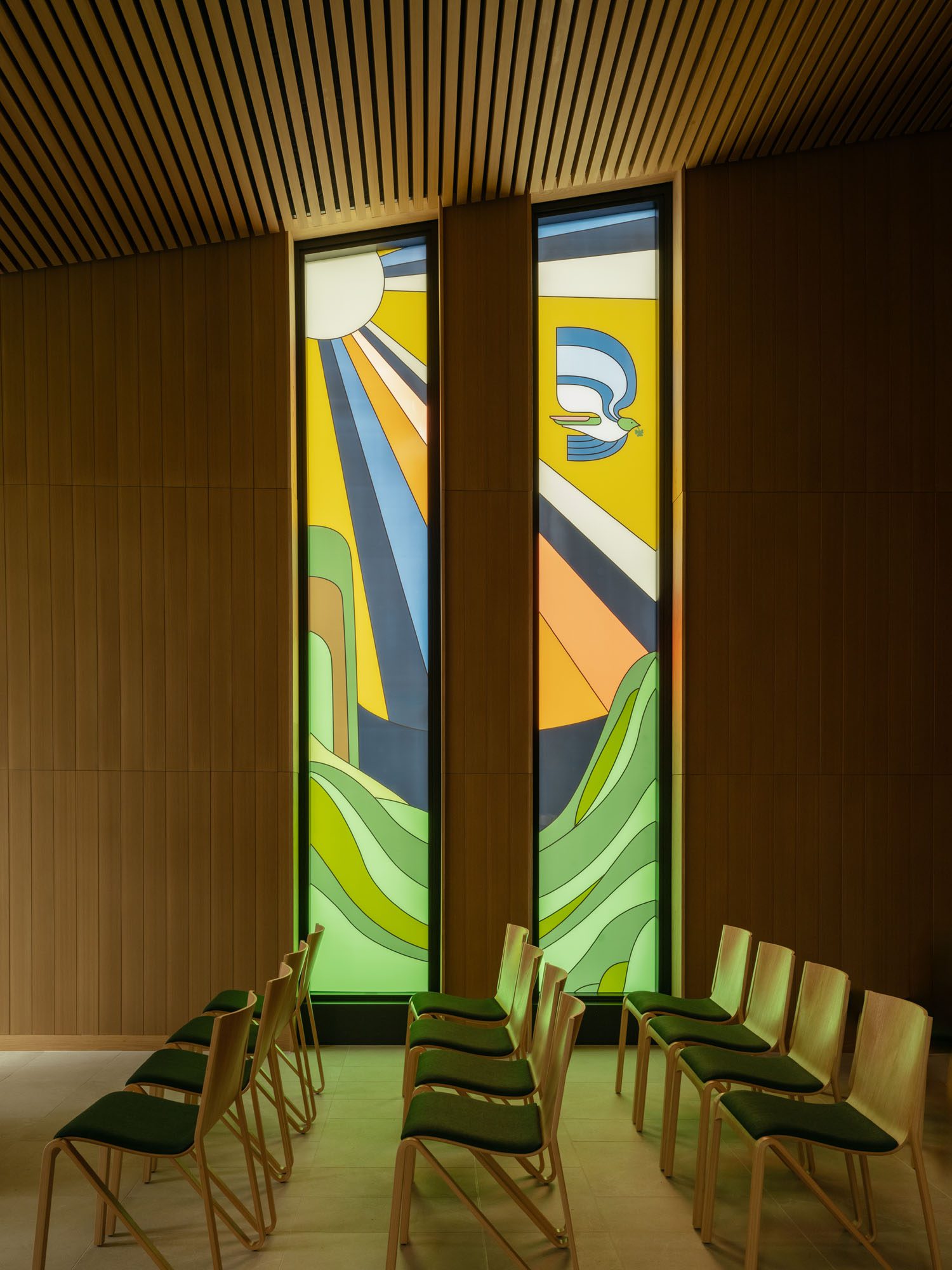
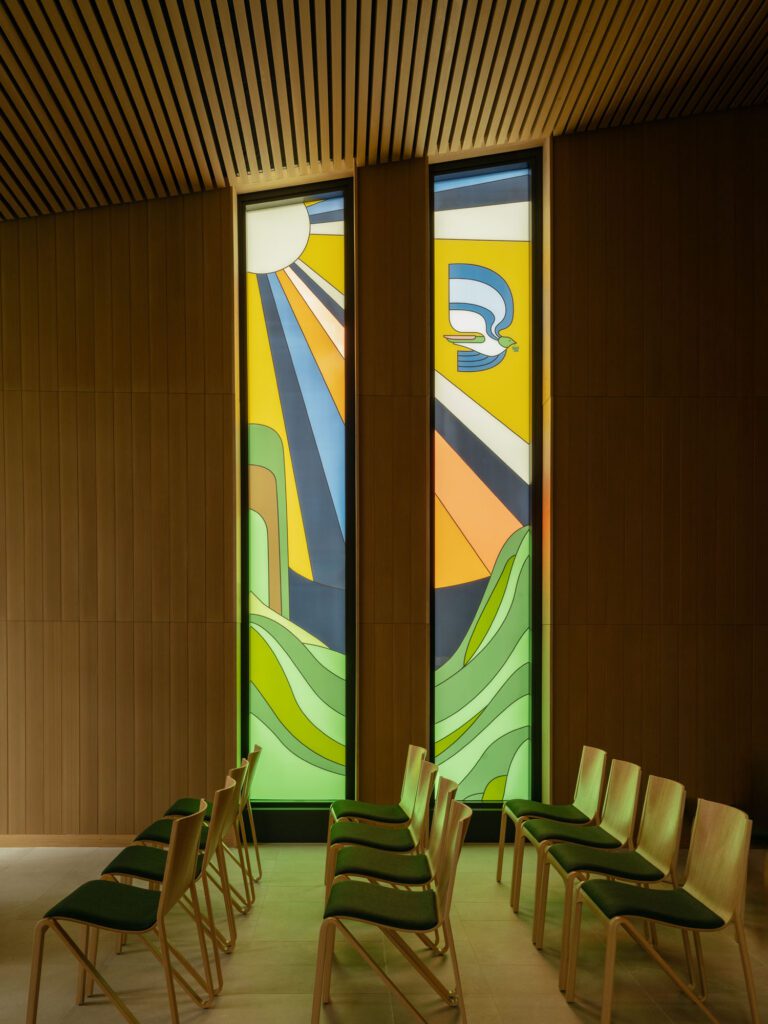
The stained glass windows in the small chapel were designed by old boy Jon Chapman-Smith with students, representing elements of the school's spiritual, historical, and cultural story.

Acoustics that elevate student engagement

Dilworth’s choral programme has always been an incredible strength, and the interior accentuates this.

“They are seriously beautiful singers,” notes Jasmax project architect Jeremy Bennett. “Over the last few years, we’ve invited senior students interested in architecture to the Jasmax studio to follow the design process. Before they leave, they thank us with a song, and the sound is enormous.

“We couldn’t wait to hear the whole choir sing once the chapel was completed. Sound tests before the consecration confirmed our experience: the boys were outsinging the organ, and the speakers had to be turned up.”

The spatial and acoustic strategies are inseparable, tuned to carry everything from a full choir and congregation with the organ, to the intimacy of a string quartet, to amplified live bands. This level of sound quality was guided by acoustic engineers Marshall Day from the very start of the design process. The folded, triangulated ceiling profile not only defines a strong architectural character — recalling the energy of the school’s 1950s buildings — it also scatters sound evenly across the room, so that every seat hears speech and music with clarity and warmth.

“The ability for the boys to hear themselves at their best in the new chapel certainly elevates their engagement,” says Dan. “This year, we have about a fifth of the school population looking to be in the choral programme. The building accentuates and improves the sound, and it lets the students and the audience hear the calibre of talent.”

Student engagement also defined the wide, shallow plan, in which seating wraps around the pulpit, “so everyone would feel close and connected and feel part of what is taking place,” says Reverend Worboys. “We can now host a whole-school Sunday night chapel service, with a good number of parents attending alongside their young men. It brings a really strong community feeling before their boys head off into school each week.”

Drawing on the geometries and materials of the older Dilworth campus, St Patrick’s is built for a school that looks different now: larger, more diverse, and more connected and open to the community around it.

Red light from the stained glass cross washes across the floor of the baptismal narthex.
A heritage grove of trees is the backdrop for services; the folded, triangular ceiling lifting the gaze up and out into the world. The new organ was made in the Netherlands, with the pipework from Slovenia.

The heart of the tōtara

Three carved tōtara panels, created by old boy Jon Chapman-Smith and Aaron Troy, adorn the central pillars of the new St Patrick’s Chapel, marking its completion.

The panels tell Dilworth’s story through layered symbolism. St Patrick’s Cross anchors the central design, linking Ireland and New Zealand, surrounded by 12 buds honouring the school’s first students in 1906. A Trinity Knot flows through all three panels, transitioning into harakeke weaving to represent a community bound by faith. The vertical compositions mirror the “Dilworth Hero’s Journey” — rising from the whenua towards the sky, tracing each student’s growth from “The Call’ to “The Flourishing”. The three tikanga — Māori, Pasifika, and European — are woven throughout, unified within an Anglican framework.

The designs were shaped by the wider community through student and staff workshops, surveys, and cultural guidance from Bishop Kito and old boy John Tipene. For Jon Chapman-Smith, the project was as personal as it was artistic — felt deeply as a former student returning to his roots.

The result is a lasting record of the school’s faith, heritage, and identity, designed to inspire pride in the students and connect past, present, and future.

Words Andrea Stevens
Photography Mark Scowen

St Patrick’s Chapel, Dilworth School

Architect / Interior architect Jasmax

Client Dilworth Trust Board

Main contractor Cassidy Construction

Quantity surveyor BBD

Structural / Seismic / Fire engineer Holmes Consulting

Services / HVAC engineer Cosgroves (now Stantec)

Facade engineer Meinhardt Group

Acoustic consultant Marshall Day Acoustics

Geotechnical engineer Soil & Rock Consultants

Landscape architect GreensceneNZ

Lighting designer Cosgroves; Energylight; Jasmax

Facade system APL

Roofing RoofLogic (Fibertherm; Ultratherm Xtreme)

Waterproofing Pro clima (Extasana Adhero)

Timber cladding Innowood (Innoclad, American Oak)

Brick cladding Canterbury Clay (Roman, custom)

Metal cladding Nu-Wall (E series, weathered copper)

Flooring Forté (Smartfloor in European Oak)

Paint Resene

Acoustic panels Autex

Ceiling Innowood (InnoCeil in American Oak)

Feature columns Forté (Muuro, Fawn)

Acoustic wall Canterbury Clay (Roman)

Seating Thonet (Nave, Ply Collection, Zesty)

Lighting Energylight (Erco, Parscan); Mark Herring Lighting (Nave Pendants, ELS Flute)

Tiling European Ceramics and Stone (ENZO Carbonstone, Sand)

Latest video features

In the Coromandel, a home with a humble profile and a thoughtful design makes the most of a stunning location.

Built with awe-inspiring attention to detail, this Arrowtown home is a fresh interpretation of a familiar Otago rural vernacular.

This sculptural Northland bach is a perfect north arrow on a remote farm high above the sea.

With the sun on its bow and the community at its stern, this is a house in which the elements are always front of mind.

Trending articles

Design News

Harp Kitchen by Poliform

At Milan Design Week, Poliform transformed the storied halls of Palazzo Clerici. The 18th-century residence, layered with history and texture, became the setting for the

Design News

L’Appartamento by Artemest with Obery

During Milan Design Week, Artemest’s New Zealand partner Obery Studio guided a group of designers through the brand’s L’Appartamento exhibition. We speak to Jane Mason

Design News

Resident Abroad

Celebrating its 15th year, Resident returns to Copenhagen’s 3daysof design, continuing a new chapter for the New Zealand studio within one of the global design