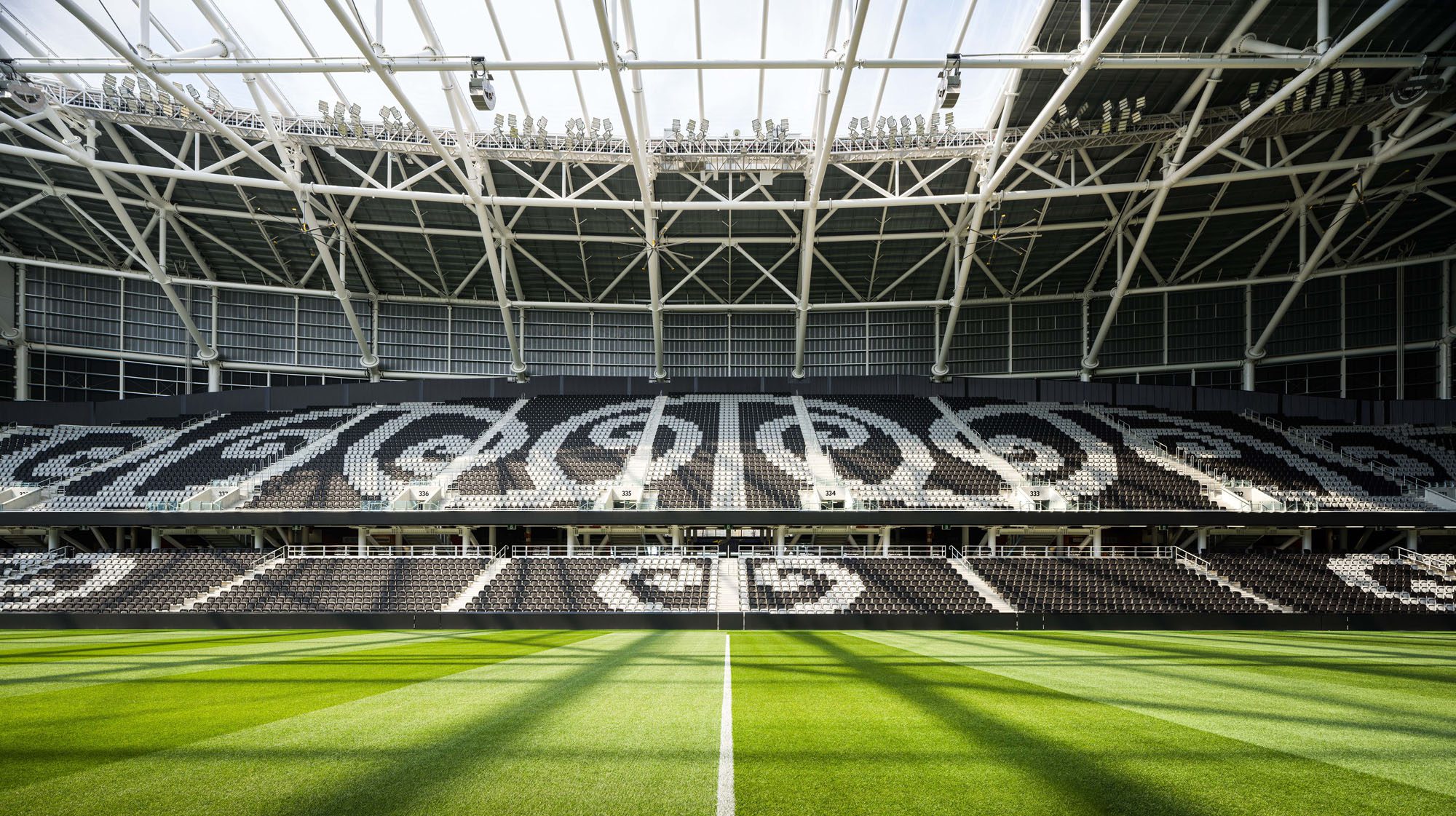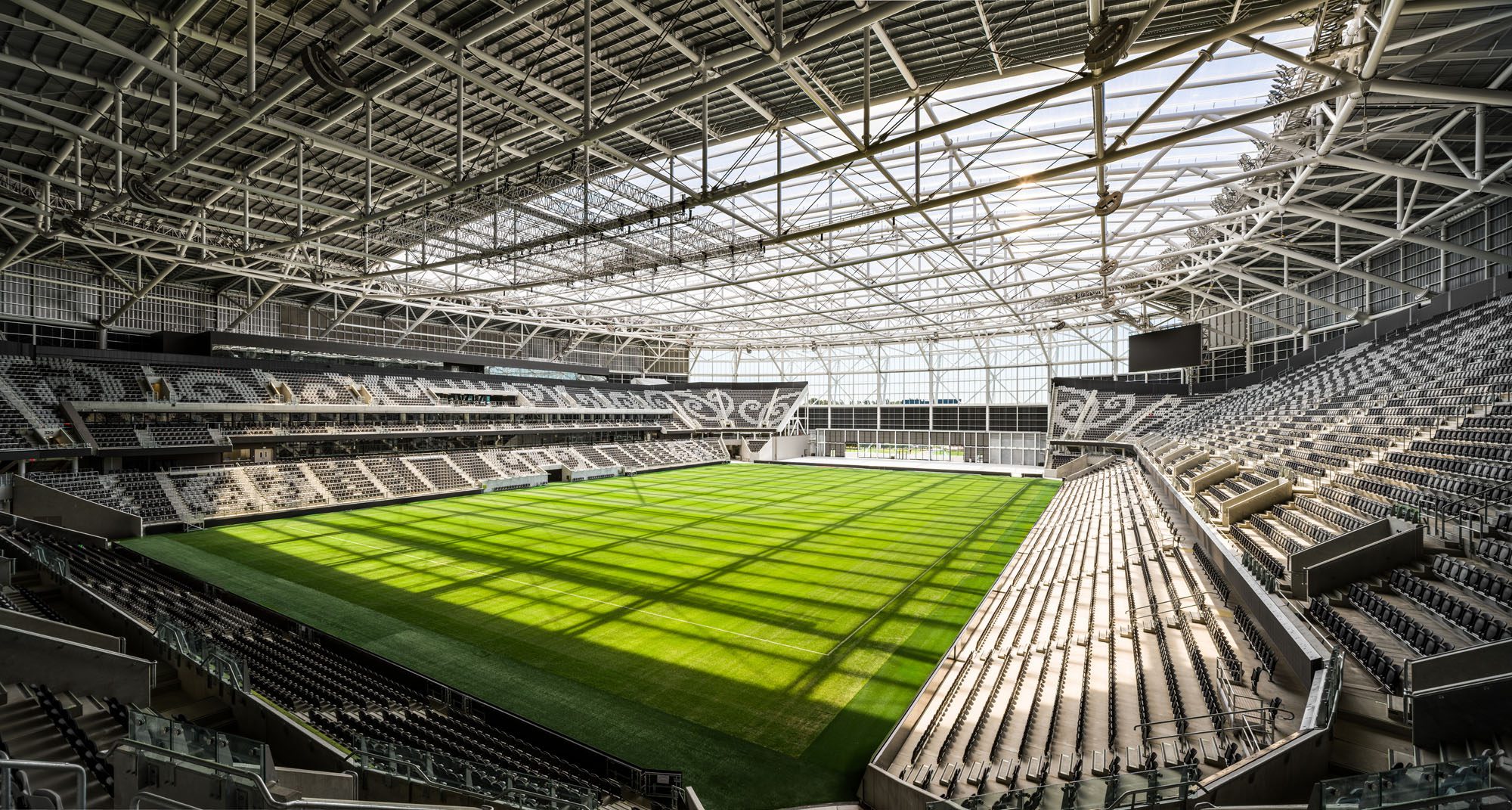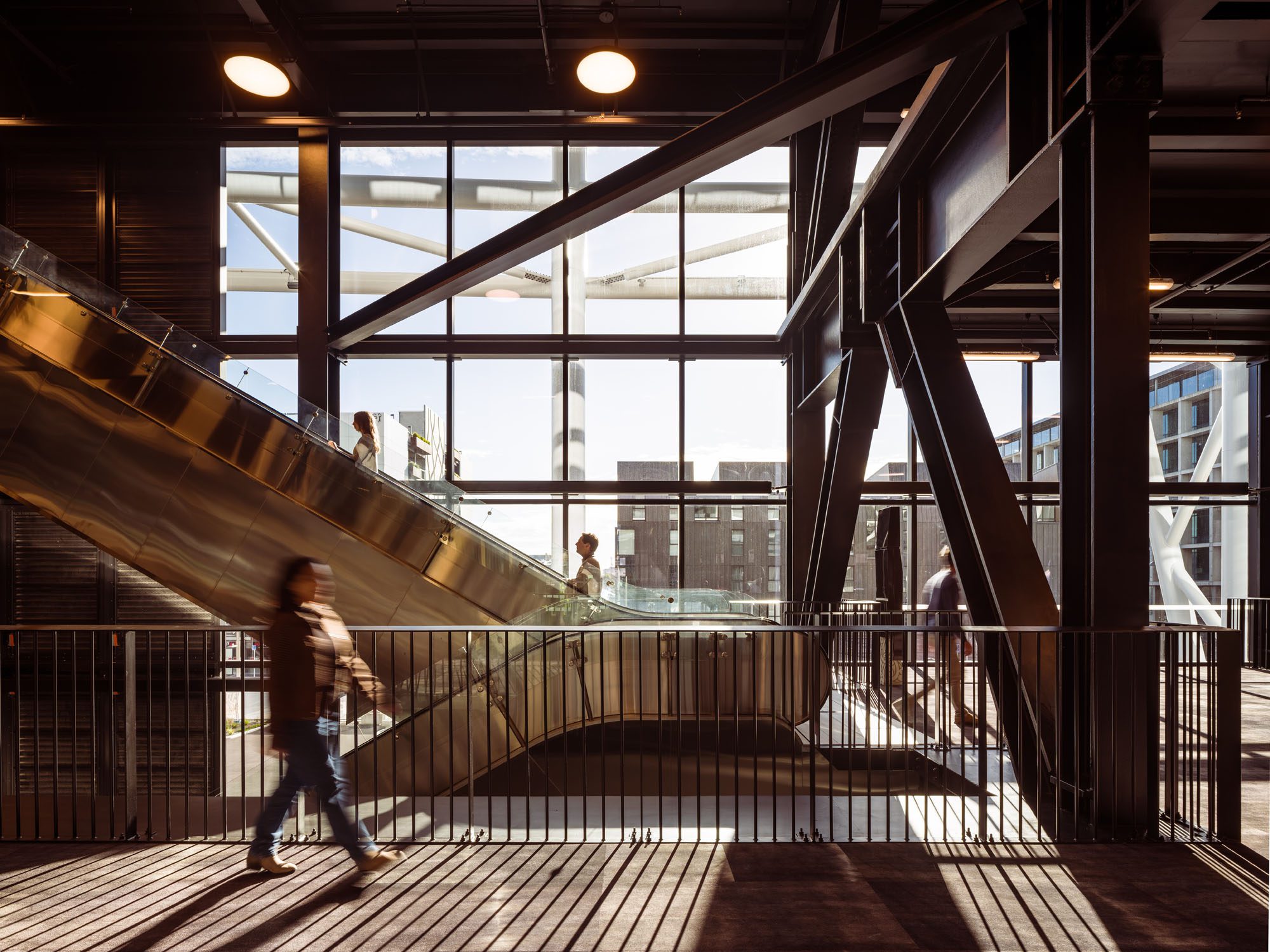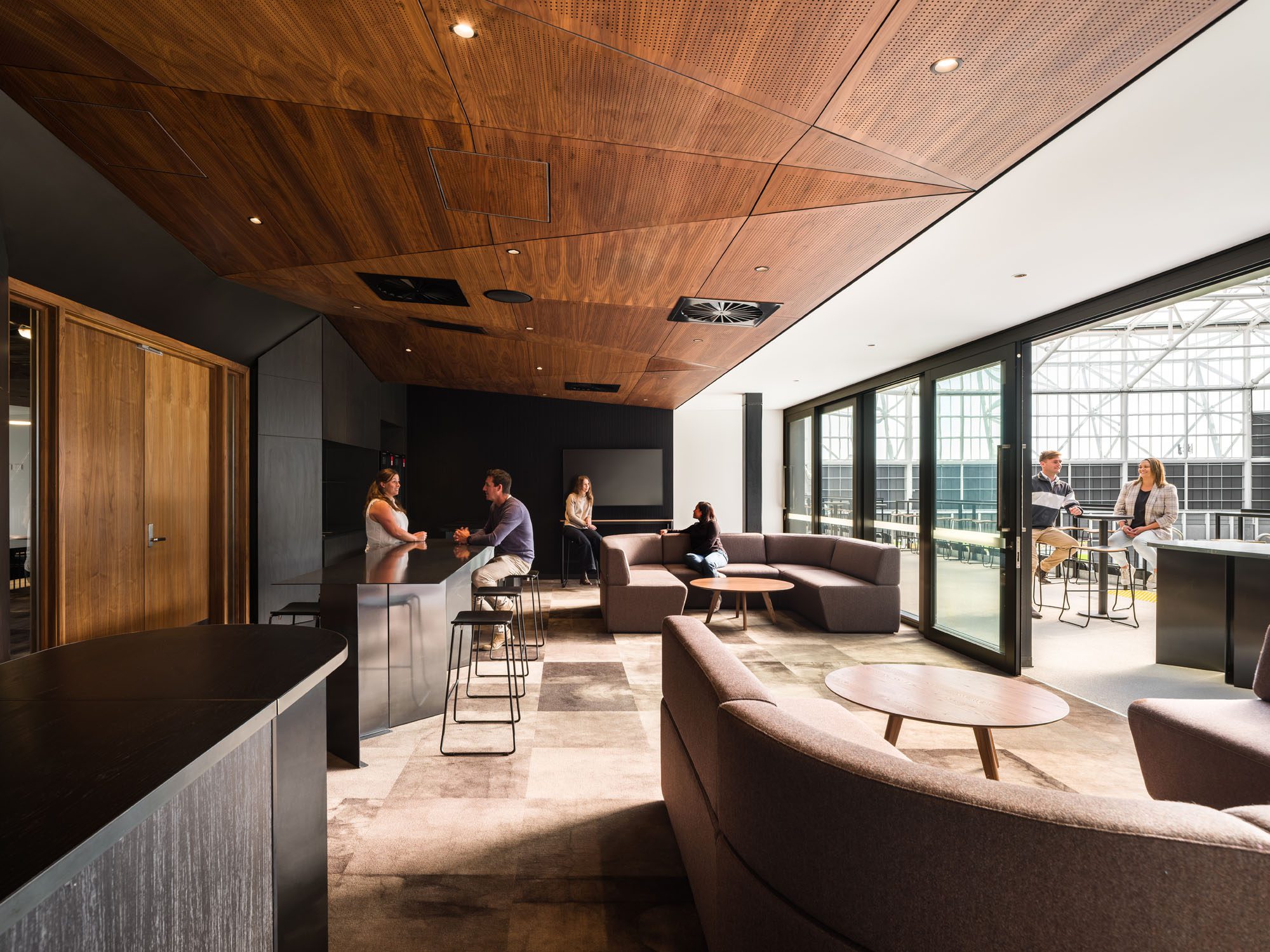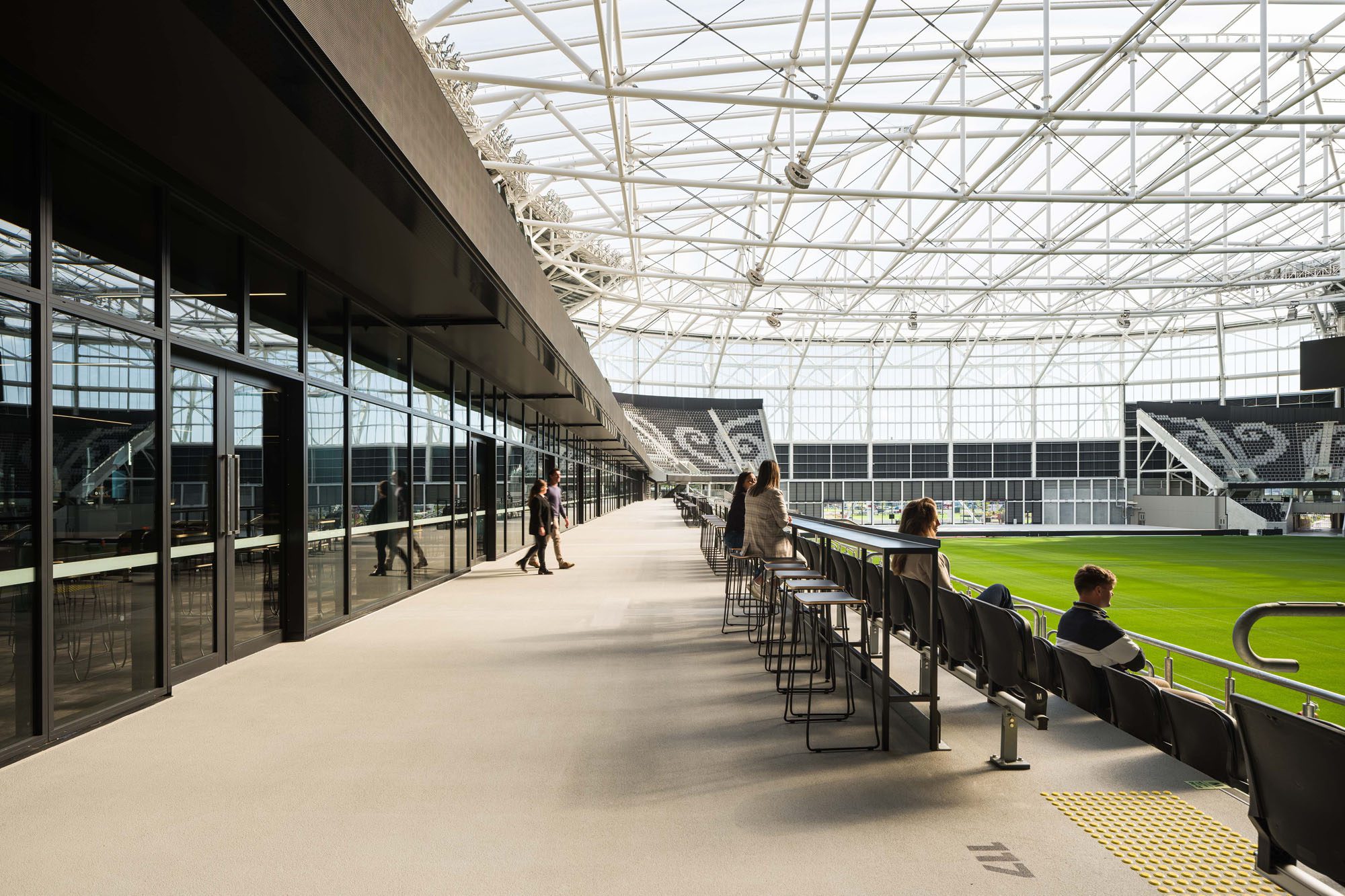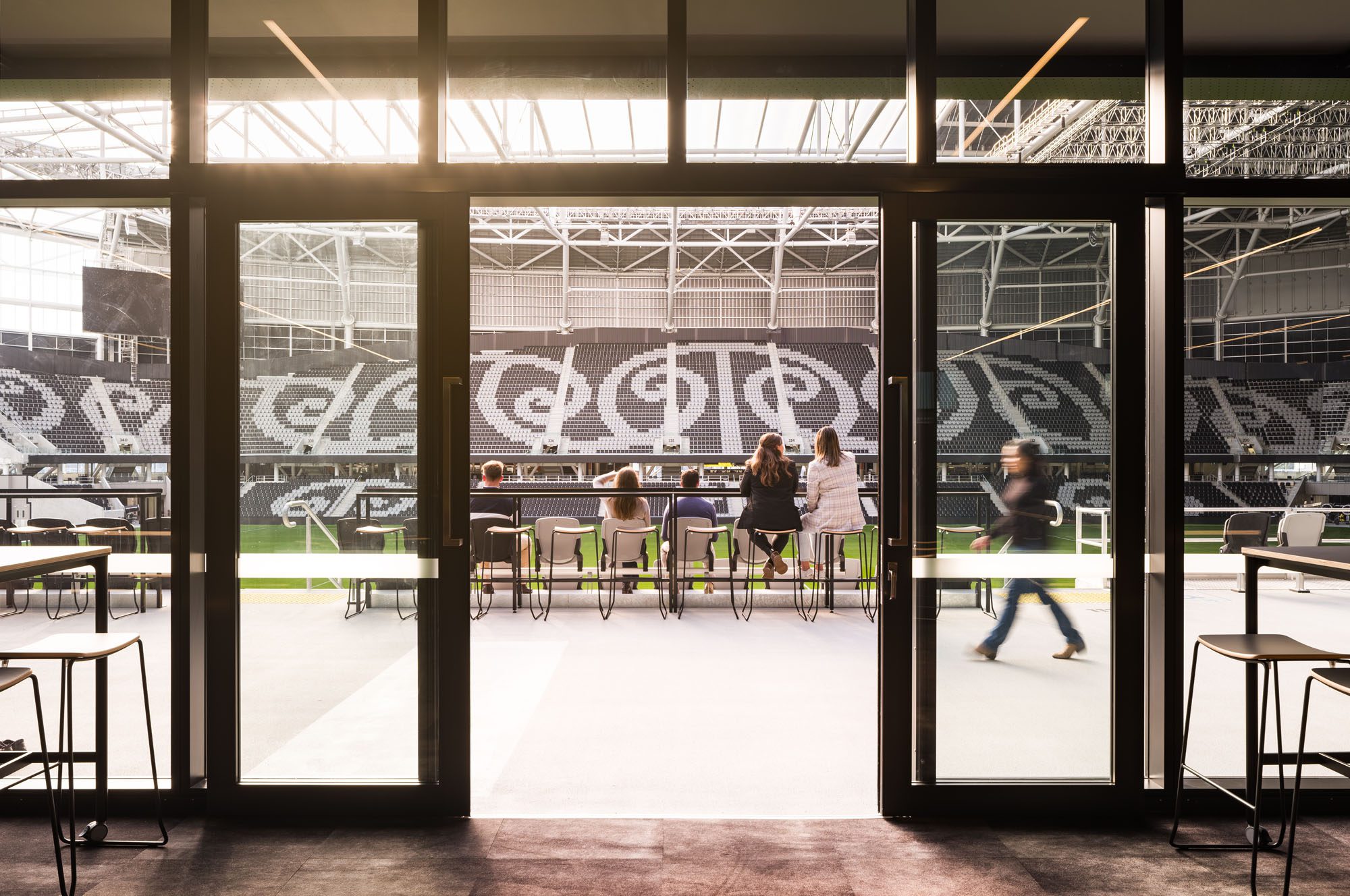


While we aren’t yet playing tiddlywinks out there in the middle of the field, much has changed in what and how we watch sport. Jeremy Smith toured the new One New Zealand Stadium, Te Kaha, by Populous and Warren and Mahoney to get a feel on the final anchor project of Ōtautahi’s rebuild.
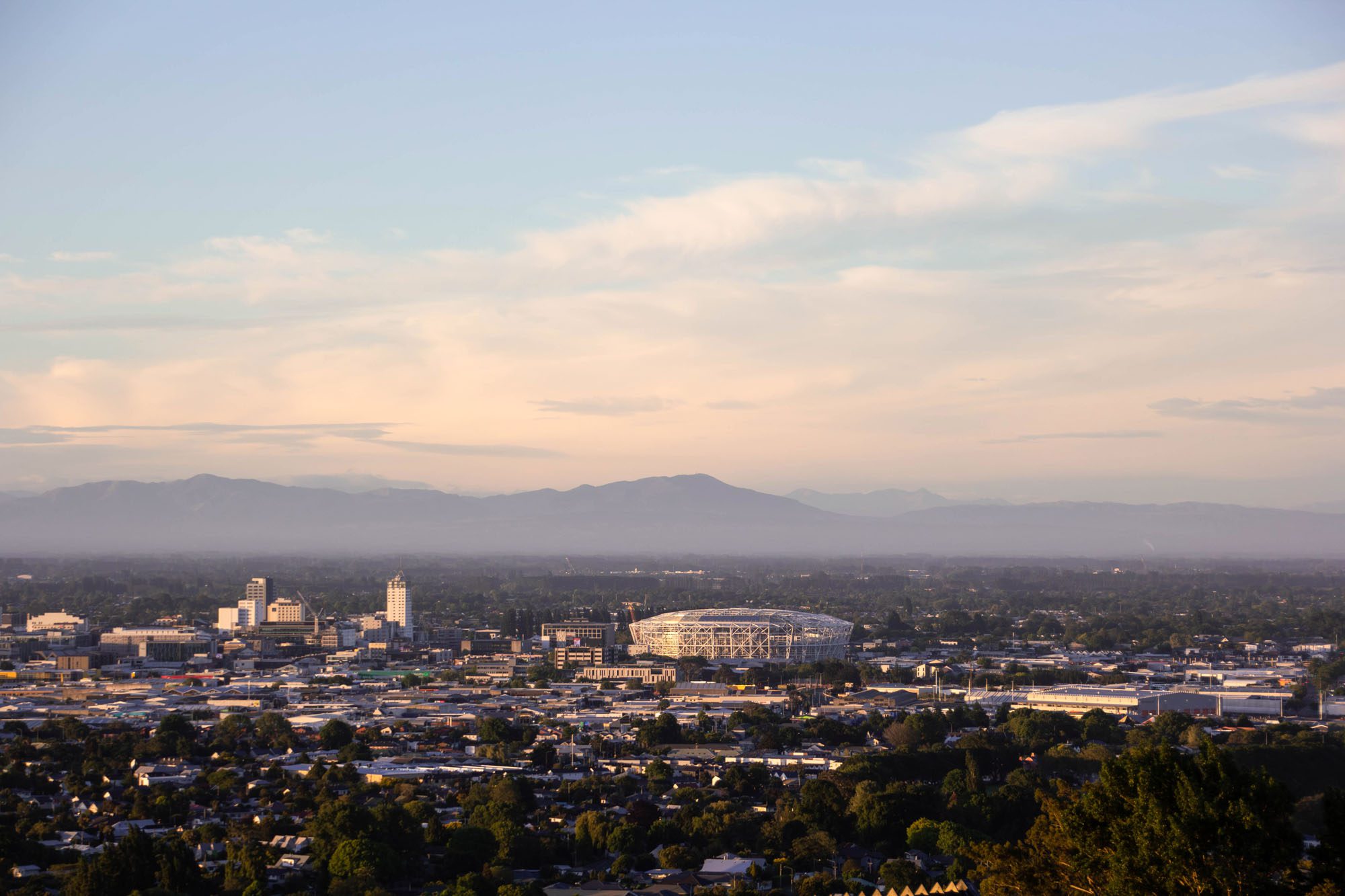
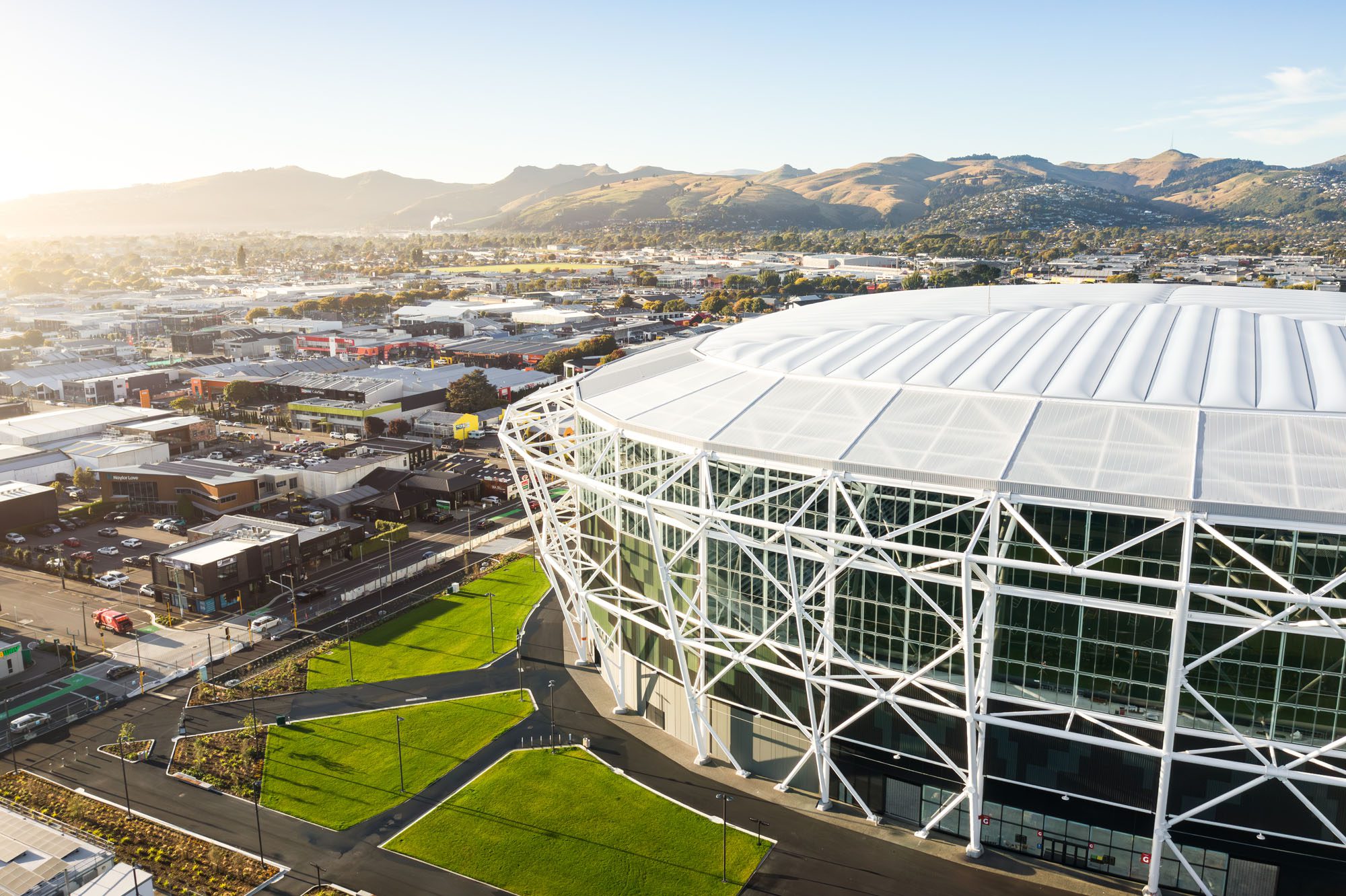
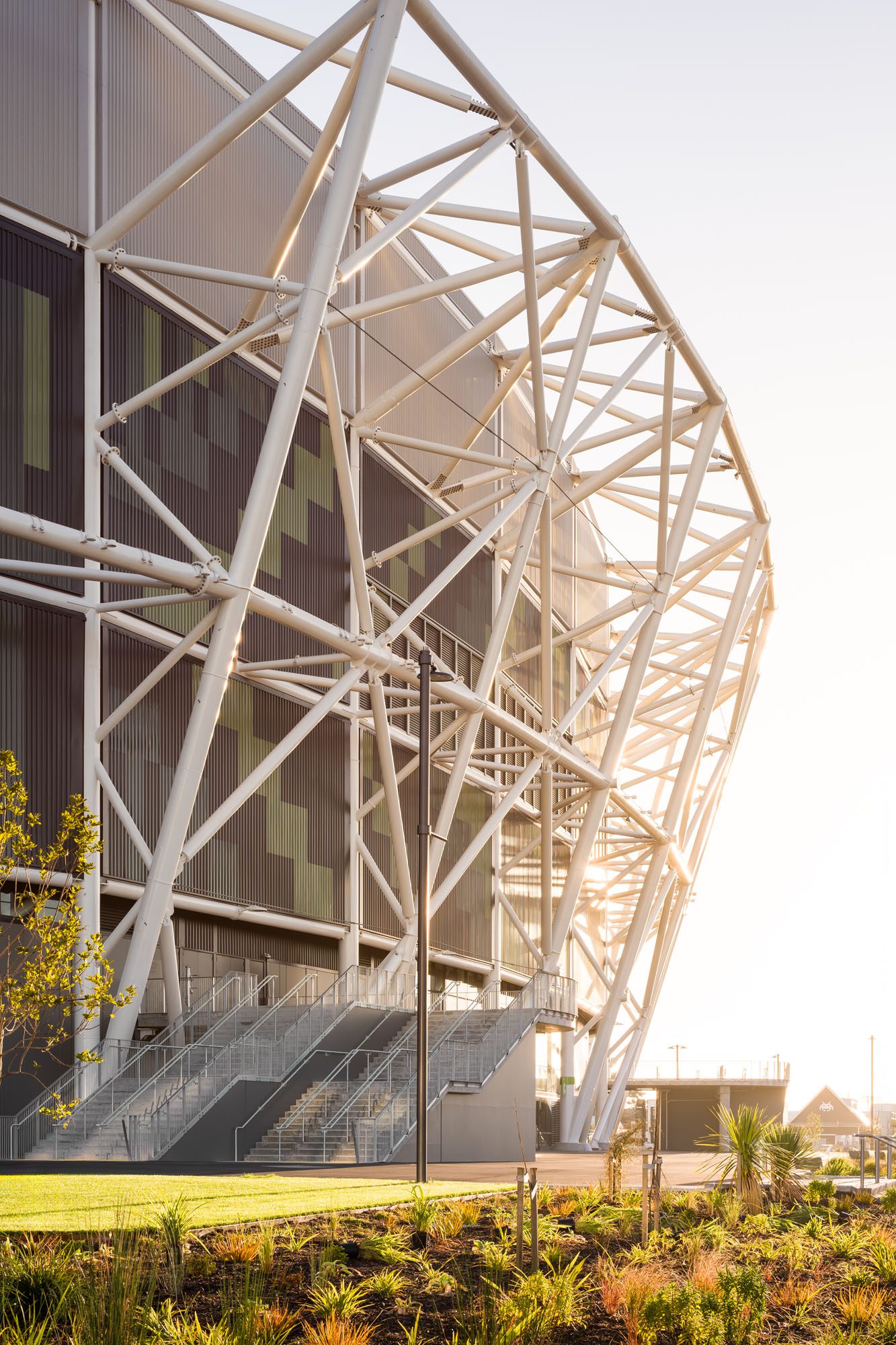
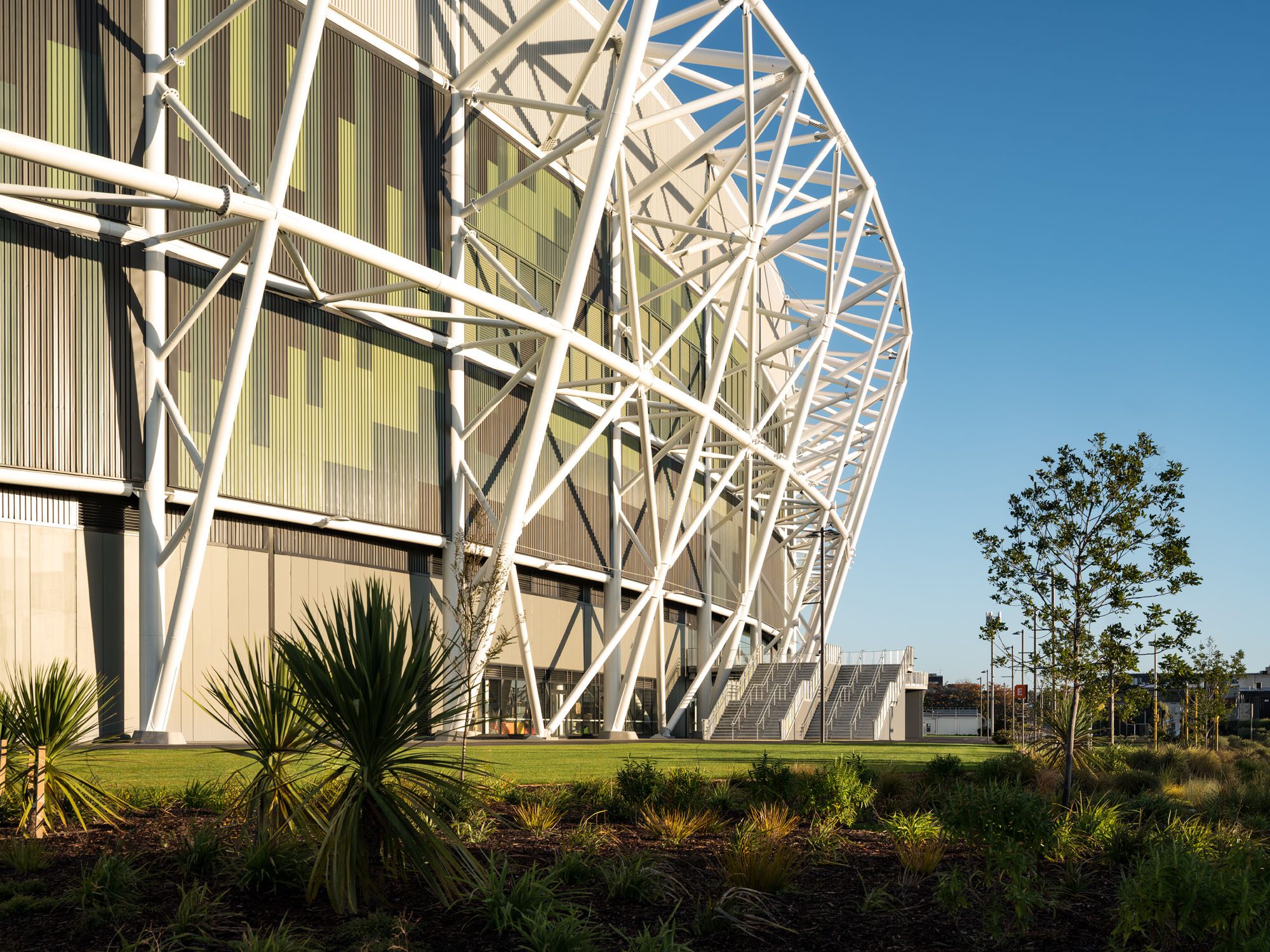
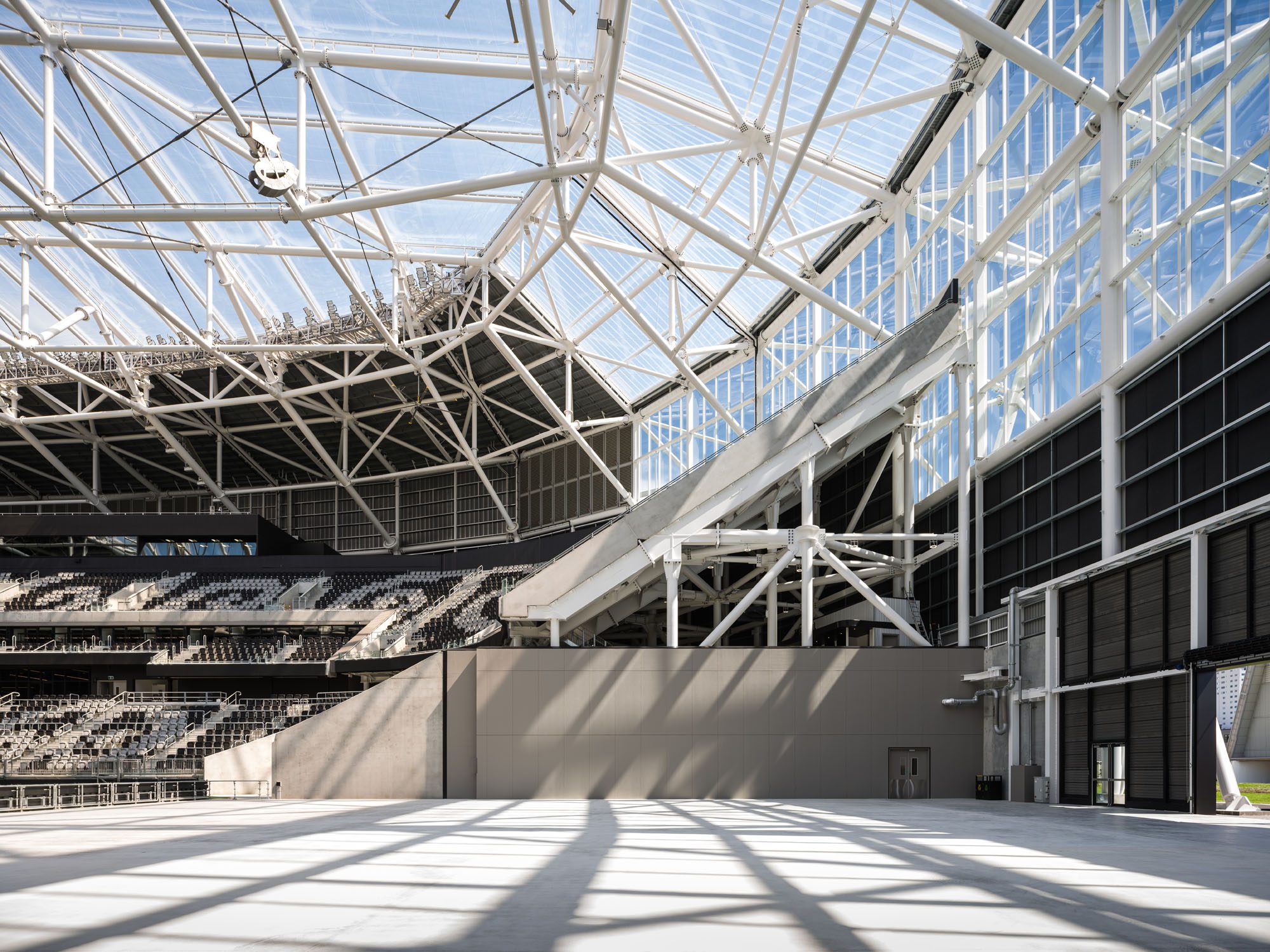
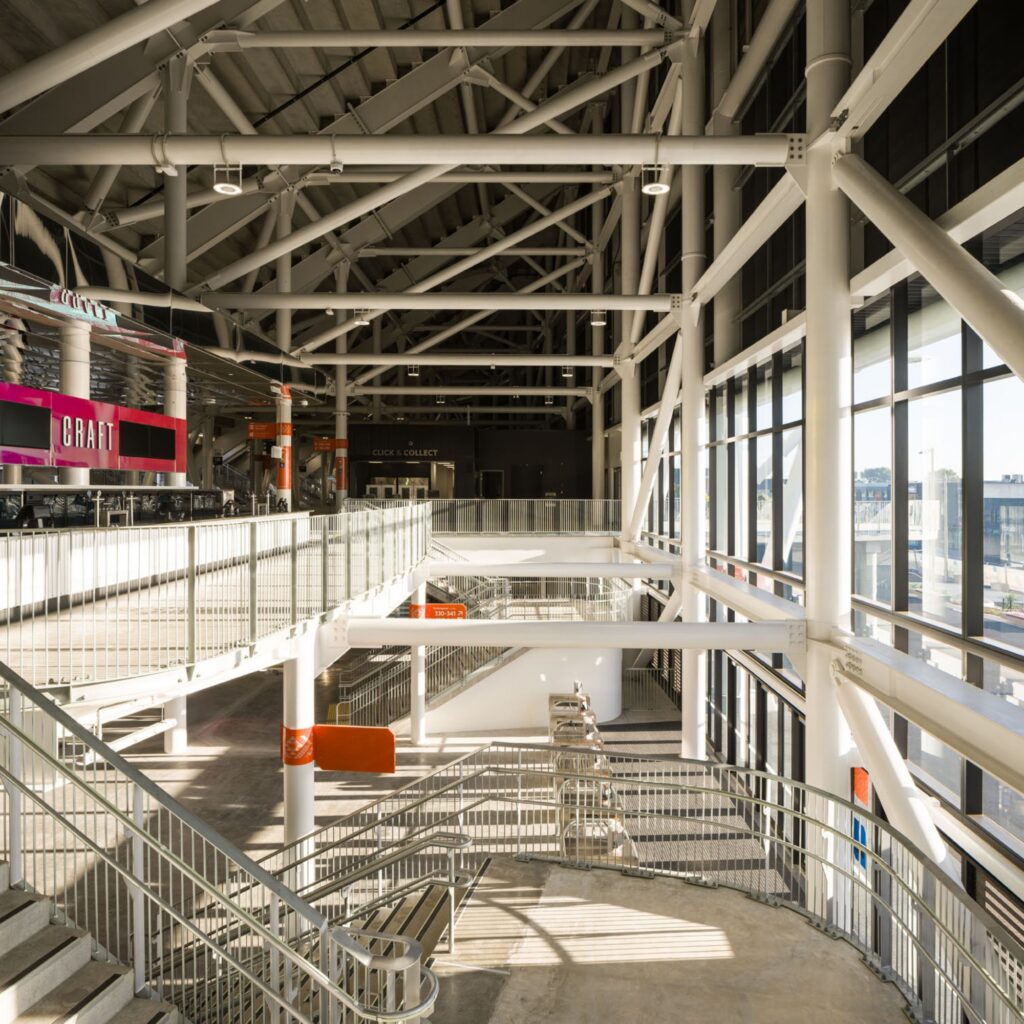
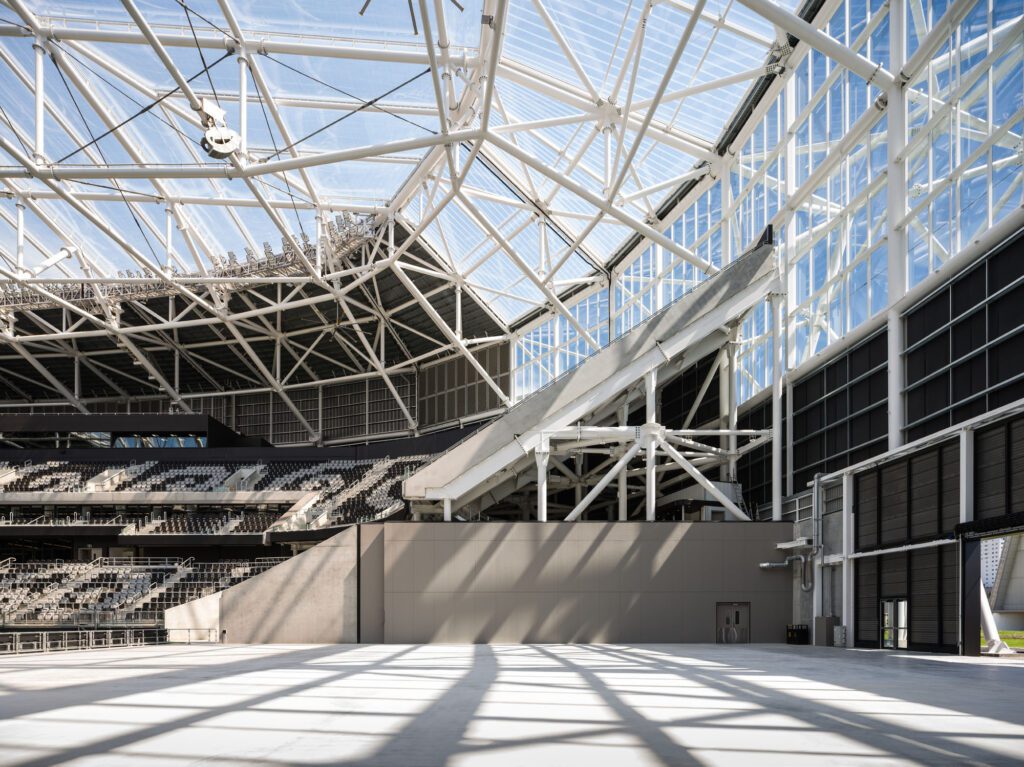
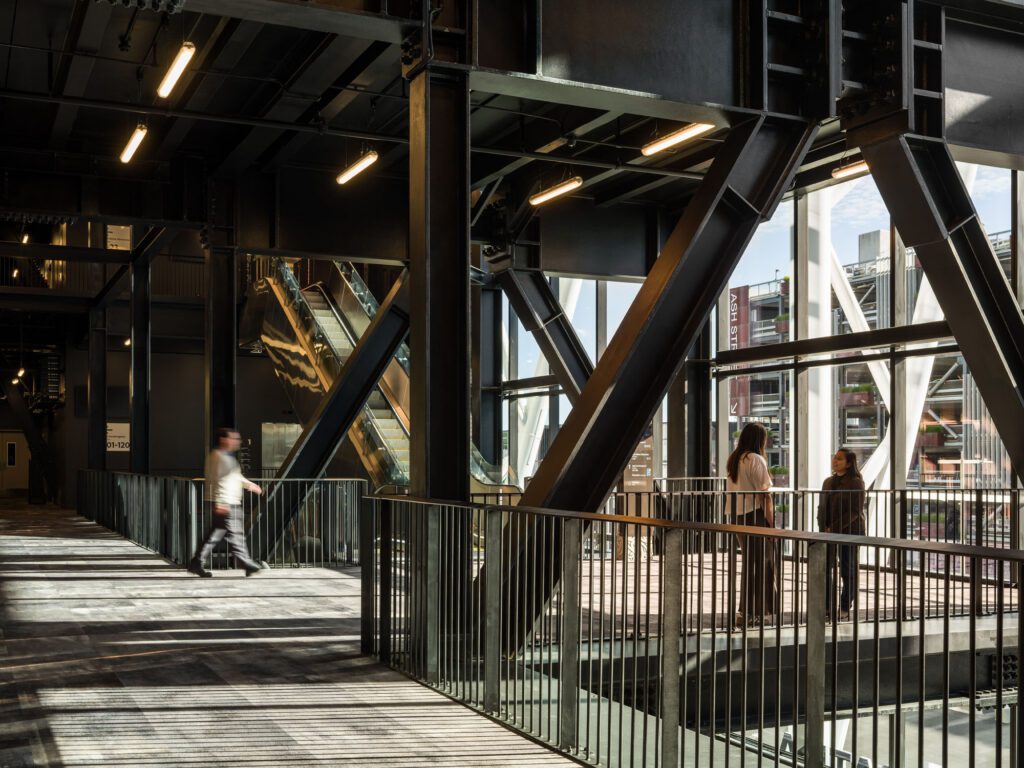
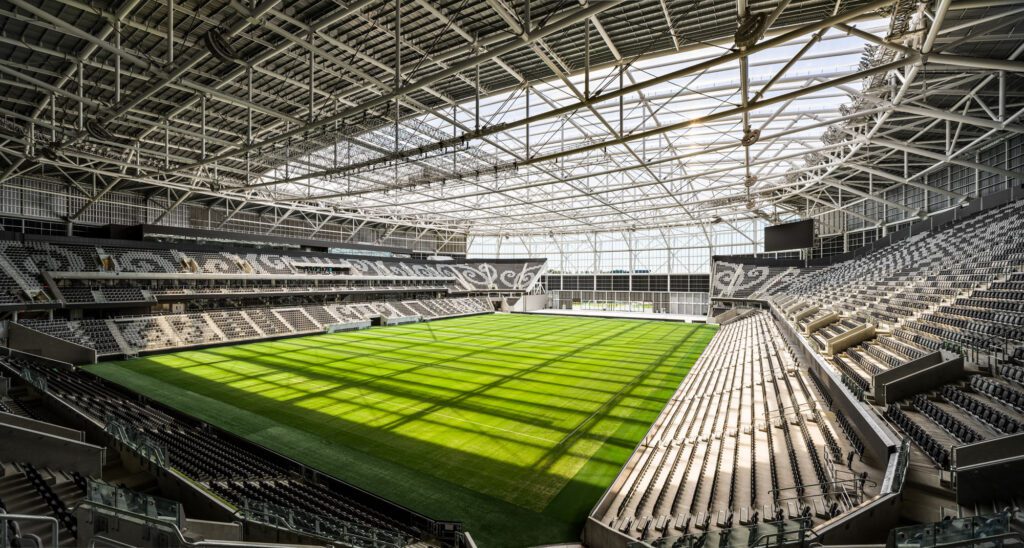
There’s no shortage of community atmosphere around the unwrapping of One New Zealand Stadium at Te Kaha. Our own internationalist architects, Warren and Mahoney, have packed down with Populous (who seem to design anywhere and everywhere involving seats) to deliver Ōtautahi’s largest event space. They’ve even put a bow on top: a roof! And, in case you’ve missed that the inside is indeed inside, they’ve run the roof trusses down the exterior to visibly oval the outside into a full city block. With a 100-metre stage in the middle, there’s theatre in the enormity of it all.
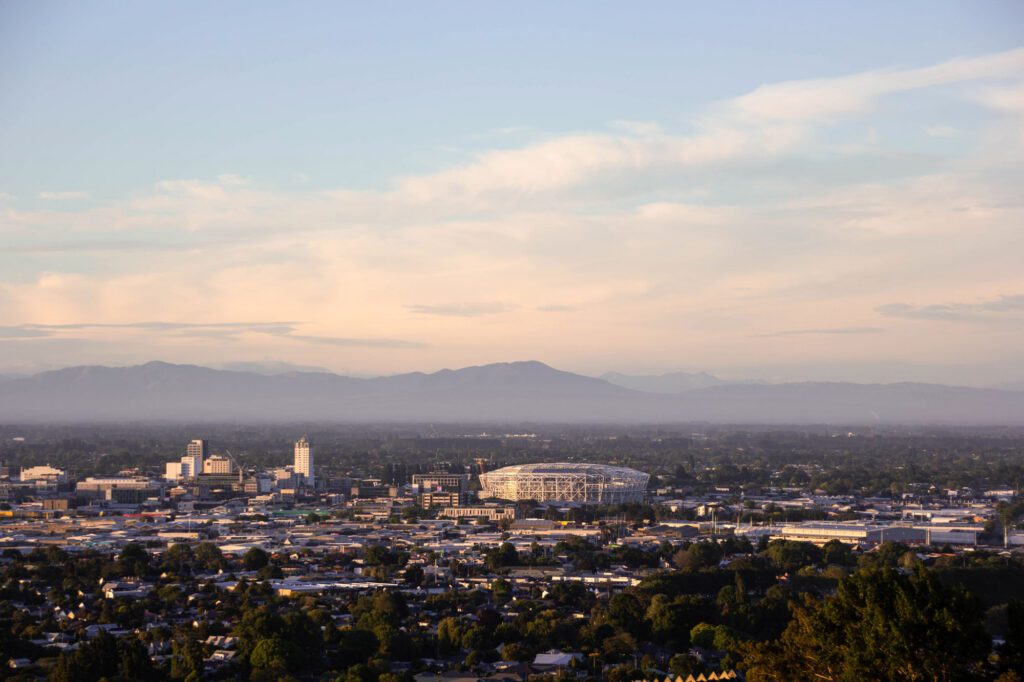
It isn’t hard to find, either, rising high in the post-quake CBD.
“Like the Cashmere Hills,” one punter tells me about its size. “Twenty-five thousand capacity, and thirty when needed.”
He’s wearing red and black, and it’s not even game day. He also lets out another number: “Six hundred and eighty-three million!” The reported cost of the place.
It’s not a question; it’s emotion.
Amongst such parochial excitement, getting everyone and everything into the right place, and at the right time, takes some doing. There’s a lot in seating gradients, commentator angles, temperatures, and half-times. There’s serious game in stadia.
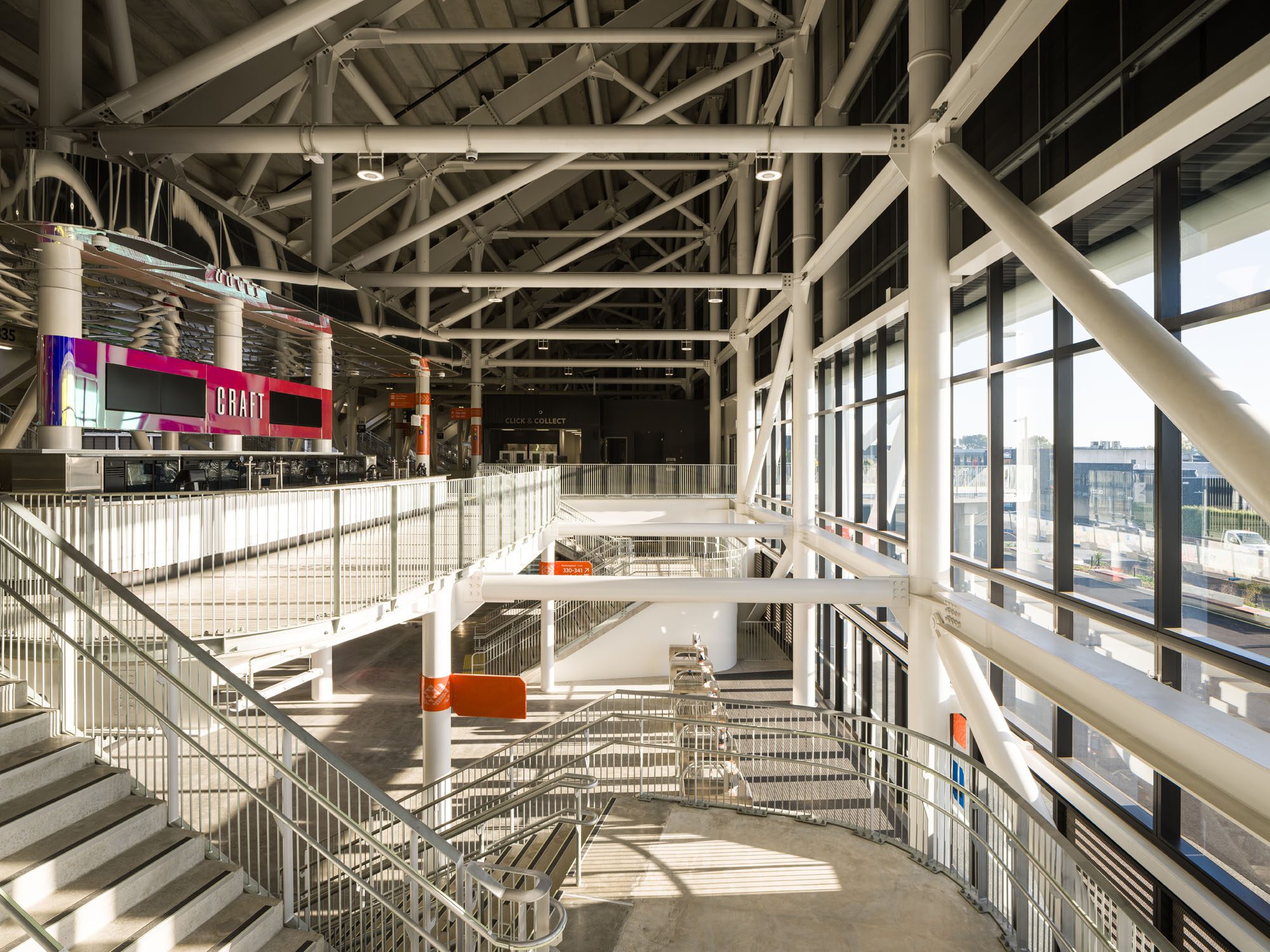
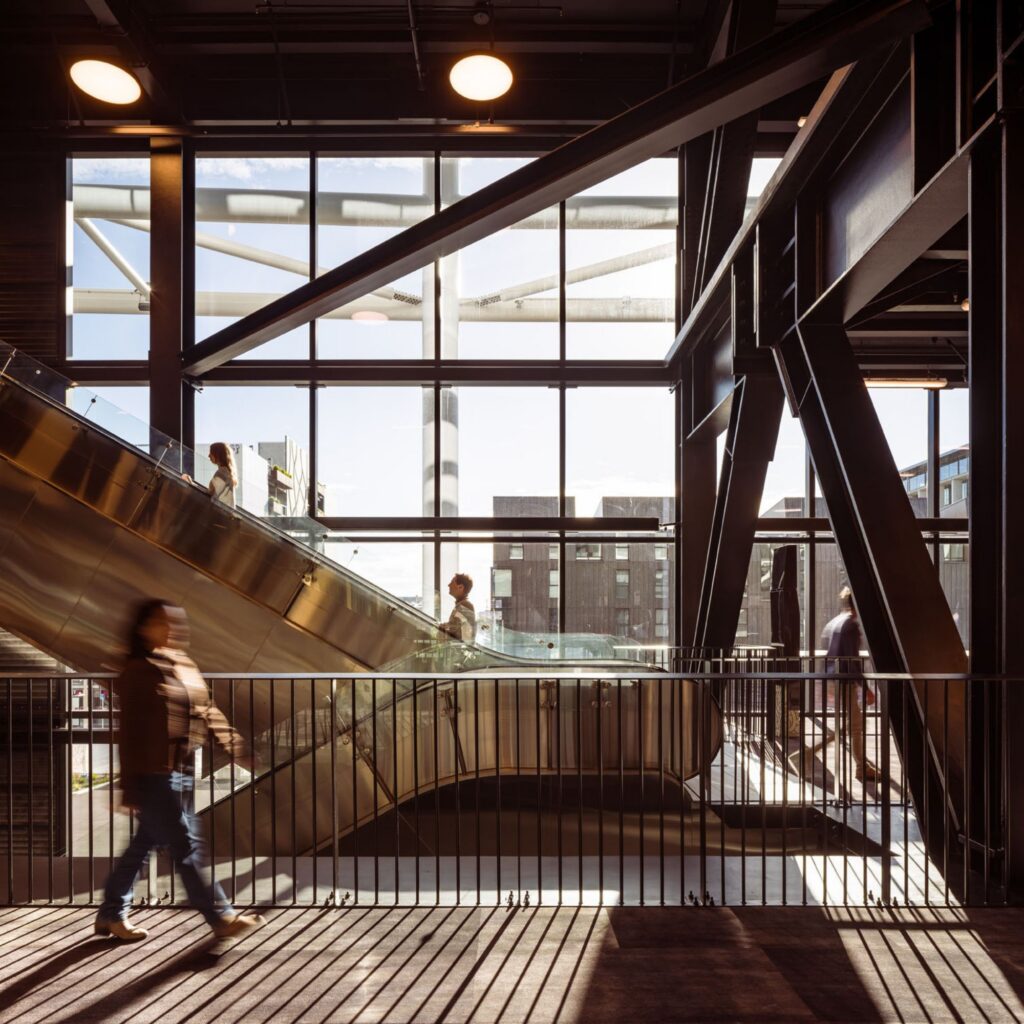
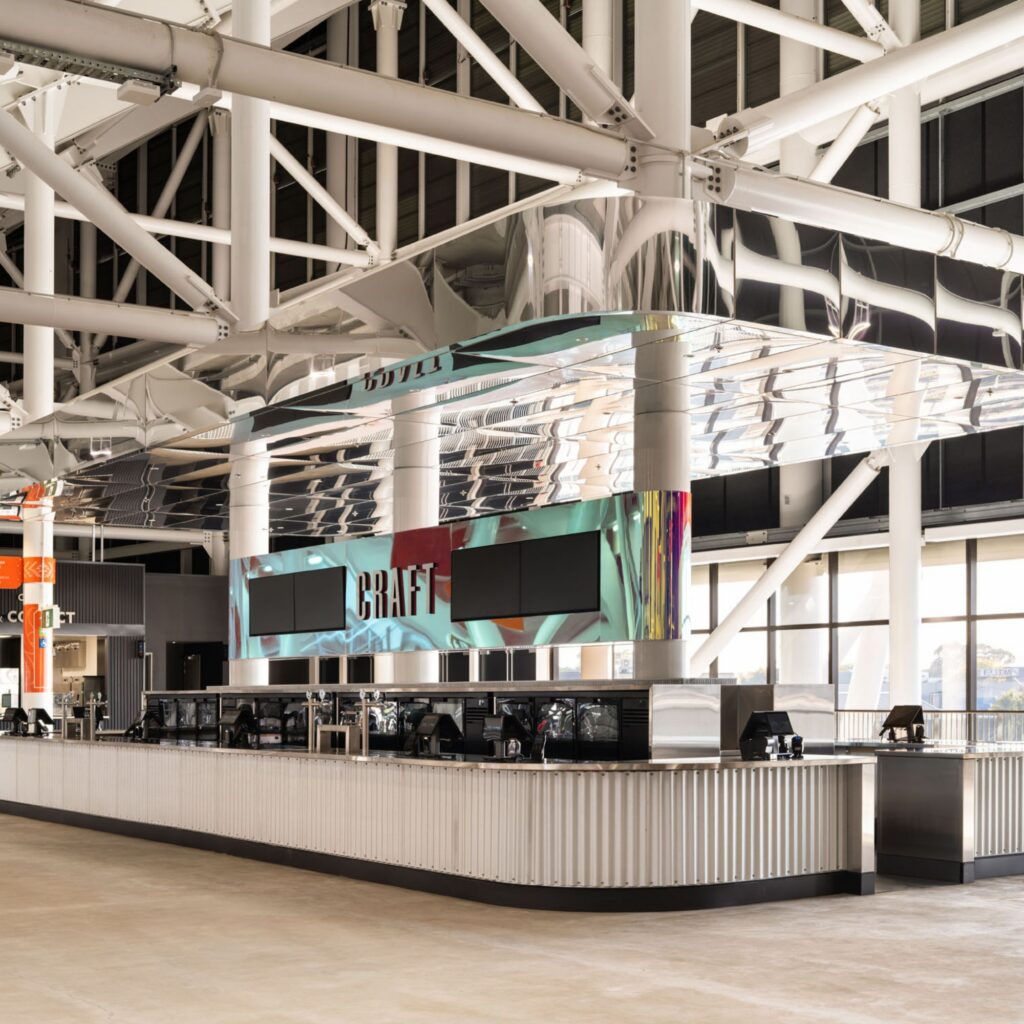
While we aren’t yet playing tiddlywinks out there in the middle, much has changed in what and how we watch. The days of bench seating your way up Lancaster Park after a 30-minute wait for hot chips have long gone. Just as economics have found their way onto jerseys, our sports architecture has broadened its catering. Yet, even with the fullest diary of Let Me Entertain You bookings, stadia the world over inherently have regular periods of inactivity. The odd community meeting, market, or cup of coffee goes only so far between times, for, in buildings this big, the sky really isn’t a limit. Fiscally resolving what else to do with all that infrastructure has become part of event typology.
While there’s set moves in every playbook, stadia also uniquely work to their specific communities. They are also spaces to innovate. By digging down 100 feet, Los Angeles’ SoFi Stadium visibly has less above-ground space to activate. Quzhou’s Sports Park includes a built hill that you might recreationally walk up and look in without a ticket. Tammela Hybrid Stadium in Tampere near Helsinki even builds in a crowd by accommodating places for people to live. So, I ask Warren and Mahoney’s NZ Sport and Recreation Sector lead, Matthew Body, what’s unique about this place, and what happens when my merched-up friend eventually goes home?
The story, he tells me, “goes back to the quakes”, followed by some 10 years of political readying, two years of design and detailing — which overlapped the groundworks by a year — and another three of above-ground construction on-site, all to “reinvent the New Zealand stadium experience”. Matthew points to our arenas “historically arriving through additions and alterations”, which complicates the spectacle. To highlight the point, I receive the All Black captain experience of running out on to the field of dreams exactly on the halfway line.
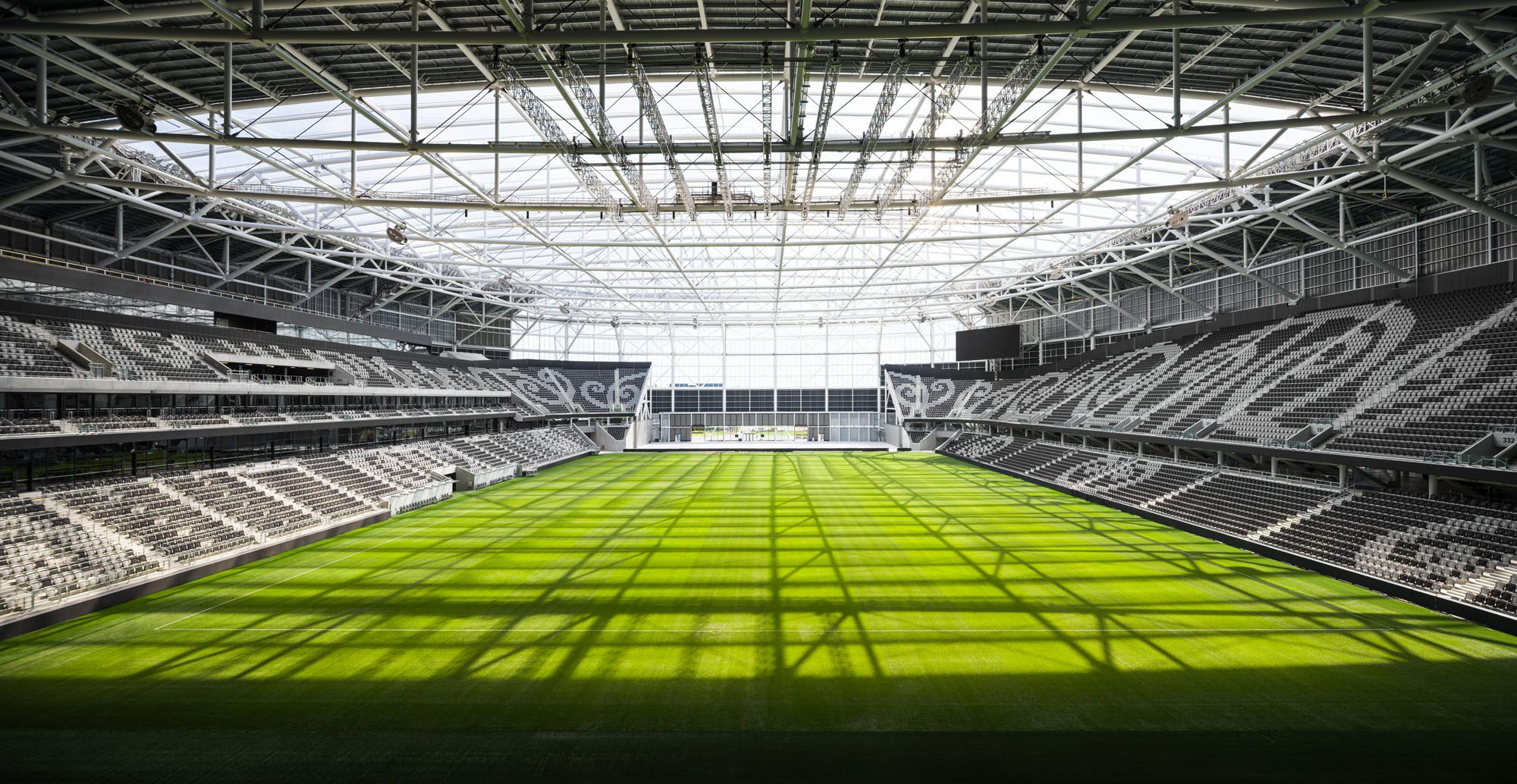
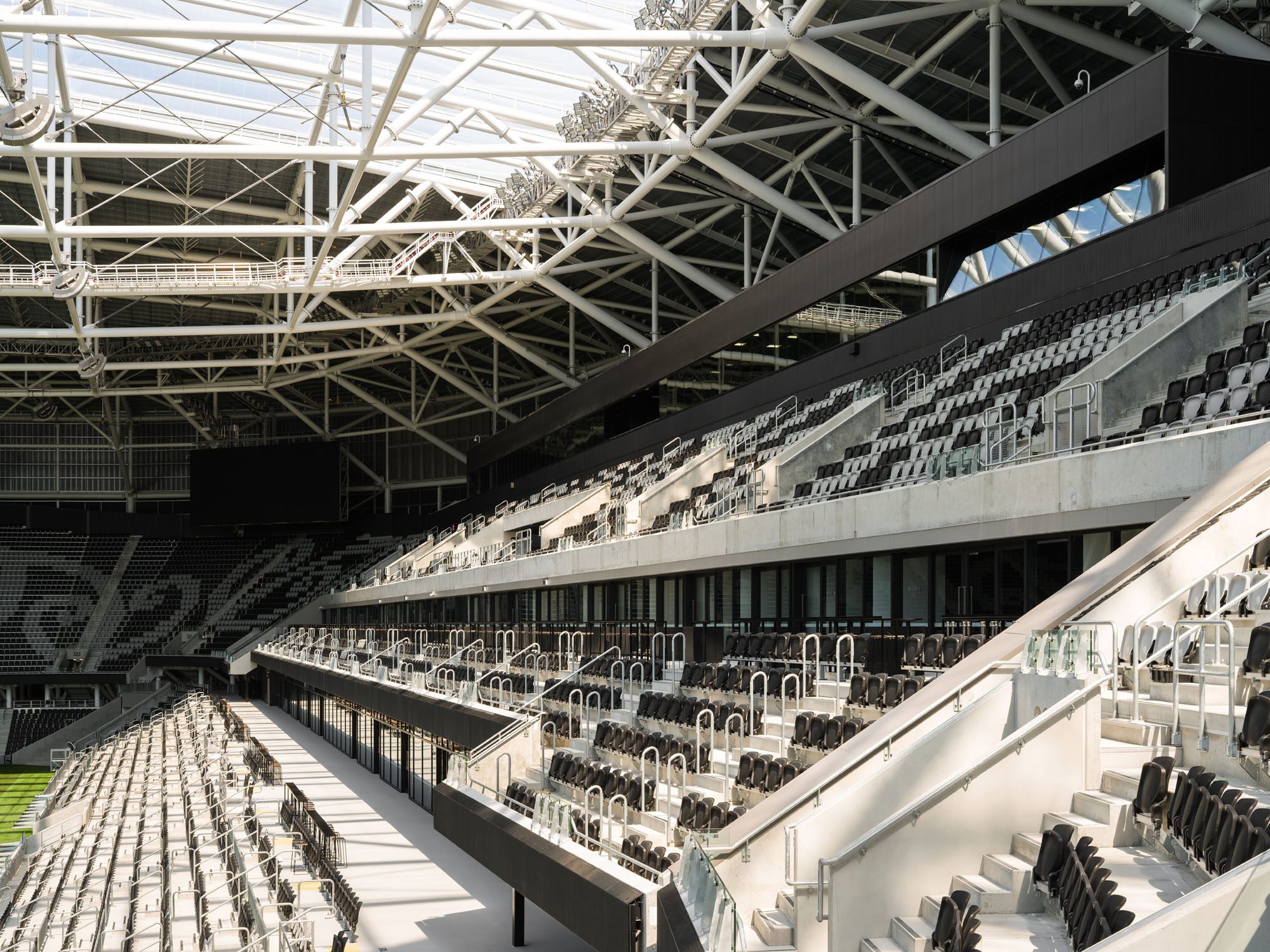
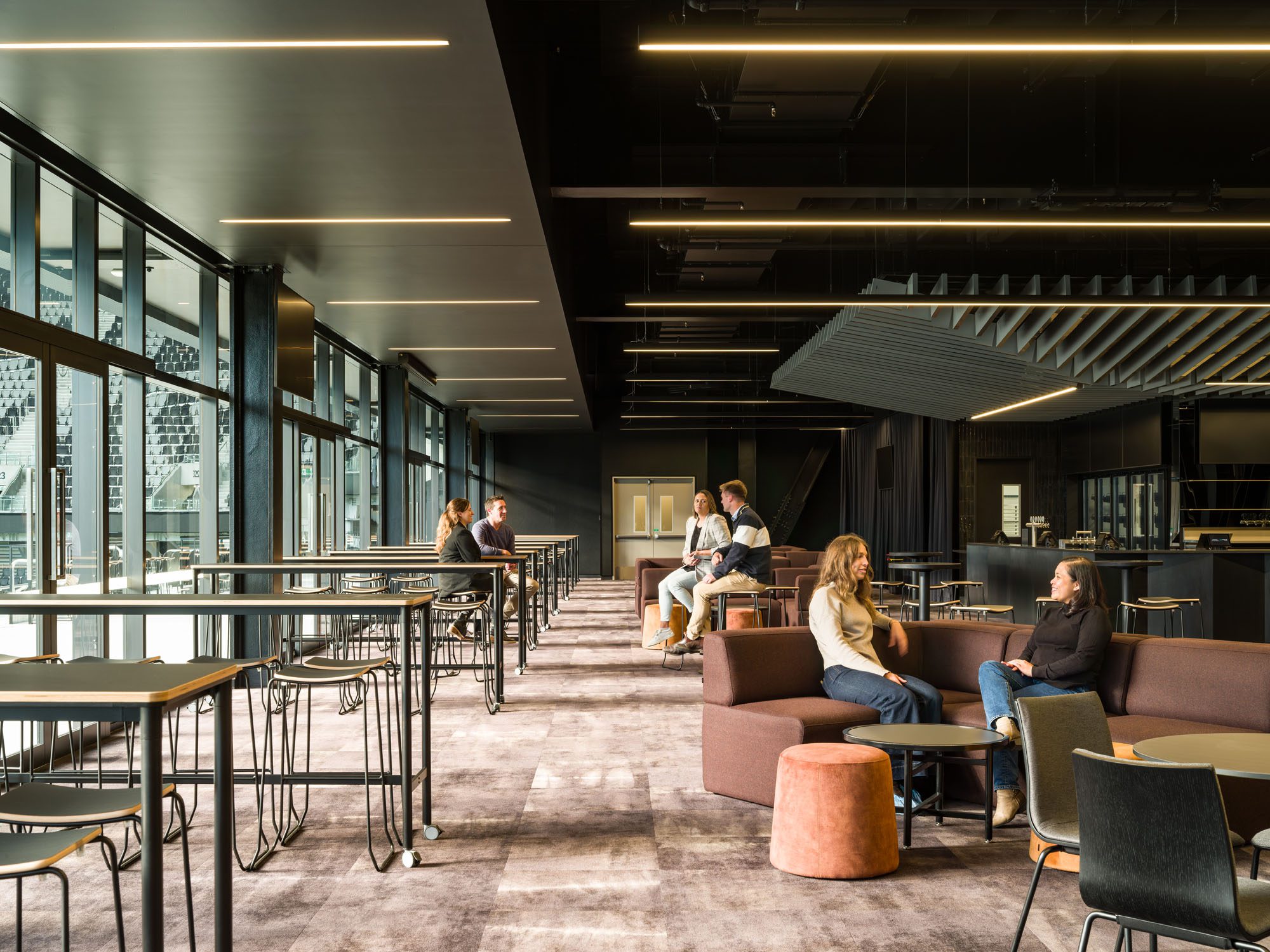
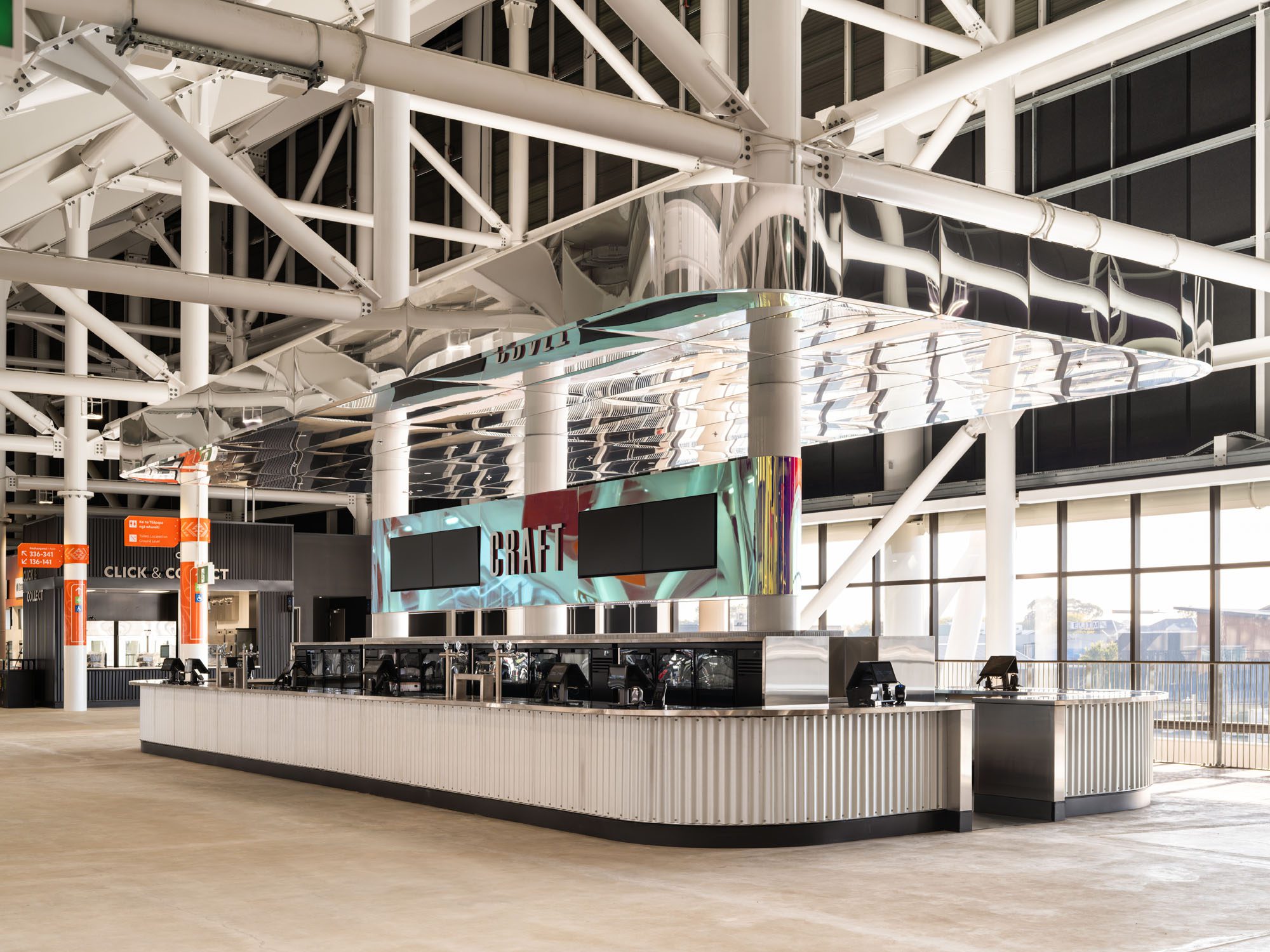
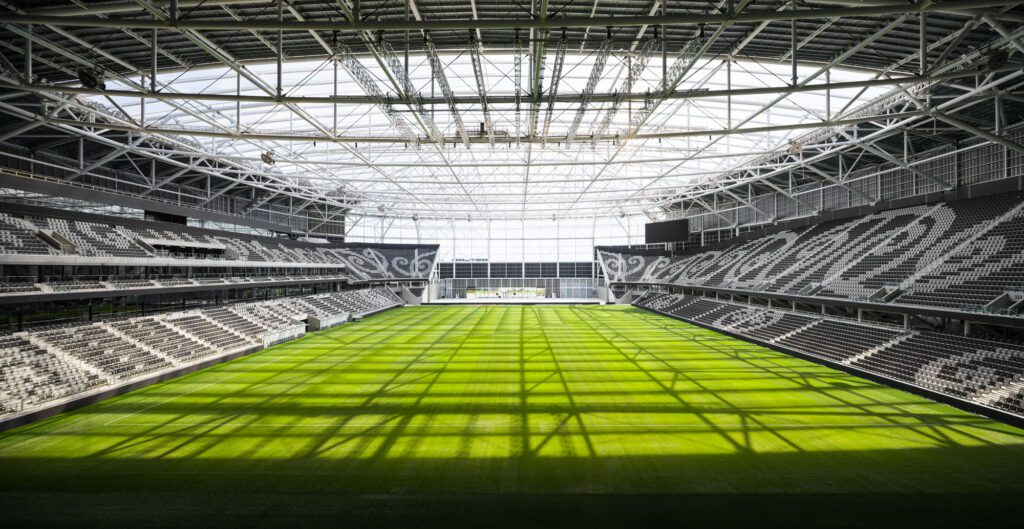
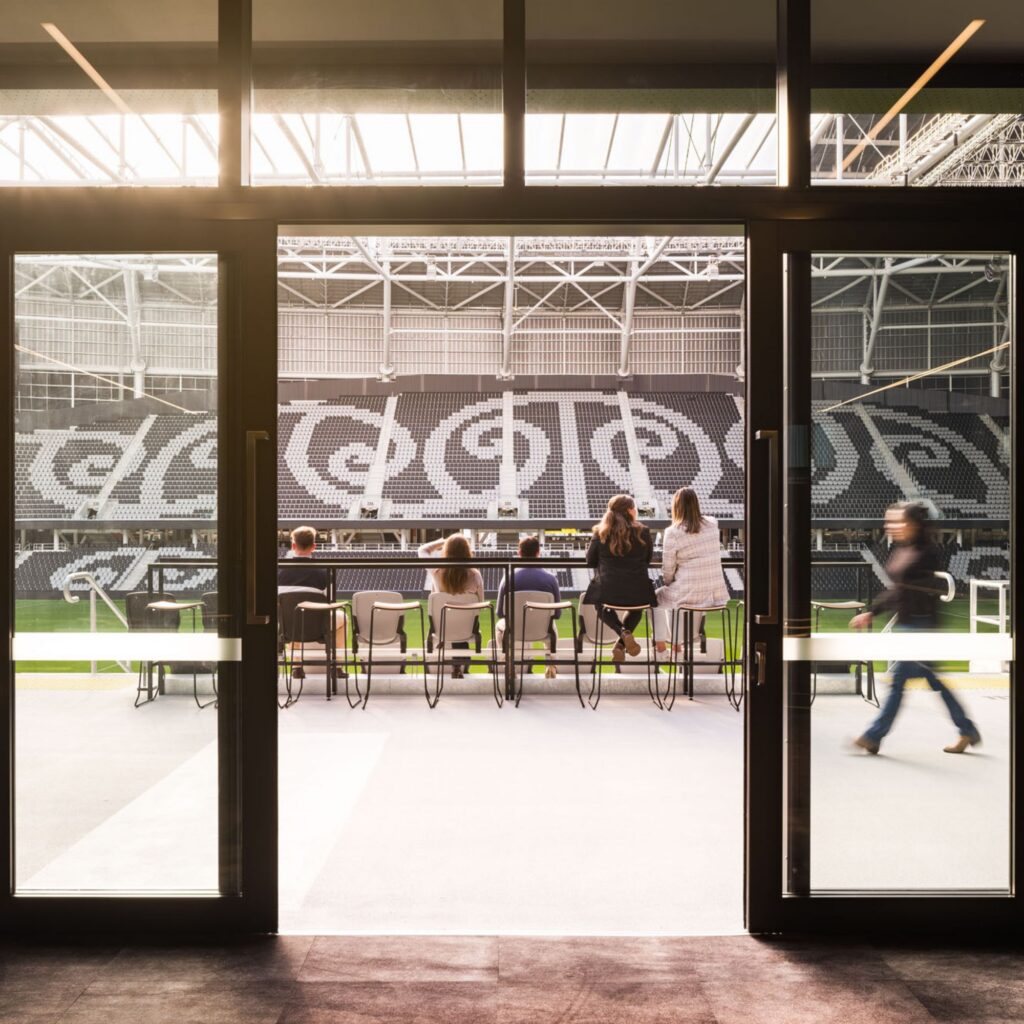
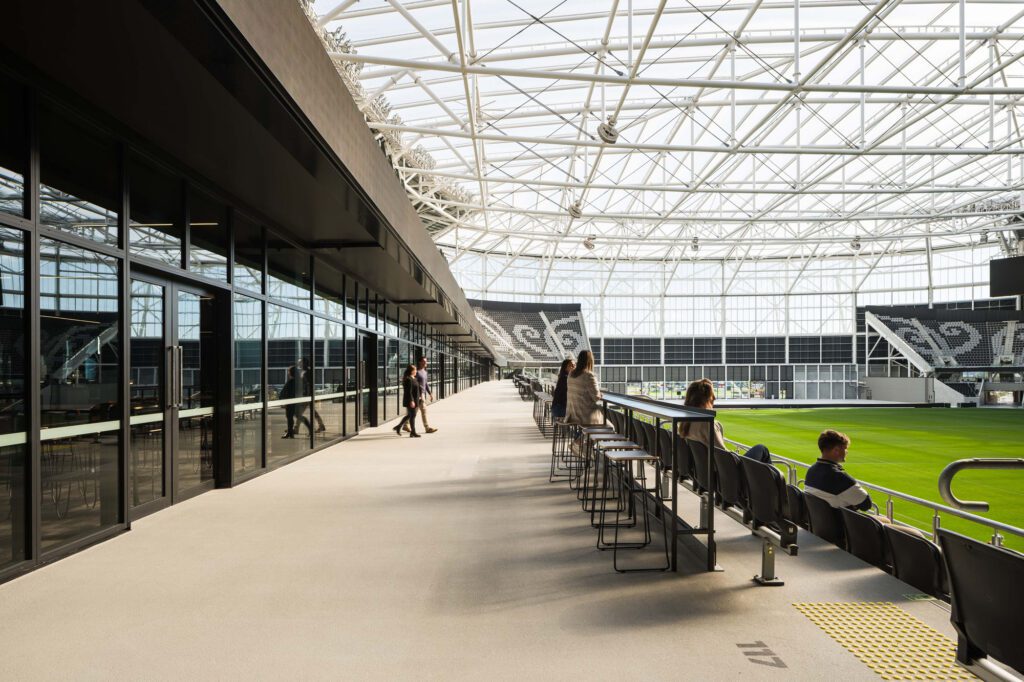
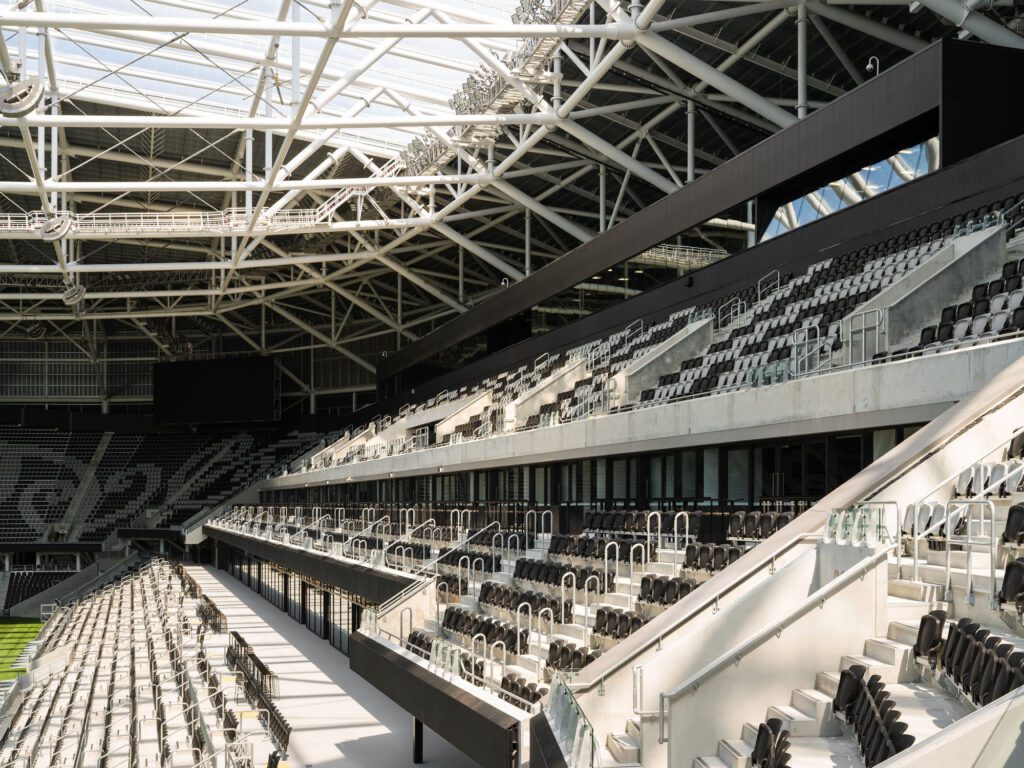
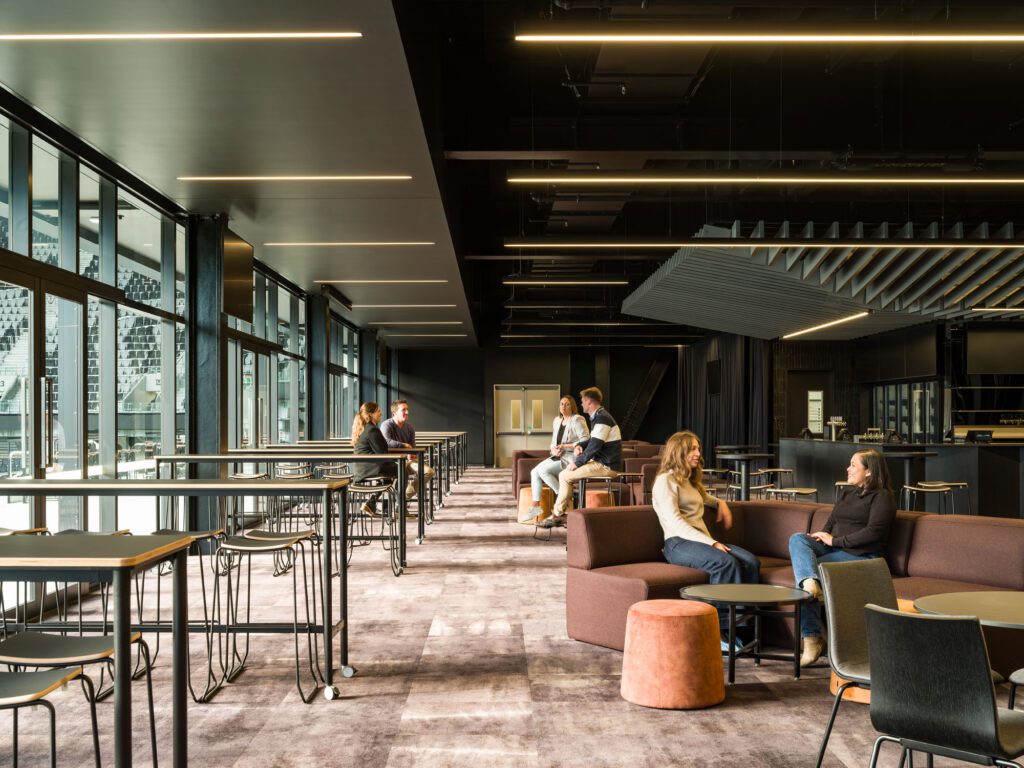
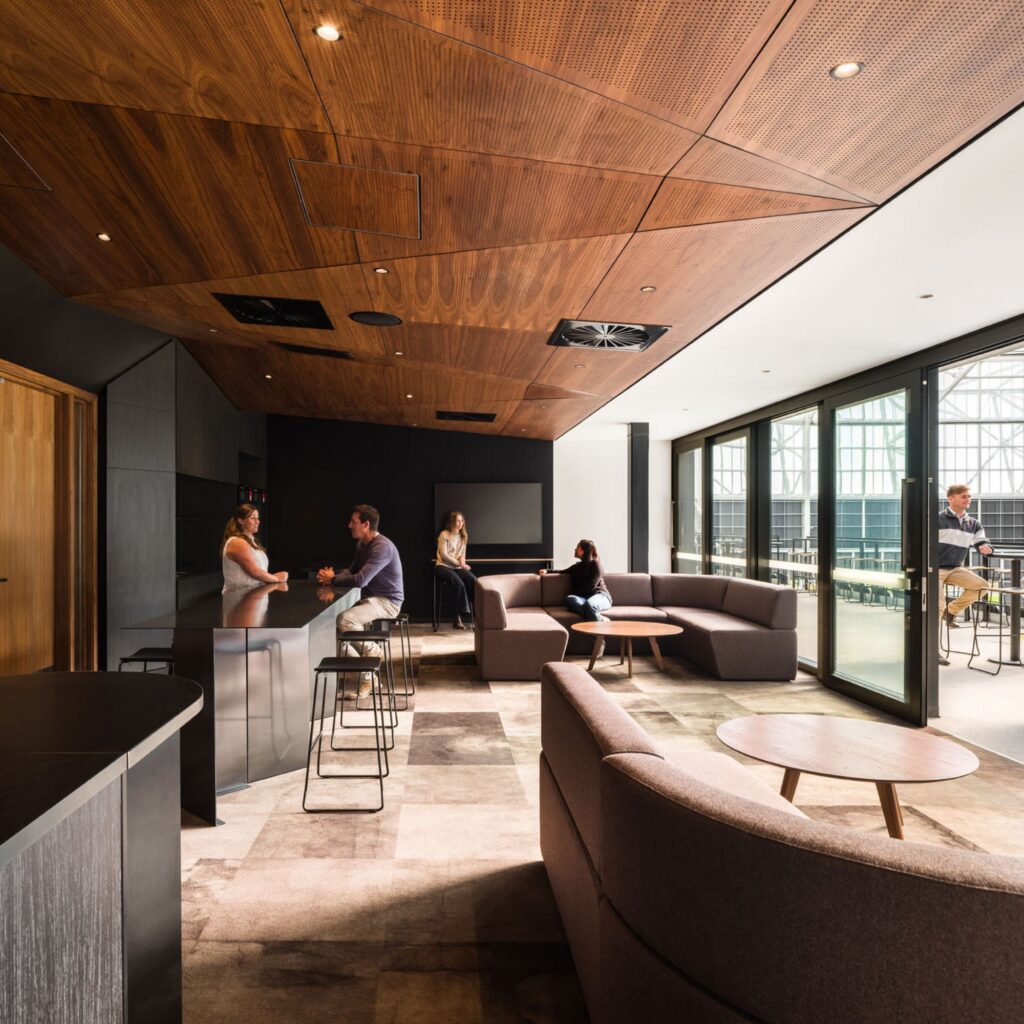
The game plan here is to make a really good event space in the city and the people will come. Hence the crowd is so close to the action — what the architects call “The Coliseum cauldron effect” — and supported with the full gauntlet of hospitality facilities to enhance the experience.
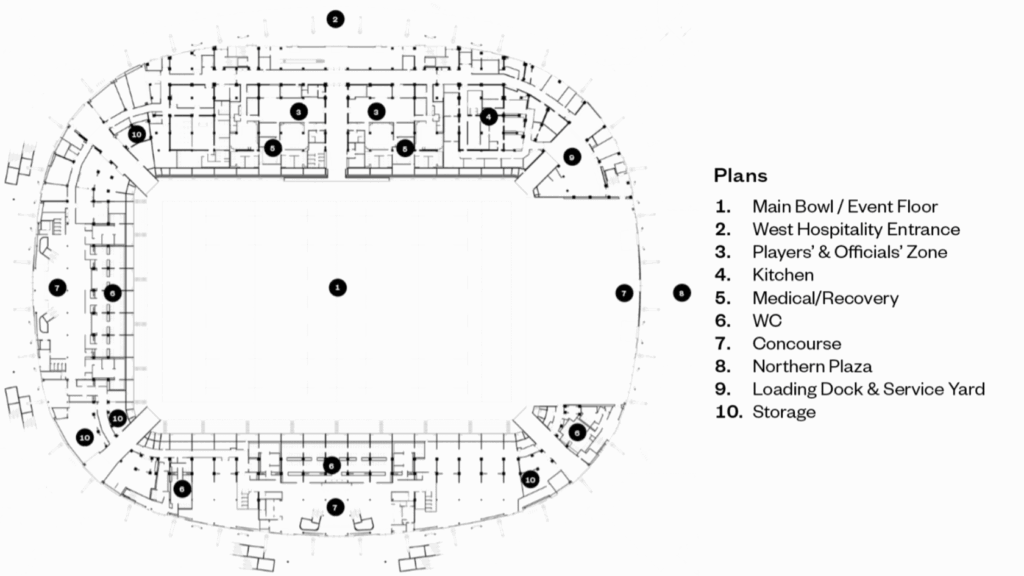
If there’s a lot on the outside, it’s because there’s a lot on the inside. Down in the players’ dressing rooms, the seats are three of me wide. This also explains the removal of the seats from the northern end — it’s event planning. The gap provides a stage pocket for other types of entertainment. There’s even rigging for a stage curtain on the opposing 22 to suit a smaller crowd.
So, while I thought the days of watching rugby shotgun style from the front seat had long gone, the event managers could, if they wished, stage a drive-in.
Getting it all to kick off, Matthew next explains, is all “people and science”. That’s coaches talk for understanding the importance of shared space and community.
“Half the crowd is here for the players and the other half for everything else. It’s social.”
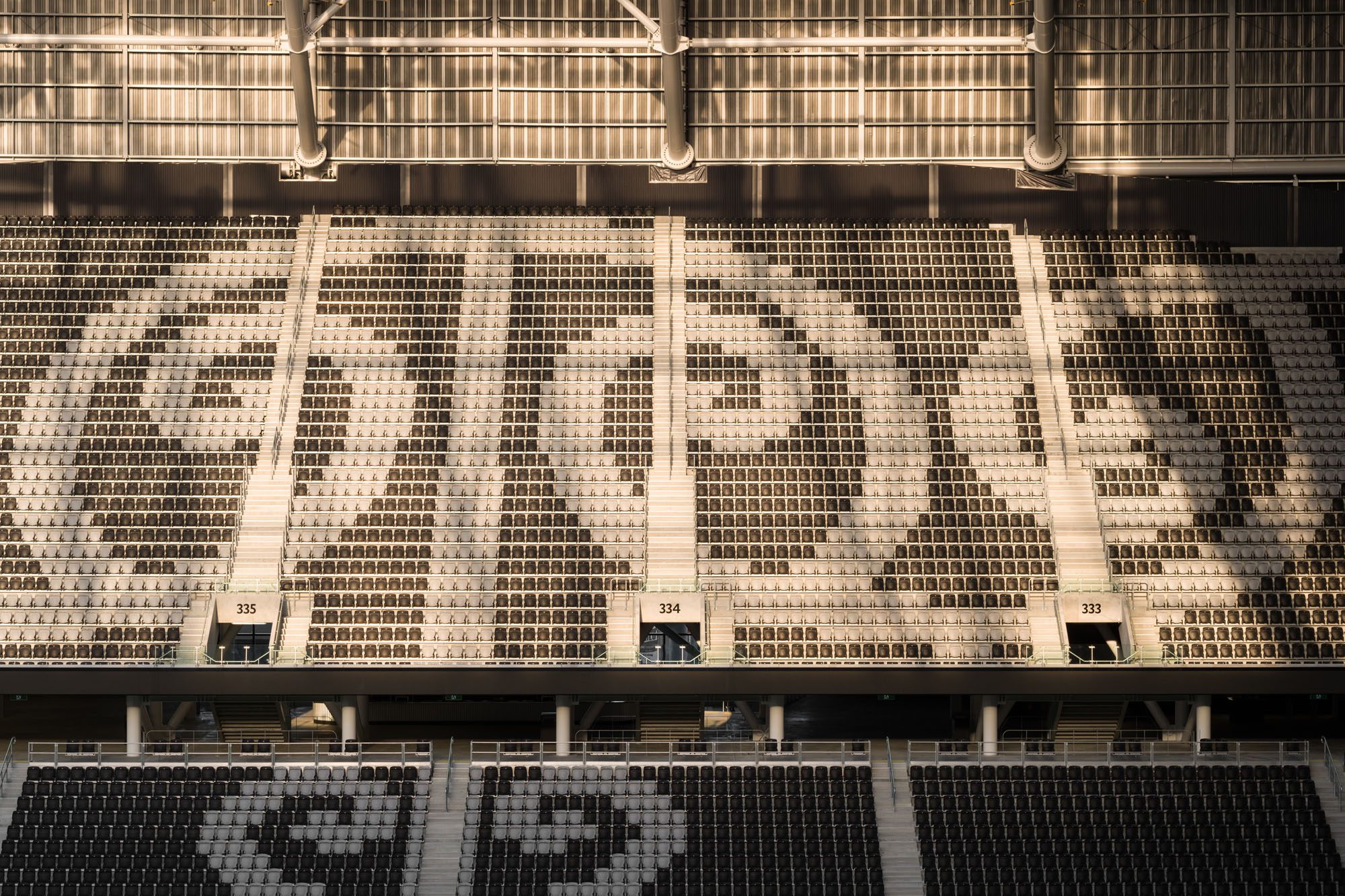
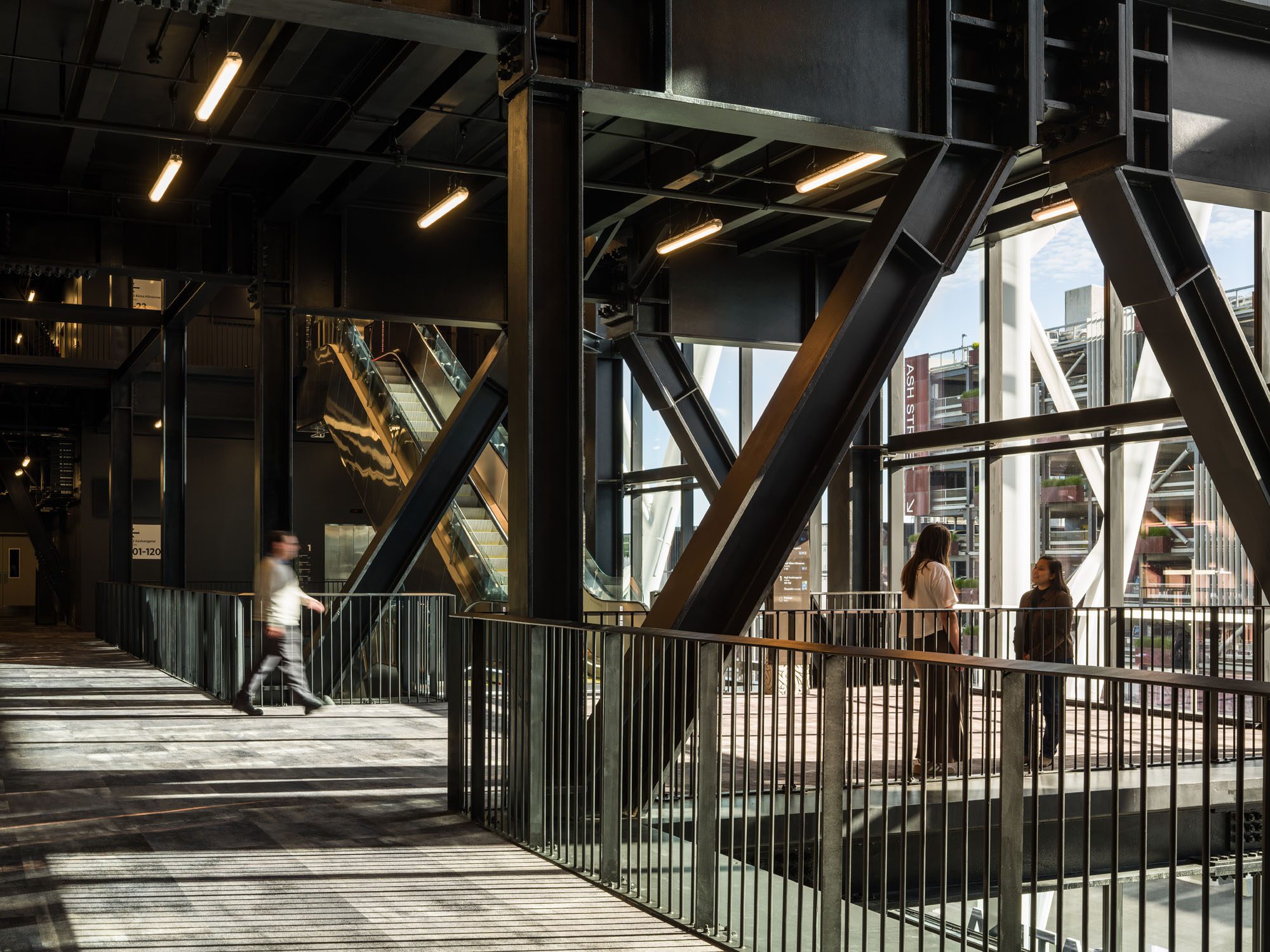
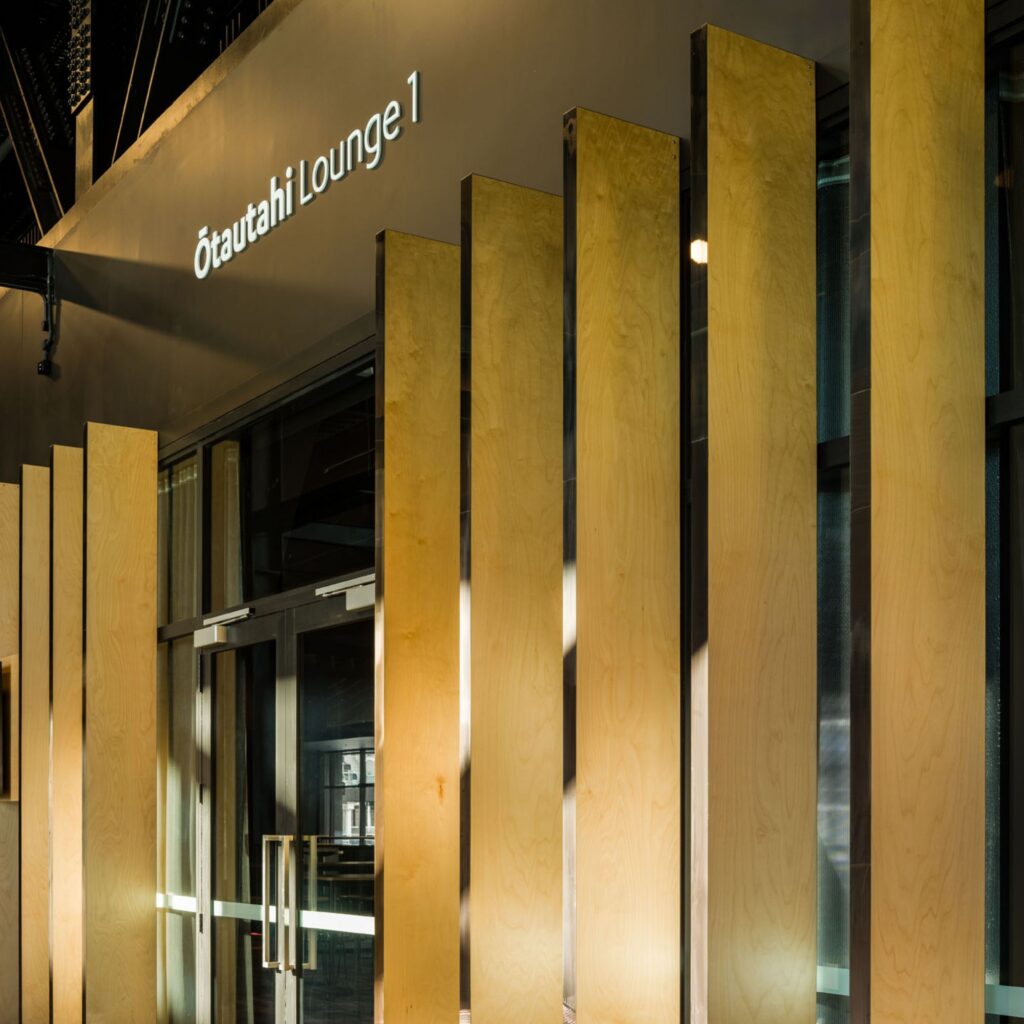
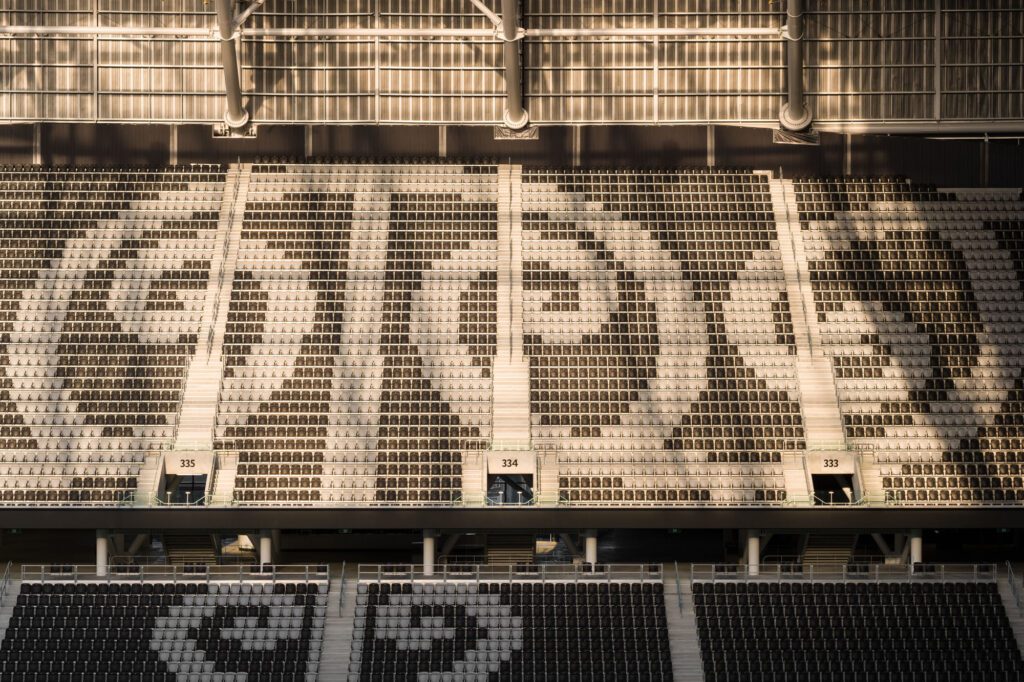
The seating to place visibly runs over the stands, but it’s deeper with iwi collaboration to “the ongoing spirit of the people of this area.” Being so close, the city is part of every show. It’s “he tāngata, he tāngata, he tāngata” and event, event, event.
And the science? That gets BIM complicated. There’s no letting half-time queues build up here; “Nothing is a fluke” I’m told.
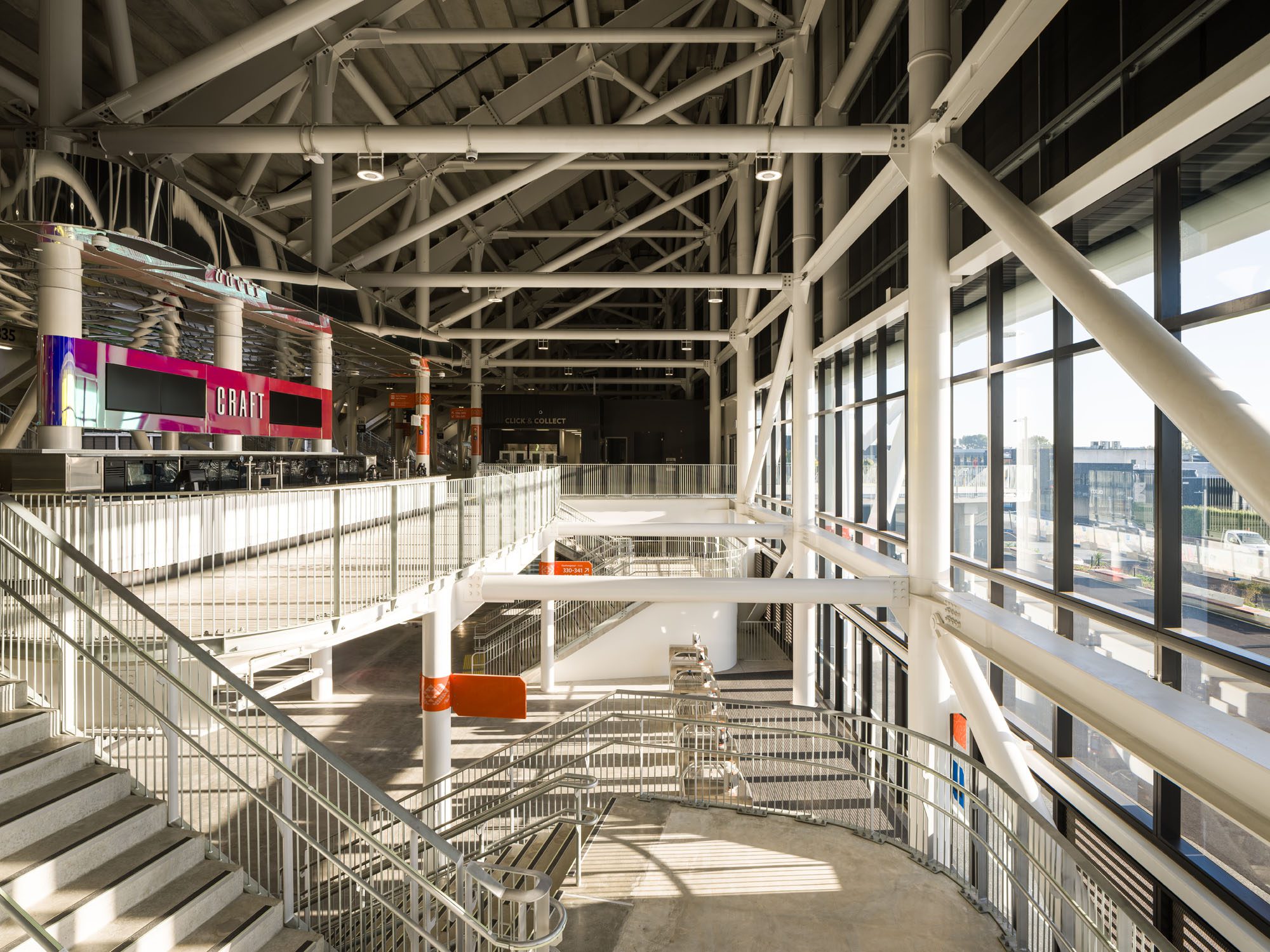
They’ve crowd modelled: food and beverage; the acoustics in order to balance the noise for rugby games against attenuation for concerts; and the management of the interior with the placement of natural ventilation openings, mechanical fans, and daylight. The building works a bit like a conservatory in the way the clear ETFE roofing and structure span over the stands to form a welcoming environment for spectators, players, as well as for the grass.
There are always things to do in greenhouses, of course, particularly as the temperatures rise. Establishing fresh pastures, as Canterbury historian Robert Peden describes in his “Pastoralism and the Transformation of the Open Grasslands” (Seeds of Empire : The Environmental Transformation of New Zealand, Tauris, 2011) has always taken “considerable determination” and there’s no shortage of ambition here. All that steel does prompt thinking sustainably to a forest of another kind, even to what megaform stadium Kisho Kurokawa might have designed for his Agricultural City.
But, unlike covered stadiums with grass overseas, this roof doesn’t open, the turf isn’t retracted to grow-labs, and they don’t slide the entire field outside to breathe. The natural grass growing here all happens inside, which is currently an only in Aotearoa thing and climatically follows on from an approach Populous first pioneered with Jasmax at Forsyth Barr stadium in Ōtepoti / Dunedin. It’s a high-tech, low-tech approach of innovating where it counts and that, in our isolation, we are good at. As Matthew concludes, it’s “putting the value where it’s valued”.
So, with the play sheet established, you might entertain value in the spectacle, perhaps tabulate to economic value, even captain in value to getting things done and turning up on time. You might value some new merchandise or wear your old Red Bands, for, inside, there’s still a grass root feel to the weather outside. But, perhaps most of all — and fittingly after all that this city has been through — it’s a call-up to the value of sharing an experience. Time to play, the architects say. Game on.
One New Zealand Stadium
218 Madras Street, Christchurch
Architect Populous and Warren and Mahoney
Client Christchurch City Council
Operator Venues Ōtautahi
Main contractor BESIX Watpac
Structural / Seismic / Services / Lighting engineer and Acoustic consultant Mott MacDonald
Fire engineer Holmes Fire
Interior architect Warren and Mahoney
Landscape architect LandLAB
Roofing Fabritecture (ETFE); profiled metal
Glazing Hagley Building Products (aluminium, structural glaze)
Carpet tile Advance Flooring (Neoflex); Jacobsens (Dye Lab; Tarkett vinyl); Interface (Woven Gradience)
Sports flooring Advance Flooring (Neoflex rubber)
Porcelain tile Tile Warehouse
Paint Resene
Acoustic panels Autex (Groove; Woven Image; Quietspace; Cube)
Partitions DuraPlan (compact laminate)
Joinery Nordzco
Kitchen design Wildfire
Bathroom design Warren and Mahoney
Doors Pacific Doors
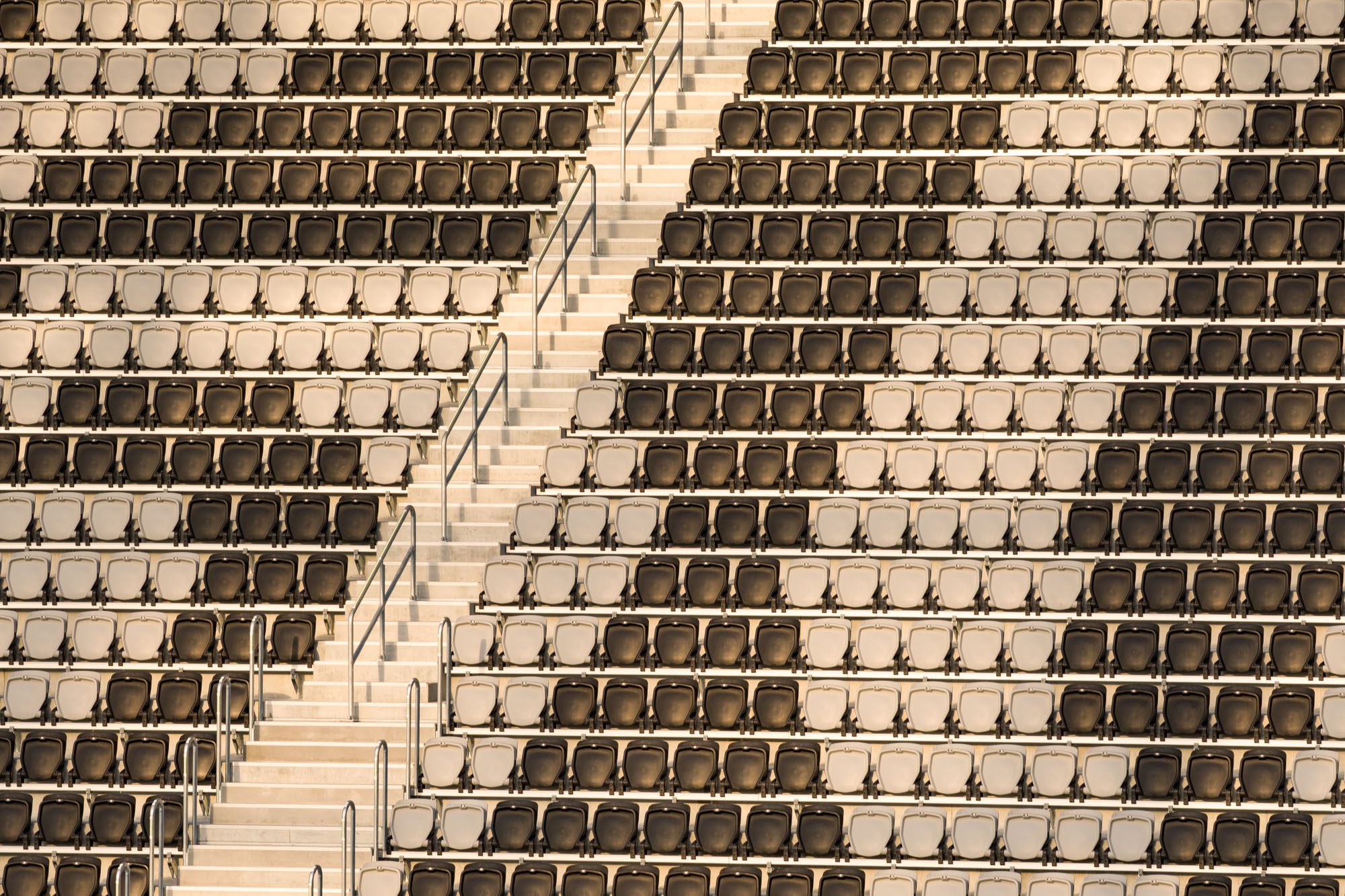
Stadium seating Alloyfold
Words Jeremy Smith
Images Joseph Hampton and Dennis Radermacher
This article originally appeared in Architecture Aotearoa Issue 01.