


Utilitarian forms and understated elegance collide in this rural Queenstown Lakes home by RTA Studio.
In 2009, Rich Naish, founder and director of RTA, built a home for himself and his family in Auckland’s Grey Lynn. This ‘House for Five’, as the project came to be known, was an early exploration of some of the residential ideas that would come to define his highly successful studio. The distributed plan — breaking an otherwise monolithic form into smaller, interconnected ‘pods’— led to Rich designing homes that take into consideration the entirety of a family’s life cycle. A long-lasting fascination with context also began there.
So, when the second owners of Rich’s Grey Lynn home decided to build this house in Queenstown Lakes, the choice of architect was never in question. They went straight back to the mind behind the house they had come to love.
“There’s a nod to [House for Five] here,” says Rich — although that one was a deeply urban exploration of those themes, while this one is distinctly rural and combines the firm’s other passion: the South Island.
The original house on the site was located just below the crest of a gentle hill and, due in part to planning rules, the architects decided to locate the new home in a similar spot.
“We also wanted to take advantage of the established trees,” says Rich.
The area is known for its beautiful specimens of macrocarpa, beech, and ash, and the siting and landscaping sought to accentuate that existing context.
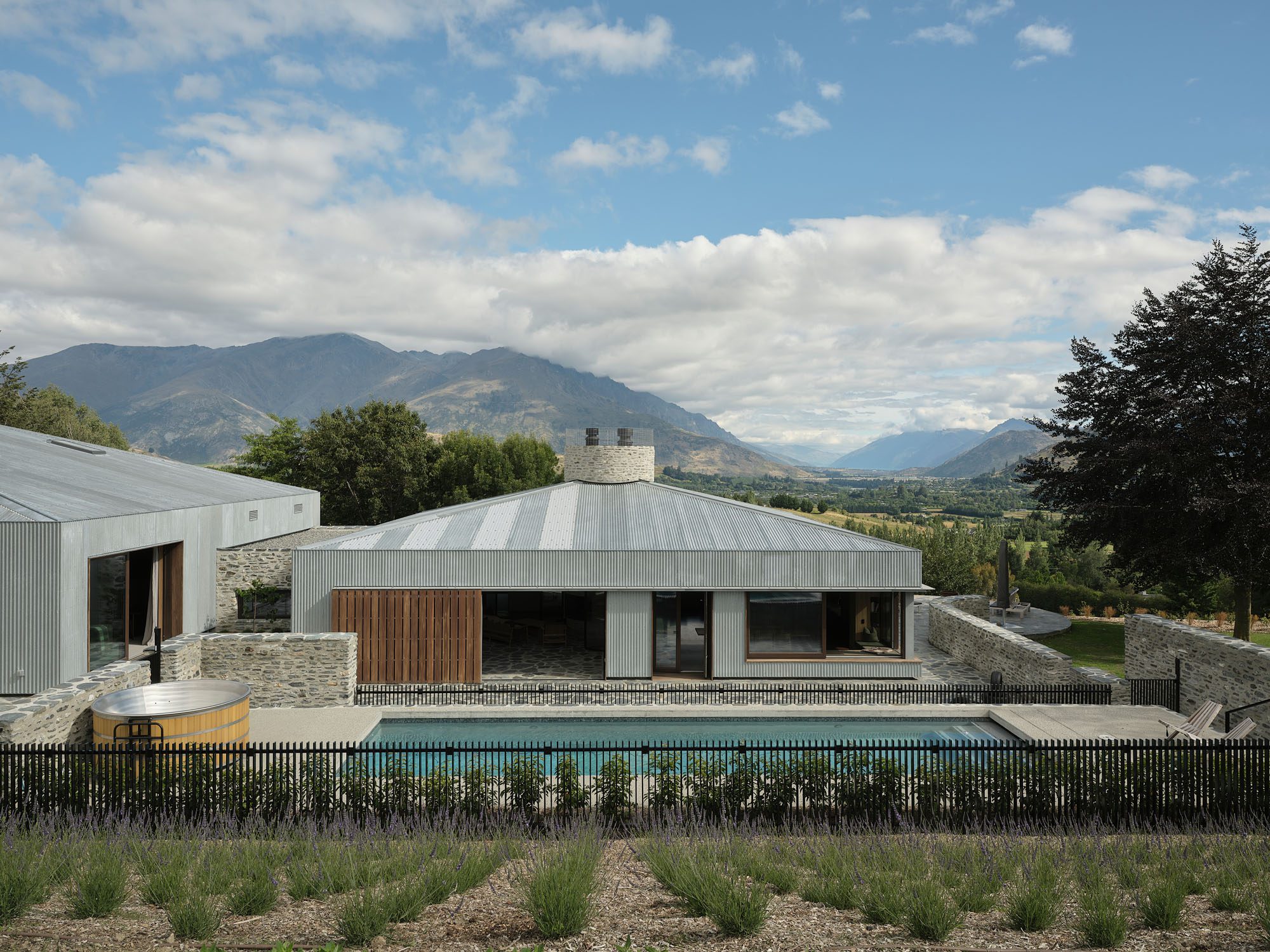
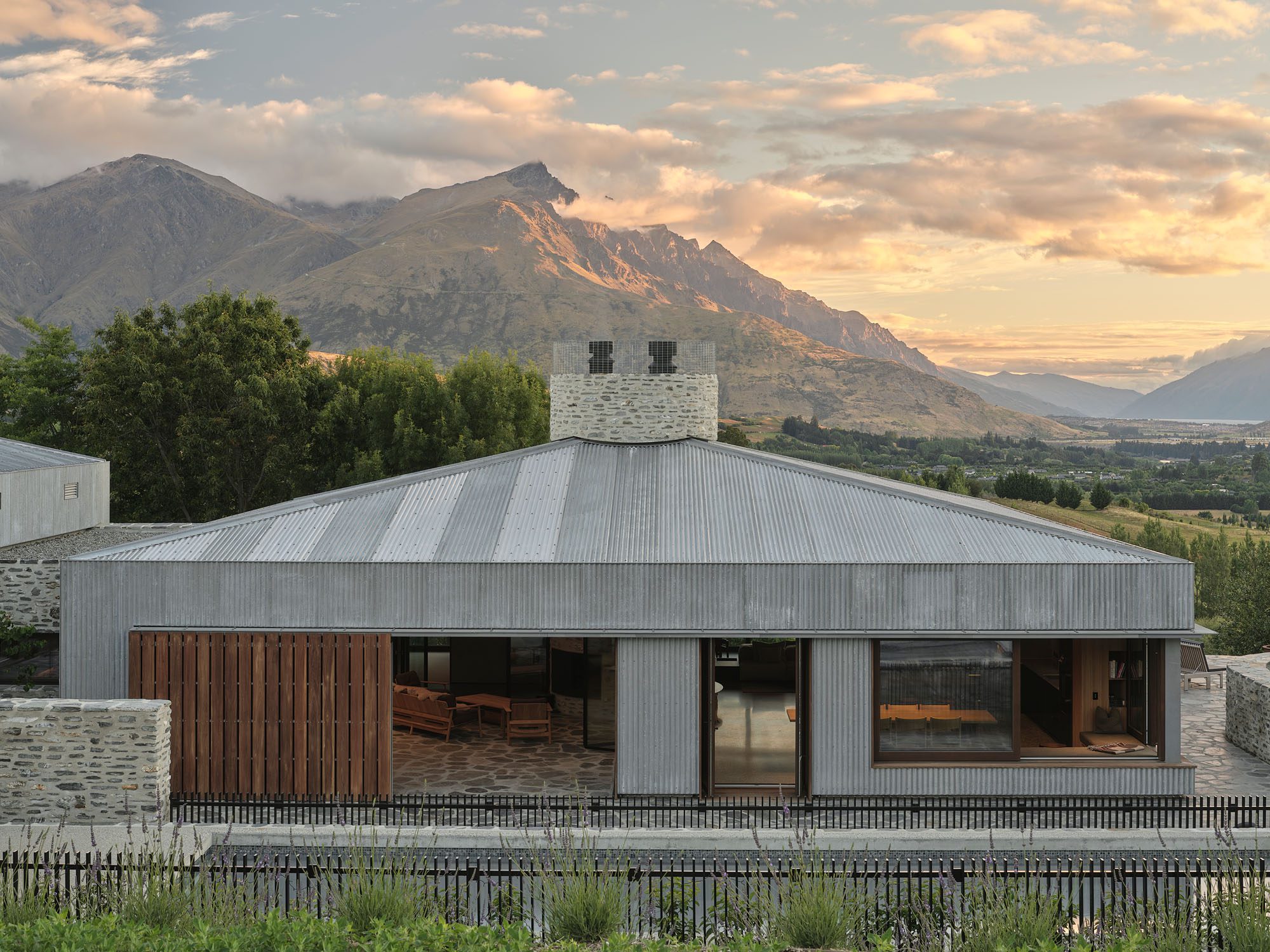
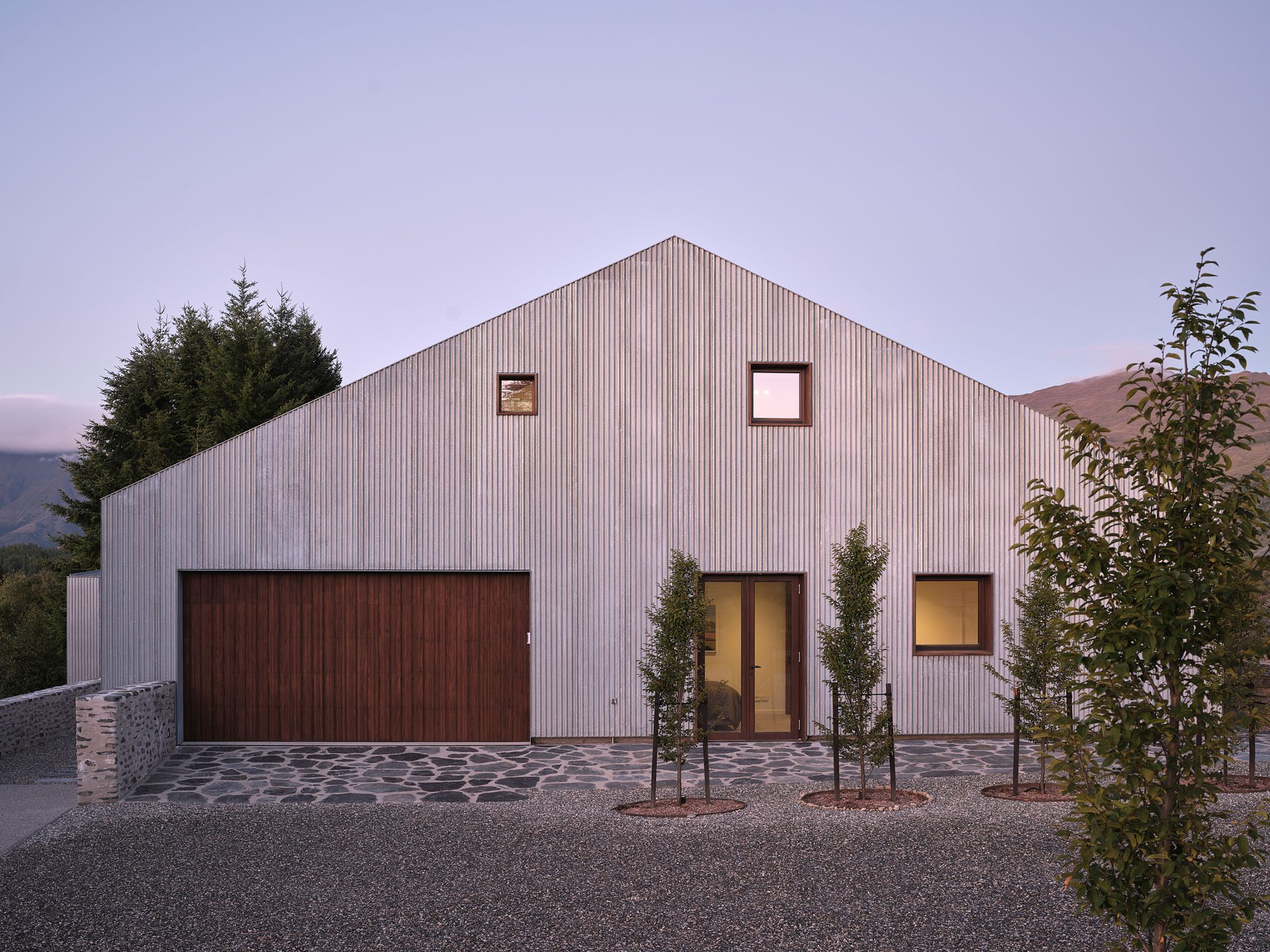
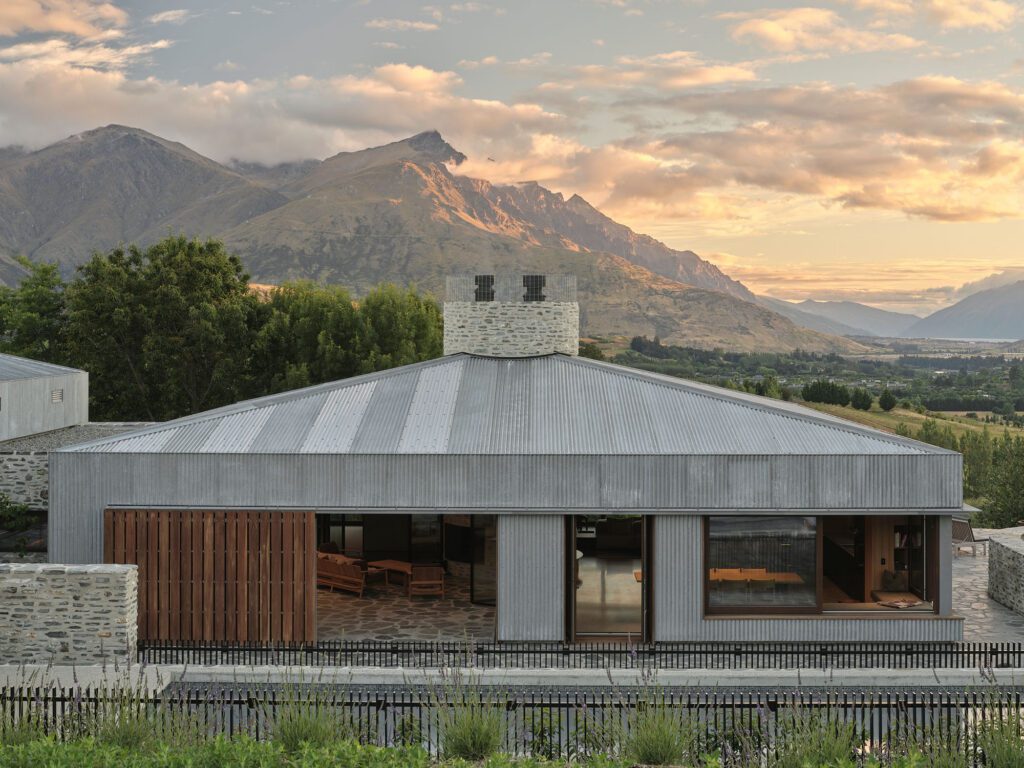
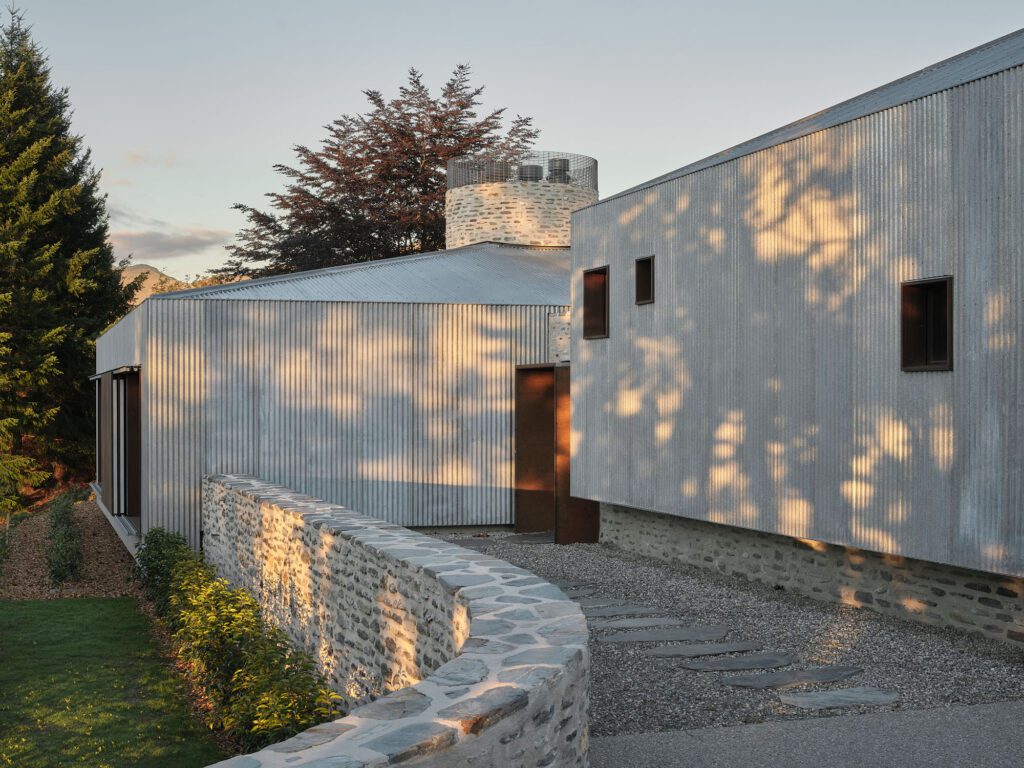
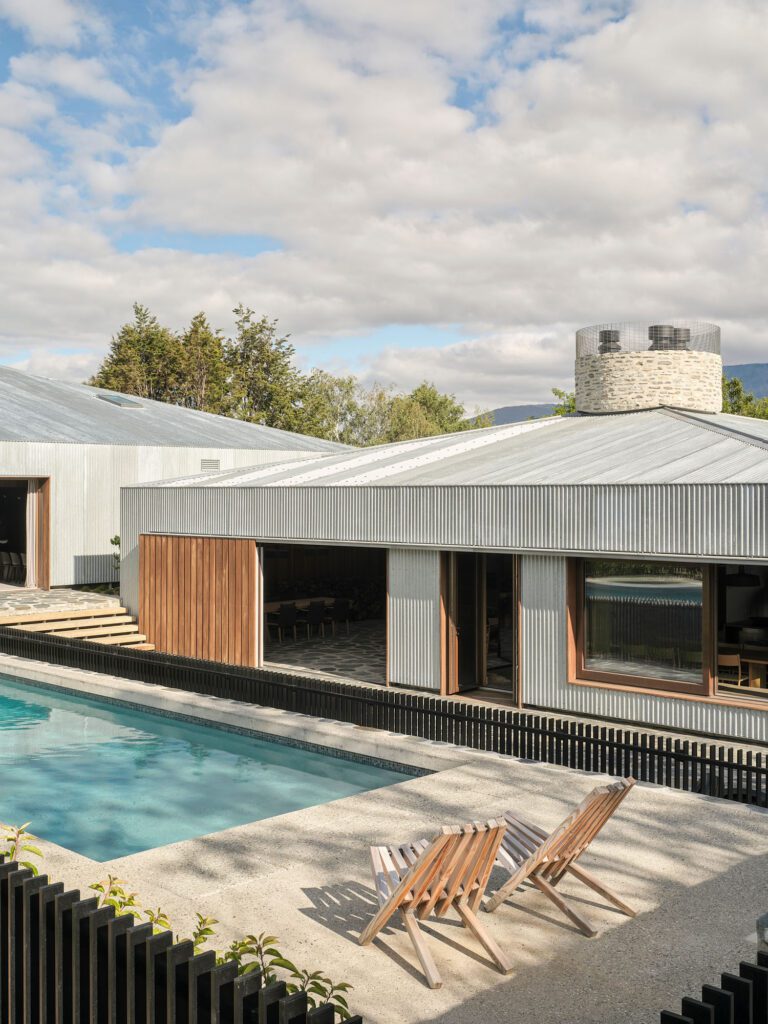
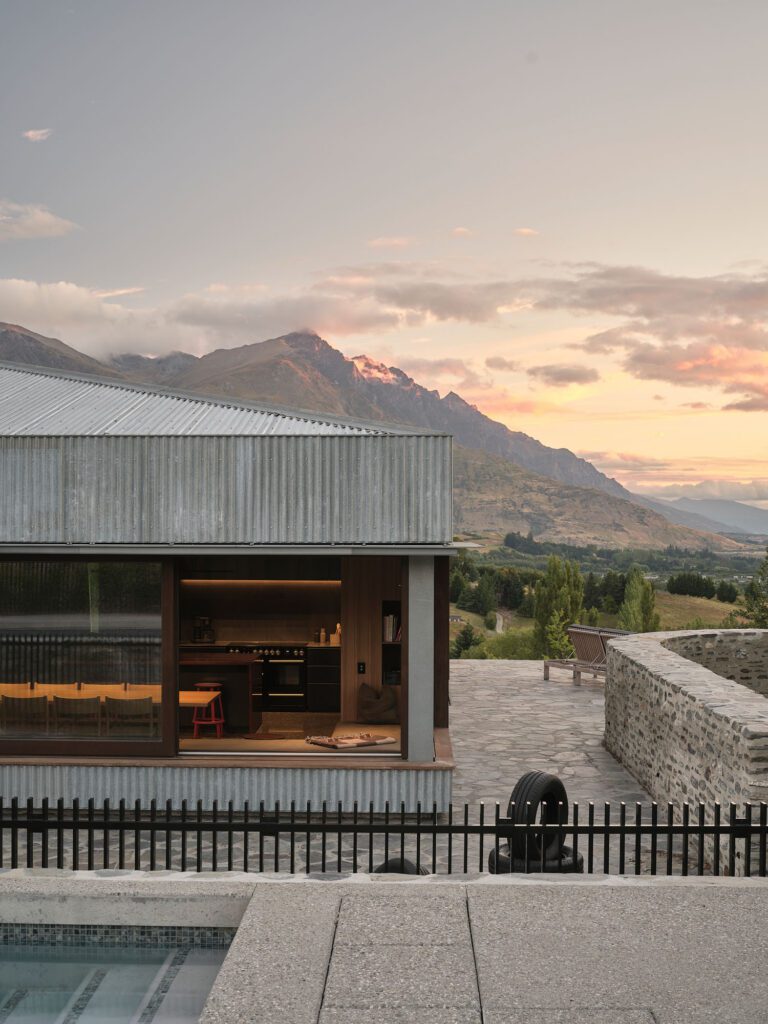
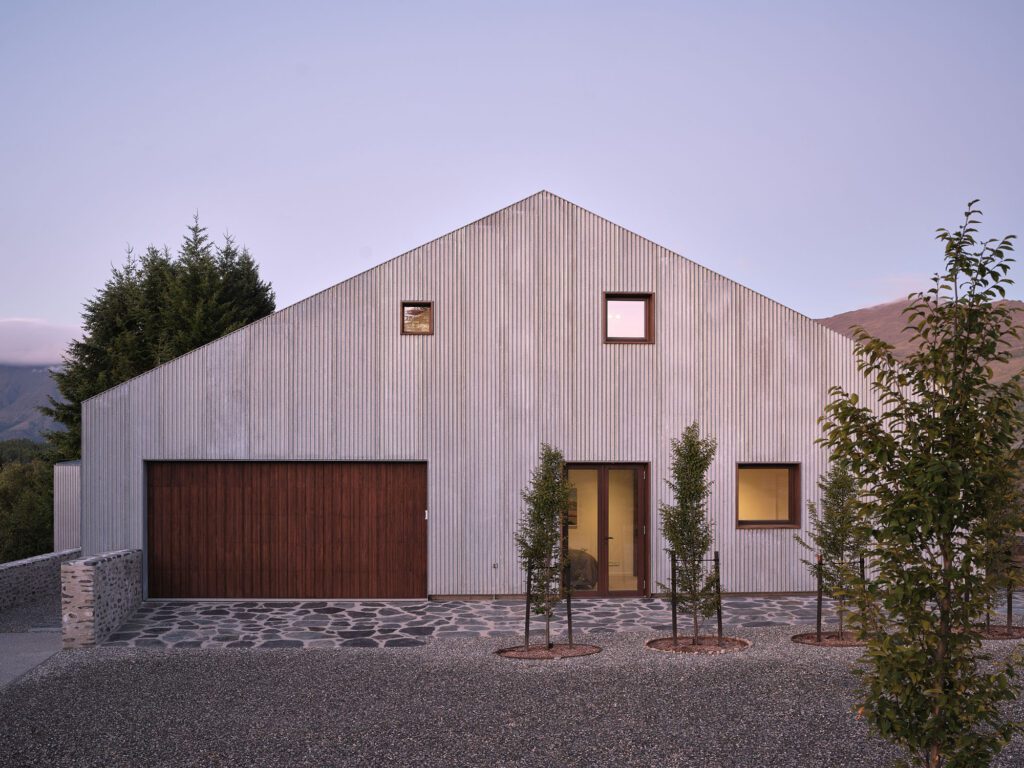
Arrival here comprises a staggered reveal. The house at first seems nestled, as if it’s not all that interested in the sleepy rural scenes directly to the south. ‘Understated’ was one of the key words of the brief, and the structure initially appears like a mildly stylised version of the barns so common in the area.
“The idea is two sheds that we’ve almost abstracted and formalised,” says Rich, “just tightened up into formal interpretations of rural [forms].”
“One of the things we love about this house is that it feels as if it’s always been here; it doesn’t feel like it’s arrived. [It feels] of the landscape, of the rural environment,” comments project architect Michael Dalton.
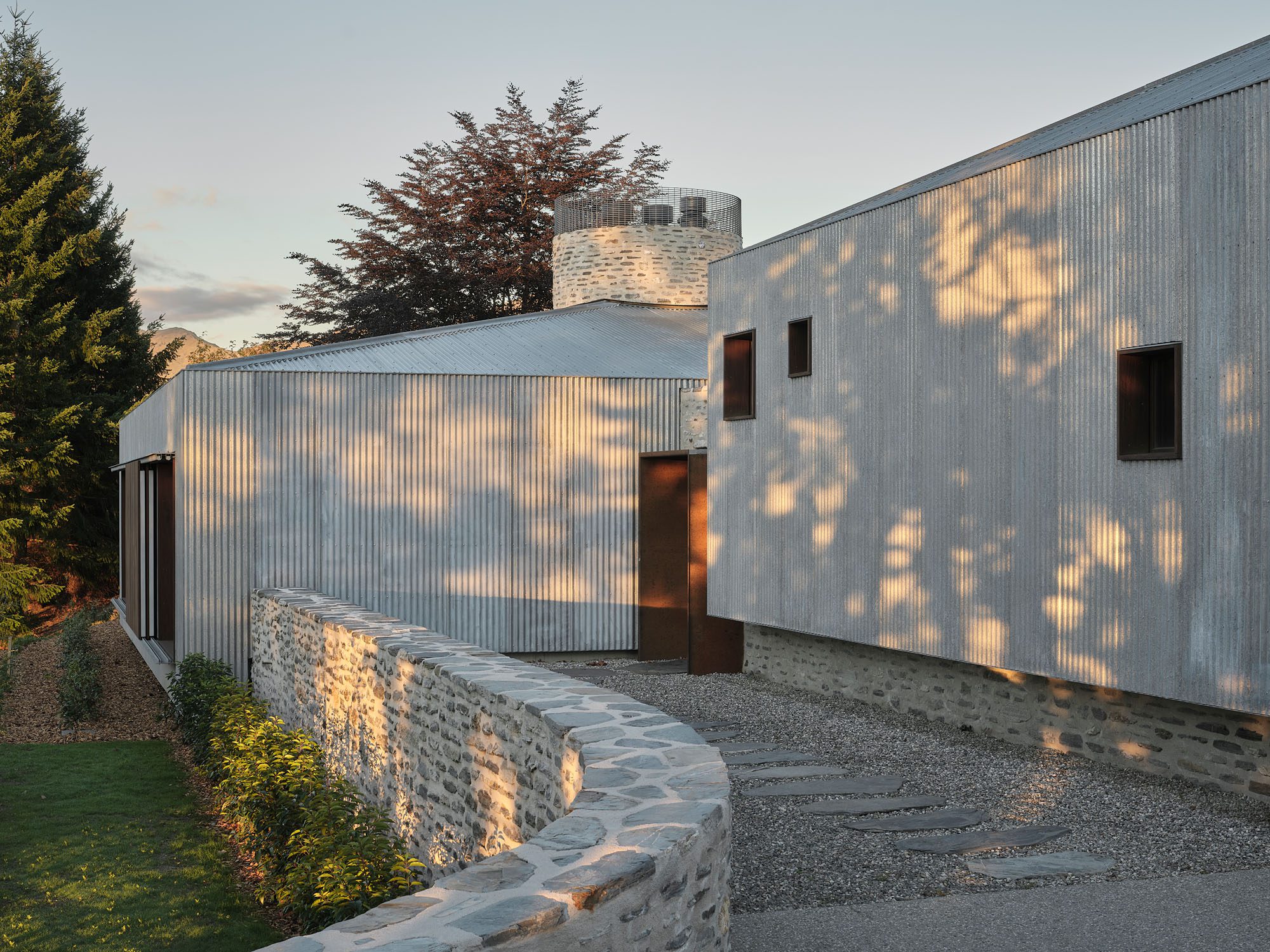
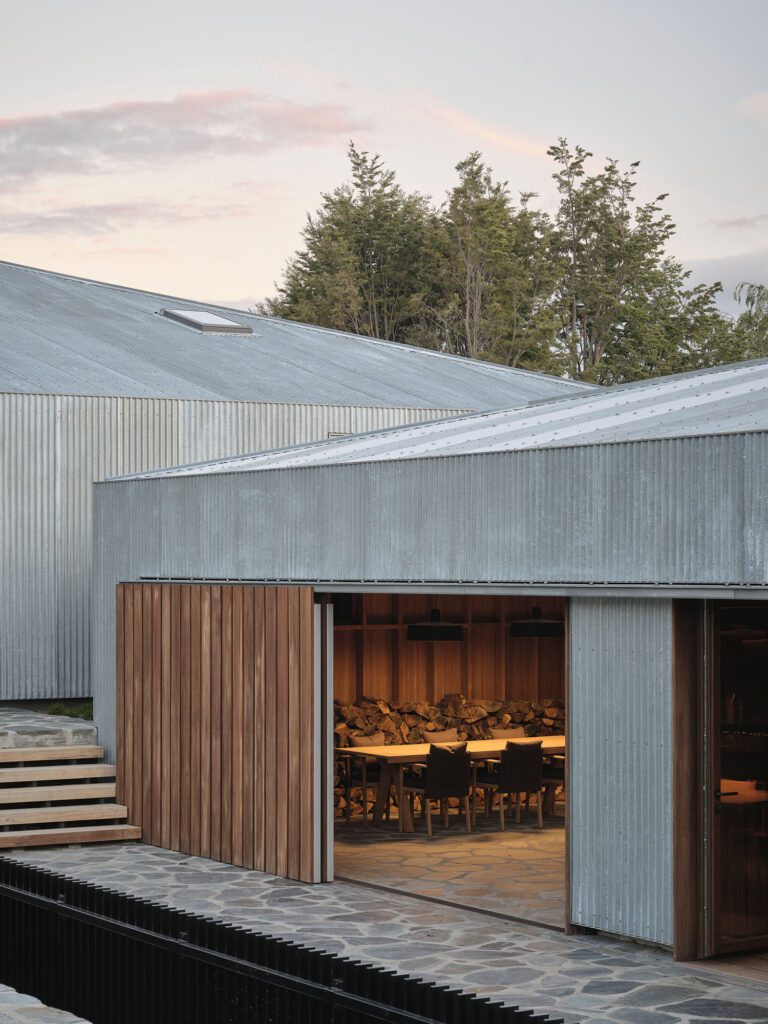
The corrugate is more interested in honesty than meticulous shine; the gabled form — which in some ways echoes that of the House for Five — is quintessentially local. There is, however, something entirely different going on.
The geometrical form that your eye is expecting due to recognisable proportions and gables stops abruptly, the large volume sliced at the gable’s apex into a tall southern facade. Spotted gum has been used to frame deep window openings and penetrations through the building skin. A plinth of local schist grounds the more ‘flexible’ allusions of the corrugate. All gutters have been concealed and flashings are minimal, resulting in a beautiful crispness that is both elegant and relaxed.
The arrival, through an external corridor sandwiched between the house and a stone wall, is followed by a low ceiling — moody, compressed space past the threshold.
Although the materiality hasn’t changed much upon arrival, there is a sense of pause and ceremony past the door. The change of light conditions almost forces you to stop and let your eyes and breath adjust to the new environment, which, although generous in size, feels compressed and, although rural in materiality, is now elegant and elevated. The schist and timbers, the corrugate and barn doors stop alluding to utilitarian farm structures and become something that is part luxury lodge while still nodding to a farming heritage.
In plan, the house is divided into two distinct, square areas separated by the arrival hallway.
“The programme is living in shed one to the left; guest/family bedrooms, garage, and utilities in shed two.
[The clients] have their primary bedroom in shed one, so [that side of the complex] can operate as a sort of one-bedroom apartment.”
RTA’s distributed plan in full effect! The technique ensures that there is flexibility, allowing for just a couple or a large family group, each able to inhabit the space without it feeling too empty or too crowded.
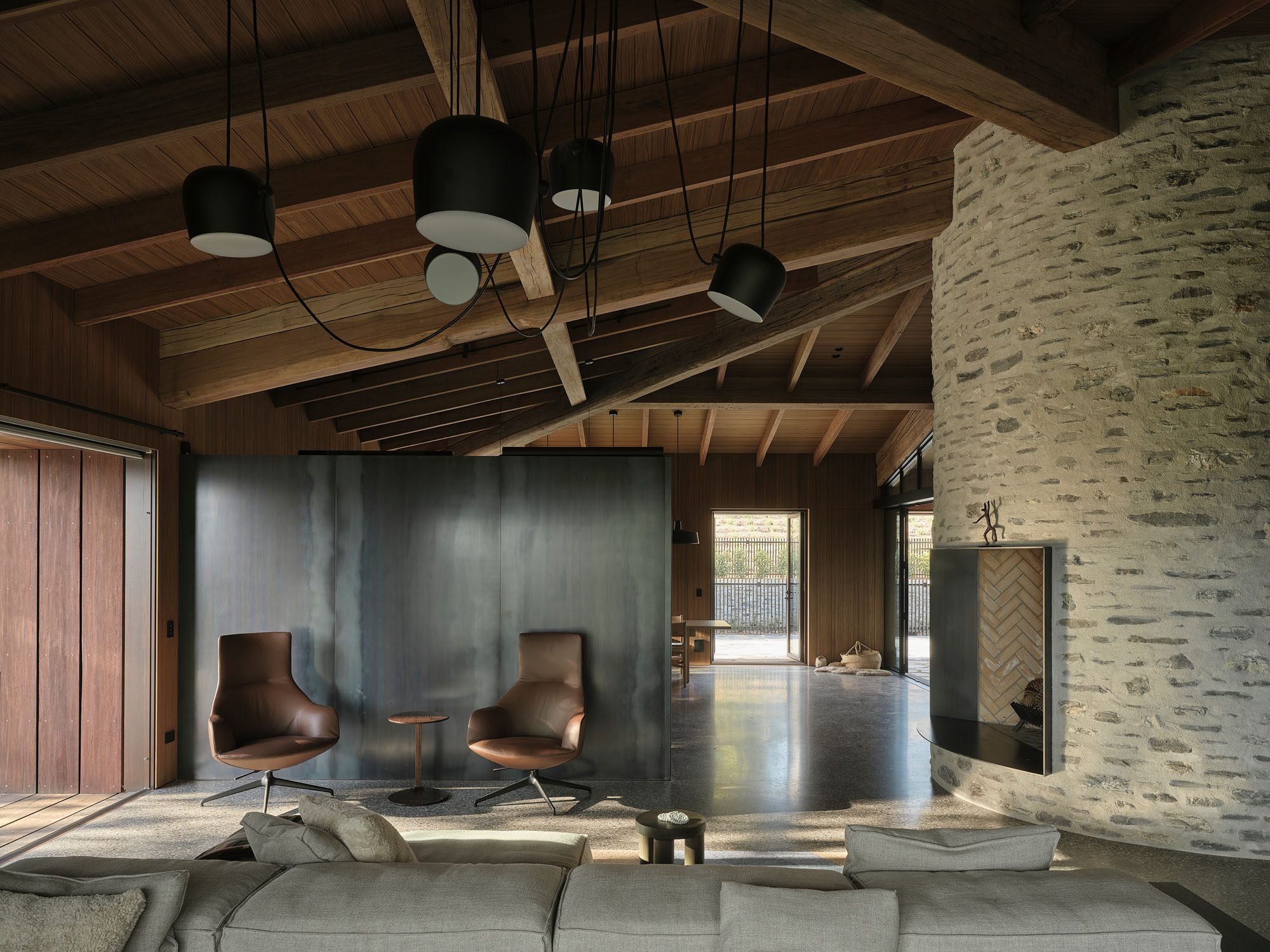
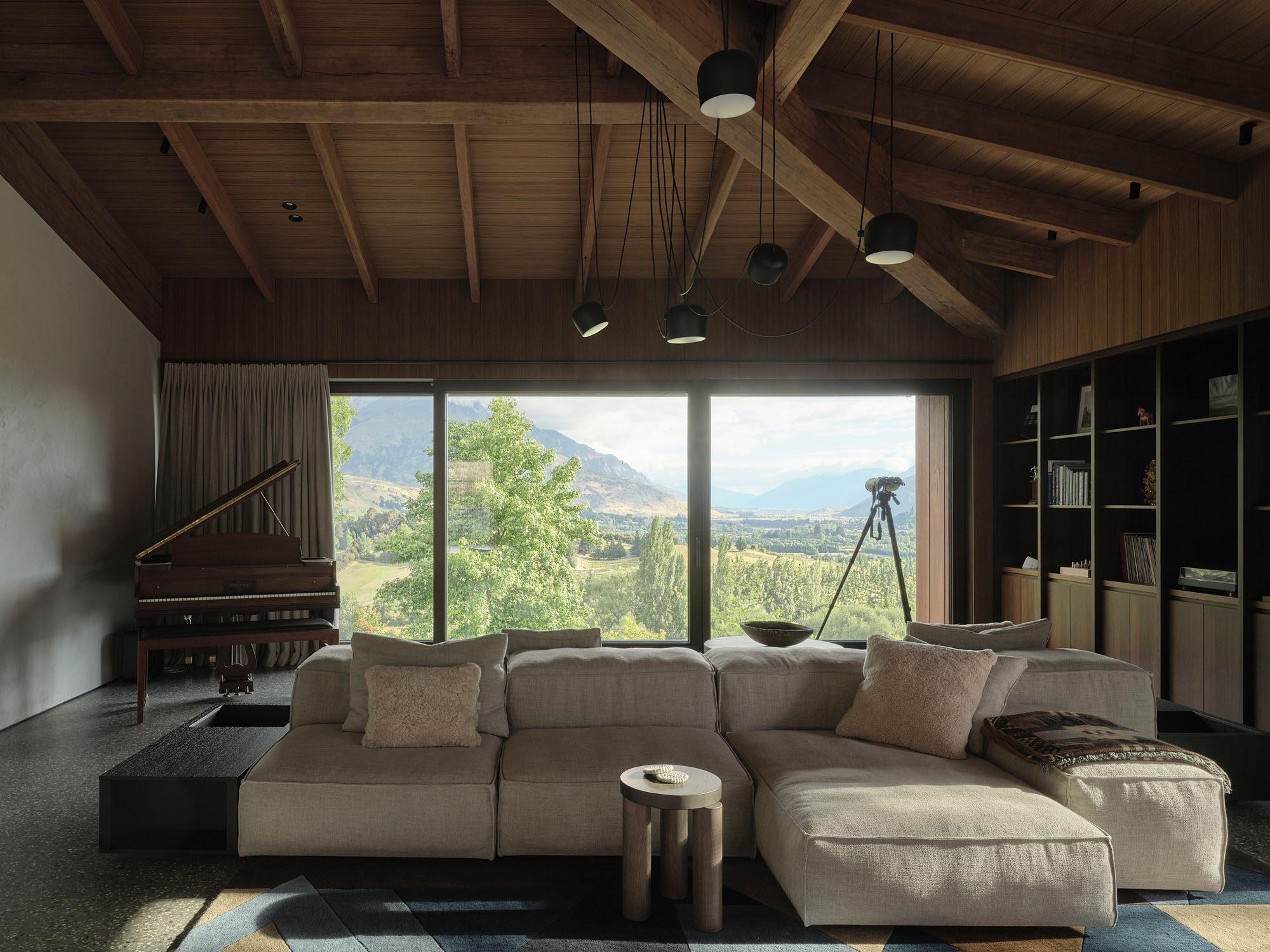
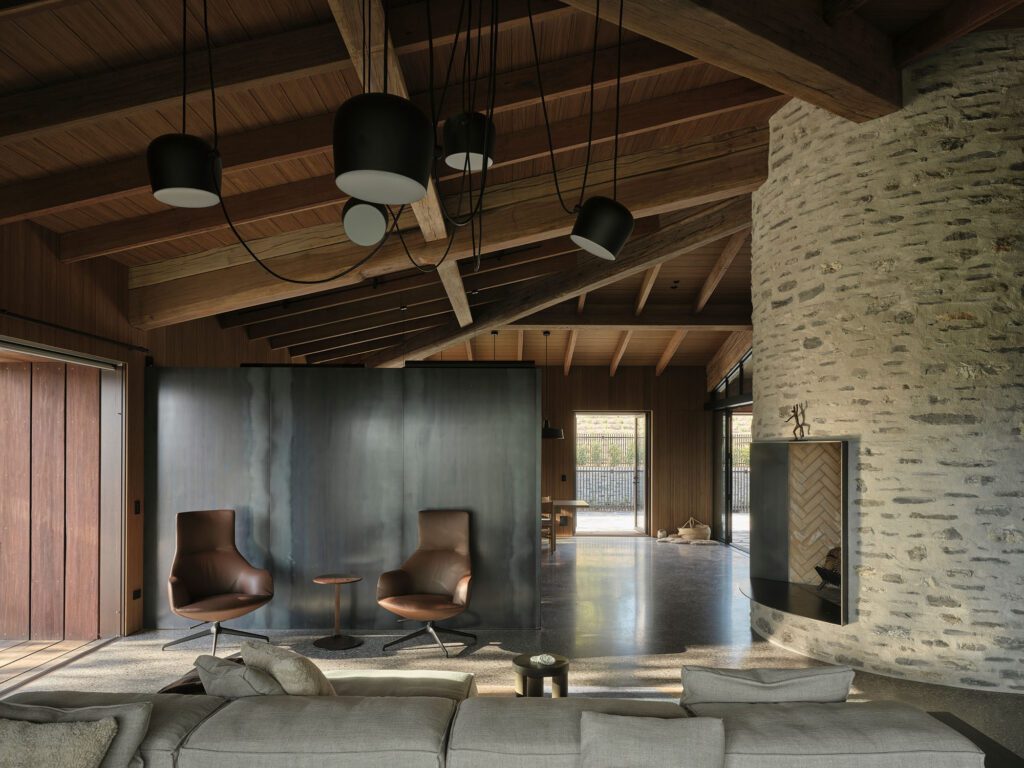
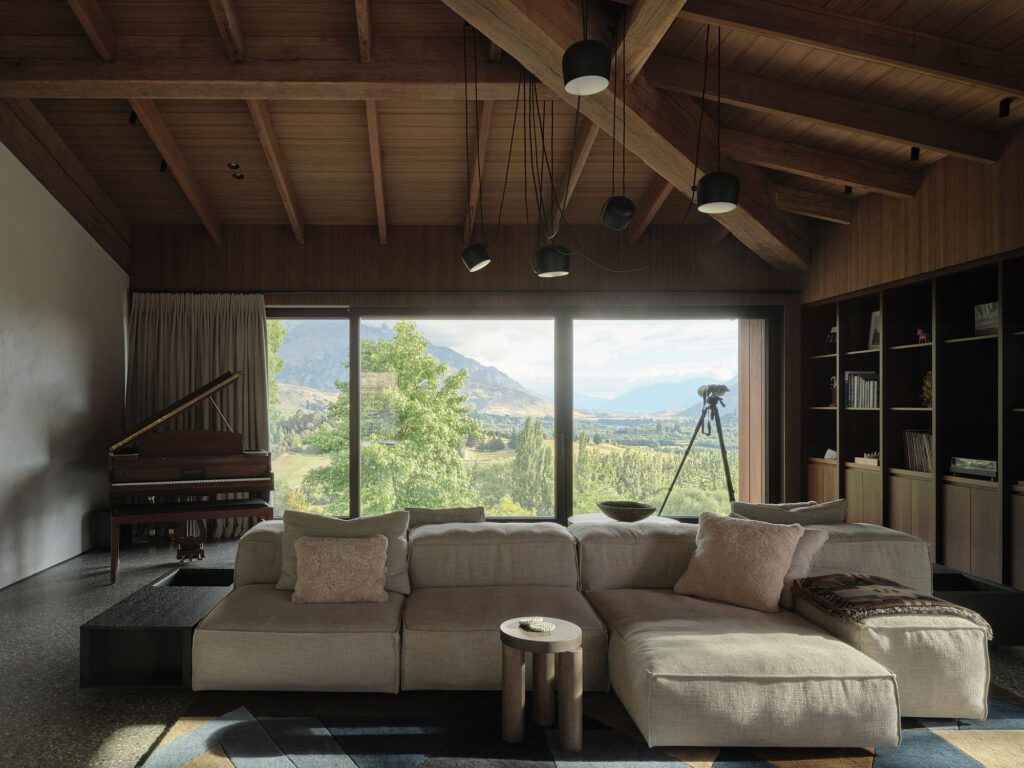
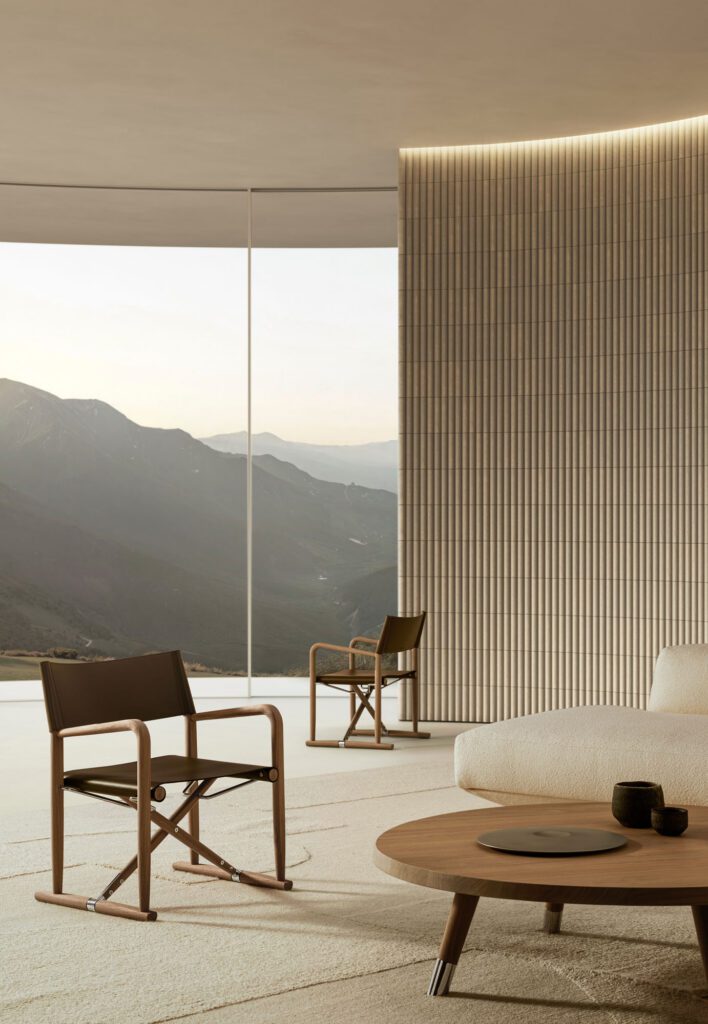
The living shed is immediately to the left of the front door. A hallway takes you past a semicircular stone structure to a framed picture window that explodes towards the south. “[We] really wanted to deliver that big wow moment,” says Rich, “that very unexpected view towards Kingston and the end of the lake.”
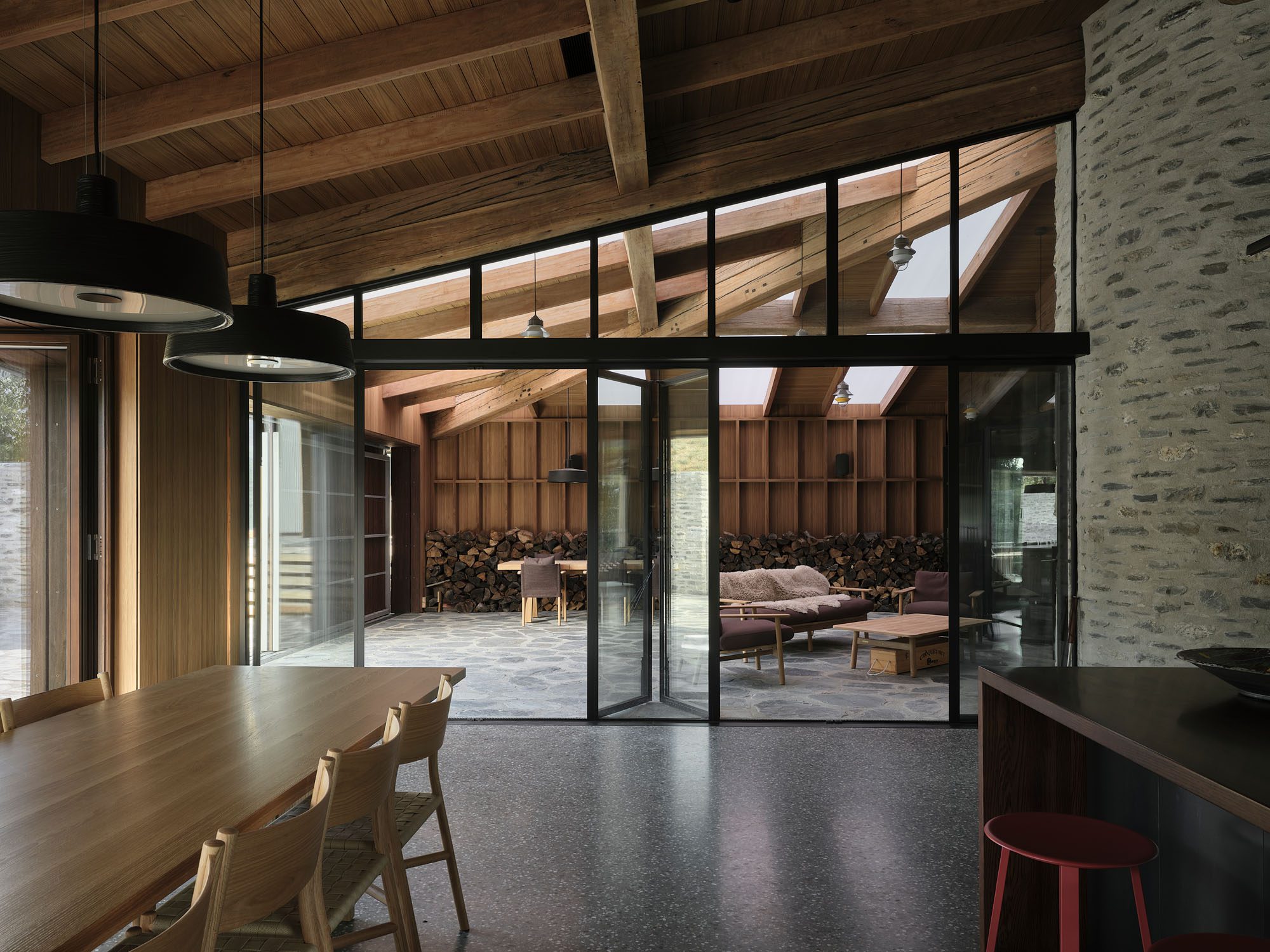
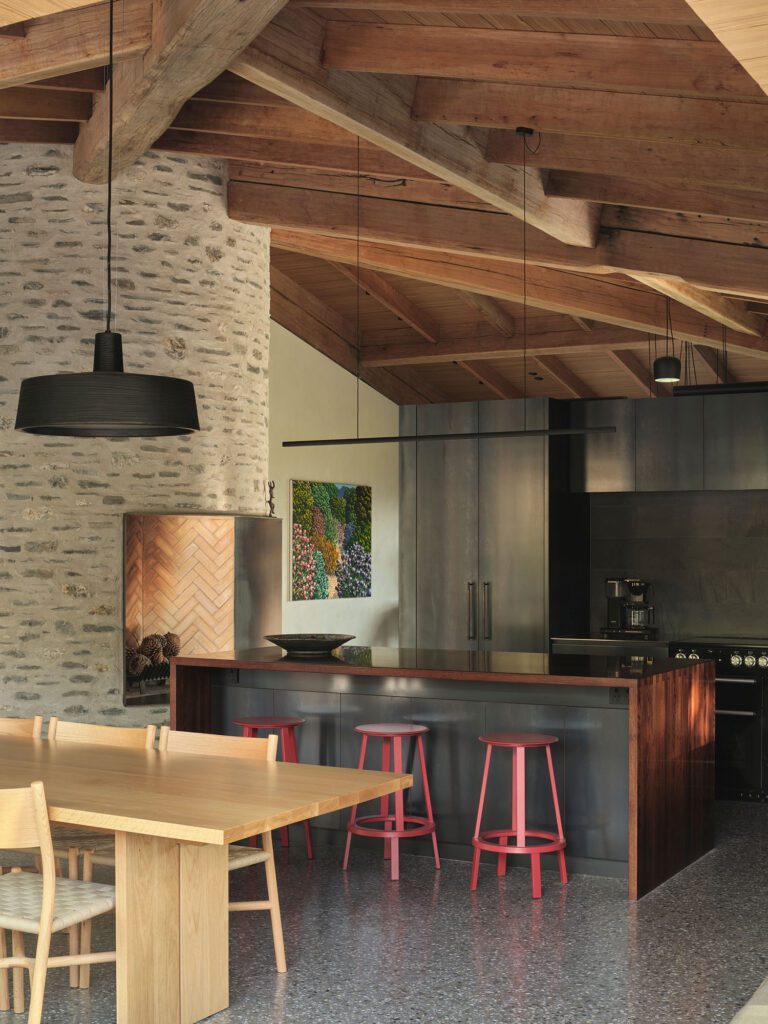
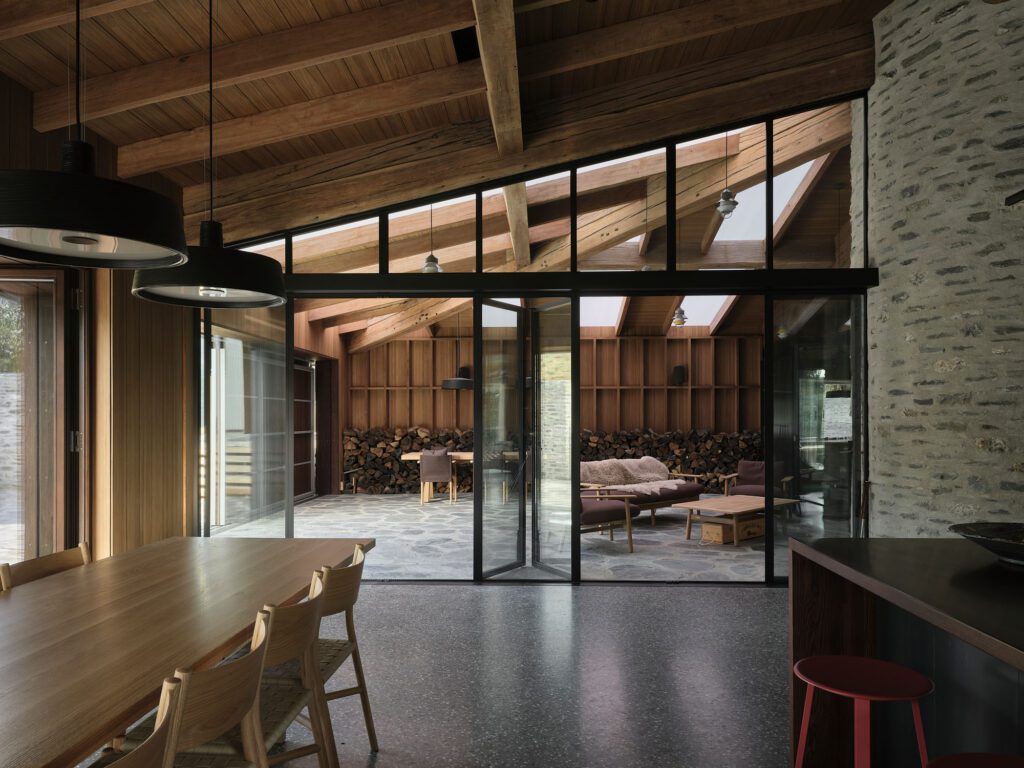
The living room is anchored by polished concrete floors, while a combination of plastered and timber-clad walls softens the space, bringing warmth to the enclosure.
Above, a radiating structure of recycled Australian hardwood heritage beams fans outwards from a central point — leading the eye inwards to the heart of the room.
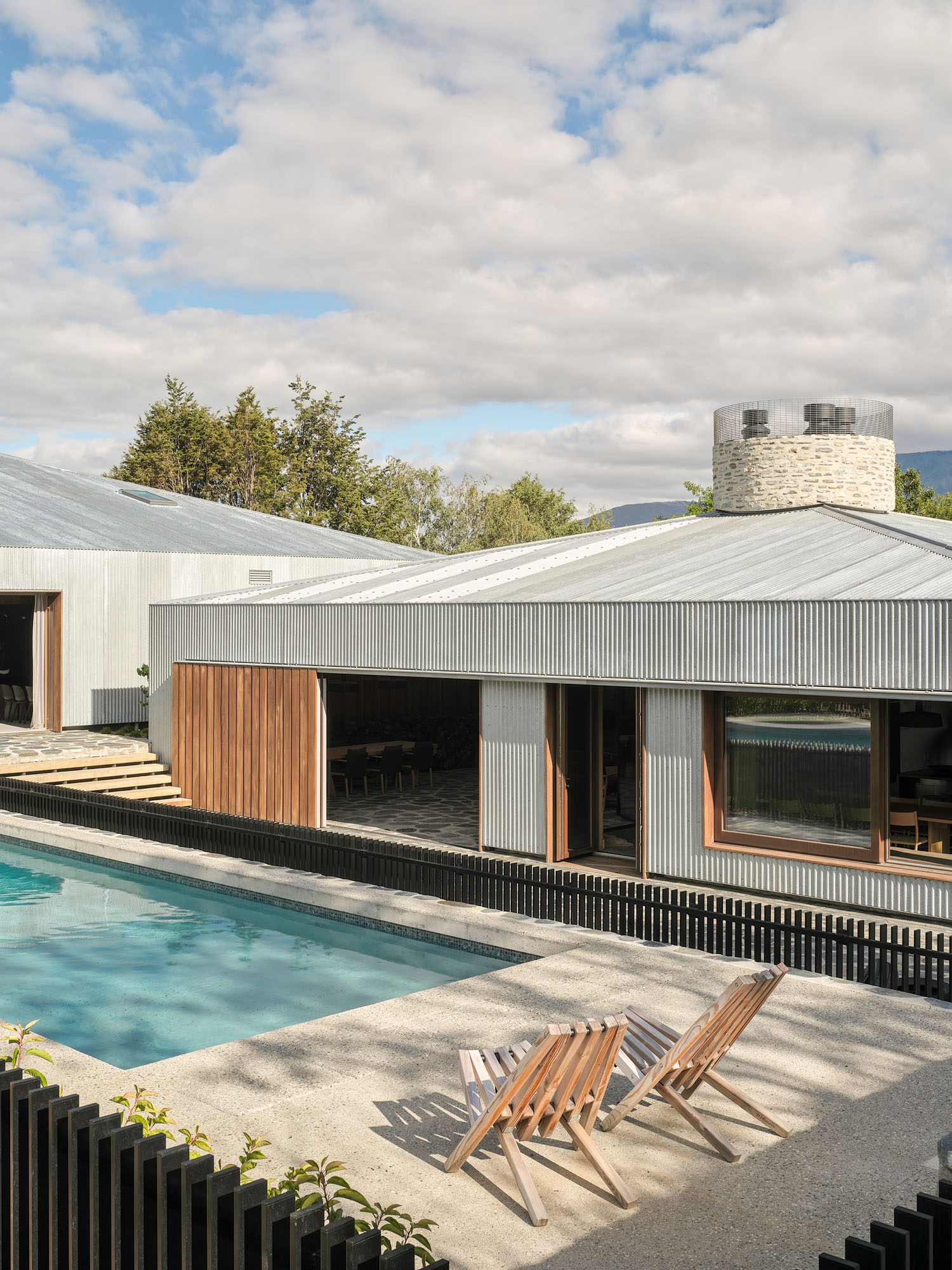
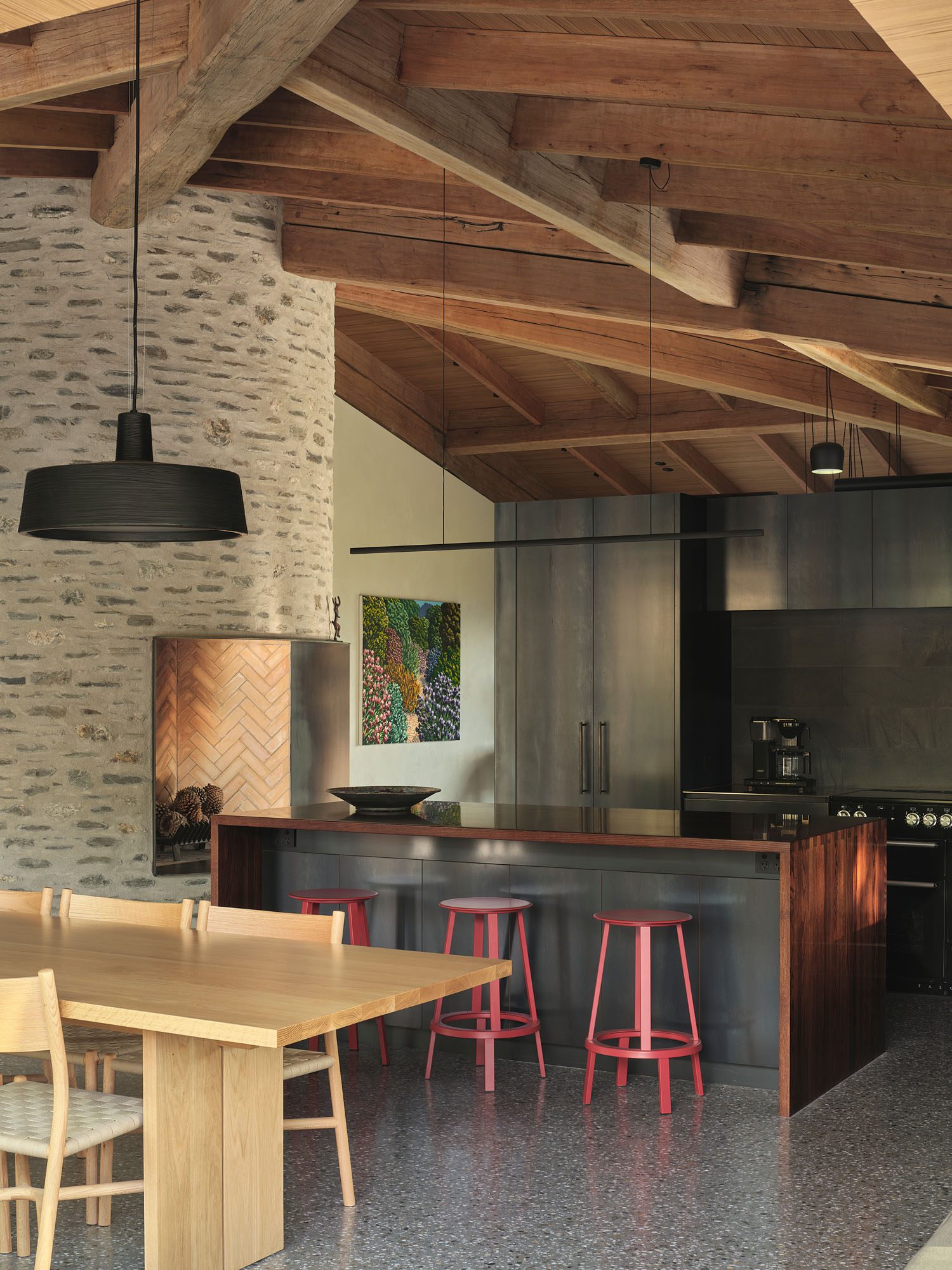
The circular structure is a large, central hearth wrapped in Central Otago schist.
“It’s a concrete drum that was cast in situ,” says Michael, explaining the methodology. “All the timber beams are connected there. The stone doesn’t run through the roof — the stone above is on a shelf angle that they bent in the shape of the roof.”
The drum inhabits both the interior and exterior.
The glazed divider that abuts it can be opened up so that the spaces are suffused with natural airflow, sun, flexibility, and expanse.
This is both the structural spine of the roof and the social core of the house. Within it sit two fires: one opening to the interior living room, the other to the outdoor room beyond — on a still evening, flames flicker on both sides of the same stone mass, dissolving the boundary between inside and out, and making the fireplace the heart of the entire dwelling.
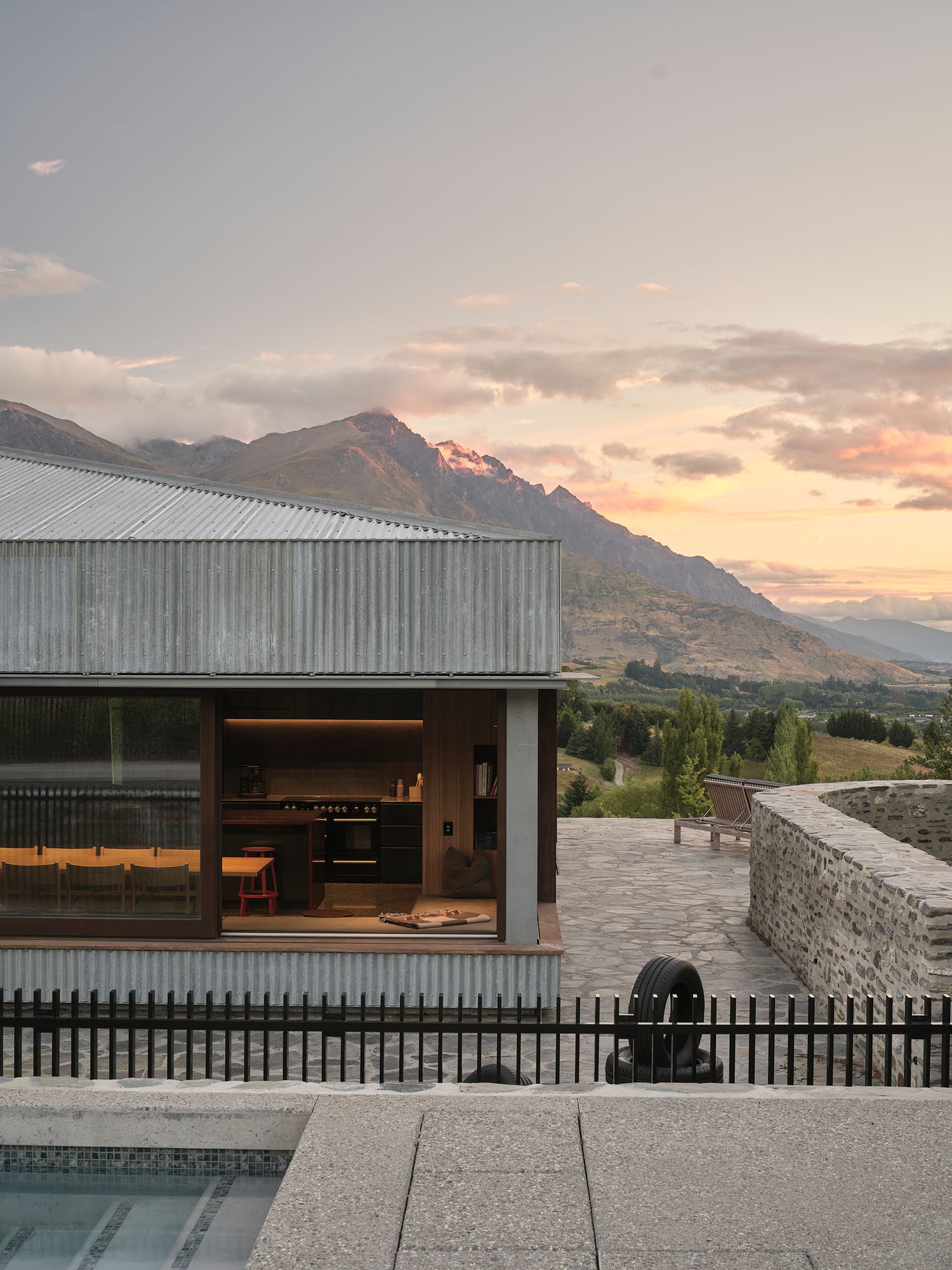
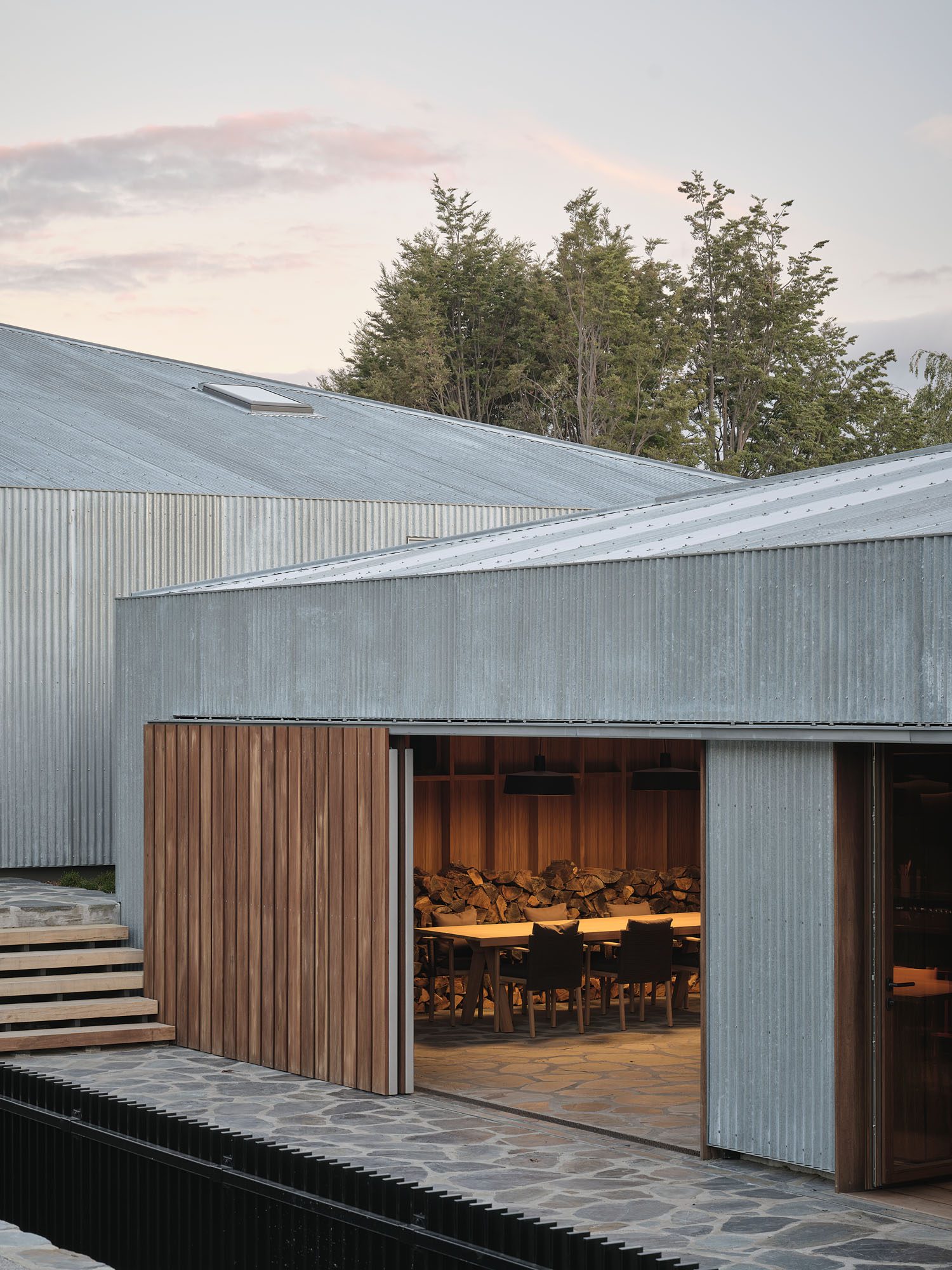
The semi-enclosed outdoor living room reminds one of RTA’s semi-porous external spaces, which have been explored in both Rich’s own Cardrona hut and in Bob’s Cove House — areas that offer year-round flexibility and shelter.
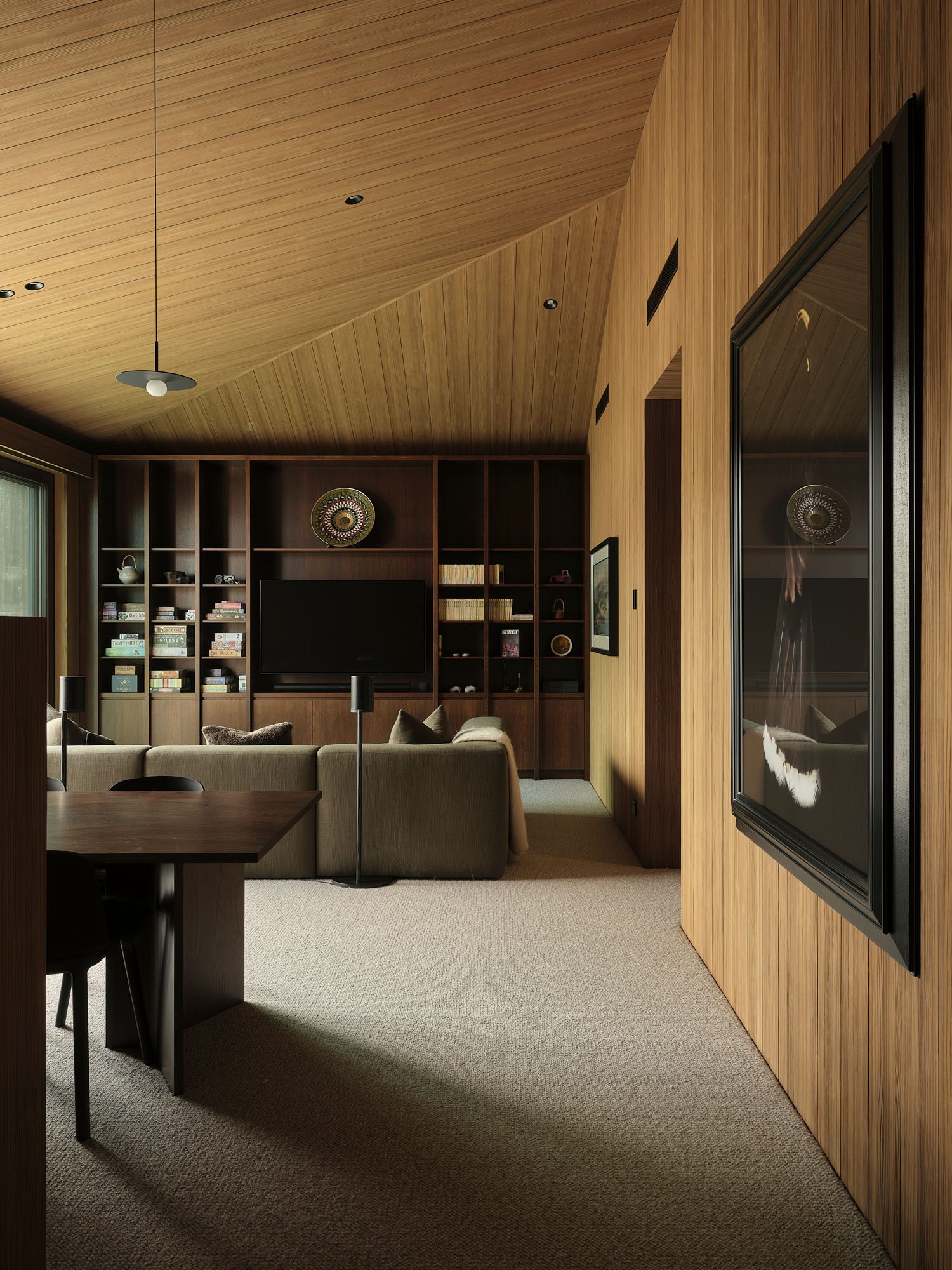
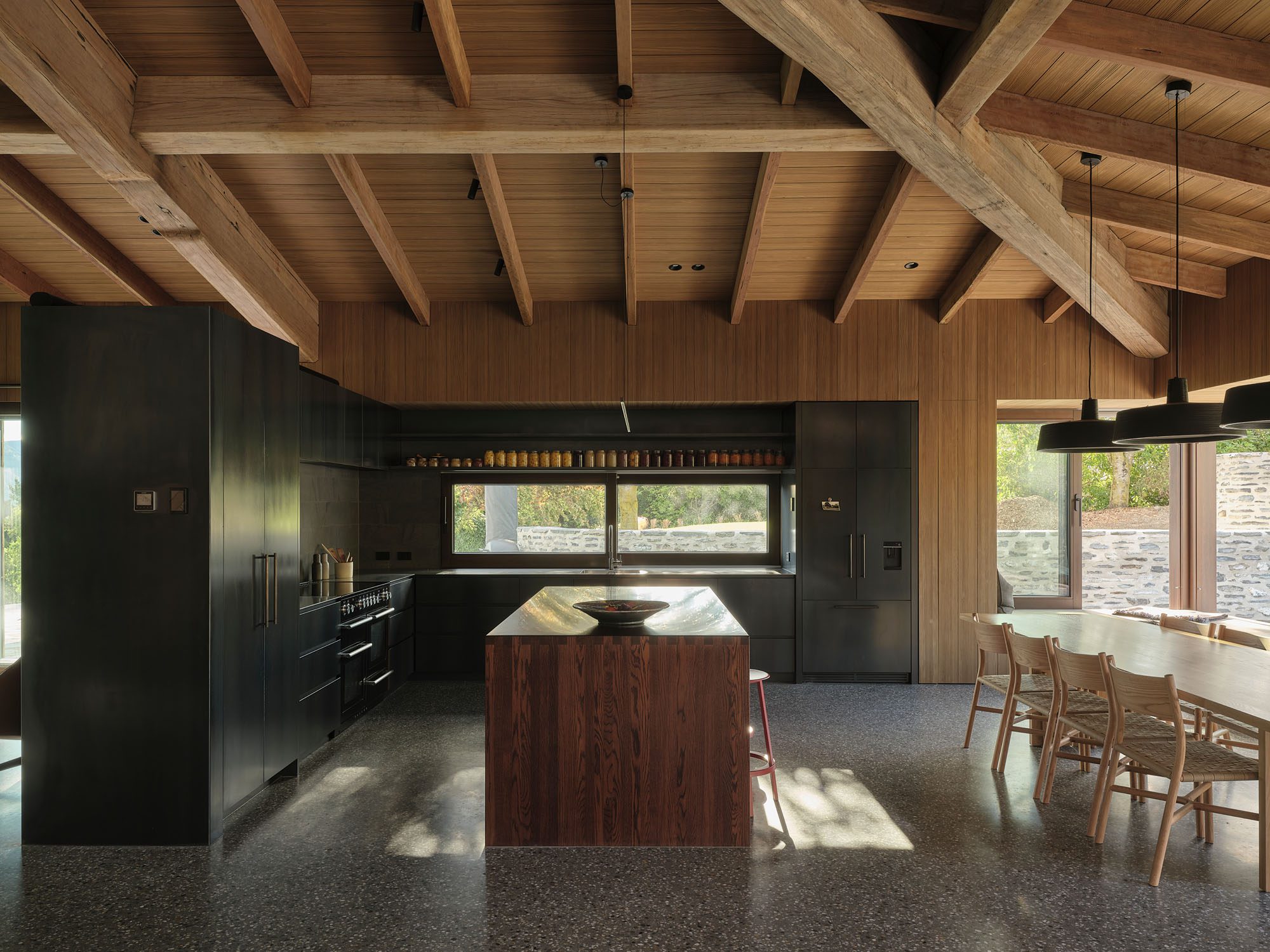
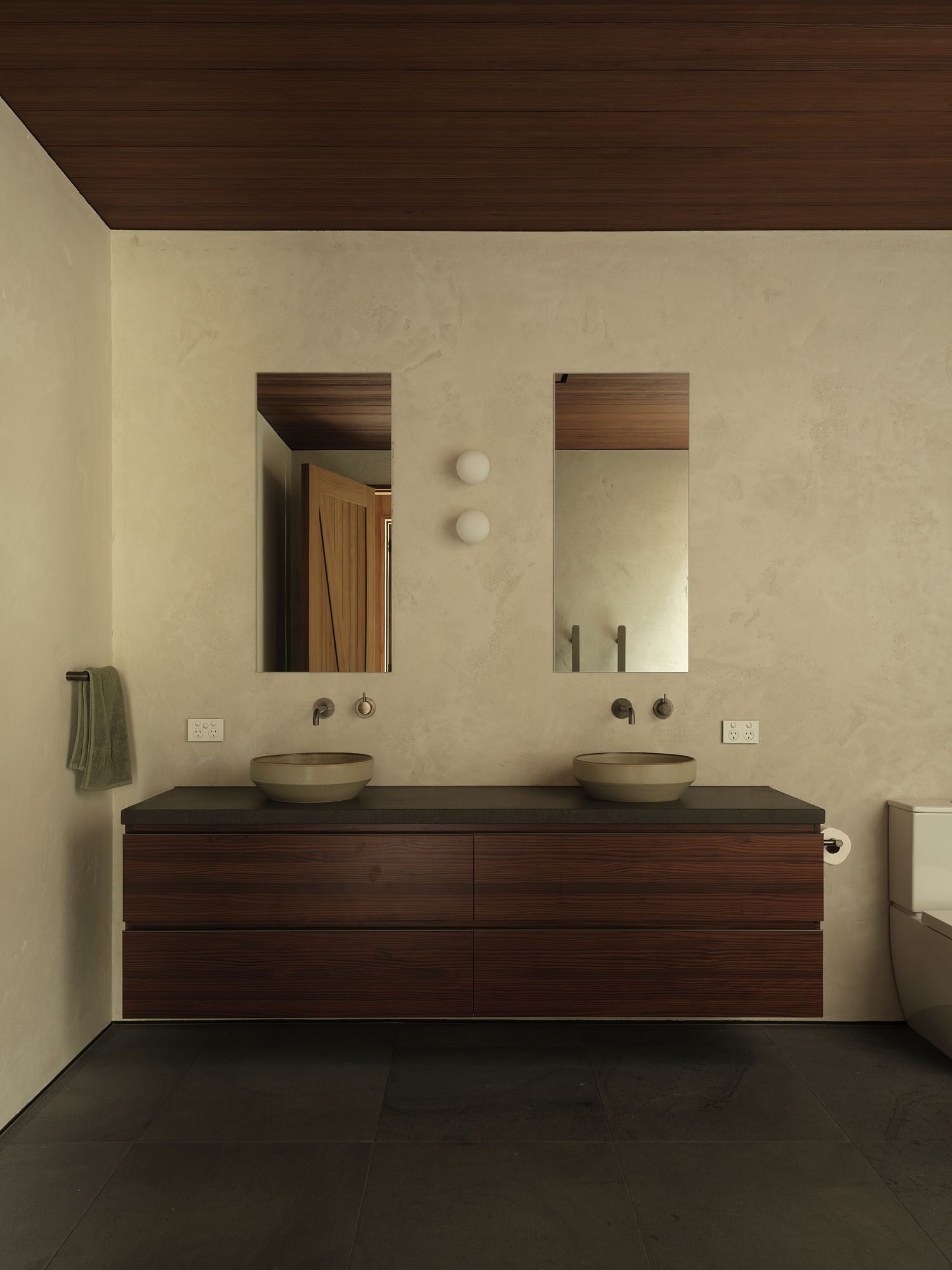
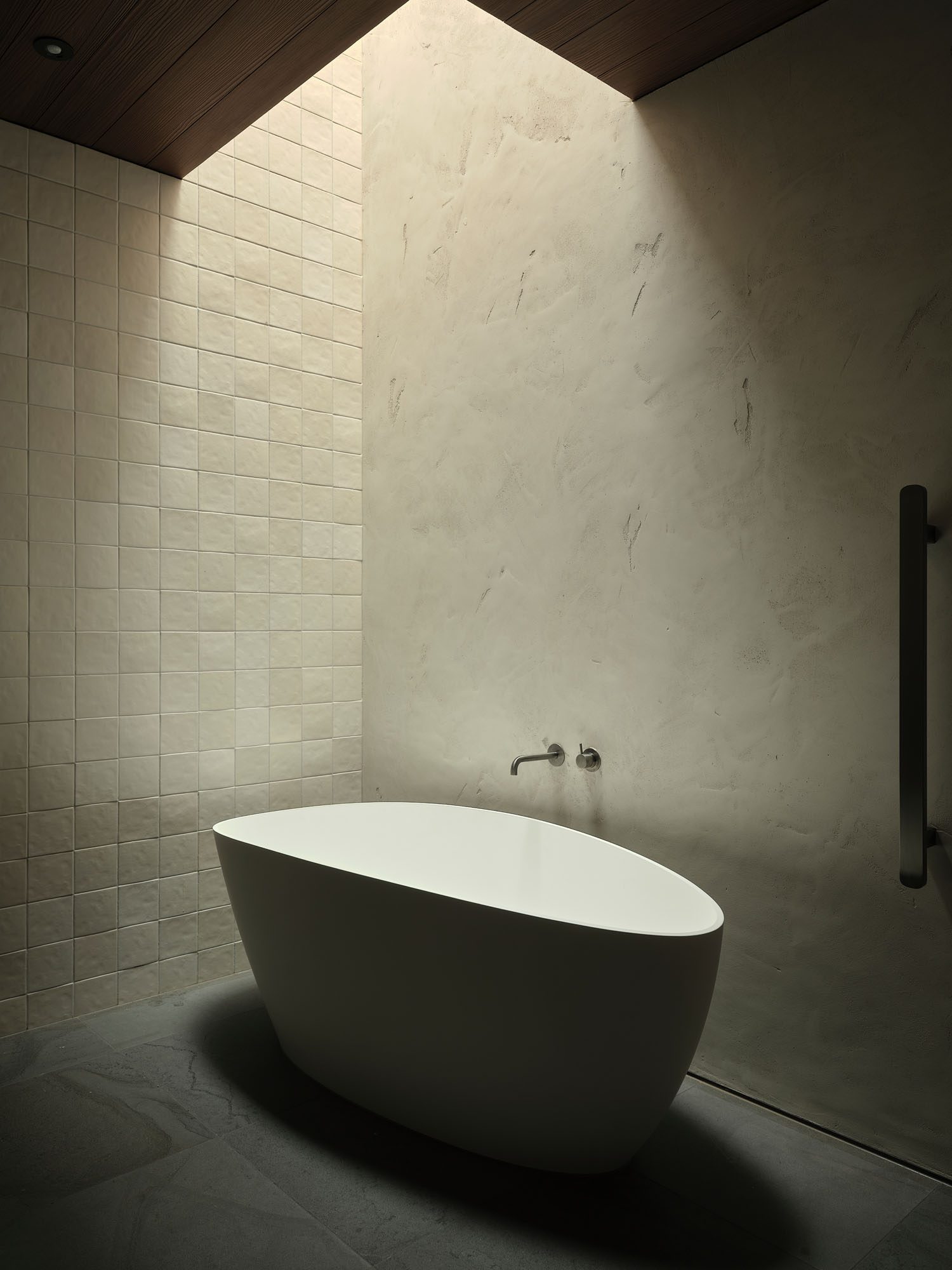
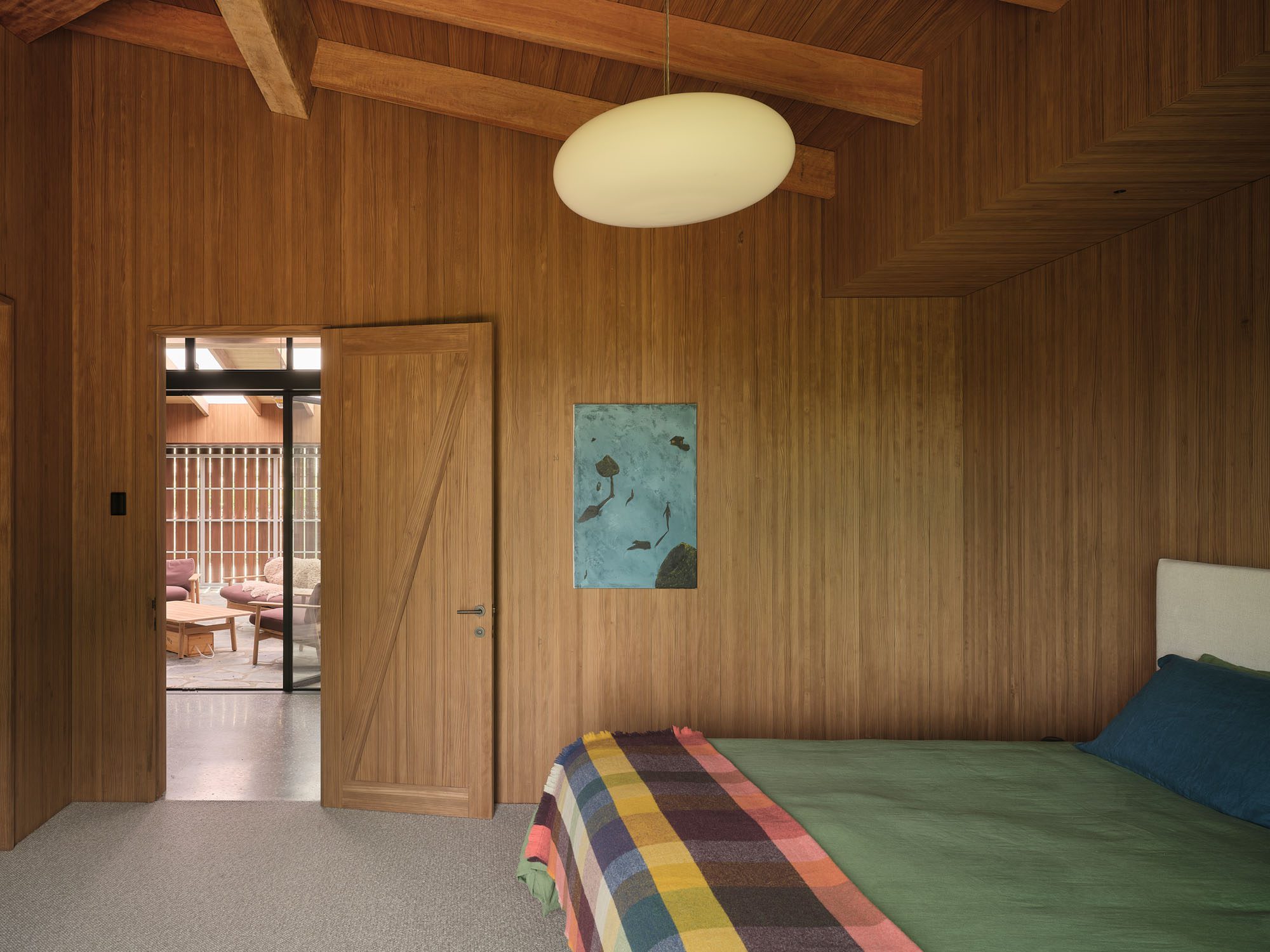
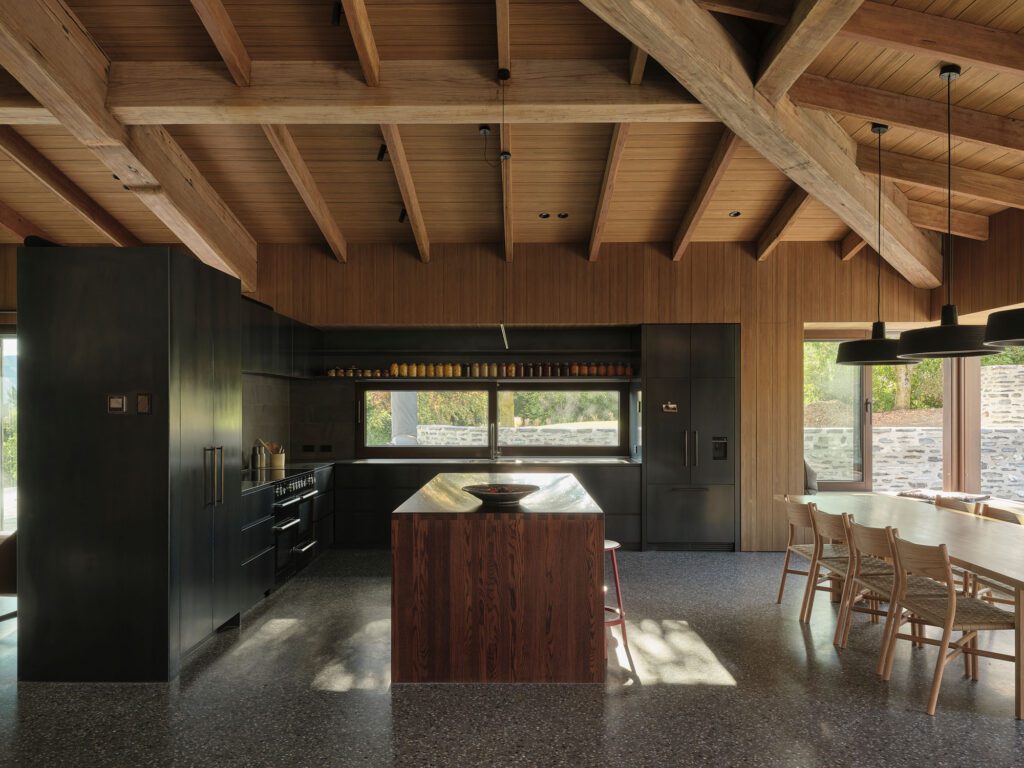
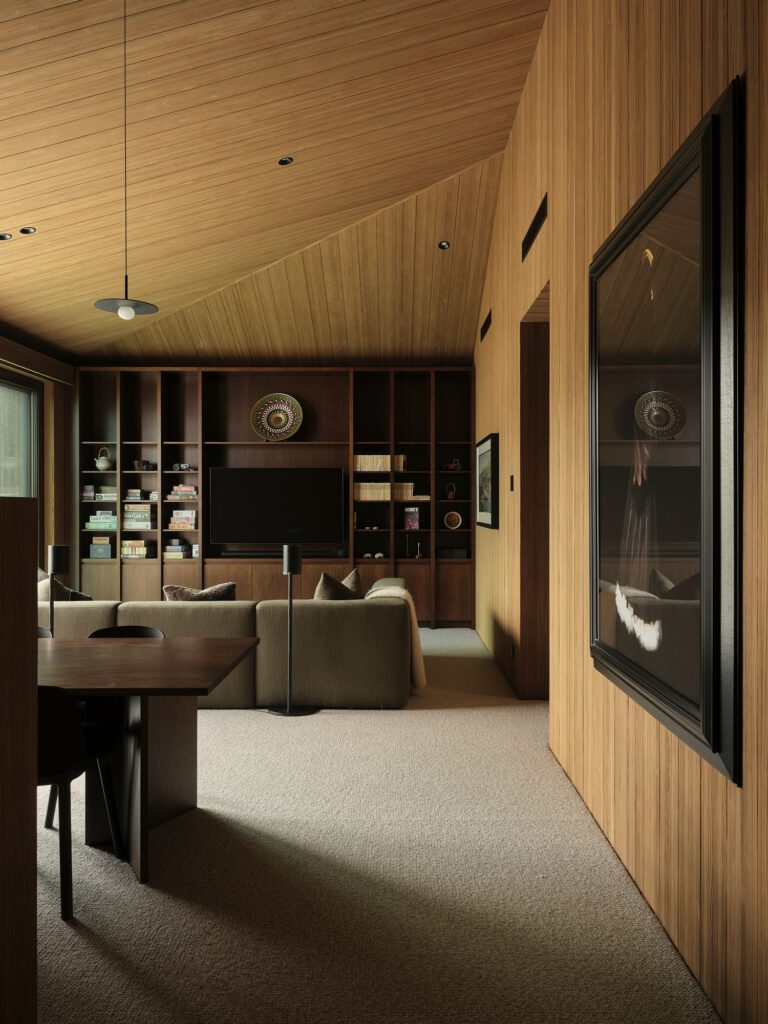
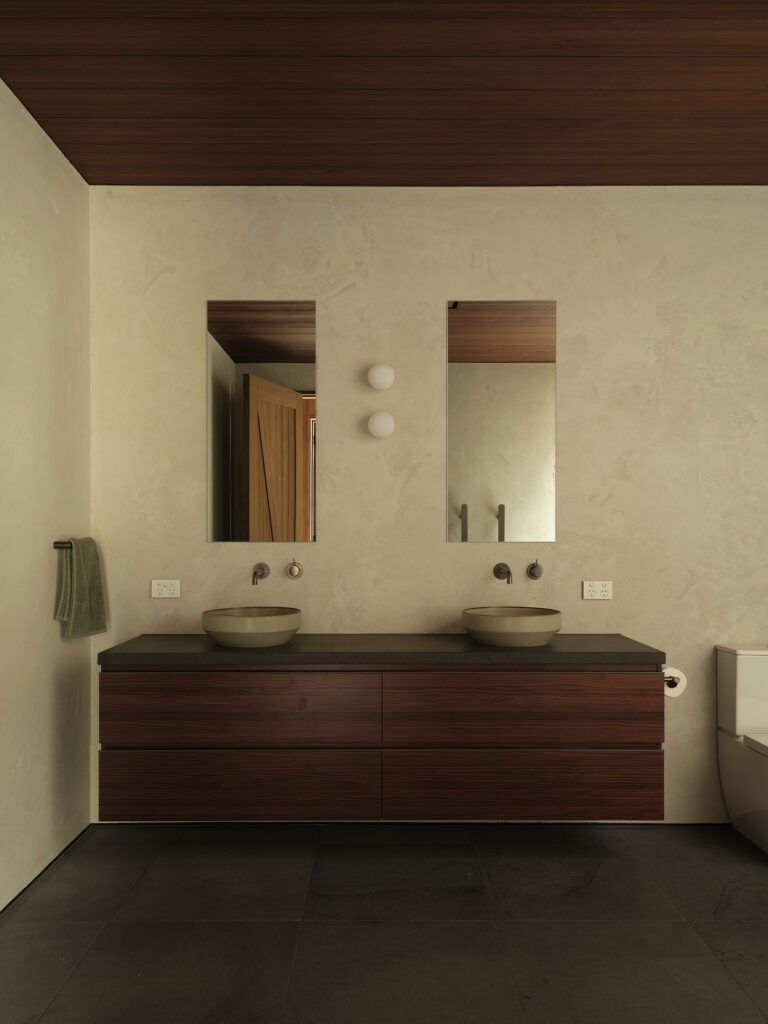
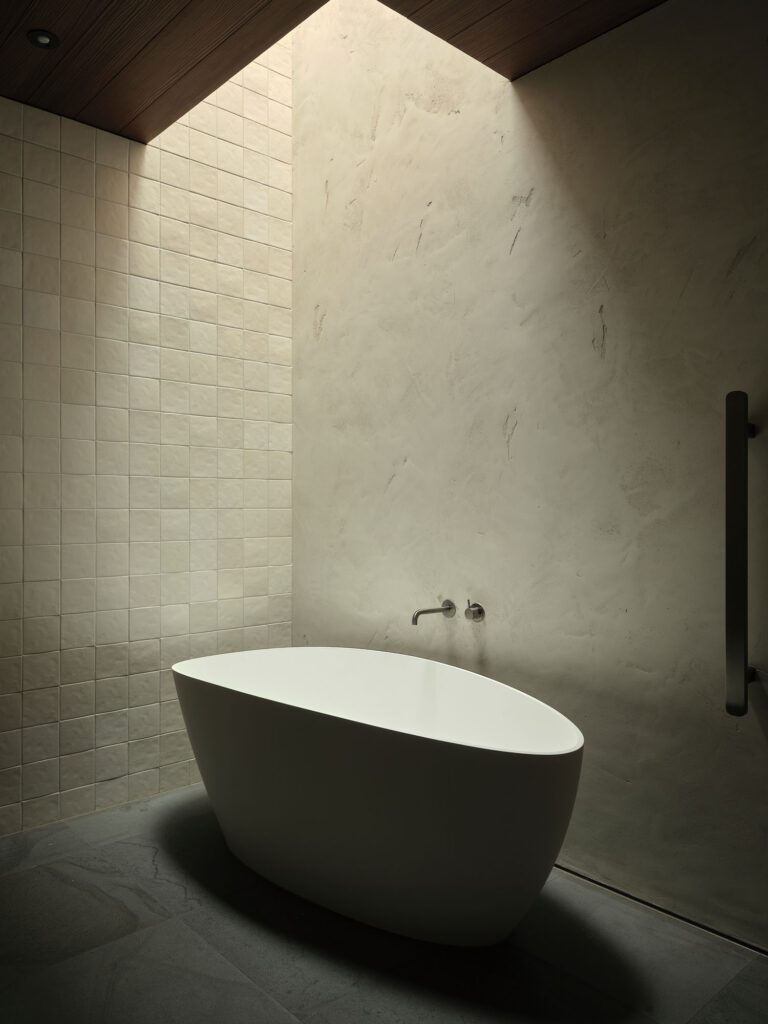
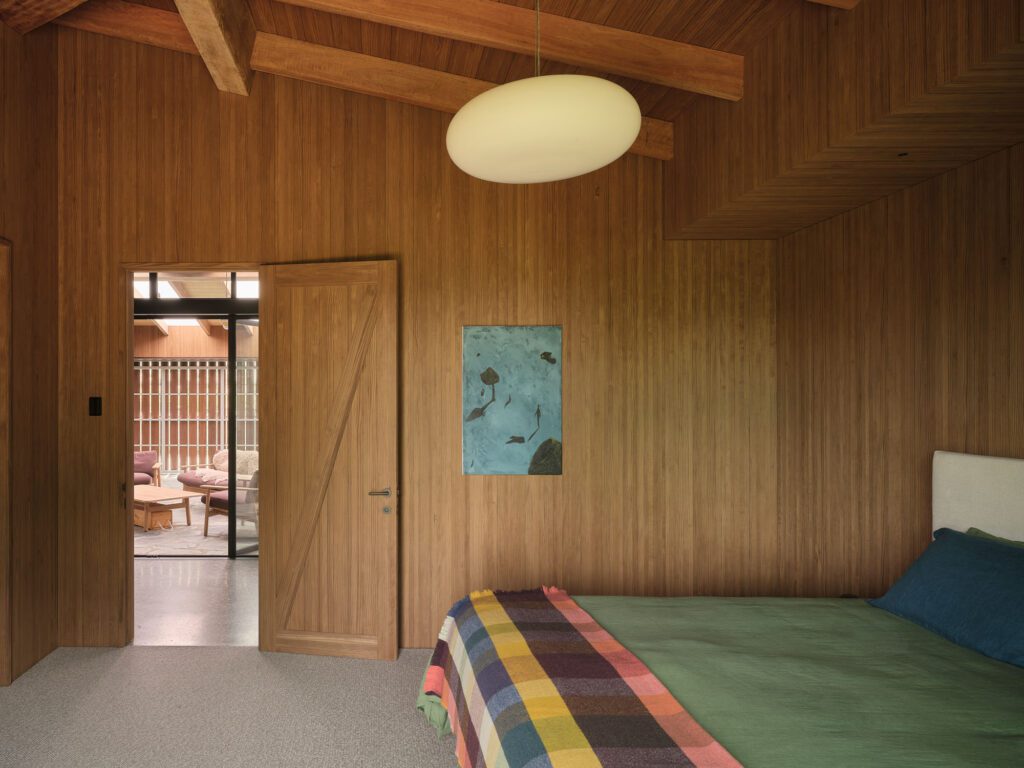
Shed two has a more relaxed interior, with walls and ceiling clad in natural timbers. The family bathroom has a hand-applied polished plaster finish in green tones.
“We designed this house to be really cosy,” says Michael. “There’s roaring fires, [it’s] warm — it really does come to life at night-time, particularly in the winter months.”
Back outside, the house is surrounded by places to escape various wind conditions. The west offers views to a lawn and a valley below, while the northern terrace has a pool, wedged against the hillside.
There are stairs that can lead you there, or, should you wish to keep going, you can continue past rows of vibrant lavender, alive with honey bees. Further up the hill and out of sight, there are rows of solar panels and the expanding views of hills and sky: bright and snow-covered in winter, sun-drenched and ochre during this tour.
A real skill is needed to balance something utilitarian — forms that were born from pure necessity and availability of materials back in the early days of colonial occupation here — with something altogether luxurious. RTA has accomplished it masterfully in this home defined by two sheds and the prevailing scent of lavender.
Two Sheds was named the Readers’ Choice Home of the Year 2026.
Project Credits
Architecture: RTA Studio
Build: Dunlop Builders
Landscape Designer: Baxter Design
Words: Federico Monsalve
Images: Sam Hartnett
Coloured Concrete: Peter Fell
Timber: Abodo
Furniture: Studio Italia
Tapware: Plumbline
Lighting: ECC
Fireplace: The Fire Dept.
Interior Walls: Rockcote