

Sanctuary House by Rowe Baetens

Could there be a better design than a courtyard house to flex with the whims of the Auckland weather? Cue a double-courtyard design.

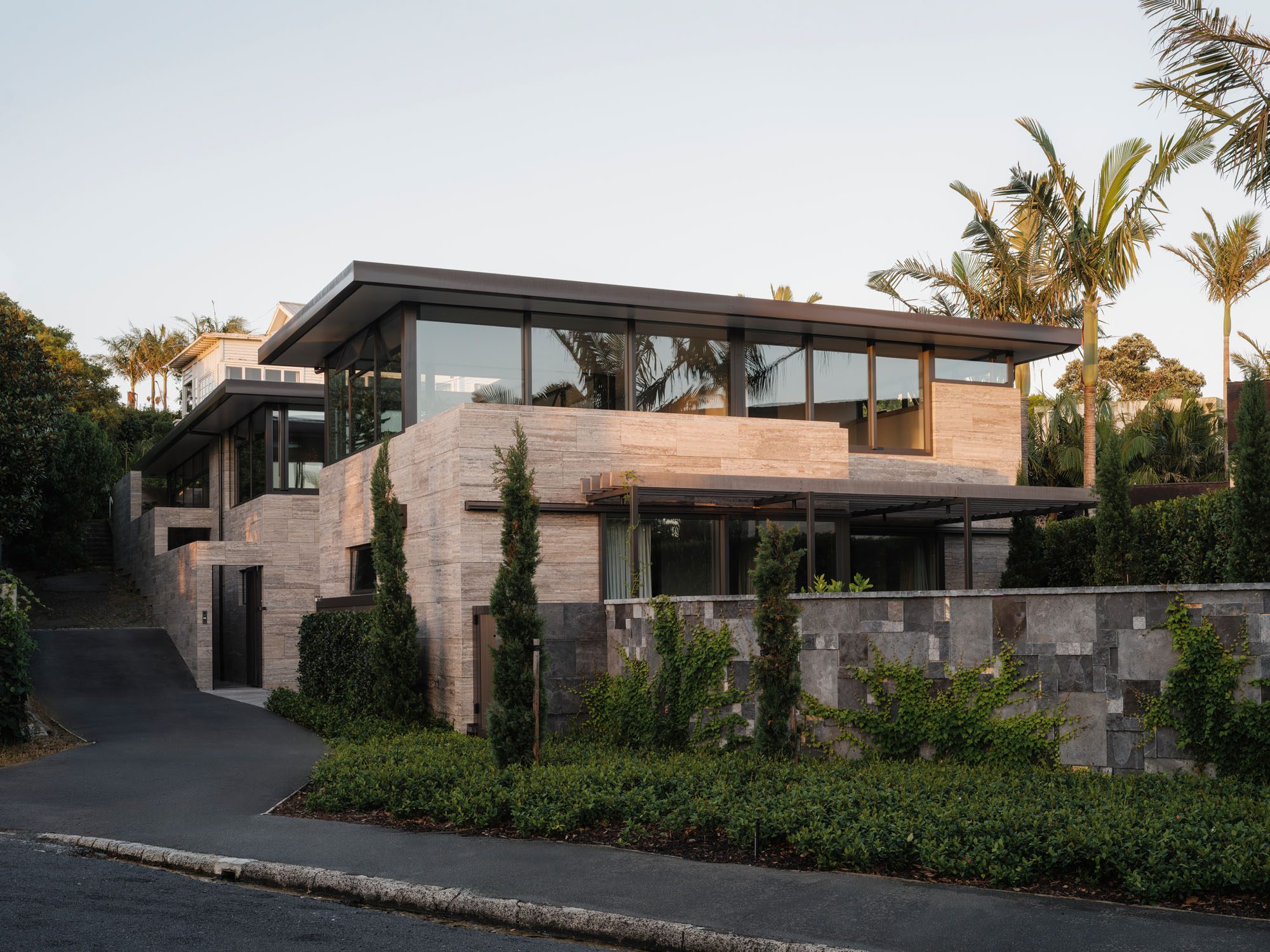
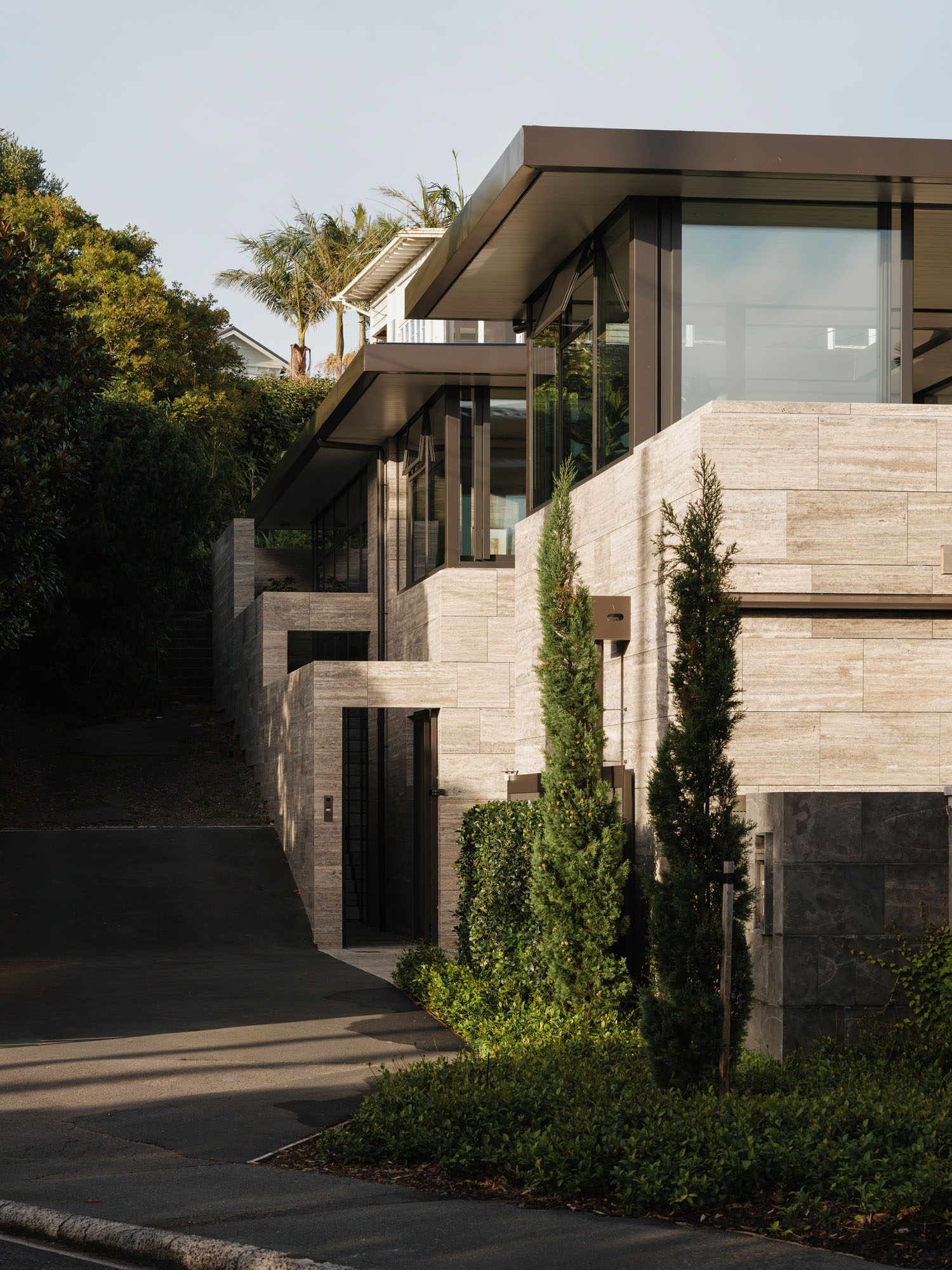
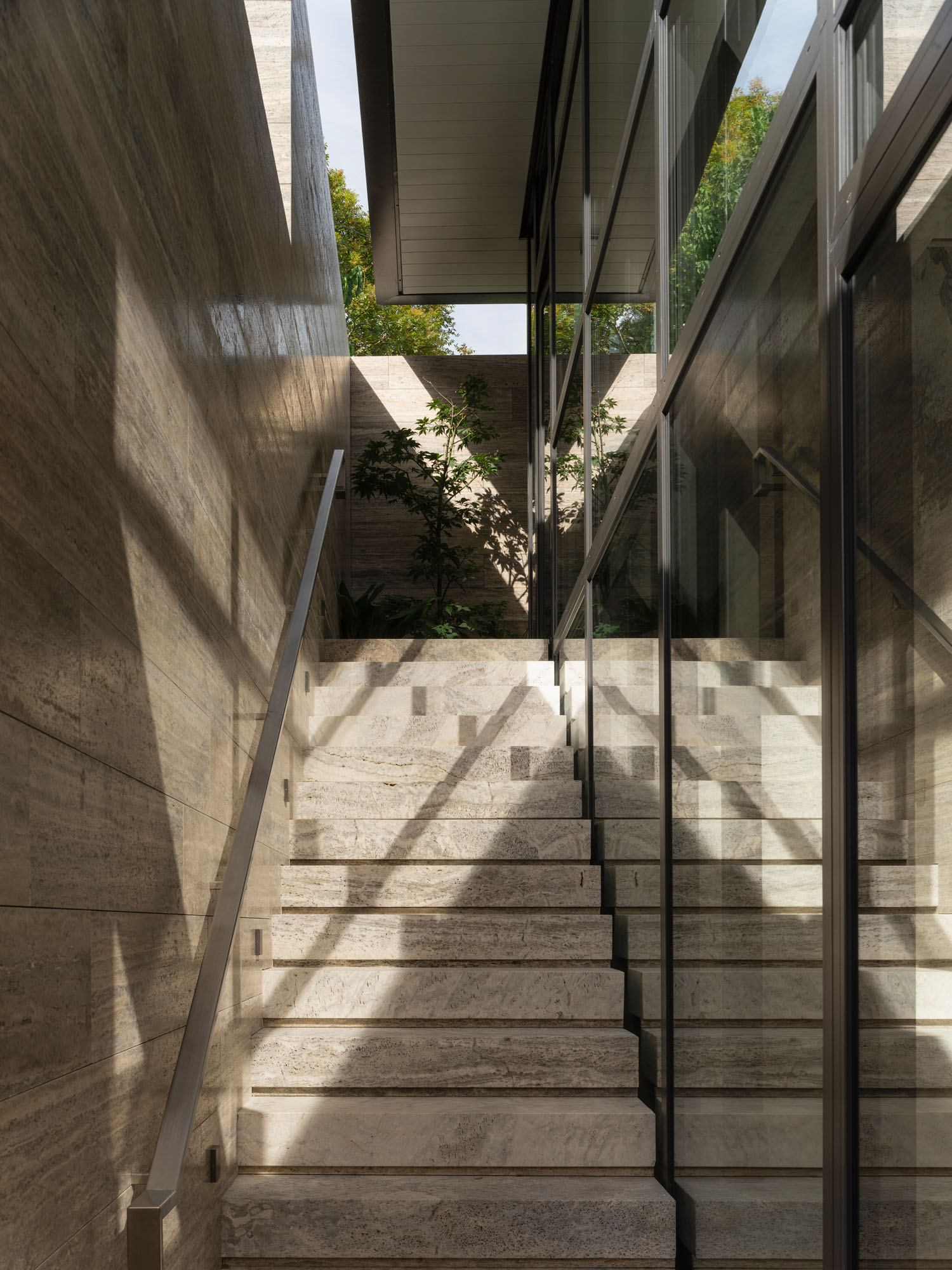
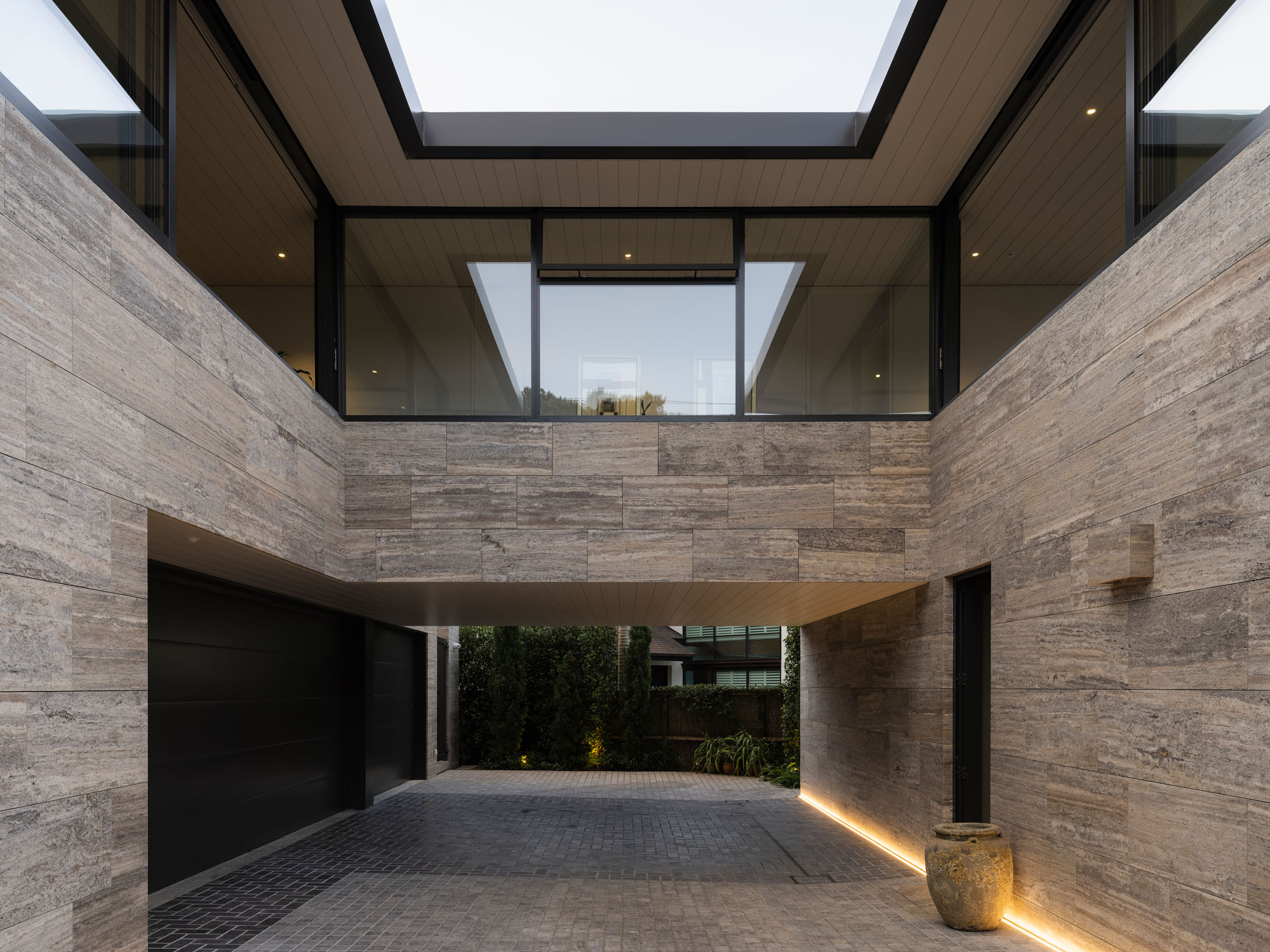
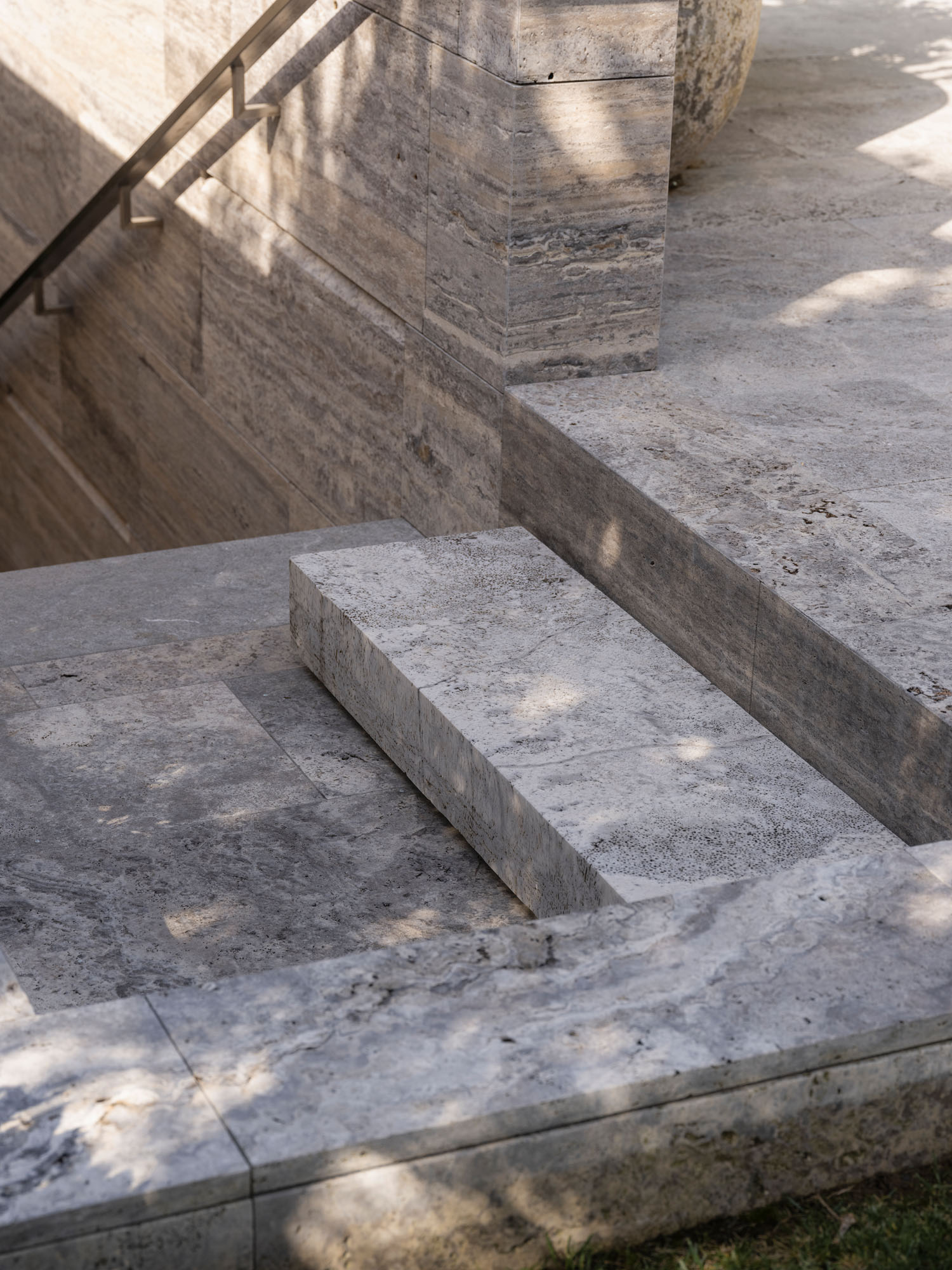
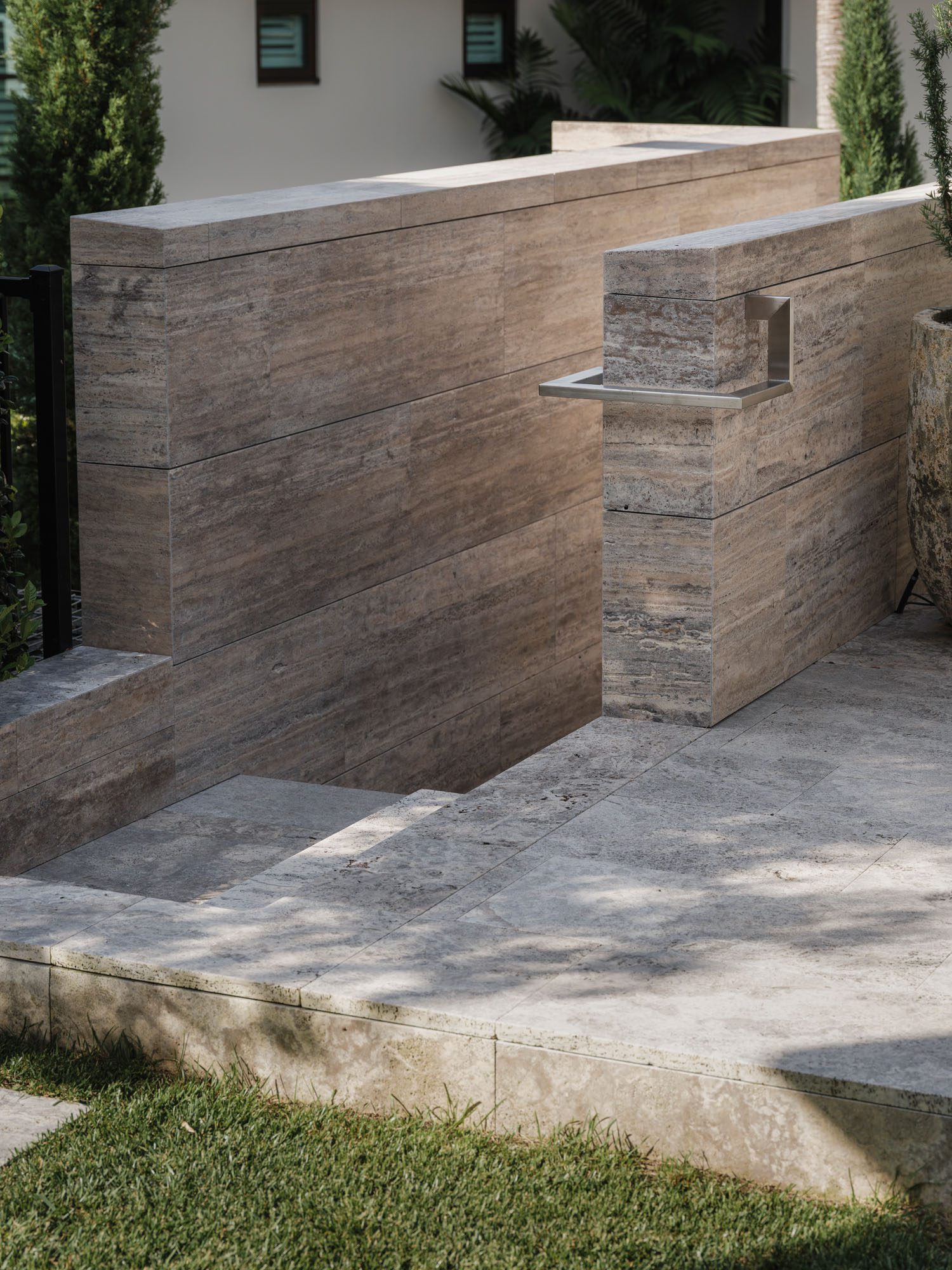
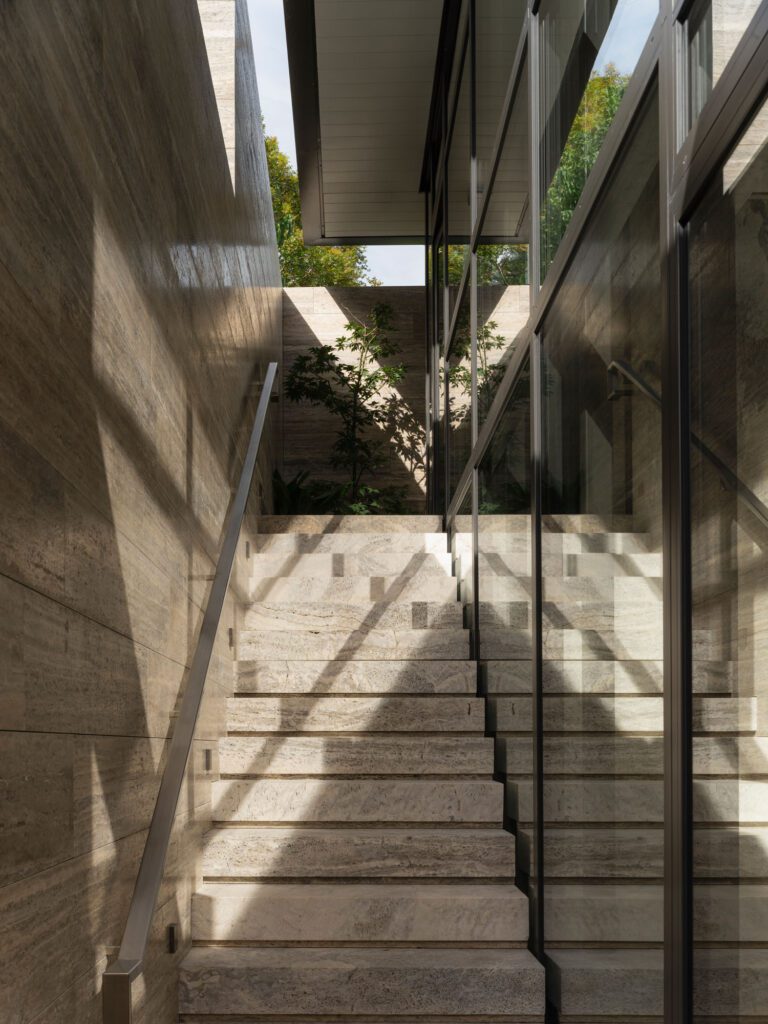
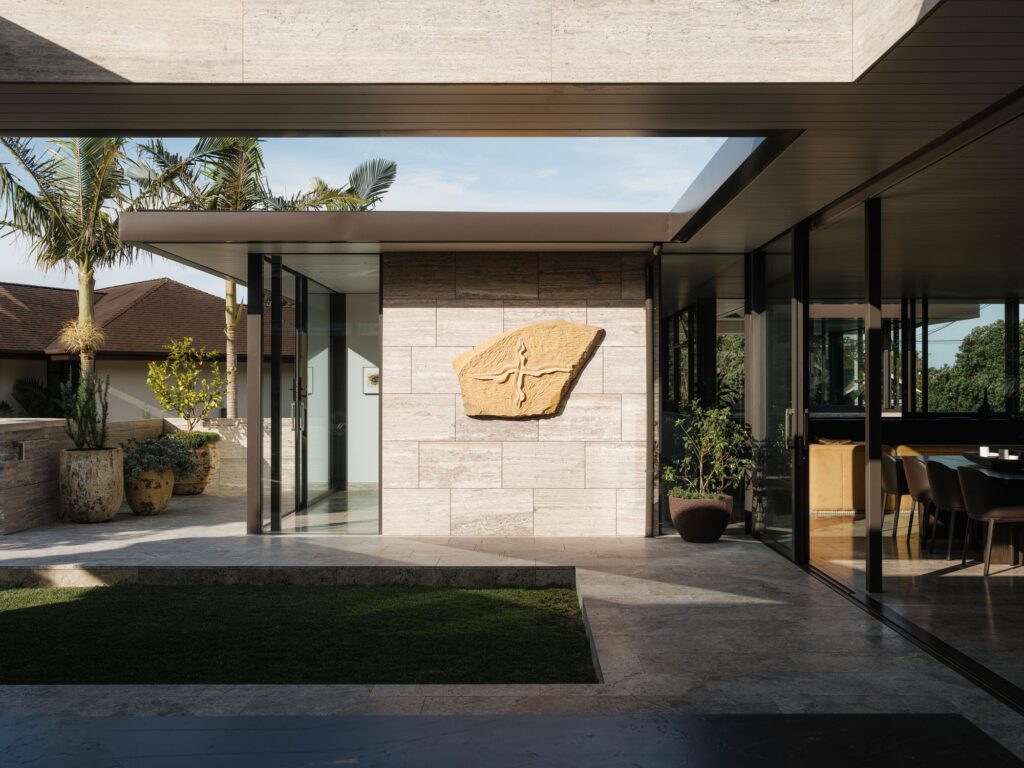
Visitors to this Milford property settled on a clifftop, just a sea-breeze from the sand, might think they’re seeing double from the outset. An entry on the eastern flank starts off as a narrow channel between monolithic walls before opening to elegant blocks of silver travertine that form a stairway carved in two by a glazed divider. Half tucks beneath the eaves and the other half runs internally; the mirror image illusion can be momentarily unsettling.

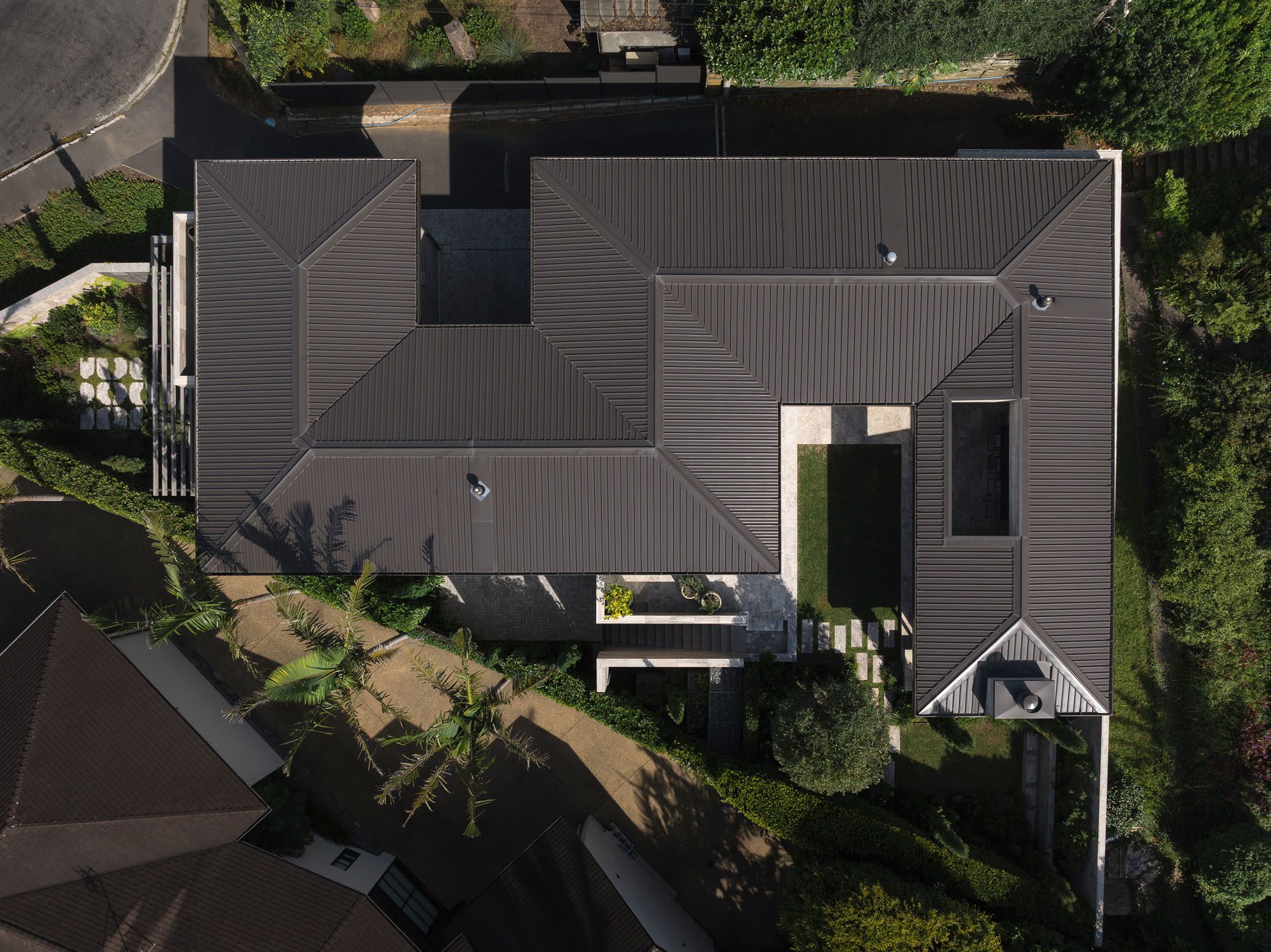
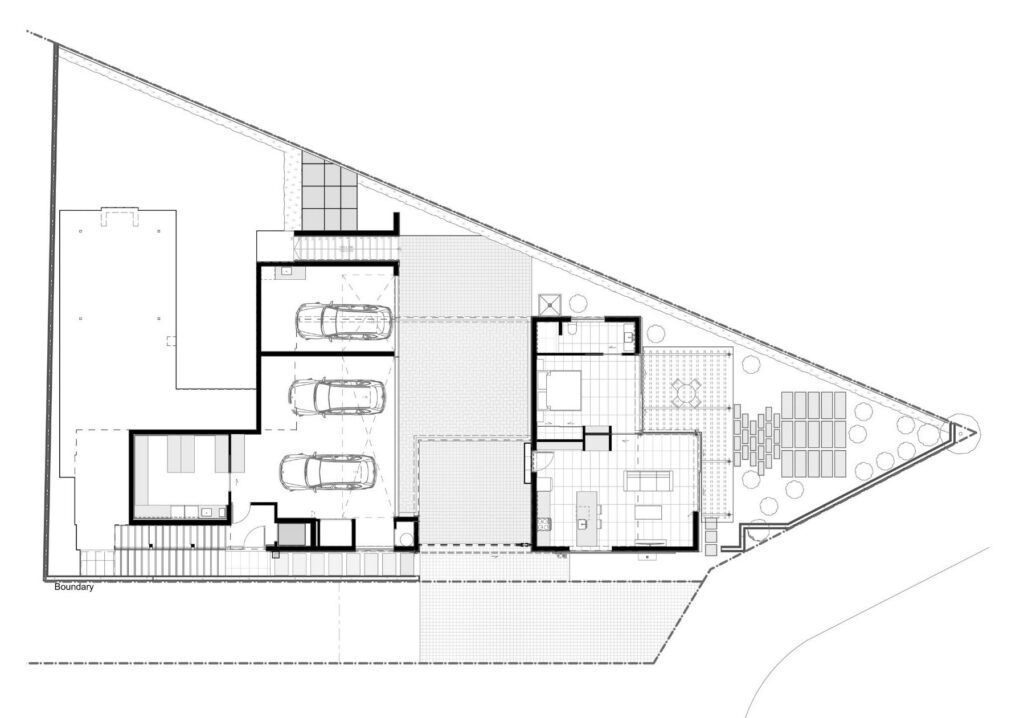
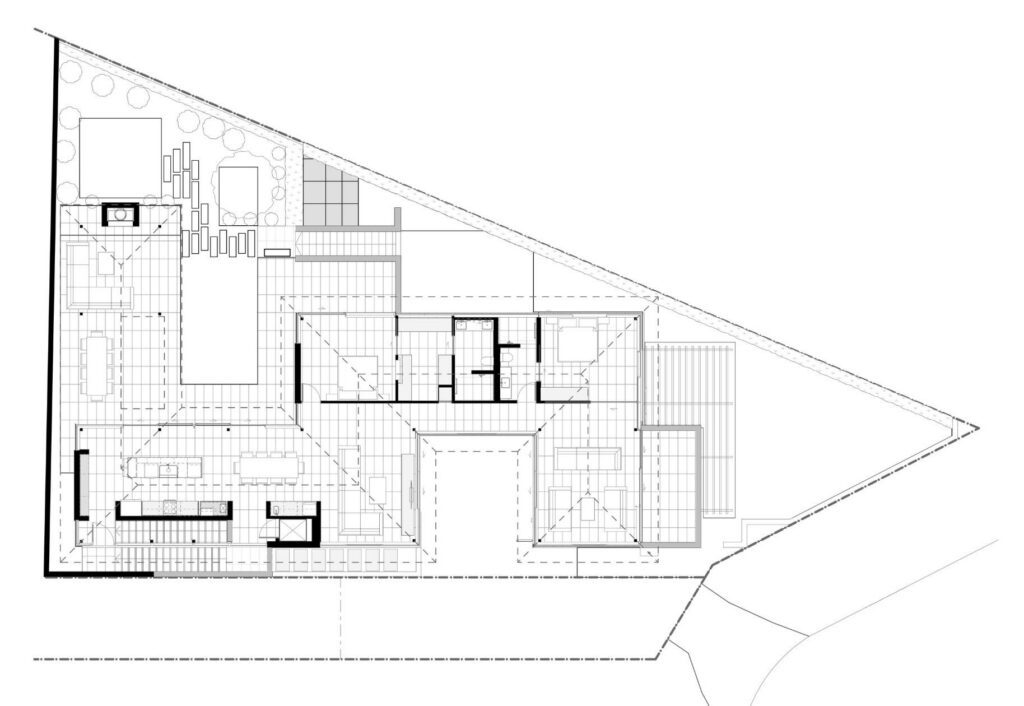
Architect Tom Rowe of Rowe Baetens designed an S-shaped footprint to respond to the topography of this wedge-shaped section. When the owners, classic downsizers, bought in this quiet cul-de-sac one back from the beach, they initially moved into the two-unit, brick-and-tile block for a year to absorb the essence of the immediate neighbourhood. So much serenity. But their idea to build on the tight 594-square metre site threw up some challenges.

Ascending from a cobblestone entry court, an outdoor/indoor stair is separated at its centre by a glazed curtain wall and is flooded with light from above
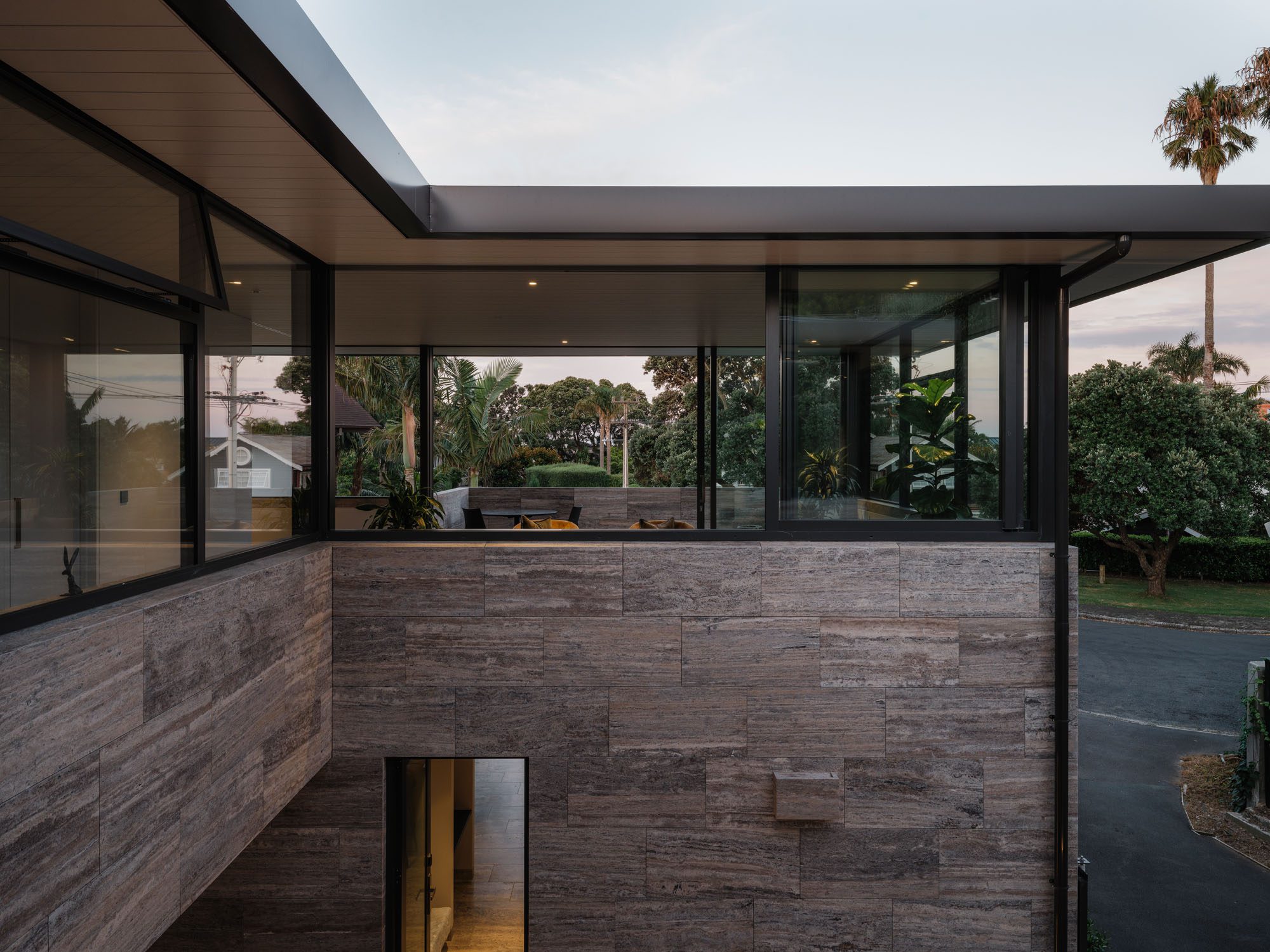
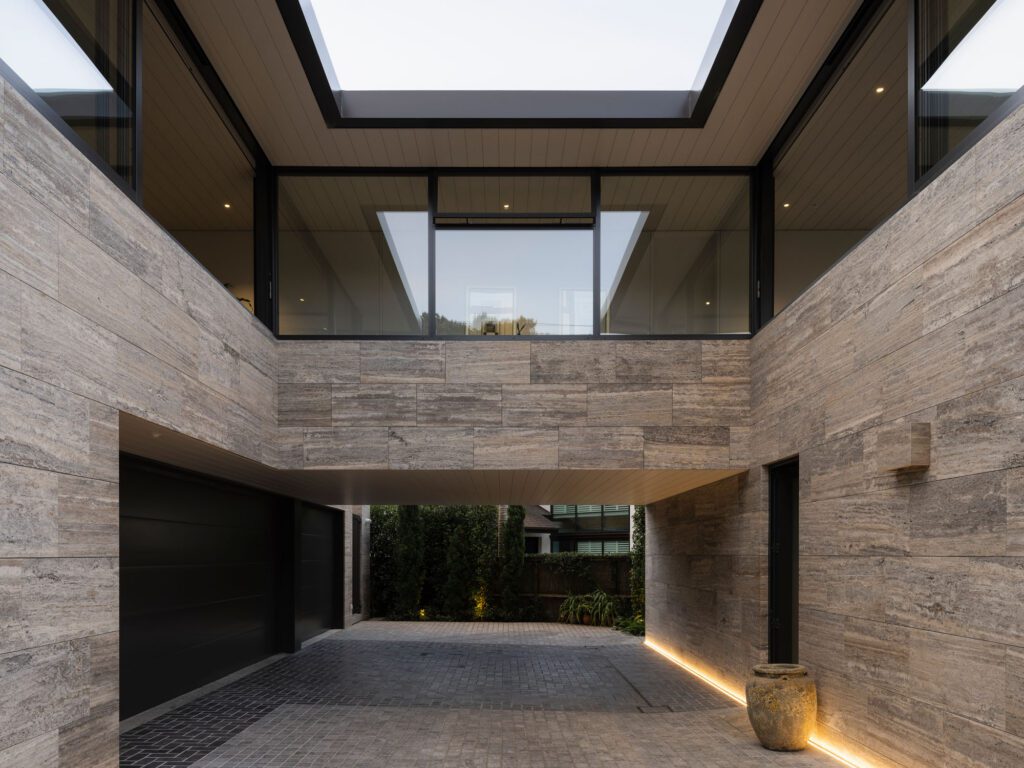
The lower level houses a self-contained guest suite and, to the other side, the garage. The upper level forms a bridge-like structure above the two lower elements

They turned to Tom, whom they knew from a previous project. In that reimagination of a Dargaville farmhouse, a dramatically high roof extension on slender supports expanded the living and the owners’ vision.

“It was a lot more than we had ever anticipated or dreamed of; a glorious place,” says one of the owners. 

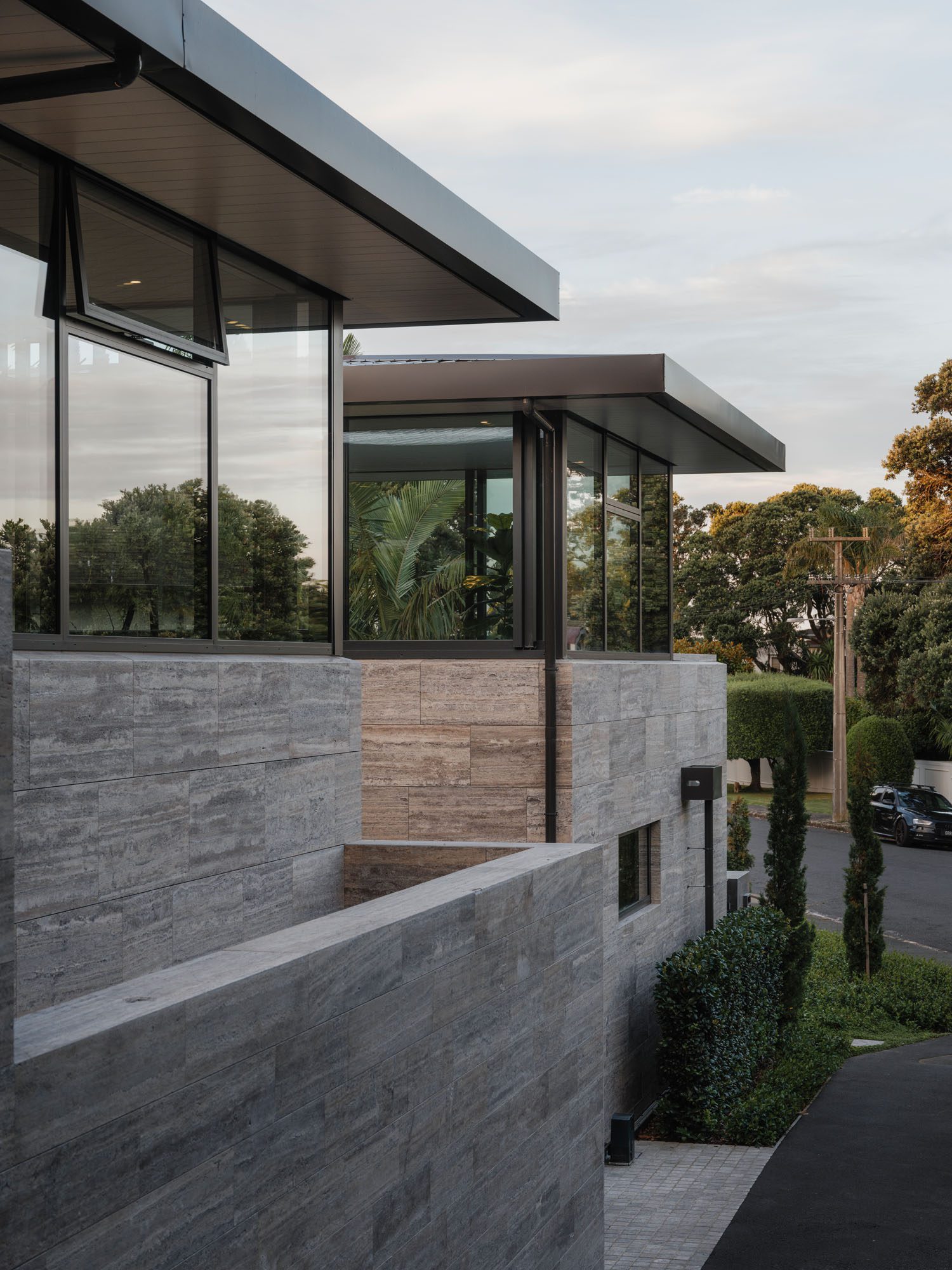
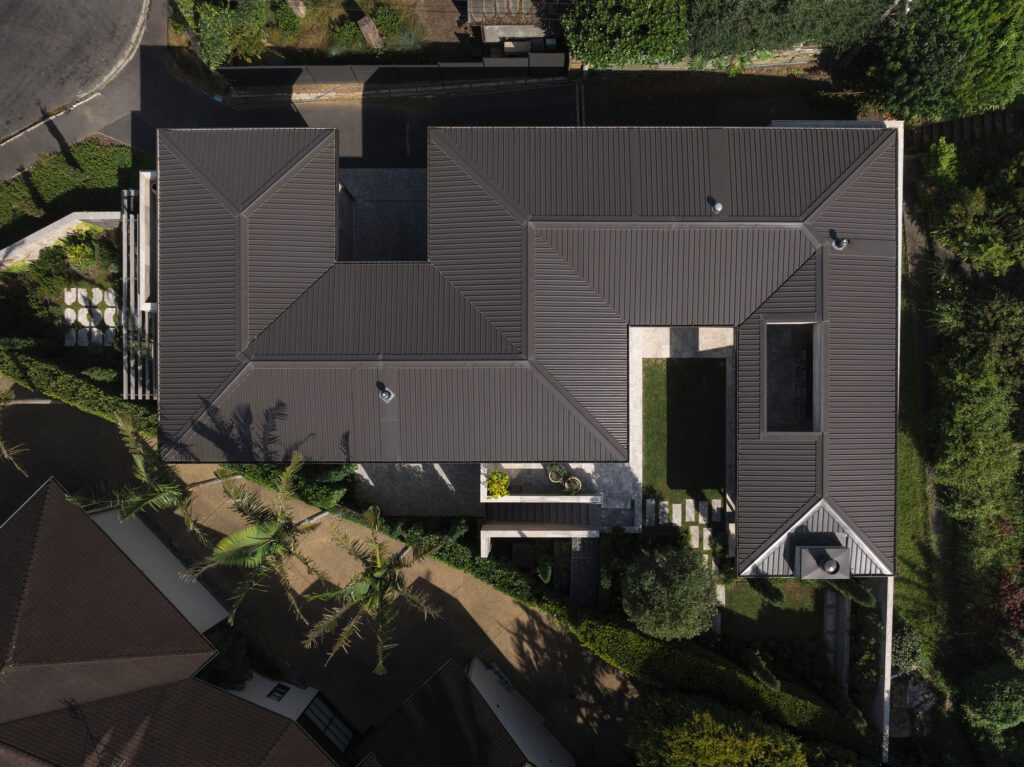
Seen from above, the definition of the S on the floating roof plane of the Milford house is apparent. But it’s in the day-to-day that its genius is appreciated.

“It allowed us to maximise the coverage, maintain privacy, and get light in right around the house,” explains Tom.

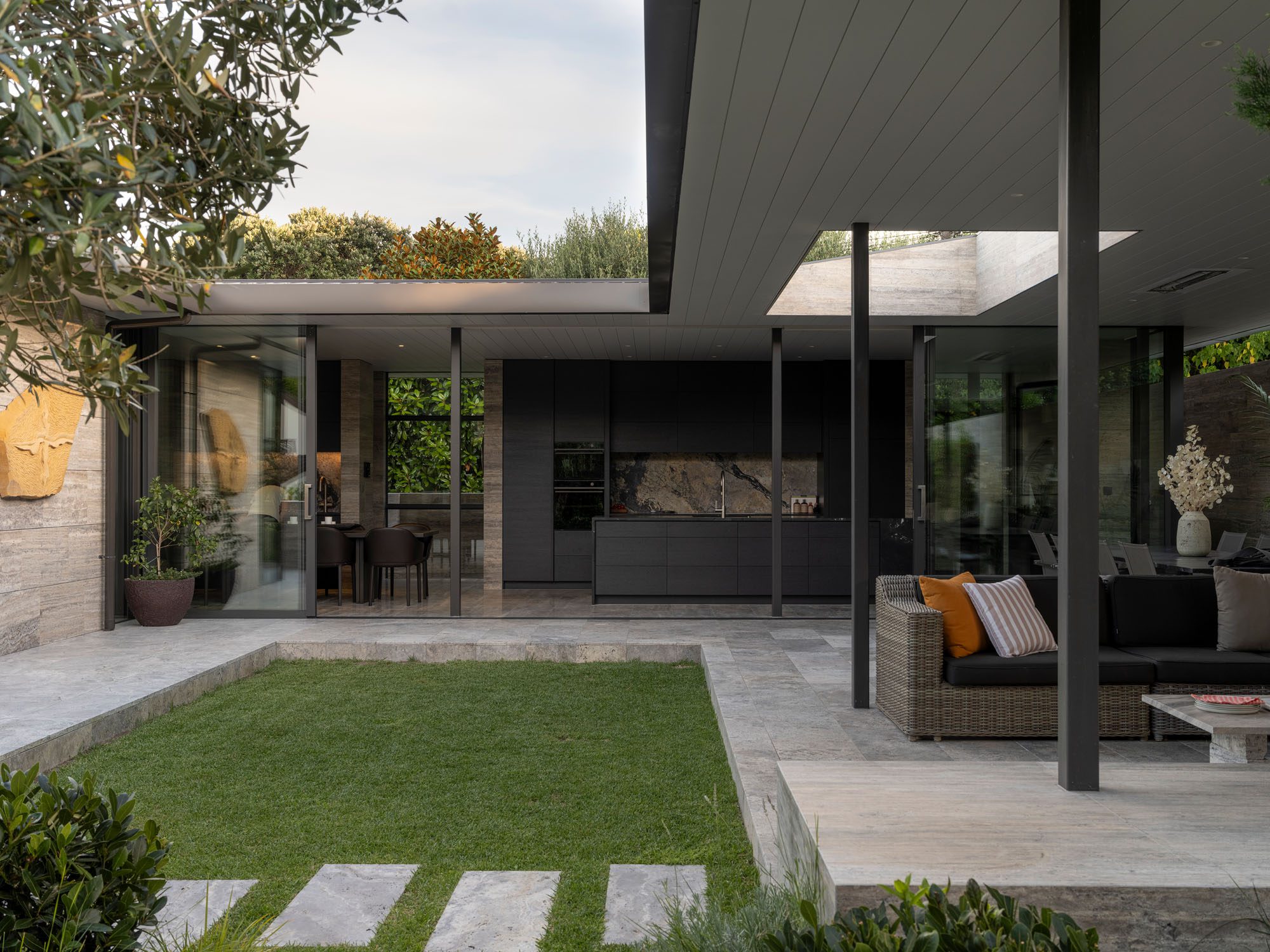
Designed for a couple who enjoy entertaining, various connected spaces — both indoors and out — provide ample areas for gathering.
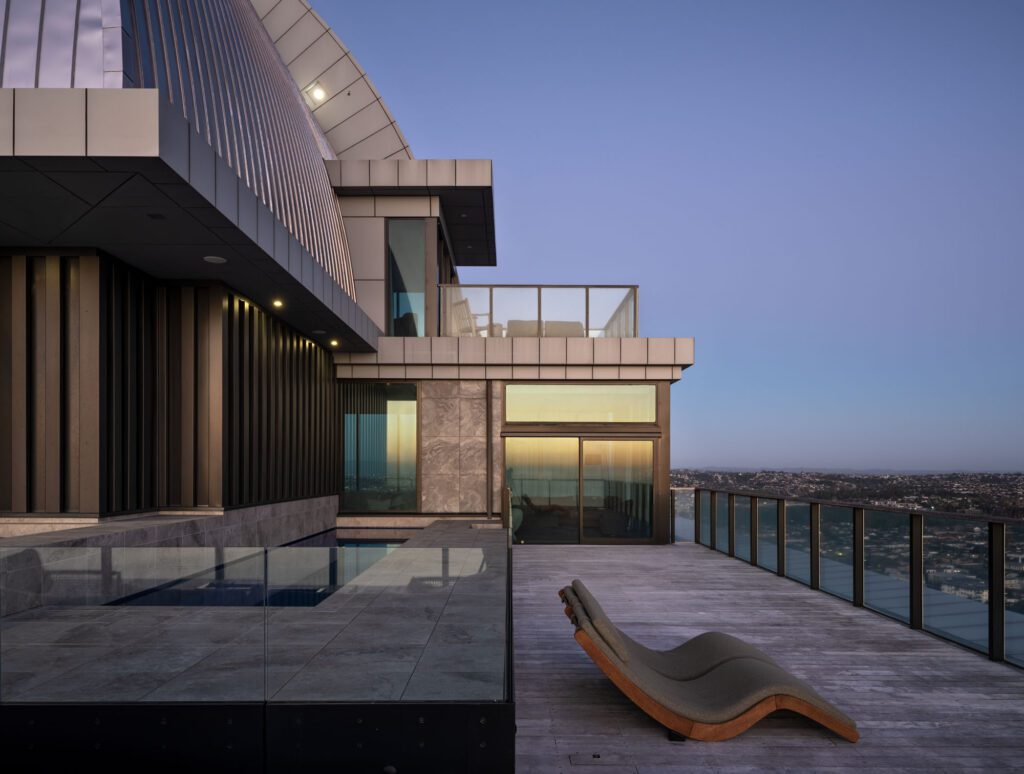
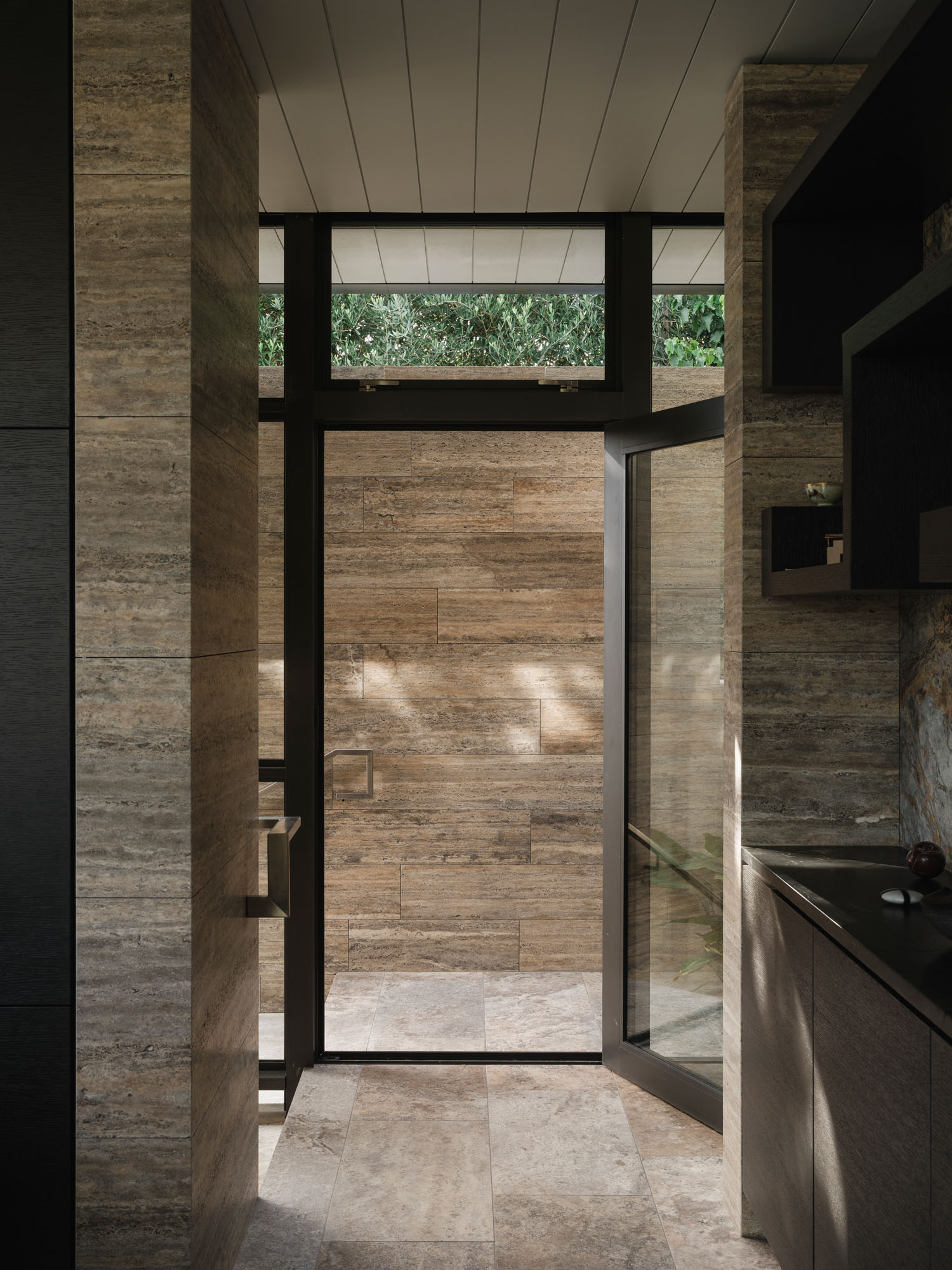
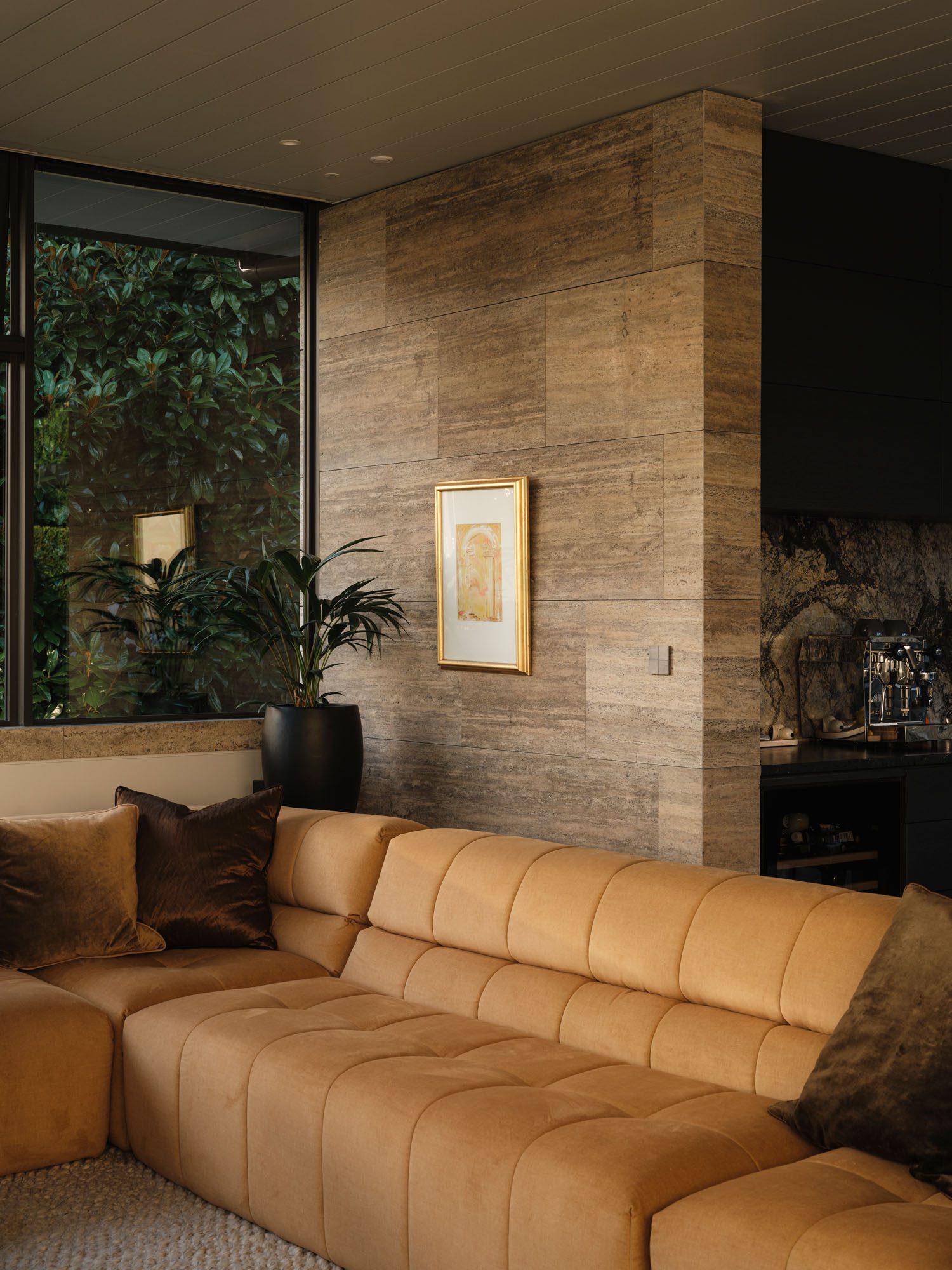
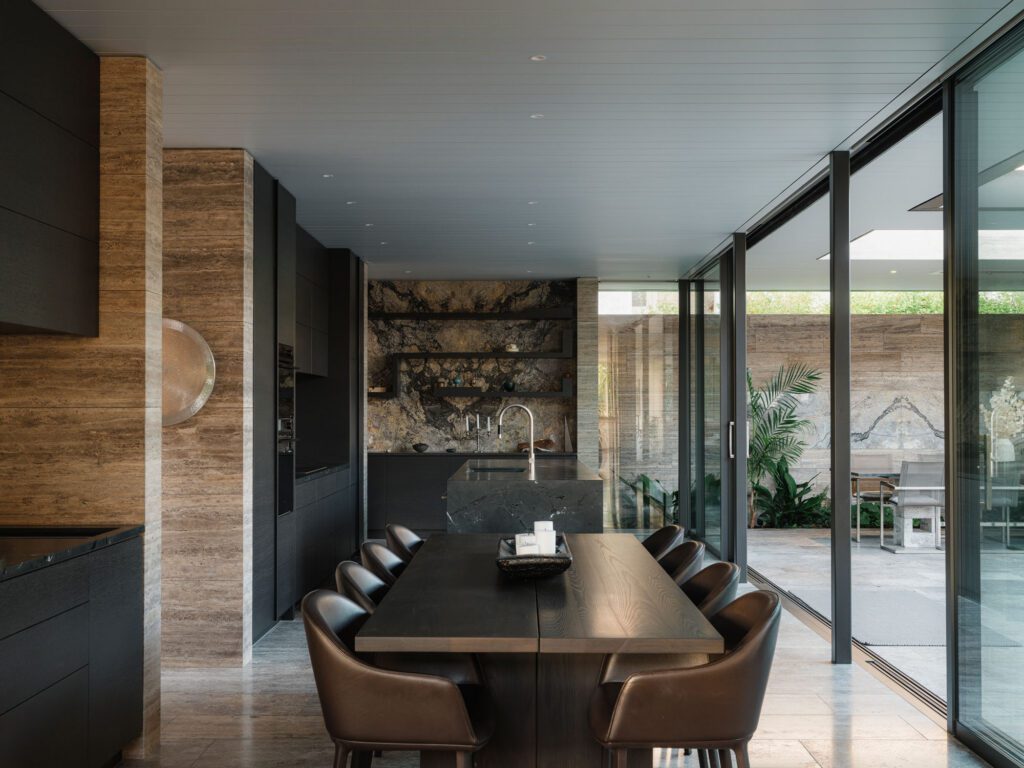
Turkish travertine from Italian Stone is the constant; its masterful application in this home carves out joy in unexpected detail. At once solid and presenting a sense of lightness, it brings energy and character that is experienced differently depending on the way the light falls, the time of day, and the use of the space.

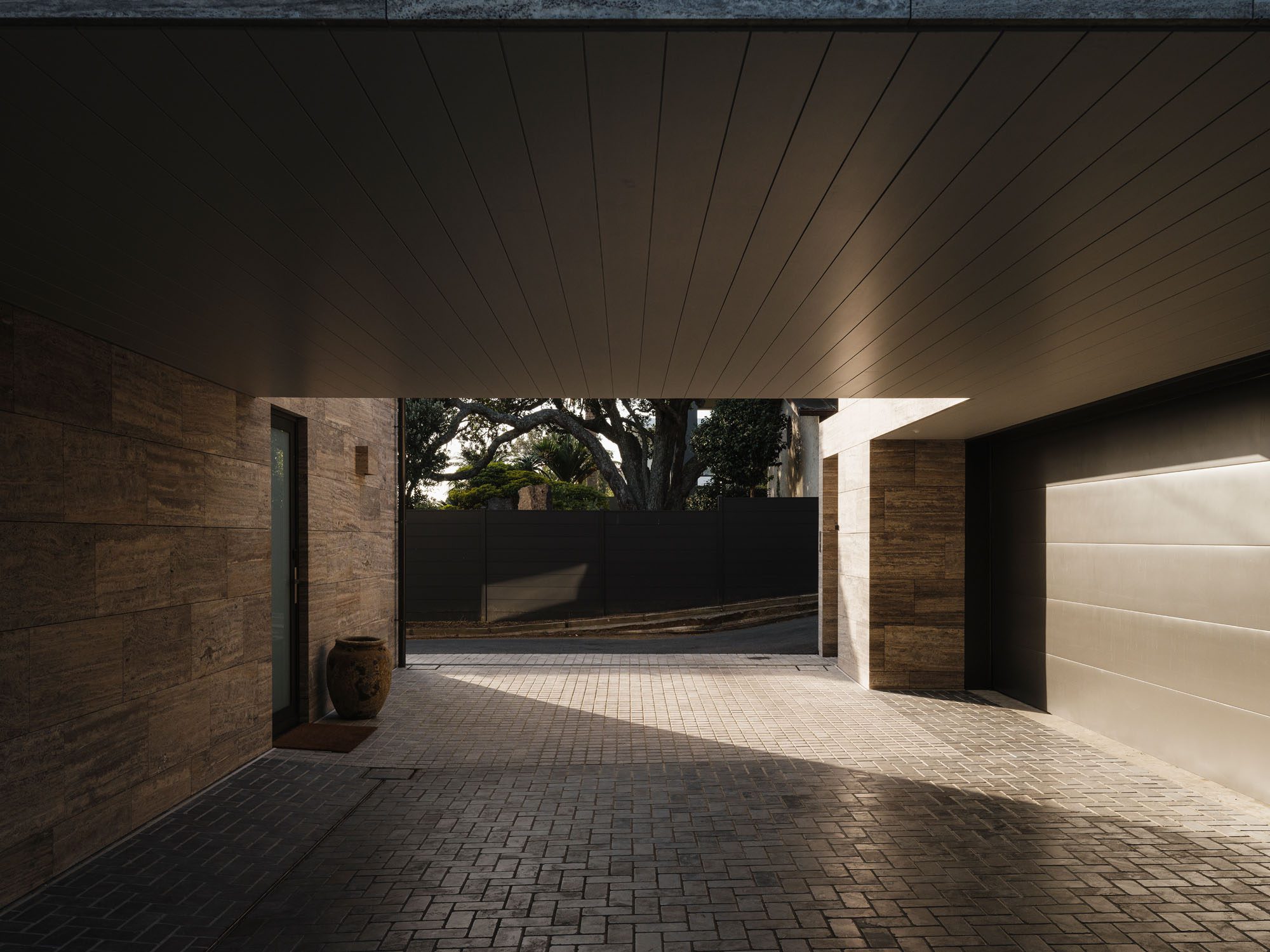
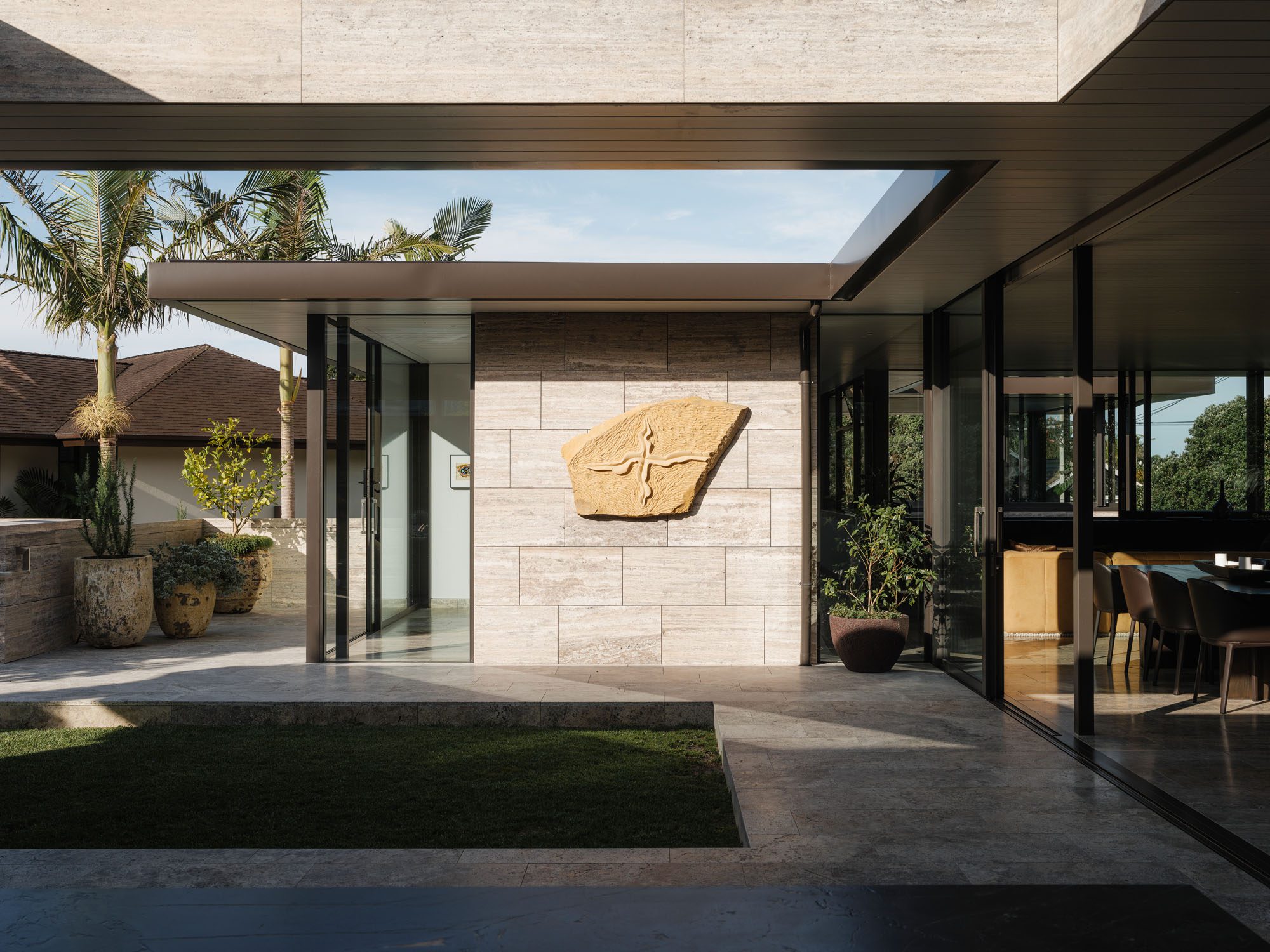
One of the courtyards at the heart of the plan is a cobblestone entry to the garage that resists the lackadaisical approach of allowing a garage door to dominate the façade and separates a self-contained flat from the main body of the house. Above, this void supports wraparound connection to the suburban scene from the front room.

“It was logical to put the main living on the upper level,” explains Tom.

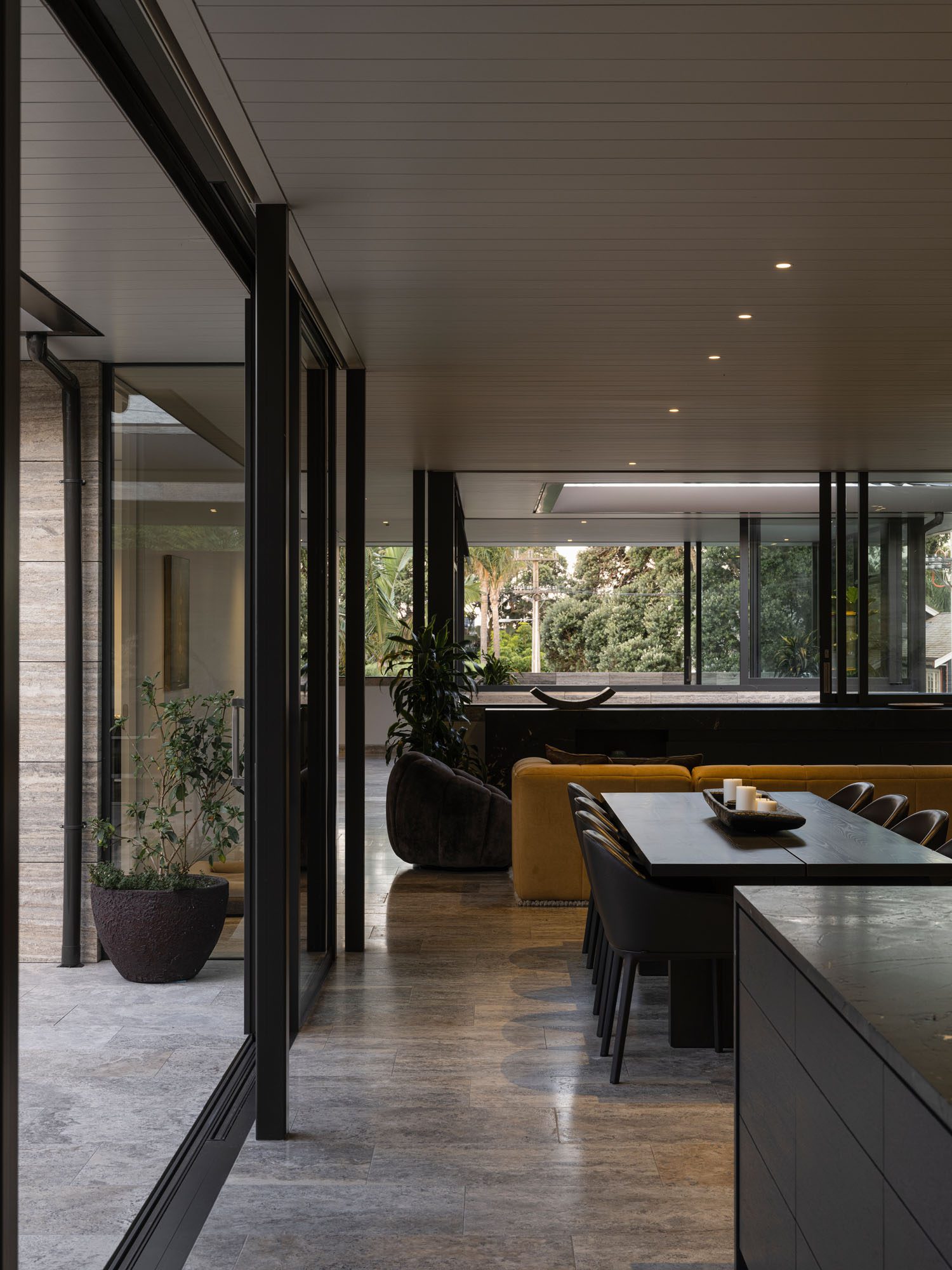
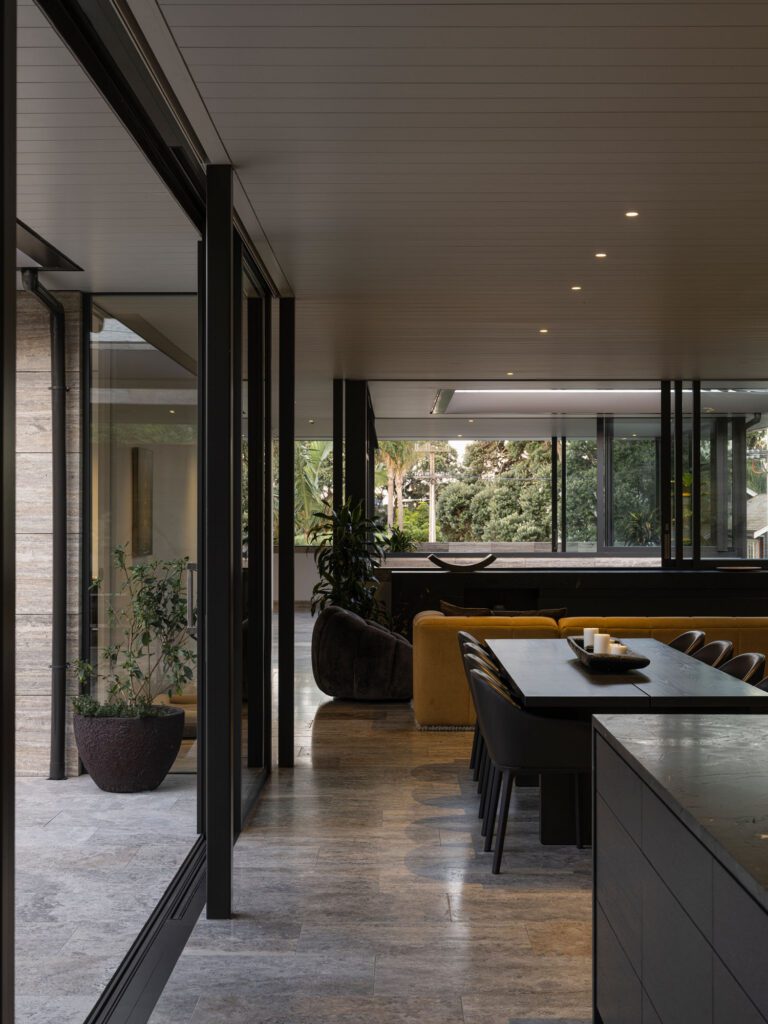
Sight-lines between here and a second lounge near the kitchen and dining zone are maintained through extensive glazing.

Street side, the omnipresence of pōhutukawa lends a visceral sense of place, of being in the suburban seaside.

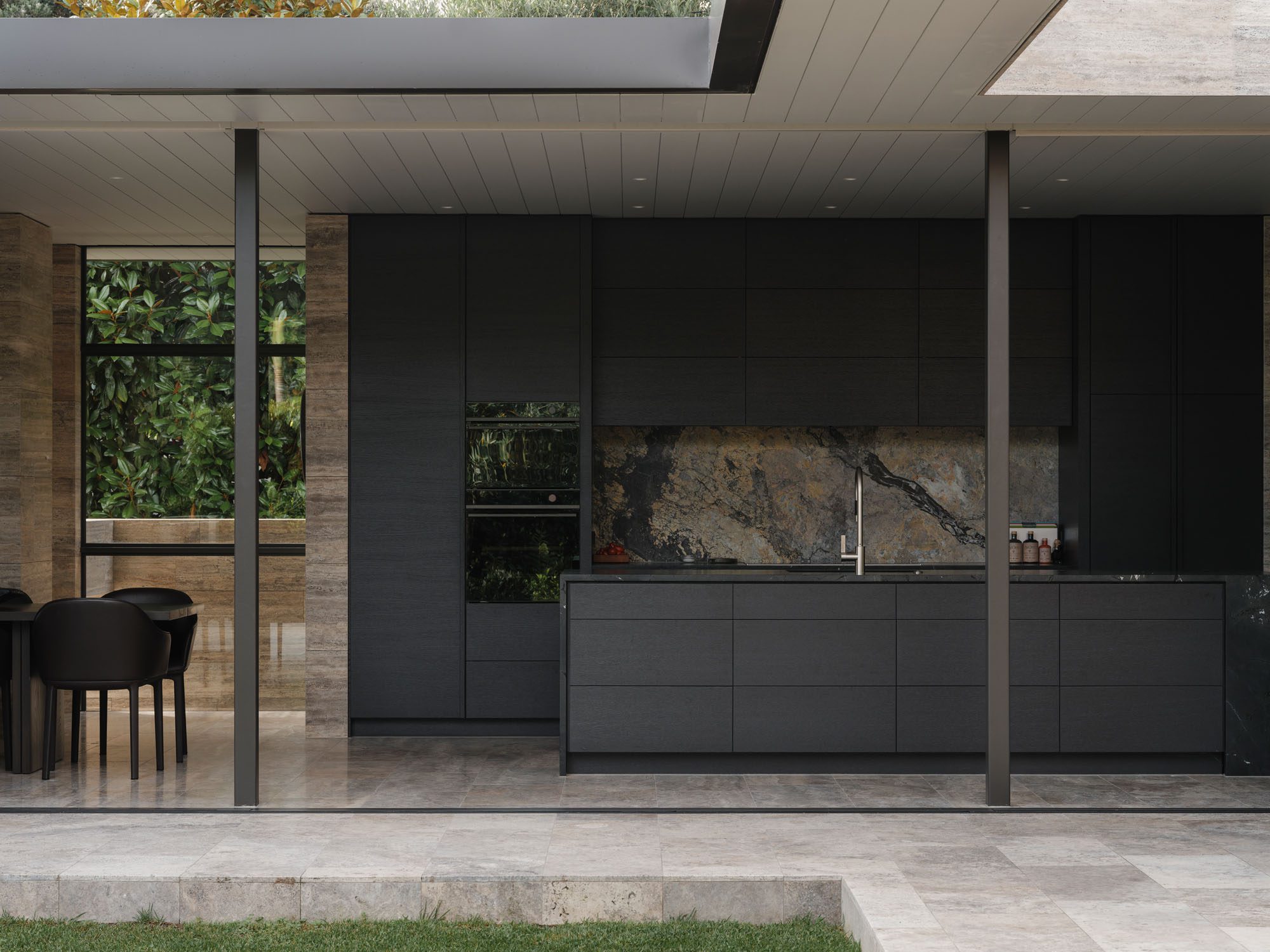
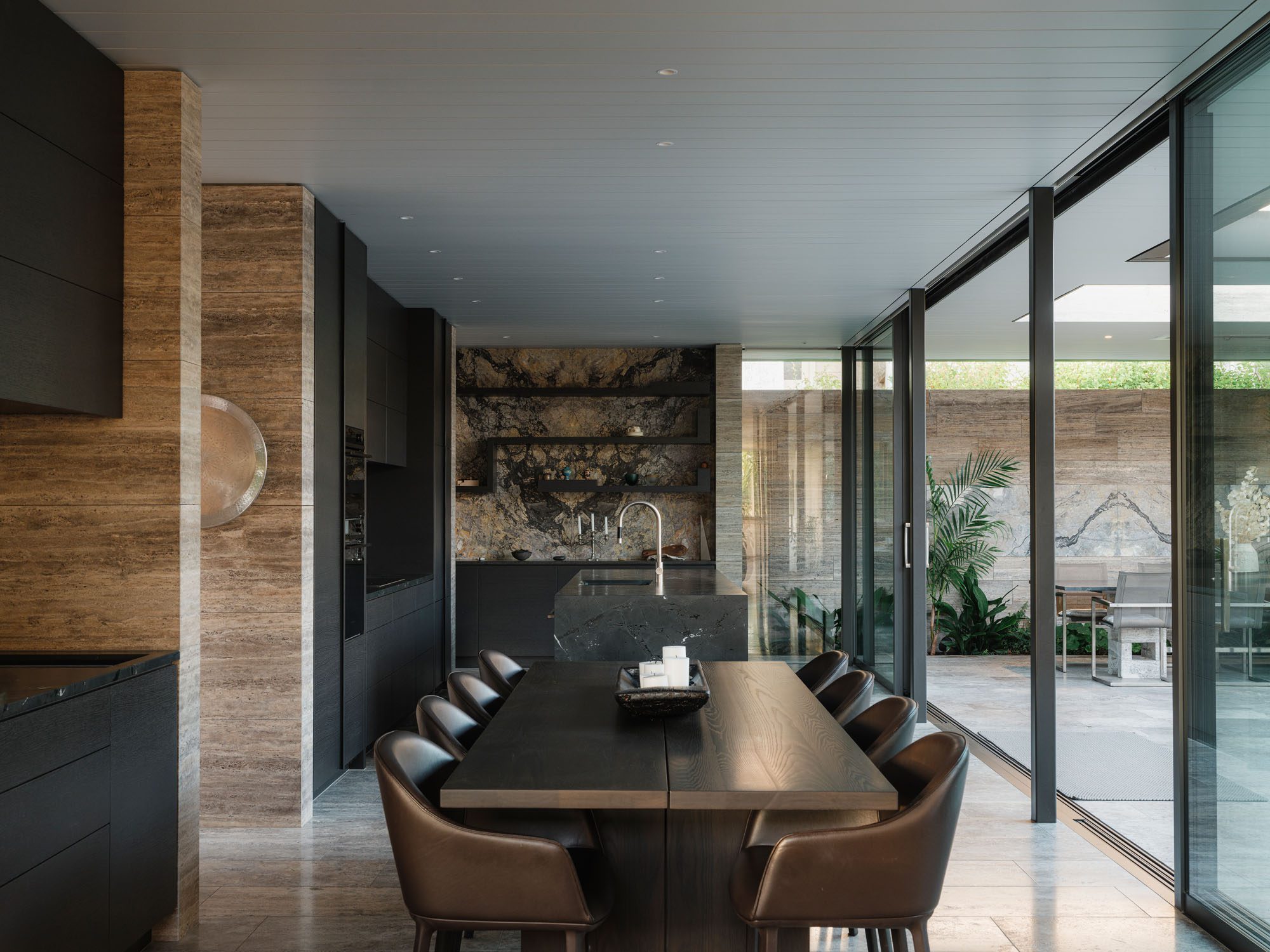
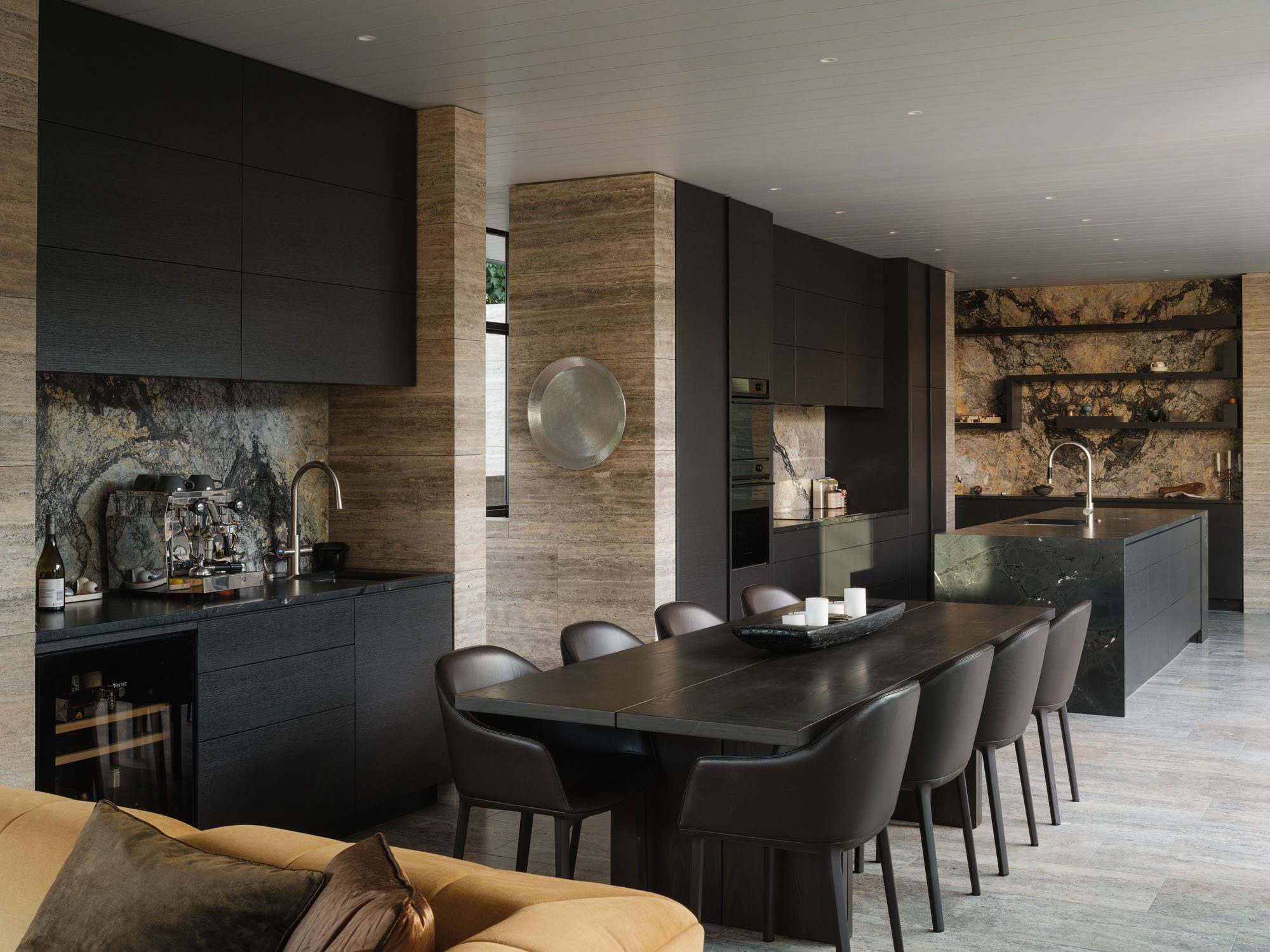
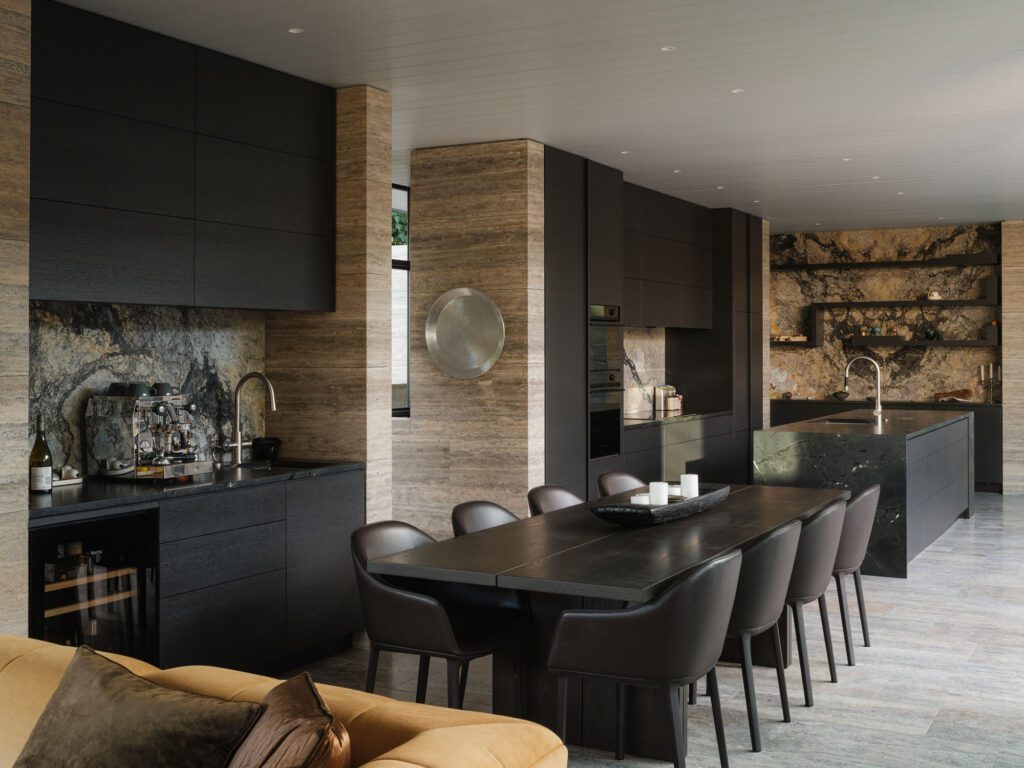
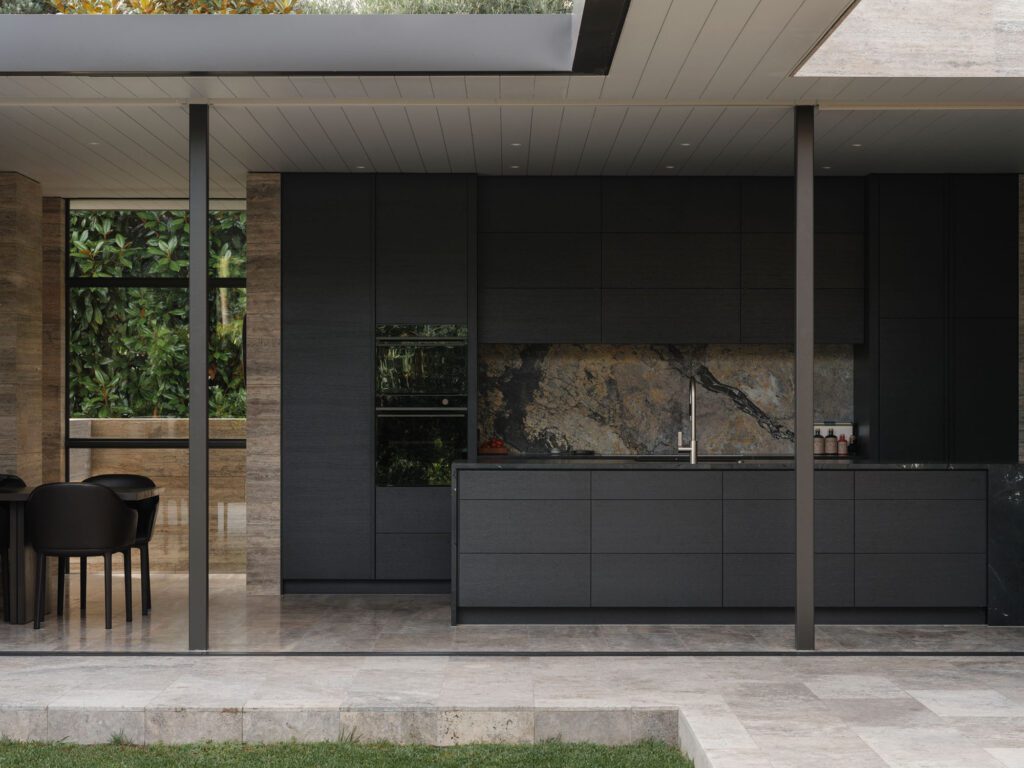
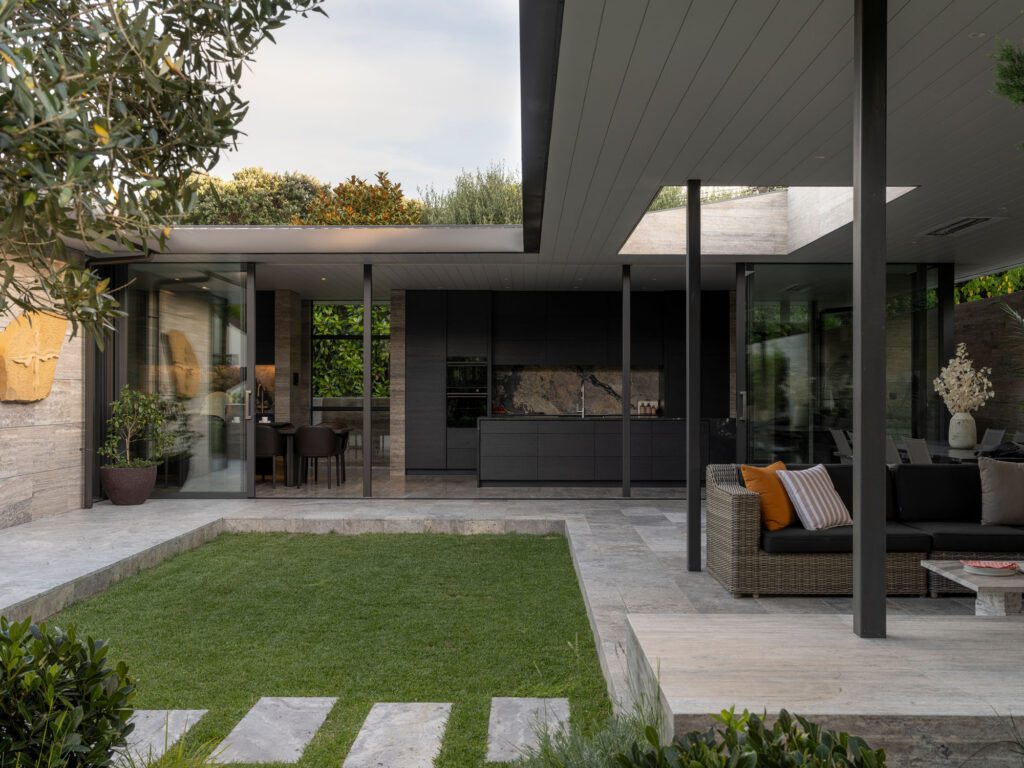
The upper level covers an internal area of 270-square metres, settled in an ethereal atmosphere created by wide eaves, the extensive use of stone, and carefully placed windows that frame luscious greenery. The kitchen features Dedalus marble from Italian Stone — an eye-catching choice that injects a beautiful array of dramatic veining to the heart of this entertaining space.

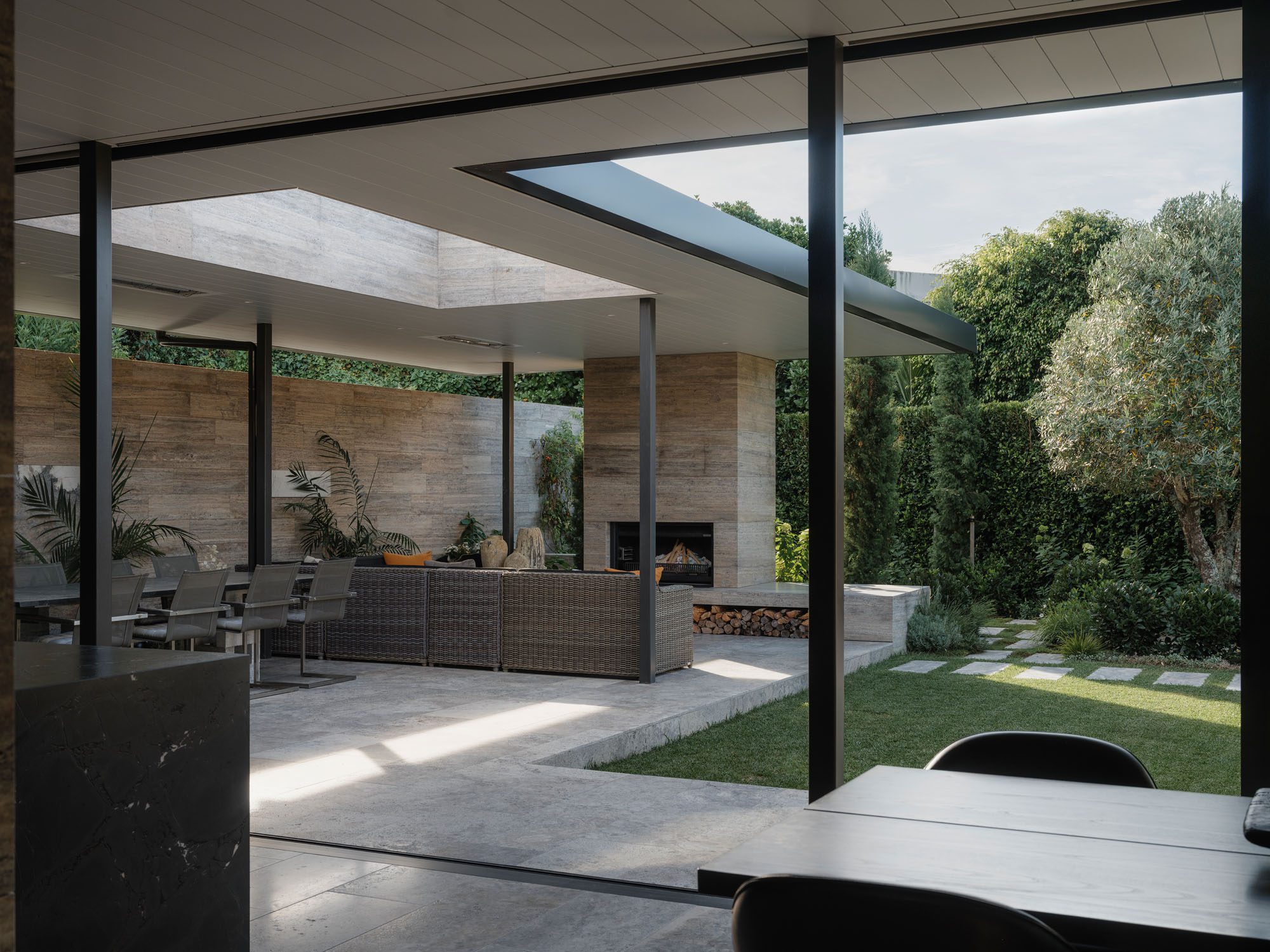
Towards the rear, in the second bend of the S, the feeling is more intimate. Here, a courtyard garden is planted in an Italianate theme that leans into the provenance of the stone cladding. Lemon trees and rosemary grow in bulbous weathered pots.

As stone merchants, the clients were undoubtedly going to express their passion product in grand gestures — but how to choose? Turkish travertine won top billing and has been used as cladding and flooring.

The S-shaped form delicately balances privacy with urban engagement. From the serene central courtyard to the second living area that opens to the street below, there's a plethora of spatial experiences.
As the architect explains: "This house offers a retreat within the city, providing options to enjoy peaceful courtyard spaces or embrace the liveliness of the surrounding context."

“We wanted something cost-effective with a beautiful colour that was neither too dark, too light, nor too in your face,” says one of the owners.

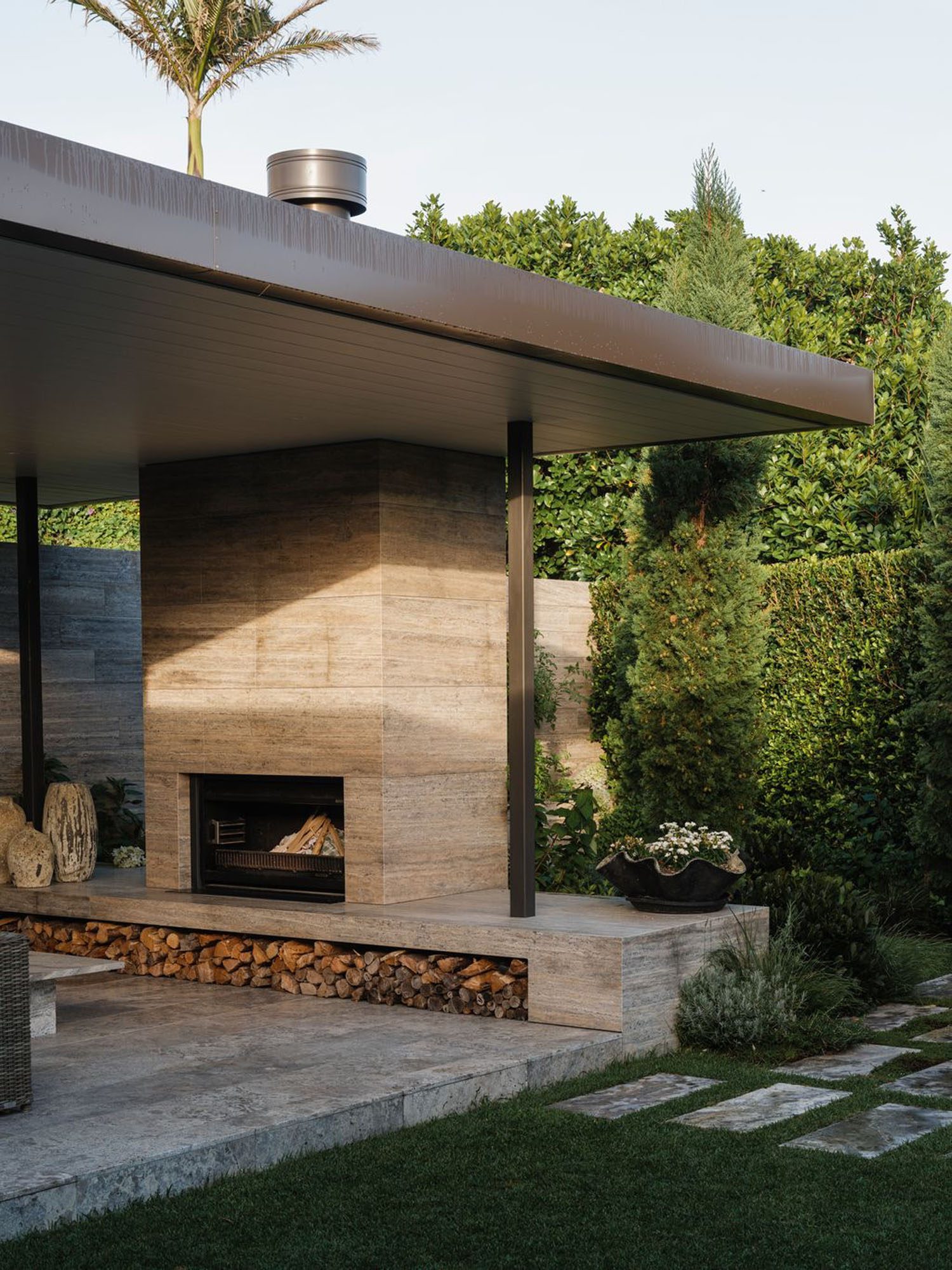
Nevertheless, it’s the type of stone that makes you want to reach out and touch it. Textural 30mm tiles on the exterior are pure organic elegance.

“Their sedimentary horizontal grain elongates the lines of the architecture,” says Tom, “and their leathered finish is so tactile.”

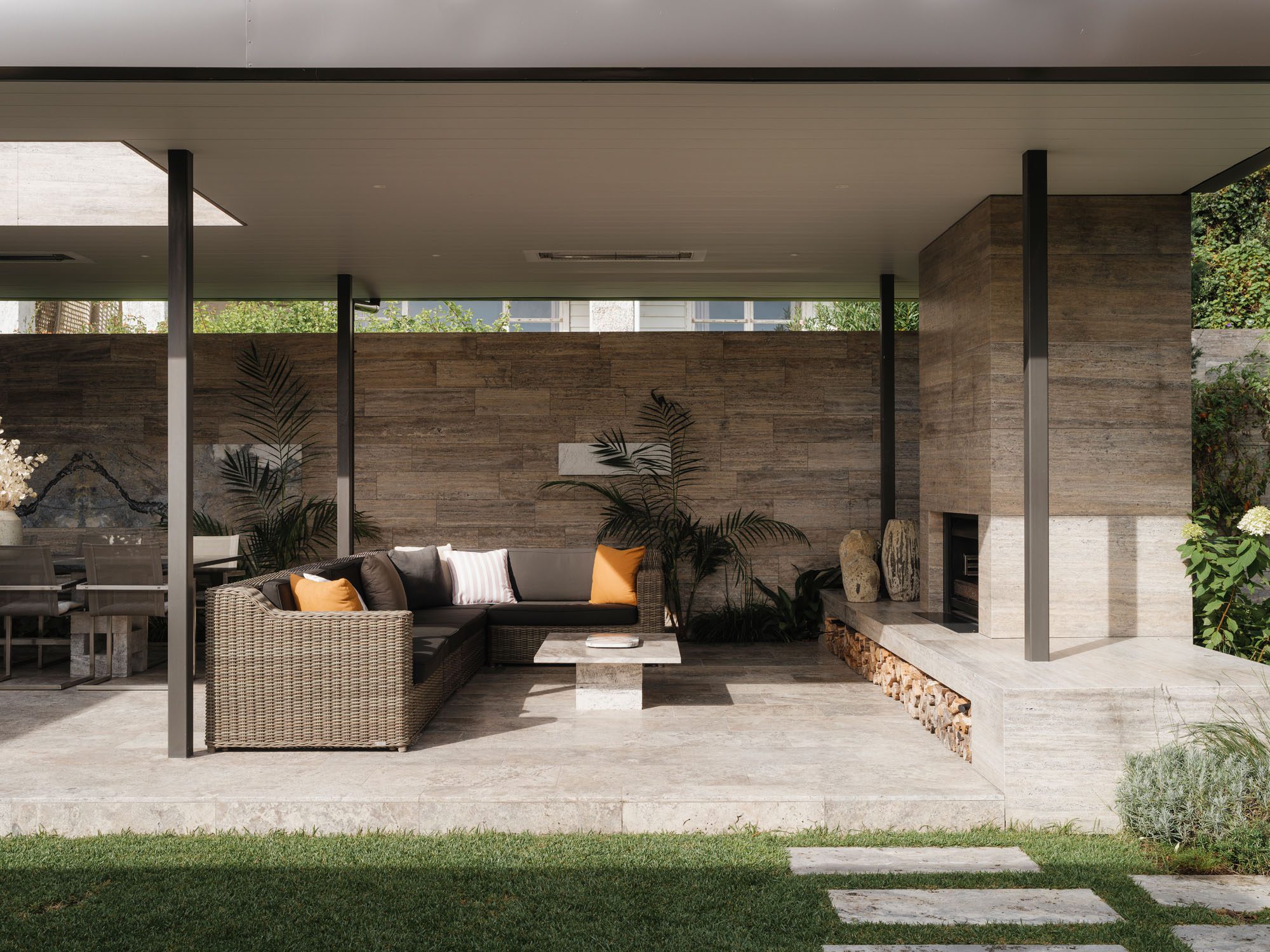
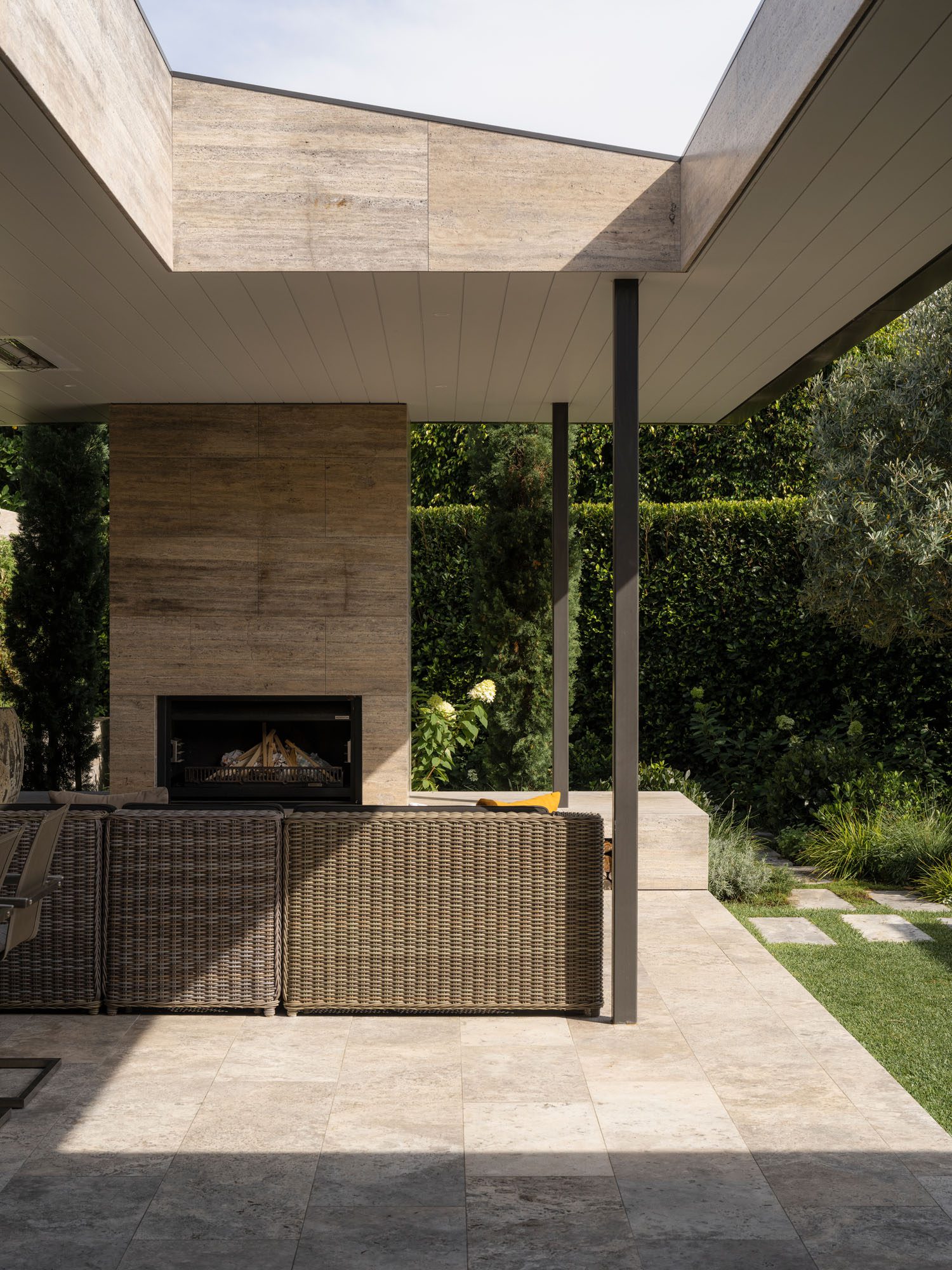
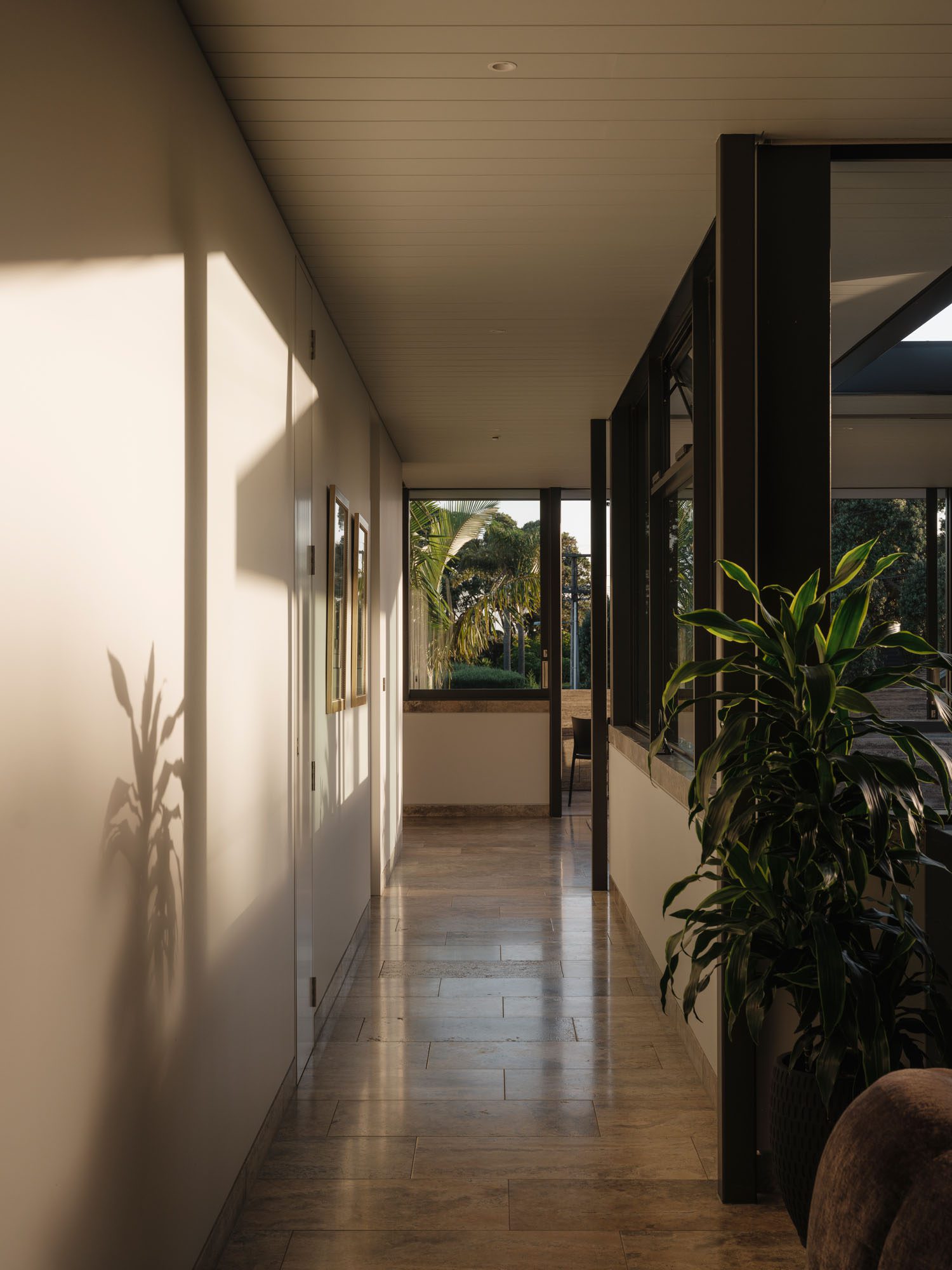
Beneath tongue-and-groove ceilings, the same stone in a cross-cut version stretches across the floors of both living rooms to the dining and kitchen zone, and on past the threshold to the patios. Look closely and you’ll spot stone elements elsewhere, too — in finer details such as the sills, skirtings, and vent covers for extractor fans, but also in monumental form, such as the massive blocks that form the stairs. It all feels strong, solid, but never oppressive.

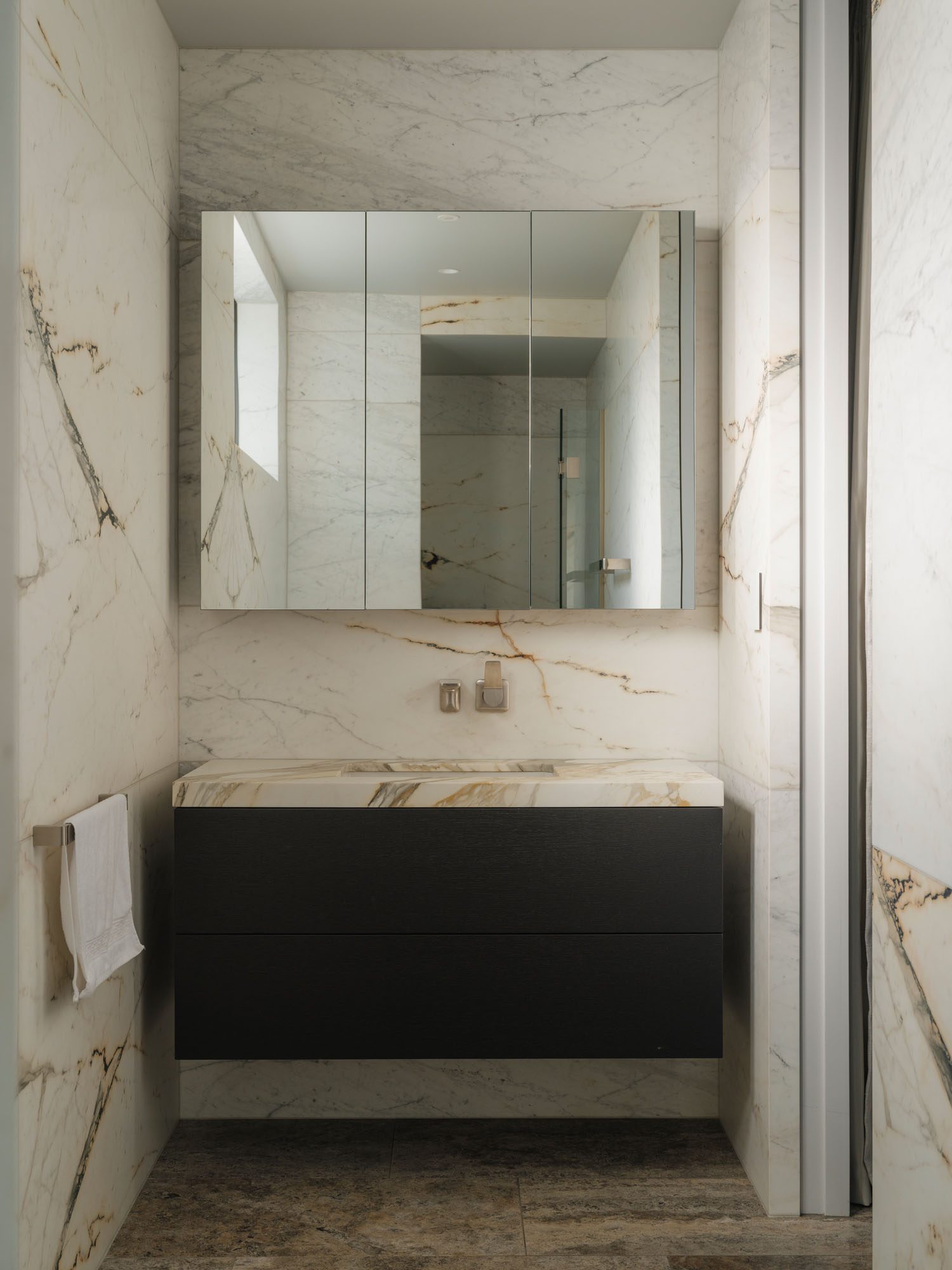
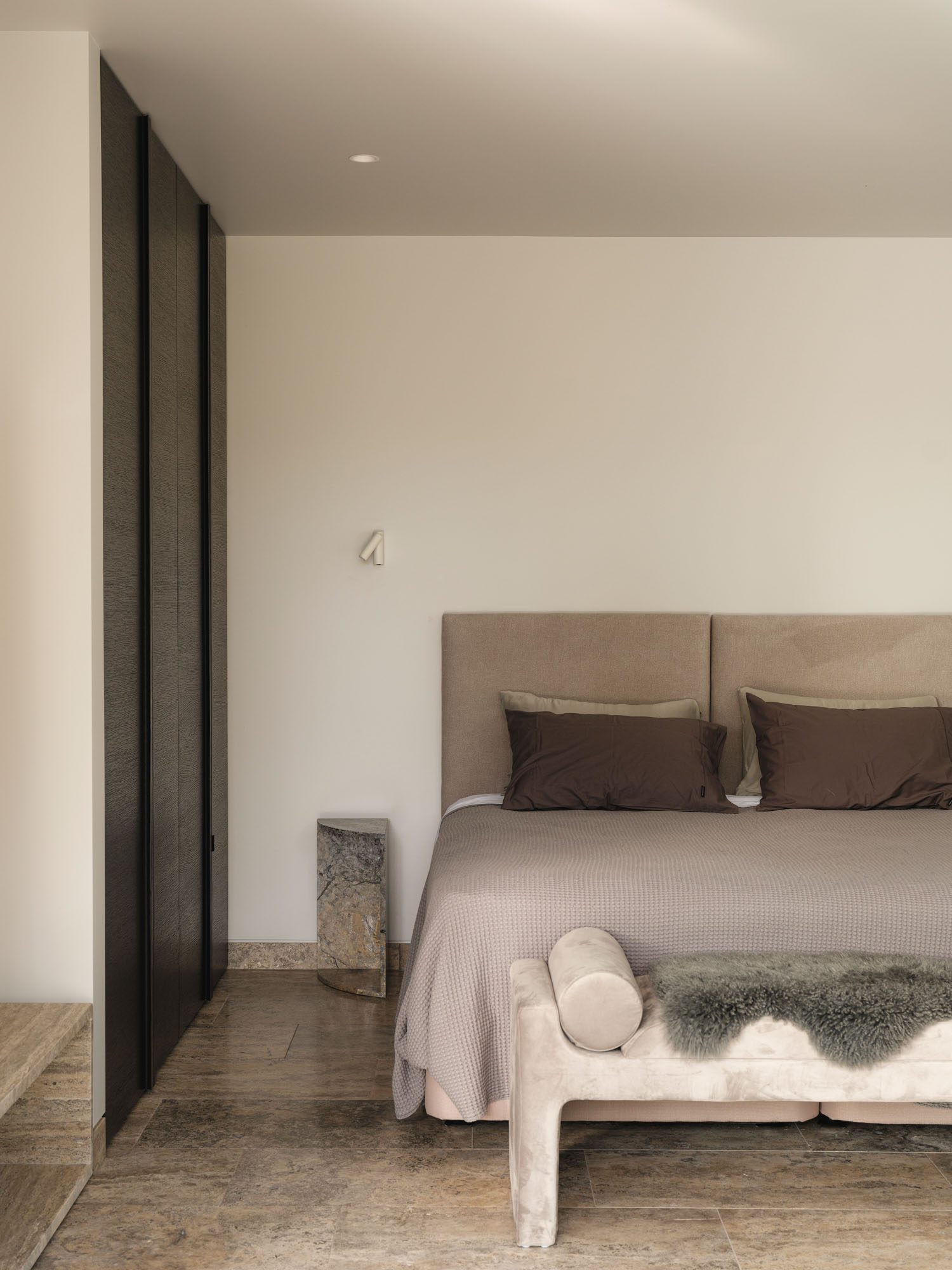
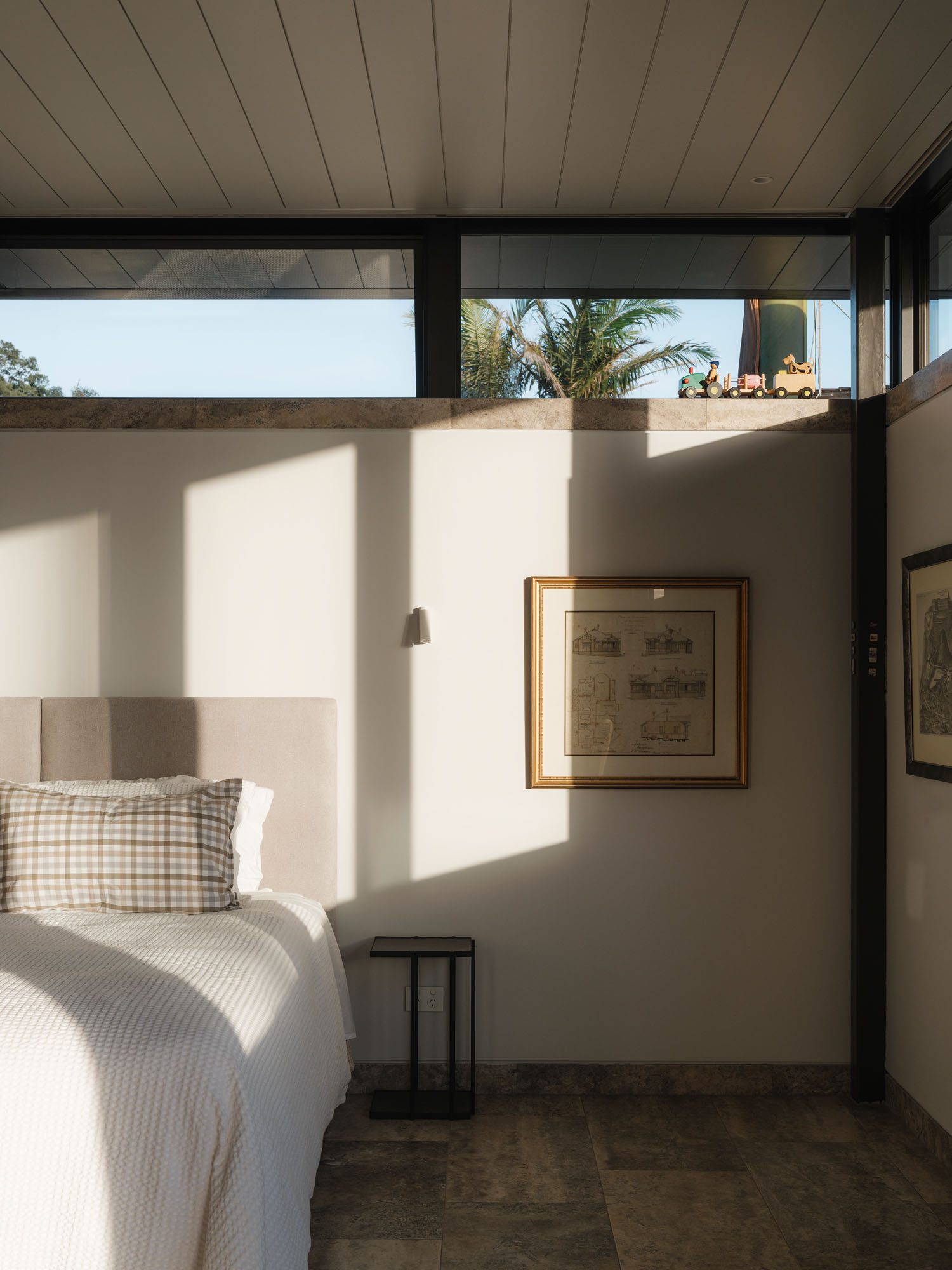
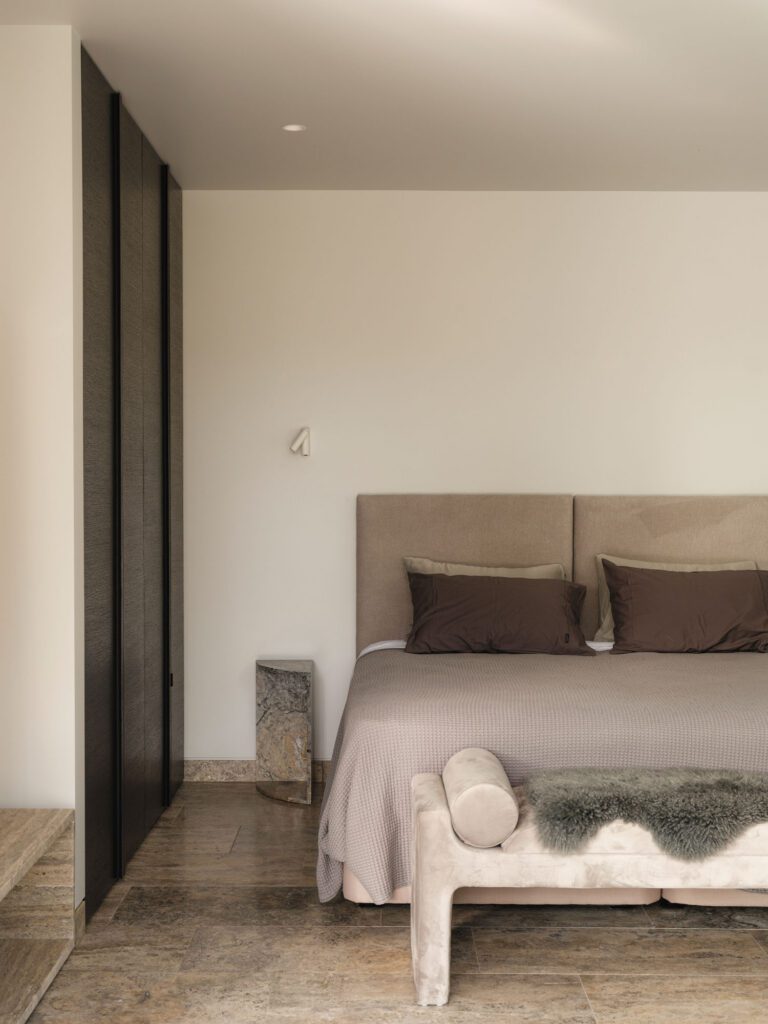
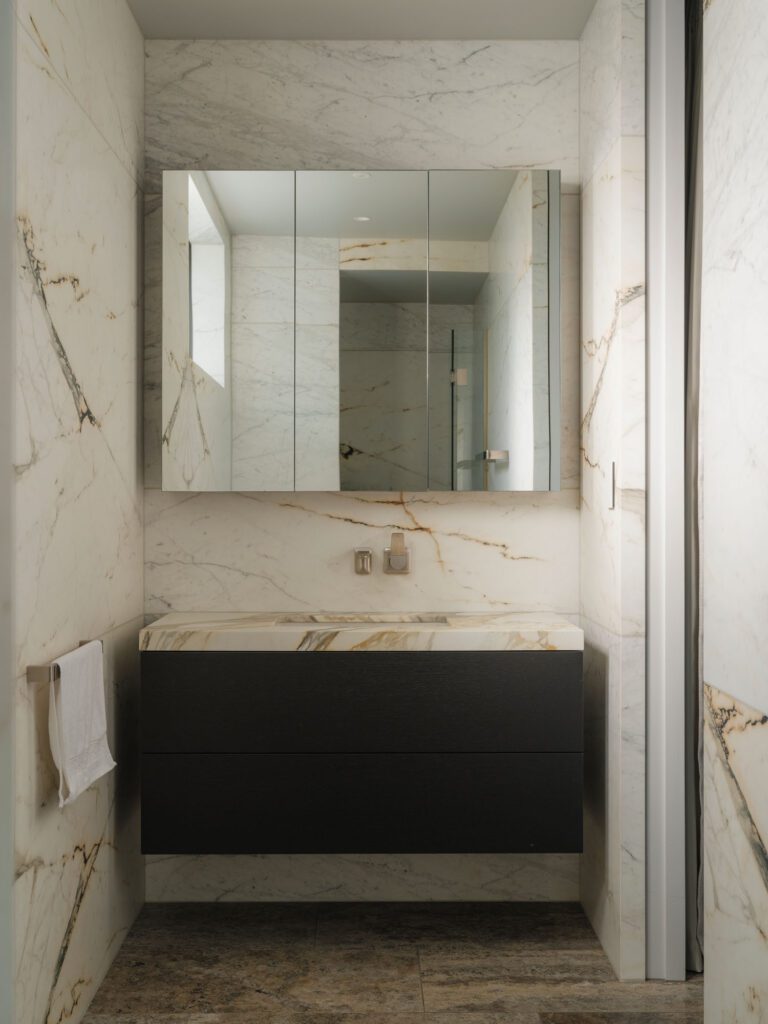
The private spaces are pared back and neutral, cohesive in tone with the travertine underfoot.

“A ribbon of fenestration frees the roof from the walls,” explains Tom.

Beneath the 2.7-metre stud, this introduces a lightness of being that traverses the seasons and provides visual connection to the sky and surrounds.

Modular sofas and comfy tub chairs in gold and chocolate velvet tie in with the tones of Dedalus marble on the splashback of the bar, a one-off example the owners fell in love with on a buying trip to Turkey. The same eye-catching marble in the kitchen is repeated behind shelving near the entrance and sparks moments of pareidolia — with bird wings being a common vision.

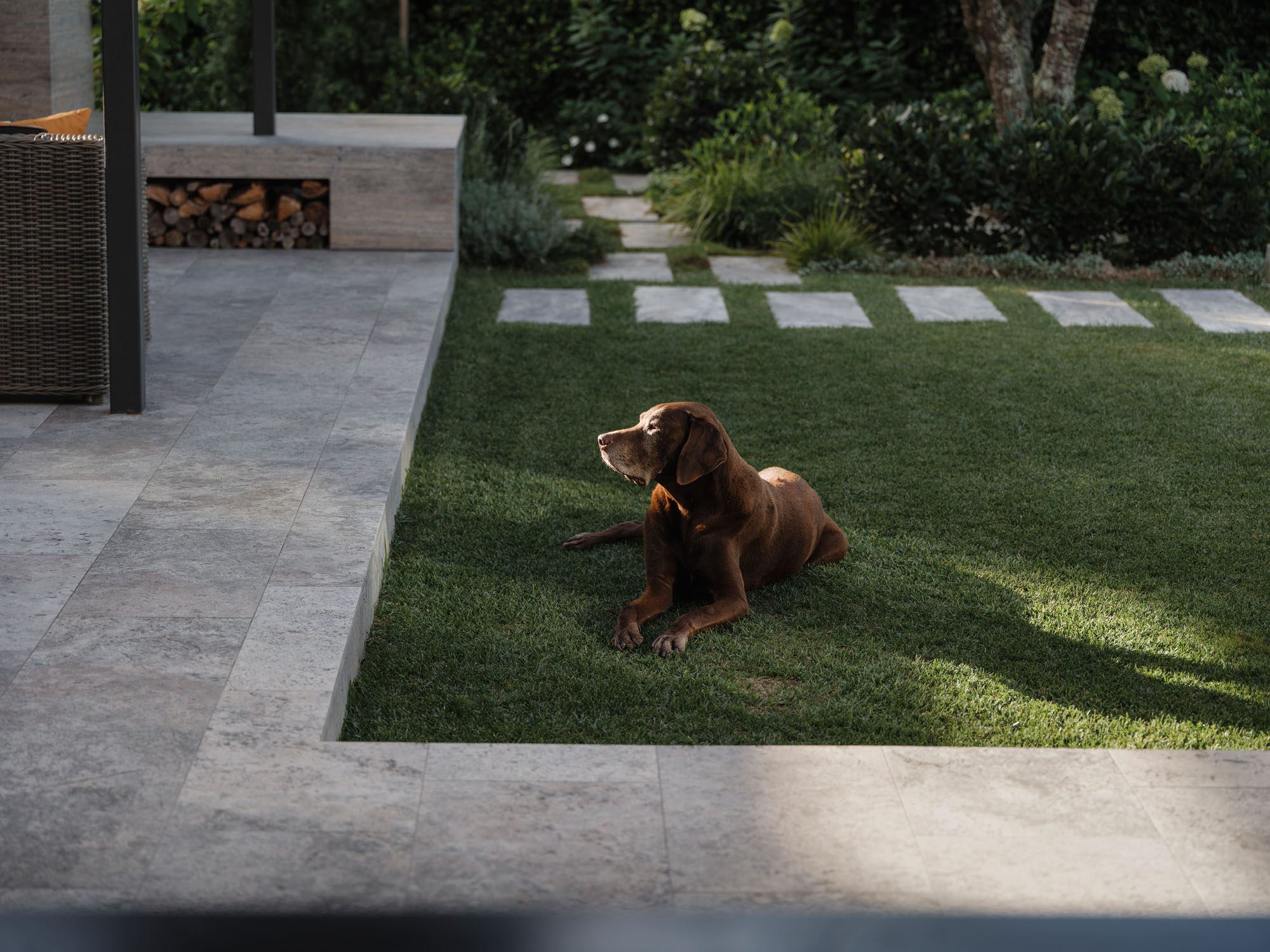
Although the benches are tucked into a space just four metres wide, there’s generosity of function. The youngest grandchildren can sit up with Nanny at the island as she makes a sandwich, while Bruno, the giant German Pointer, settles onto the sun-warmed patio beyond the peel-back sliders, and friends gather around an outdoor table with a stone base made from marble offcuts.

In this north-west courtyard, landscape architect Alex Luiten designed a garden that is anchored by a mature olive tree that was craned into place and planted together with tapering conifers either side of the fireplace: an Italian microcosm in Auckland’s North Shore. Moats of foliage in the mini courtyards that surround the house mix the foreign and familiar (cypress and rengarenga) side by side, softening the edges of the form.

A cardboard model of the home, displayed high on shelving near the kitchen, is battered and worn, but still in pride of place.

“We used to look at it over a glass of wine in the garden then leave it out in the dew,” explains one of the owners. “It really helped us see the house as an object and to move forward with the plan.”

Come evening, when low-level strip lights wash the fortress-like walls with an amber glow, there’s no castle in town to compare.

Project Credits

Architecture: Rowe Beatens
Build: Bay Group Construction
Words: Claire McCall
Images: David Straight
Stone: Italian Stone

Latest video features

In the Coromandel, a home with a humble profile and a thoughtful design makes the most of a stunning location.

Built with awe-inspiring attention to detail, this Arrowtown home is a fresh interpretation of a familiar Otago rural vernacular.

This sculptural Northland bach is a perfect north arrow on a remote farm high above the sea.

With the sun on its bow and the community at its stern, this is a house in which the elements are always front of mind.

Trending articles

Homes

Sanctuary House by Rowe Baetens

Could there be a better design than a courtyard house to flex with the whims of the Auckland weather? Cue a double-courtyard design.

Design News

Cam Barrett: Recasting Light

Cam Barrett’s work draws on the language of organic form. His lighting series is marked by a quiet naturalism, with soft, rising lines that recall

Design News

Ground Control

At M House by Ponting Fitzgerald Architects, the arrival sequence is deliberate — a slow arc around the building that allows the architecture to be

Homes

M House by Ponting Fitzgerald Architects

M is for ‘Martinborough’, for ‘monolithic’, for ‘minimal.’ In this holiday house, where the owners instil singular focus into everyday rituals, it is also for