As entries for Interior of the Year 2026 near their close, we spoke with this year’s local judges about the ideas and influences shaping the future of interior architecture and design. From materiality and innovation to atmosphere, craft and experience, they reflect on what elevates an interior beyond the expected — and what they are most looking forward to seeing in this year’s programme.
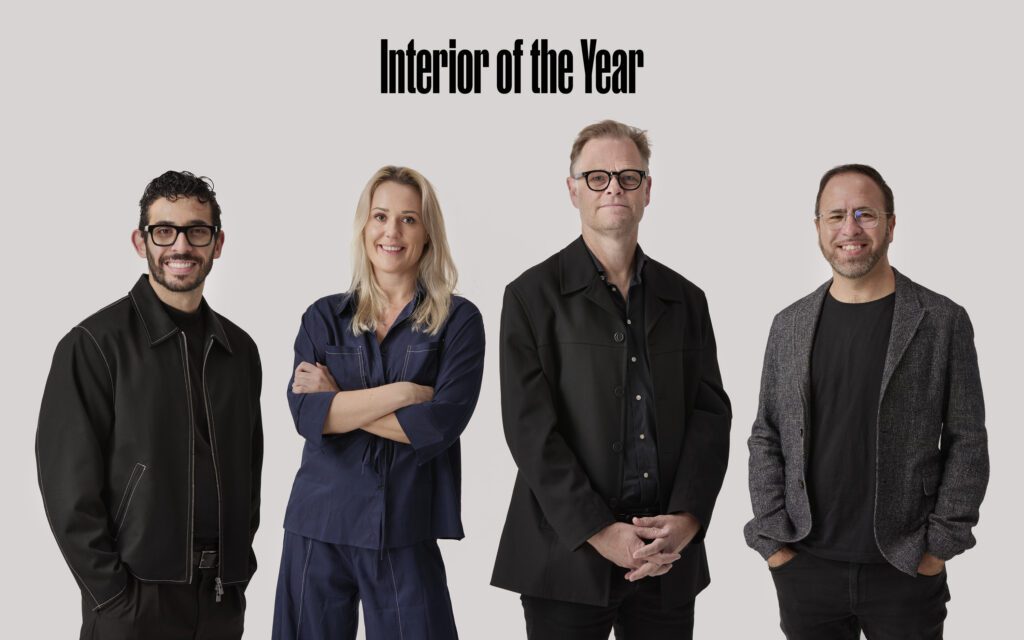
Abdallah Alayan, Principal, Monk Mackenzie
You describe your approach as the harmonisation of large-scale moves and small-scale details. In an interior context, where do you tend to look first when assessing a project?
For me, careful spatial planning is where the magic of a big idea starts to unfold into a plausible reality. A layout needs to function in a certain way, but can also make or break the experiential and emotional quality of a space. A good plan forms the bones for every other layer of design thinking to shine through.
What’s the detail that tends to give a project away: the one that tells you whether the design thinking goes all the way through or stops at the surface?
Aside from the layout of a space itself, the calibre of design thinking is often revealed in junctions and tactility. A design beyond the surface will have deep consideration for the way materials meet with composition down to the millimetre. High quality design goes deeper than aesthetics, it’s also about intentionality of how elements feel in use.
Anna Hill, Principal, Jasmax
Materiality is central to your practice. What does a considered approach to material selection tell you about the thinking behind a project?
Material selection is where intention becomes tangible. When I look at how a designer has approached materiality, I’m reading the depth of their thinking and whether they’ve understood the client, the context, the long game. The easiest thing to do is reach for something beautiful. The harder, more interesting thing is to choose something that earns its place: that responds to how the space will actually be lived in, that ages well, that carries meaning. Whether it’s a home, a hospitality space, or a civic building, materials do a lot of work. They carry culture, they shape atmosphere, they influence how people feel in a space over time. When a palette is truly considered, you can feel the brief has been understood, not just decorated.
What are you most curious to see in this year’s entries: is there a particular sector or typology you’re hoping will surprise you?
Workplace is where I spend most of my time, so I’ll be looking at those entries with a critical eye. What interests me most is whether designers are genuinely grappling with how people work now and where it’s heading: how AI is beginning to shape spatial thinking, how flexibility is being designed for rather than just talked about, and whether agile working still holds the influence it once did or if we’re seeing something new emerge. A category I’m curious about is residential, specifically single dwellings. It’s a scale I don’t often get to work in, and there’s something fascinating about how designers navigate that level of personalisation. When the brief is essentially one person or one family’s way of moving through the world, the design decisions become incredibly intimate and specific.
At the other end of the spectrum, Health and wellness is a sector where design can make a real difference to people at vulnerable moments. There’s an enormous opportunity to do something genuinely different, and I’m curious to see how some of this year’s entries reflect that responsibility.
Gary Lawson, Director, Stevens Lawson Architects
The NZIA Gold Medal recognises a sustained contribution to architecture. What does longevity in design practice teach you about what holds up and what doesn’t?
Experimentation through design research and innovation along with a deep commitment to one’s beliefs avoids design falling into a fashionable or momentary trend; design should express a distinct and individual character. Through genuinely engaging with the nuances of a site, and/or a location, along with finding a personal expression for a client’s brief, for me, helps generate designs of lasting value. Yet, such serious quests shouldn’t discount true surprise and delight within design – moments of beauty and intrigue can be timeless.
What do you think separates a very good interior from one that genuinely matters?
Alvar Aalto said that “Architecture should reveal the life that is being lived inside it,” which, in my view, demands something deeply personal, and expressive of difference; again suggestive of something of a distinct character – I think design that finds such expression through form, space, light, materiality and thoughtful detail starts to genuinely matter.
Federico Monsalve, Editor, Architecture Aotearoa
After more than a decade of judging and convening, what shifts have you noticed in what practices are putting forward, and what that says about where design is heading?
You can clearly divide many of the categories into pre- and post-pandemic eras. Whether we like it or not, workplace, hospitality, residential, and especially health and wellbeing projects have all shifted in response to the great reset that lockdowns represented for many of our indoor and public interactions. The agile working models that dominated conversation in 2019 have evolved into hybrid approaches, with hospitality and residential influences increasingly woven into workplace design in an effort to entice staff back to the office. At the same time, residential design is taking into consideration flexibility to accommodate work and educational purposes. I am very curious to start seeing where this year takes the conversation.
What would a standout entry look like to you this year: is it something that surprises you, or something that feels inevitable in the best possible way?
I think there are two types of entries that stand out: the ‘immediate wow’s’ and the ‘slow burners.’ The former makes a great first impression, usually through a combination of excellent presentation and well thought out entry materials. The second is often a little more nuanced; entries that don’t necessarily shout but linger in the back of your mind throughout the judging process and you keep going back to them to try and figure out what is making them stay with you. Both of them have their own way of charming the judges.
Learn more about the Interior of the Year Awards