


Built Sculpture by Condon Scott Architects

Geometrically crisp against an organic backdrop, this Wānaka home is a confident expression; the result of clients who knew what they wanted and an architect who added the visual poetry.

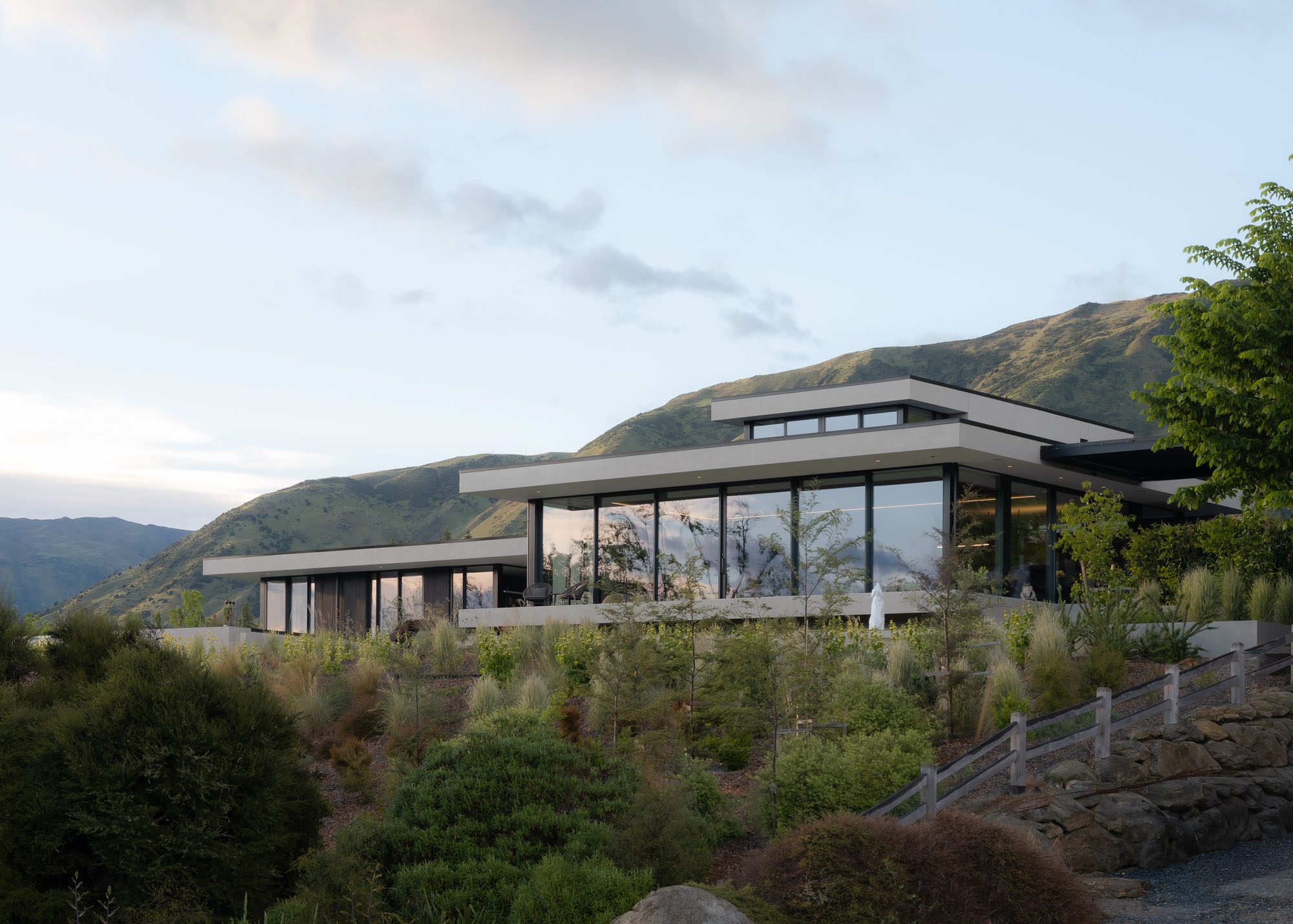
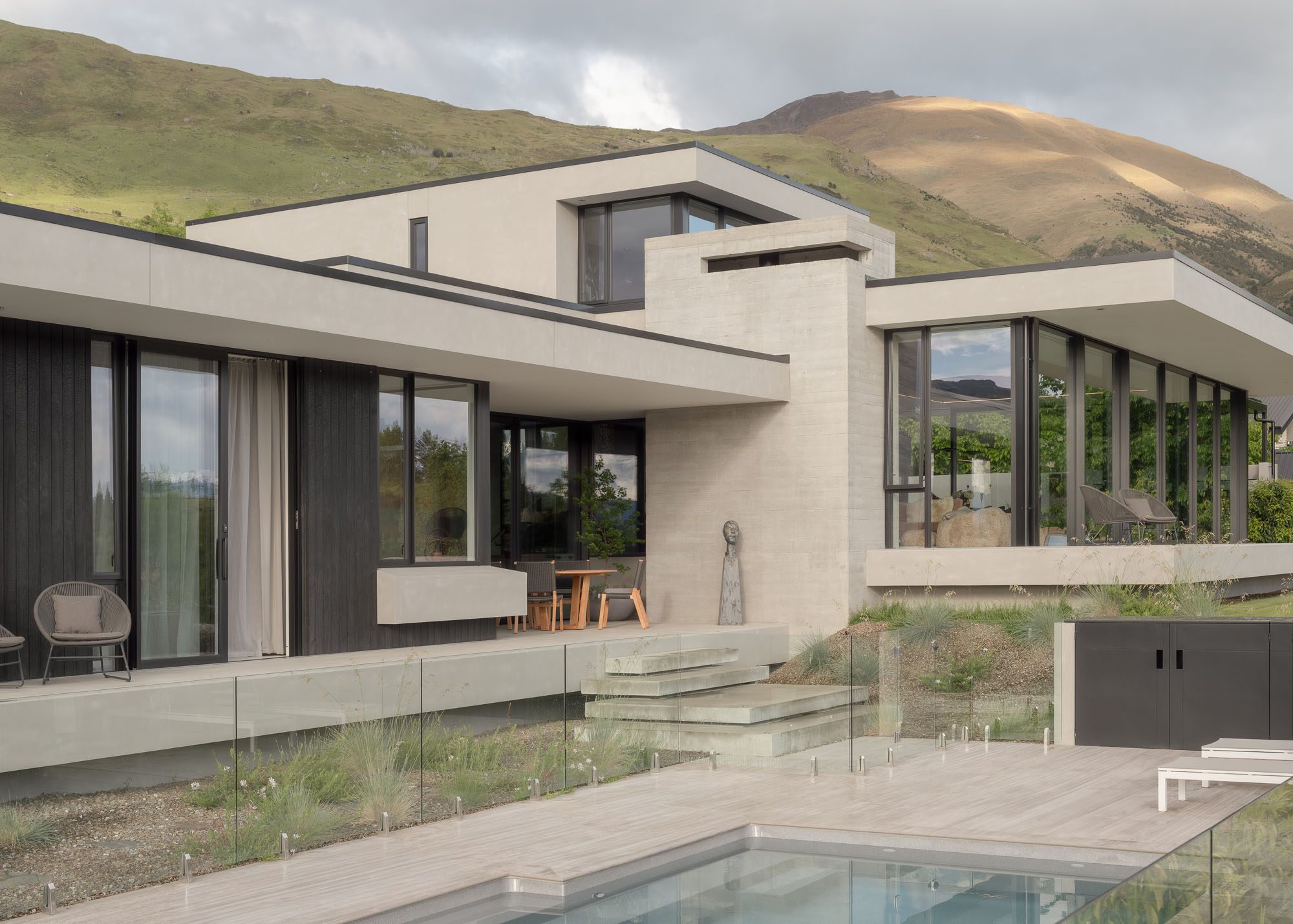
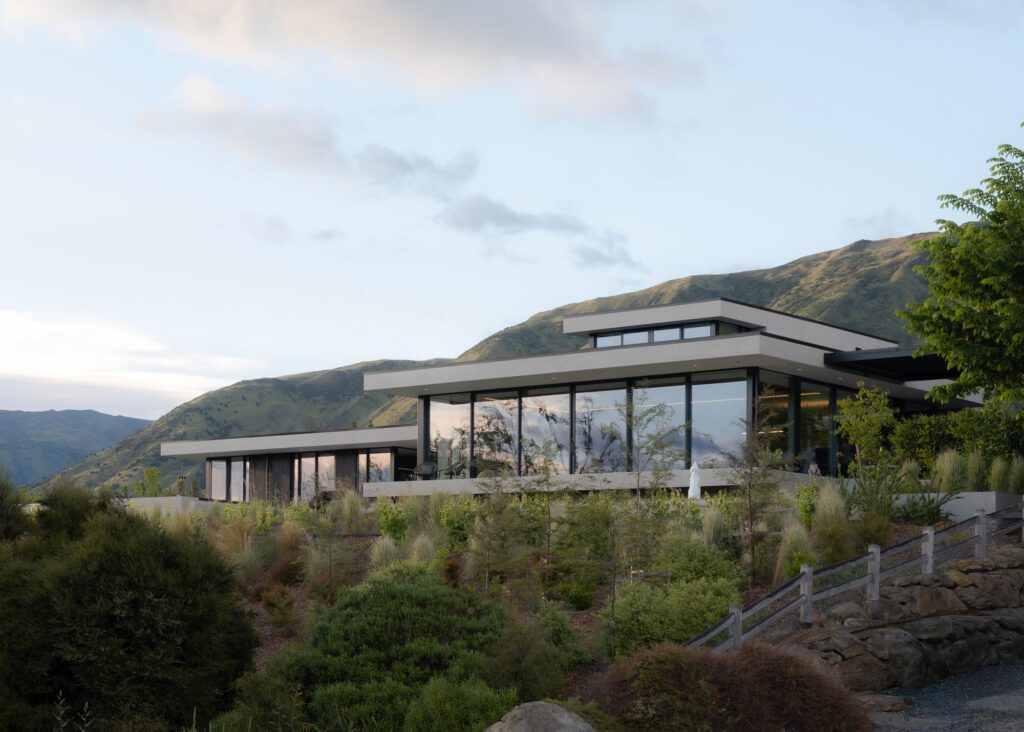
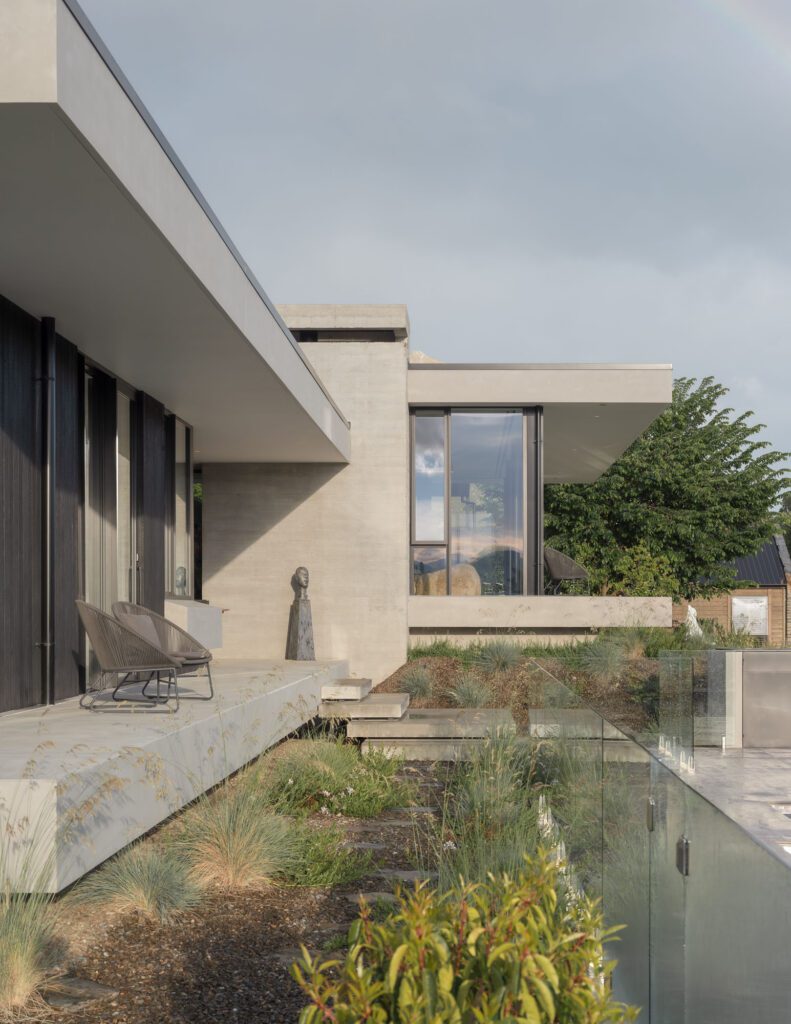
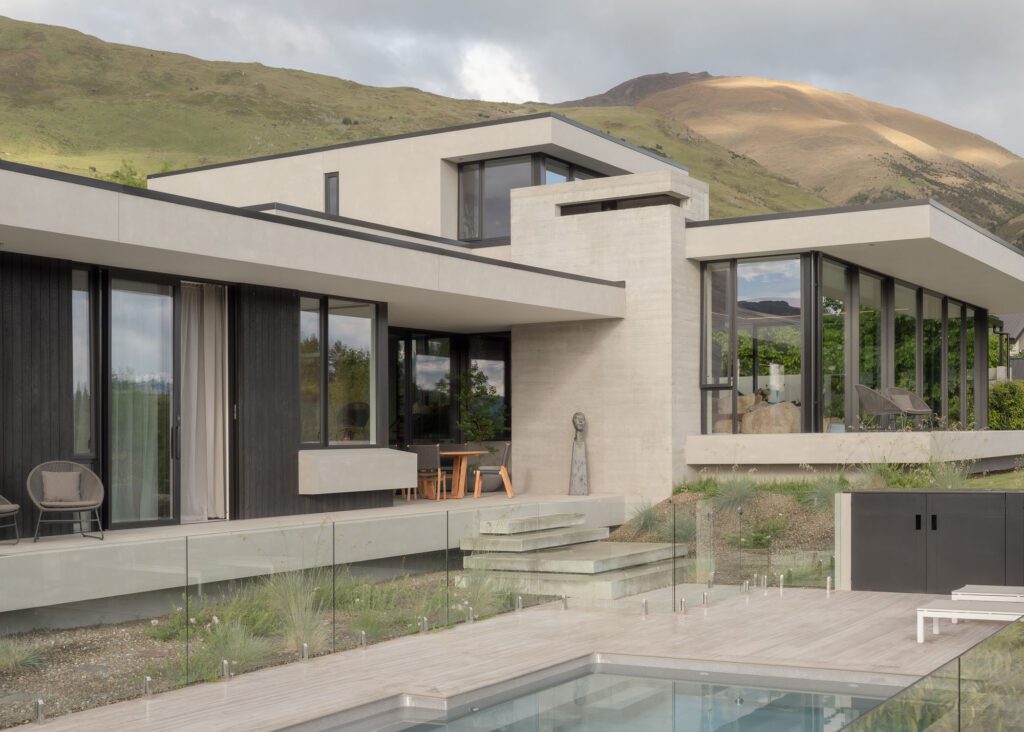
Strong horizontal planes of the roof and floor plates define the geometry of the north-east elevation. Ground covers planted close to the house move into taller grasses down the bank and into a forest of natives that forms the boundary.

You could call it black and white thinking — the brief to Barry Condon of Condon Scott Architects was for a clean, pared-back design in tones of dark and light — but that would belie the complexities, the many shades of grey, that turn such ideas into beautiful built sculpture.

For one thing: positioning on the land. 

“The elevated site sloped in two directions, so it was a bit of a challenge,” explains Barry. “As you moved down the hill, the primary view began to disappear.”

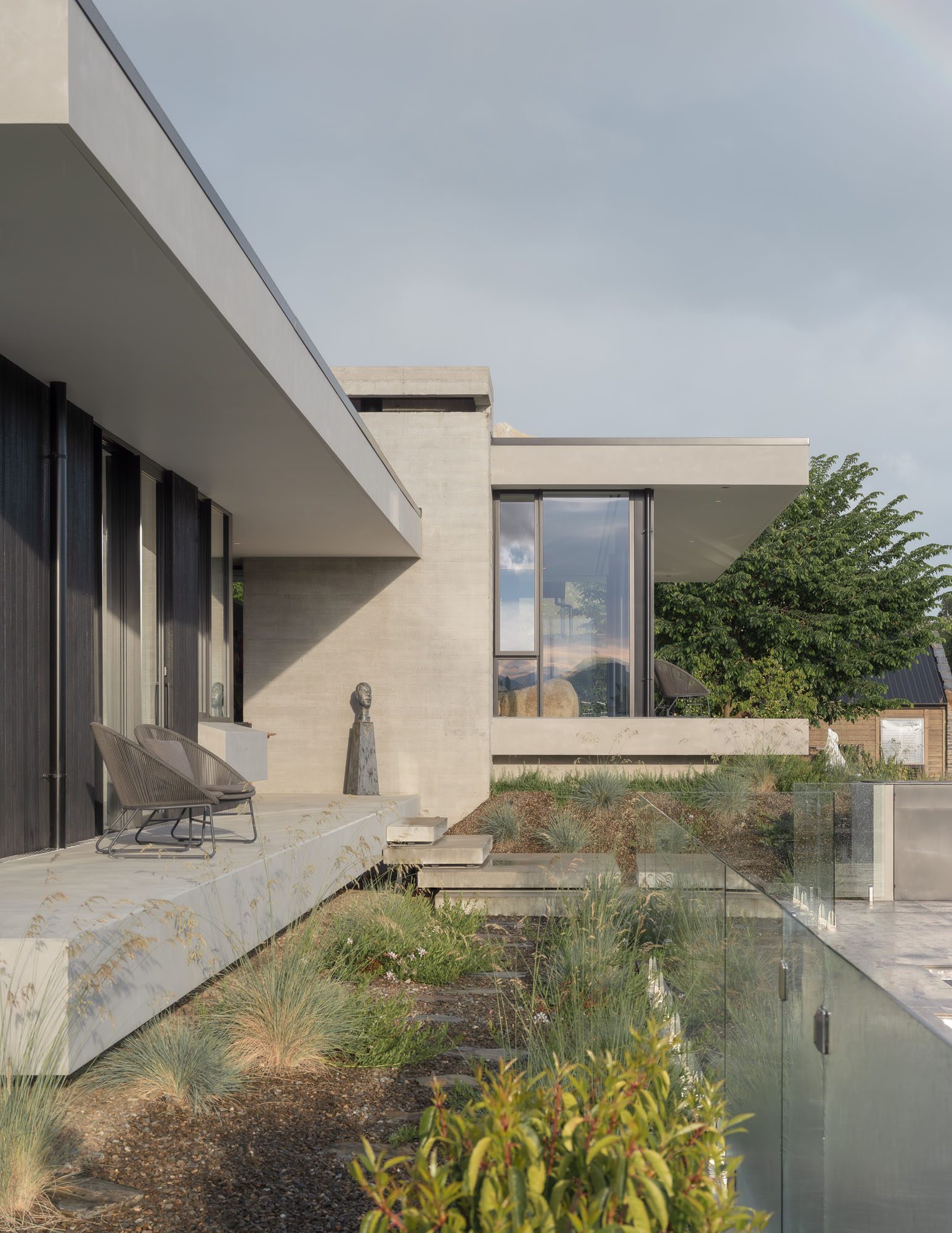
Terry Stringer’s Boy and Apple stands on the morning terrace alongside floating steps that lead to the pool.

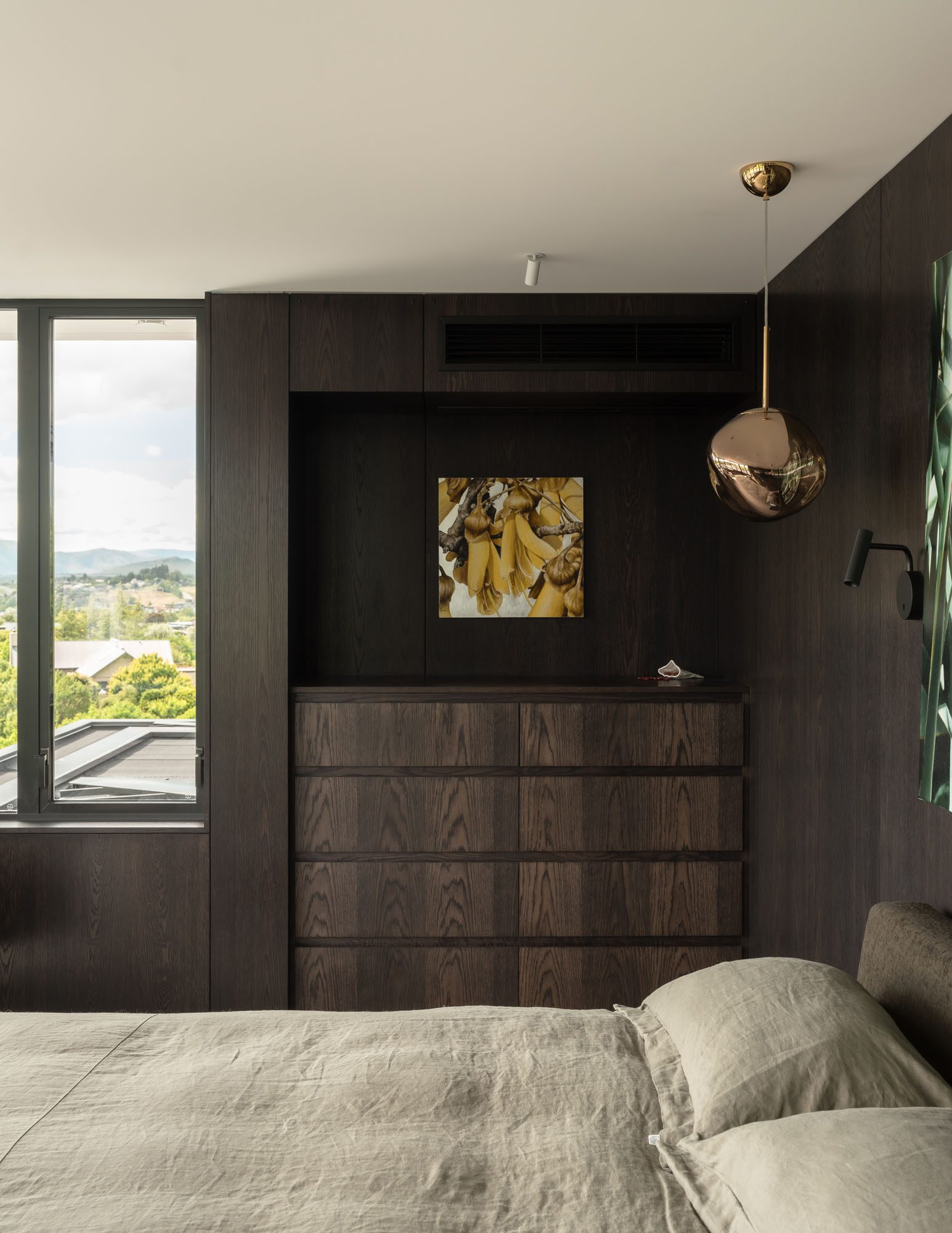
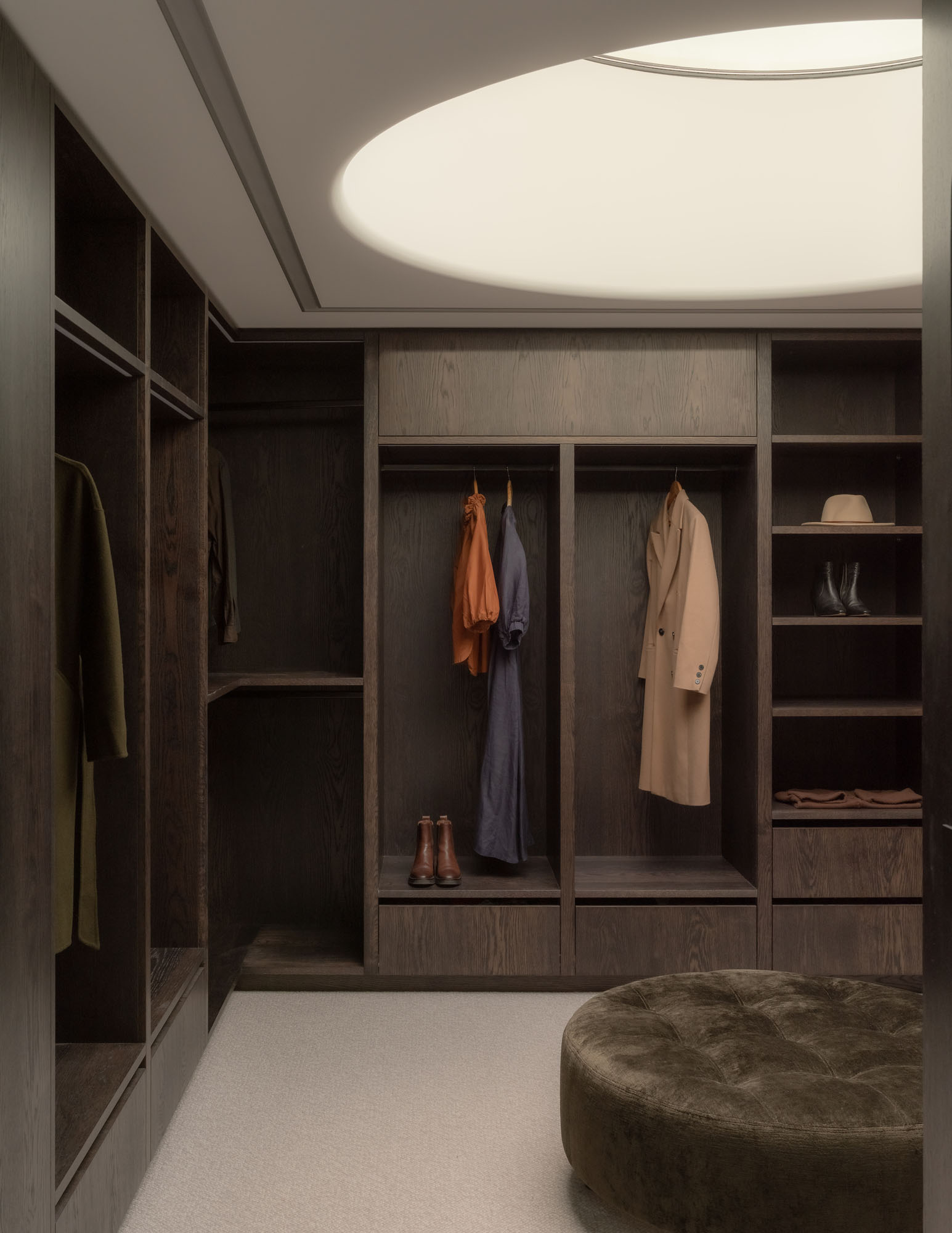
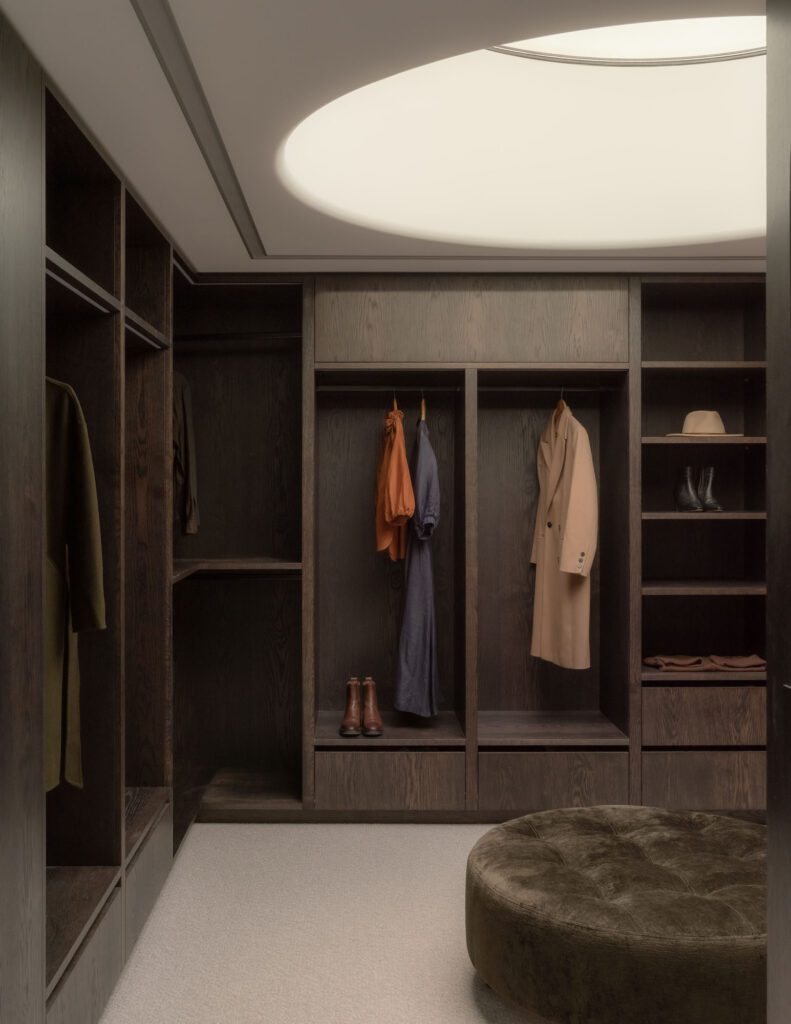
By projecting the living rooms forward of the guest bedroom zone and positioning the main suite as a ‘pop-top’ above it, mornings for everyone now involve the sun slowly creeping up the slopes of distant Mount Maude. The owners, in their eagle’s eyrie, can get dressed at leisure in a dedicated room as big as the bedroom. An ocular skylight is a surprising element, a periscope on the weather. 

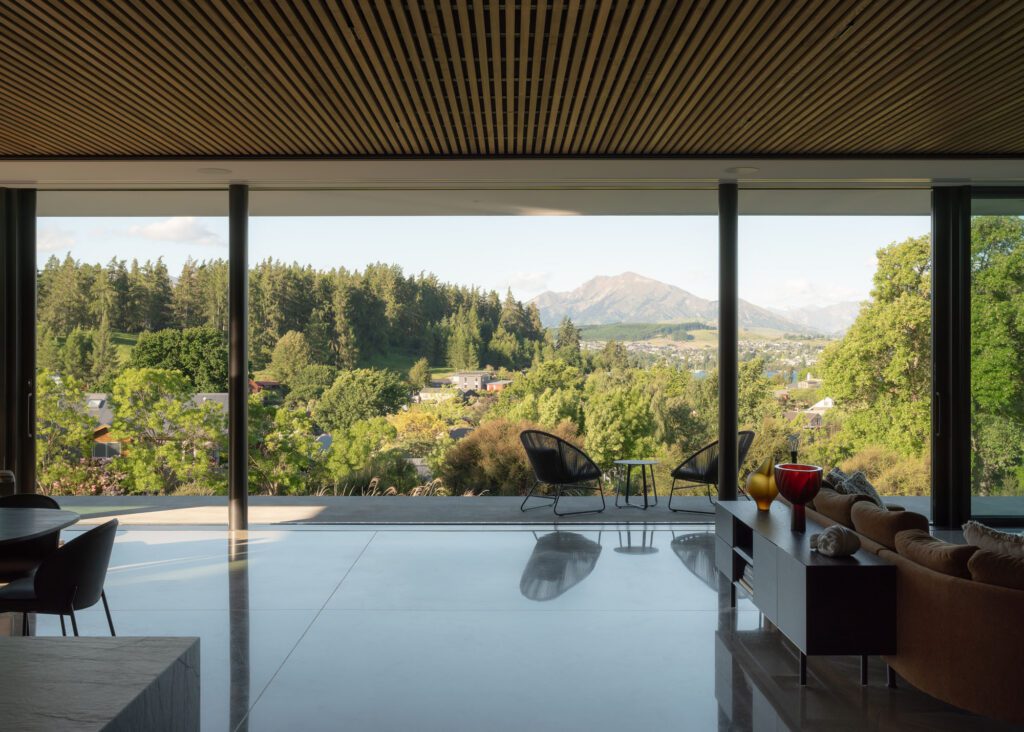
Downstairs, while the northern elevation gets the money shot of the view, sheltered courtyards on the east, west, and south are connectors; part of a programme that acknowledges the importance of the spaces in between. 

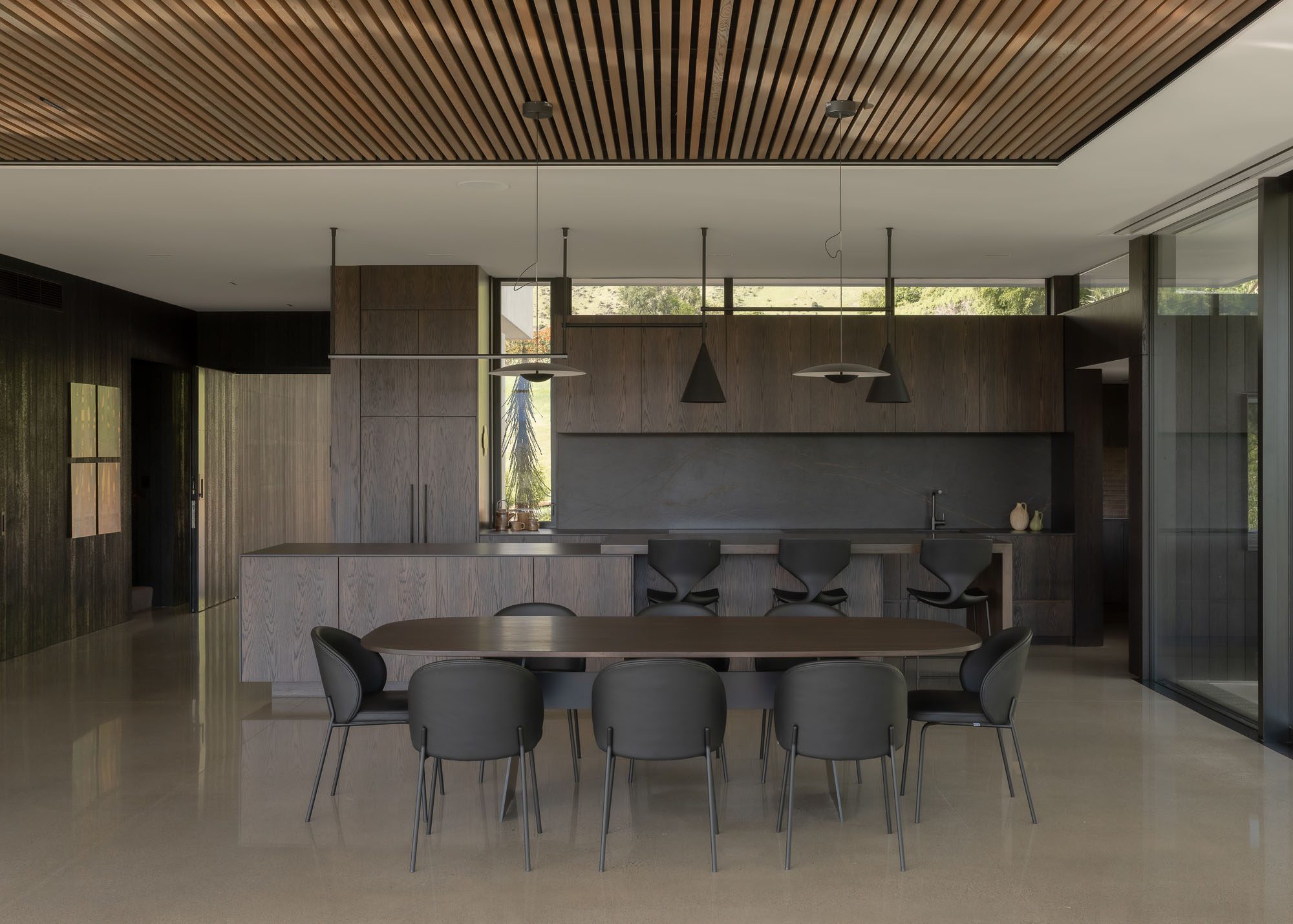
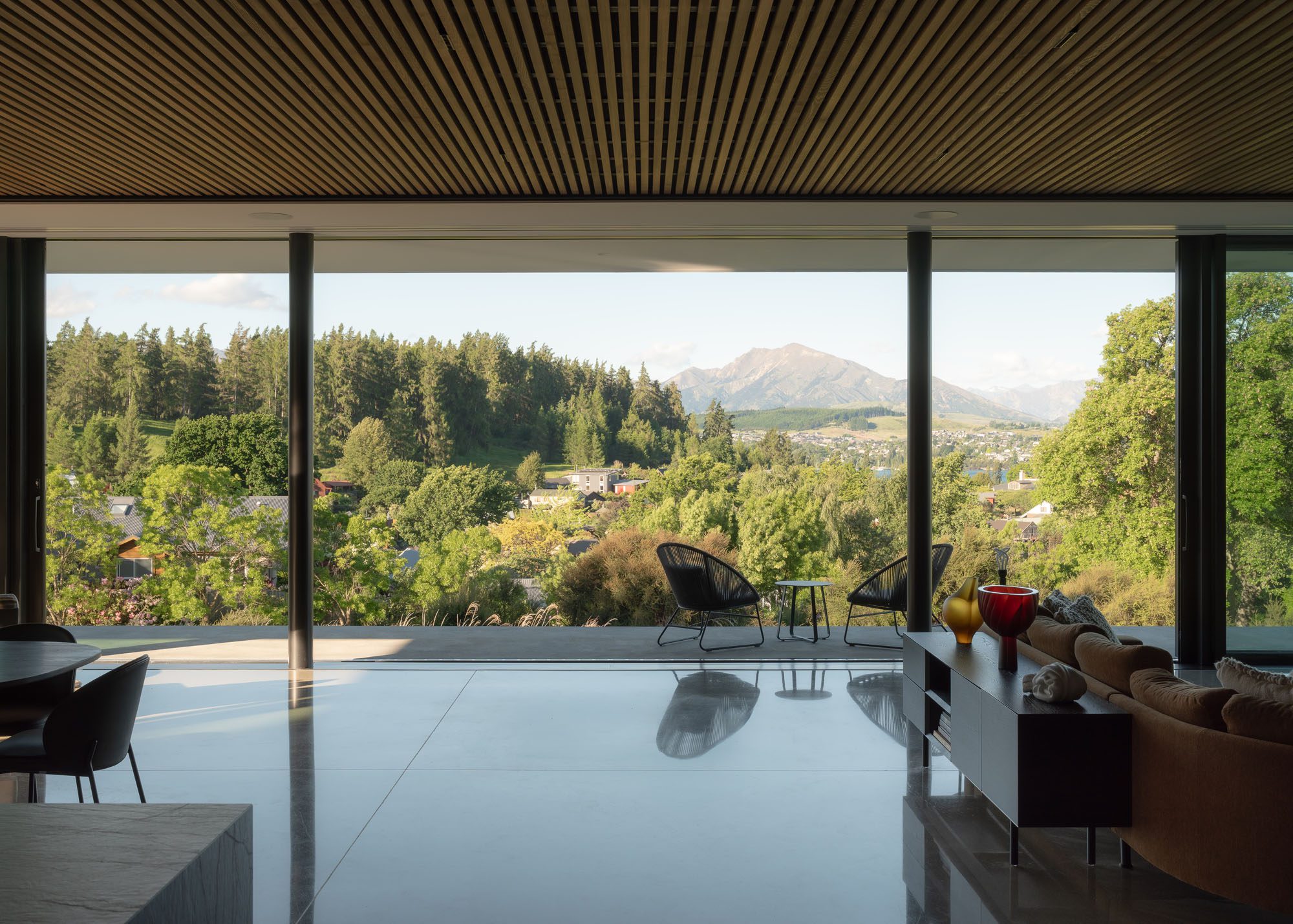
Reflections settle on glossy polished concrete floors in the main living area, which puts Mount Maude in full frame. A cedar-batten ceiling softens the acoustics.

Moving south was a long-held plan for Barry’s clients, who bought this site knowing their new life would never be lonely. Their home on the western edge of town draws their adult children, friends, and extended family south in any season and is designed to accommodate a couple or a convivial crowd.

 During the day, the house reads as a series of horizontal planes, anchored by a vertical chimney element.
 
“Cantilevered concrete becomes the decks leading from the living room and bedrooms,” explains Barry. “These create a deliberate shadow-line beneath the structure, which makes it look like it’s floating above the land.”
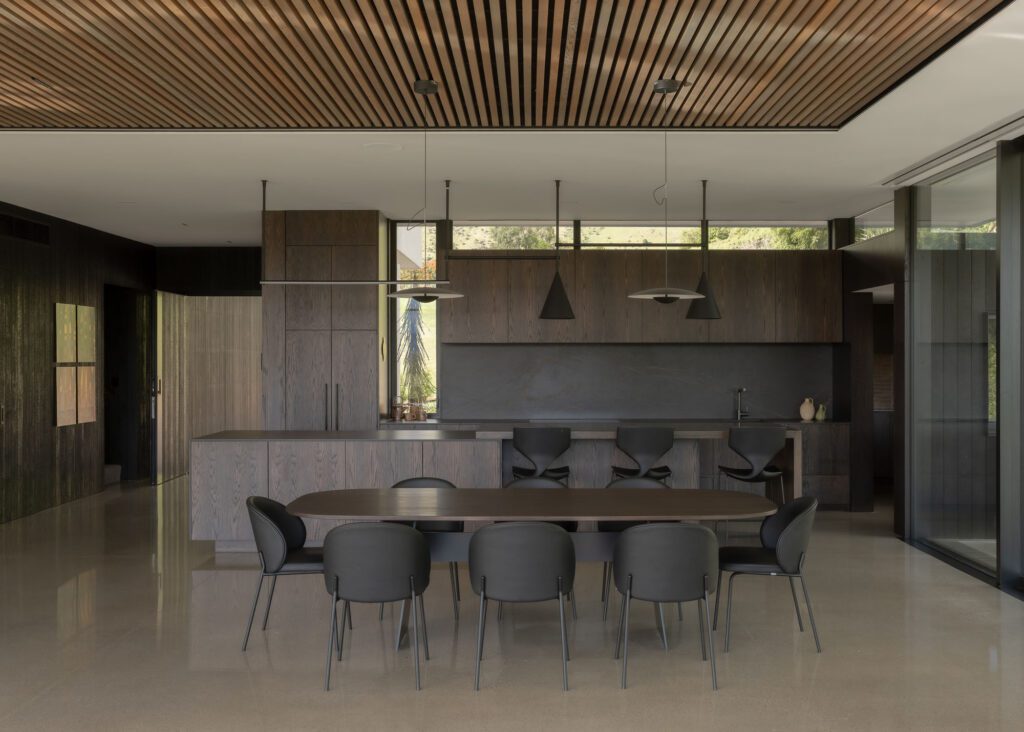
Clerestories above the dark-stained oak kitchen allow diffused western light to enter the space and offer glimpses of Roys Peak.

Pale plaster articulates the horizontal, a board-shuttered finish differentiates the chimney (the fulcrum), and char-tinted shiplap timber cladding lends contrast.

“Glass also tends to read as dark in the daylight,” says Barry, of the windows and joinery.

This recessive nature further emphasises the strong parallels of the form.

In the entry court, where a trio of horoeka casts tall, spiky shadows onto a plaster wall, the near black of the timbered garage door continues as a dark vein across the threshold, channelling the welcome into the living room.

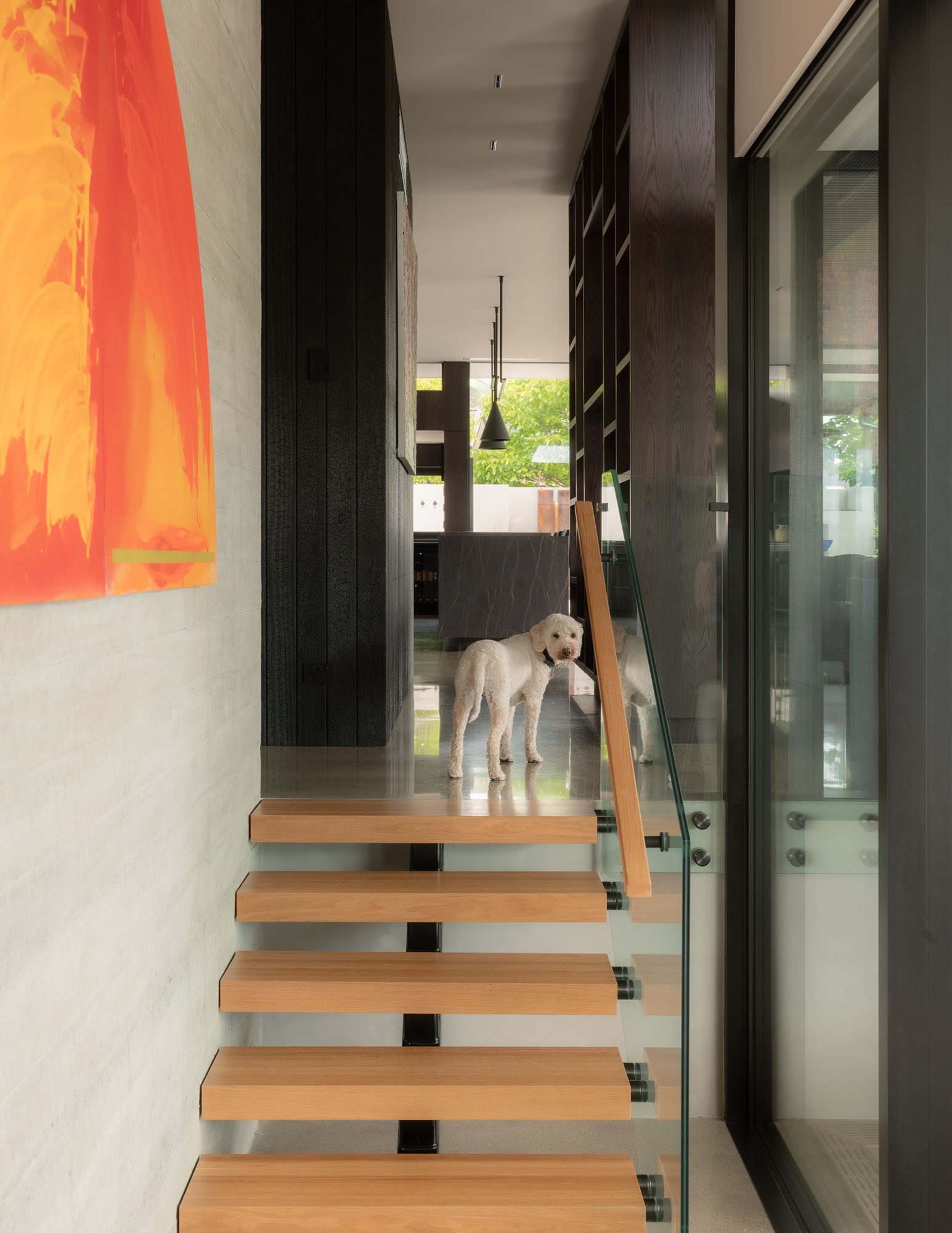
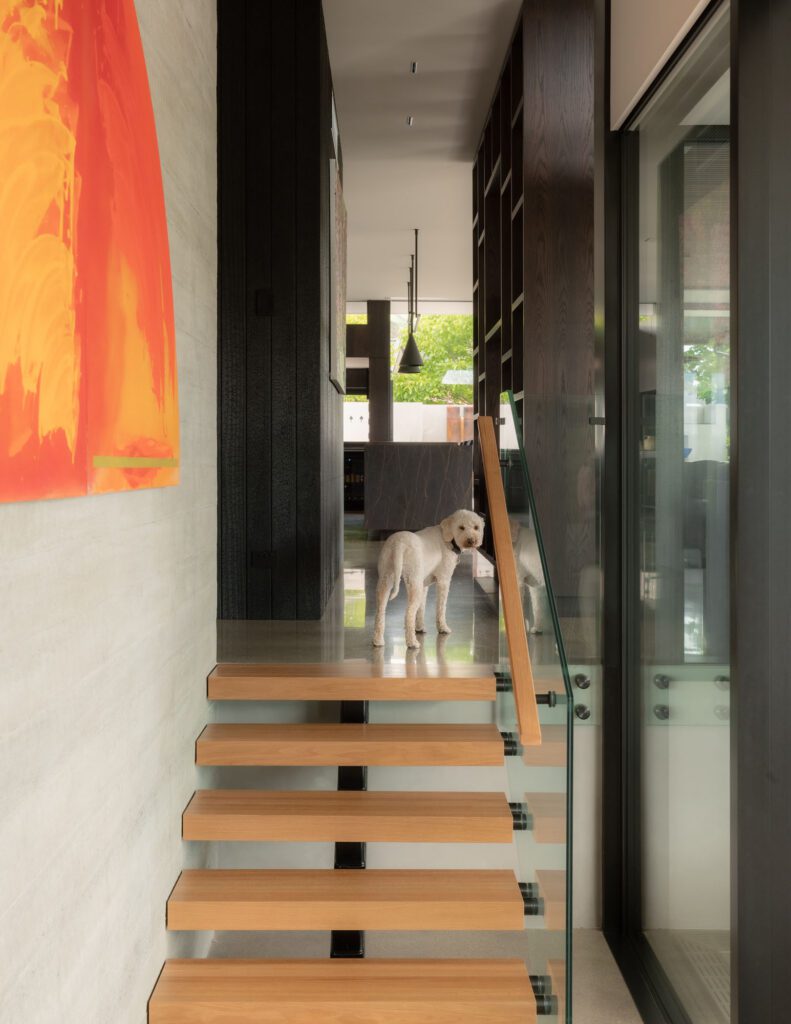
Sammie, the labradoodle, stands on the stairs that lead from the living zone to the guest wing. On the concrete wall is Gretchen Albrecht’s Leaf Fall Autumn.

The spectacle of forest, lake, peaks, and sky is art in itself, but the owners had works of their own they wished to celebrate. Among glimpses of scenery — including

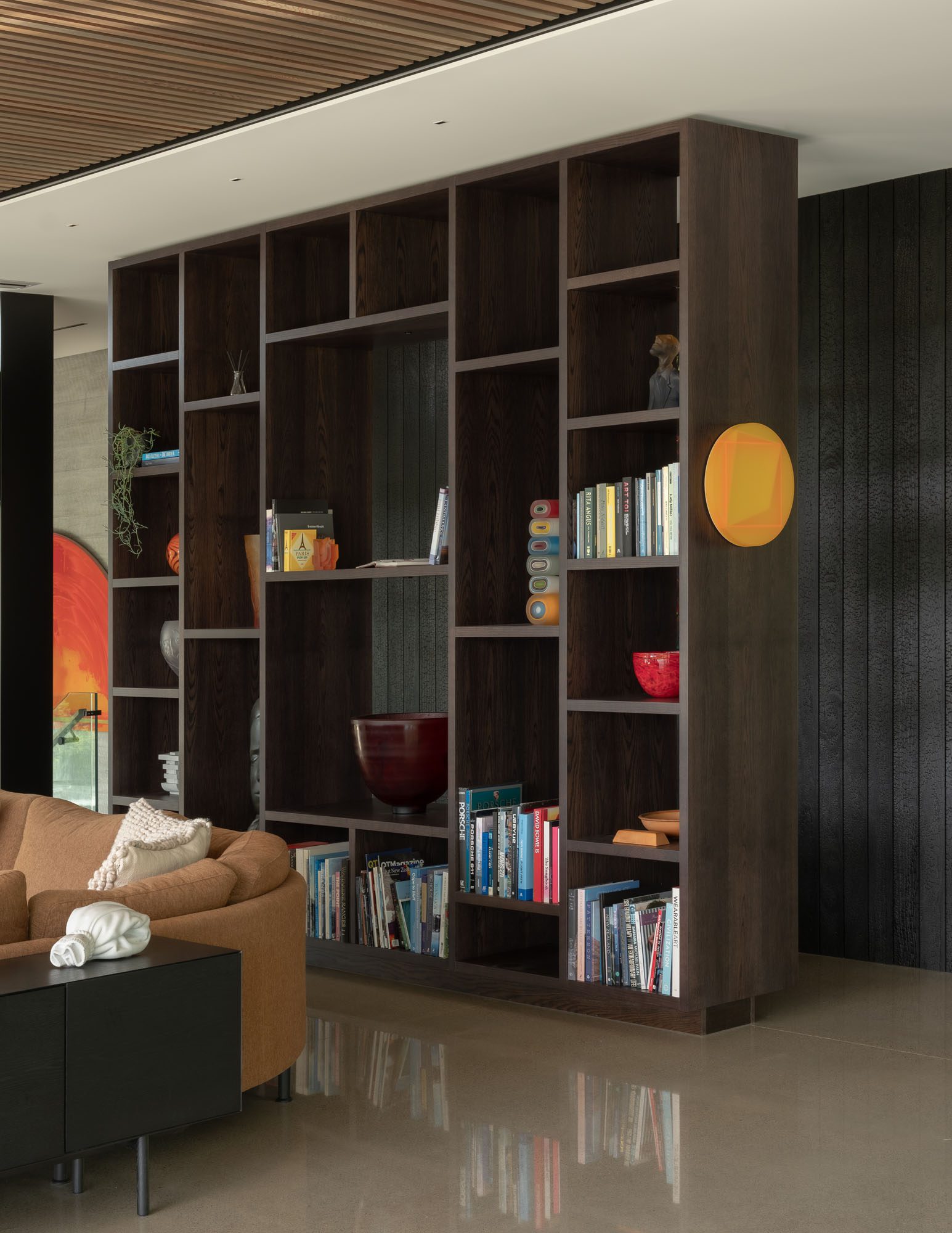
views through high-level windows that frame vistas towards Roys Peak — a Karl Maughan in the passageway is a floral splash of colour, a helioscope yellow circle by Kāryn Taylor brightens one end of a display divider, and cast glass objects by Ann Robinson and Mike Crawford are translucent within the scene.

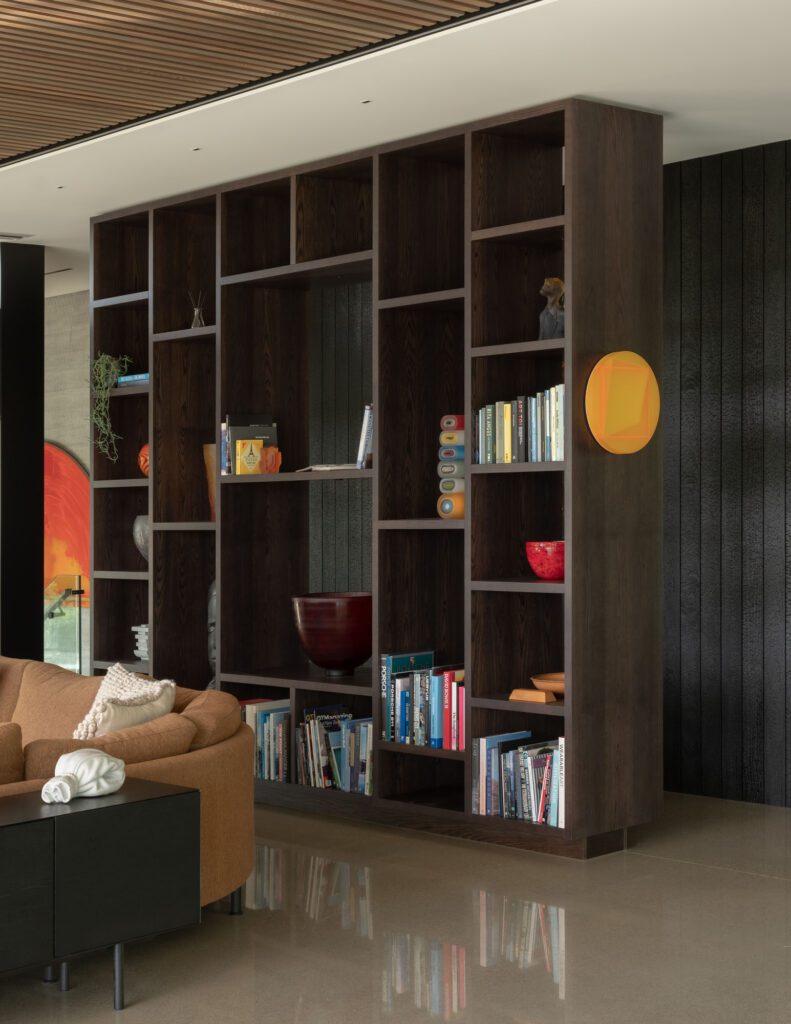
Echoing the brightness of the Gretchen Albrecht work is Kāryn Taylor’s Helioscope Yellow, displayed on the end of the built-in divider-cum-shelving unit that forms a passageway to the guest wing.

“The artwork adds another dimension to this home,” says Barry.

Overhanging eaves not only regulate heat in the height of summer but also protect paintings from direct sunlight.

A textural interchange between materials lends further interest: from the gloss-finish floors to the battened ceilings, shuttered fireplace, and grain-deep kitchen cabinetry. In a micro-reflection of the main structure, a slab of timber appears to float above the Dekton benchtop, which is criss-crossed with veins of gold.

“The island becomes a server where people dip in and help themselves,” says Barry. A butler’s pantry tucked in behind makes front of house a clean and tidy presentation zone.

A 2.1 metre-diameter oculus floods the walk-in dressing room with light. Crown-cut oak veneer wardrobes, with a black stain, take their cue from the kitchen palette.

As easily as conversation flows, so, too, do the spaces — from here to the fireplace courtyard or the sheltered eastern terrace, where suspended concrete steps lead down to the pool. Landscape architect Annabel Riley used native trees and shrubs, plus local Cluden stone, to integrate the dwelling with its domain.

Art has its carefully defined place here, too, since the Condon Scott team designed al fresco rooms around it. An alcove next to the al fresco fireplace contains Paul Dibble’s The Baptism of the Land, Terry Stringer’s Boy and Apple overlooks the pool, and Ben Foster’s Golden Boy II, head tilted to the moon, has a wolf-like presence at the edge of the lawn.

The house is a crisp study in dark and light tones, with floor planes that project as balconies. The main bedroom is a ‘pop-top’ insertion above the streamlined body of the home.

“Our clients knew he looked good against grass and wanted to be able to see him from the house and have him lit by night.”

While it felt right to have a dog waiting at the bottom of the steps for them, the owners’ own labradoodle, Sammie, might disagree. She needn’t worry; Sammie was very much considered in the design. The laundry and garage are her domain for eating and sleeping while, outside, carefully disguised fencing keeps her contained (and the rabbits out).

Hovering in the semi-rural scene, this home where architecture, art, and animal antics collide may be minimal of palette but it maximises joy.

Words Claire McCall
Images Biddi Rowley

Latest video features

In the Coromandel, a home with a humble profile and a thoughtful design makes the most of a stunning location.

Built with awe-inspiring attention to detail, this Arrowtown home is a fresh interpretation of a familiar Otago rural vernacular.

This sculptural Northland bach is a perfect north arrow on a remote farm high above the sea.

With the sun on its bow and the community at its stern, this is a house in which the elements are always front of mind.

Trending articles

Homes

River Light by PRau

On the banks of the Avon, PRau’s material choreography turns a private residence into a study in considered restraint.

Design News

Harp Kitchen by Poliform

At Milan Design Week, Poliform transformed the storied halls of Palazzo Clerici. The 18th-century residence, layered with history and texture, became the setting for the