

M is for ‘Martinborough’, for ‘monolithic’, for ‘minimal.’ In this holiday house, where the owners instill singular focus into everyday rituals, it is also for ‘moments to mark.’
When the clients asked David Ponting of Ponting Fitzgerald Architects for a place that was artistic and abstract, for architecture as an object more than a residence, it was a heaven-sent commission. The couple, drawn to the studio’s ambitious curated compositions, had a four-hectare block that was an open barley field, a pastoral palette on which to sketch — confidently.
“This was a project beyond just building a house,” says one of the owners. “It was something we could focus our energies and efforts into, not just immediately but in the future, too.”
Initially, the brave brutalism of concrete was explored.
“The clients gave us the words ‘bunker’, ‘gravity’,
and ‘safety’ as part of their brief,” says project architect Frances Young.
However, here in the agricultural backlands, in a region known for its vineyards strung out along alluvial terraces, concrete seemed to jar.
“As we developed the design philosophy further, the lightness of a hay shed became a more contextual response,” explains David.
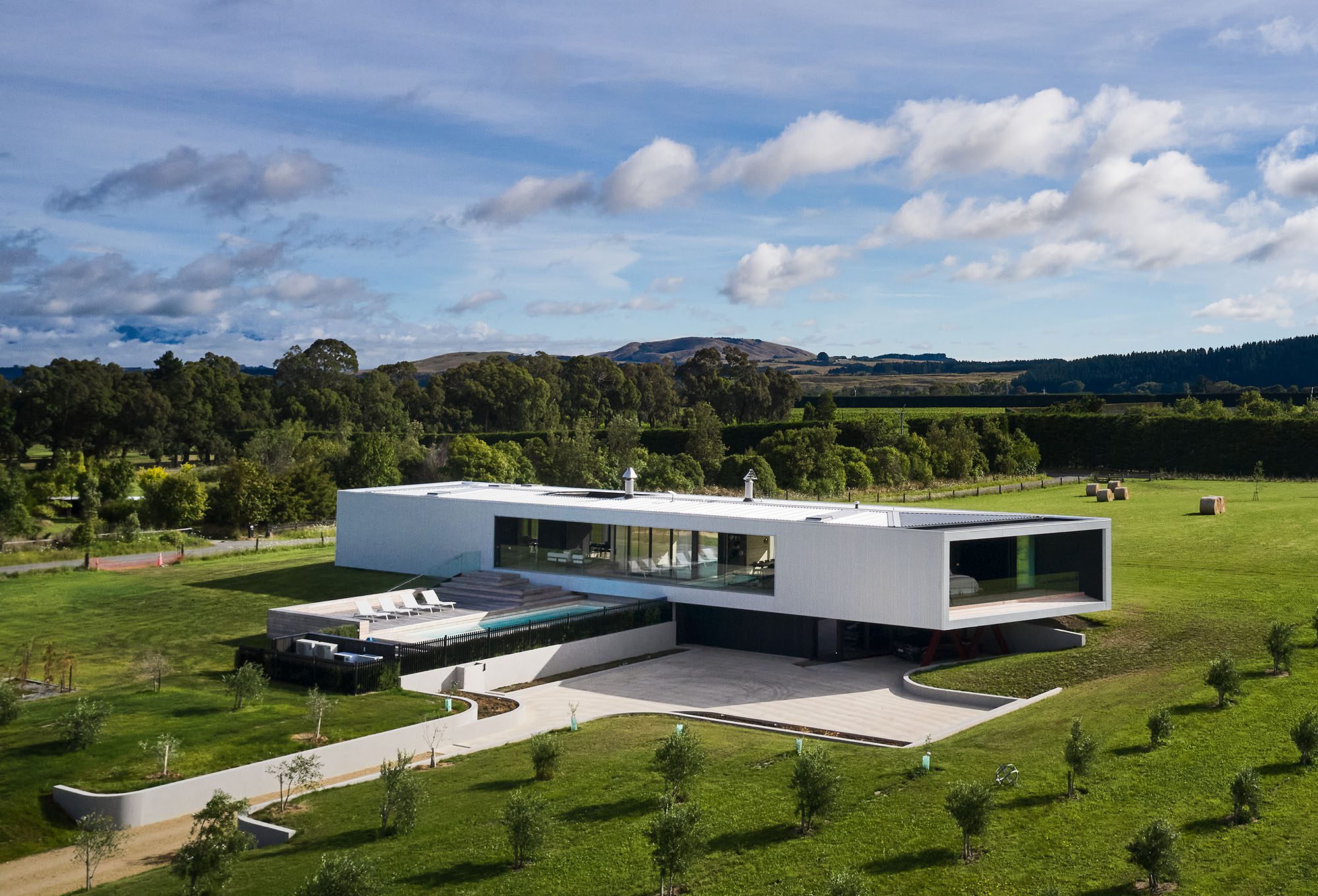
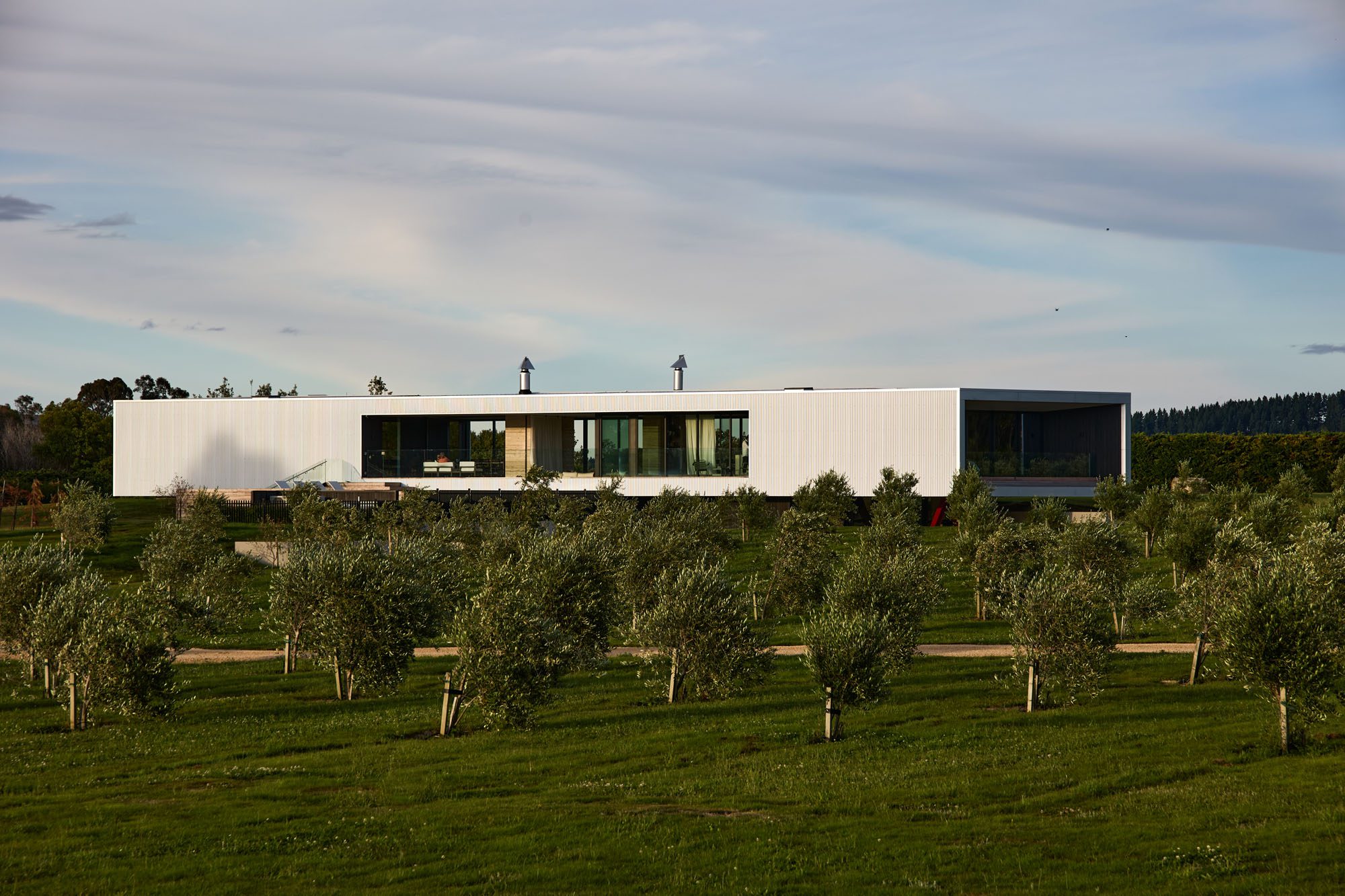
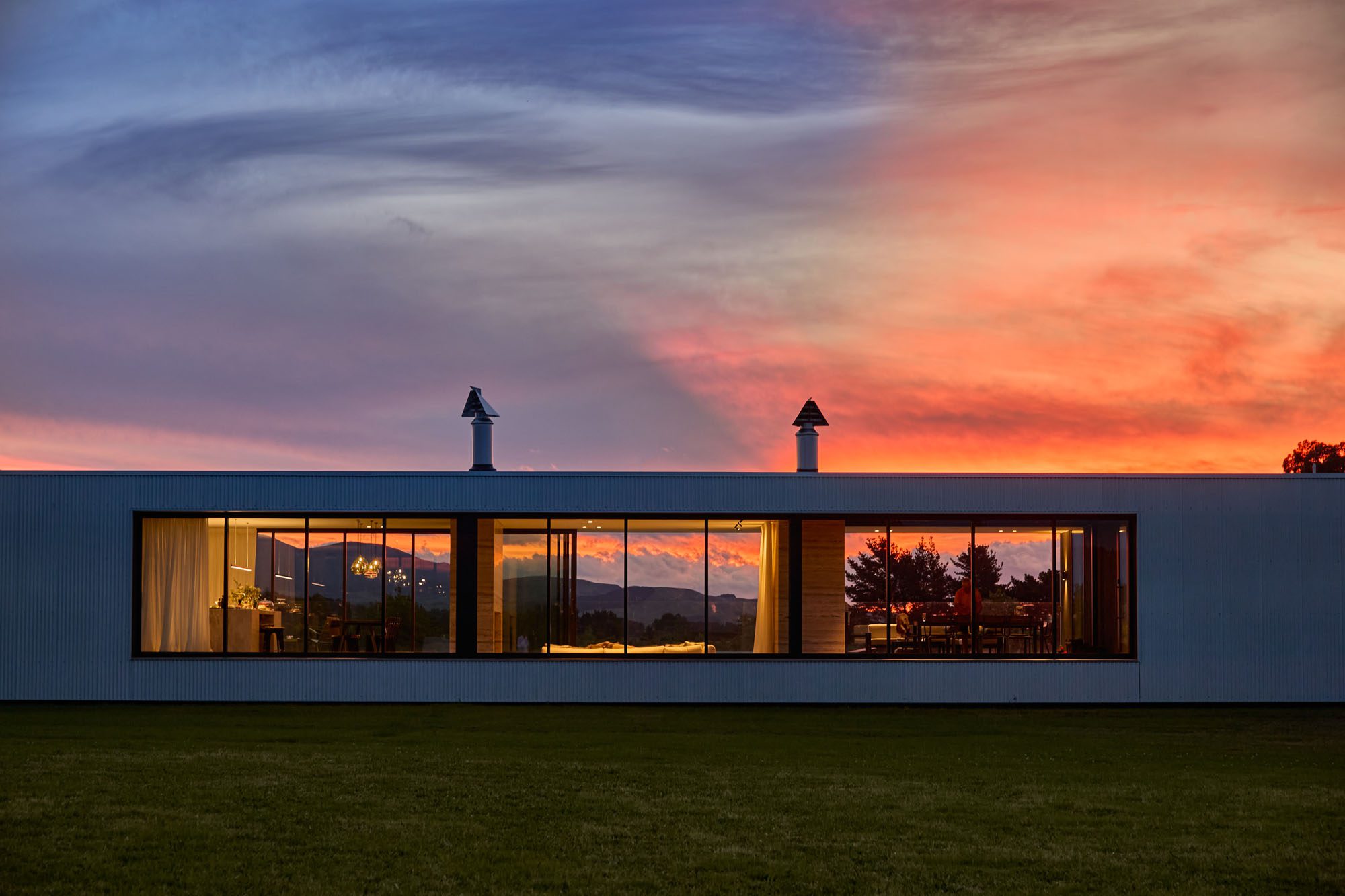
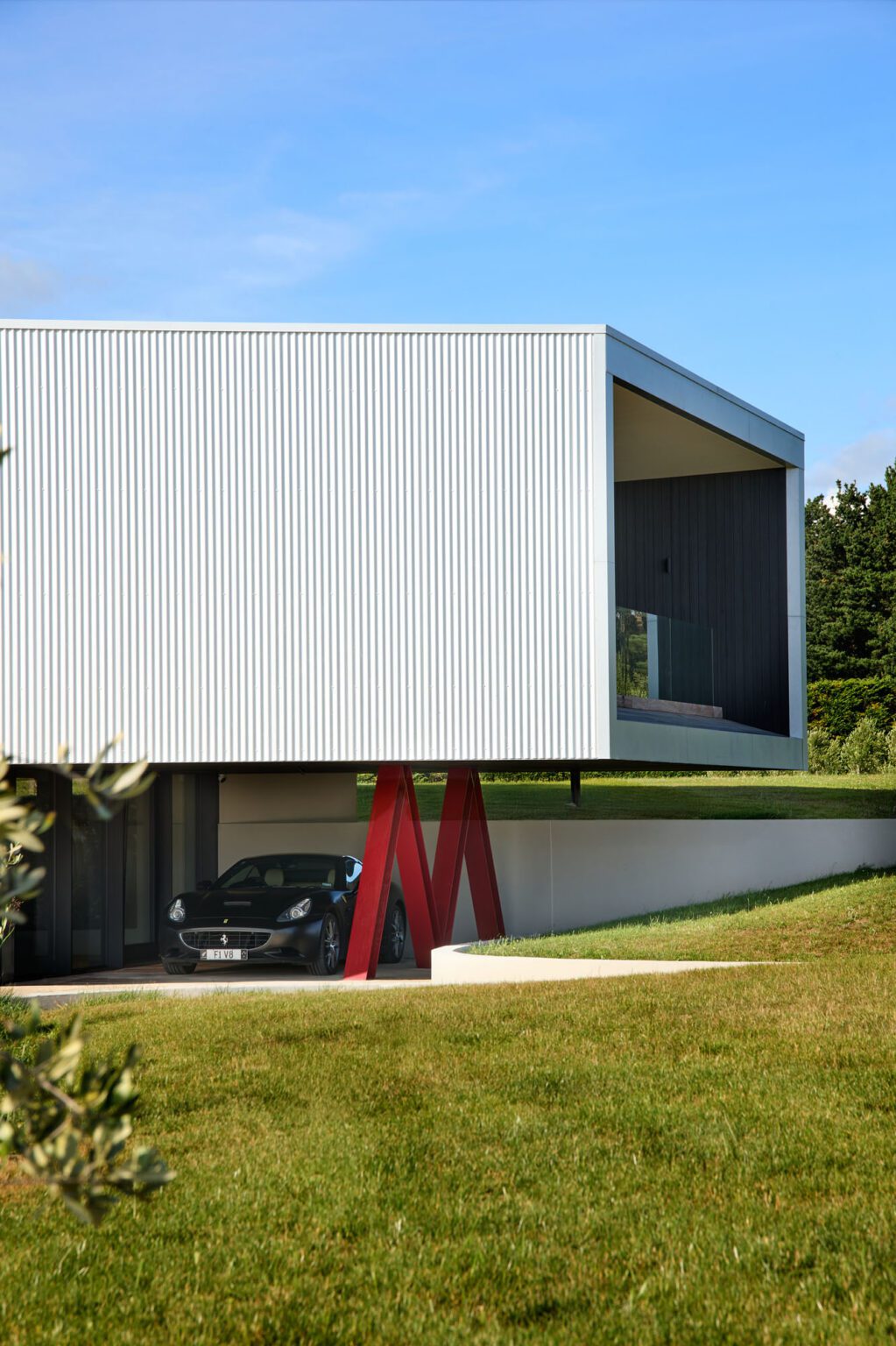
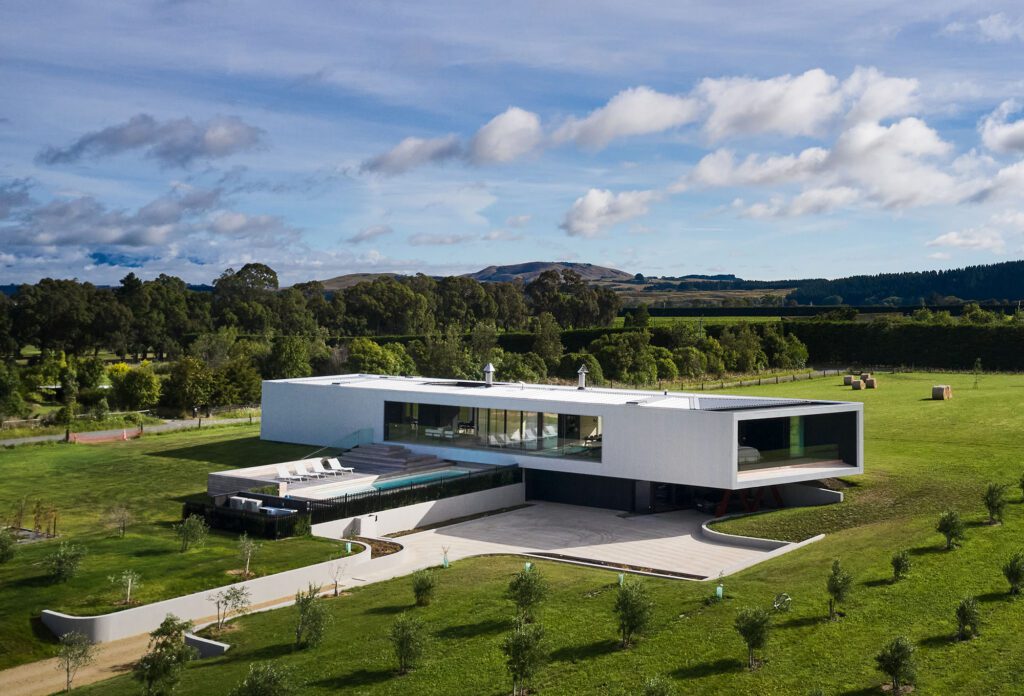
So, corrugated steel, its rippled surface providing a visual and tactile dynamic, cloaks the building, a silver slash that appears to float just above the green paddock.
“We located it to the north-west boundary for the best distant views of the Aorangi Range, on top of a gentle hillock that rolls up through the land,” says David.
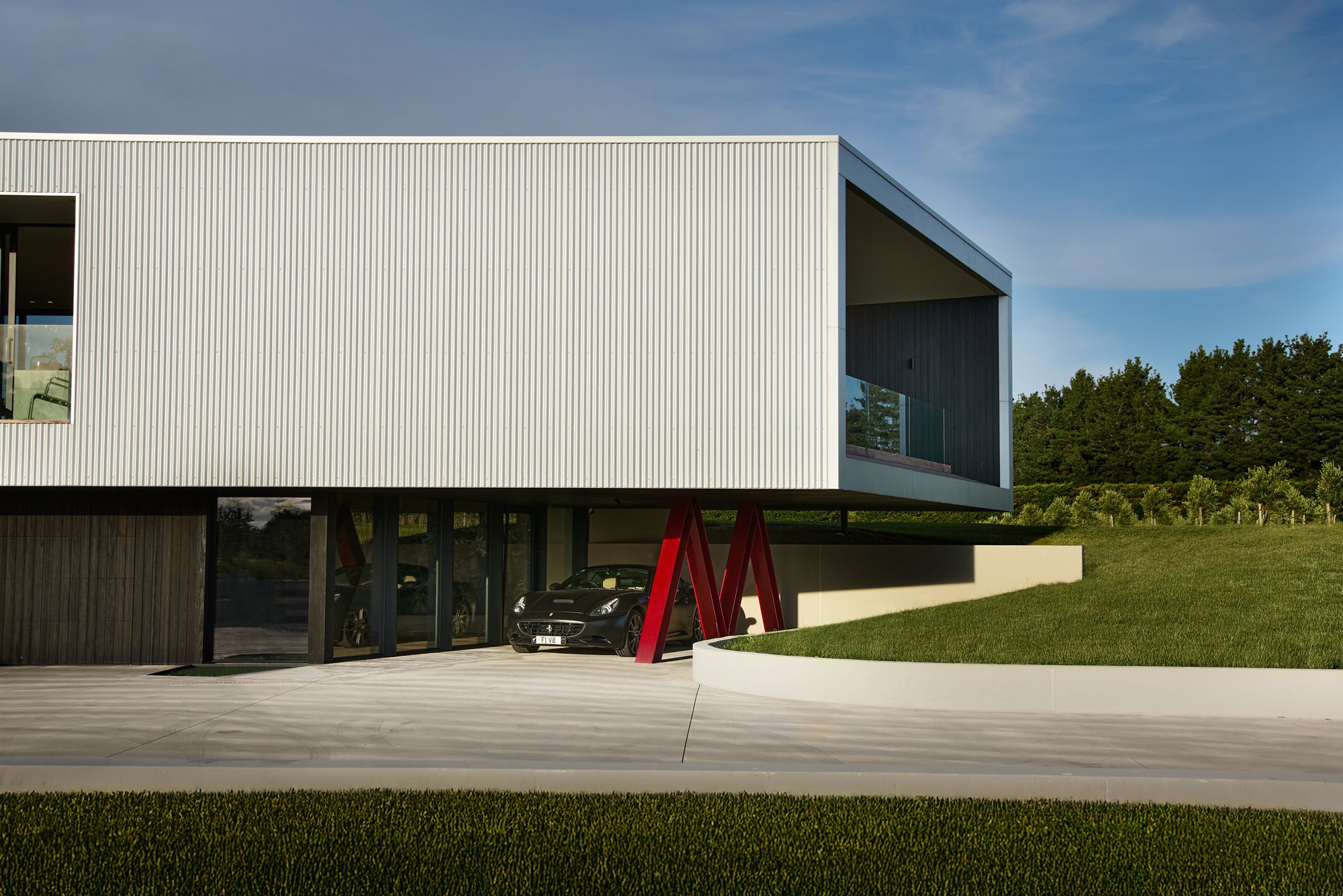
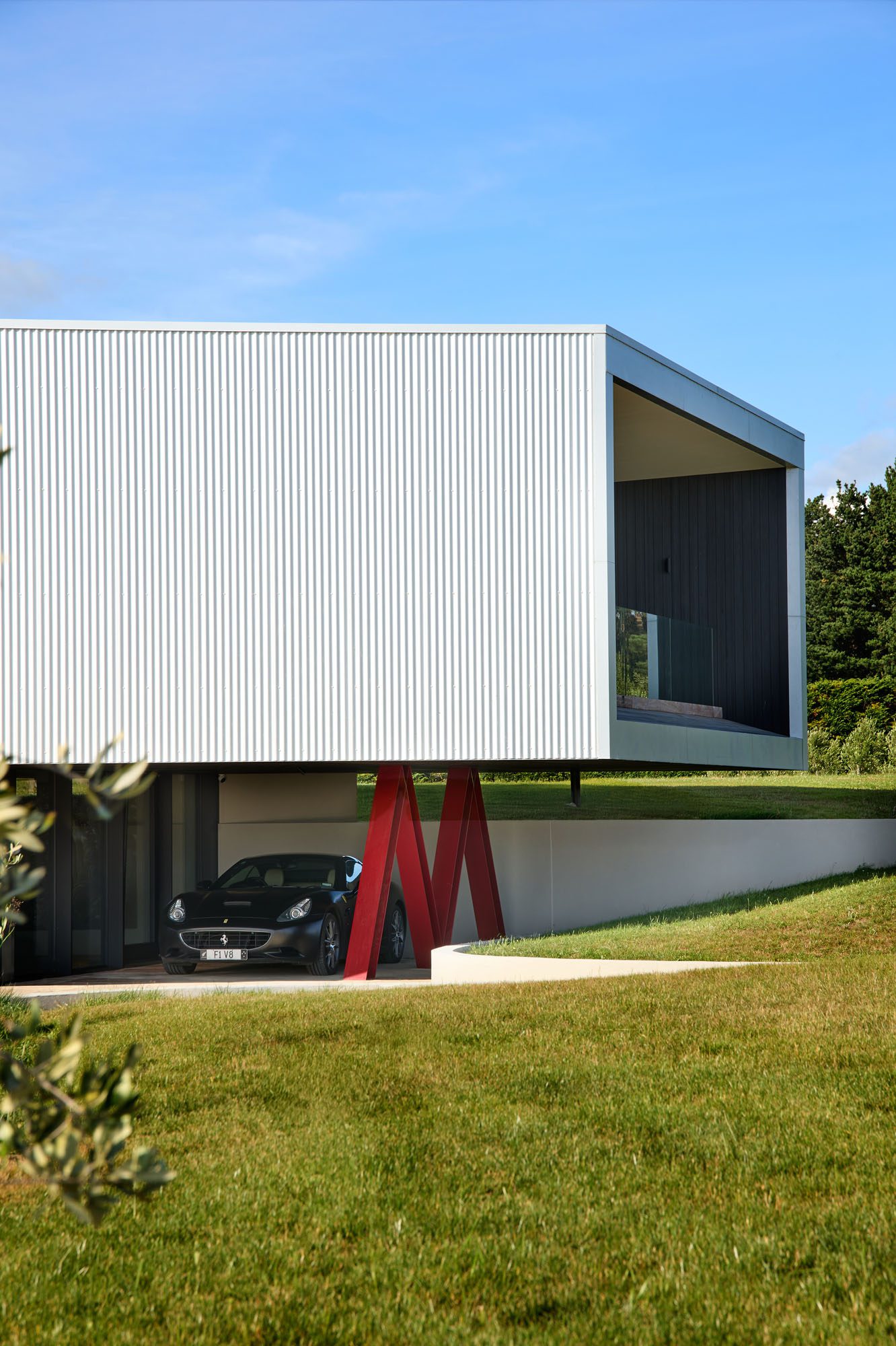
Getting to the front door requires a circumnavigation of the elegant 45-metre form — an intentional arc on a gravel ribbon that takes in the sculptural presence of the dwelling from the south, west, and northern elevations. Then, where the ground contour falls away, a subterranean carport and entry tuck beneath the eastern edge. This cantilevered end is supported by steel struts that form a giant red M, reflected in the glazed foyer.
“The owners make olive oil and keep it in bottles branded with an ‘M’ pressed into red sealing wax,” comments David.
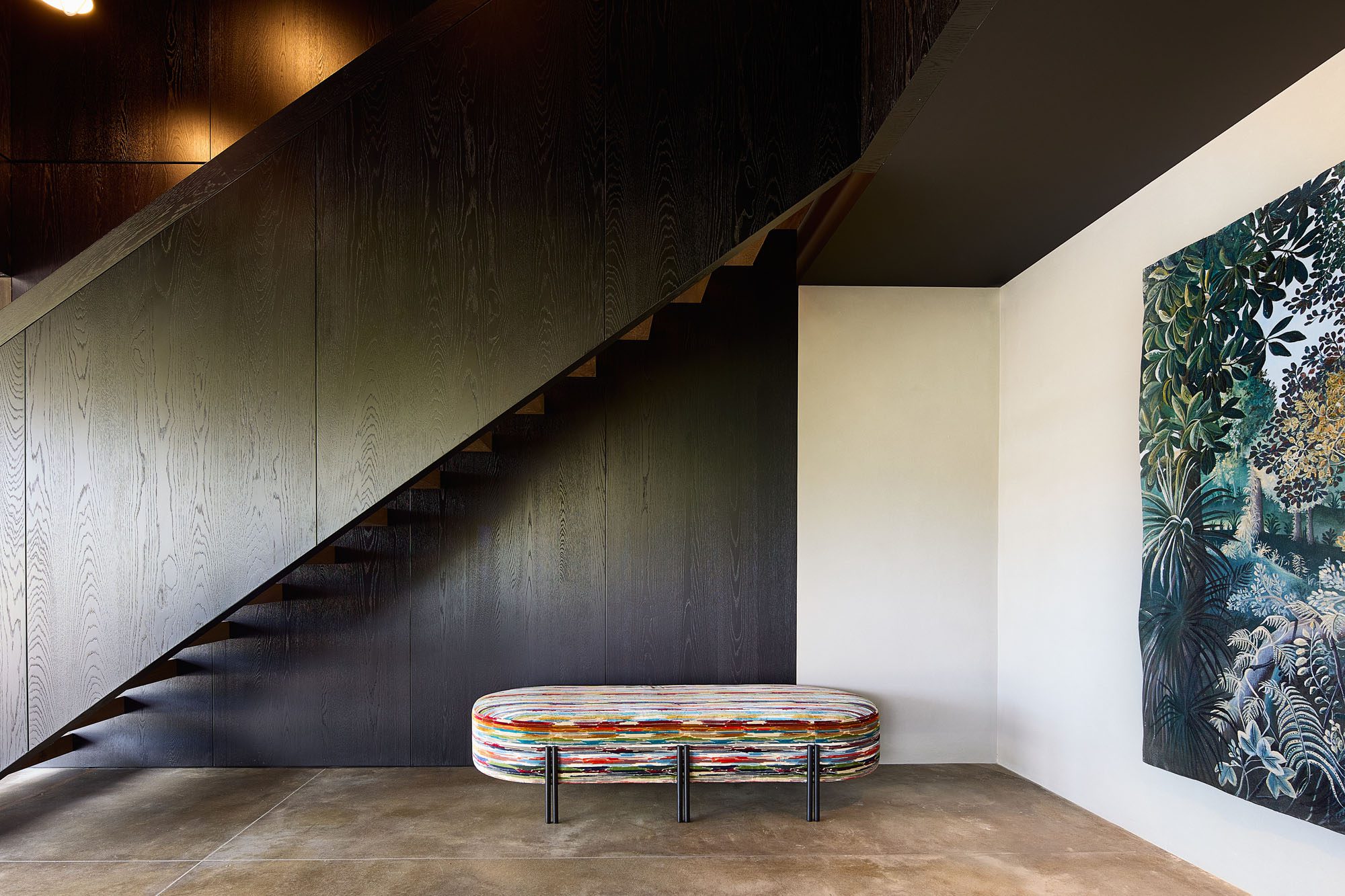
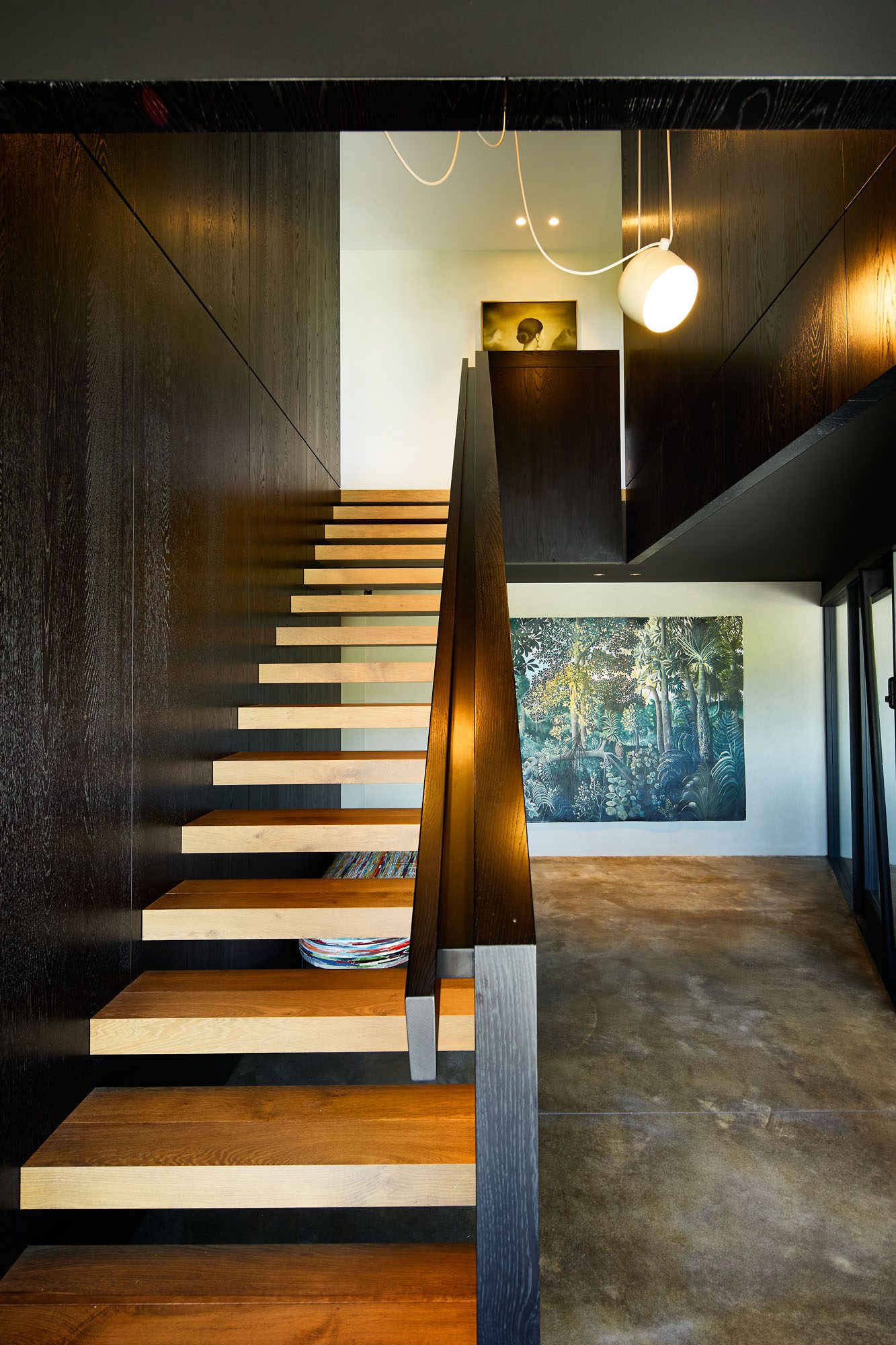
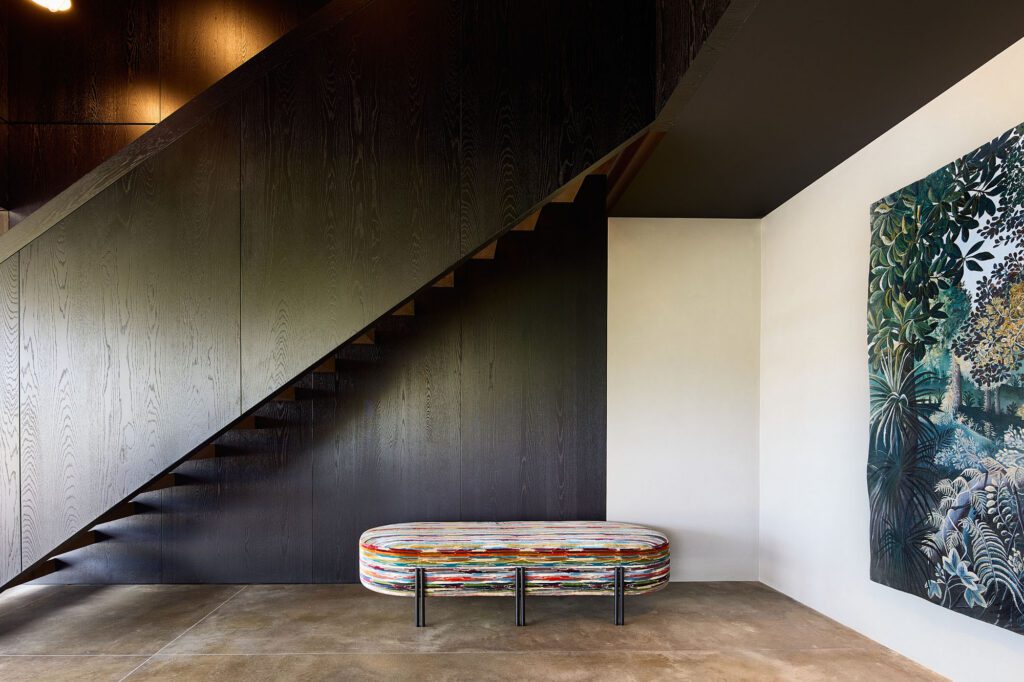
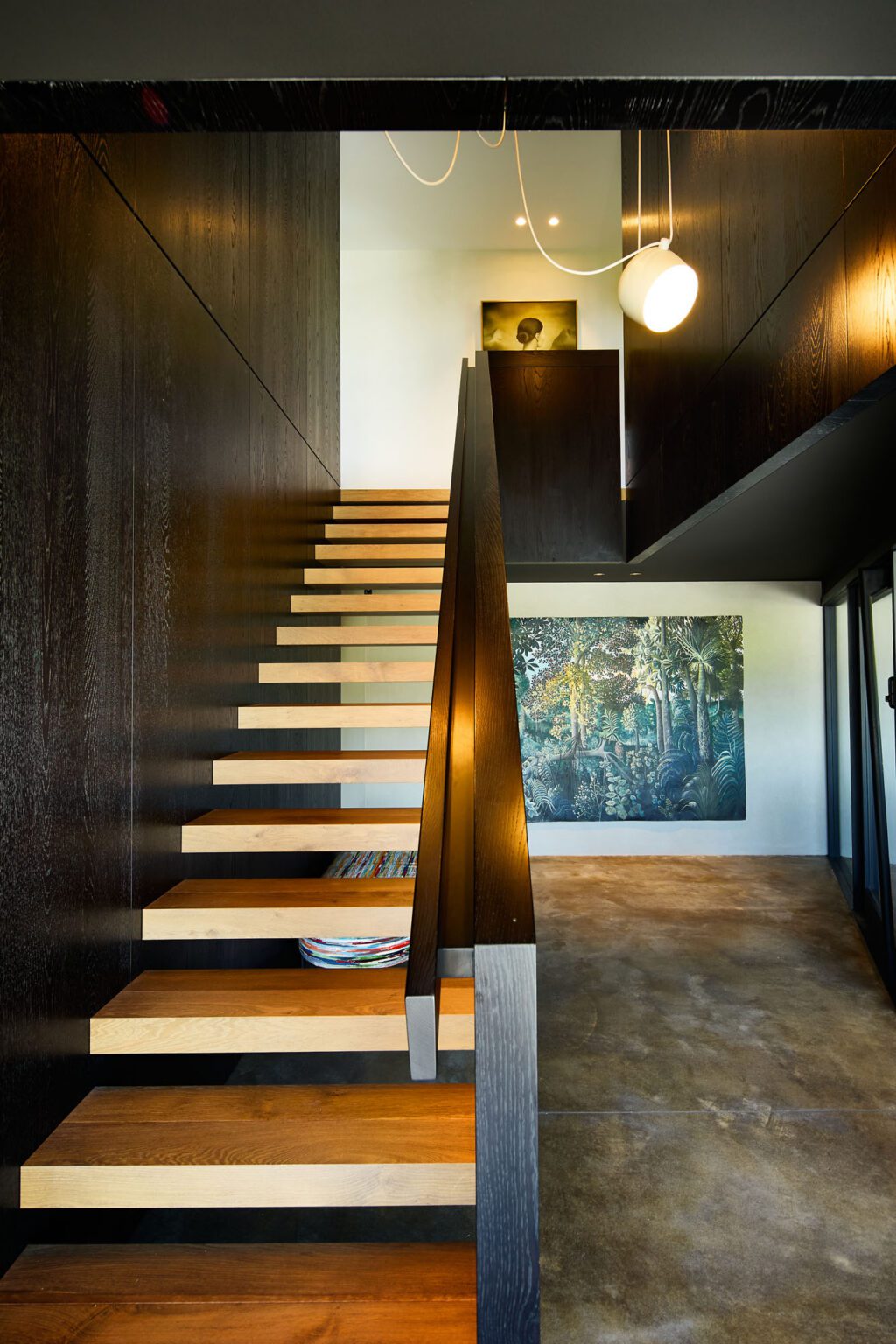
The journey upstairs through a cave-like volume, with walls panelled in dark-stained American oak, follows the classic programme of compression before release. Turn the corner and the expansiveness of the backdrop floods in. It’s all hay-bales, macrocarpa hedges, hills, and sky.
This rectilinear insertion is not as straight-cut as it first seems; the architects took an angled slice off one end, aligning the main suite to Hinekura Hill. This is a private sanctuary, with an outdoor bath on a deck that looks across the paddocks, but there’s no walk-in wardrobe.
“In the bedrooms, the clients wanted to keep things comfortable yet contained,” explains Frances. “The idea of adequate as enough.”
That’s not to say there’s no sense of generosity.
There is — the real kind. The owners envisaged this as a destination retreat, where everyone could gather. At the opposite end of the pavilion, three en suite bedrooms and a bunk bed rumpus room can sleep 14. And, as confirmed foodies, the owners have no fears about catering to a crowd.
“We serve local wines where possible, and, because we planted Koroneiki olive trees before we started building, [olive oil] has become a hobby. A bottle of our own oil is a nice gift for visitors,” says one of the owners.
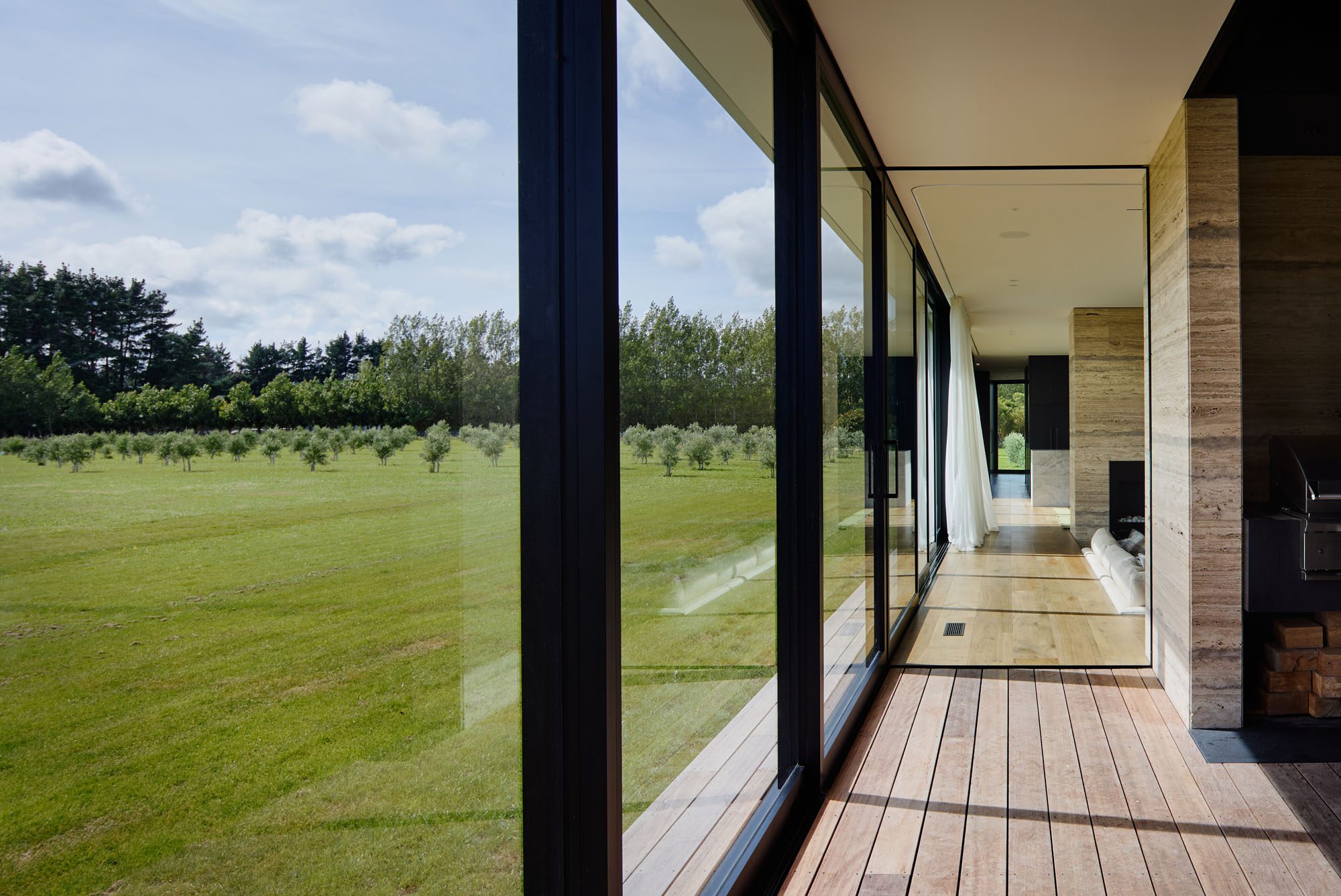
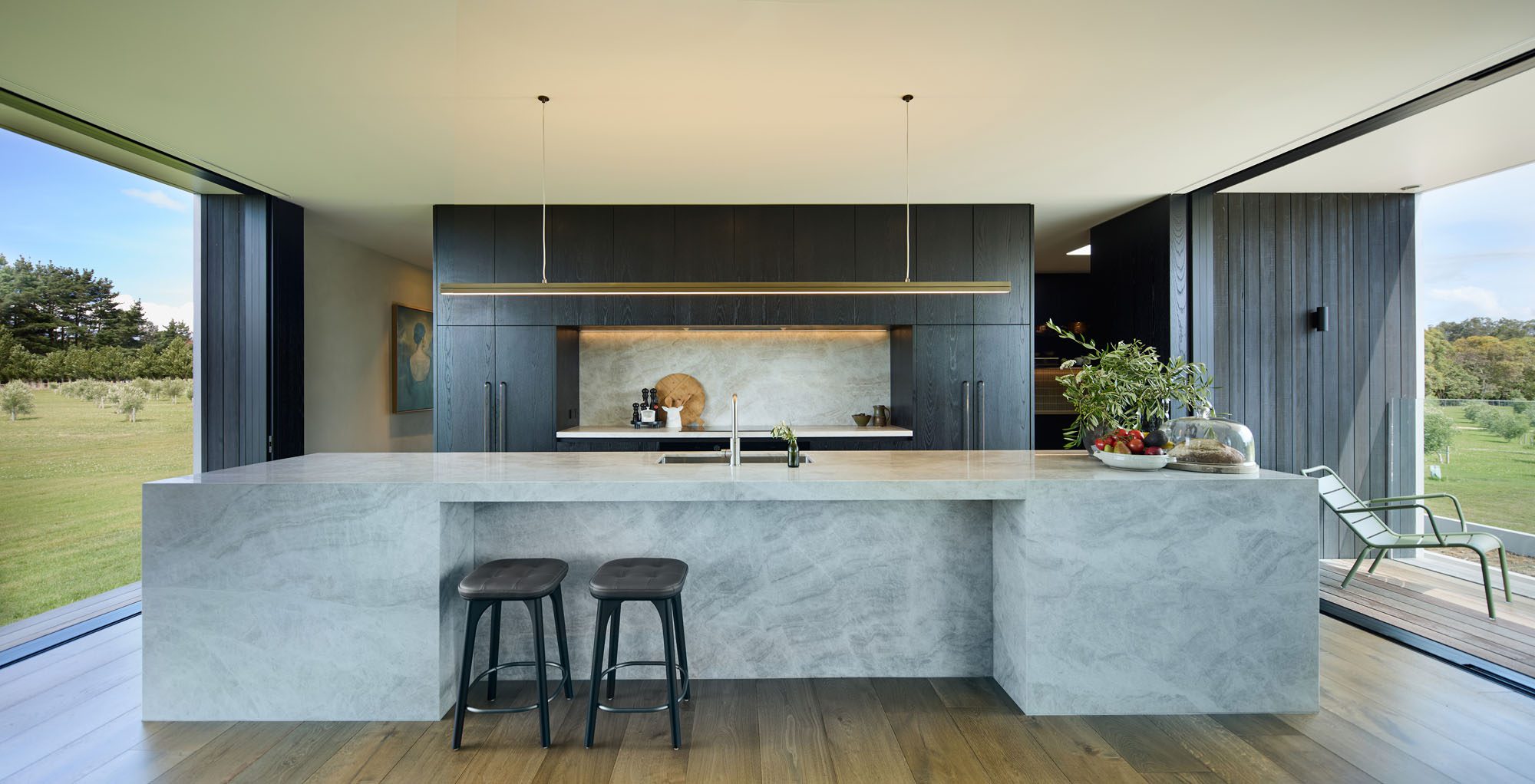
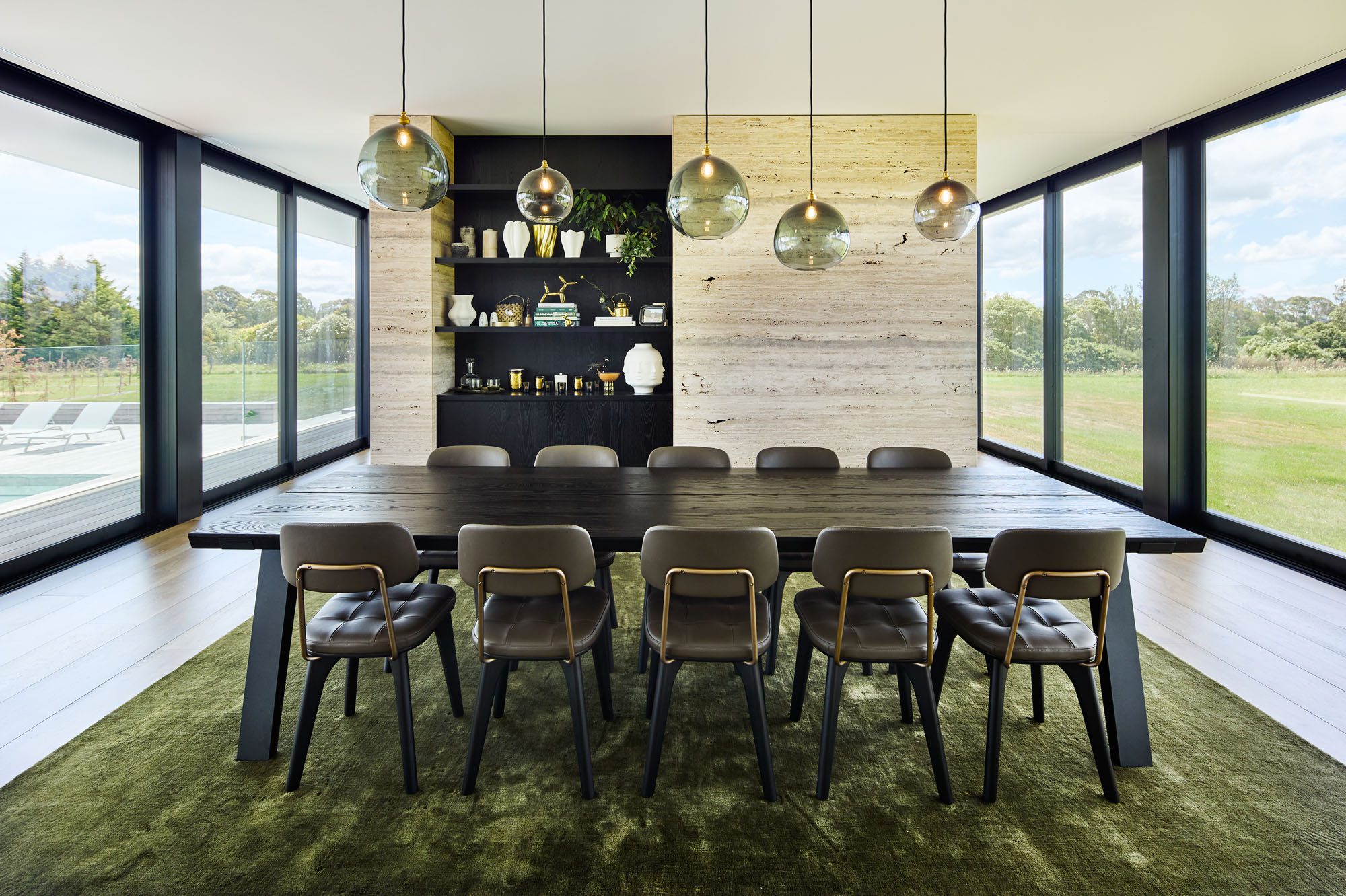
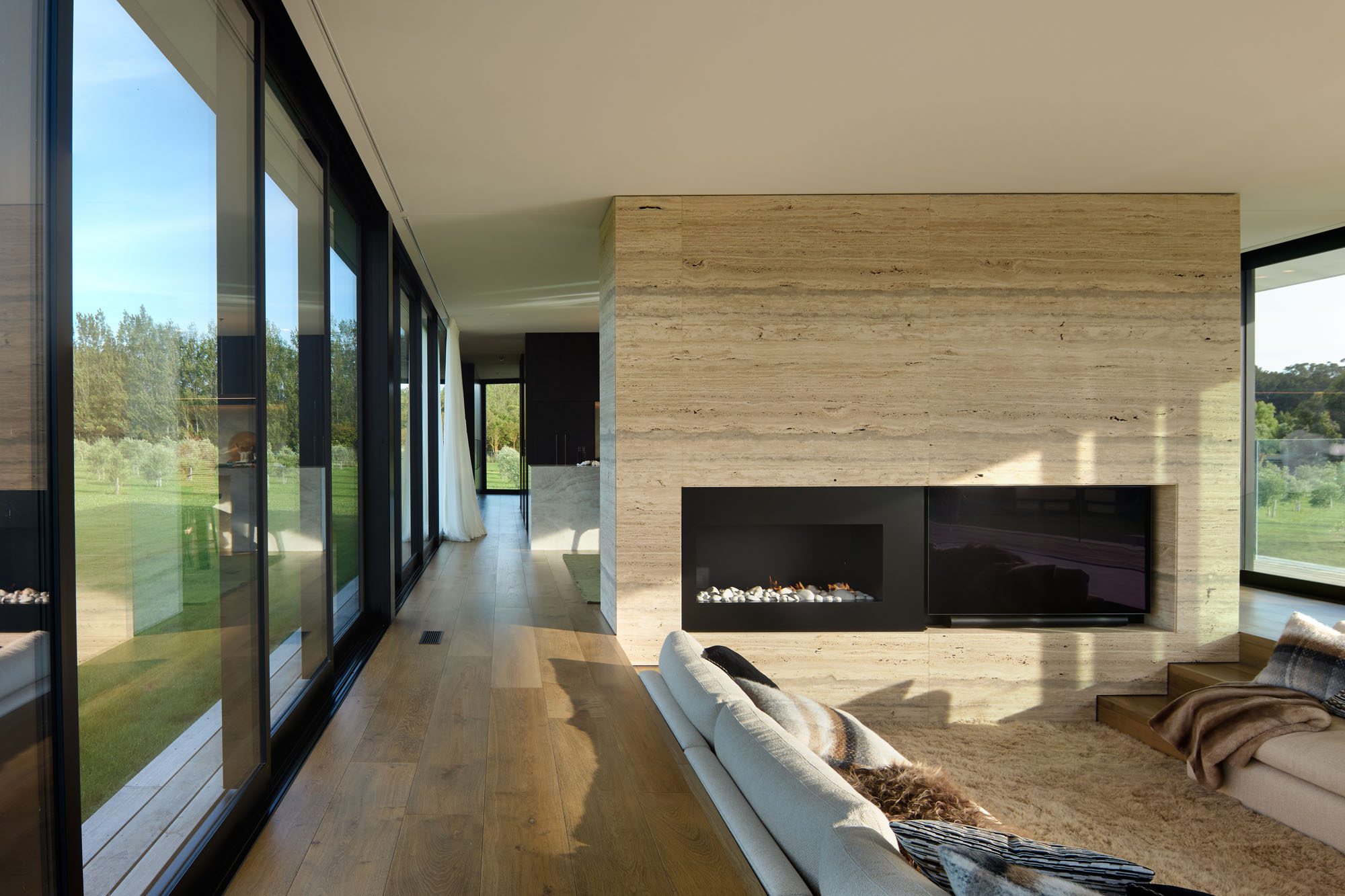
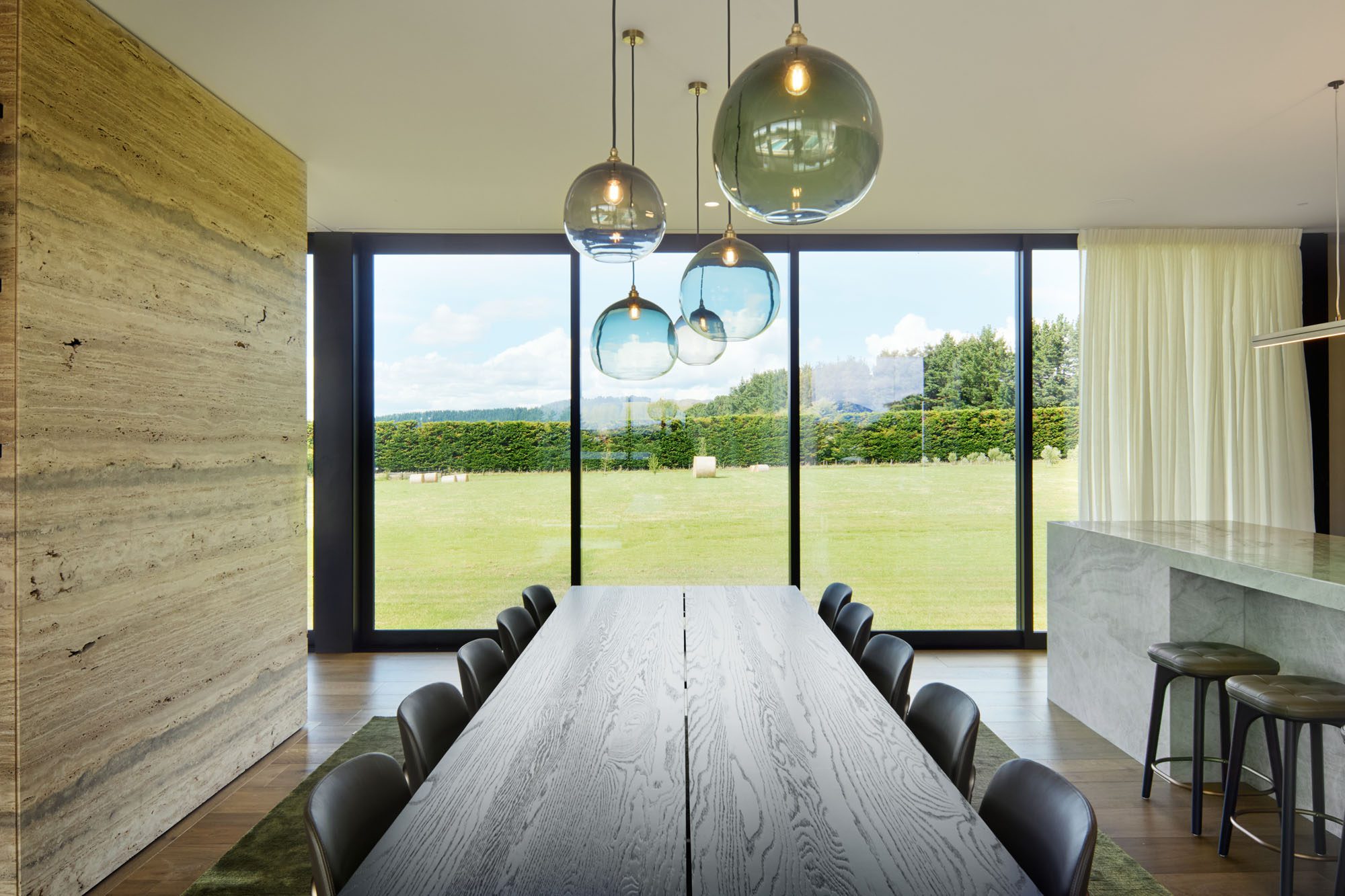
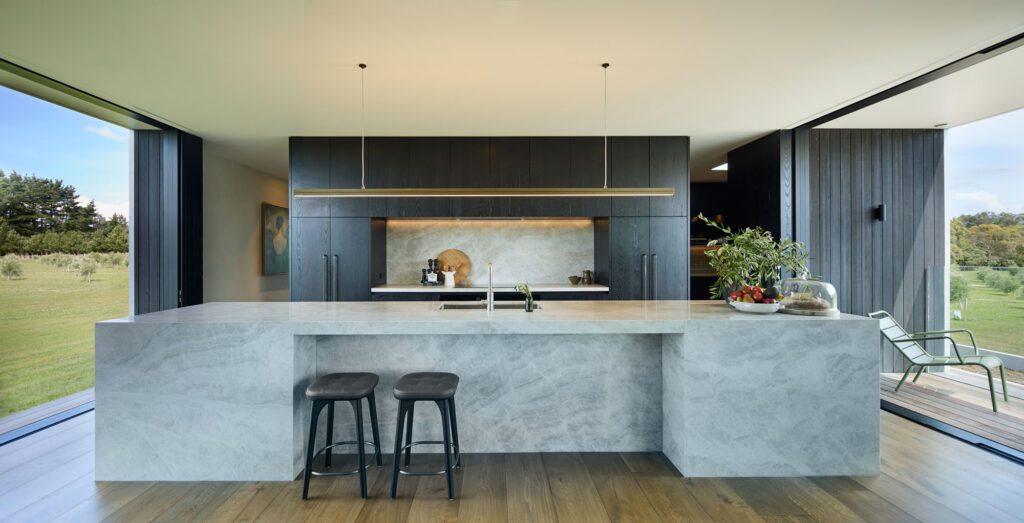
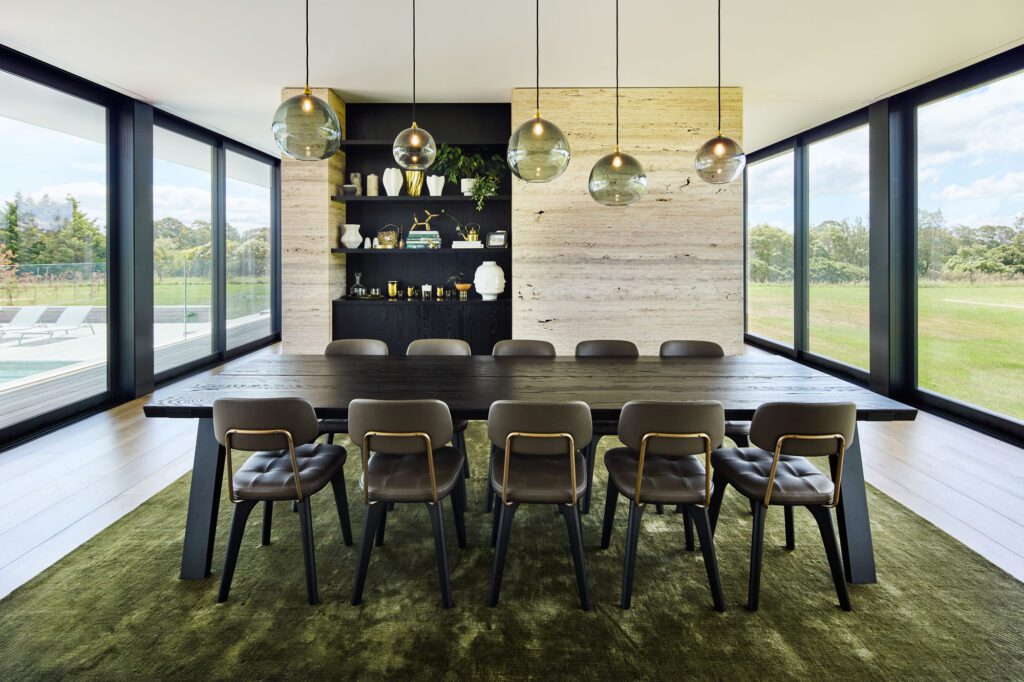
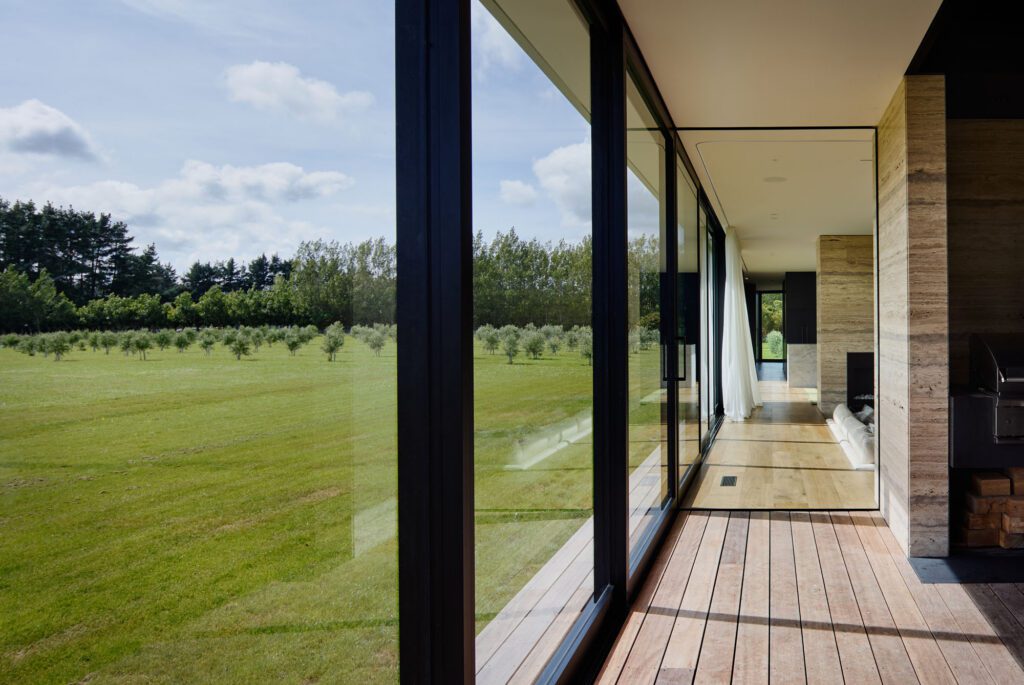
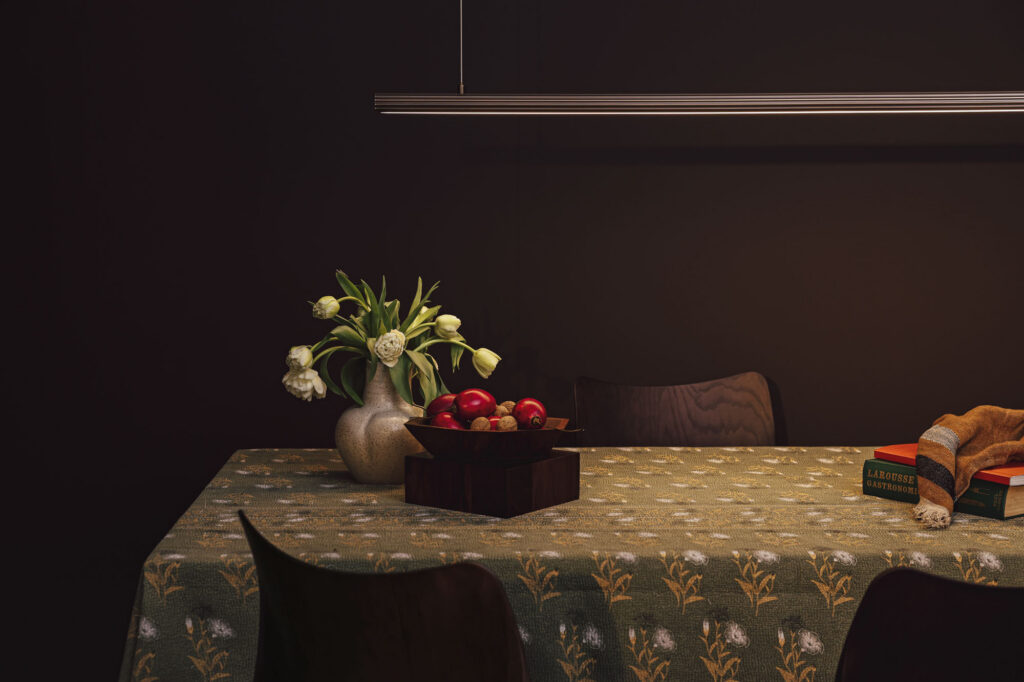
While both bedroom wings only have glazing to the short edge of the 3D rectangle, a long glass slot makes the centralised living experience about light and landscape. Externally, there is symmetry to the form: the solid balanced with a see-through cavity. Internally, the open plan kitchen and dining area embraces the elemental: good food and wine with a grandstand view. The natural patterning of a Taj Mahal island brings movement to the kitchen, which might be a showpiece but is certainly well-used. In the scullery, where the coffee machine is essential for urban java junkies, a dry ager meat cabinet is a more rural obsession. Against dark shelving, vintage majolica and taxidermy hares are artfully displayed like a still life.
“Every meal is so beautifully executed; a celebration that life is rich and meaningful,’ says David.
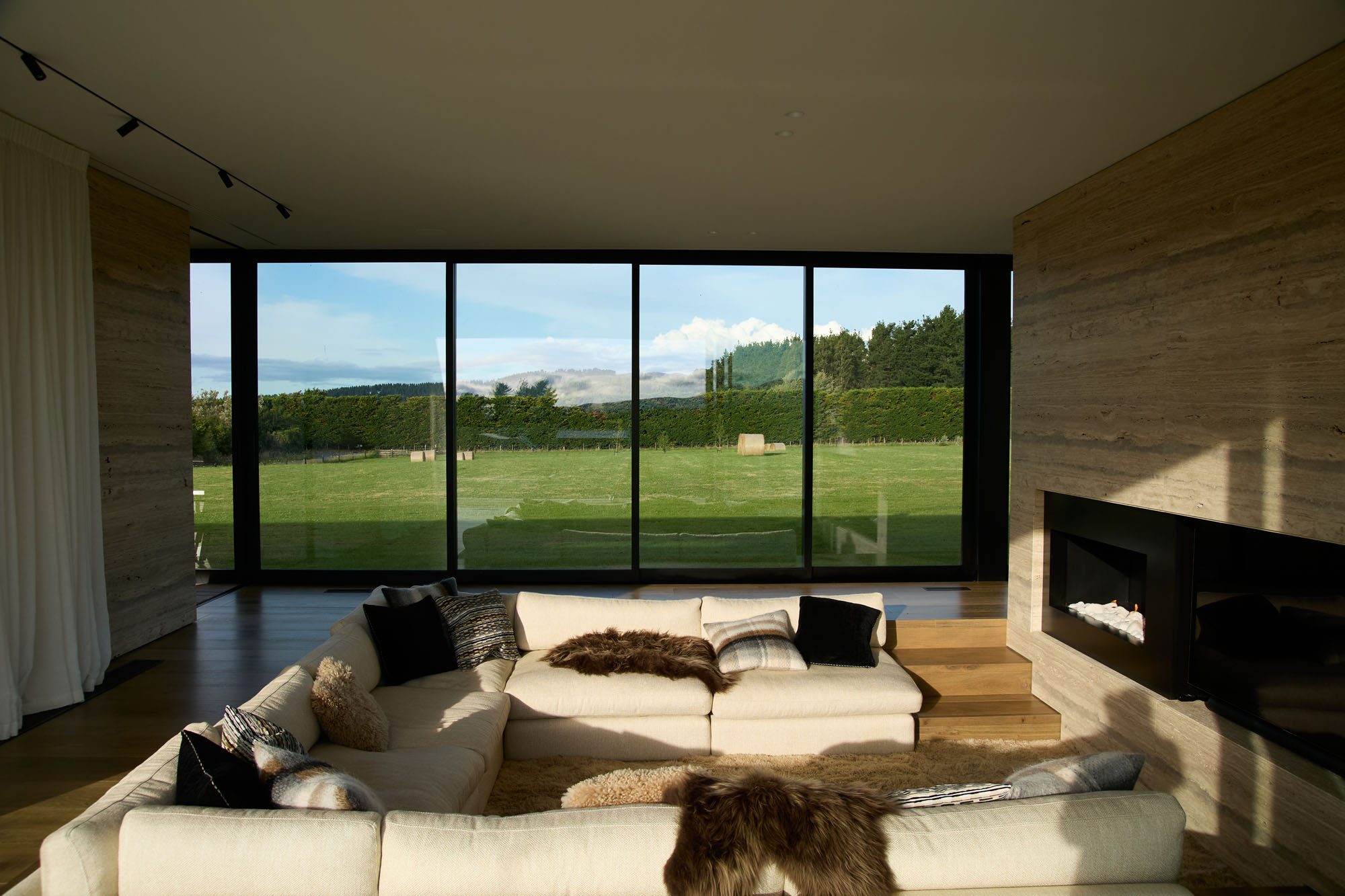
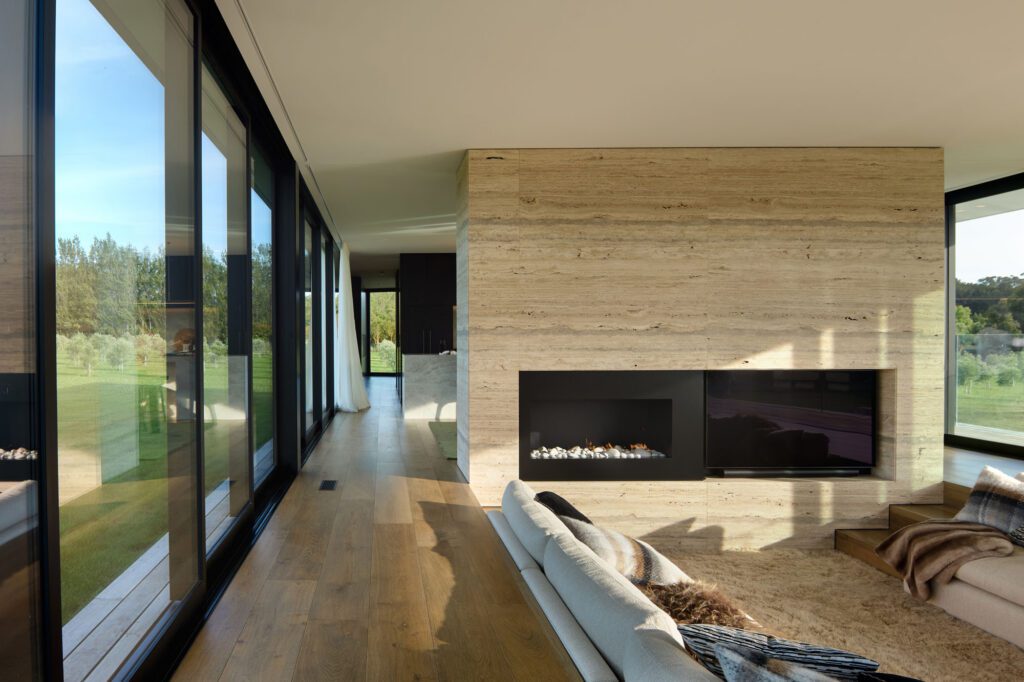
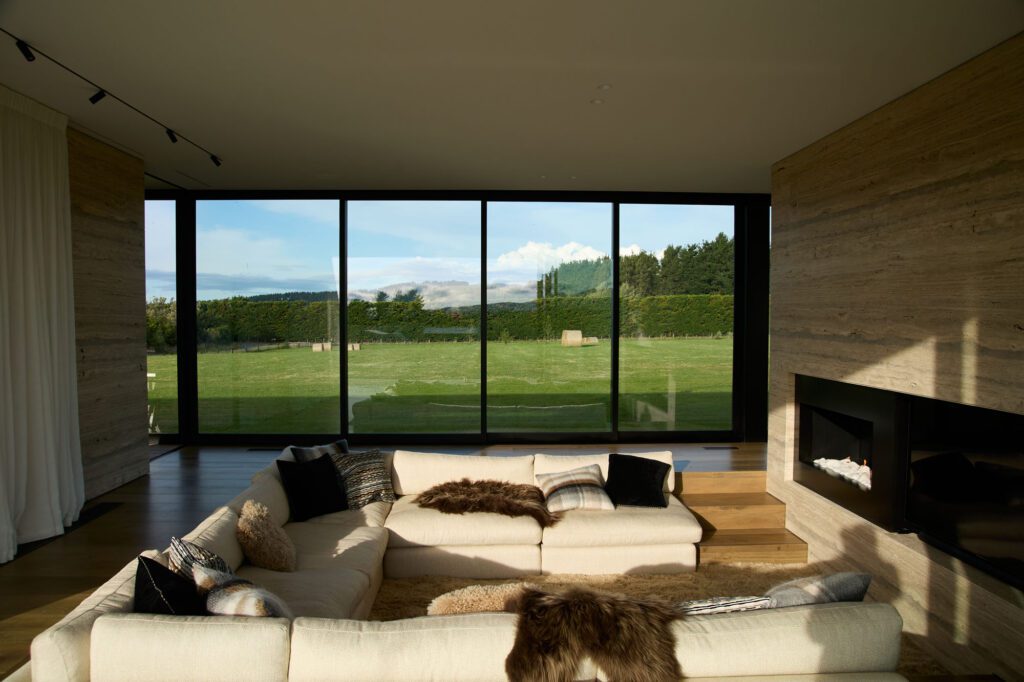
A sunken lounge set below floor level and around a rustic-luxe sheepskin rug provides an intimate place to converse.
“With your eyes so close to the ground, you feel as though you could reach out and touch the grass,” says Frances.
This cosy space is contained between two fireplace walls clad in travertine, a limestone that brings painterly warmth to the palette. Behind, and tucked within the corrugate and glass envelope, is an outdoor room with a louvred roof and access to stairs that terrace down to the pool. Cypress soldiers march around a Mediterranean garden, olive trees in formal rows stand sentinel beneath the wide skies, while beyond the perimeter the cowslip grasses grow wild.
“When I drive in and look across the field at the house, I still get a thrill,” says one of the owners. “I feel a real sense of pride in what we have created together.”
Uncompromisingly simple on the outside, the home within is abundant in texture and the promise of social connection.
“A big part of its success is that it never strayed from being an art form,” observes David. “At heart, it’s a rural story, wrapped up in a contemporary container.”
Project Credits
Architecture: Ponting Fitzgerald Architects
Build: Planit Construction
Words: Claire McCall
Images: Jeff Brass
Joinery: Renalls Joinery
Pendant Lights: Monmouth Glass
M House received Highly Commended in the Home of the Year 2026 Awards.