

Sandboxes

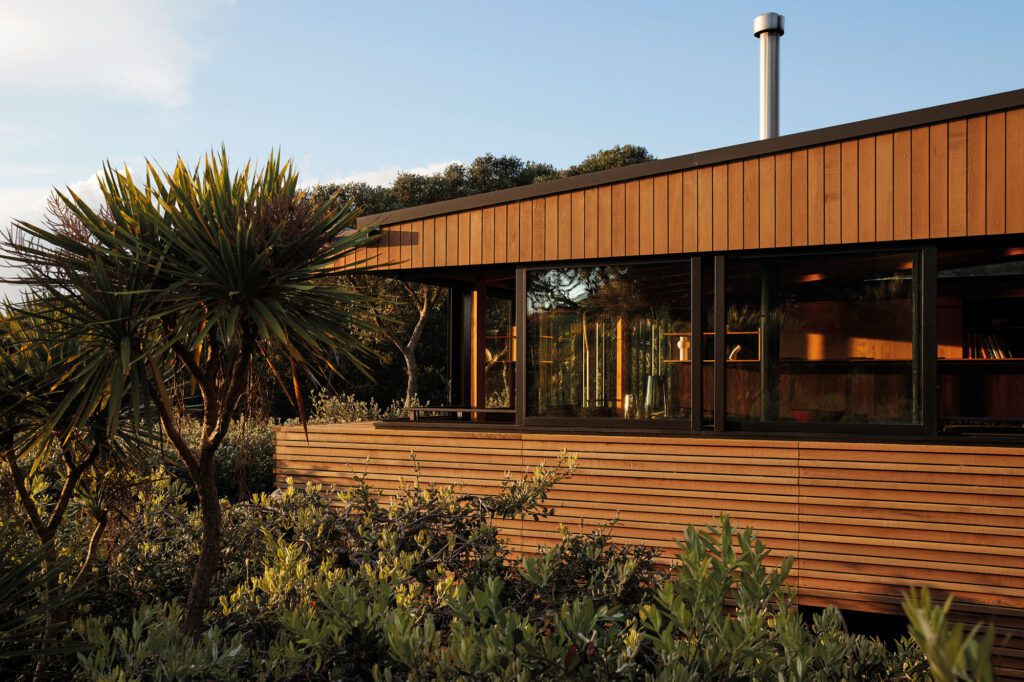
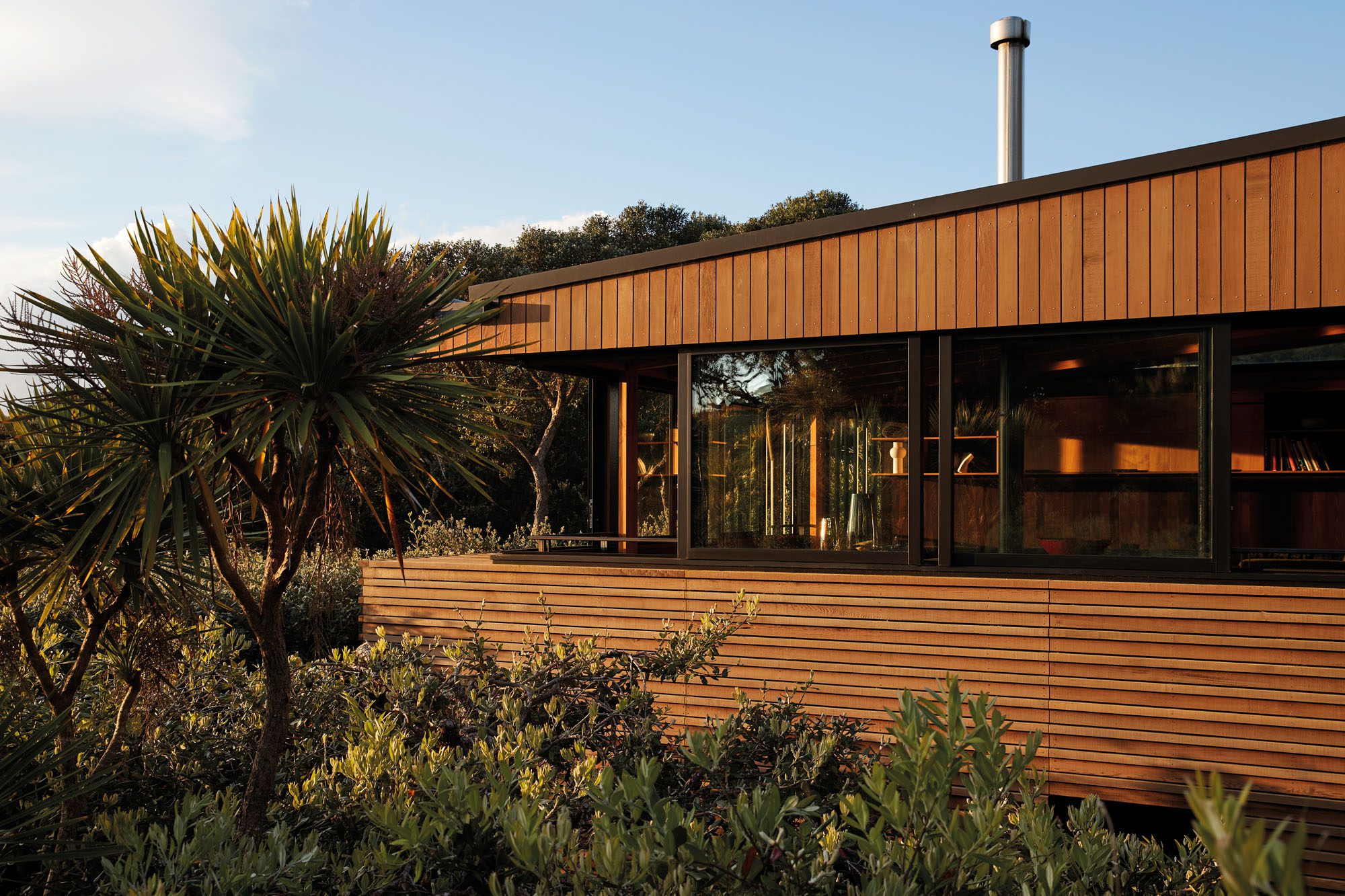
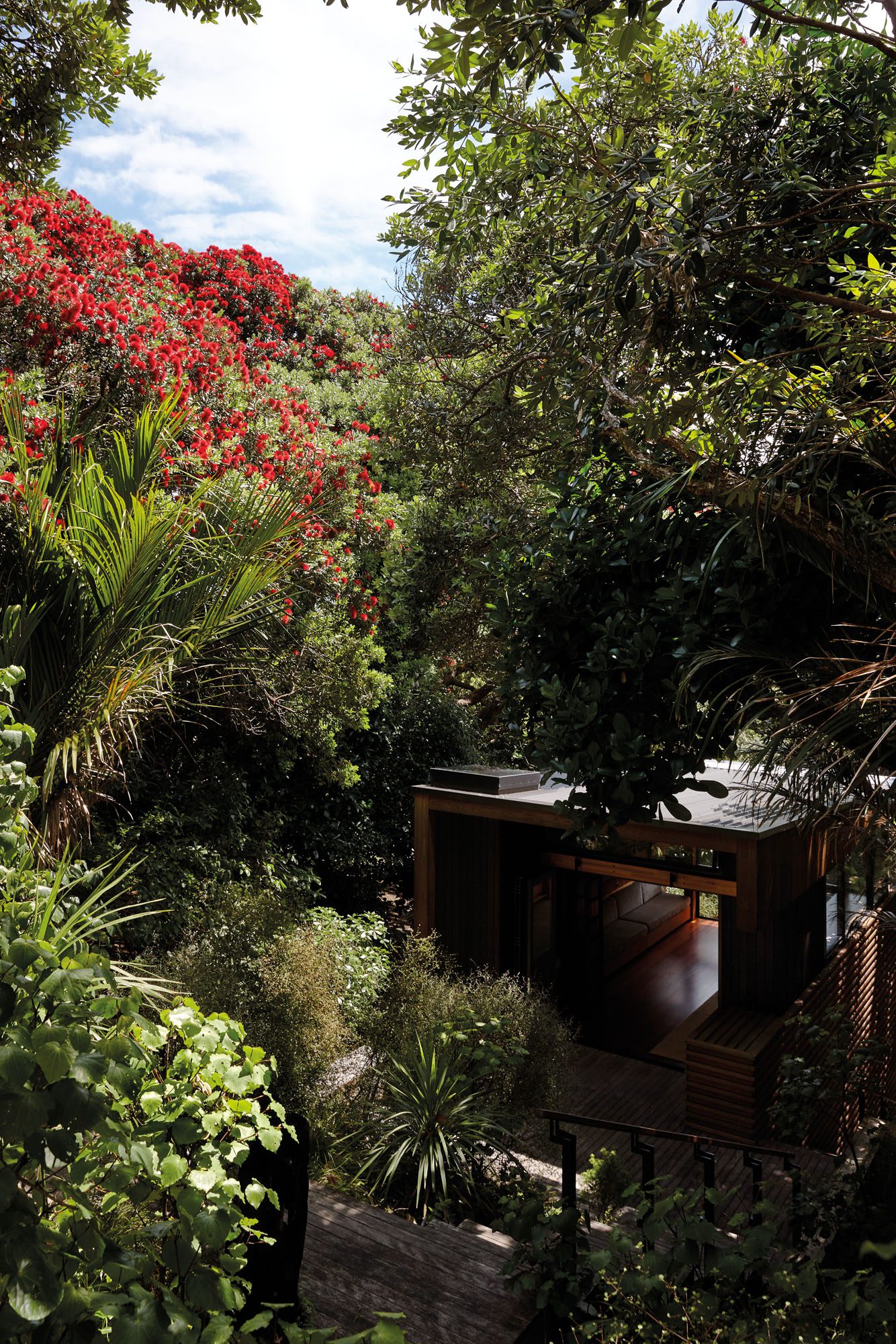
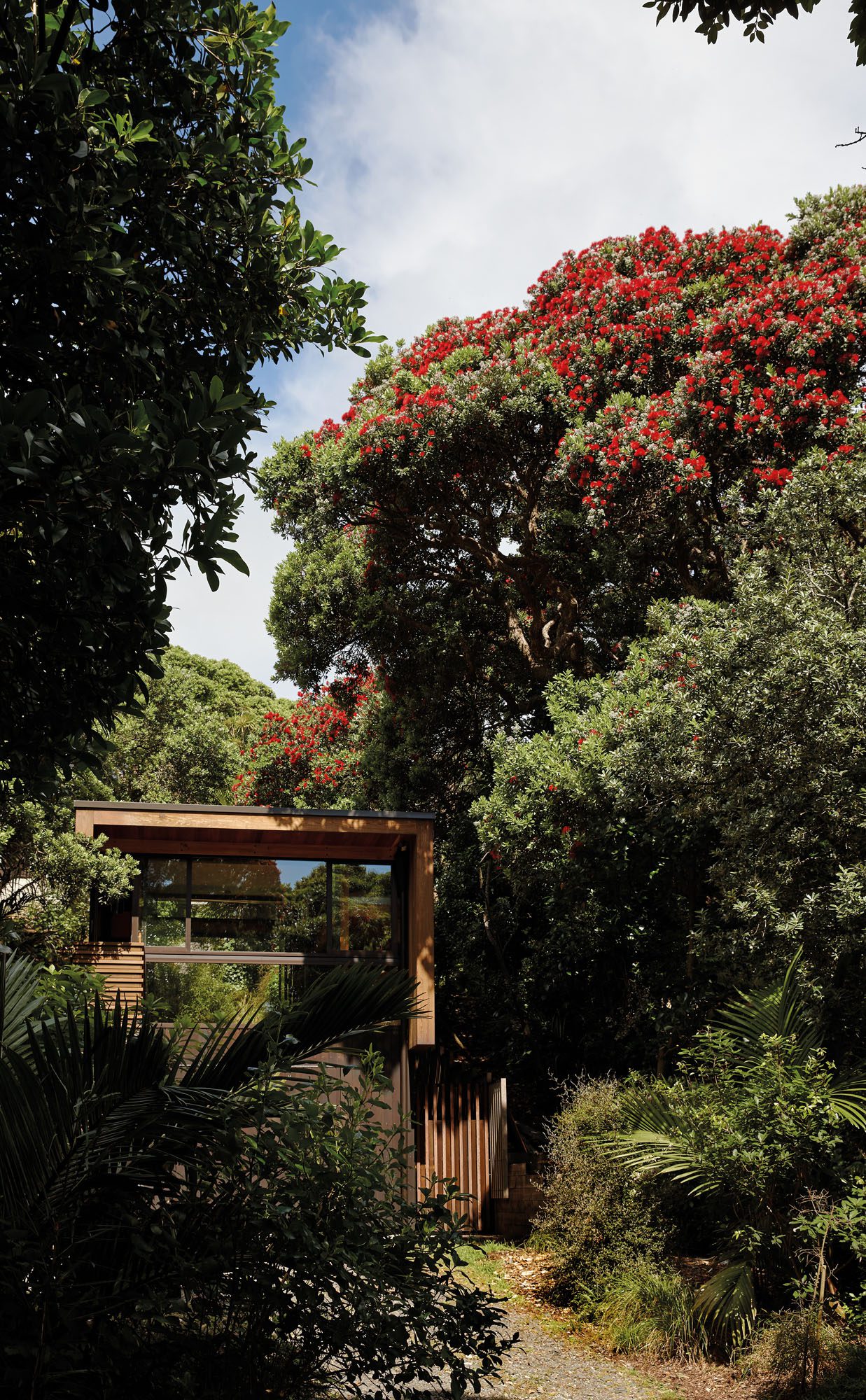
Two buildings — one beneath the canopy, the other hovering above it — occupy a steep pōhutukawa-clad site on Auckland’s wild west coast. Architectural kin, this family home and separate studio echo one another in form, while each presents a distinct character: one quiet and introspective; the other expansive and open to the sea.

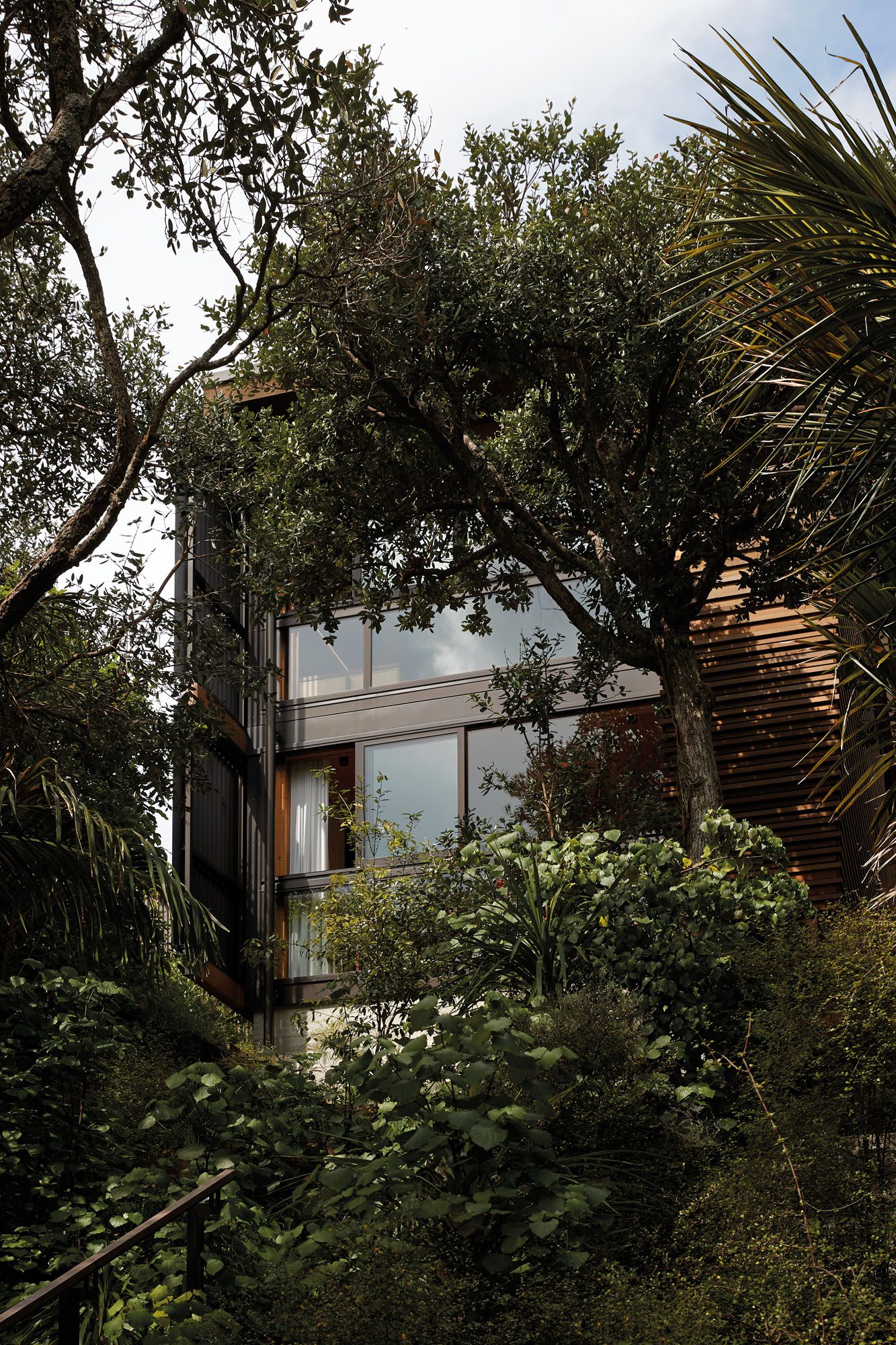
Tucked within an ancient pōhutukawa grove on a steep Piha site, this home by Herbst Maxcey Metropolitan
Architects (HMMA) is suggestive of a parent/child relationship — two built forms in dialogue across a 13-metre rise. The lower, the ‘child’, came first: a compact sleepout nestled among the lower boughs. The ‘parent’ floats above the canopy: an extroverted glass pavilion cantilevered towards the sea.

Arrival at the top of the stairs reveals the key moment in this home — the view over the pōhutukawa canopy to the sea beyond.

“The site is a tertiary sand dune and had never been built on before,” says architect Bodie Maxcey. “At both ends of the site are these amazing pōhutukawa.” The buildings are threaded between them, entwining the architecture within the natural environment.

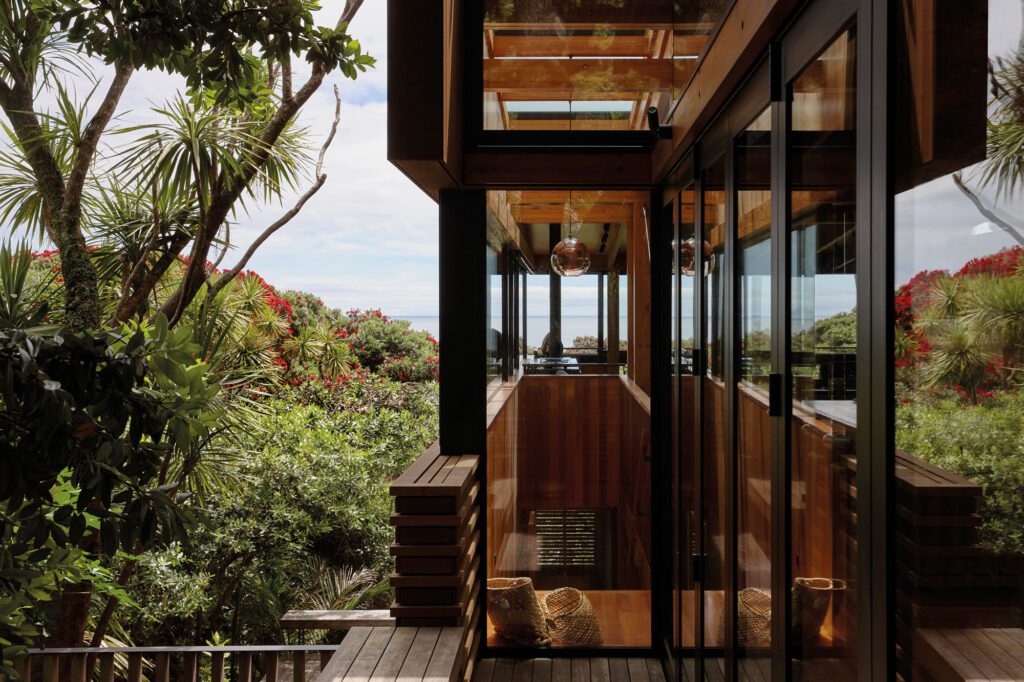
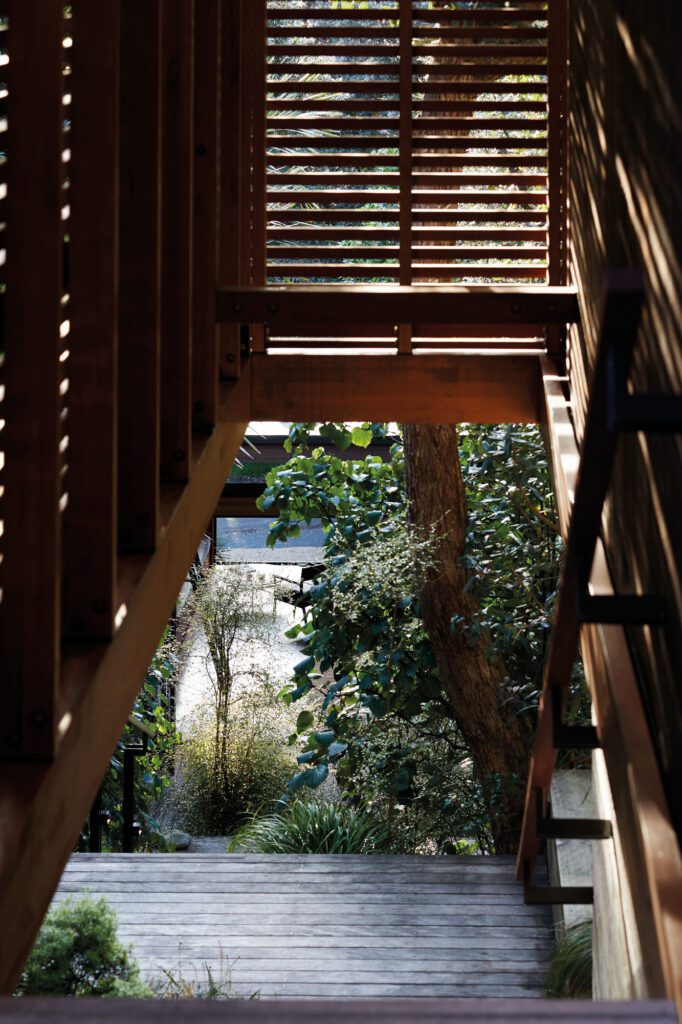
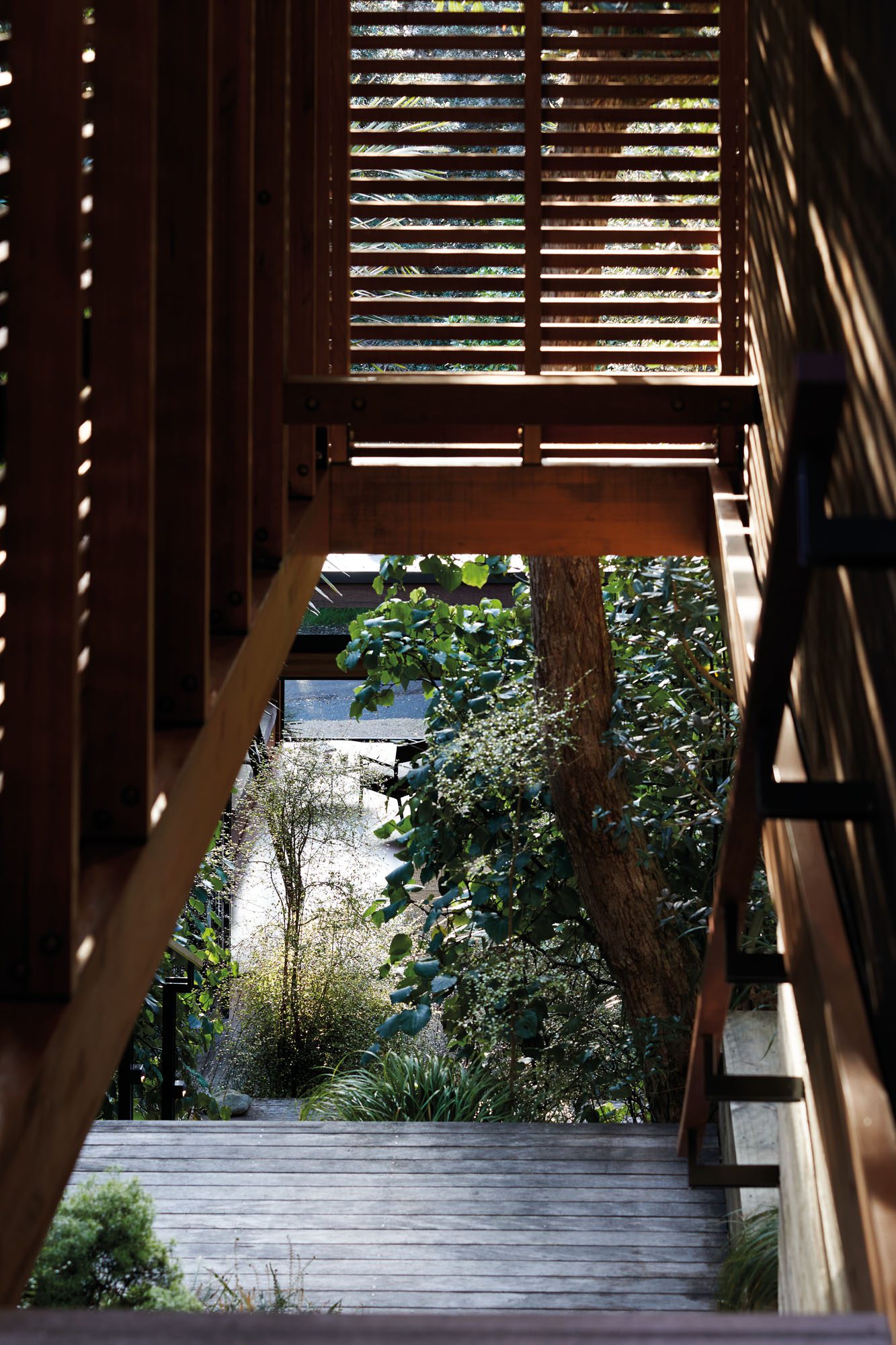
From the street, the journey is gradual. A spine of vertical steps rises between the trees, past the lower dwelling and various transitional deck and garden areas, towards the main pavilion above, where the entrance is compressed. “It gives you the sense of entering the belly of the house,” Bodie explains; yet even once inside this point, it reveals itself as an intricate rainscreen below a glass ceiling, through which gnarled pōhutukawa boughs appear as if entangled around the transparent structure.

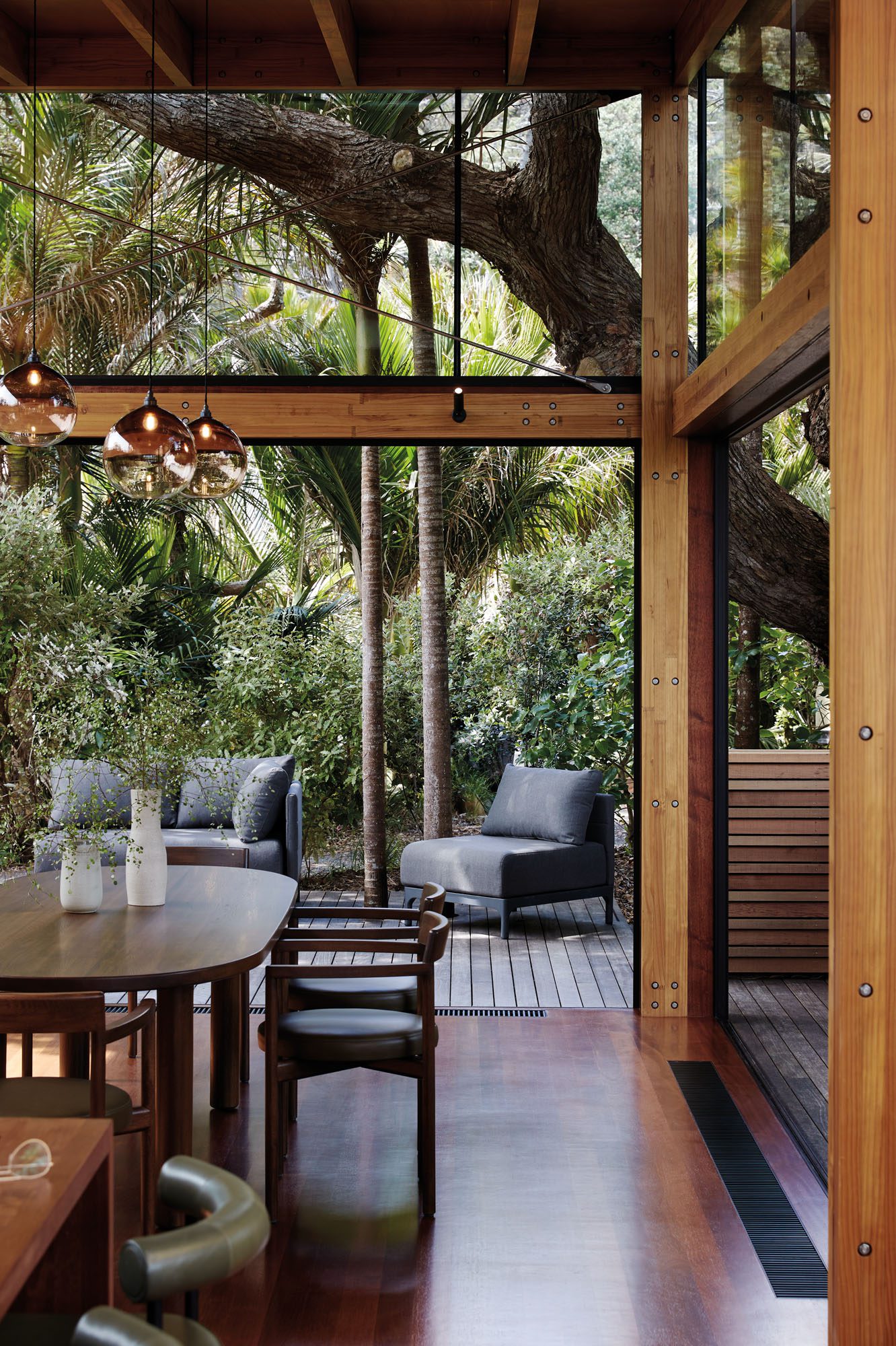
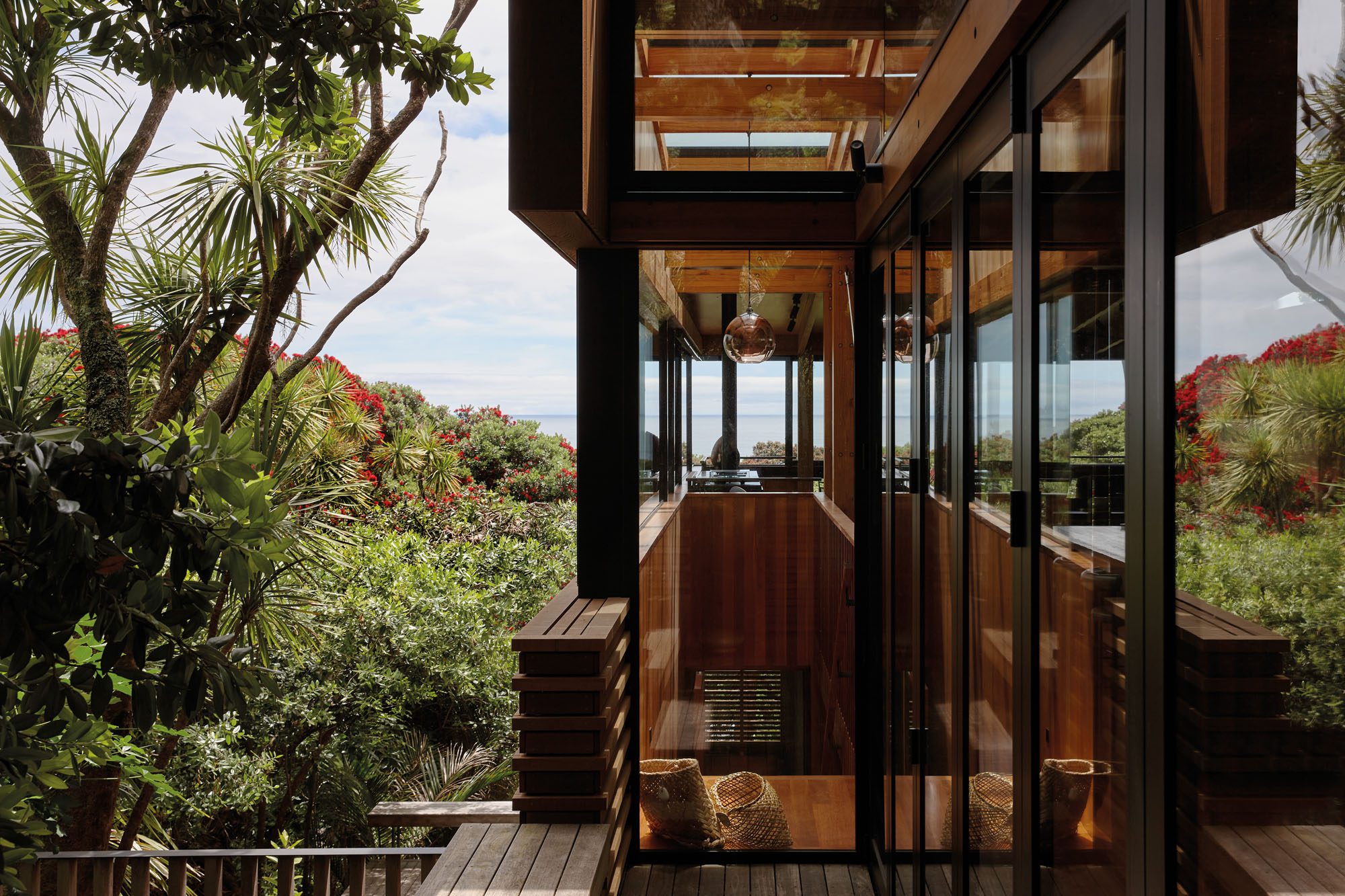
Pōhutukawa boughs appear to embrace the structure at points, giving rise to the sense that the home unfolds within the organic forms.

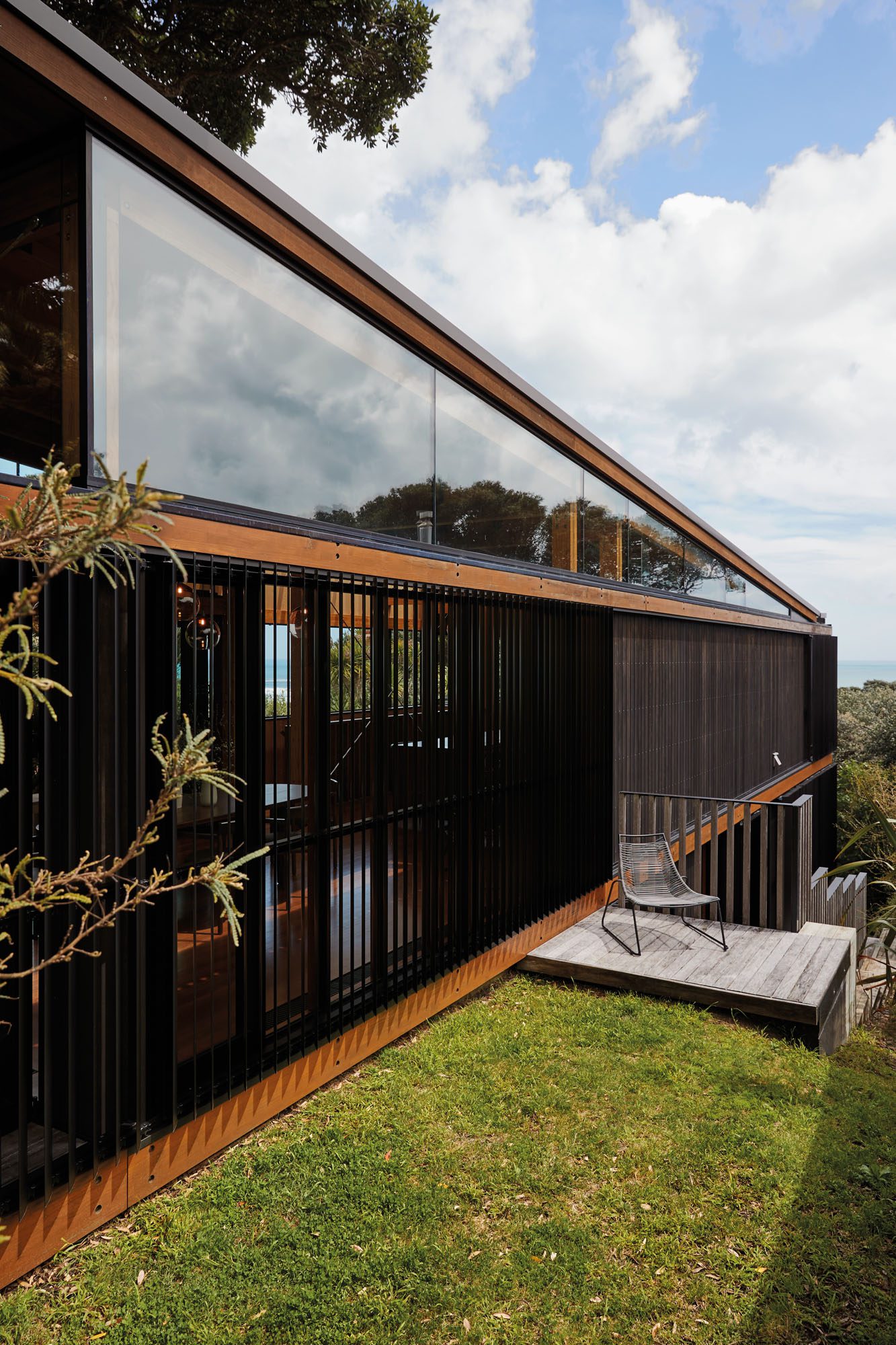
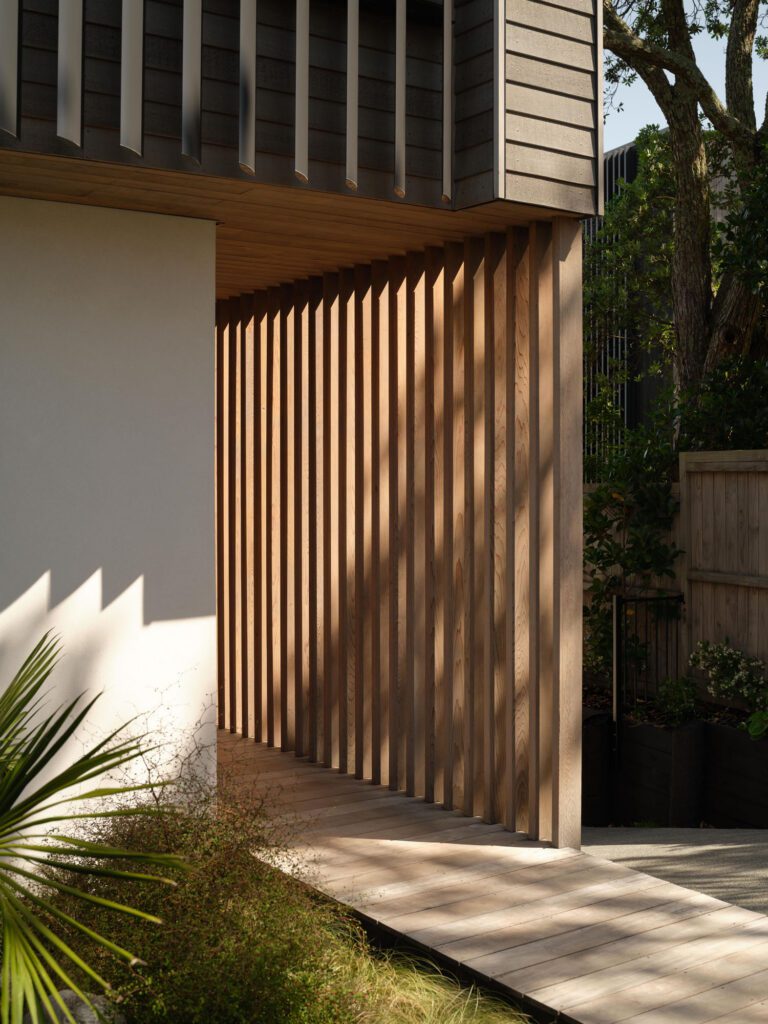
The minor dwelling — garage below, sleepout above — is dark and introspective, and its quiet mood continues into the main home’s lower level: two bedrooms, an en suite and a central bathroom, all accessed via the bottom of the stairs within the rainscreen, where dark-stained cedar walls, black tiles, concrete floors and operable external timber screens create a soothing sense of hibernation beneath the canopy. 

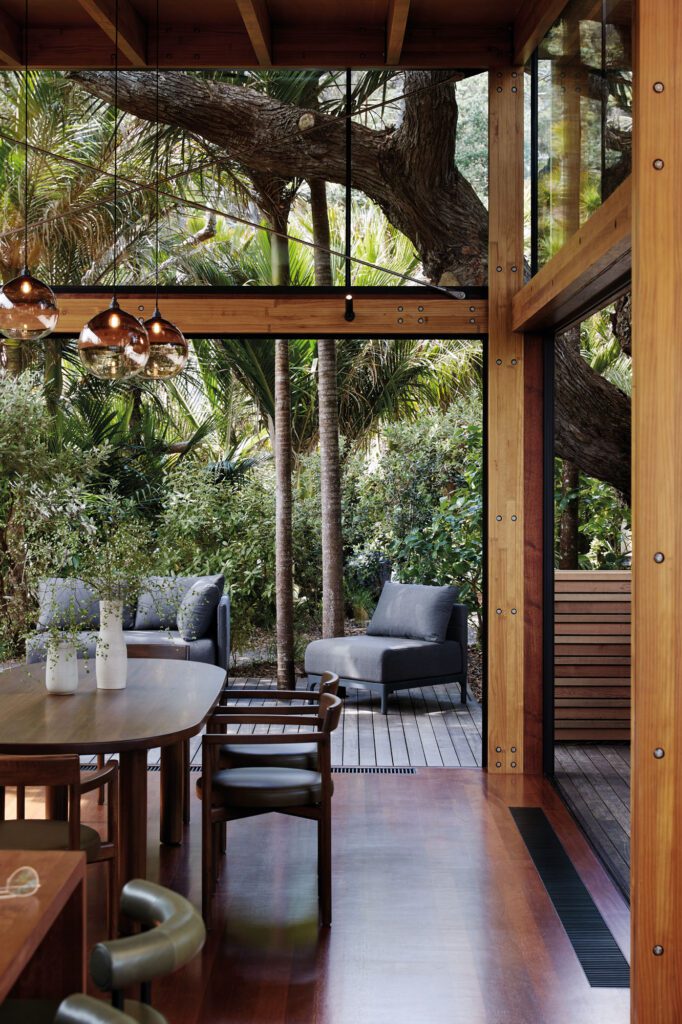
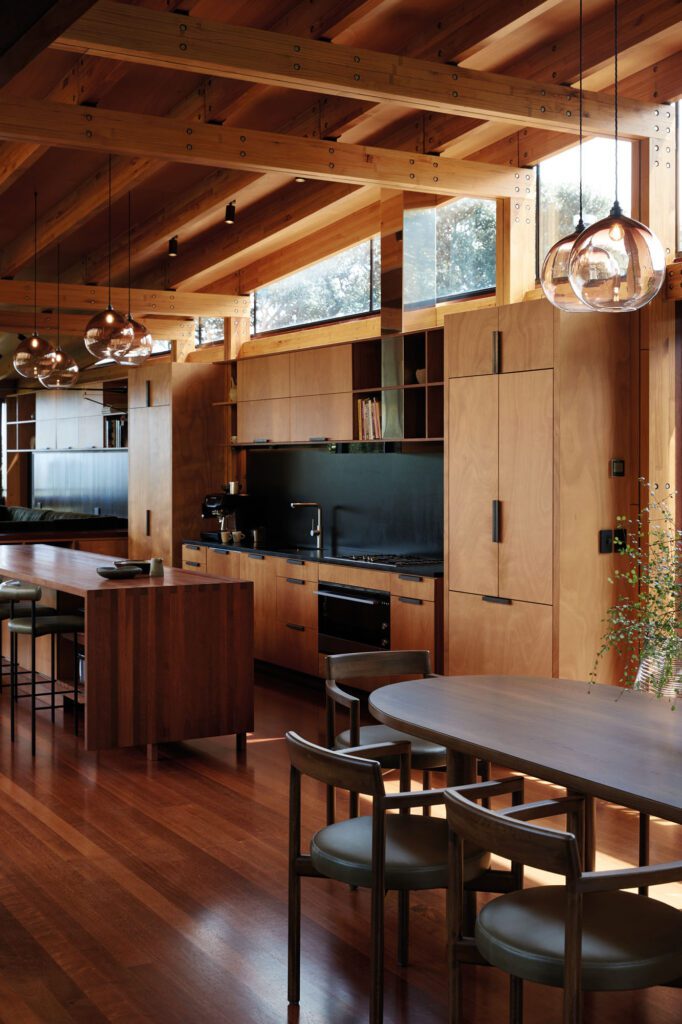
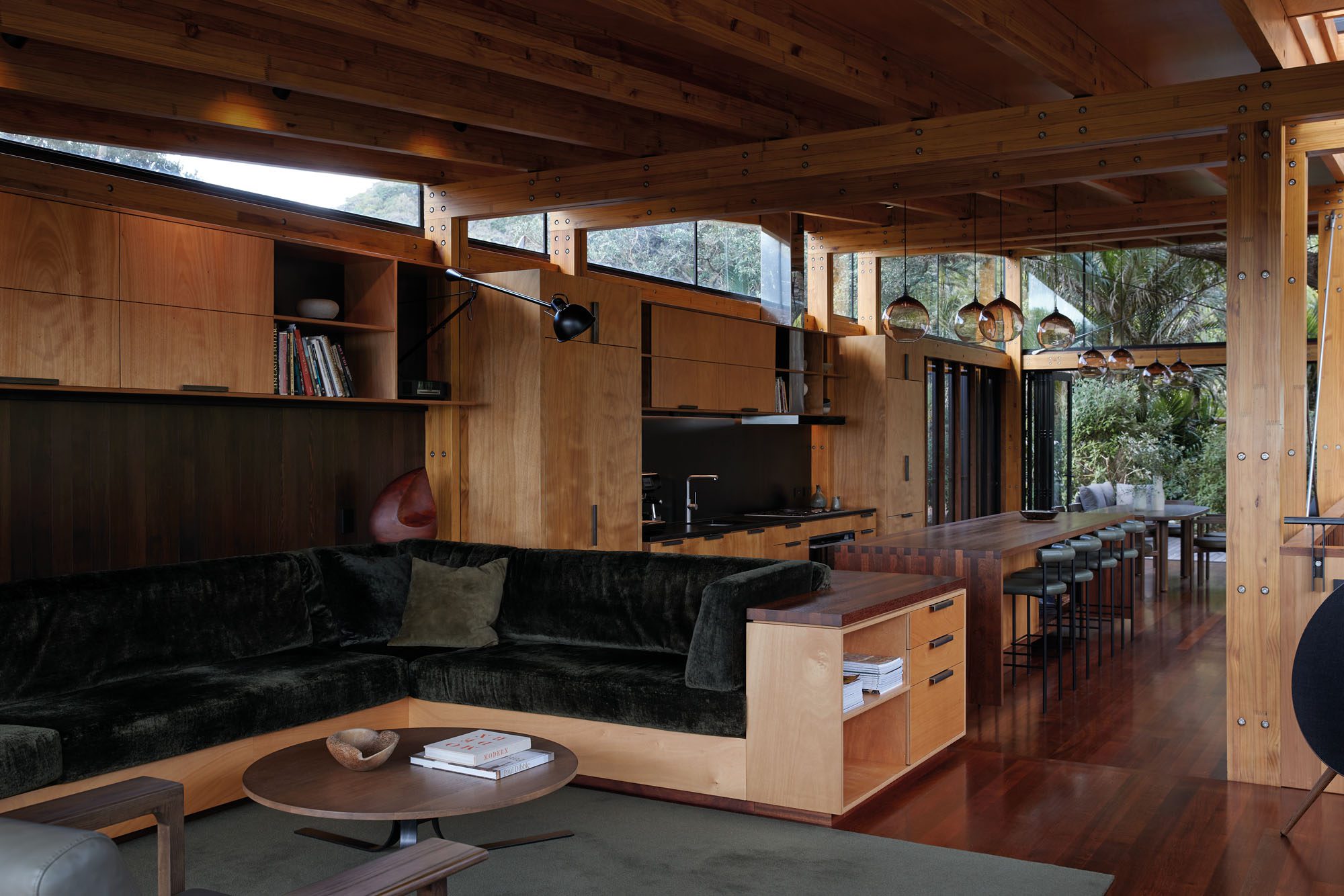
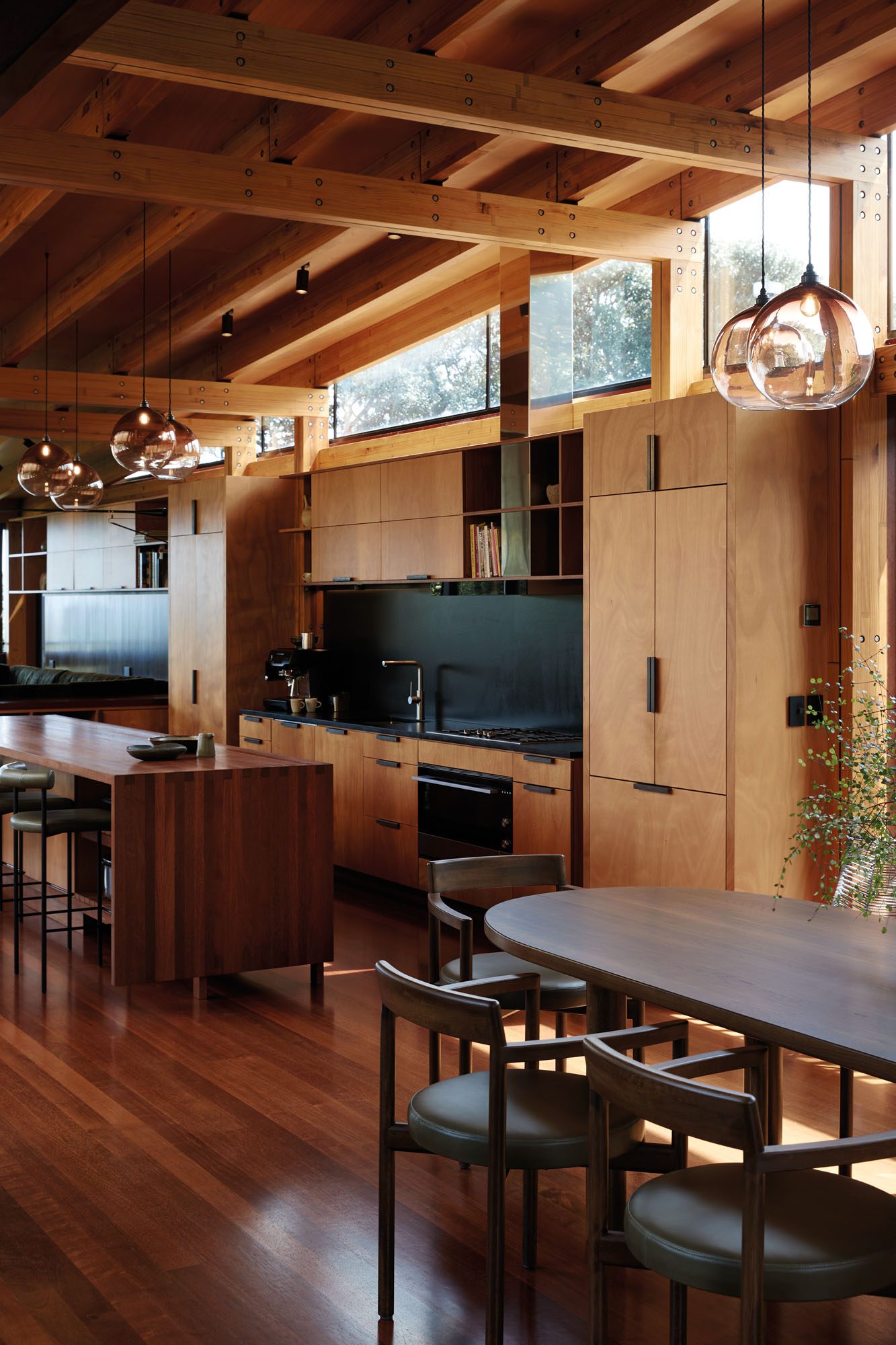
A true glass pavilion, the only solid wall runs behind the kitchen and built-in seating area.

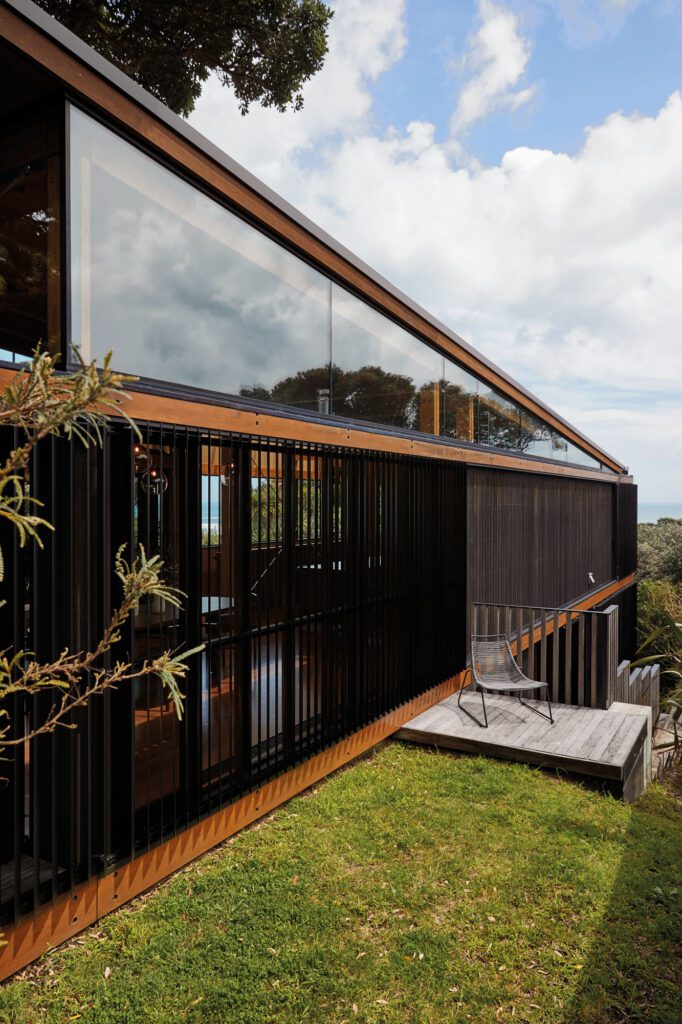
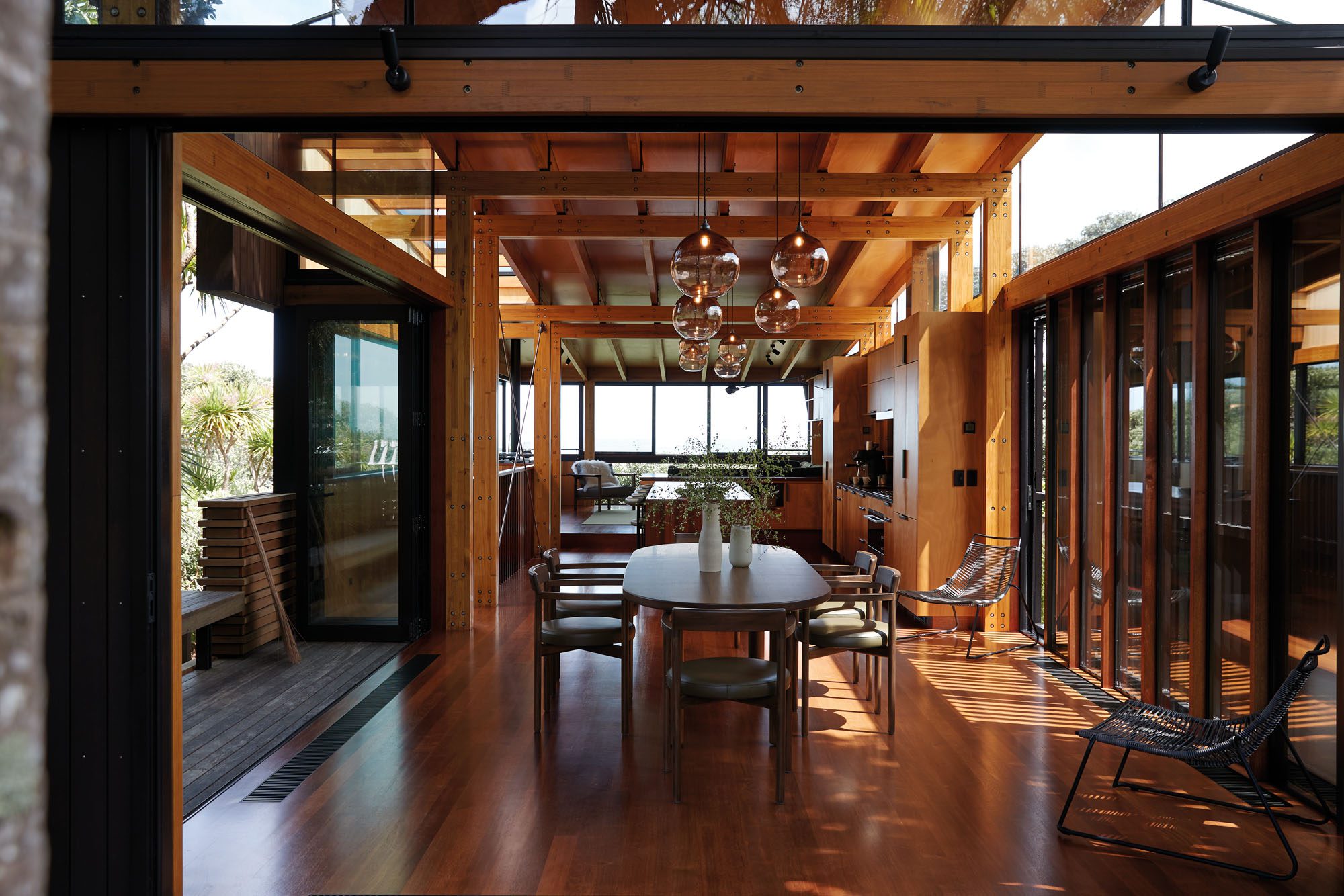
At the summit, 78 steps above the street, the pavilion opens. “This is the ‘aha’ moment where the space really reveals itself,” Bodie says. “People are immediately drawn to the bow of the house, which is cantilevered out into and above the canopy, where long views stretch to the sea and the surf breaks.” It’s a true glass room — enclosed on three sides in glazing, with only a sliver of wall behind the kitchen. 

External steel fins provide both light modulation and privacy.

The palette is warm and pared back: kwila floors and kitchen island, glulam beams, Gaboon ply ceilings, and black aluminium joinery. Deep green velvet cushions line built-in seating, creating softness among the structure’s rhythmic expression. “With it being a glass pavilion, we wanted to create a space where the structural elements become part of the visual language. Where a building has no walls, the question becomes: how do you make the structure simple and sexy?”

An intricate rainscreen wraps the stair as it ascends past the lower storey of the main home.

The answer was in the exposed beams and rafters that march from the front to the back, sentry-like — a captivating insight into the building methodology.

Entirely immersed in the pōhutukawa, this home expresses a powerful dichotomy — between compression and openness, intimacy and grandeur.

Words: Clare Chapman
Images: Jackie Meiring

This feature first appeared in Homes of this Decade 2015-2025, which was published by Nook Publishing in 2025.

Latest video features

In the Coromandel, a home with a humble profile and a thoughtful design makes the most of a stunning location.

Built with awe-inspiring attention to detail, this Arrowtown home is a fresh interpretation of a familiar Otago rural vernacular.

This sculptural Northland bach is a perfect north arrow on a remote farm high above the sea.

With the sun on its bow and the community at its stern, this is a house in which the elements are always front of mind.

Trending articles

Arts and Books

An Exhibition of Chinese Contemporary Art

An exhibition of Chinese contemporary art arrives in Auckland, tracing decades of cultural transformation through works that span performance, installation and digital media.
Design News

Lasting Grain

Set into a suburban site in Kohimarama, Clay Block House by Daniel Marshall Architects is a study in materiality and environmental performance.
Arts and Books

Introducing Architecture Aotearoa

A new architecture magazine, Architecture Aotearoa: New Zealand’s Buildings, Cities, and Culture will launch in late May 2026 as a collaboration between Te Kāhui Whaihanga