

Inspired by a very internationalist, robust coastal home for an award-winning film, this beach house by Sumich Chaplin Architects offers ambience and plenty of drama.
In the 2010 film The Ghost Writer by Roman Polanski, there is a moody shot in which the main actor is at a desk, comfortably balancing a hot drink in one hand and a set of documents in the other. He sits, in profile, in front of a robust column of horizontally stacked, grey-stone modules. To his right, and covering about 60 per cent of the background, there is floor-to-ceiling glazing with impressive sand-dunes and tussock grasses fluttering in the wind beyond.
The house — which is supposed to be on a secluded beach in the iconic US holiday town of Martha’s Vineyard — is actually a set in Usedom, a Baltic island on the border between Germany and Poland. Possibly due to this internationalism, the landscape and house feel as if they could easily belong on a number of beachfront sites around the globe: Scotland, Patagonia, maybe even Pauanui.
That image — full of ‘masculine’ features was a key element of the brief the client brought to the team at Sumich Chaplin Architects, when commissioning this home.
The clients’ imagery and desires for a New Yorker loft-style house with industrial touches and a serious connection to the dunes outside stimulated a response that would follow several previous works by the architects on the beachfront of Pauanui.
“The initial design was about creating these glazed corner elements, where you sat raised above the landscape, and bringing the Pauanui dune into the house.”
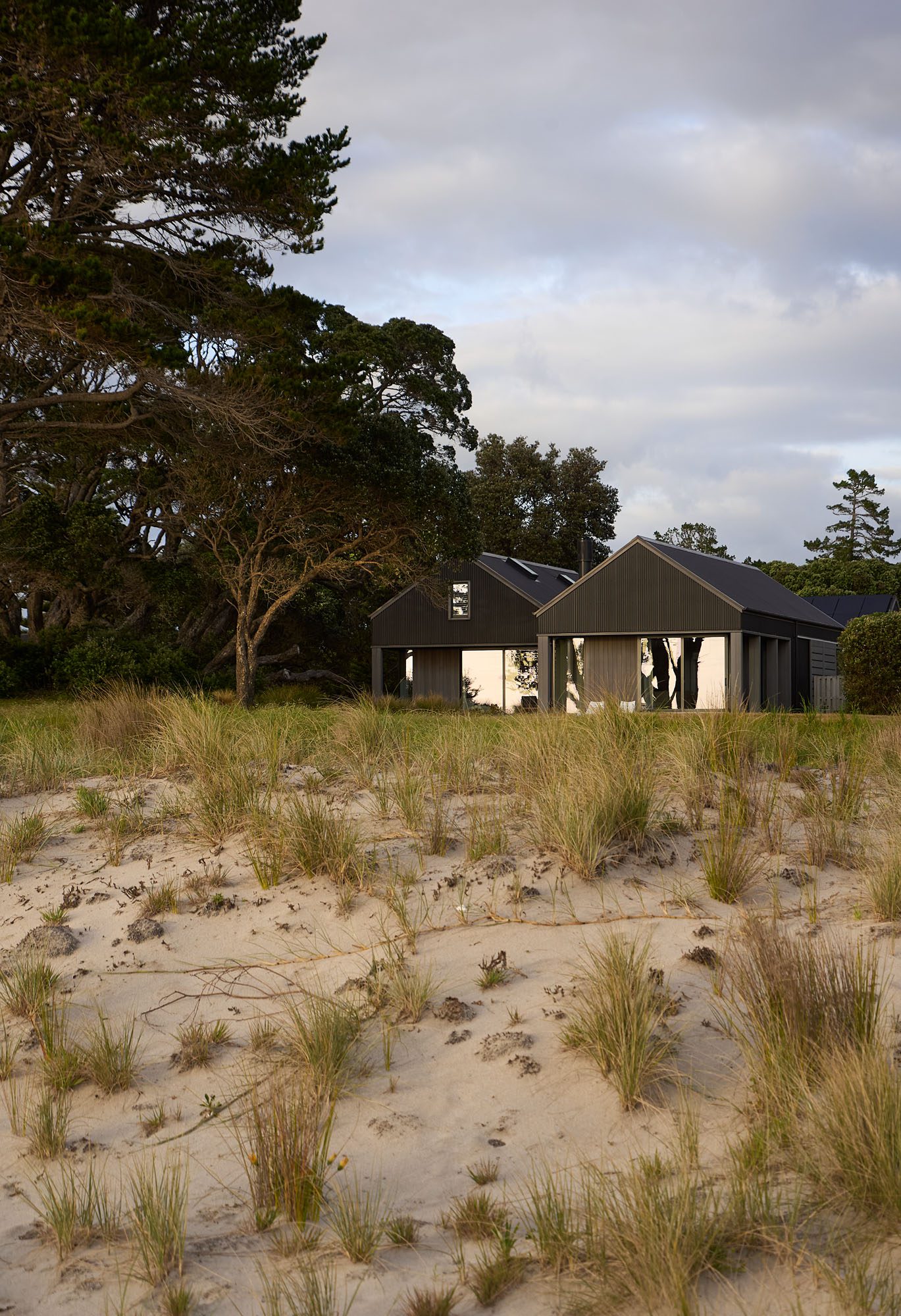
Previous works by the architects all ran parallel to the beach and perpendicular to the sites, “and they have predominately glazed façade, and roll out on a grass lawn onto the reserve and make the reserve feel like an extension of their landscape.”
It makes sense to go transparent and to borrow from the nearby public space. However, that compromises on privacy and runs the risk of making the frontage seem homogeneous with the other homes around.
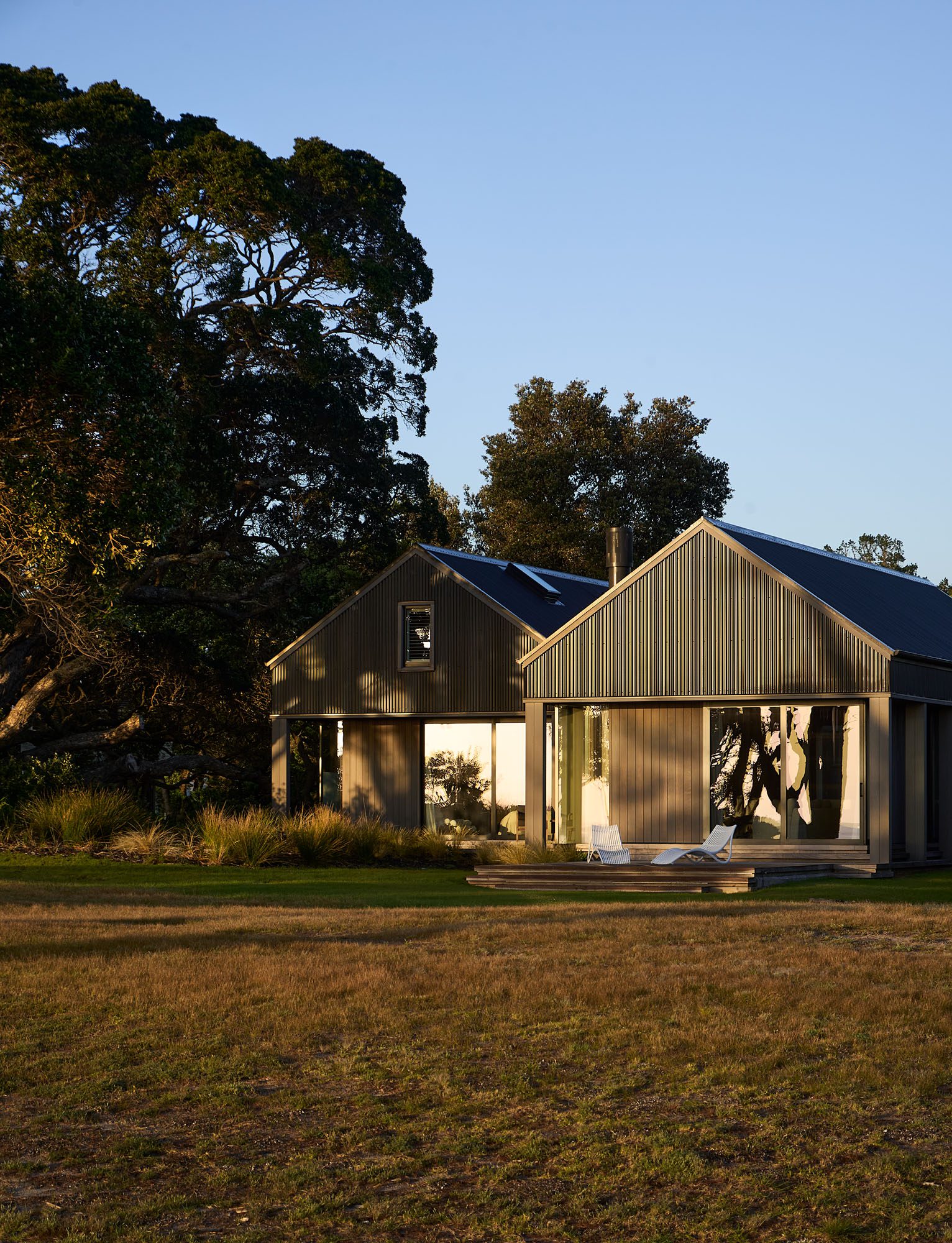
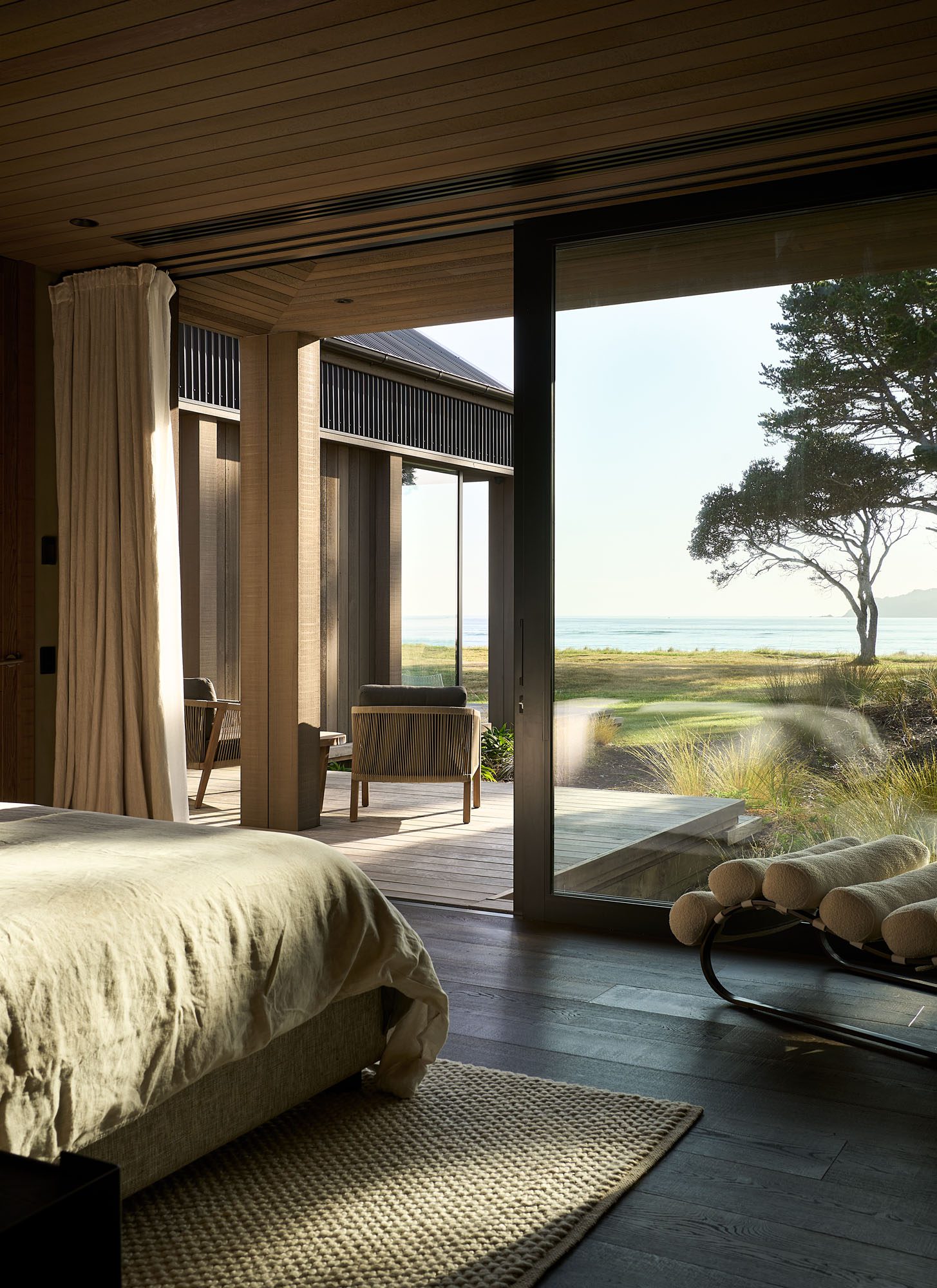
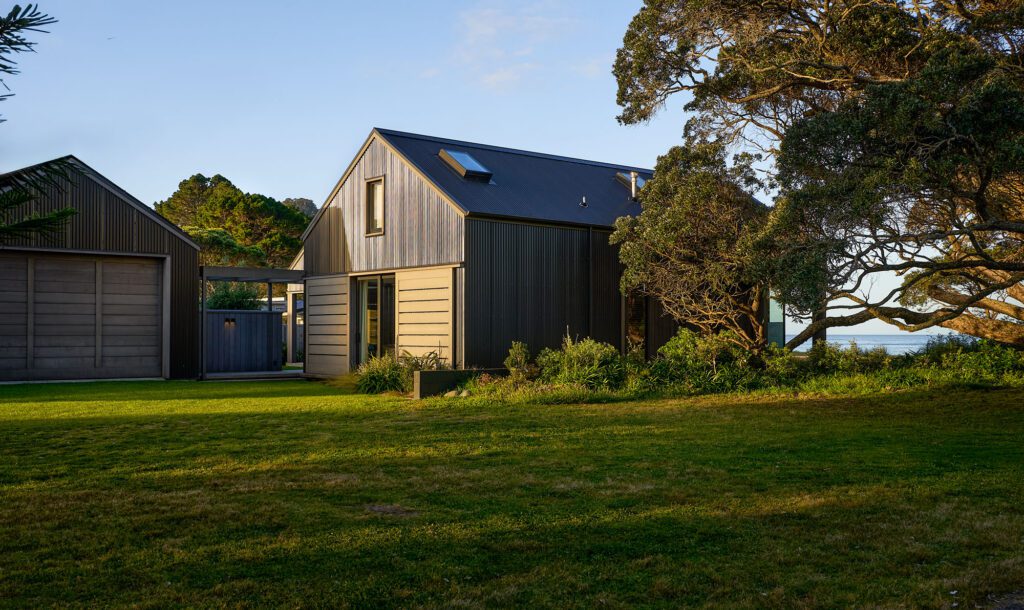
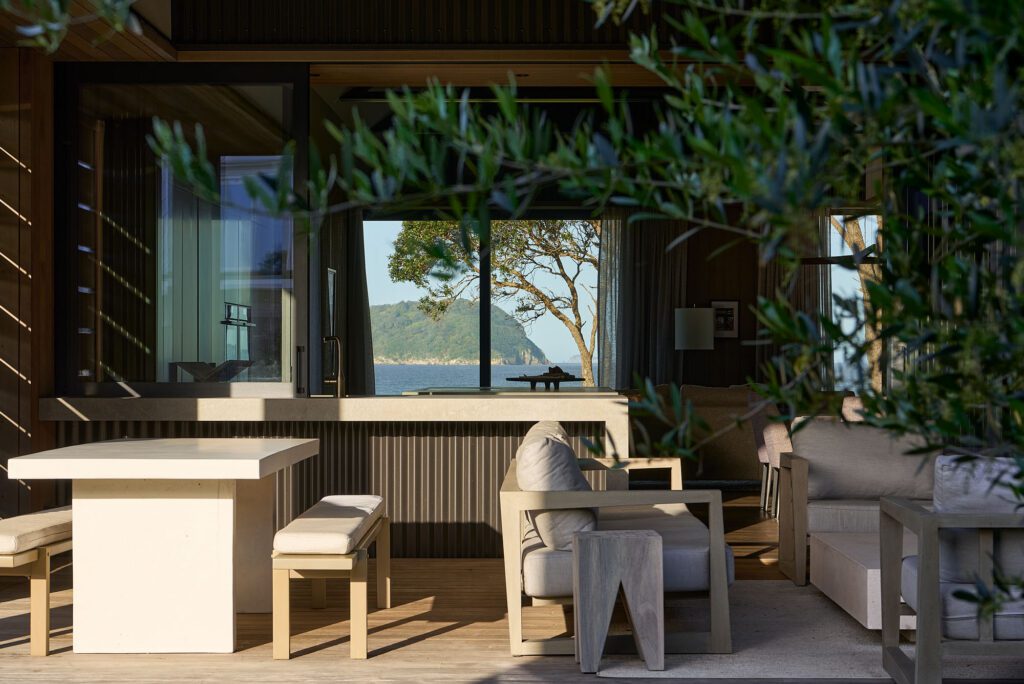
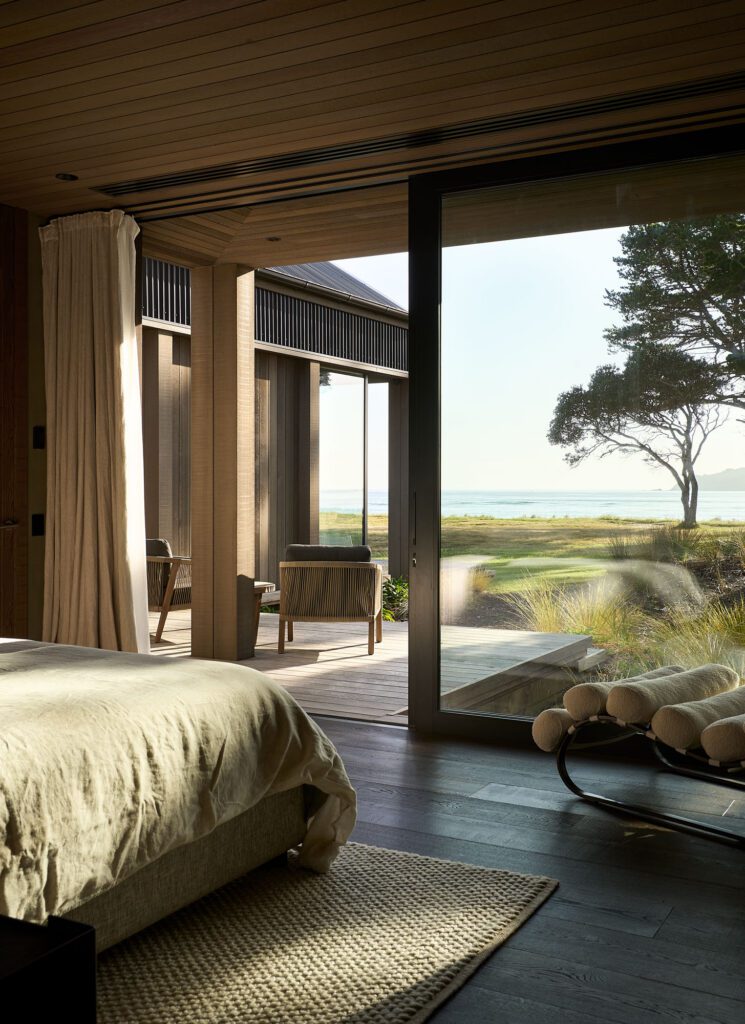
We decided to be a little bit creative,” says Sam Baxter, director at Sumich Chaplin Architects. “Driven by that Ghost Writer concept, we turned the house perpendicular to the beach with snippets and considered picture frame views, with big glass doors that took on angular aspects of the beach: the main room looks north-west and north-east, while the primary bedroom looks directly east or straight out onto the ocean.”
Much as in the Polanski film, the hide-and-reveal interplay between inside and outside becomes central, with moody materials and dune views competing in a subtle game in which beauty emerges from their balance.
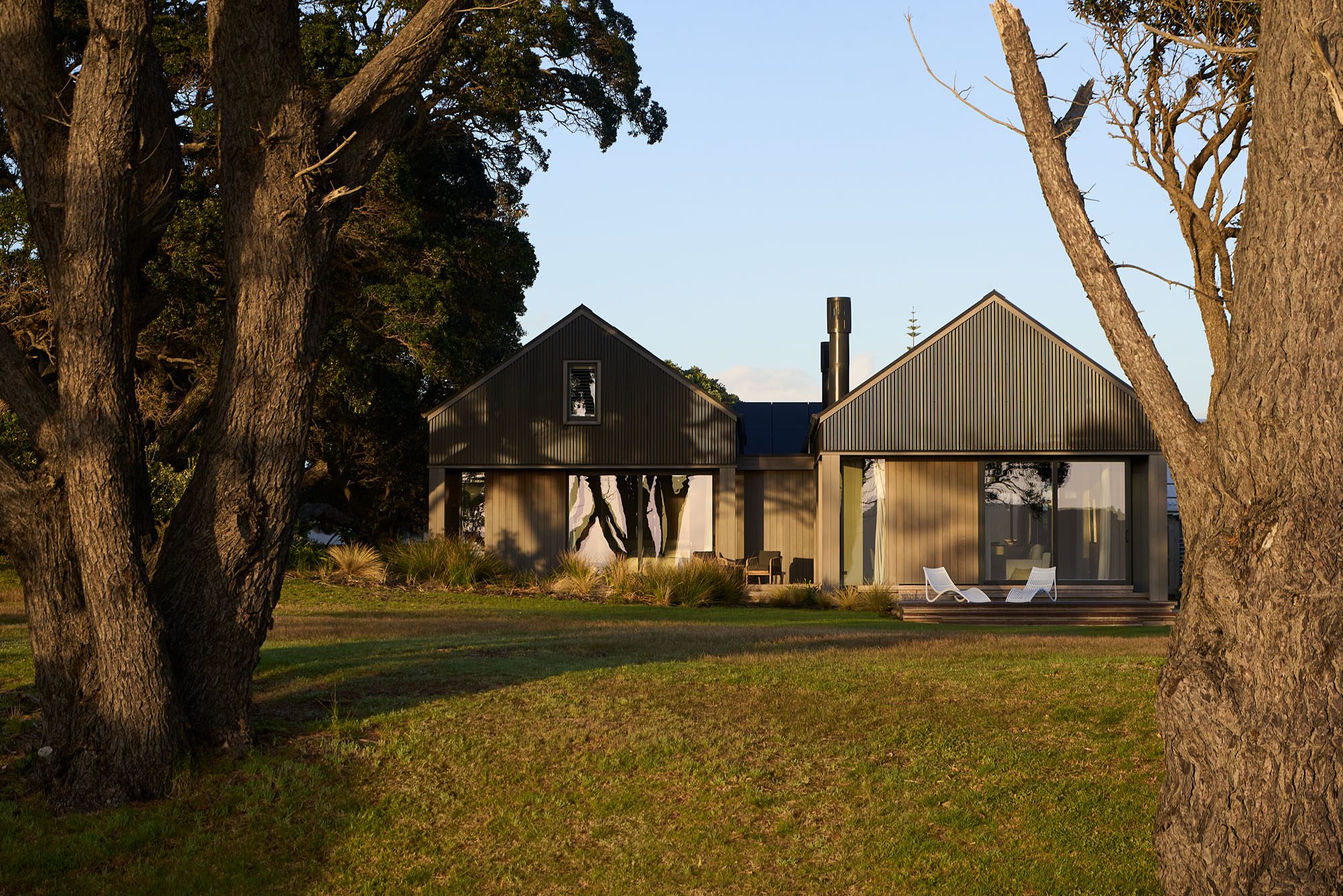
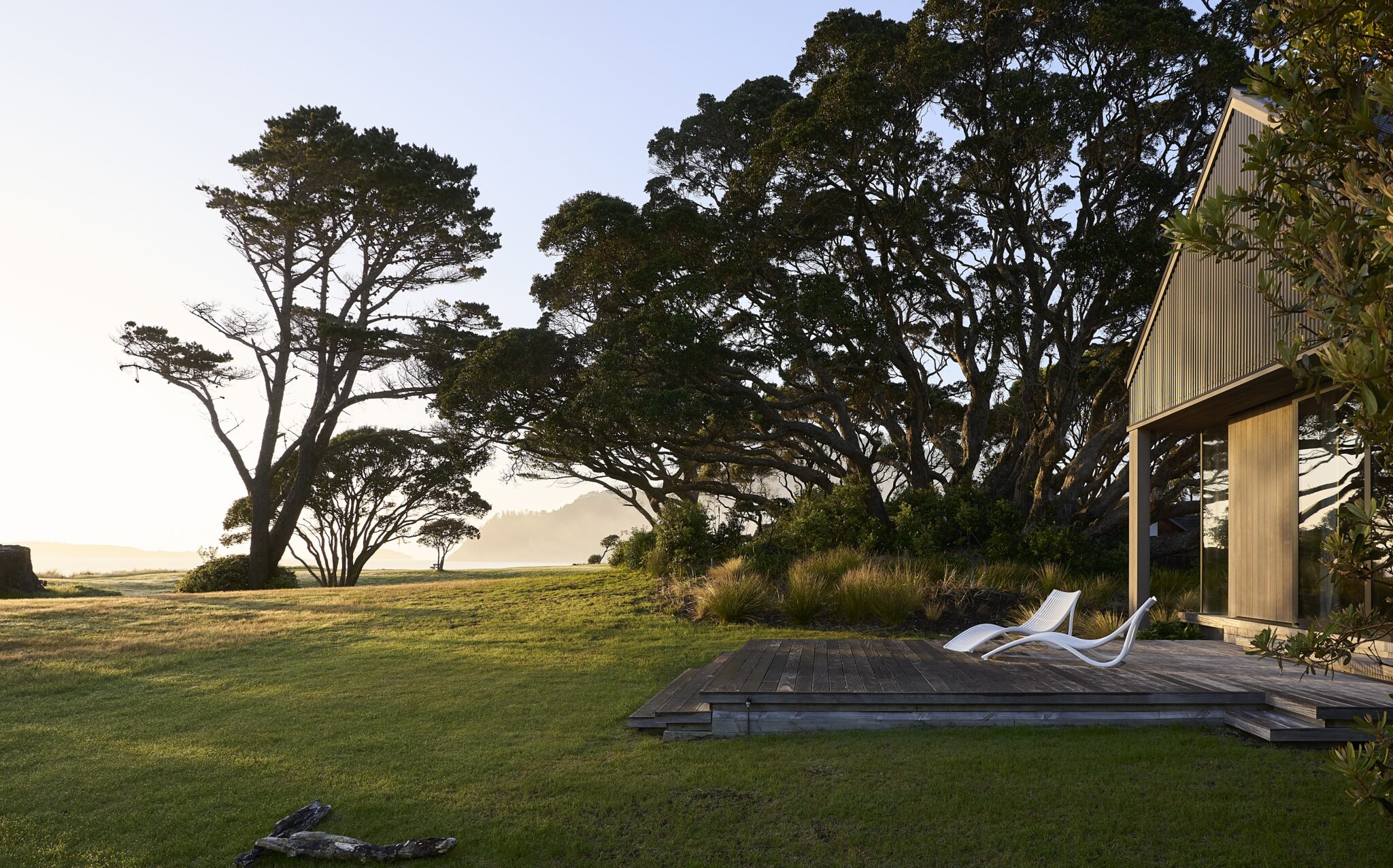
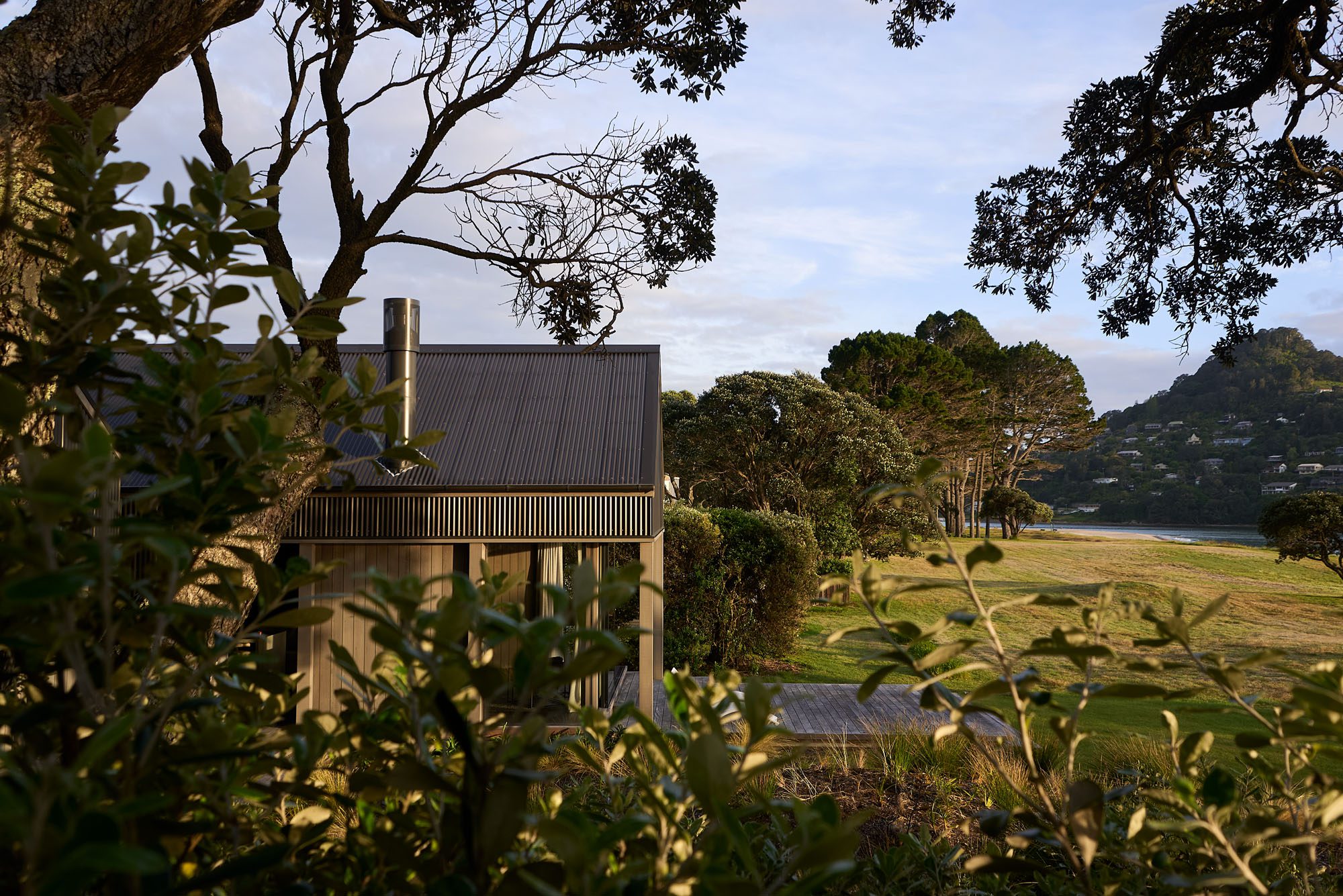
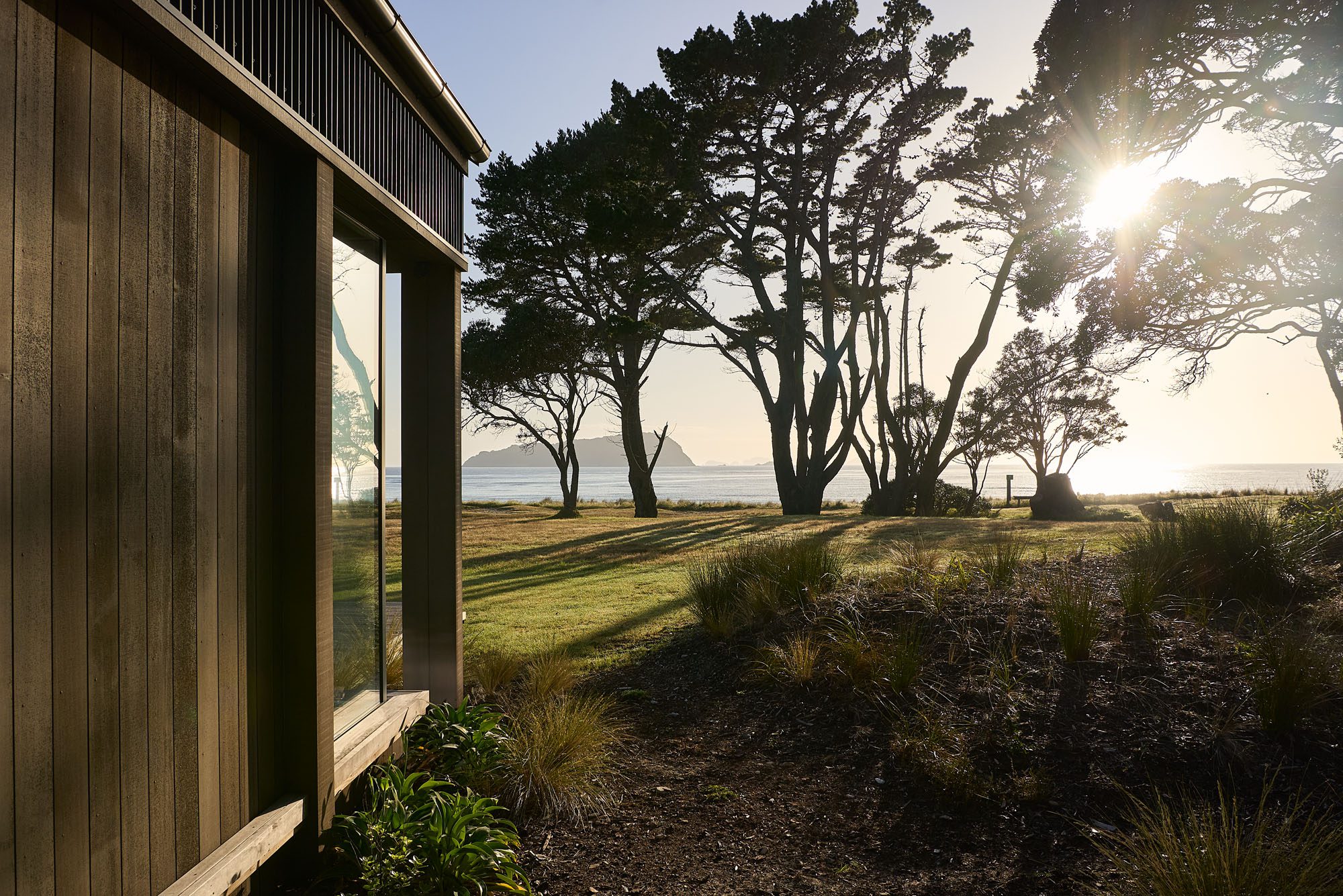
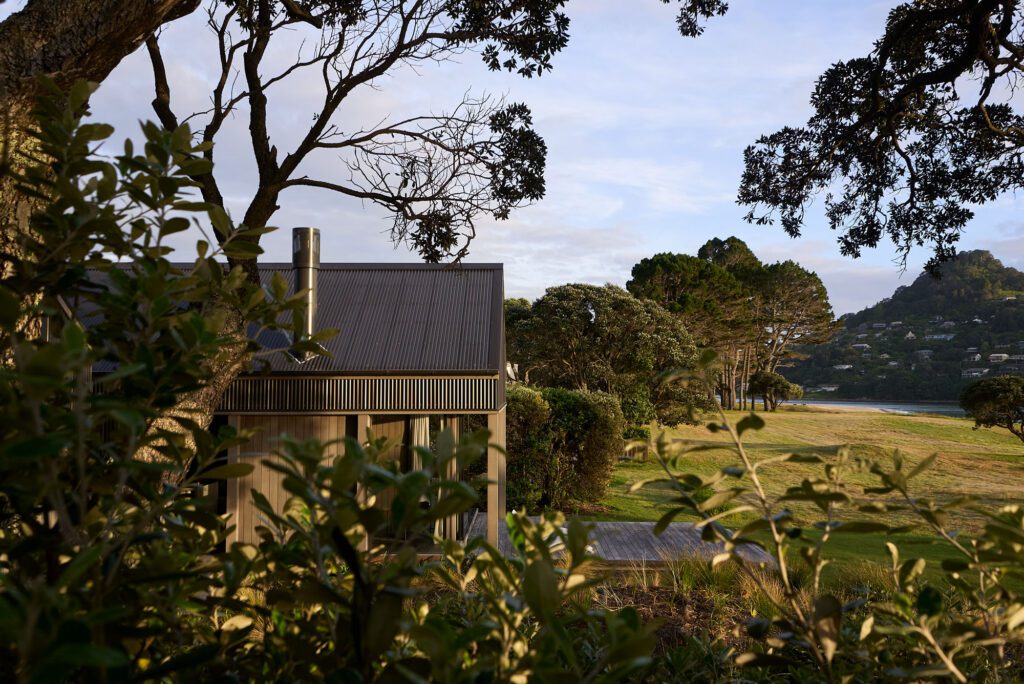
Outside, a pōhutukawa that drapes about 30 per cent of the site, Norfolk pines, and other evergreens provide further drama and contrast with the dunescape of Pauanui.
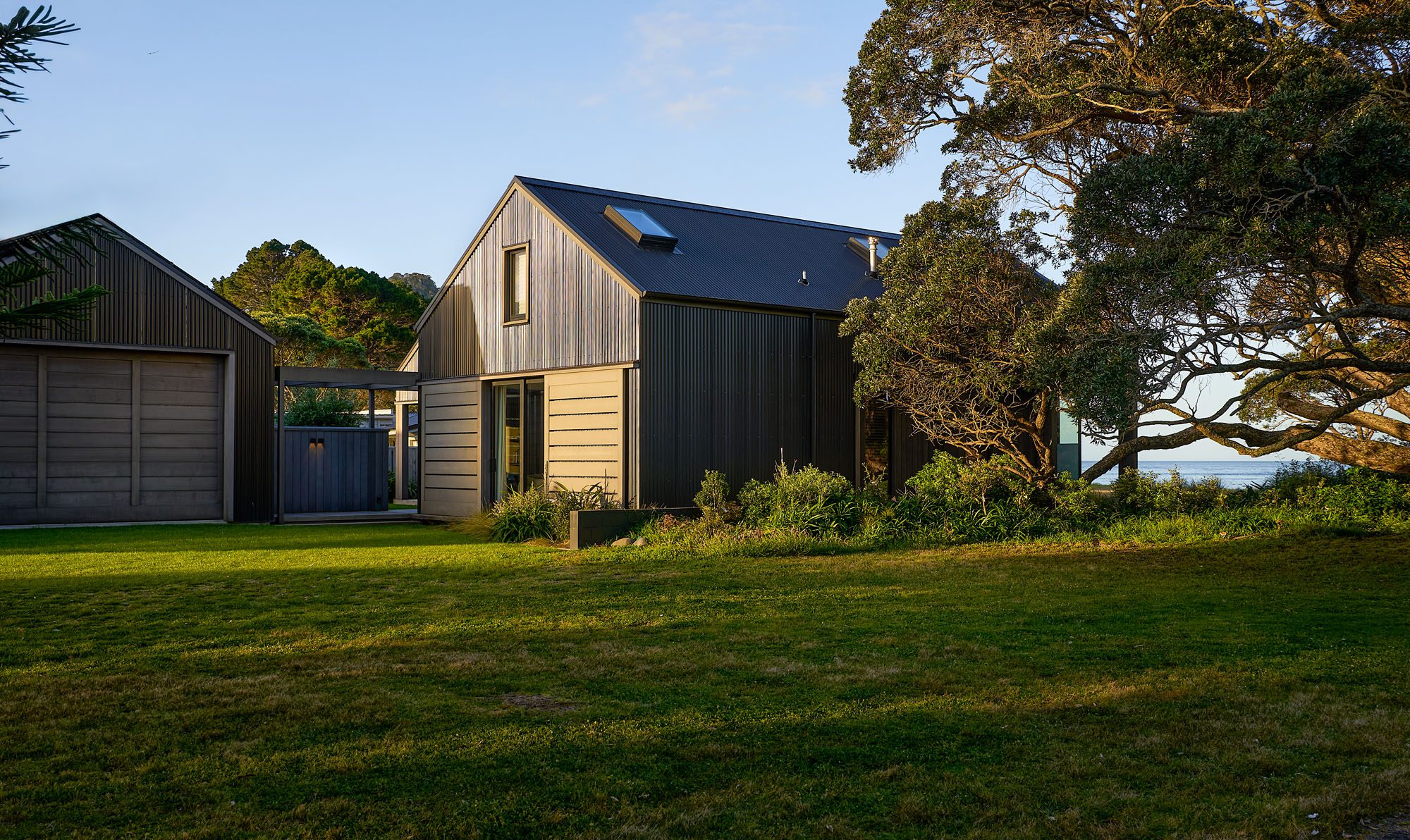
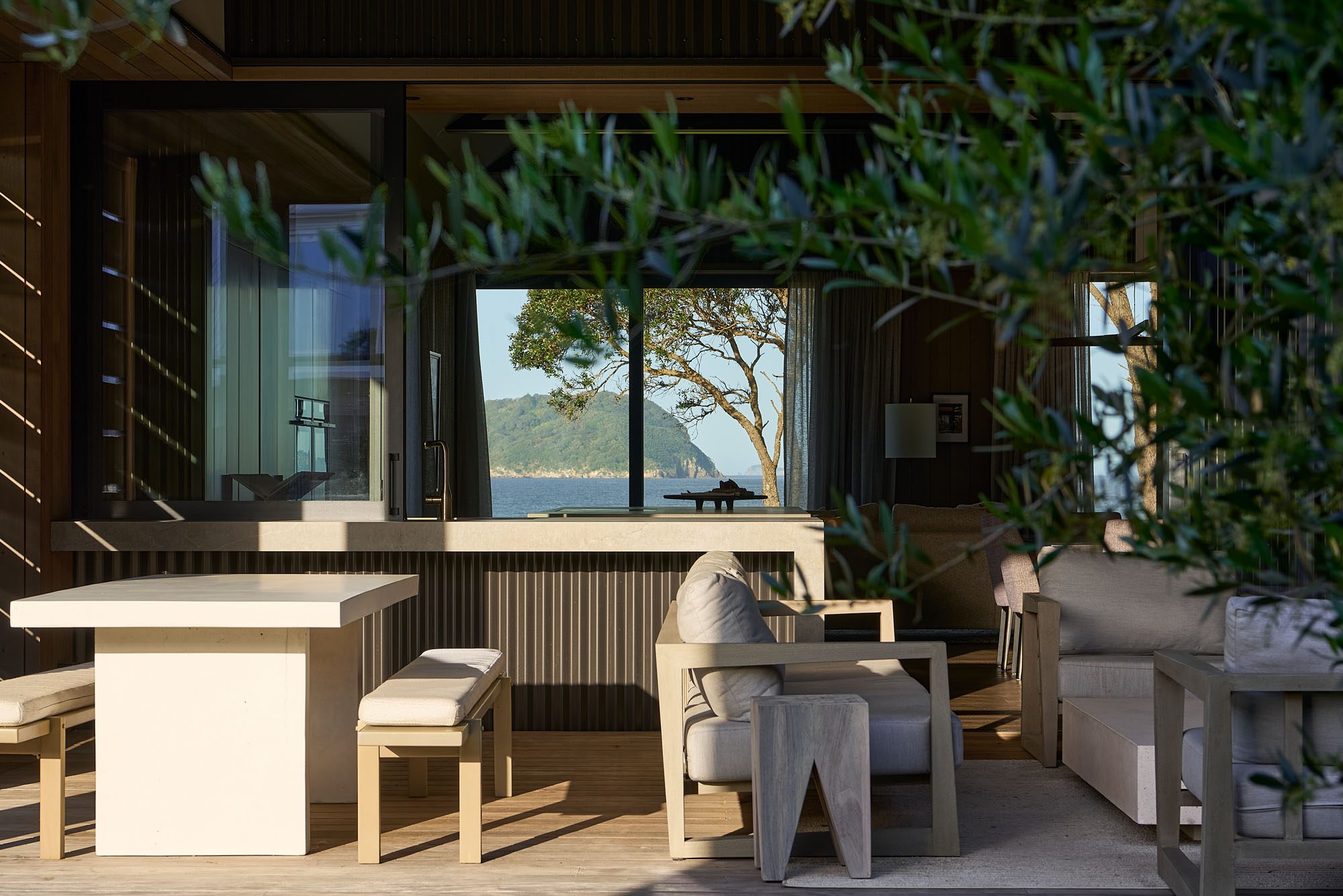
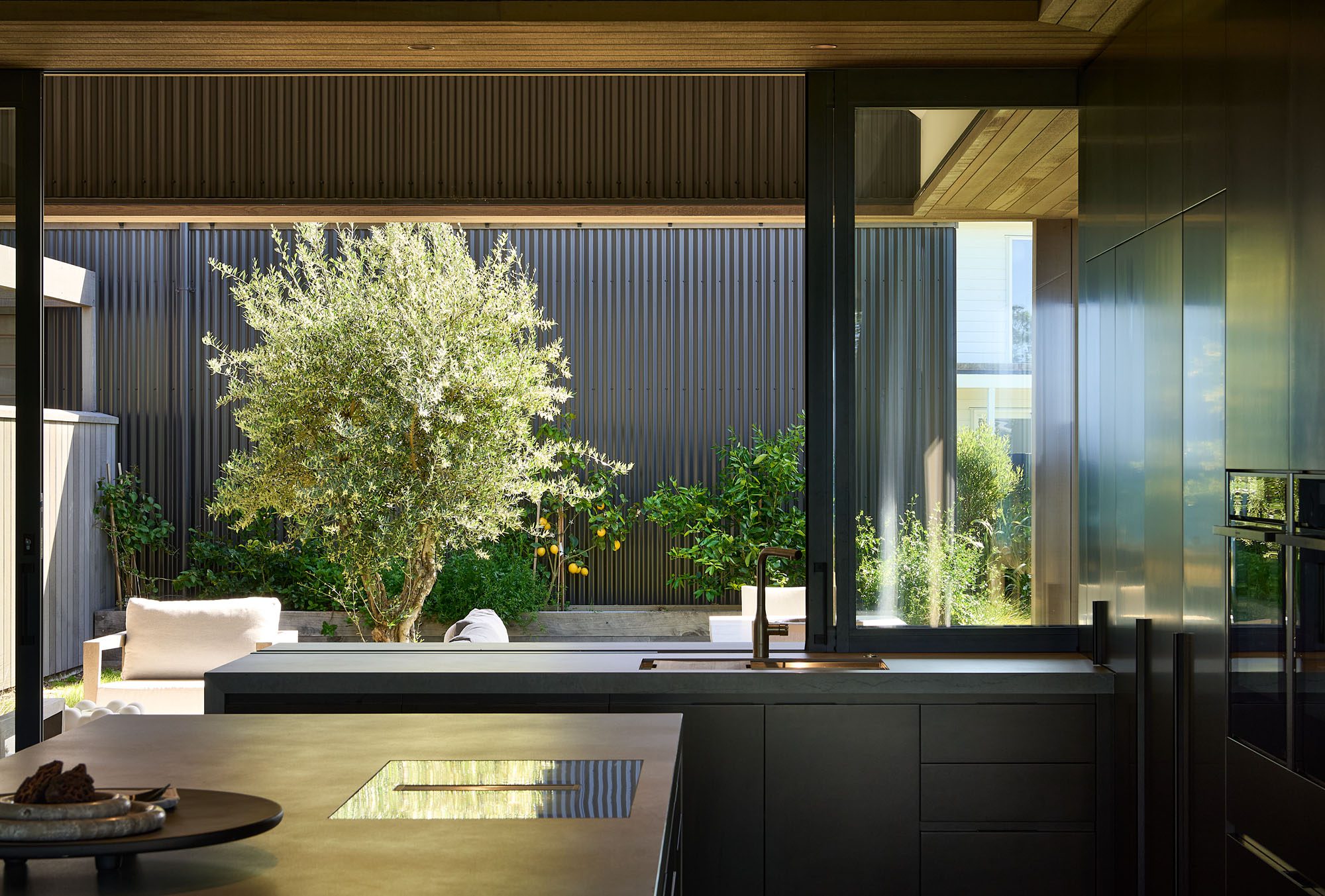
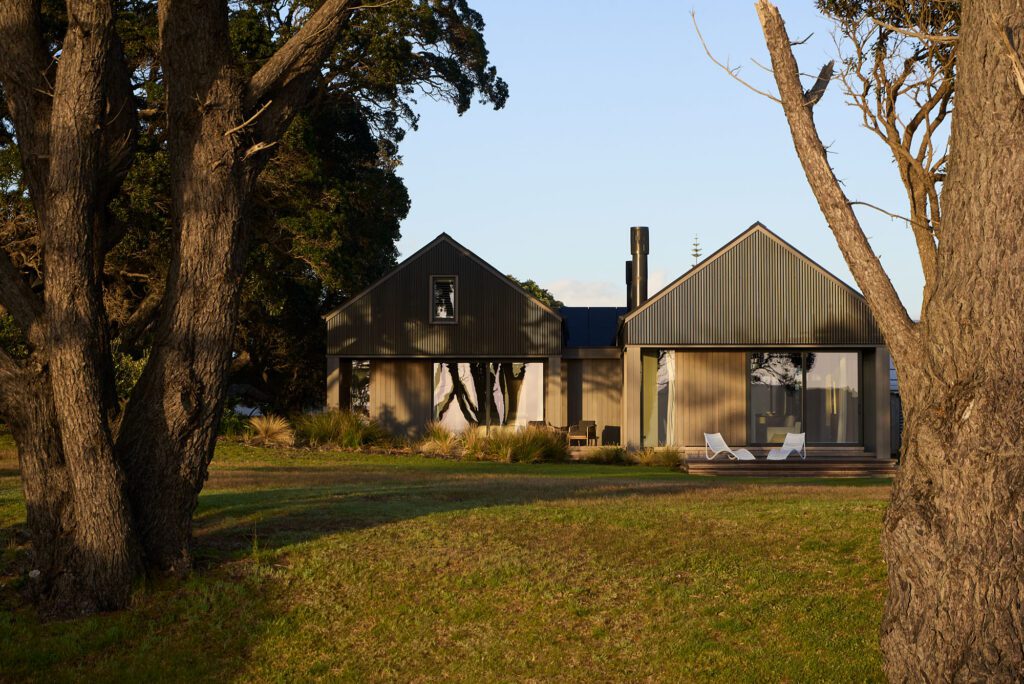
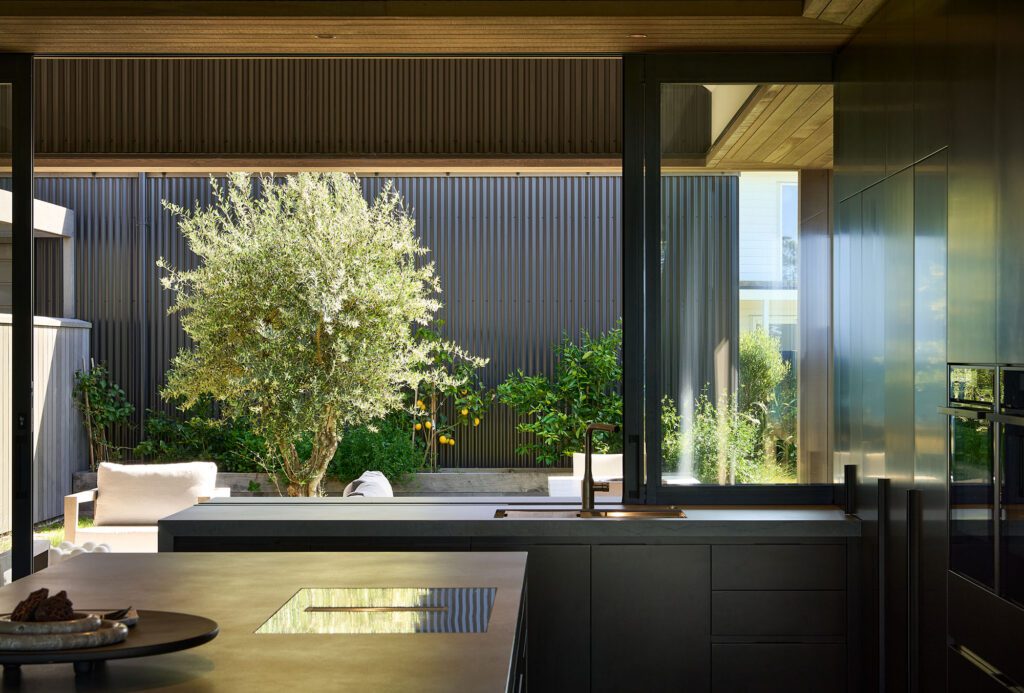
The plan itself is staggered using three main pavilions, to form an internal courtyard to the rear. “Like with any beach property, creating a space to capture the late afternoon sun and providing protection to the sea breeze is fundamental for all weather and seasonal social entertaining on the beach front. So this staggered plan was about creating a private space to the rear of the living room,” says Sam. Other obvious benefits included giving occupants a space to escape and shelter from the prevailing sea breeze, as well as create light and view shafts from the interior.
“The house is designed so you can open it up, but, depending on where the wind is coming from, you can [also] close and shelter,” continues the architect.
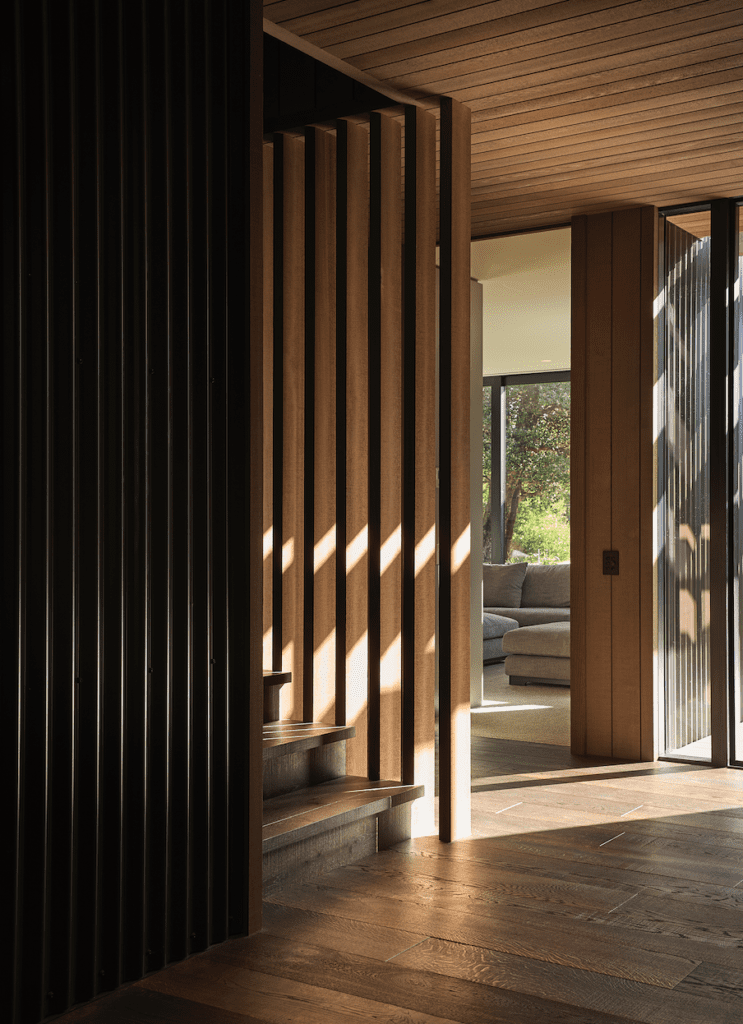
The use of corrugate and timber throughout is very appropriate for both the coastal context and a brief full of robust elements.
“The corrugate is almost a sacrificial skin,” Sam explains “that when its need replacing it basically just comes off and a new skin is placed on.”
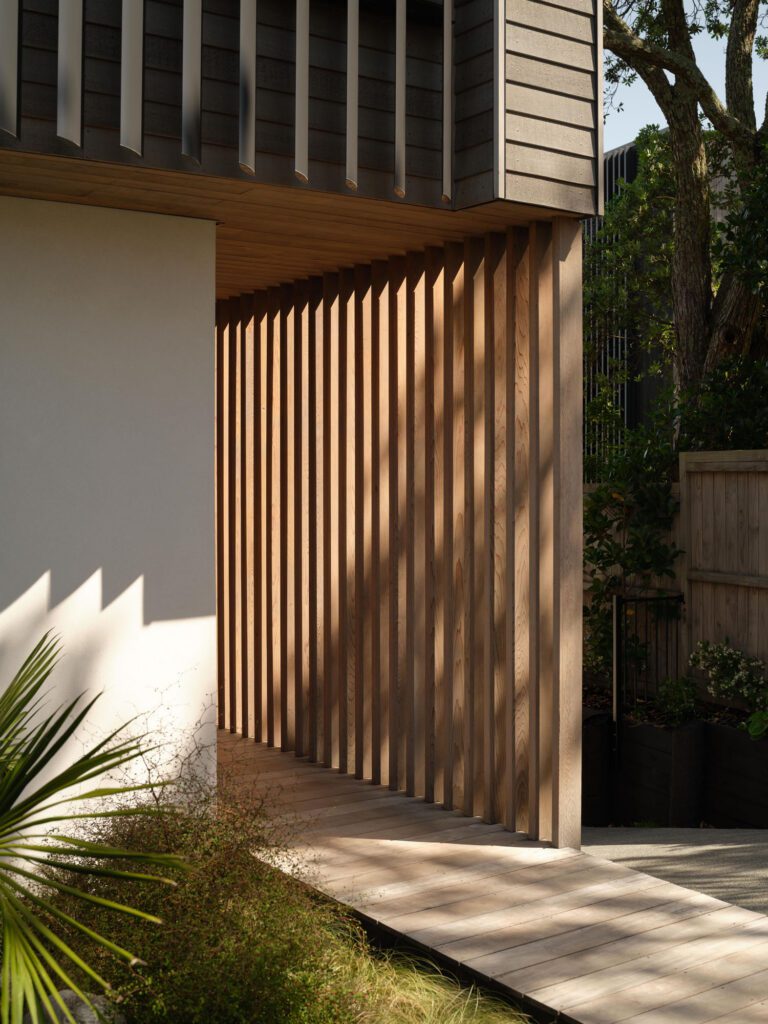
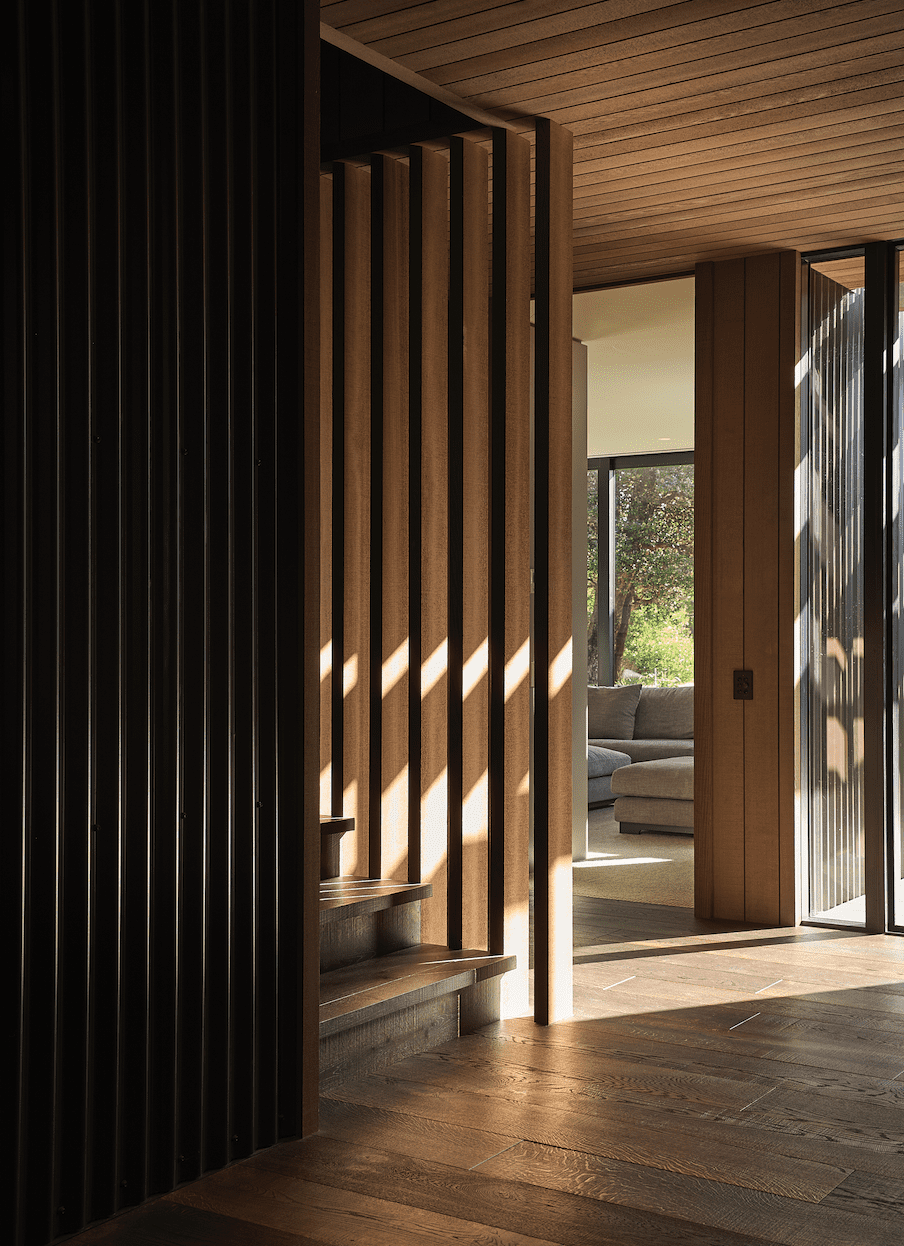
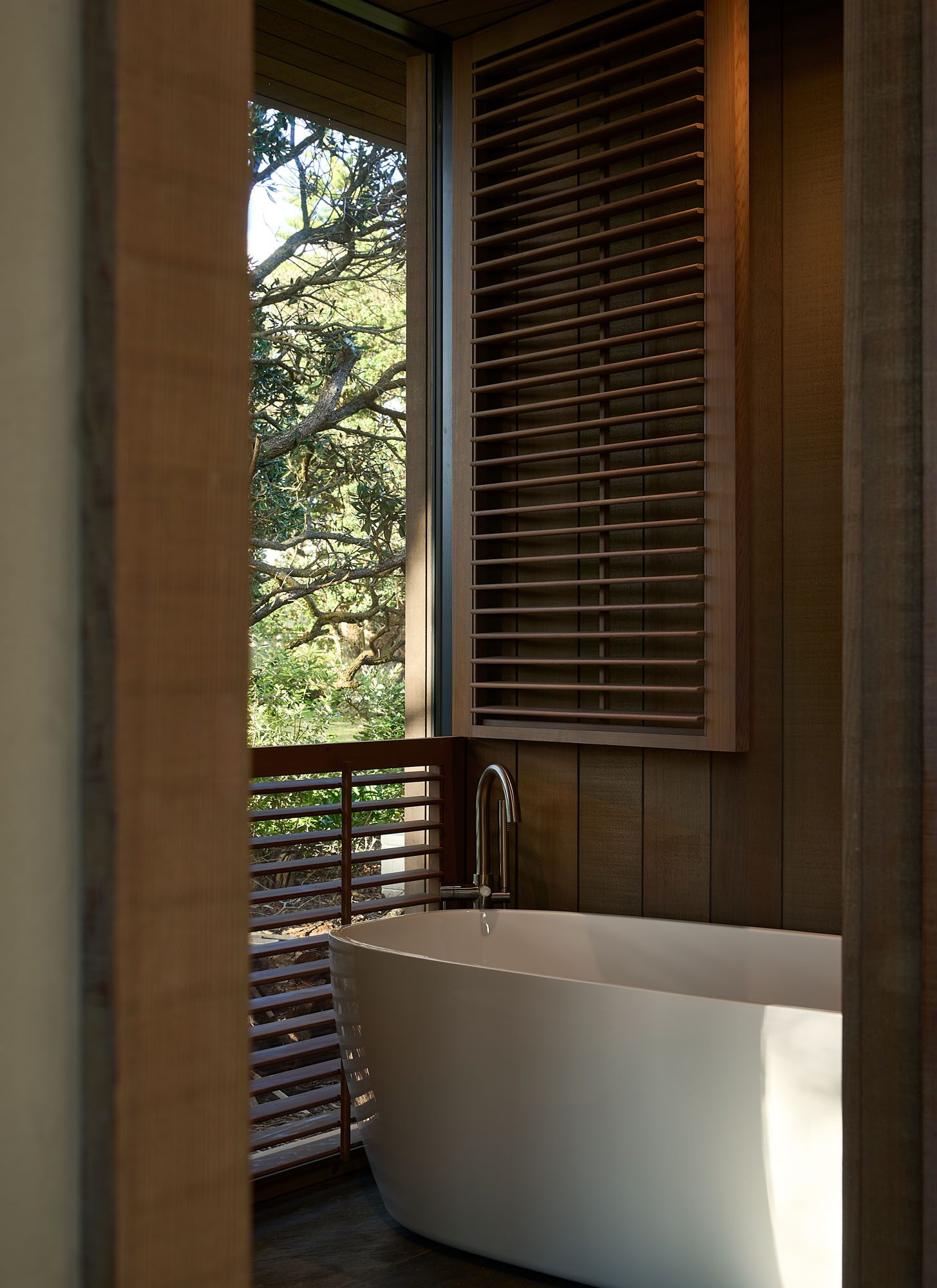
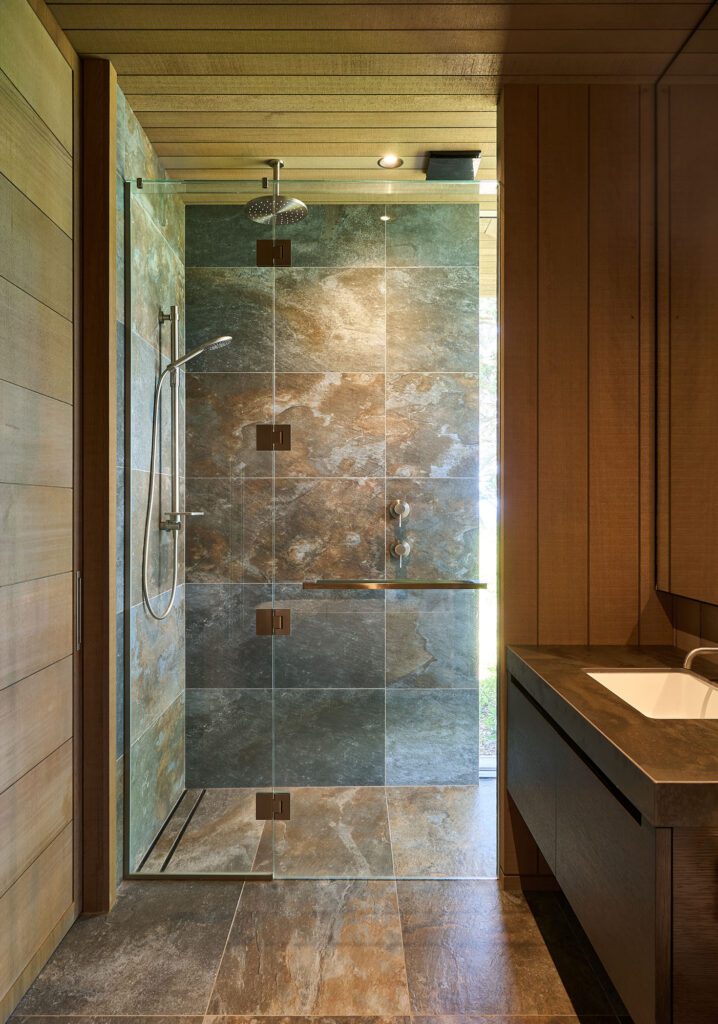
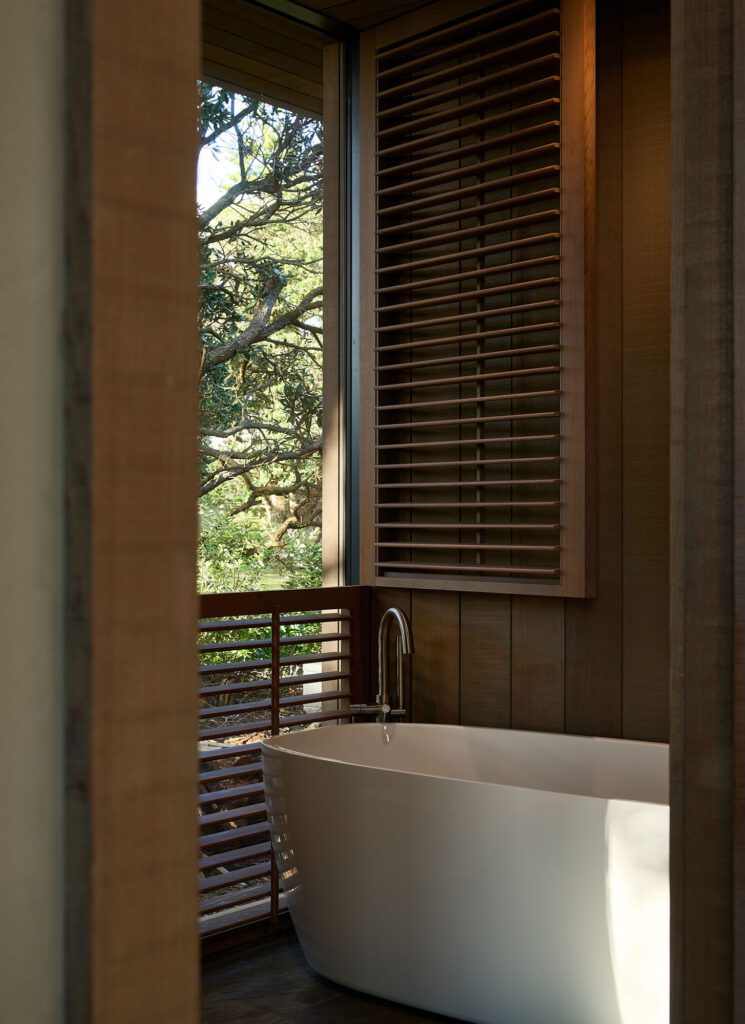
The softness of platinum-stained cedar creates a beautiful contrast to the corrugate; thick, horizontally laid planks emulate the dune’s orientation and tonality. The reveals around the windows also use the timber, in what the architect refers to in confectionery terms.
“If you look closely, everywhere there’s windows or cutouts …. It’s a bit like a chocolate Malteser. You bite into the chocolate [or the corrugate] … and everything that’s cut out is [made out] in that honey, foam texture.”
“If you imagine that you took the roof off any section, the pavilions read as a true corrugate form. It comes back to that concept: wherever we cut big recesses or openings, we return to the cedar,” says the architect. “It’s quite a simple concept, really, but we spent a lot of time trying to work out how to make you feel like you’re constantly blurring what is inside with what is outside, and taking away some of the formality, given that it is a beach house.”
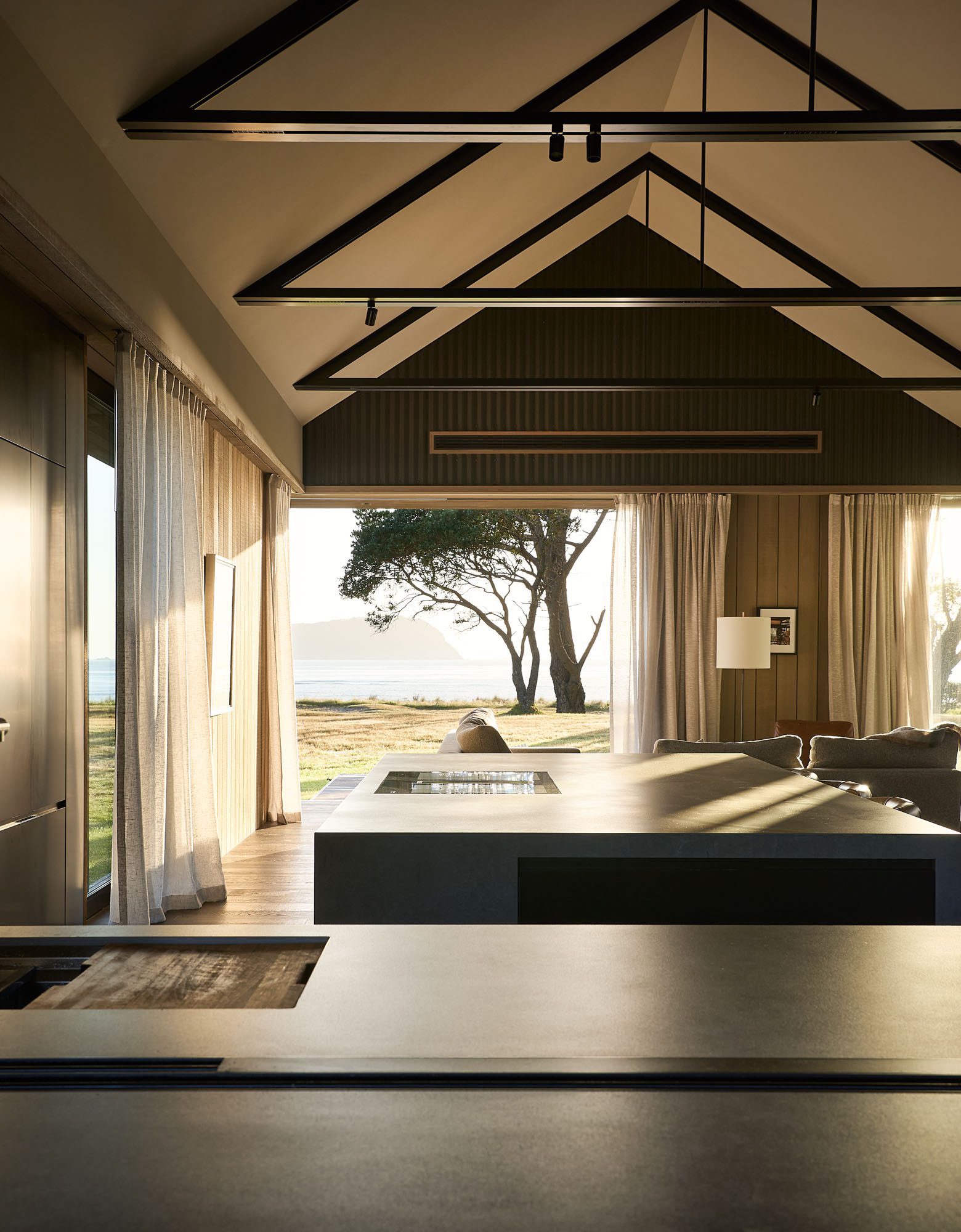
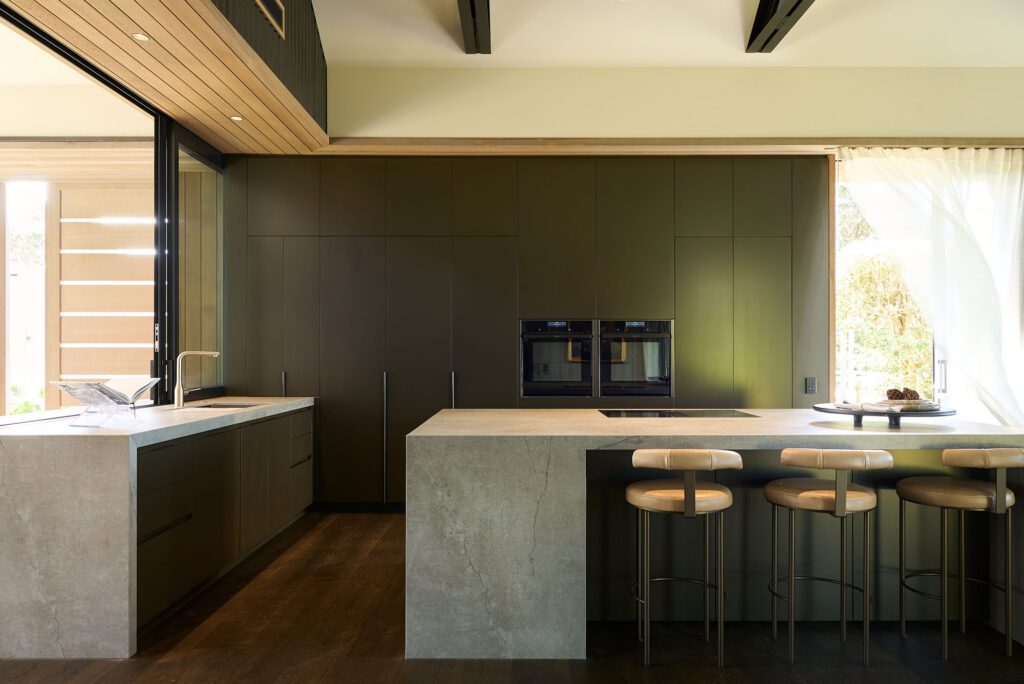
The solid oak flooring has been wire brushed, then polished to give it a really deep texture.
“It goes back to that idea of recycled, New York loft flooring that you would see in an older commercial fit out,” the architect says.
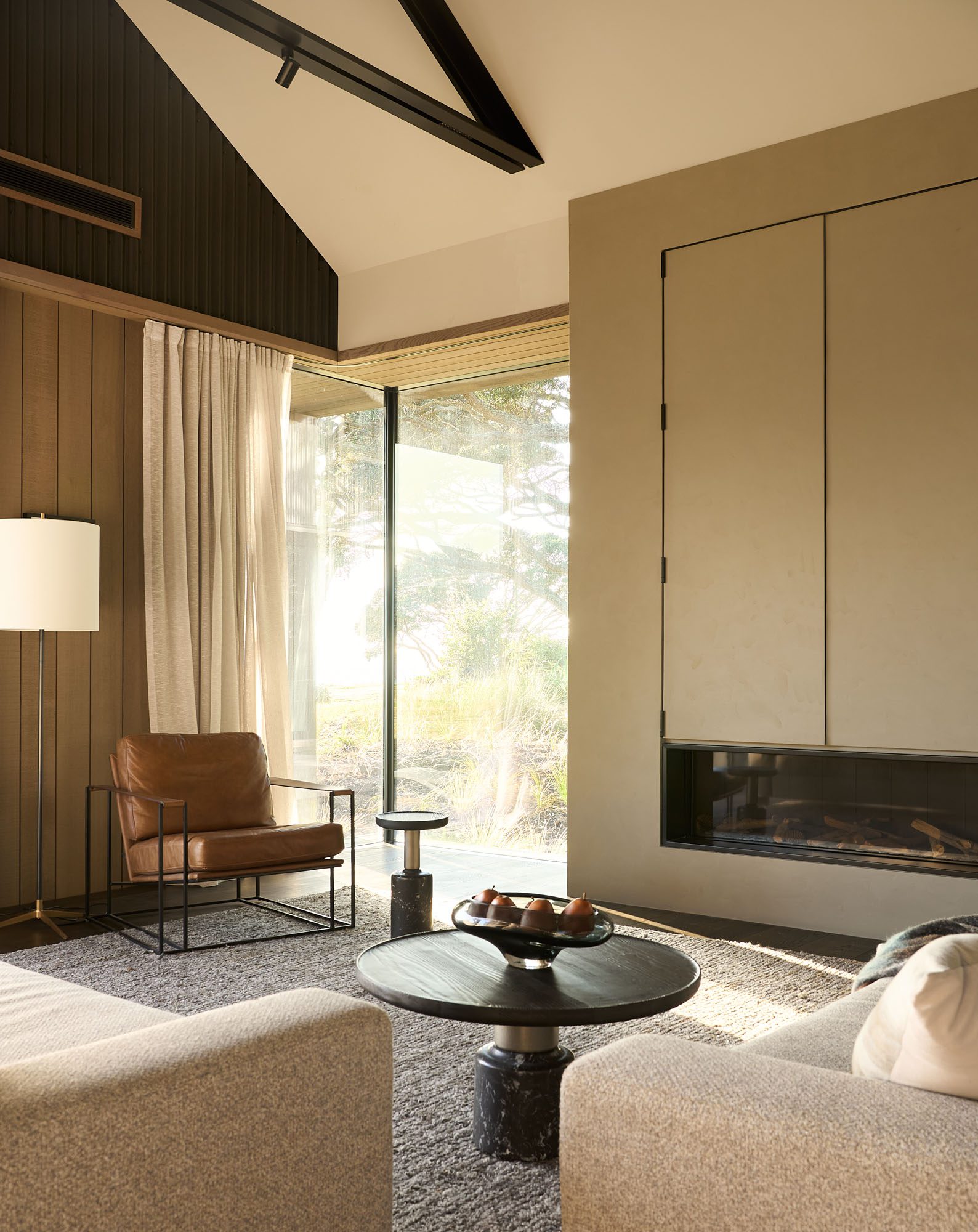
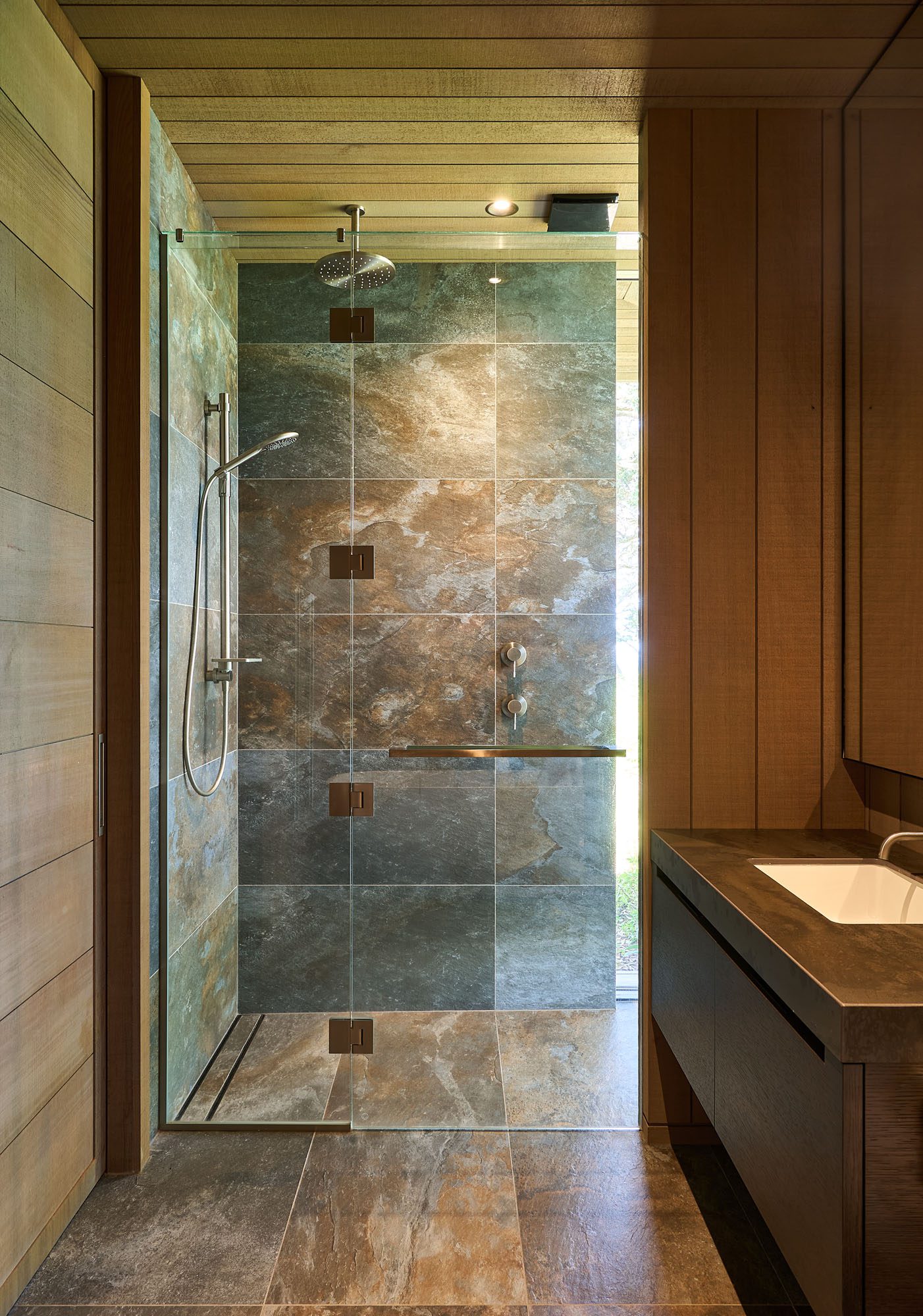
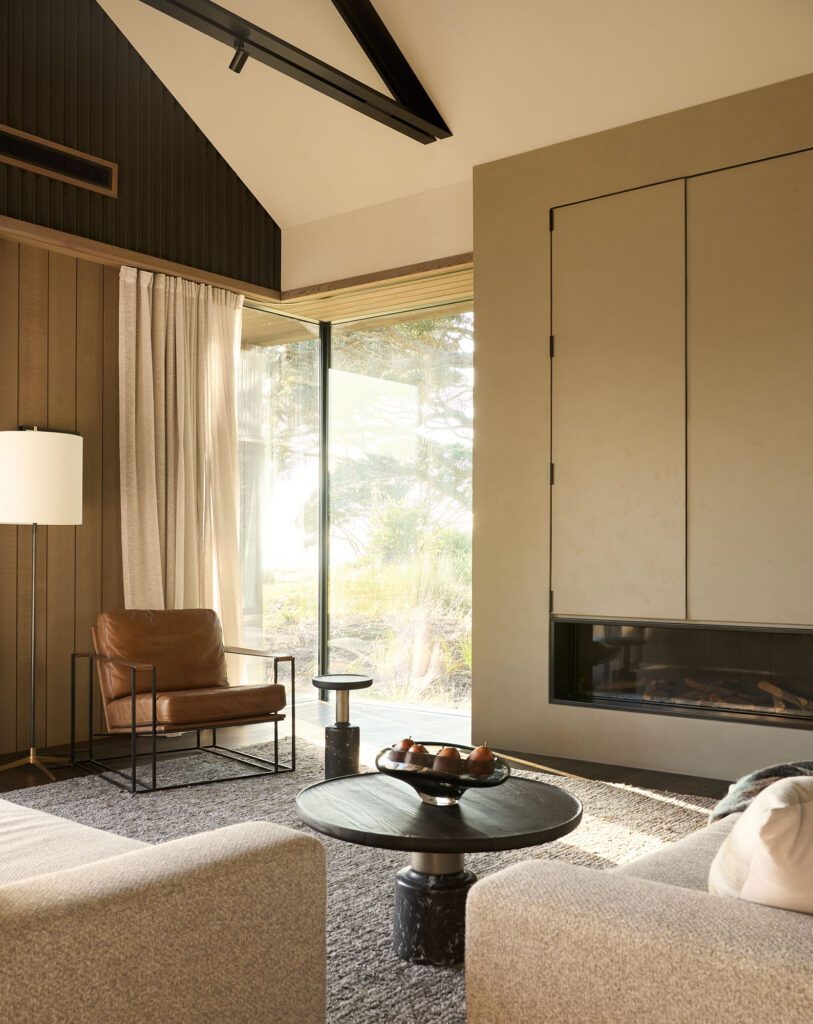
There was a conscious decision to limit the use of white; therefore, most of the internal surfaces that needed a simple treatment are really soft grey tones. The elements surrounding the fireplaces are polished plaster, giving an almost handmade softness that contrasts with the corrugate.
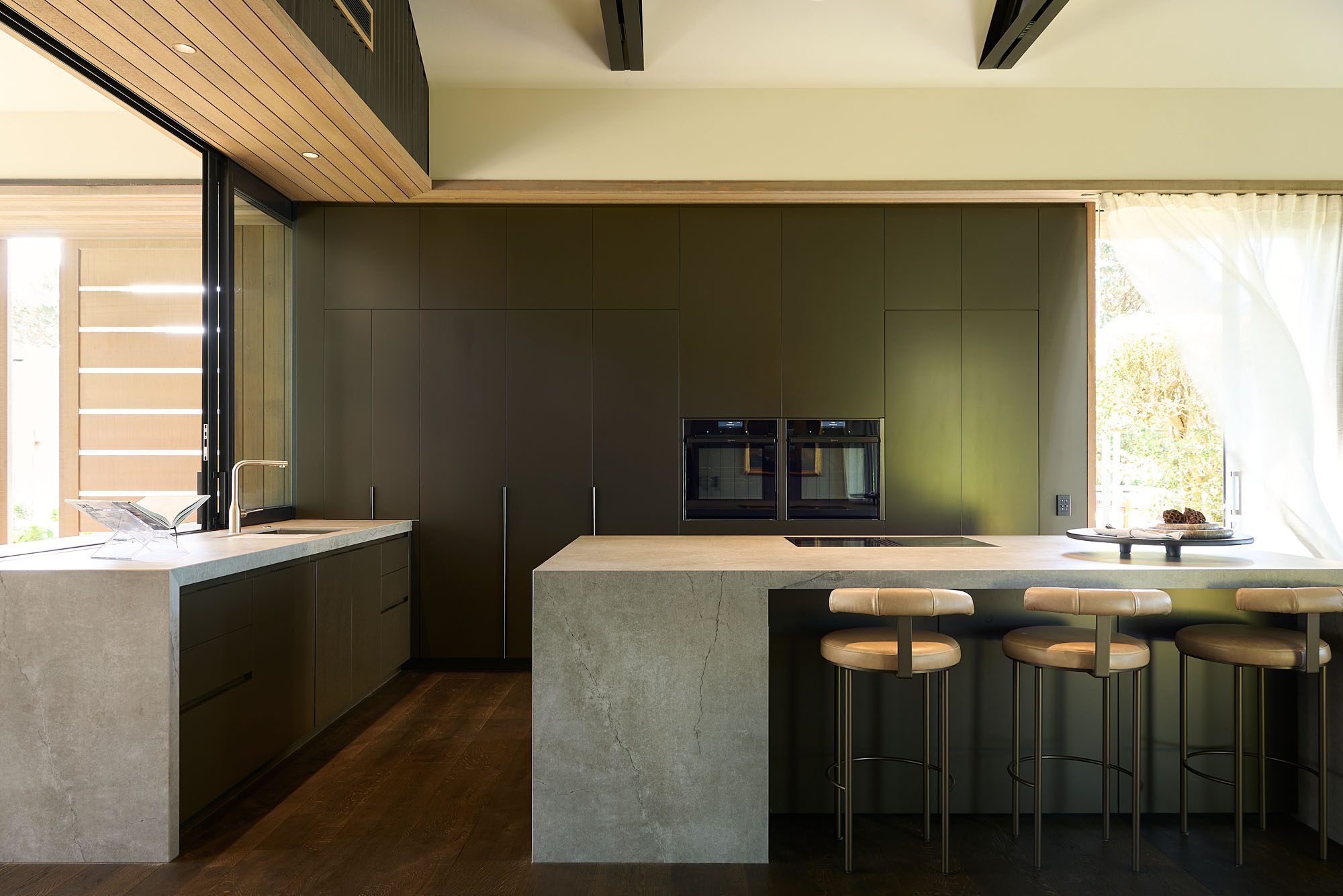
Engineered stone has been used in outdoor barbeque spaces as well as for the kitchen island bench, offering a touch of concrete-like solidity but with added refinement and softness.
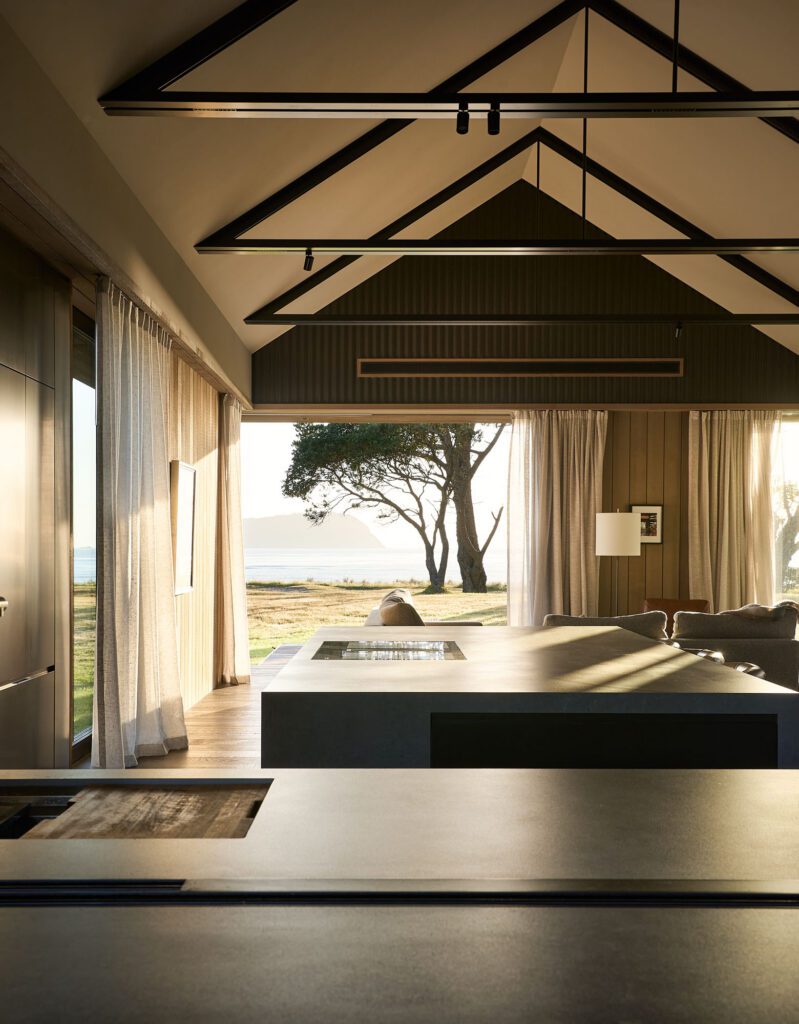
Lighting is incredibly important here. Beautiful, powder-coated steel, triangular elements that emulate the ceiling trusses hold discreet Laser Blade downlighting. These decorative, contemporary frames create an additional touch of the industrial feel the client wanted, but with slick, elegant edges and negative detailing.
“There’s an ambience that’s quite special about this property,” Sam remarks, noting how the elongated, twisted limbs of the pōhutukawa cast shadows that at times turn pitch black against a burning sunset. Downlights articulating the generous island and textured floor, together with the orange glow of internal and external fireplaces and the oily sheen of the ocean beyond, create a layered and distinctive coastal mood.
Much like a Polanski film, everything is meticulously framed and a little moody, dark in the right places with glints of a honey-coloured core that make this place extra special.