

Pacific House

Expressive geometries, a high level of craft, and connections with its landscape elevate a small number of materials into a polished, relaxed home full of moments of wonder and surprise by Julian Guthrie Architecture. 

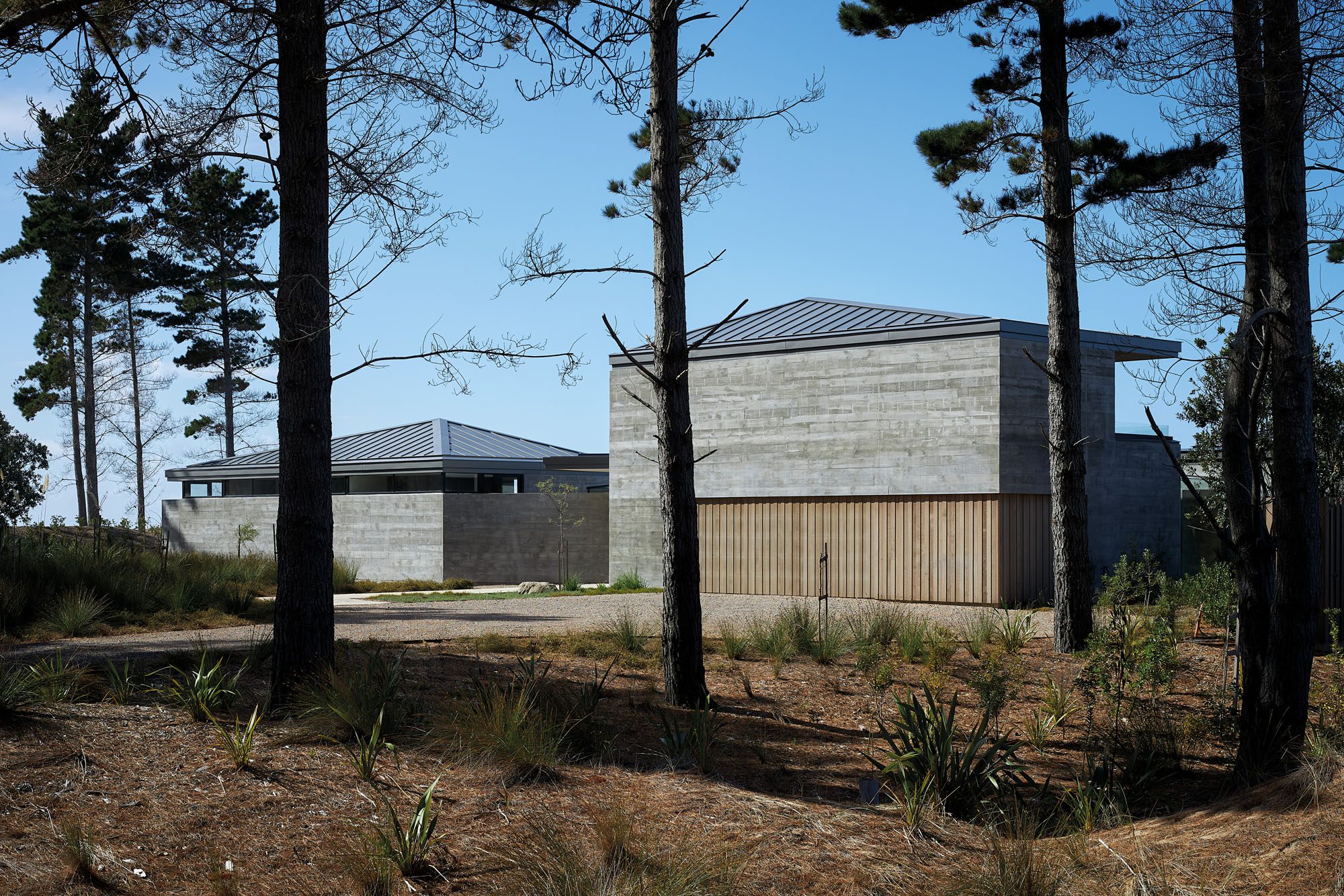
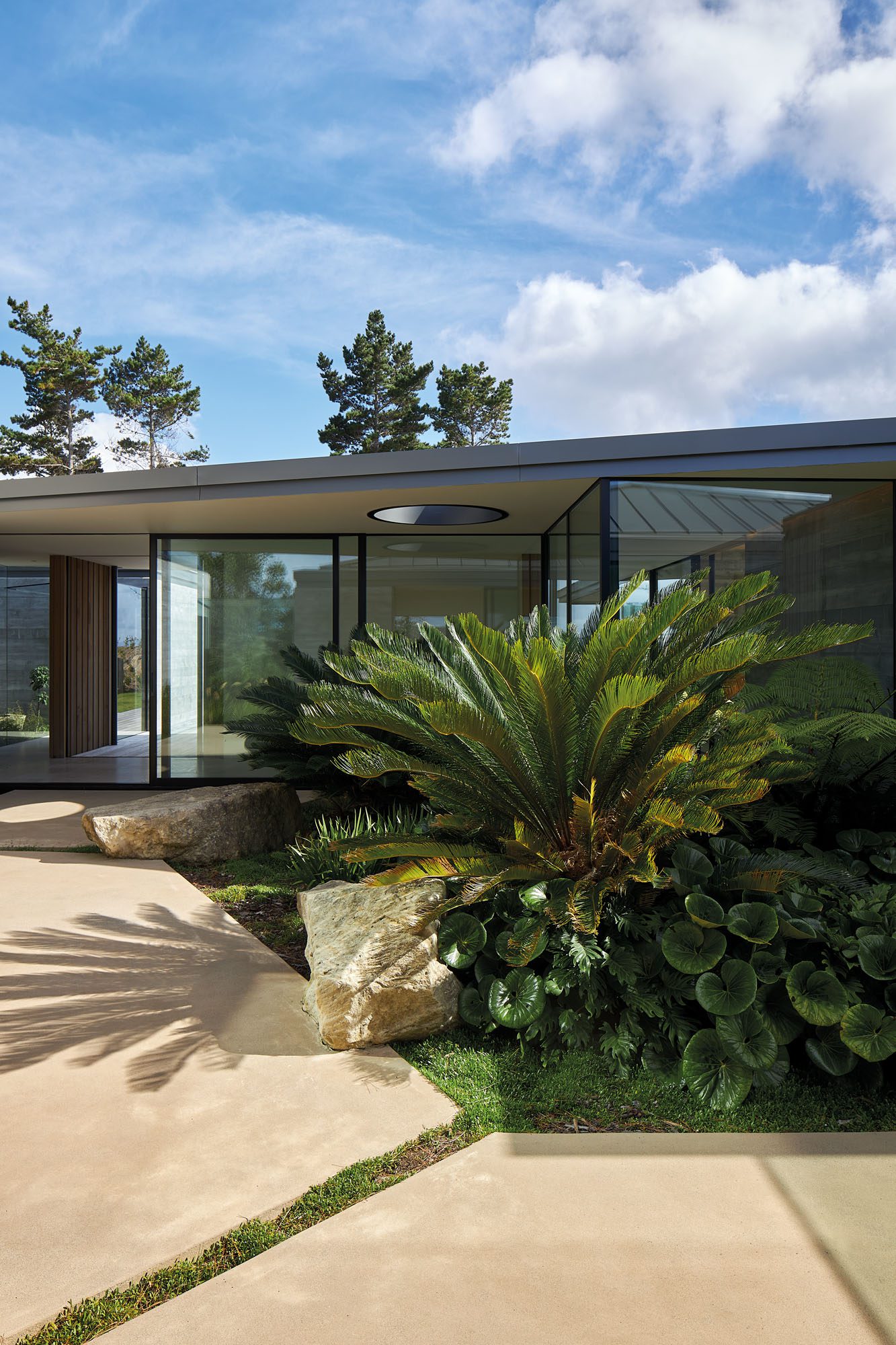
Near the border of Auckland and Northland, a long, meandering driveway dips towards a cluster of sand dunes by the sea. At its end, a house emerges — bunker-like in its concrete solidity, with a wrap-around timber garage door that reveals little of the experience that lies within.

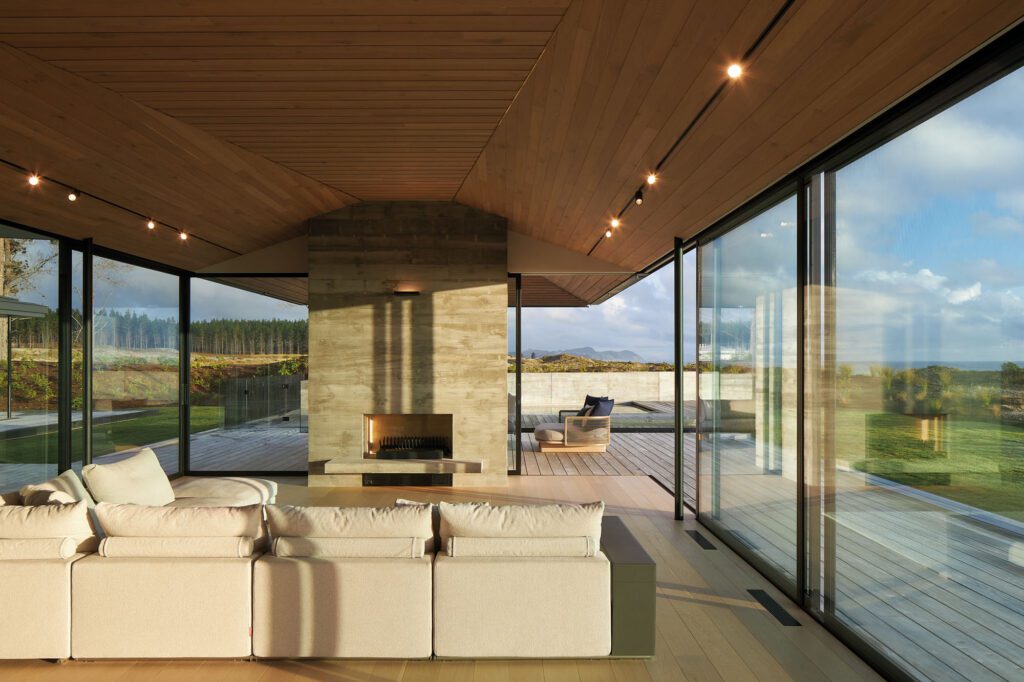
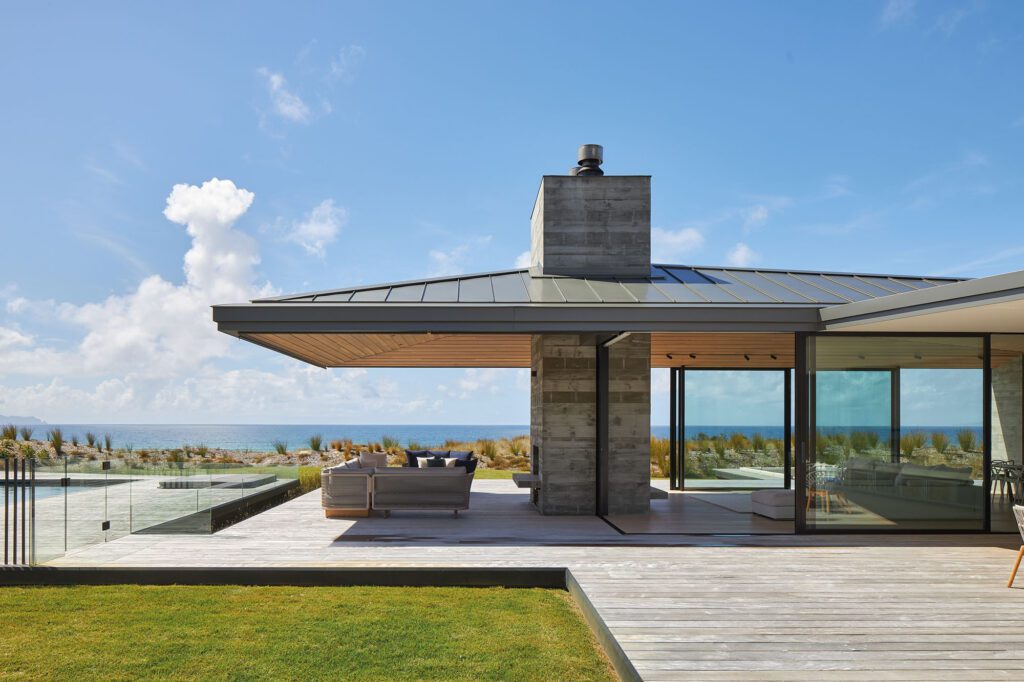
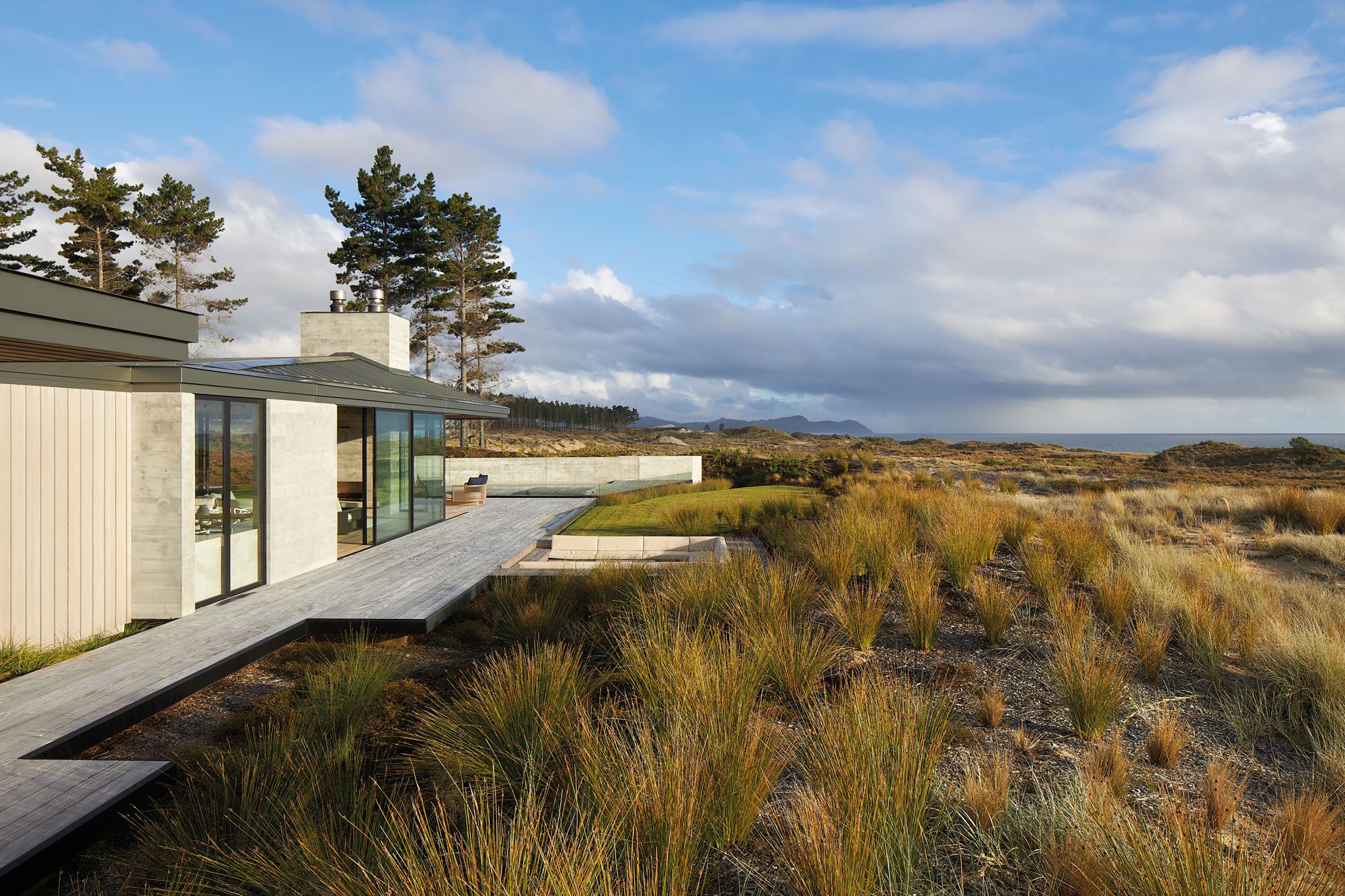
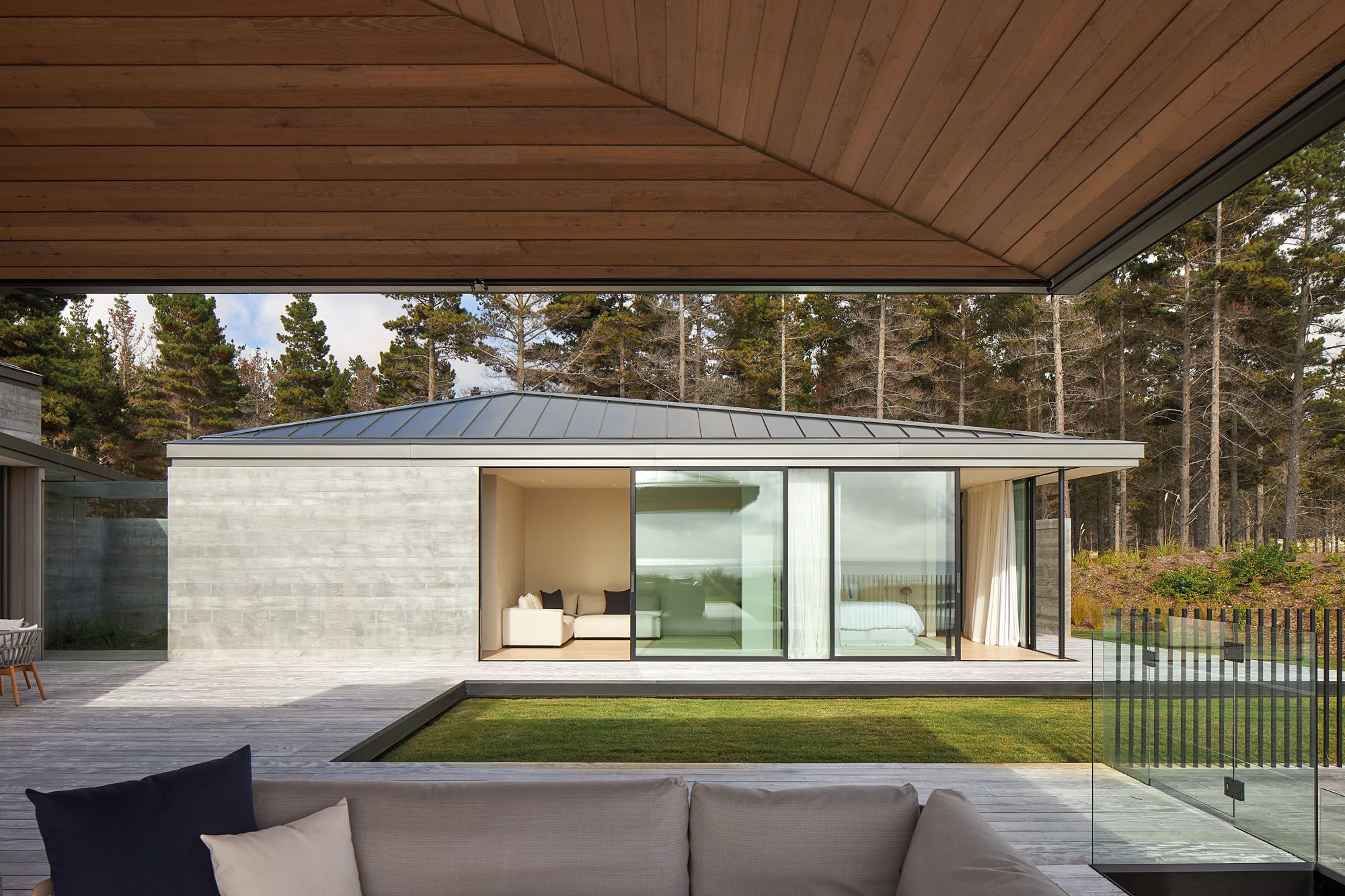
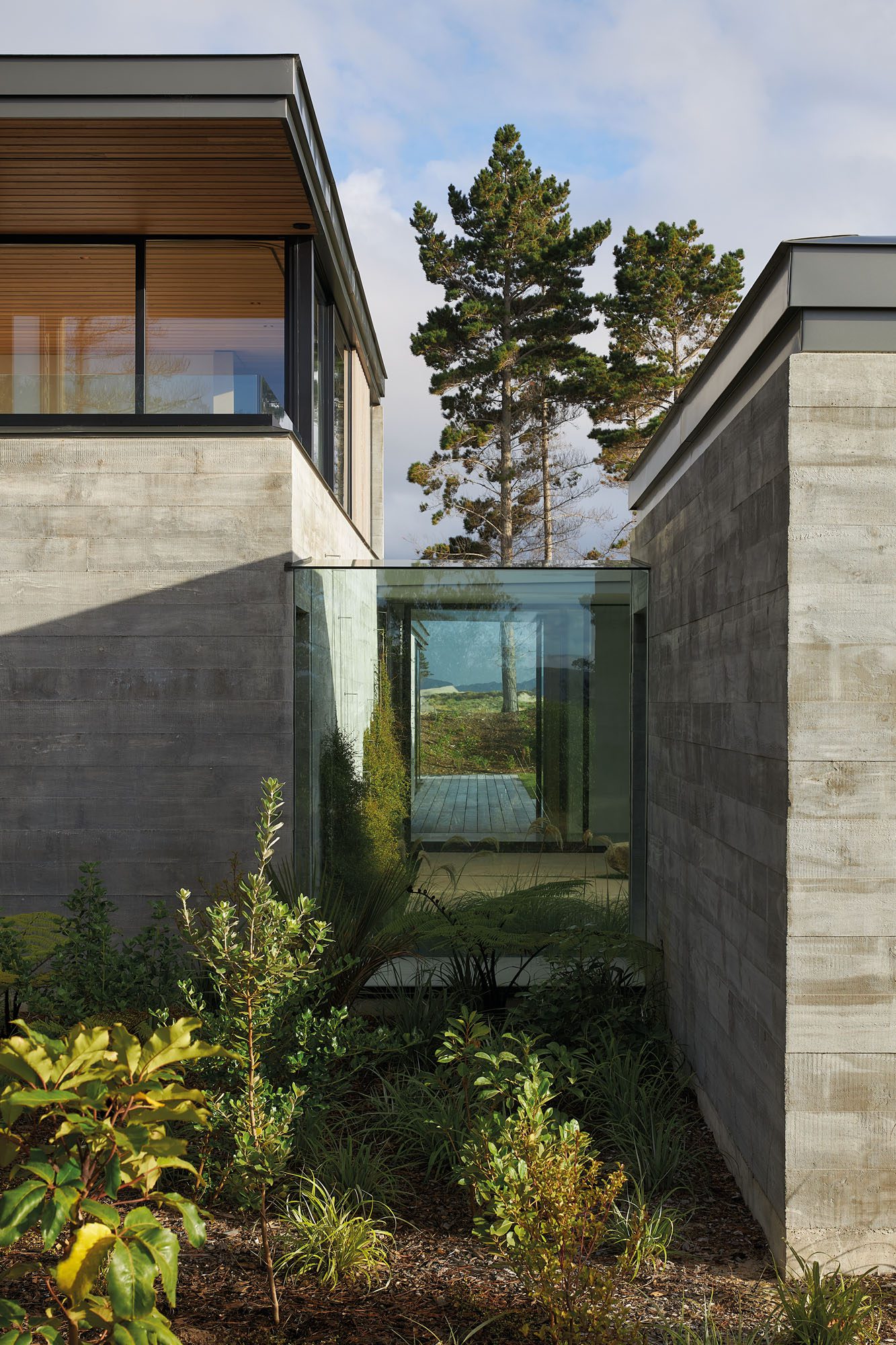
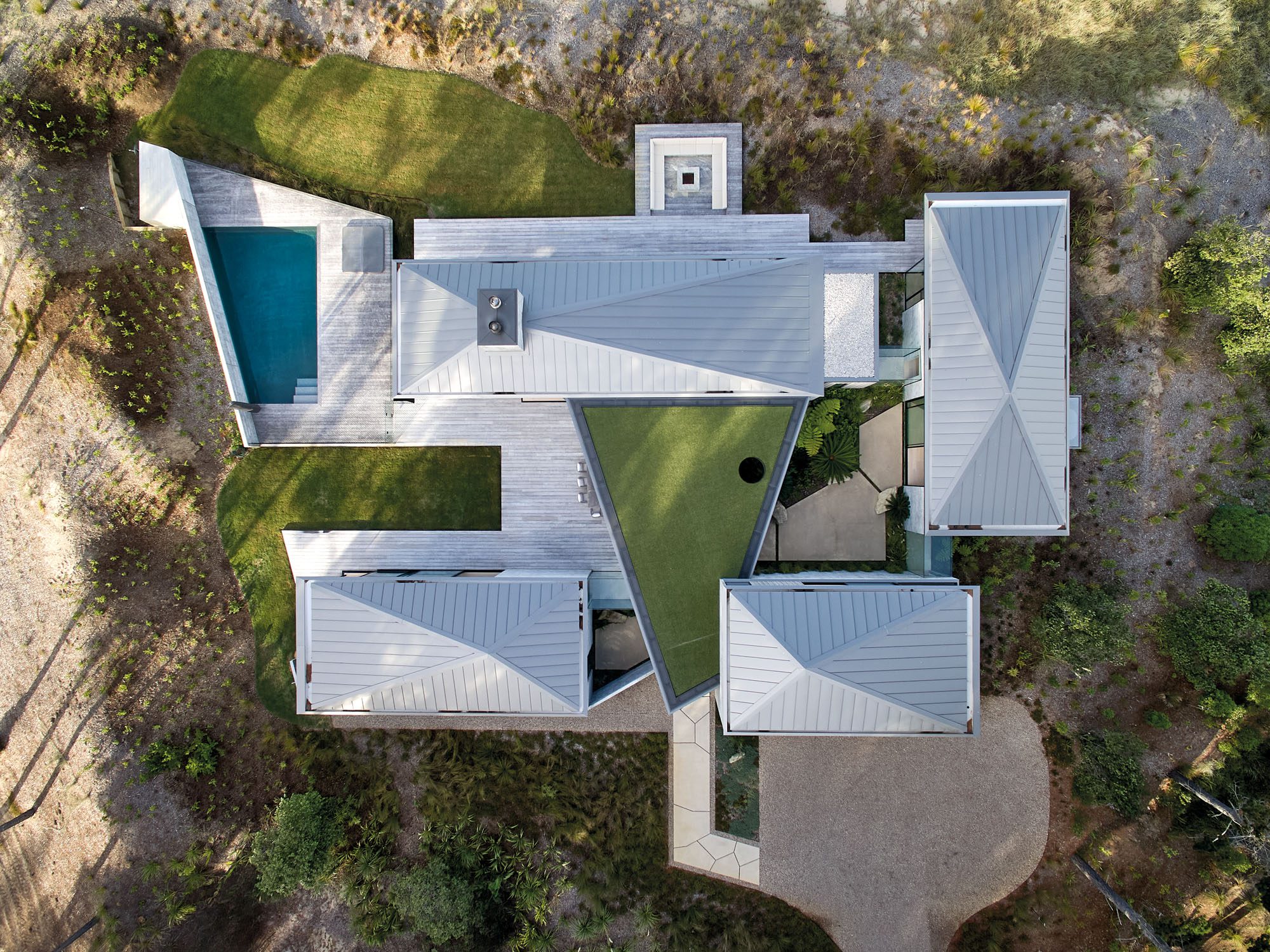
This is a large home, mostly on one level but with a basement and a bedroom that rises above. It unfolds across four pavilions arranged along three sides of a quadrangle, with the open, sea-facing north side ensuring every part of the house enjoys expansive views.

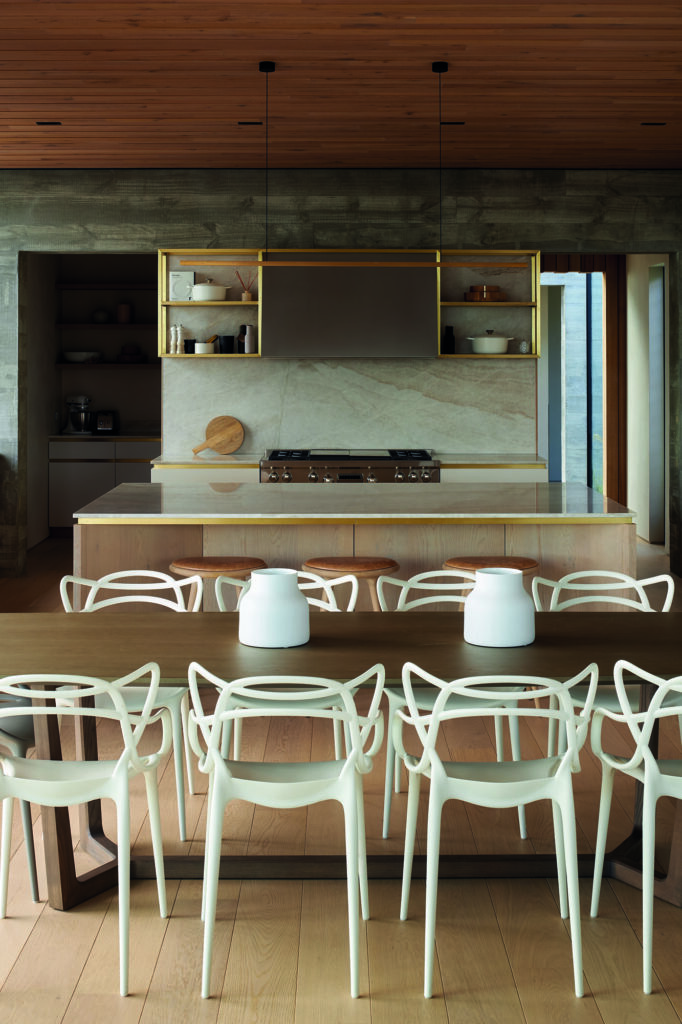
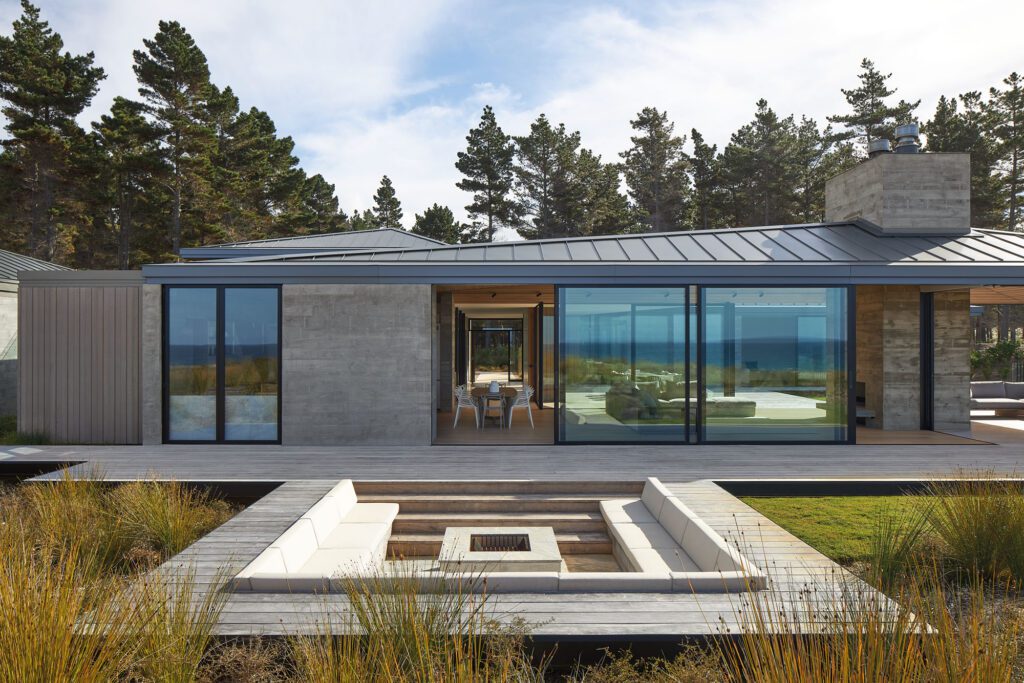
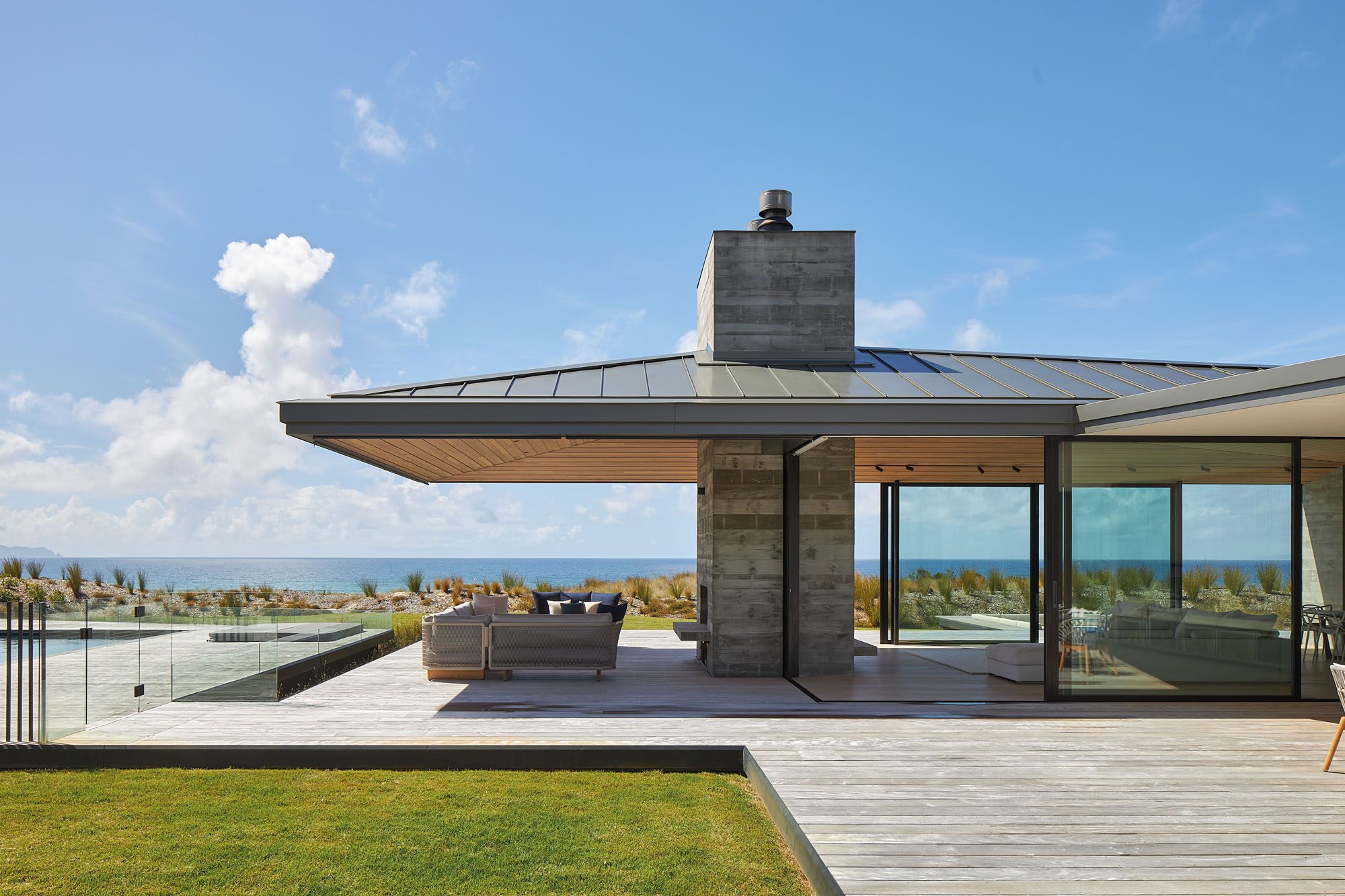
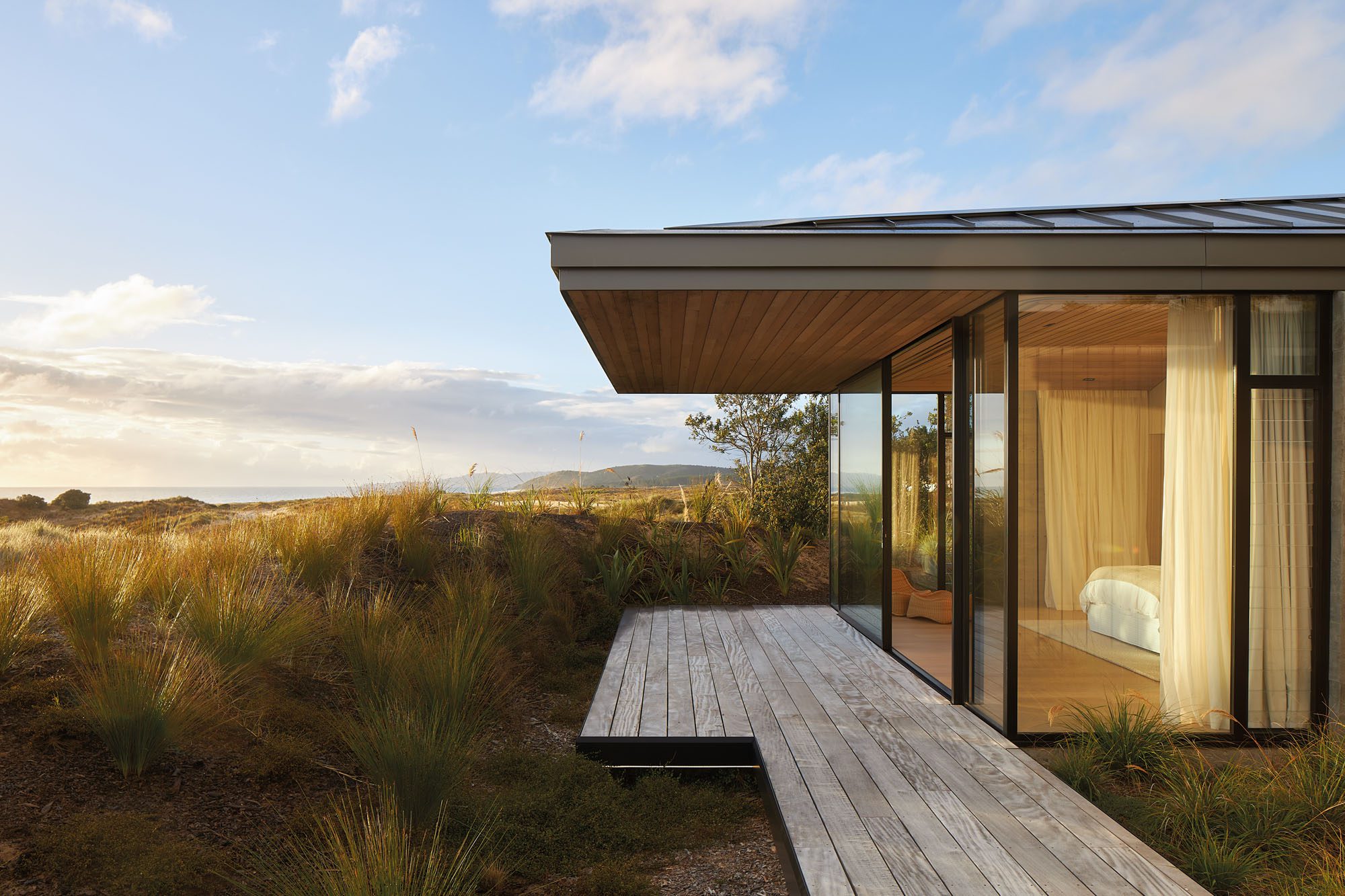
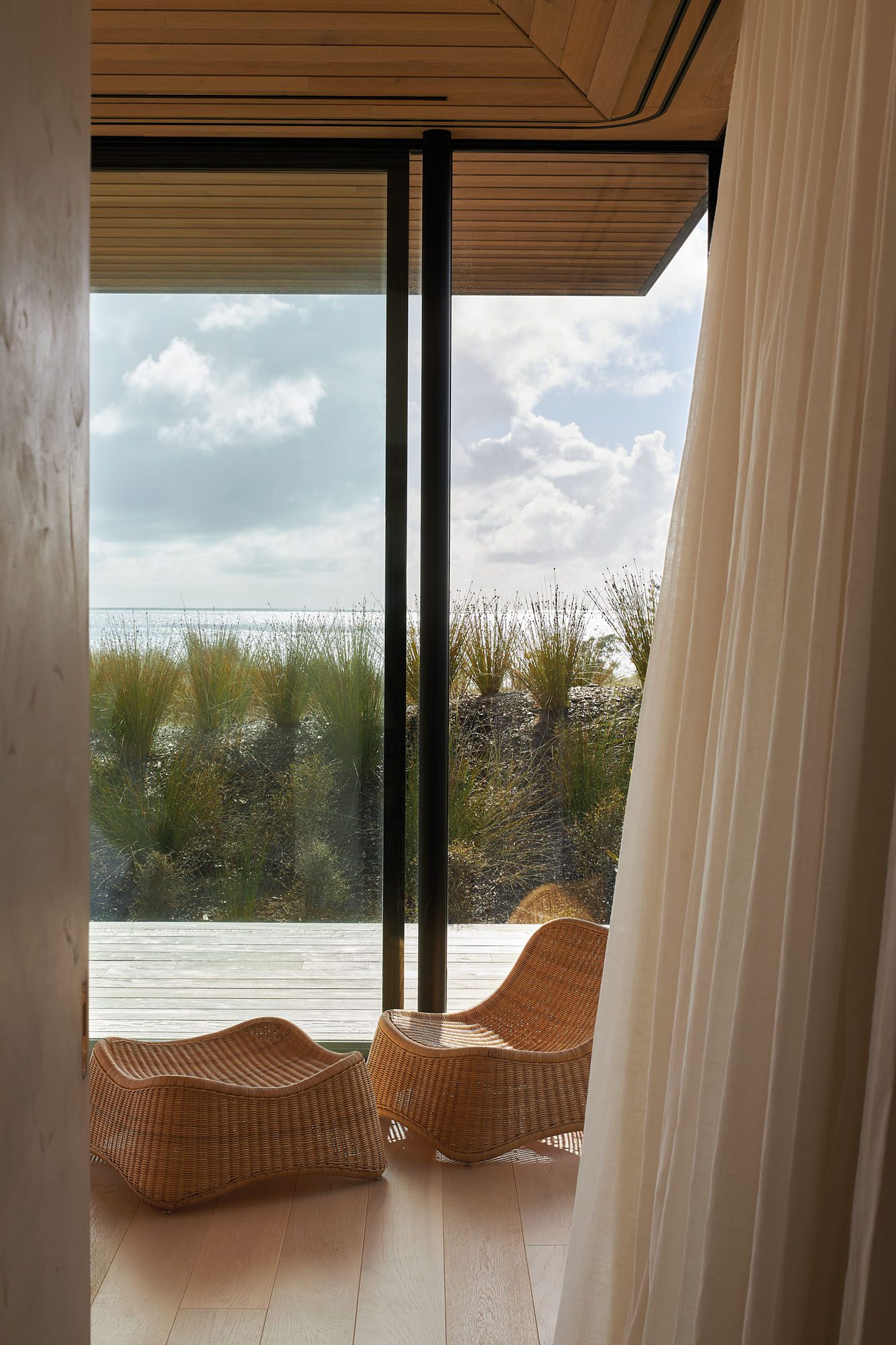
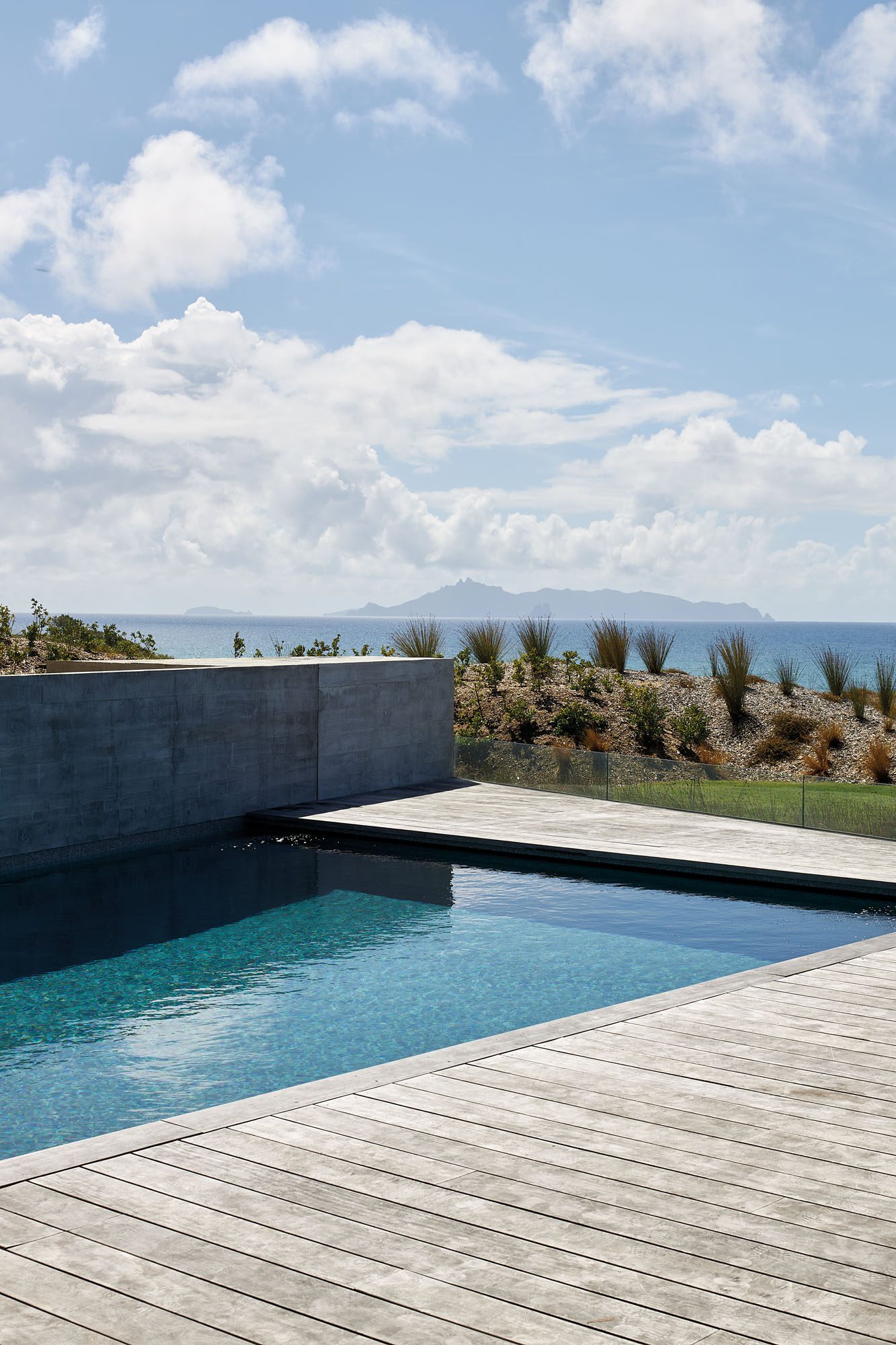
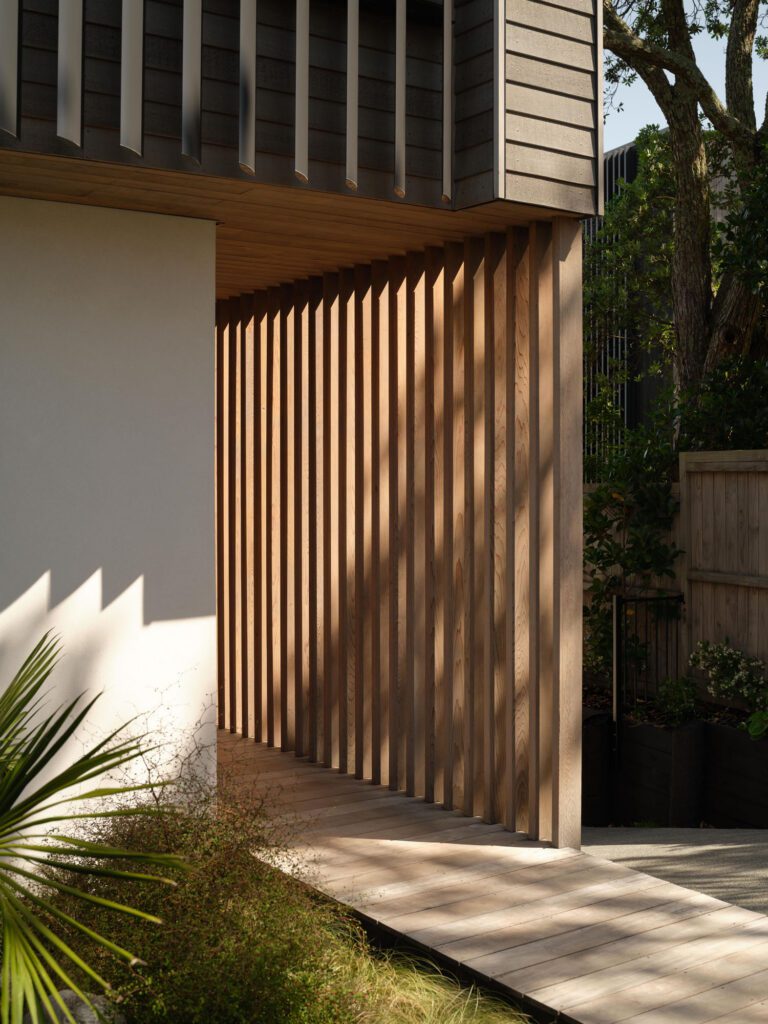
A muted palette of exposed concrete, limestone and bleached oak echoes the sand and driftwood of the coastal setting, while touches of soft brass add warmth and depth to the house's interior.

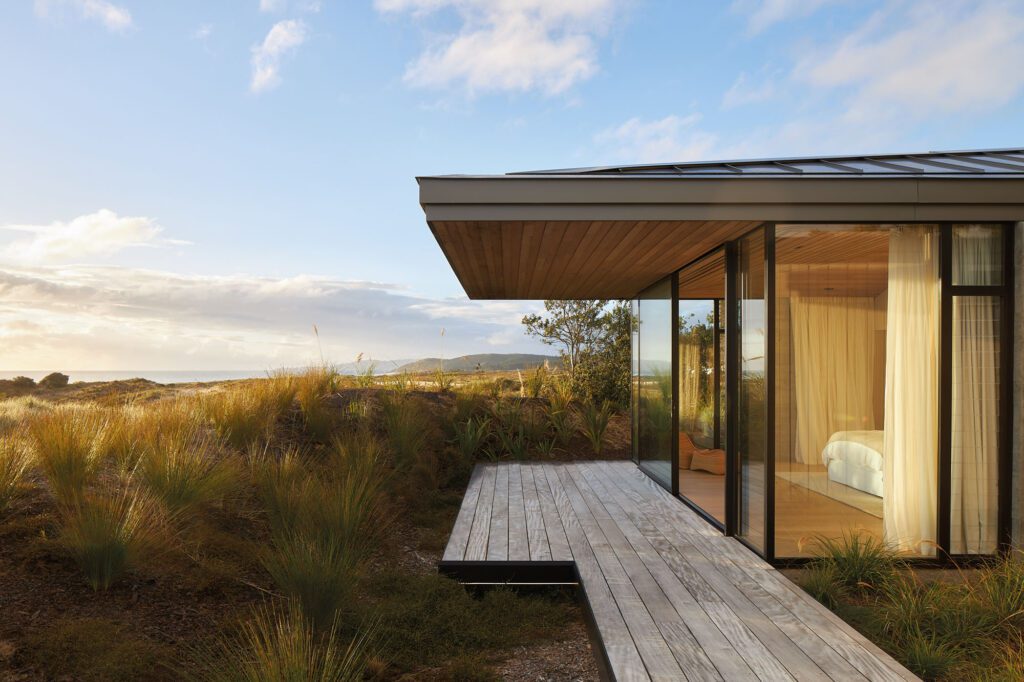
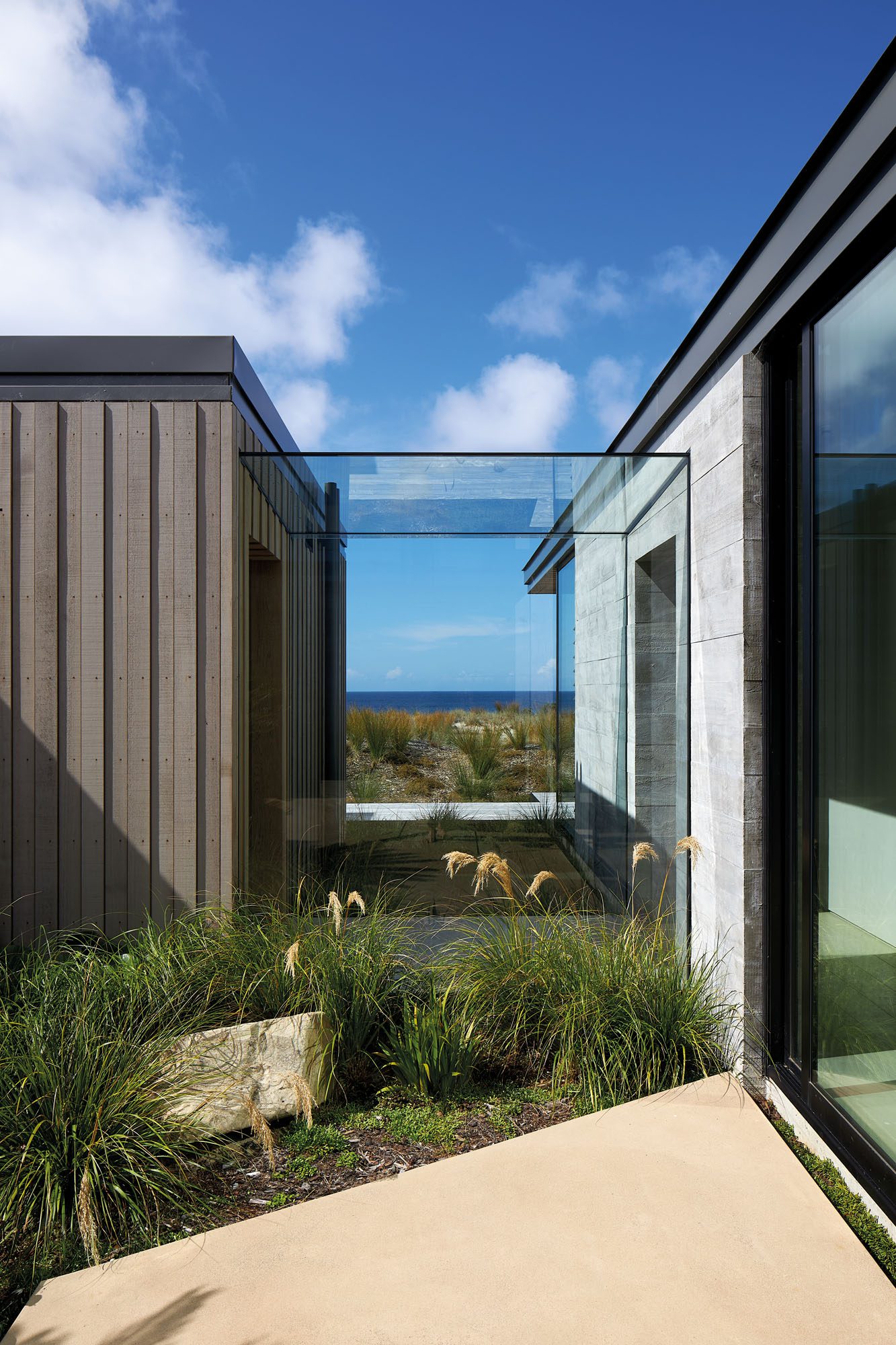
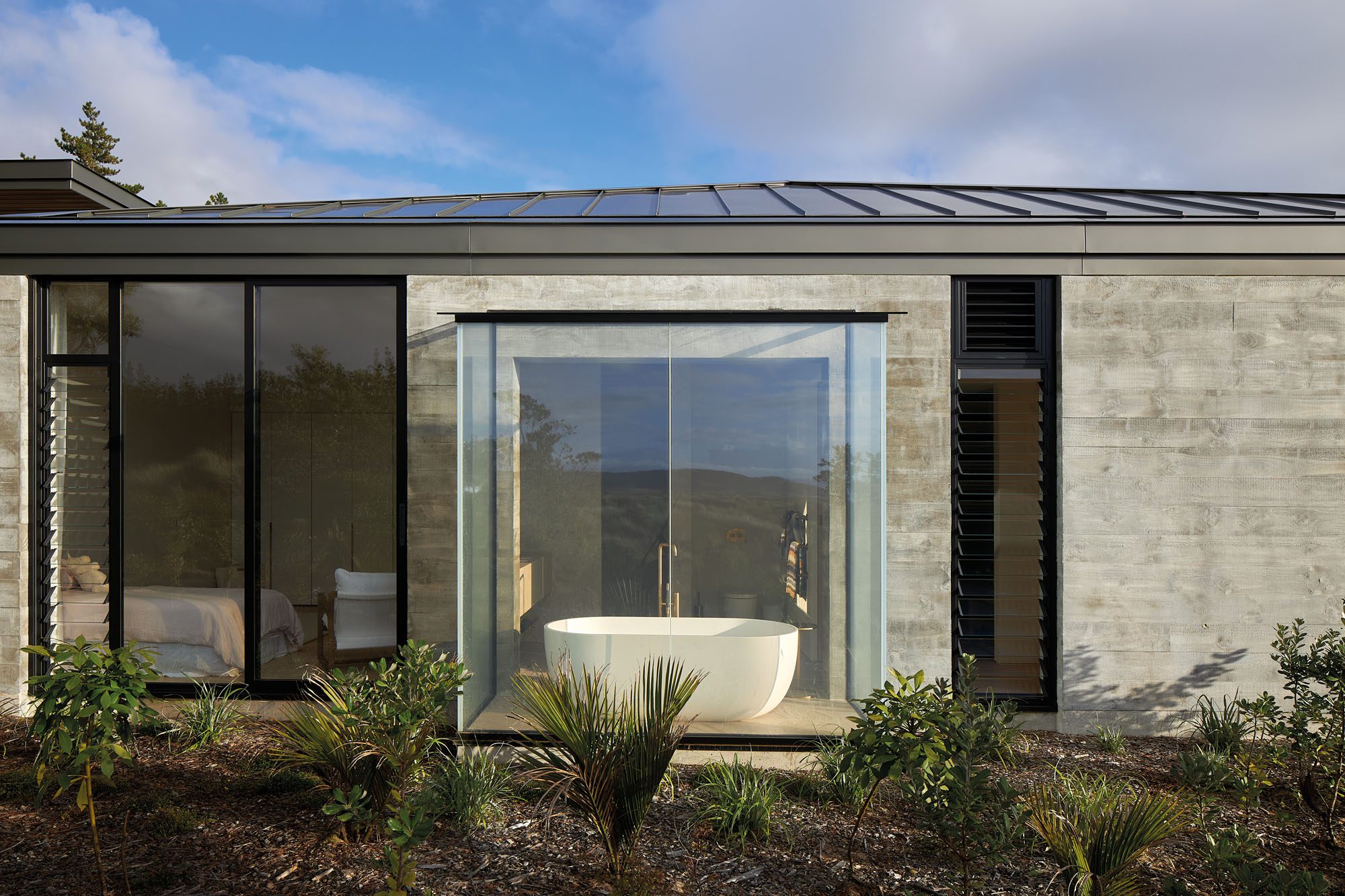
To strengthen this connection with its surroundings, the design embraces transparency. Glazing is abundant, and the links between pavilions take the form of entirely glass-clad tunnels. This is a house that looks out — designed to dissolve its boundaries and immerse itself into the landscape.

Courtyards, terraces and decks wrap around the pavilions. Some are timber-clad; others are lush with toetoe, sago palms, creepers, native tussocks, and boulders, while tall pine trees form a natural screen to the south-west.

Between each of the home's four pavilions is a series of terraces, decks and courtyards. They have been maximised to take in views of the sea, pool and landscaping (by Xanthe White Design).

At its heart, this house is about connection: between its inhabitants, with many nooks and enclaves to retreat to; between its architectural forms, where pavilions overlap in expressive geometries; and between its main materials — concrete, timber and glass — brought together with precise, crafted detail. Each element joins the next with intention: sliding into concealed pockets, interacting in ways that highlight their contrasts and create something new in their union.

A muted palette of exposed concrete, limestone and bleached oak echoes the sand and driftwood of the coastal setting, while touches of soft brass add warmth and depth to the house’s interior. Roofs are clad in wide-profile, pre-coated aluminium in a schist tone. Above the main courtyard, a triangular canopy clad in artificial turf — complete with a circular lightwell — playfully resembles a golf course.

From the bunker-like arrival sequence to the more expansive, sea-facing areas at the rear, this house offers a myriad of experiences that flow from privacy to openness, all while ensuring curated connections with the inspiring nature that surrounds it.
Words: Federico Monsalve
Images: Simon DevittWilson

This feature first appeared in Homes of this Decade 2015-2025, which was published by Nook Publishing in 2025.

Latest video features

In the Coromandel, a home with a humble profile and a thoughtful design makes the most of a stunning location.

Built with awe-inspiring attention to detail, this Arrowtown home is a fresh interpretation of a familiar Otago rural vernacular.

This sculptural Northland bach is a perfect north arrow on a remote farm high above the sea.

With the sun on its bow and the community at its stern, this is a house in which the elements are always front of mind.

Trending articles

Arts and Books

An Exhibition of Chinese Contemporary Art

An exhibition of Chinese contemporary art arrives in Auckland, tracing decades of cultural transformation through works that span performance, installation and digital media.
Design News

Lasting Grain

Set into a suburban site in Kohimarama, Clay Block House by Daniel Marshall Architects is a study in materiality and environmental performance.

Arts and Books

Introducing Architecture Aotearoa

A new architecture magazine, Architecture Aotearoa: New Zealand’s Buildings, Cities, and Culture will launch in late May 2026 as a collaboration between Te Kāhui Whaihanga