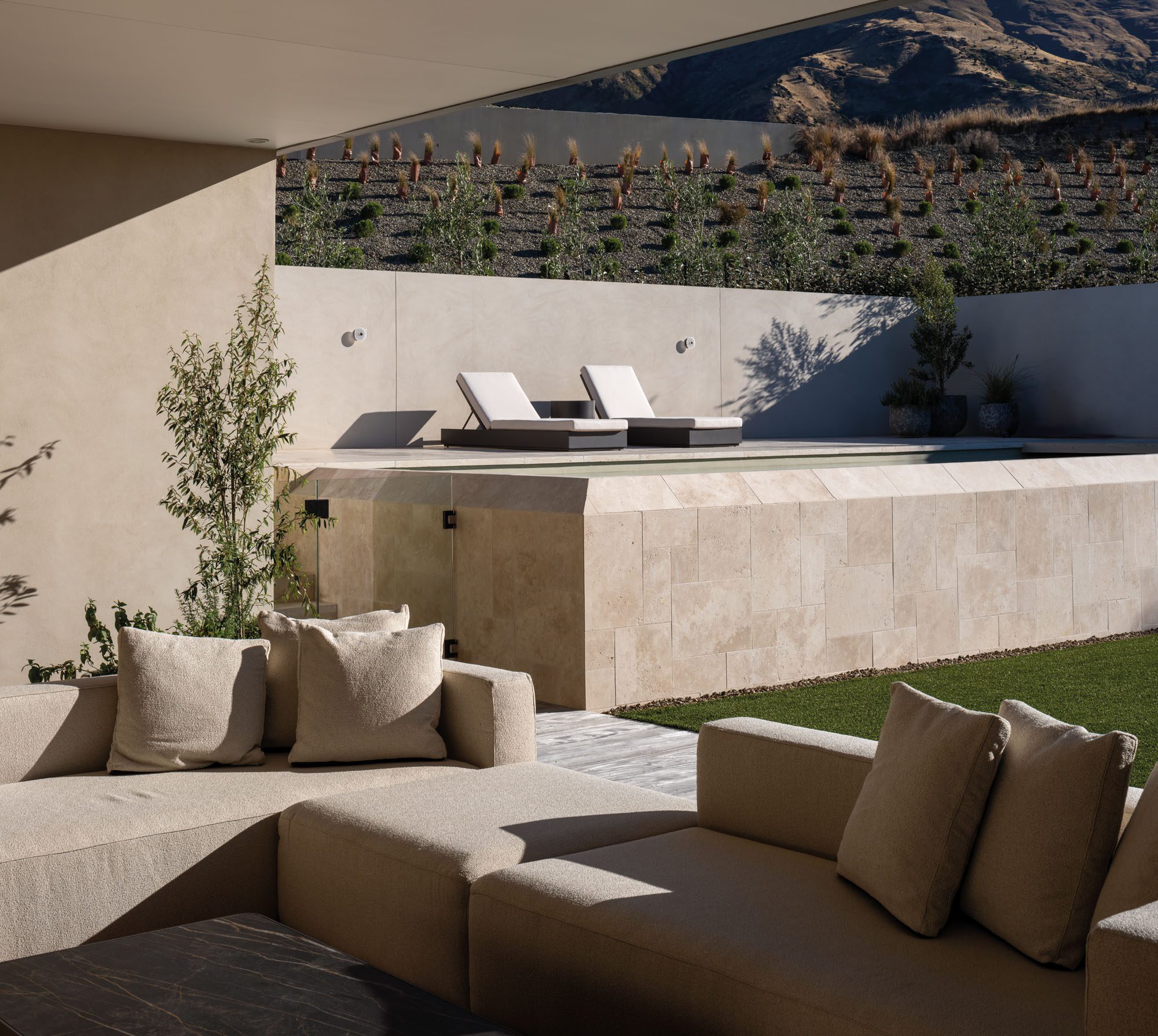
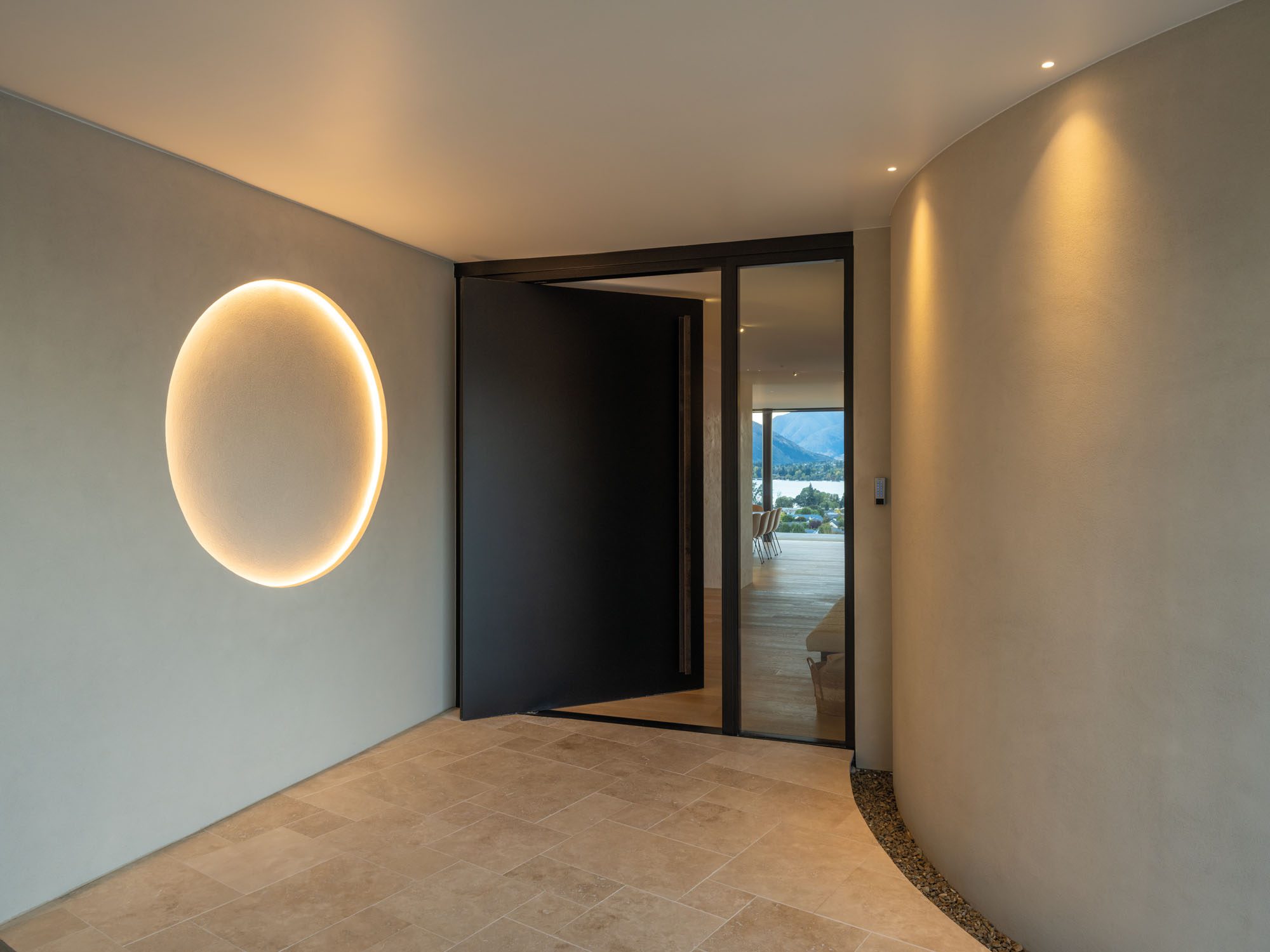


A low-slung, linear form recessed into the foothills of the Southern Alps. Crisp detailing and deep overhangs. Warm and earthen materials. A semi-subterranean minor dwelling, and a family home that creates a strong and almost symbiotic relationship with the alpine landscape.
Set in the Wānaka foothills just south-west of the main town, this site was one of the first developed in a recently released semi-rural subdivision. From here, the valley falls away to the north; the Southern Alps rise — dominant and elemental. A north-facing site, southern access, and an elevated perch above neighbouring lots created an enviable alignment of circumstance and orientation.
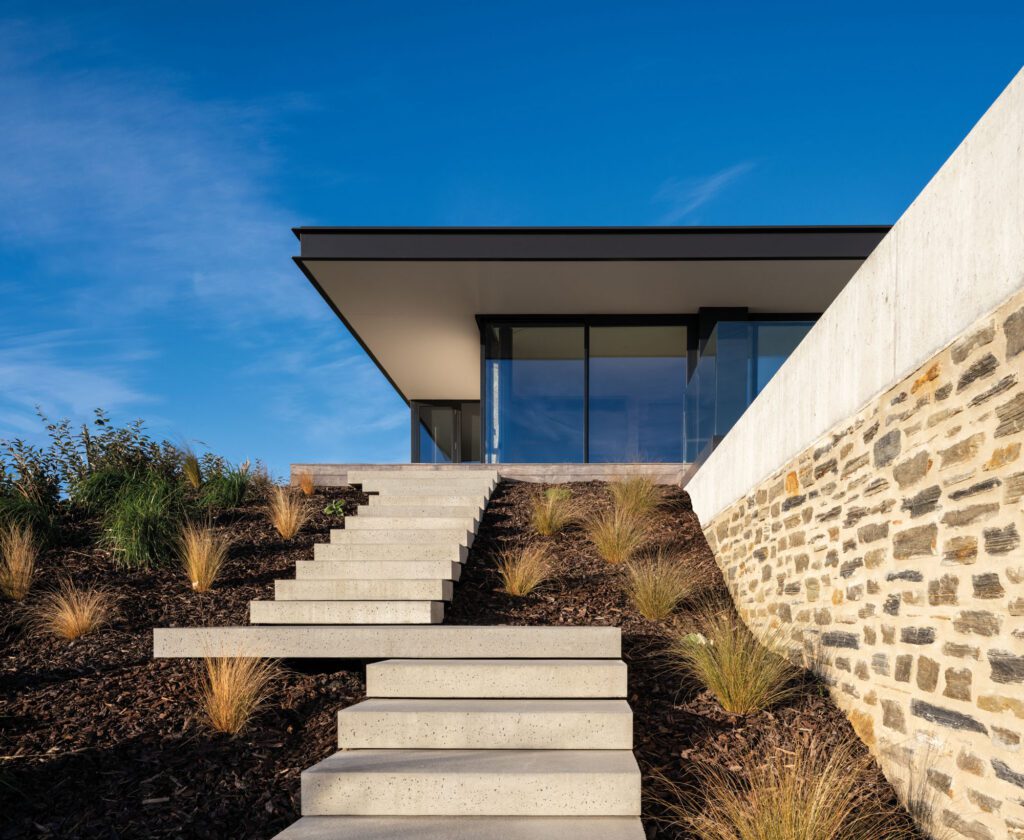
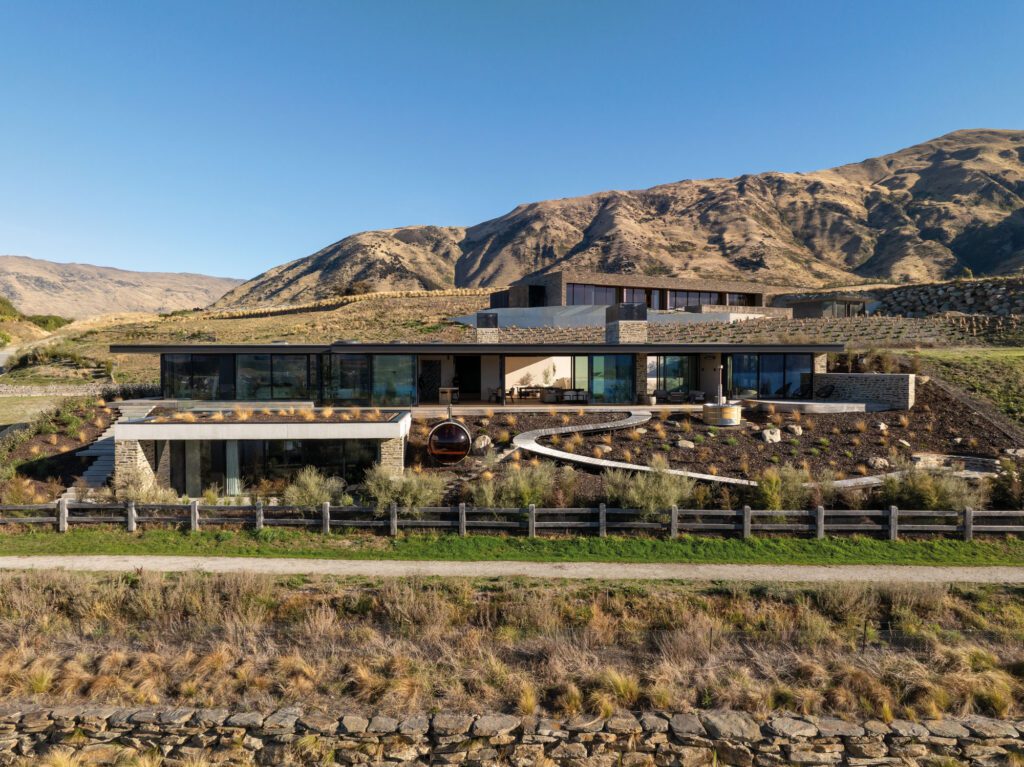
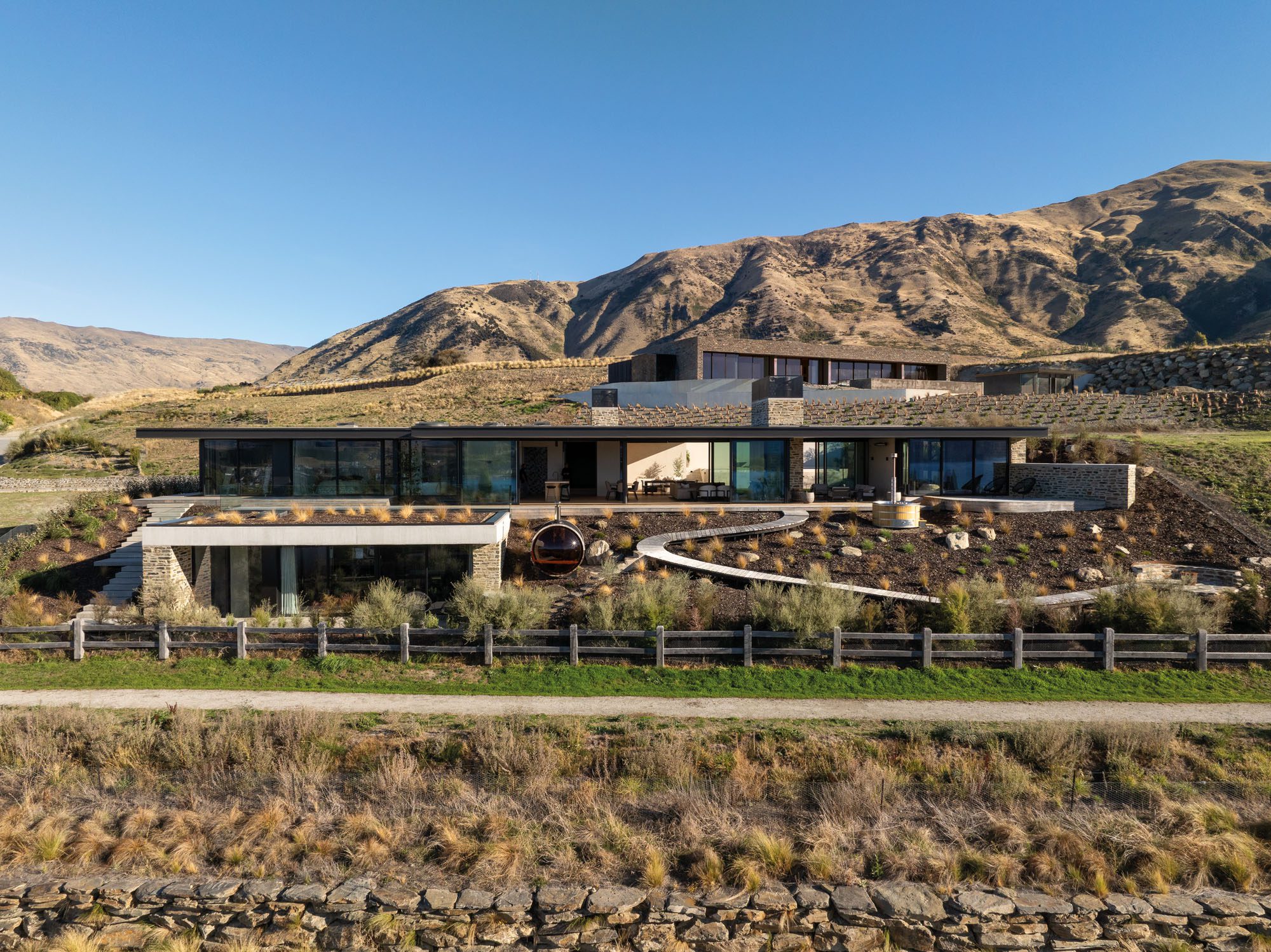
The steeply contoured terrain, with its long, narrow, terraced building platform, lent itself to a low-lying, horizontal design — a form bedded gently into a landscape of native shrubbery and dry grasses.
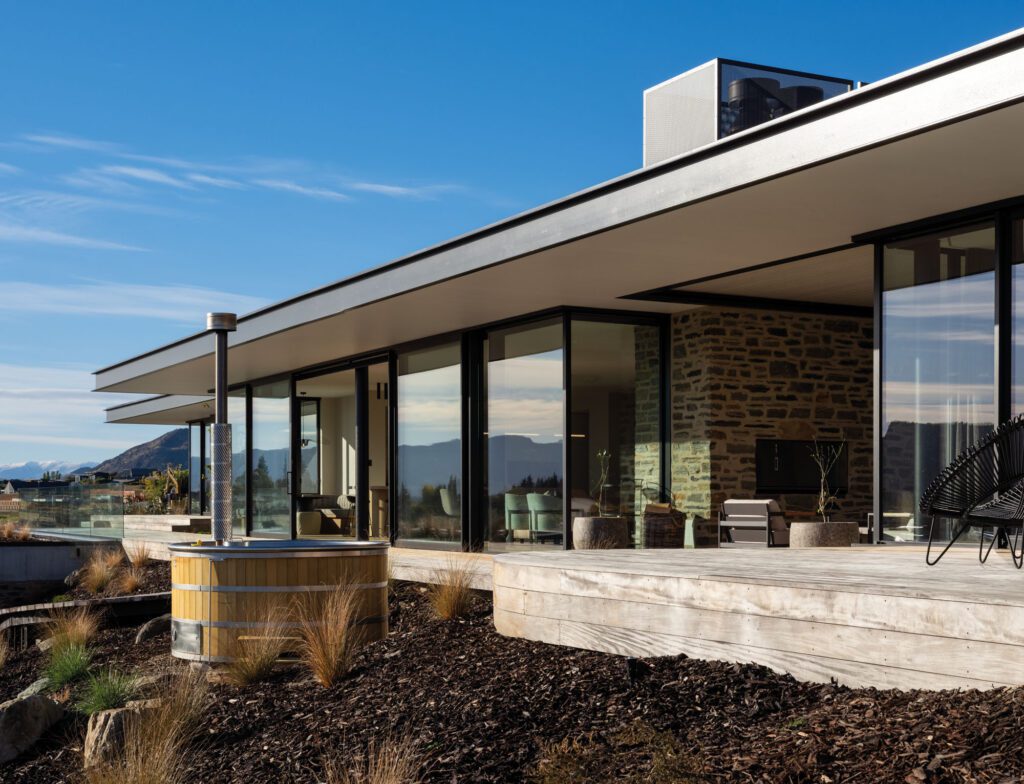
Johnston Architects responded with clarity — conceiving a building that would dissolve into its setting; a series of grounded planes stretched across the contours. “The horizontality parallels the topography and reinforces the intent for the building to disappear into the land,” explains architect Regan Johnston.
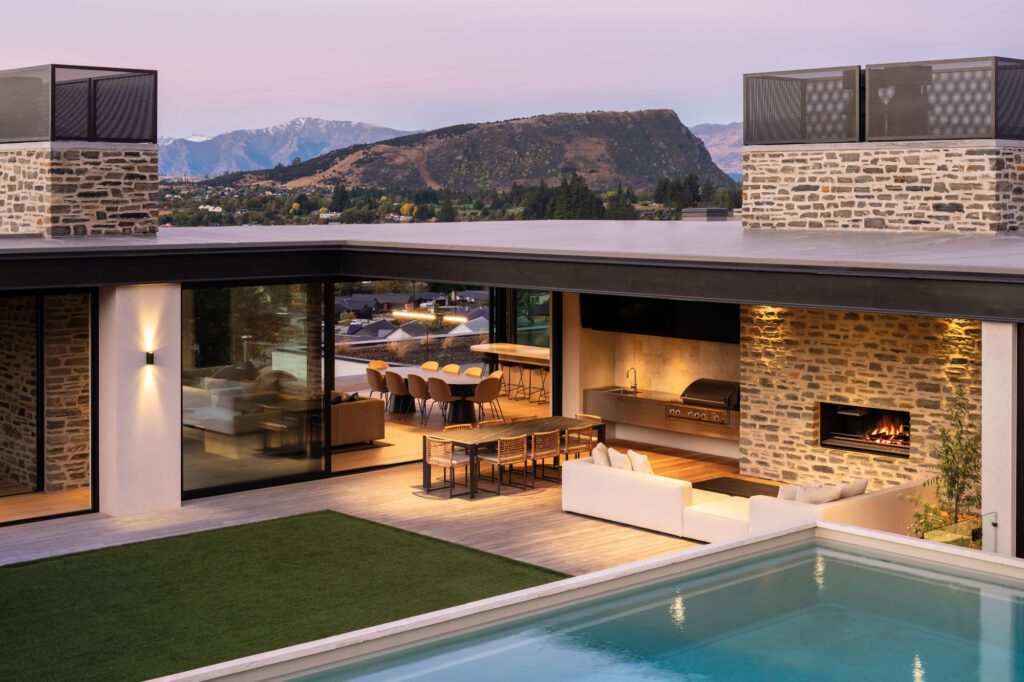
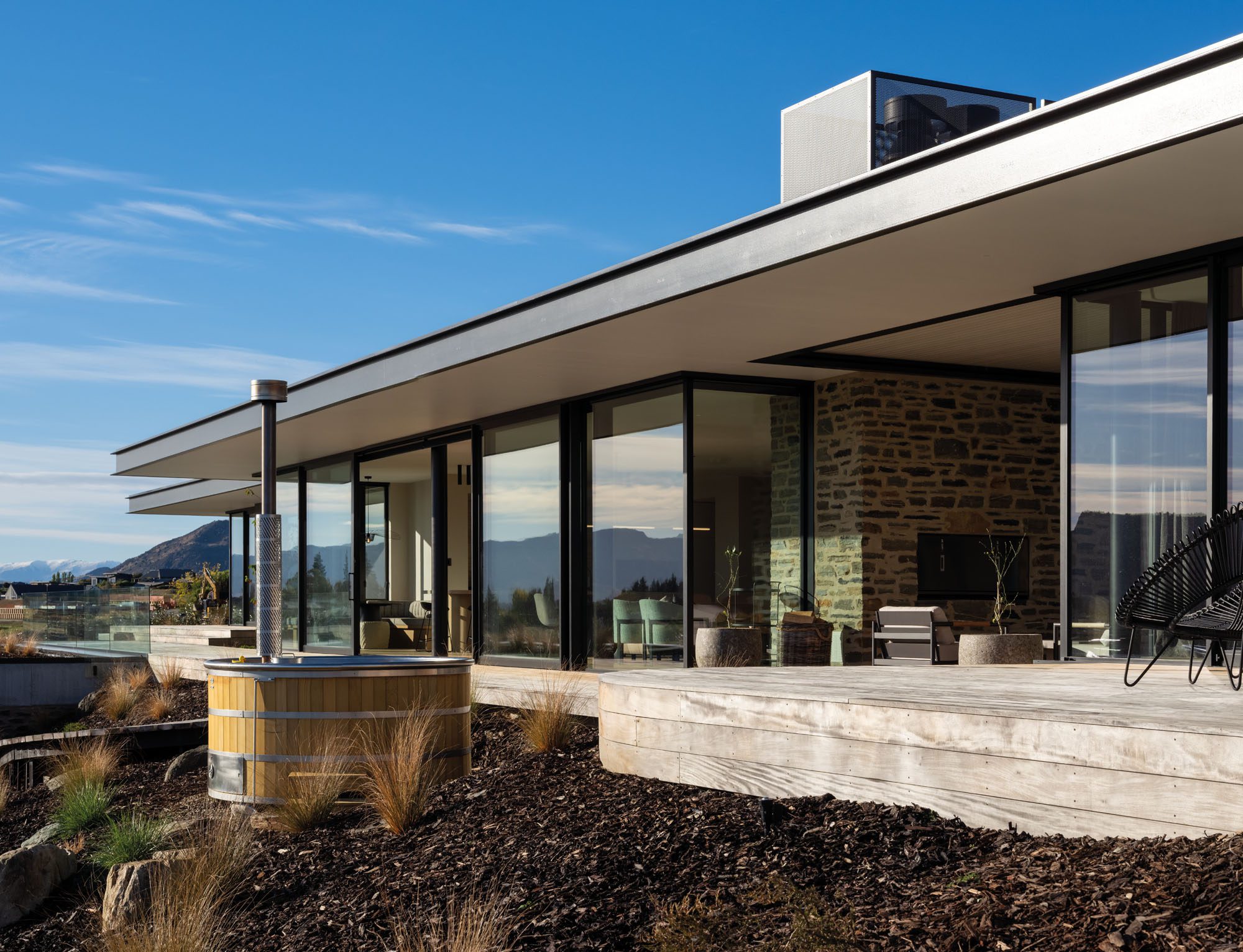
A fine-steel roof appears to hover; stone chimneys rise at intervals, anchoring the form to place. A pedestrian boardwalk meanders past the bunker — a partially subterranean studio and guest suite — connecting the landscaping with the main home.
“The bunker is embedded in the sloping site, with a green roof that folds it into the land,” Regan says. “A curvilinear retaining wall, lower seating area and meandering boardwalk contrast [with] the home’s rectilinear geometry, introducing a sculptural softness to the overall composition.”
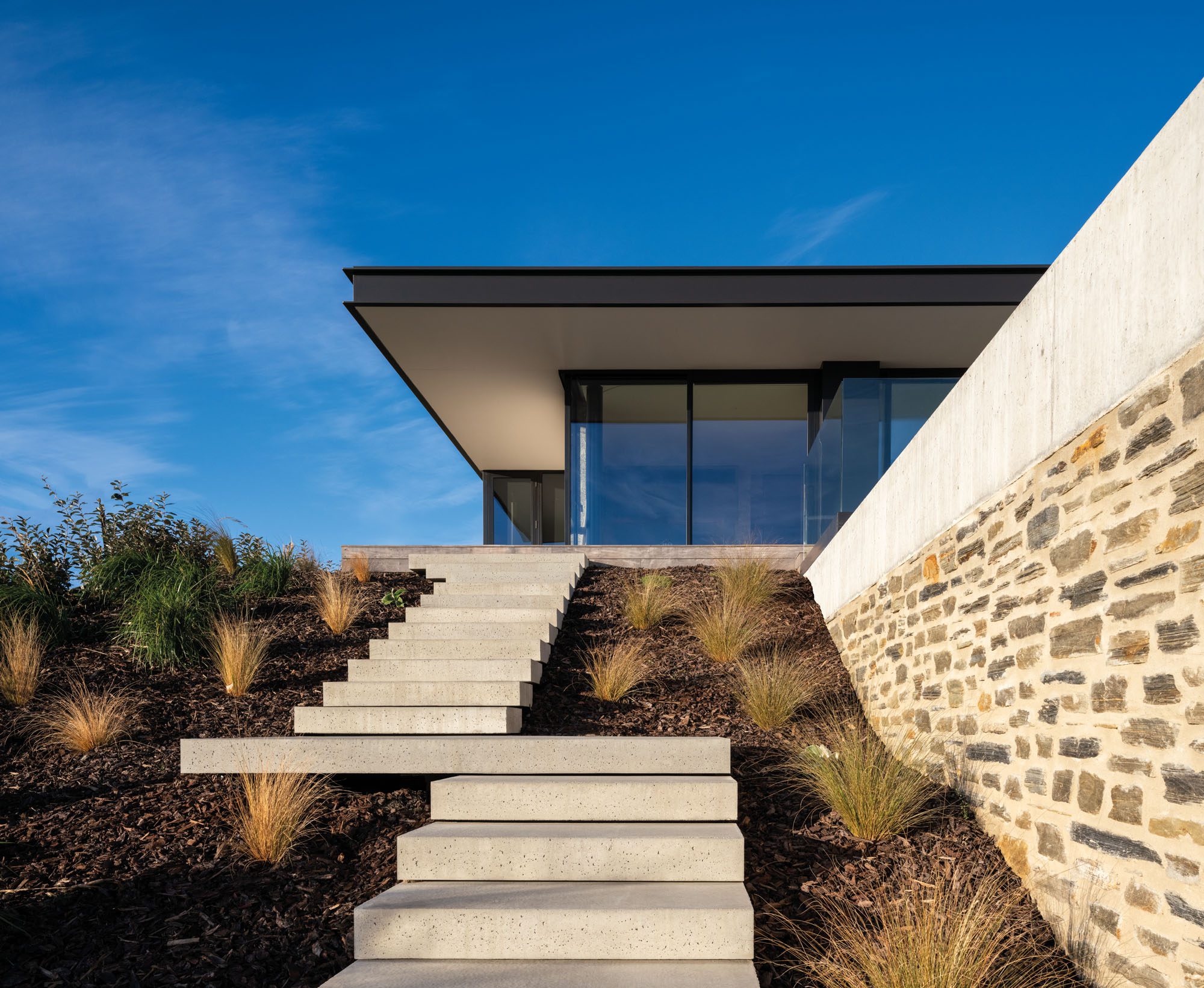
Internally, the bunker is accessed via a stair and long underground passageway — a feature that creates a sense of drama in the spatial transition from dark to light. Inside, it is airy and calm — a retreat set into the hills.
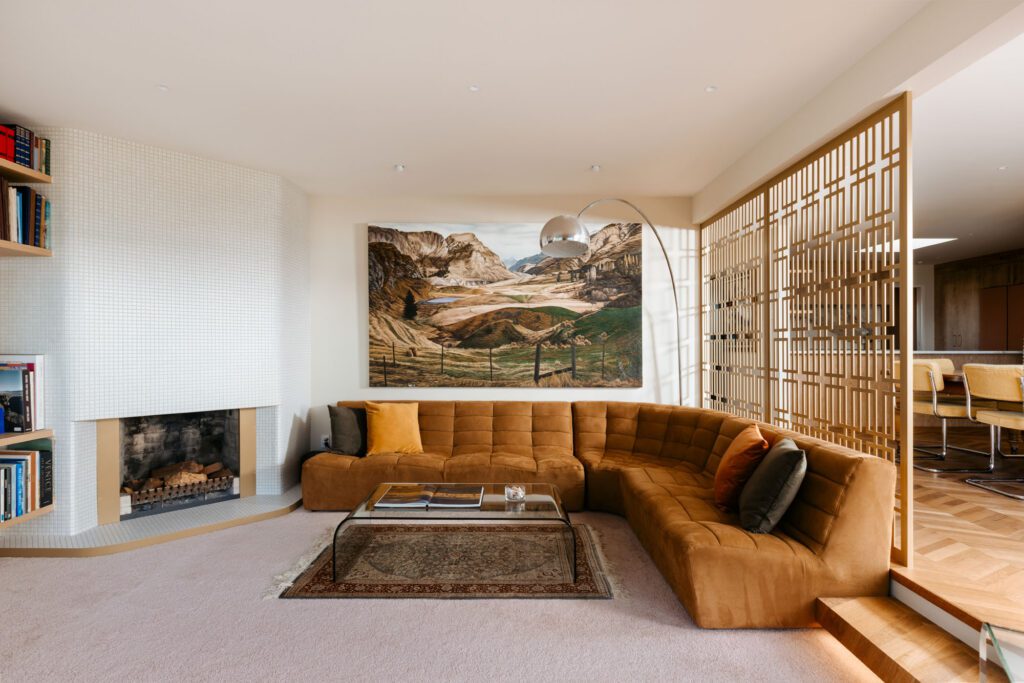
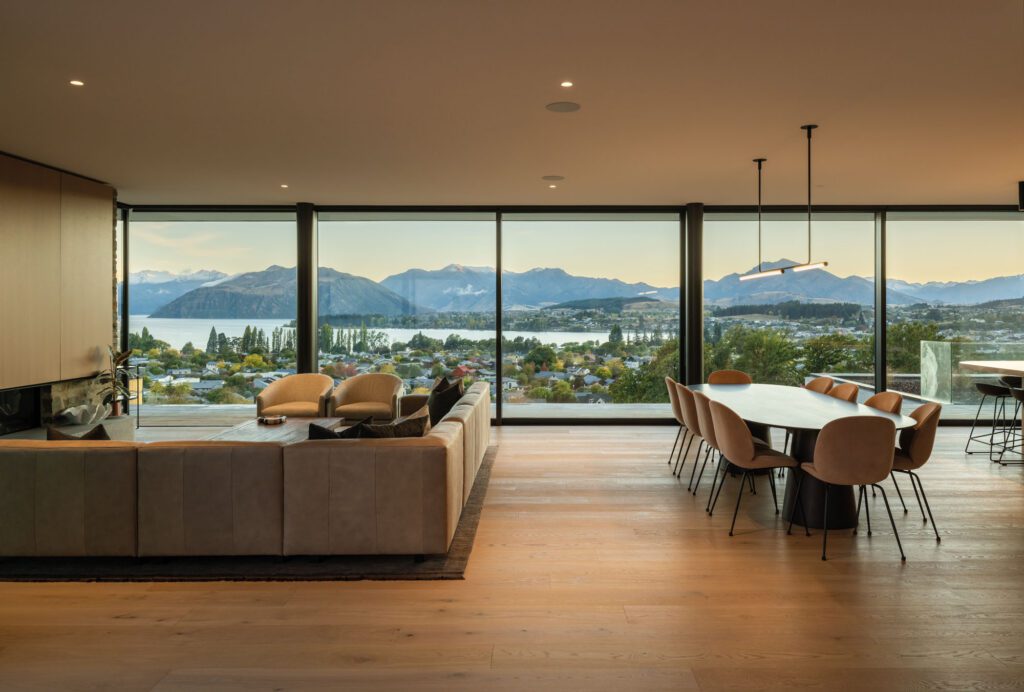
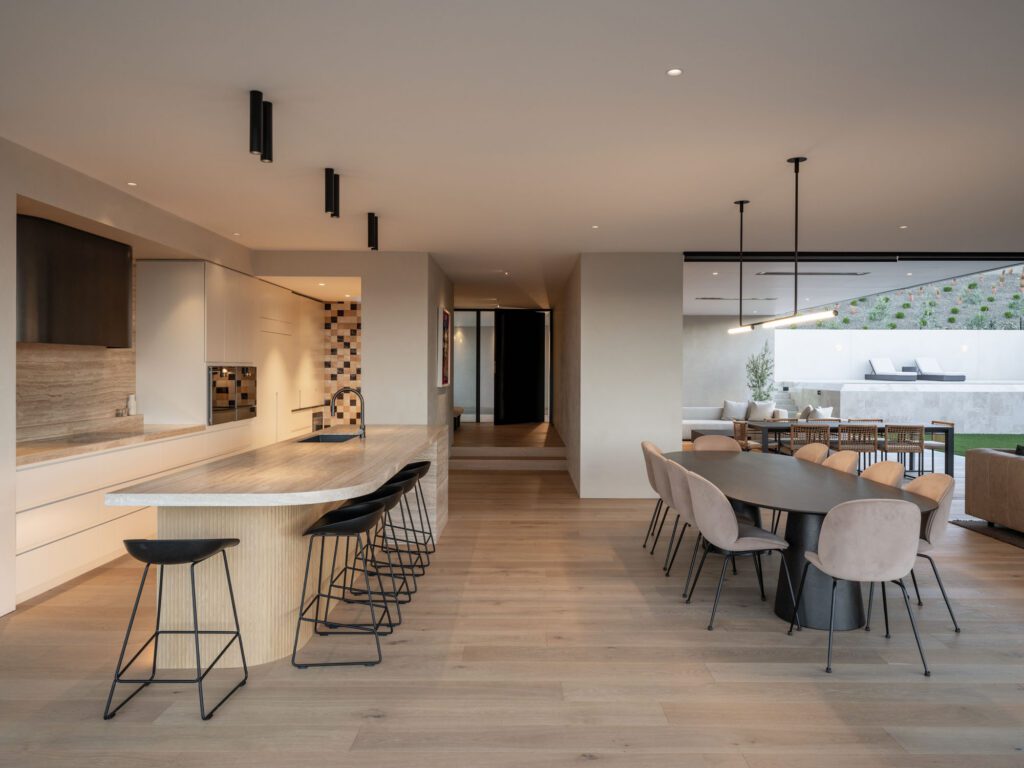
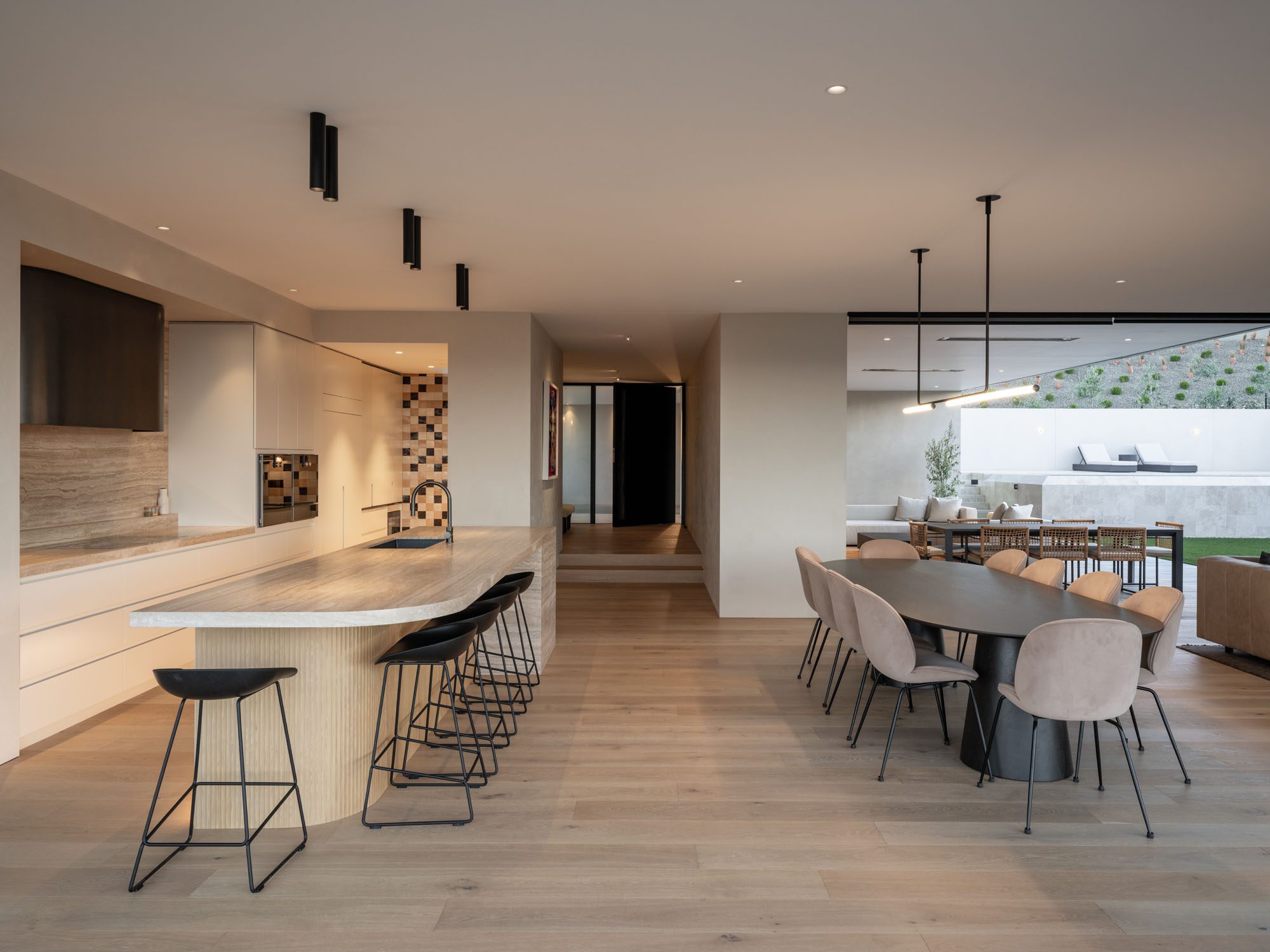
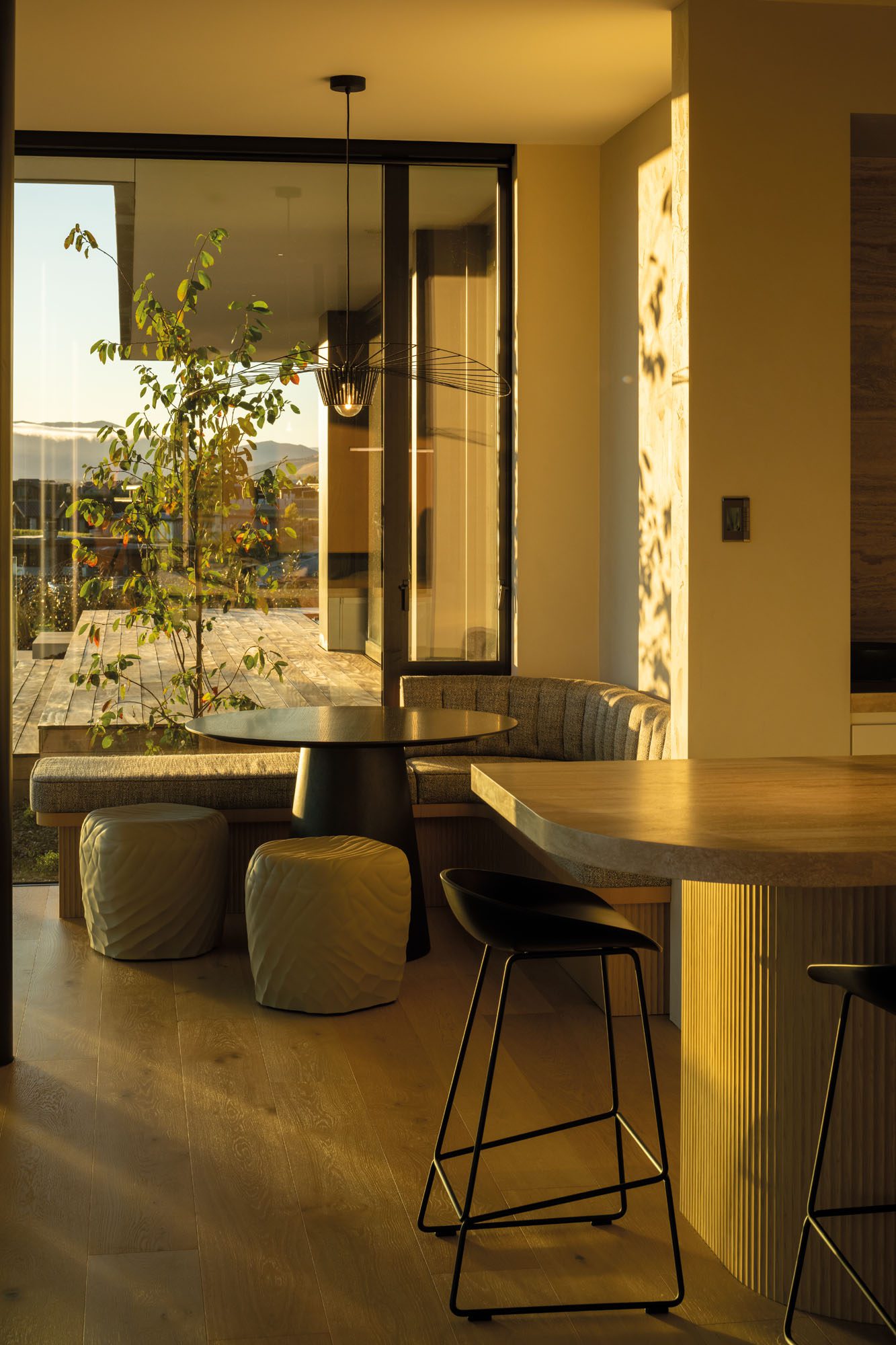
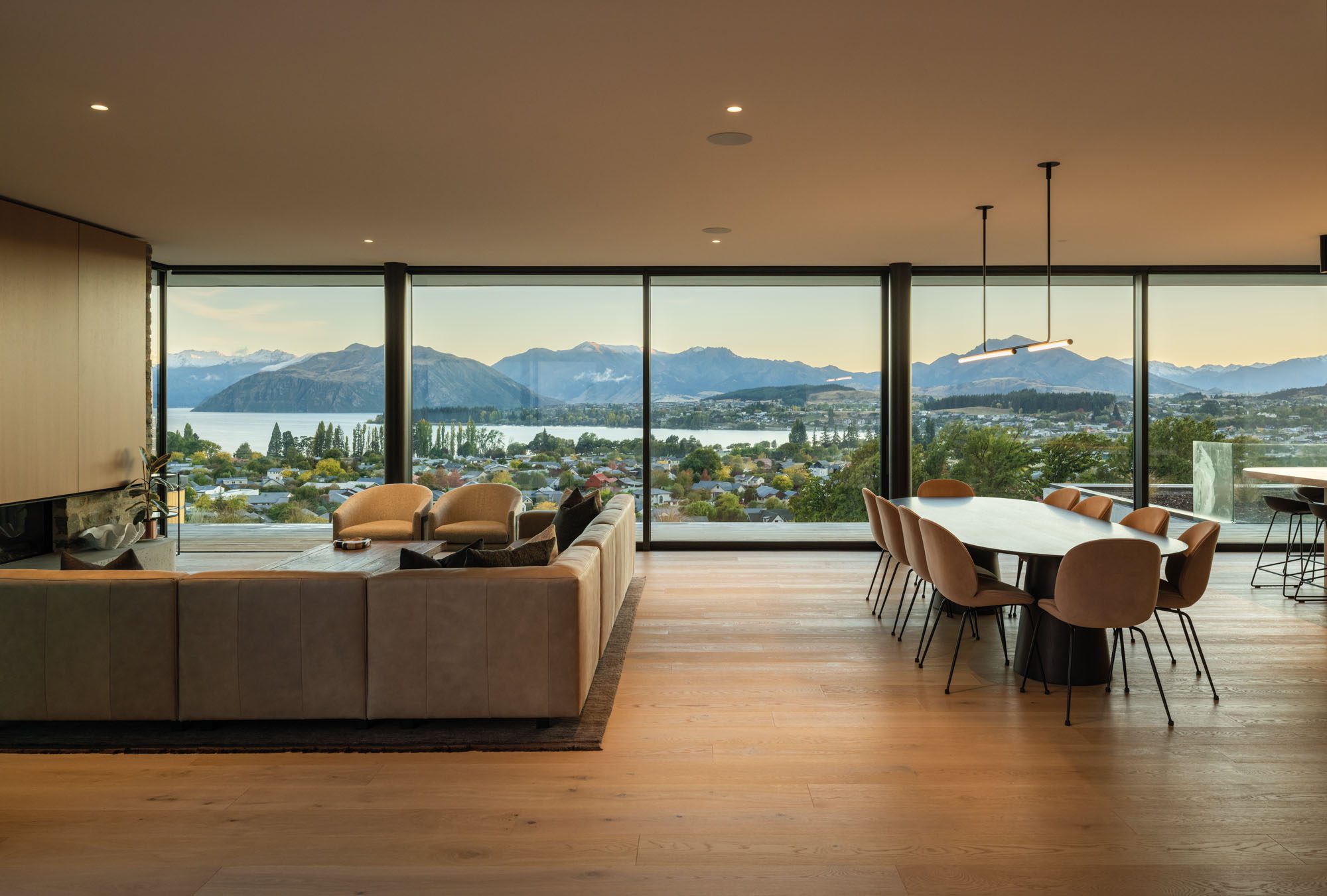
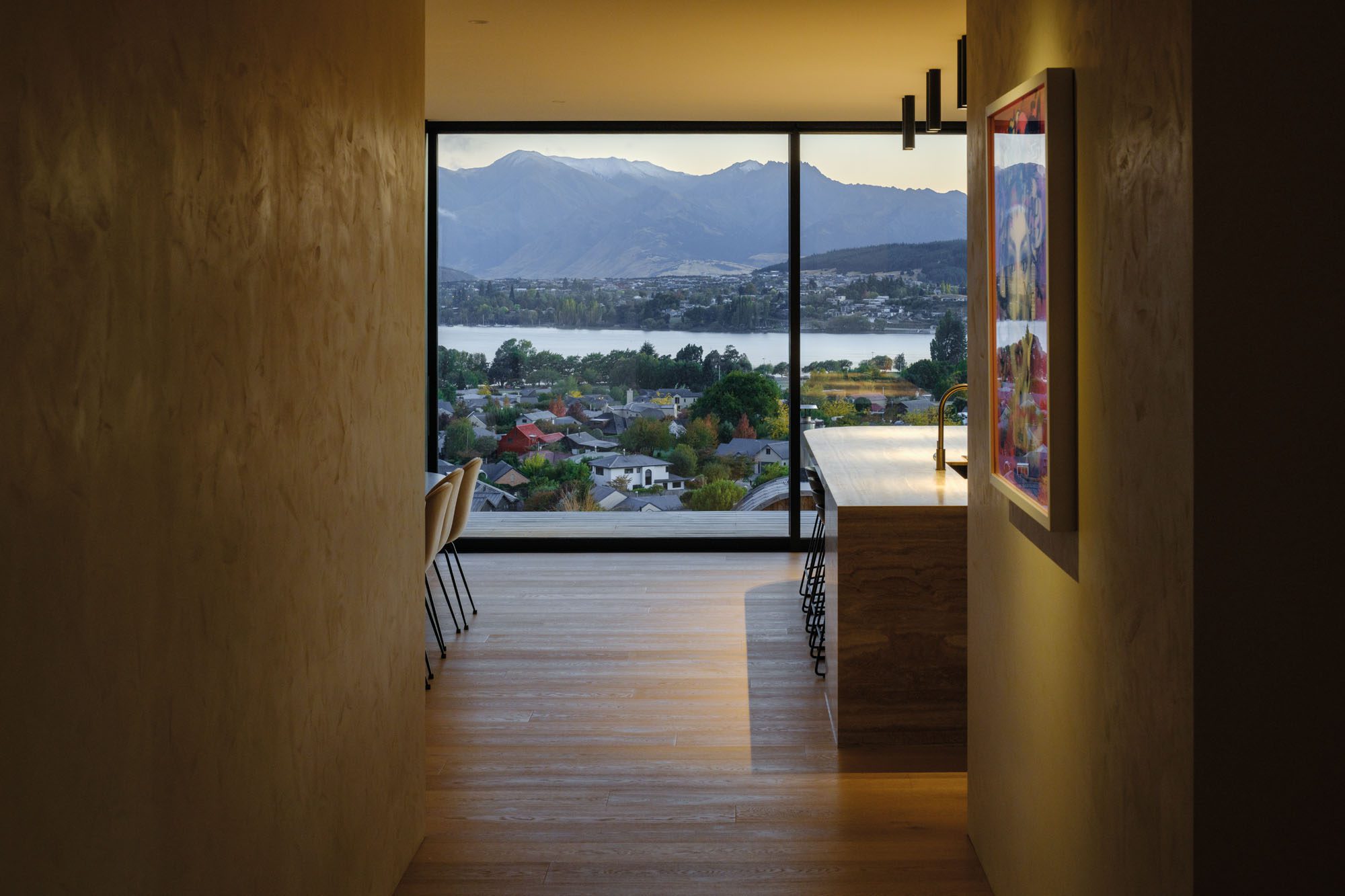
In the main dwelling, the central spine unfolds into the kitchen, dining and living areas, each opening to overlook the lake. Expansive glazing renders the dramatic alpine landscape ever present; light floods deep into the interior. Deep eaves and overhangs provide shade in summer and shelter in winter, perfectly calibrated to the region’s climatic extremes.
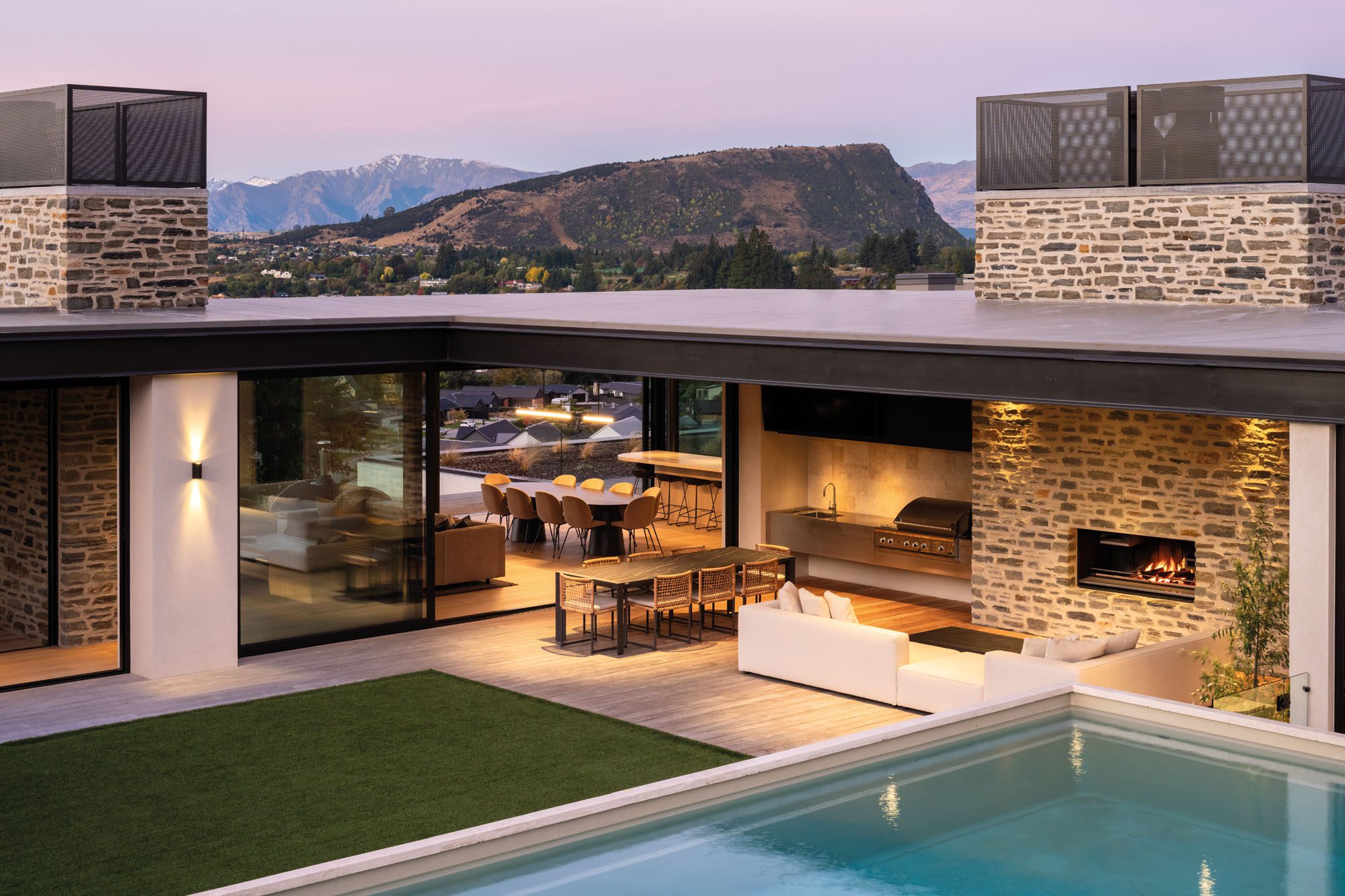
Bedrooms are gathered into a private eastern wing, while a media room — slightly elevated — is acoustically separated from quieter spaces by a covered outdoor room. At the centre, a sheltered courtyard, sun-drenched by day and warmed by fire at night, offers an additional living space and a moment of reprieve from the elements, while retaining the views beyond.
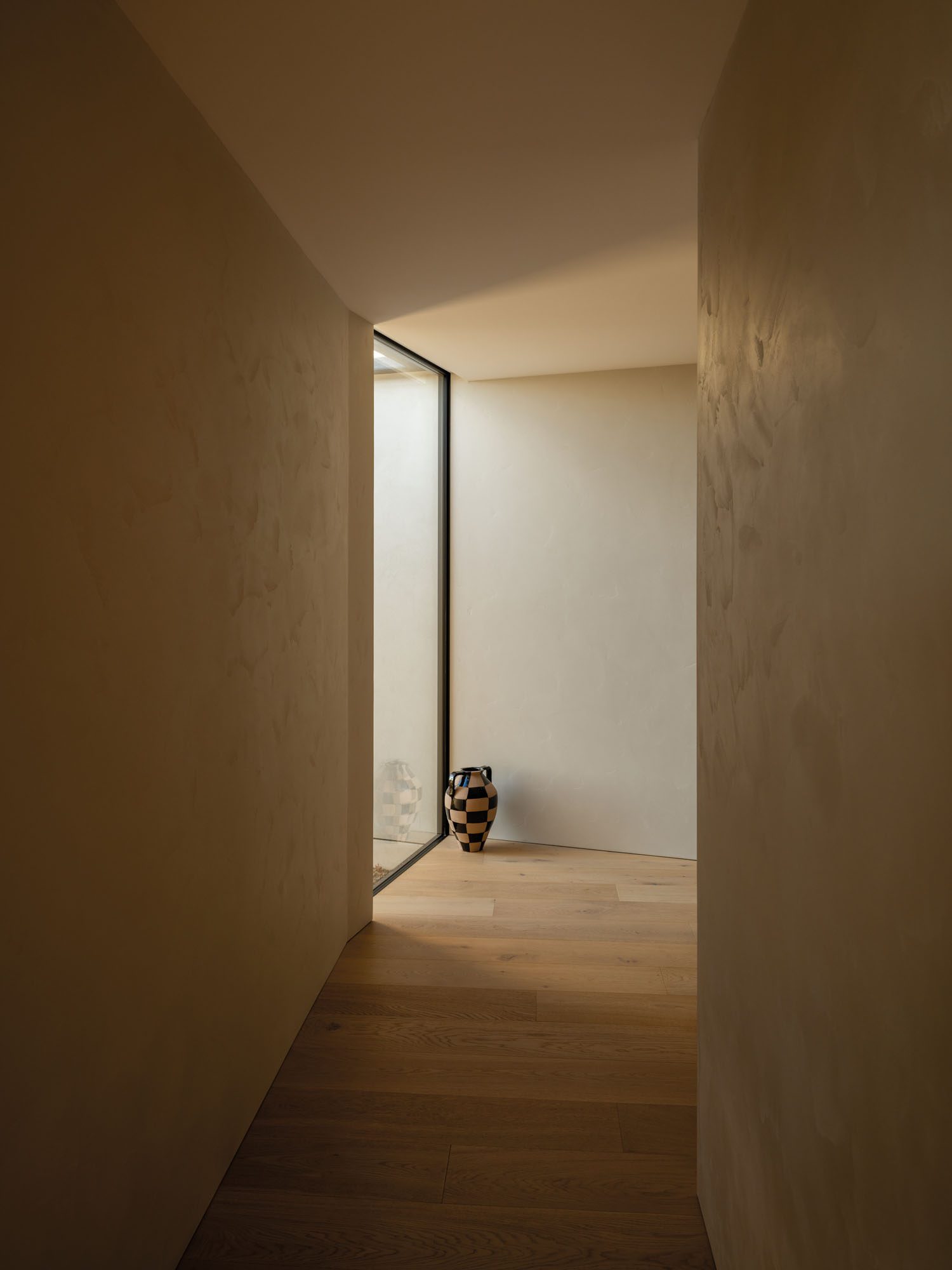
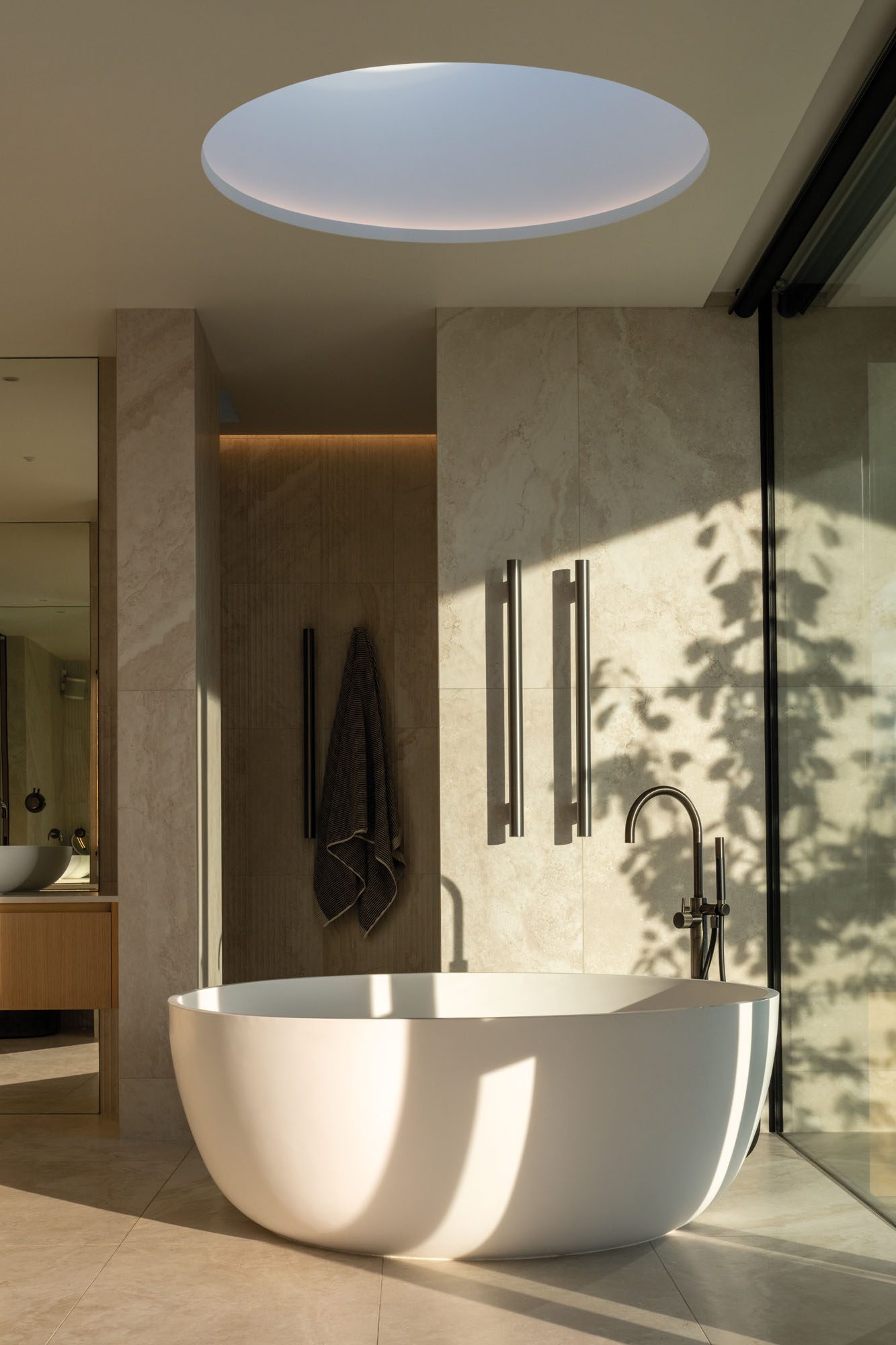
Throughout, it is the dialogue between light and material that speaks to the soul of this home. Textured plaster walls catch the light; skylights bounce it, articulating soft, organic shadows. The result is timeless, modern — a home equally responsive to its occupants and to the land it inhabits.
Words: Clare Chapman
Images: Simon Devitt
This feature first appeared in Homes of this Decade 2015-2025, which was published by Nook Publishing in 2025.