


Home of the Year 2026: Eastbourne House

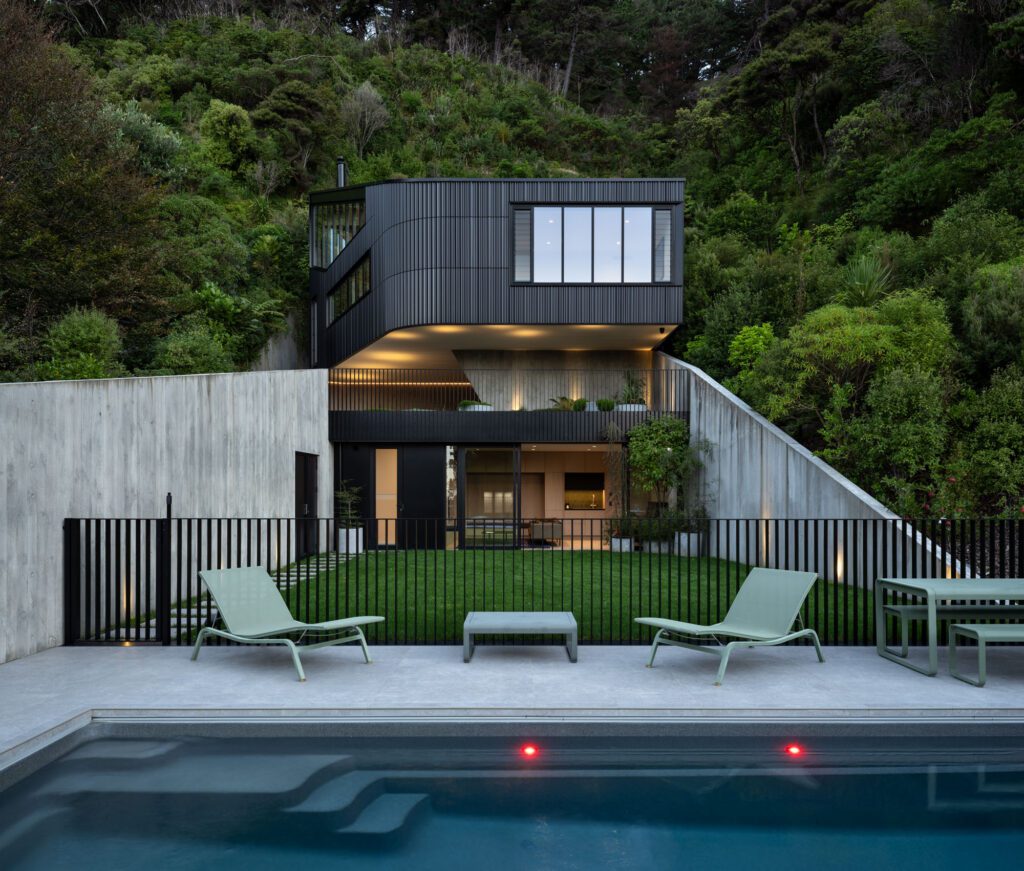
Wedged into a cliffside beside the wild harbour of Wellington’s Eastern Bays, this year’s Home of the Year winner by Stevens Lawson Architects is a masterly object full of sculpture and craftsmanship, grandeur and human scale.

The curvature of the beach mimics the thin road that connects Wellington’s CBD to the Eastern Bays and their corresponding suburbs. It is not unusual for this path — less than one metre above the high-tide mark in some places — to be battered and temporarily flooded, while the nearby hills push human occupation as close to the edge as possible. 

It’s a sort of battle between the dense bush, up from its vantage point of imposing hills, and the ocean, with human structures seemingly hanging on for dear life.

“I love traditional Wellington architecture where you have these very difficult sites, which means you have to do something quite unusual,” says architect Nicholas Stevens, of the Gold Medal–winning firm Stevens Lawson Architects (SLA). “It seems like an opportunity rather than a problem.”

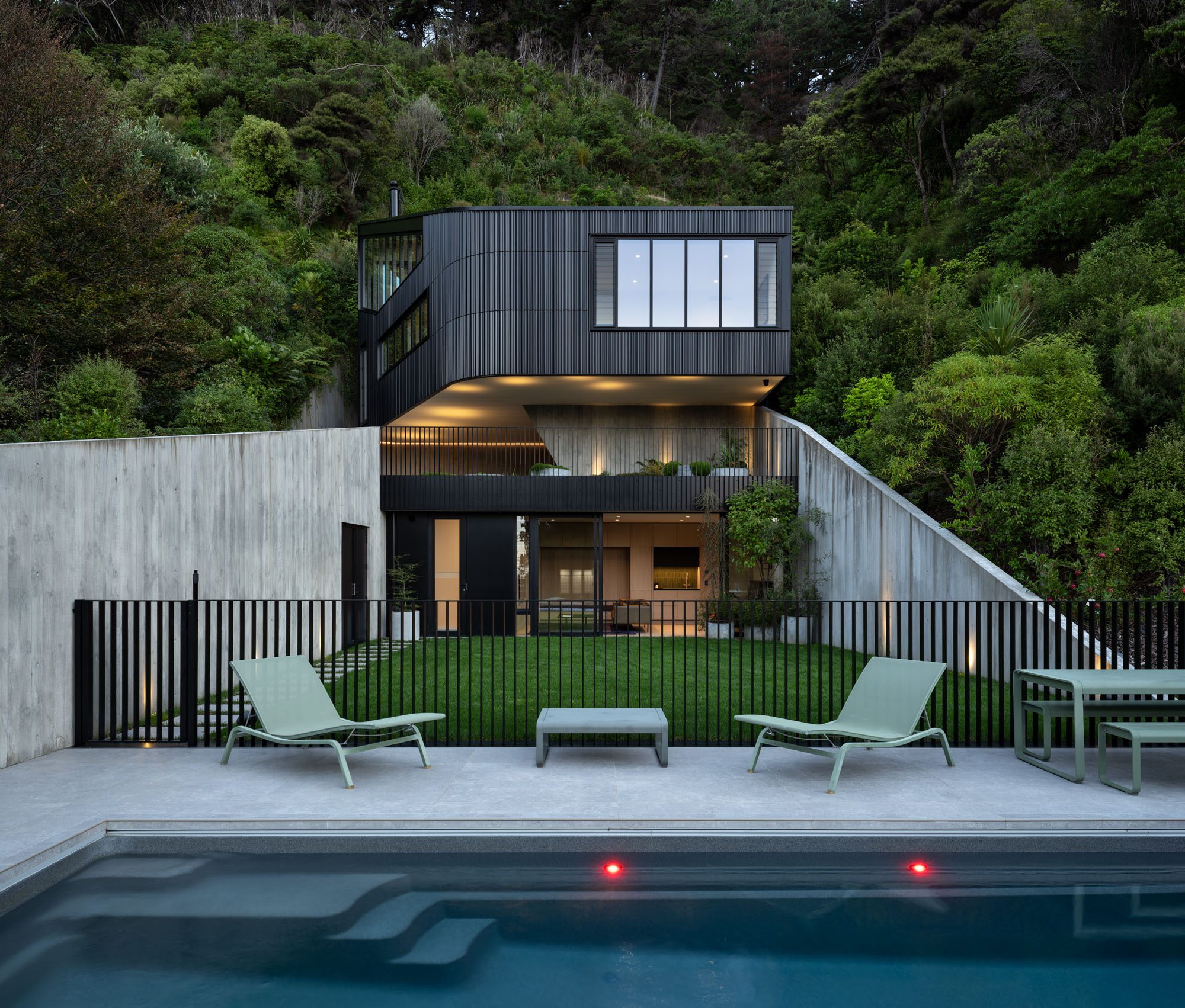
The Eastbourne House spreads across five levels and a garage. The lawn and swimming pool area are dug into the site and enclosed by retaining walls. Alize sunloungers and a Bellevie dining table, benches, and low table, all by Fermob from Jardin, add contemporary lines and a touch of colour to the poolscape.

In Wellington, that attitude has deep roots. Ian Athfield’s ghost is always present around these parts: Logan House — with its silo-like towers, rounded walls, slit windows, and multiple split levels to suit its hillside location — is only a few hundred metres from this site, while others of his authorship loom quietly within the steep underbrush.  

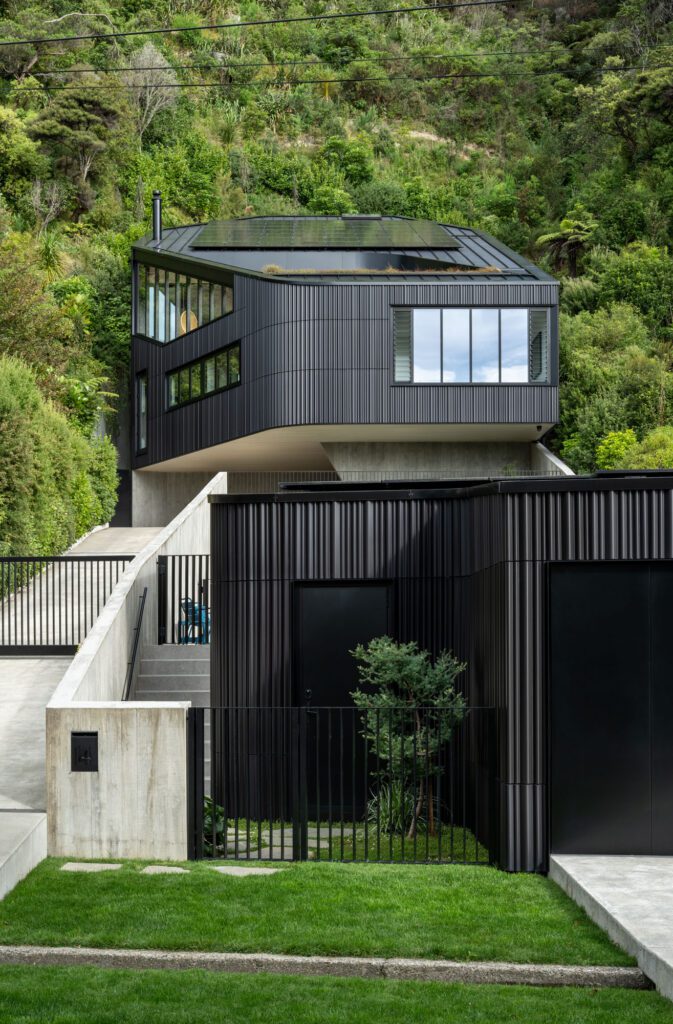
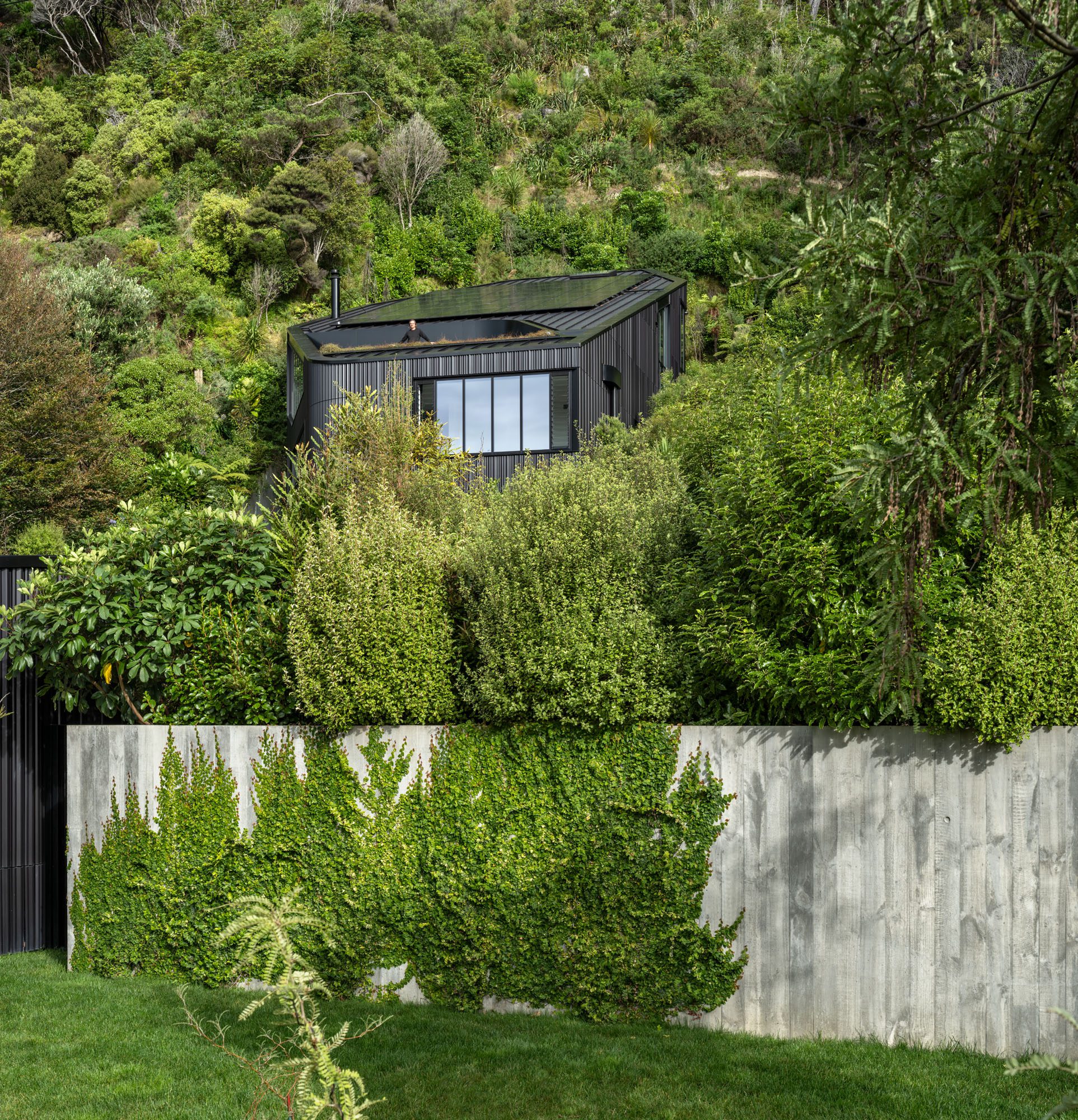
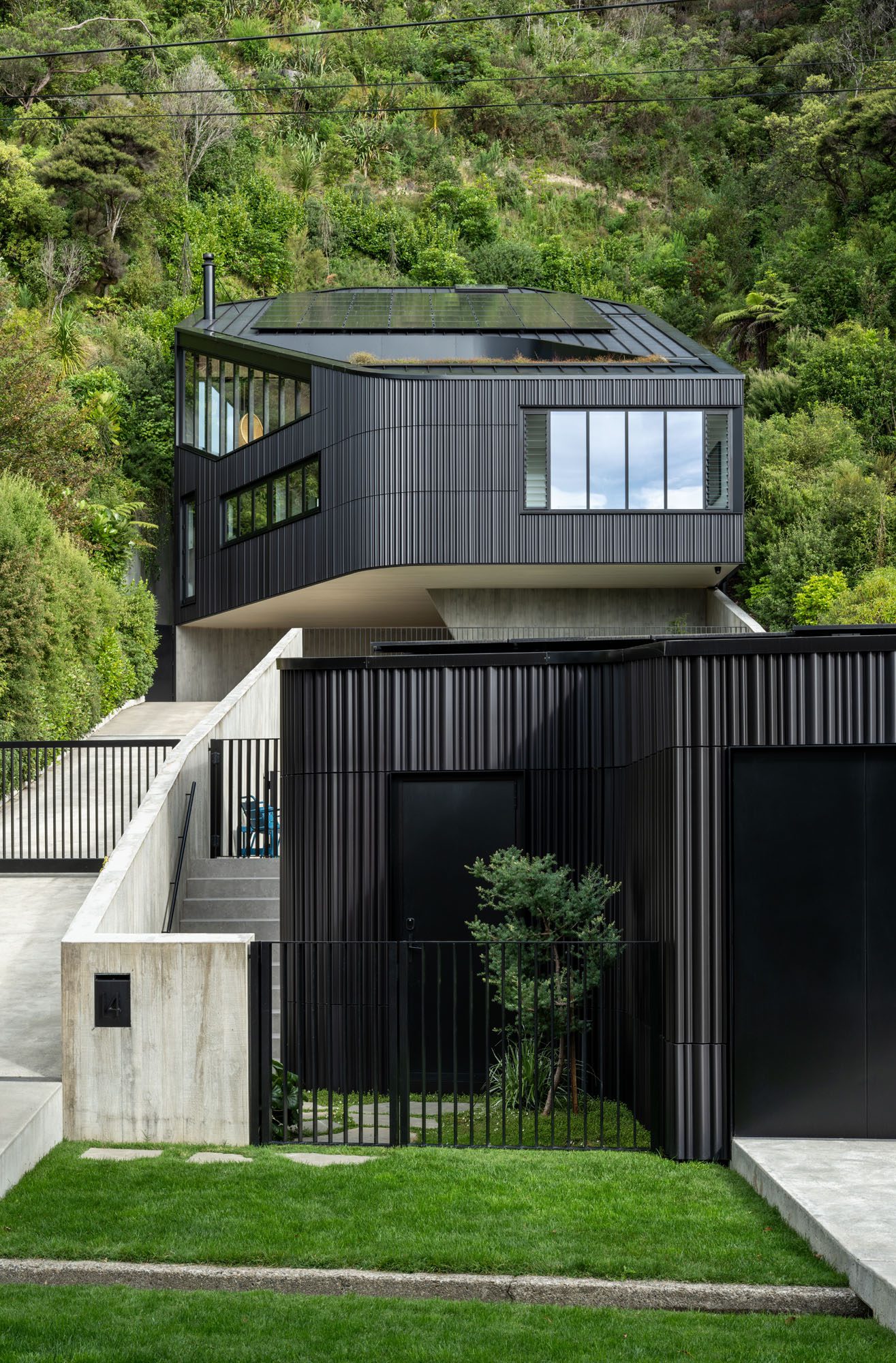
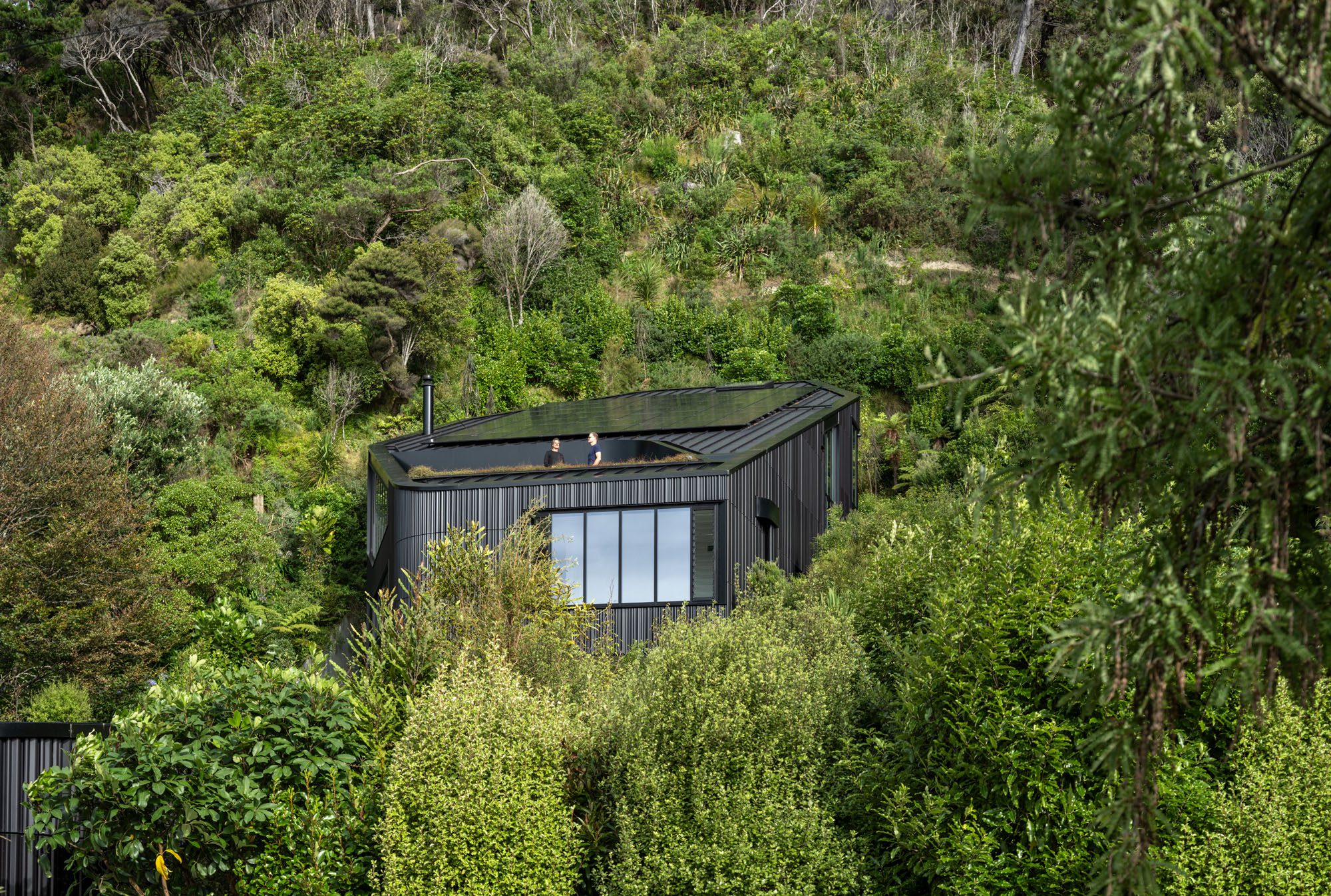
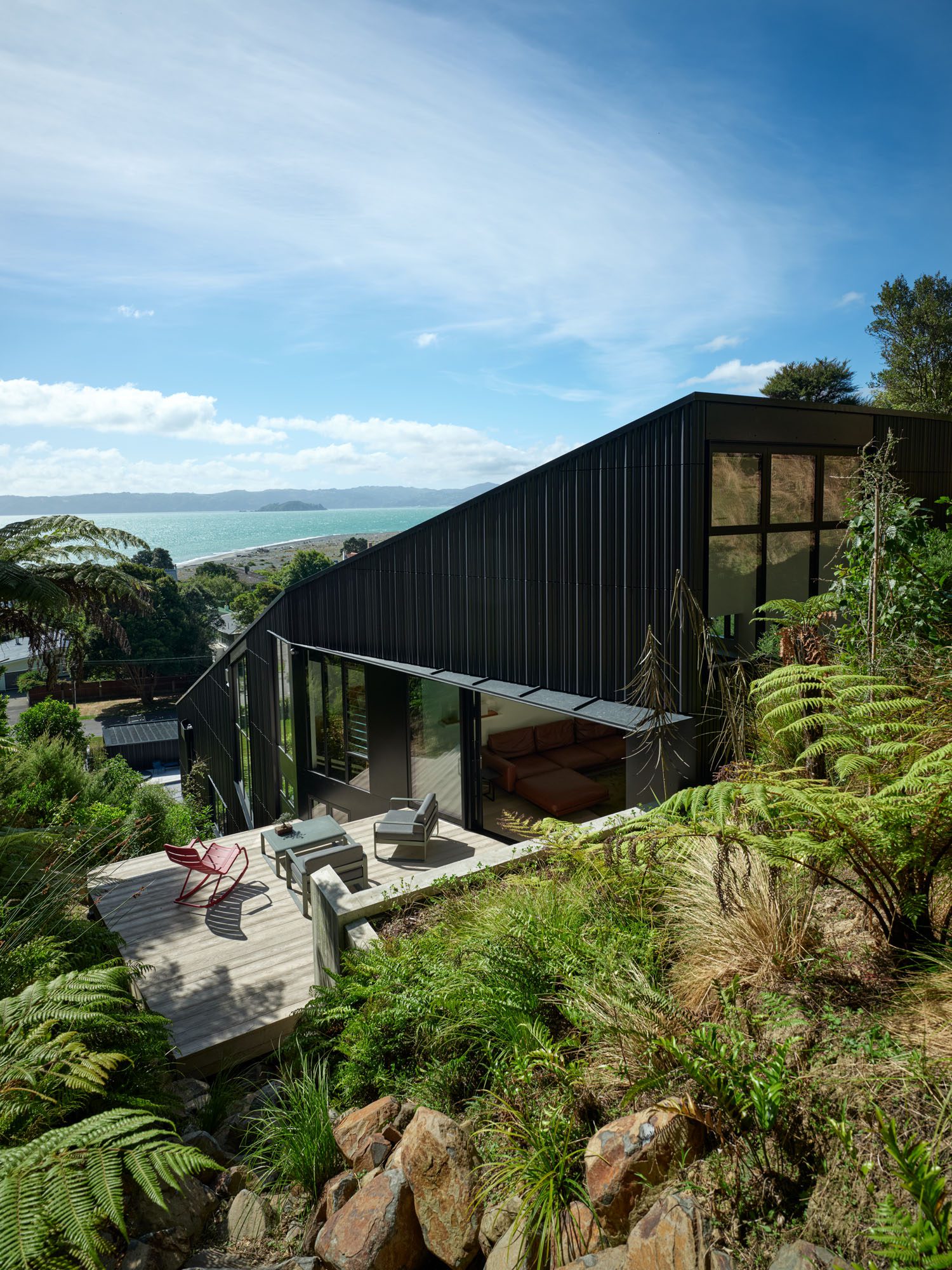
From the street, SLA’s house looks somewhat imposing, but its location at the back of the site, “like a rock wedged against the hill,” according to Nicholas, and its raised position, create a false perspective.

“It’s quite deceiving,” observes Nicholas, “because, even though it is a fairly big house, from the outside it’s a bit of a TARDIS. Also, since you are looking up [from the street] you don’t realise how far back the house is; it’s as if it’s hanging out there in space.”

The garage, at street level, is one of the few times that you come into contact with the main cladding material. This glazed, terracotta tile — with a beautiful undulating profile and pleasant ding against the knuckles — is a reference to our vernacular corrugate, but with an unexpected twist. 

“Its irregular wavy surface extended the metaphor of a rock that is shaped by the elements. Its appearance is both strong and recessive at the same time,” explains Nicholas.

The deep black behaves a bit like a tui’s plumage, shifting and waving from purples and greens depending on light and reflections. 

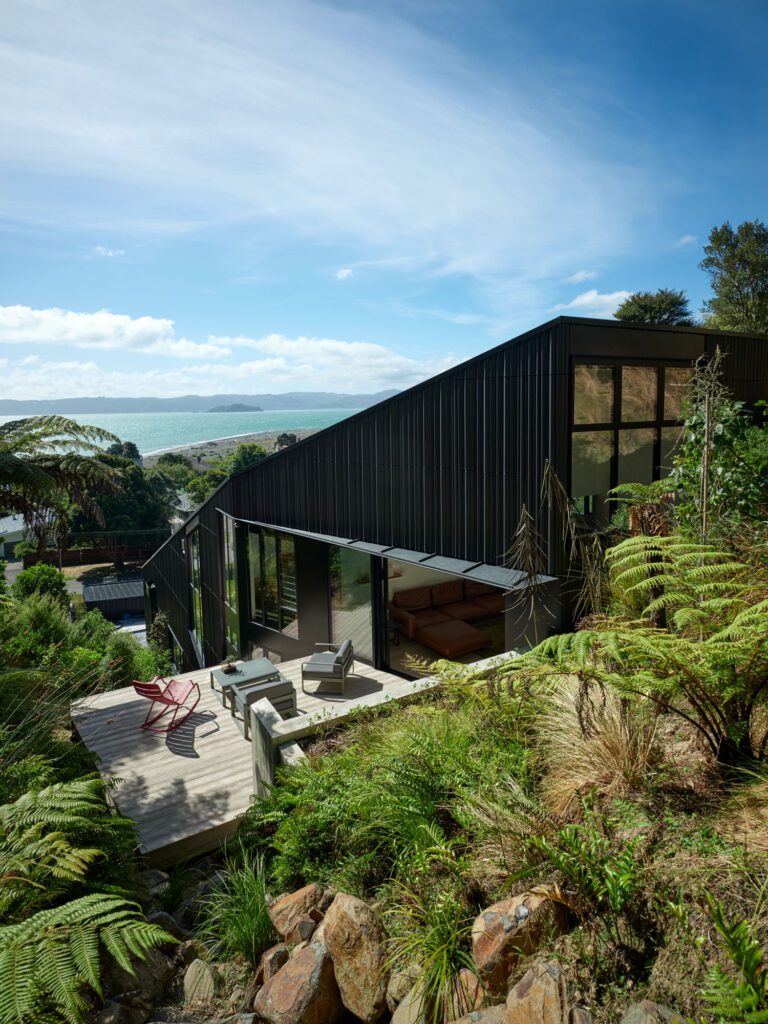
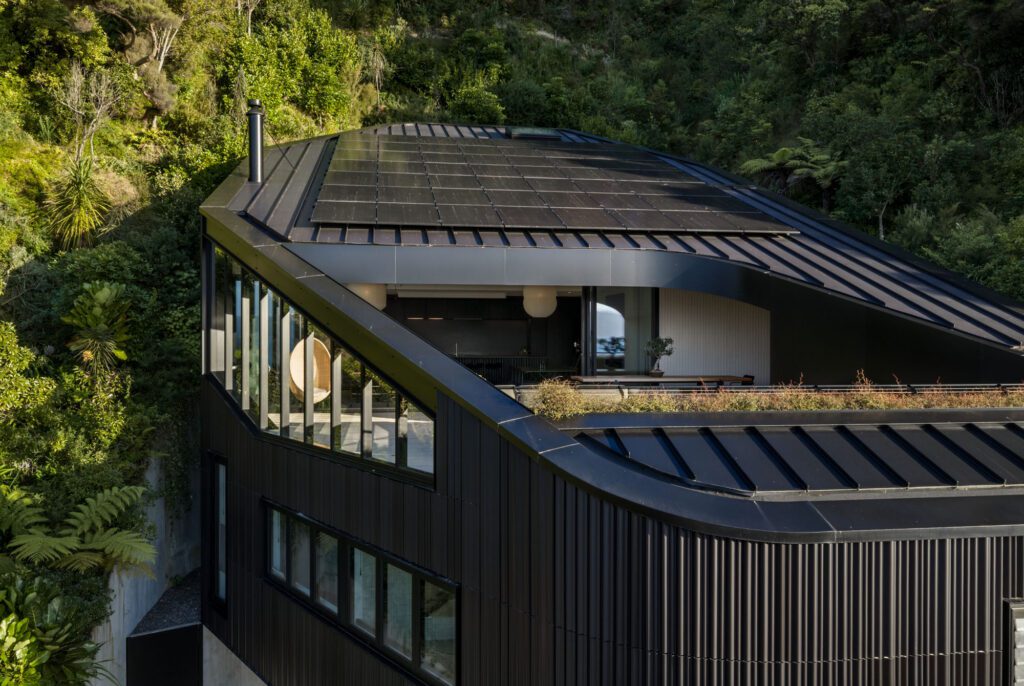
The main cladding material is a glazed terracotta tile that appears to emulate corrugate. Its deep black has accents of purples and greens depending on the light conditions.

SLA is well known for its use of black on residential projects. When asked about the wider, national fascination with this achromatic shade, Nicholas reflects that this practice “had actually died out for a while, after the Vernon Brown tradition” — referring to the Auckland architect who, back in the ’50s, was cladding homes in elegant black. However, it was revived in the ’90s with a passion that verges on the patriotic. 

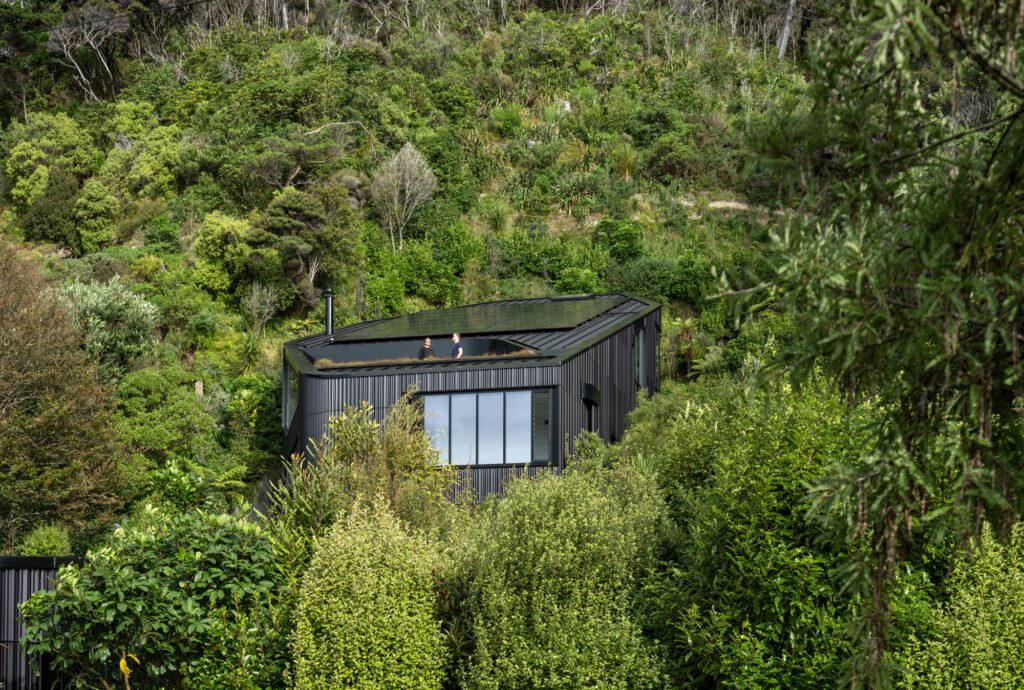
Despite its large size (655m2 of floor area), the house manages to seem smaller from the street, thanks to a combination of false perspective, its location on the site, and a colouration that blends with the shadows of the surrounding bush.

“[The team at] Planit Construction are exceptional builders and craftsmen,” says Nicholas. “This was a logistically very complex build on an extremely steep slope. The structure, form, and cladding required a high degree of skill and precision, and the glazed terracotta cladding has seldom been used in such a bespoke house, with its complex form and angled rooflines. It was hand fitted to perfection like a jigsaw puzzle …. The builders embraced this challenge and went the extra mile.” 

Adding to the peculiar conditions of the job was the fact that one of the home owners did his building apprenticeship on the project.

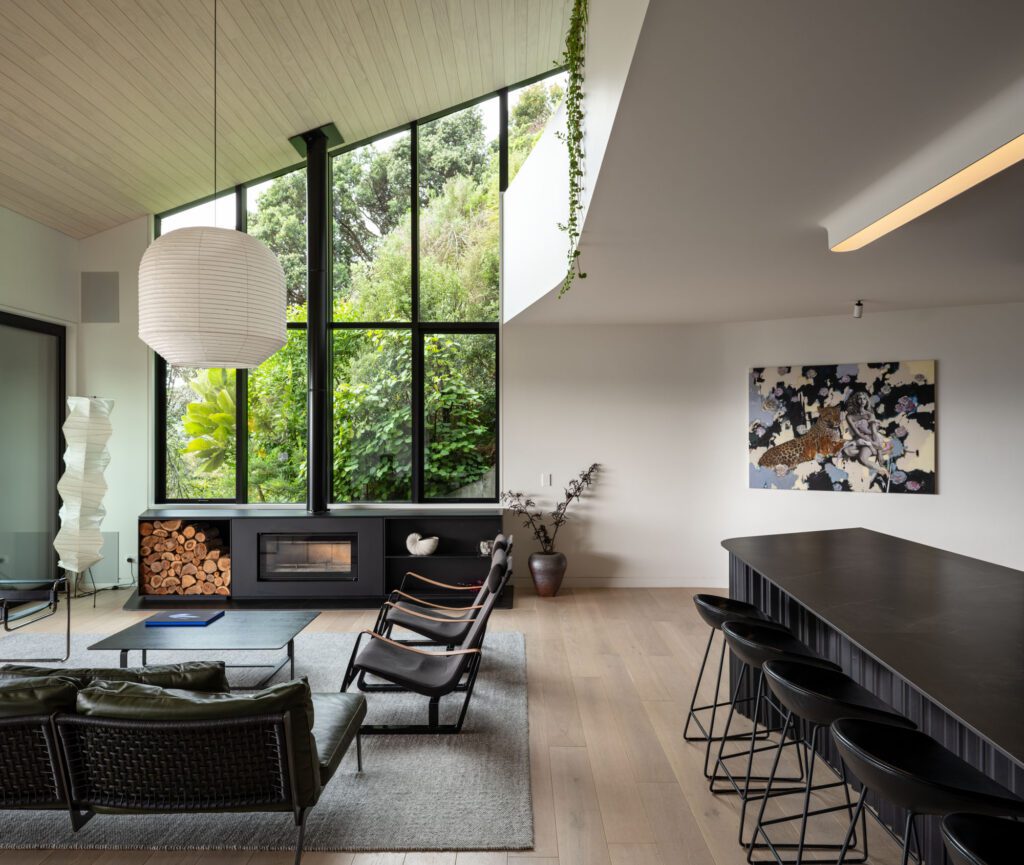
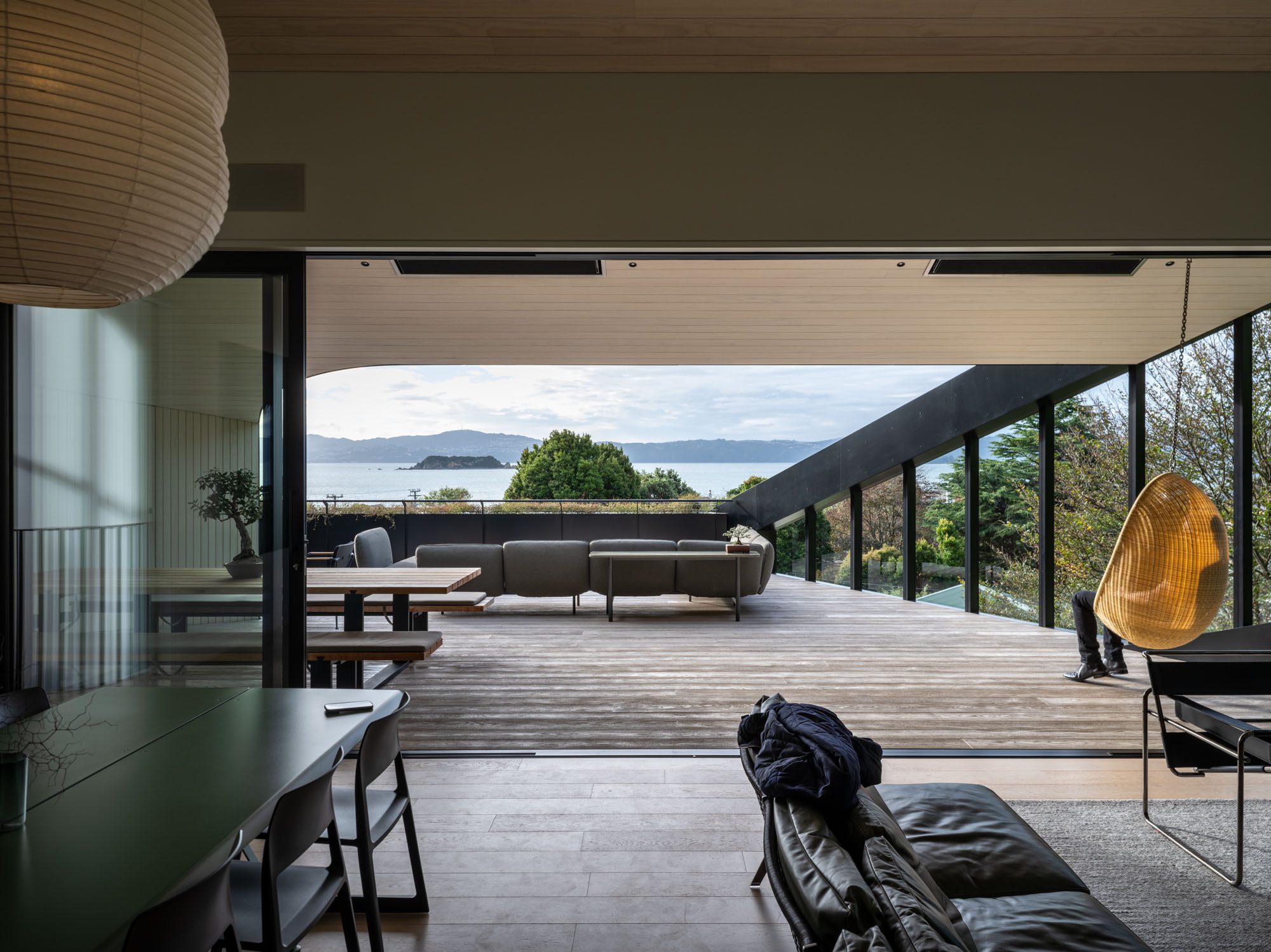
The architect helped select the furniture and opted for strong exemplars of modernism such as Wassily chairs by Marcel Breuer and the Happy Sofa by Antonio Citterio (both from Studio Italia), as well as Cité Chairs by Jean Prouvé.

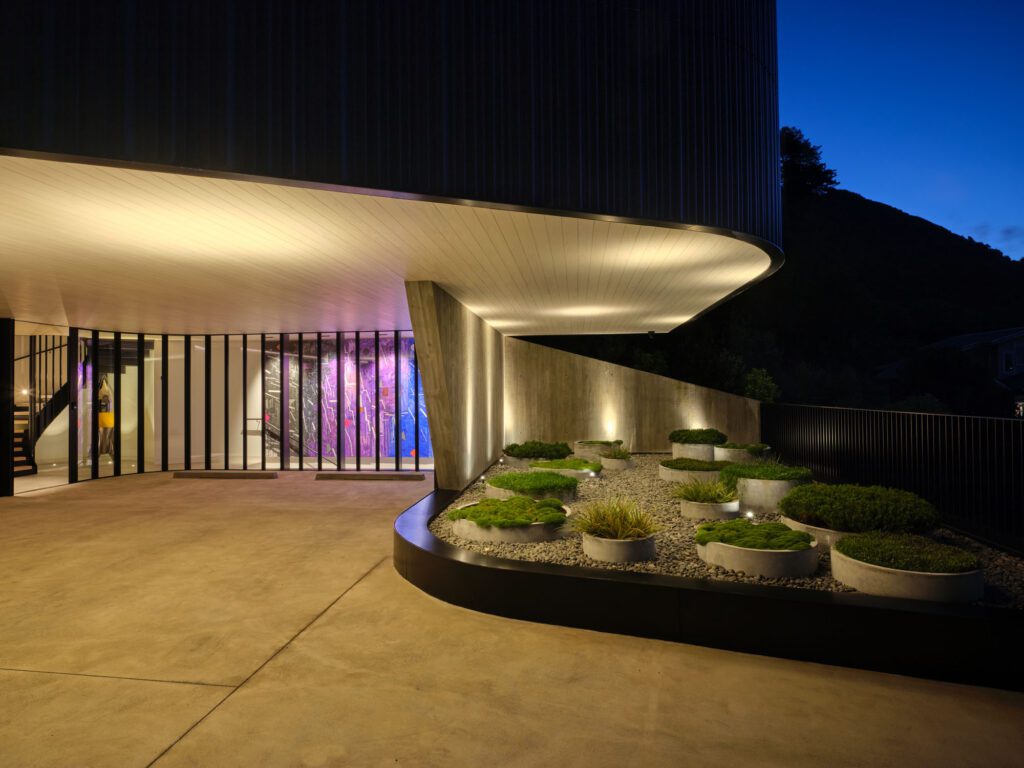
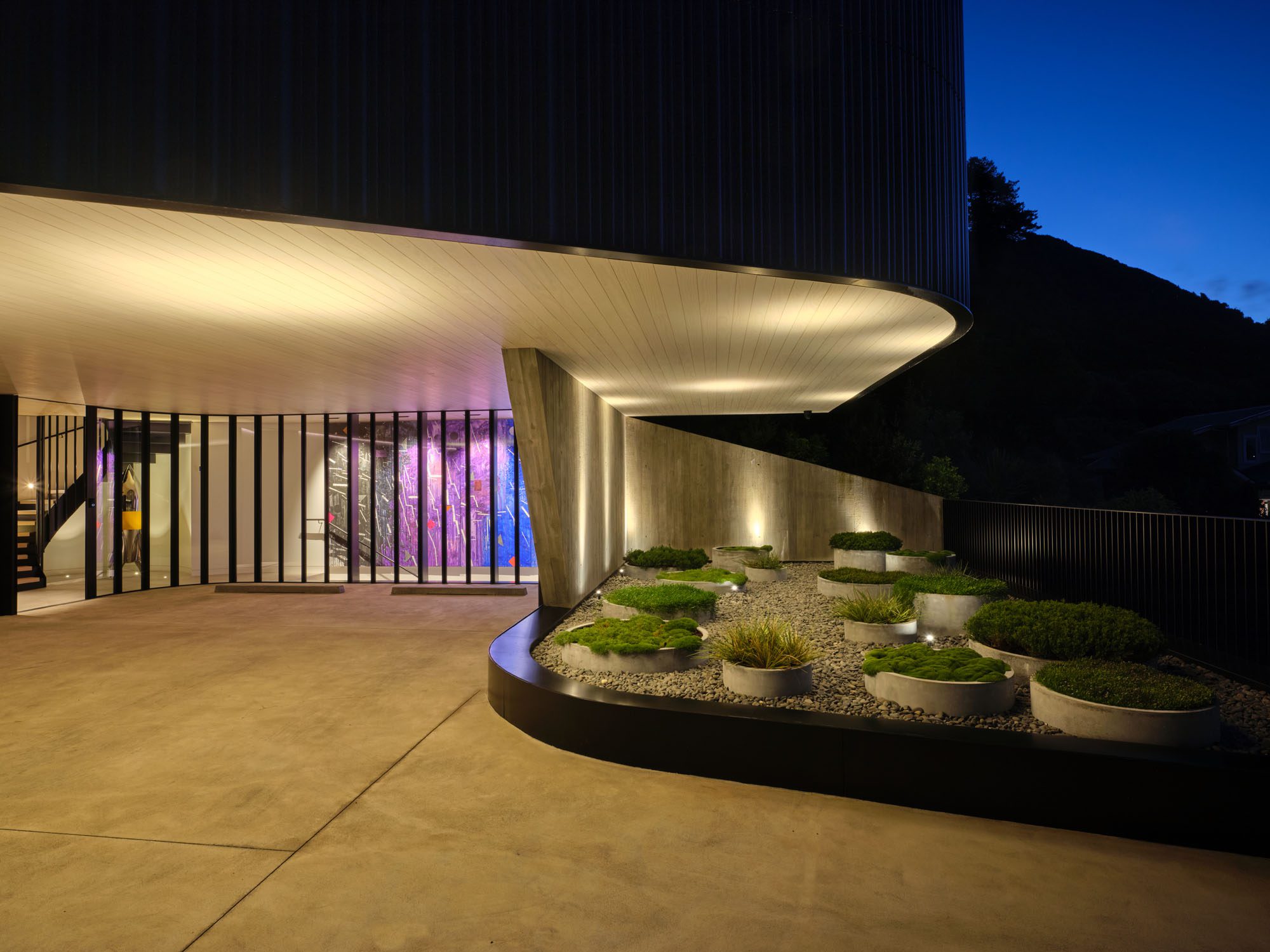
Those complexities remain largely invisible on arrival. The driveway deposits you onto an undercroft, where a concrete base — sliced in a sharp vertical angle — creates the cave-like, formal entry. The purpose of this concrete extends beyond holding the structure above; it becomes a privacy wall that, along with the driveway edging, encloses both the entry landscaping and the pool area below. In true SLA fashion, it is not just a functional brace but a stunning play with sharp angularity and expressive curvature. 

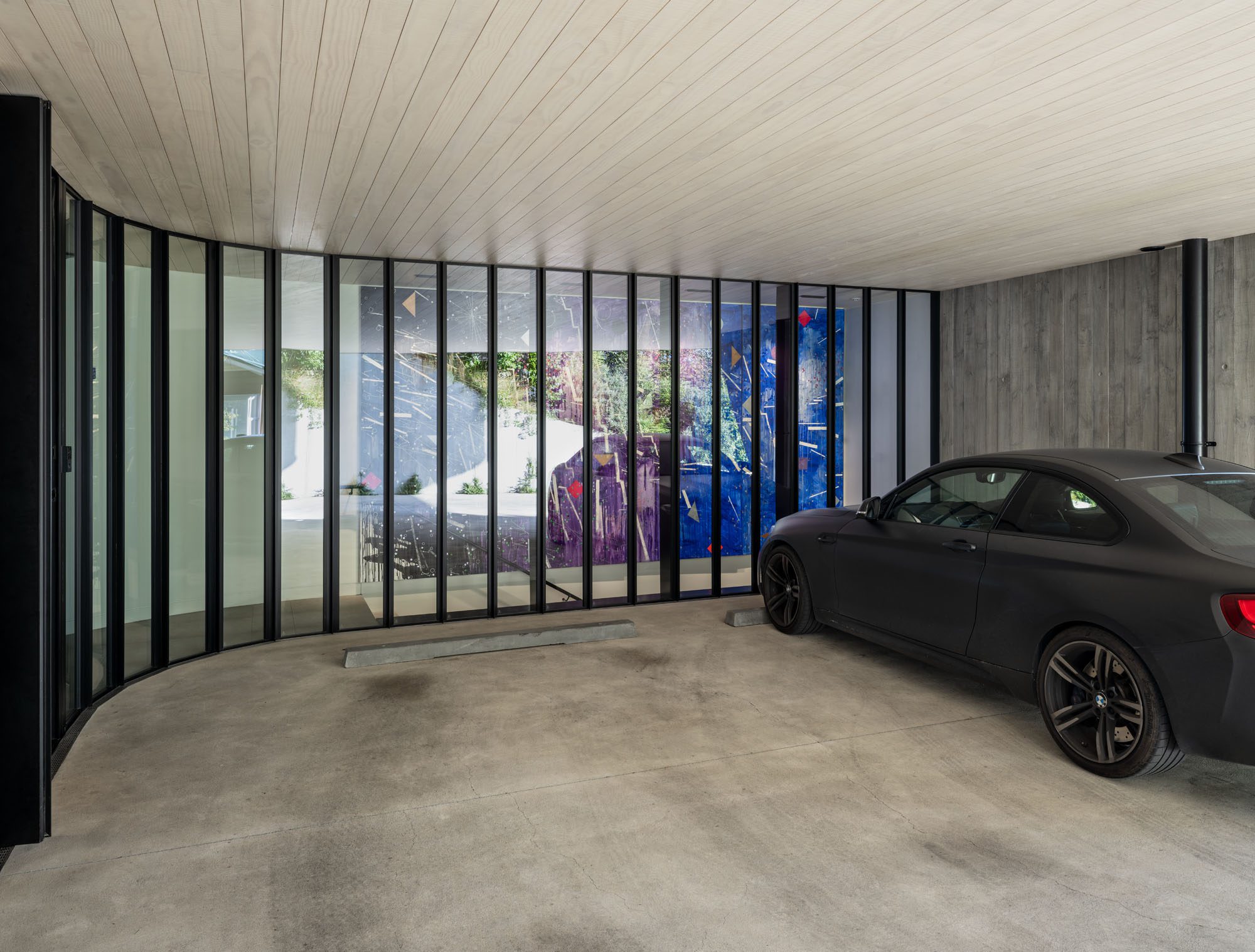
The concrete abuts a carport that is, in turn, defined by a glazed gallery hallway. The glass seems to hold daintily the enormous cantilever above. Its underside, clad on light-coloured timber (Accoya), gives the impression of a vessel for something both precious and highly crafted.

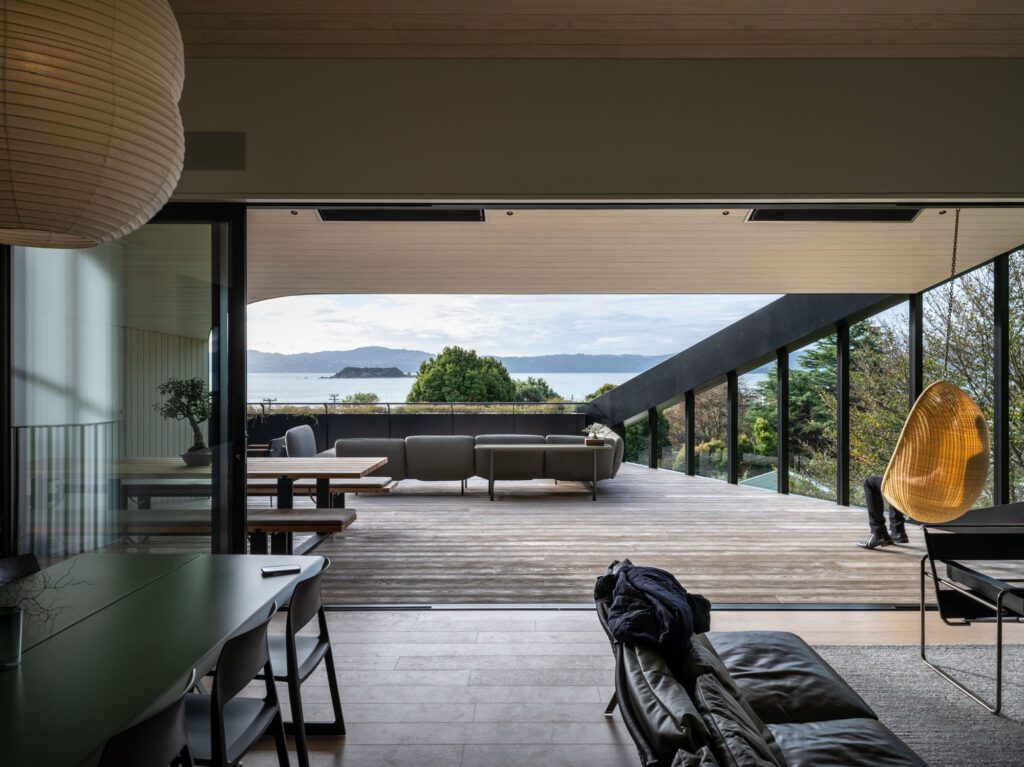
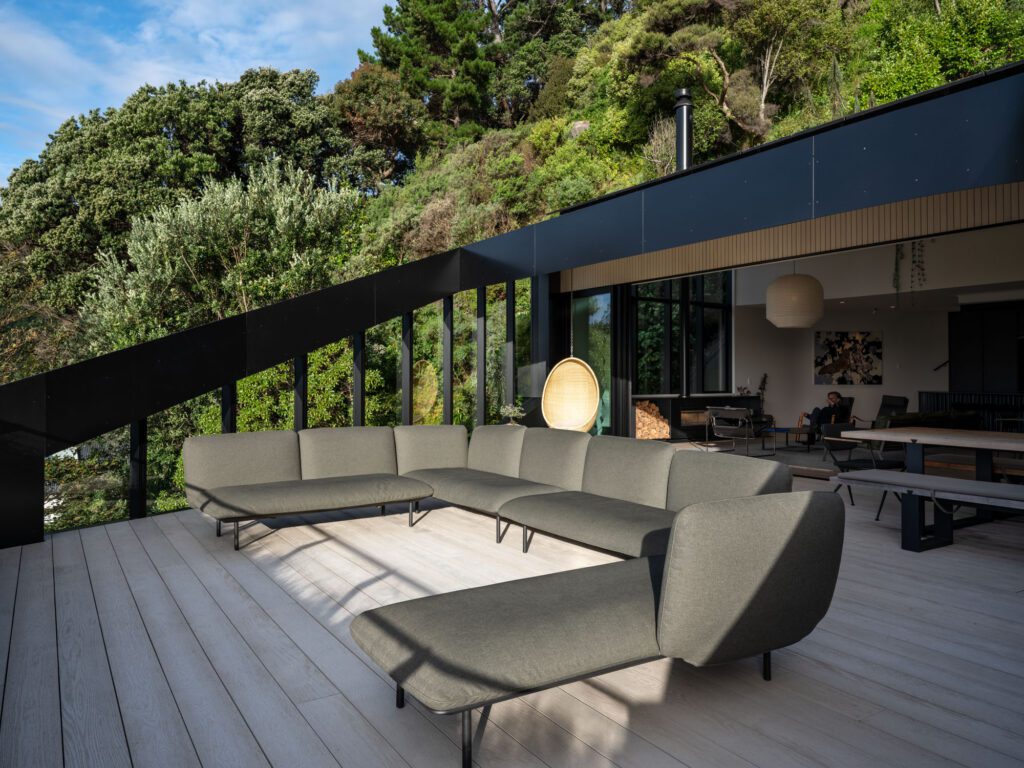
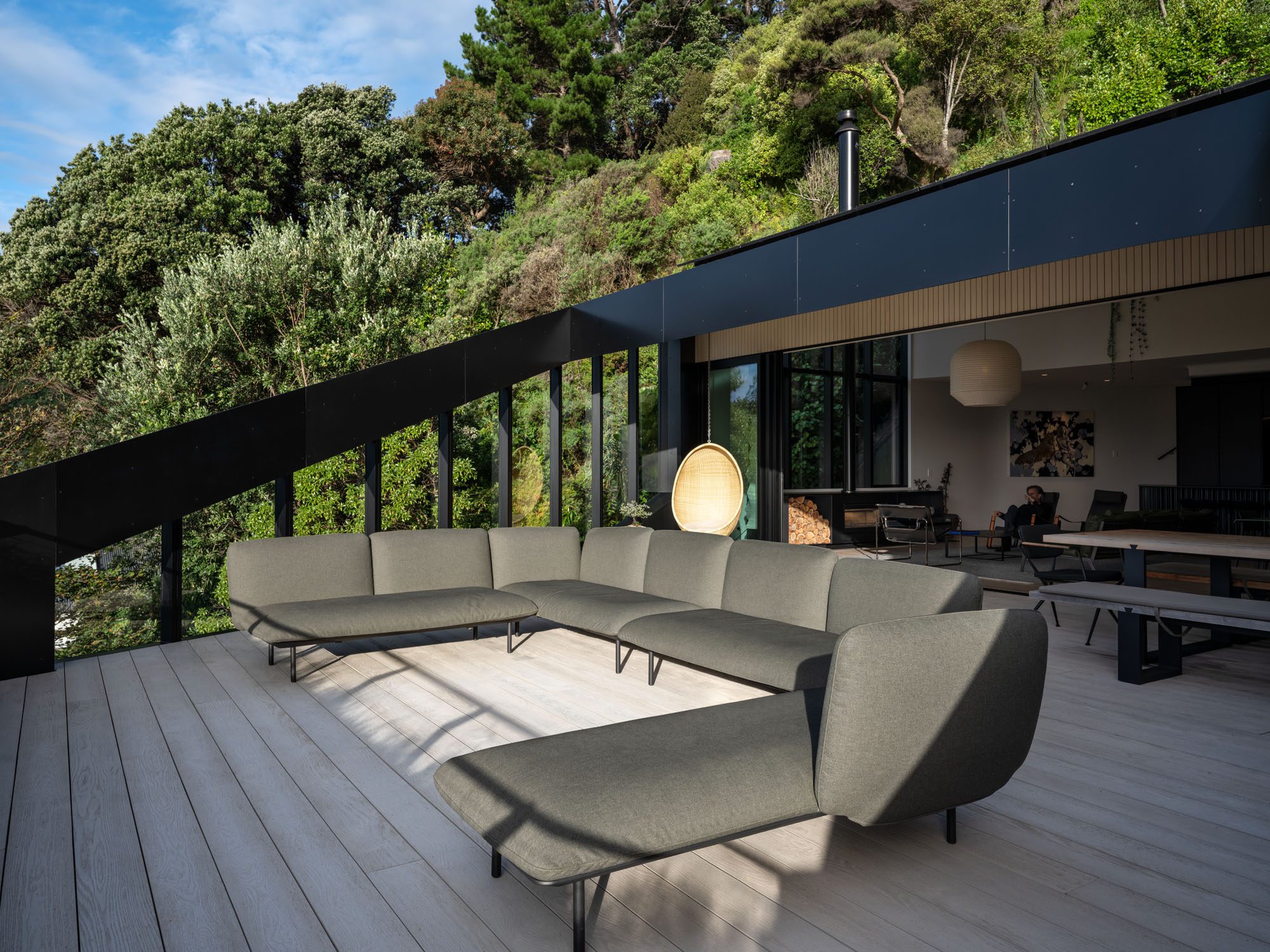
The living room spills onto an impressive deck that has been carved out from the main form rather than added onto it. Curves and materials seem to add a yacht-like mood.

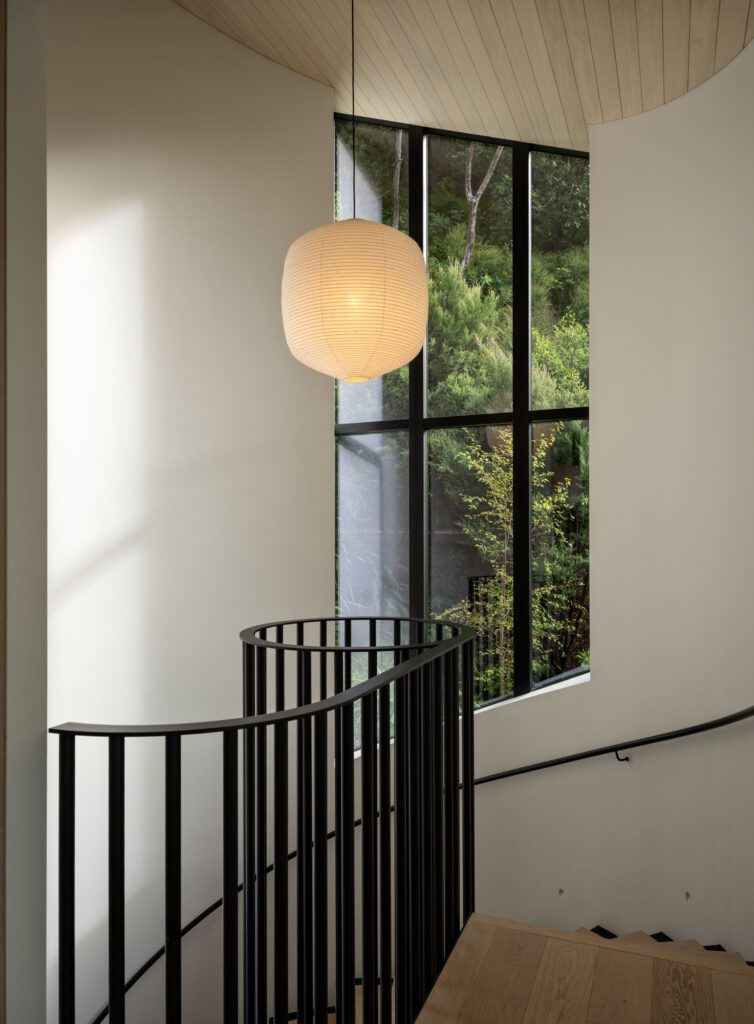
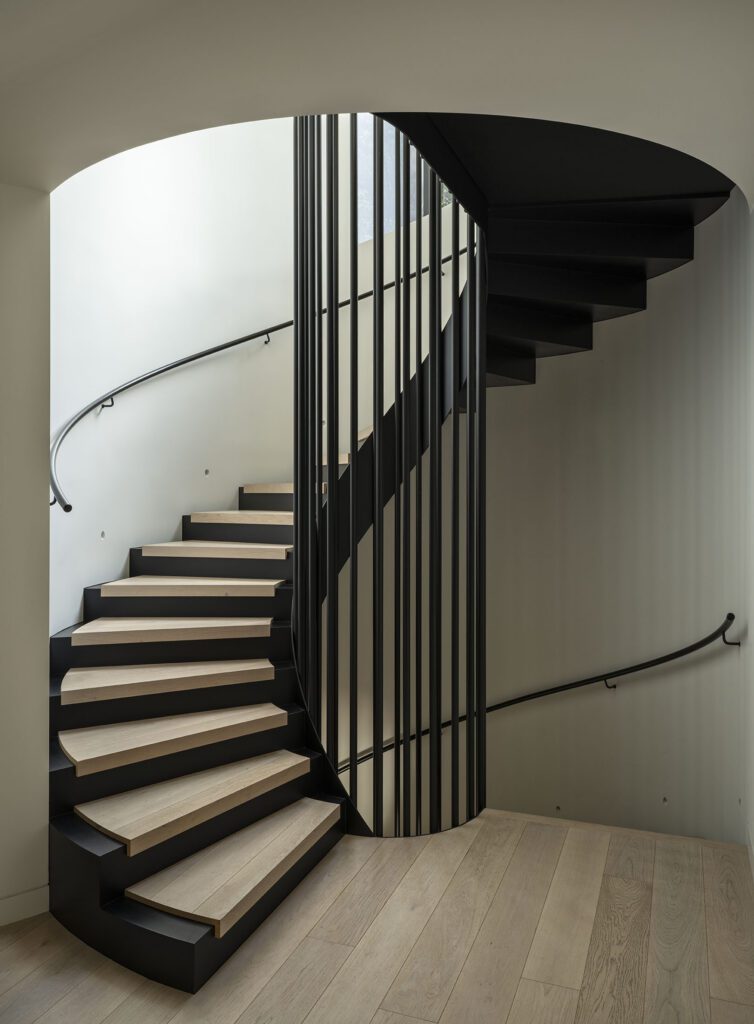
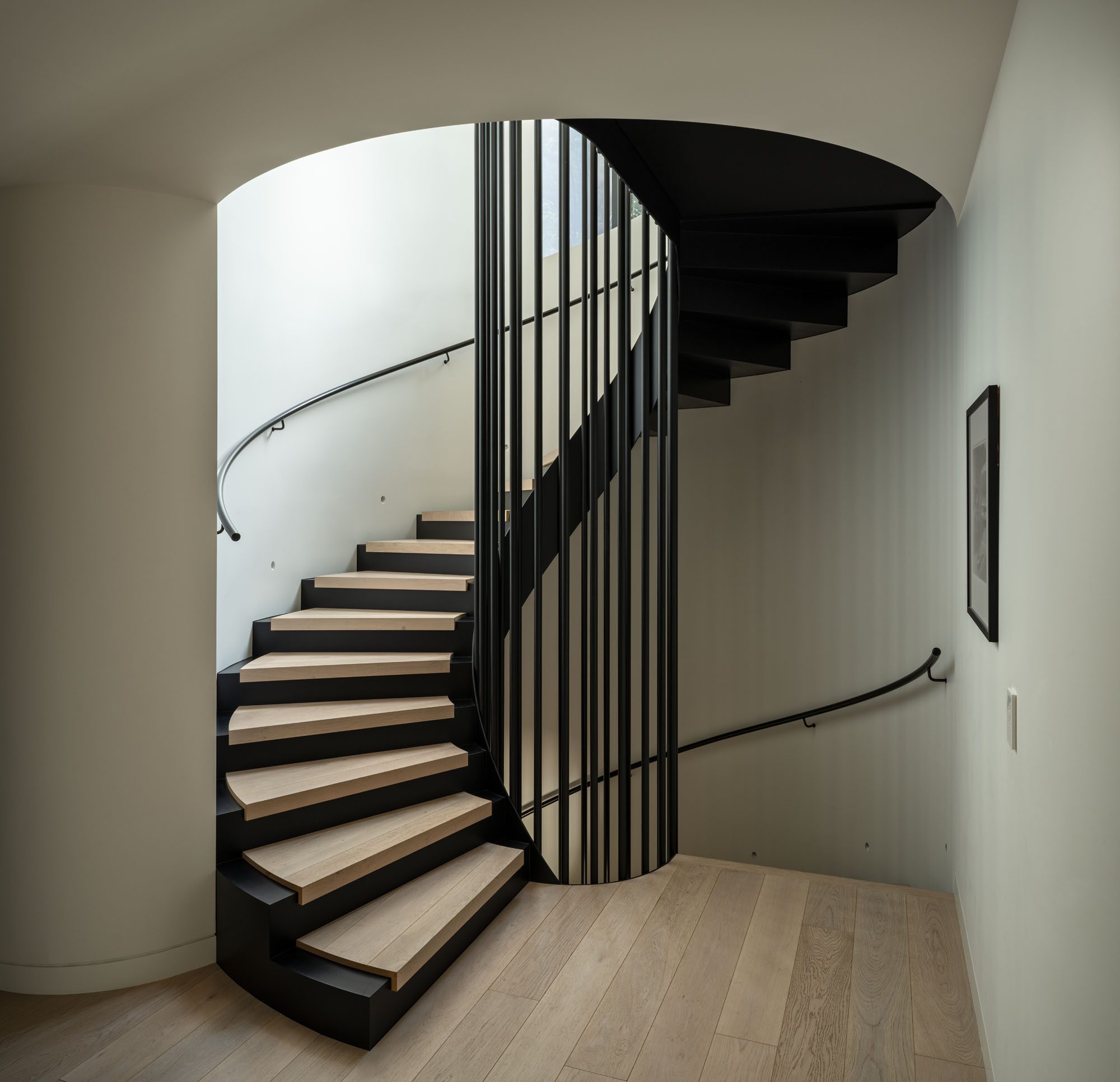
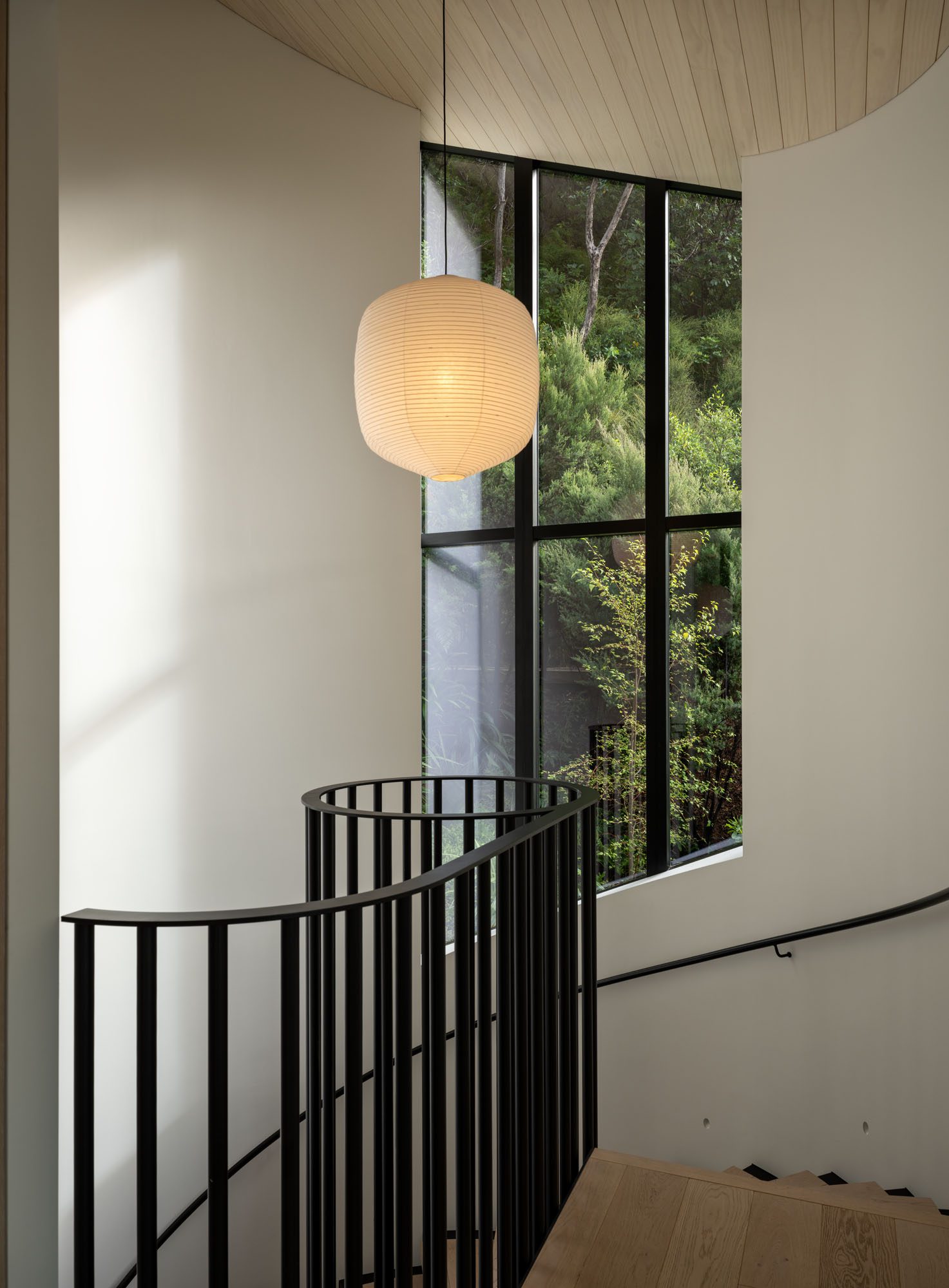
At this entry foyer, a conversation between formality and arrival gives way to a helical staircase that stitches three of the five levels. The black steelwork and timber floor overlay staircase was fabricated on site by Wellington’s Steel E.D. and Patton into a sinuous, gently flowing choreography. There is something sensuous and elegant at play here, the curvature of the stairs delineated by the cadence of the steel rods and natural light from above as they cascade into the middle core. 

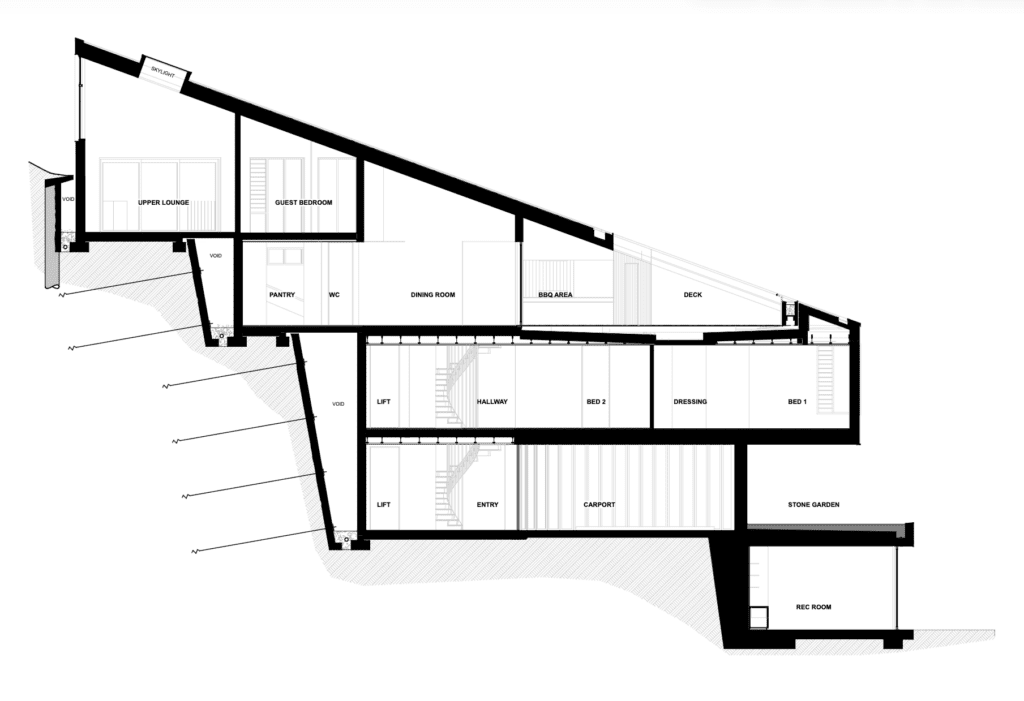
“Circulation here is more understood in cross-section than in plan,” says Nicholas. “We wanted a sense of discovery because this is a family house over five levels … so we wanted a house that can actually be lived in.”

The first floor is for sleeping: four bedrooms, two and a half bathrooms, and a mixture of internal experiences that range from vast ocean views to cocooning smaller alcoves that some family members have found particularly soothing. 

There are few flat walls throughout this interior; SLA and Ath’s curvature once again rearing its friendly and cosy face.

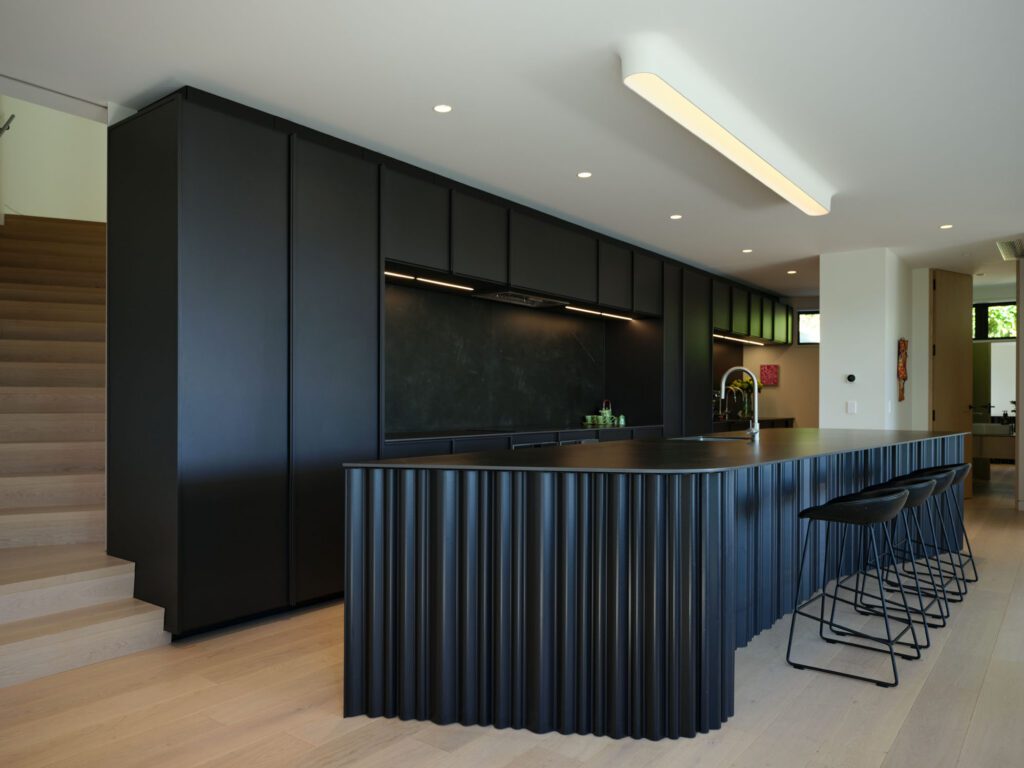
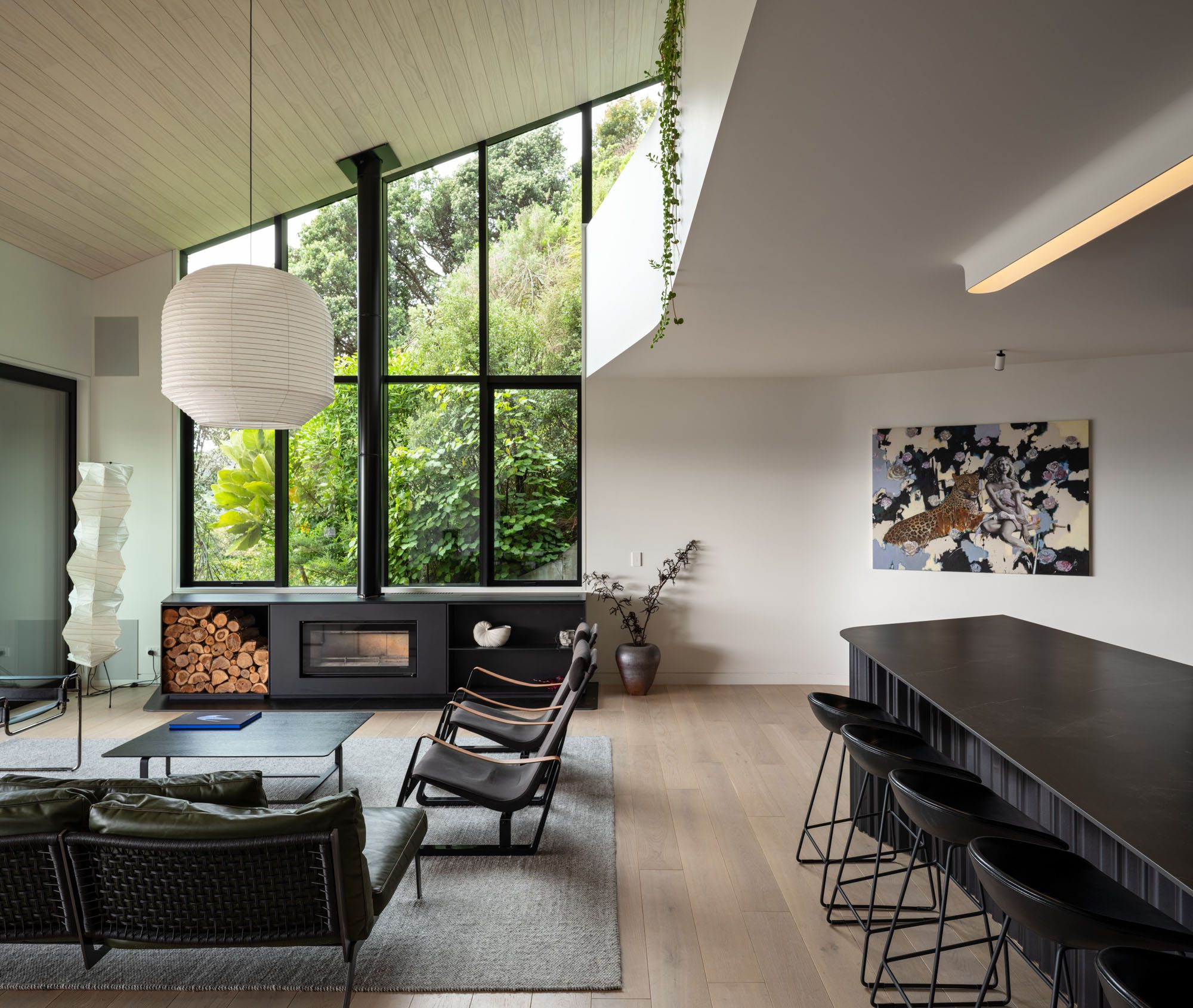
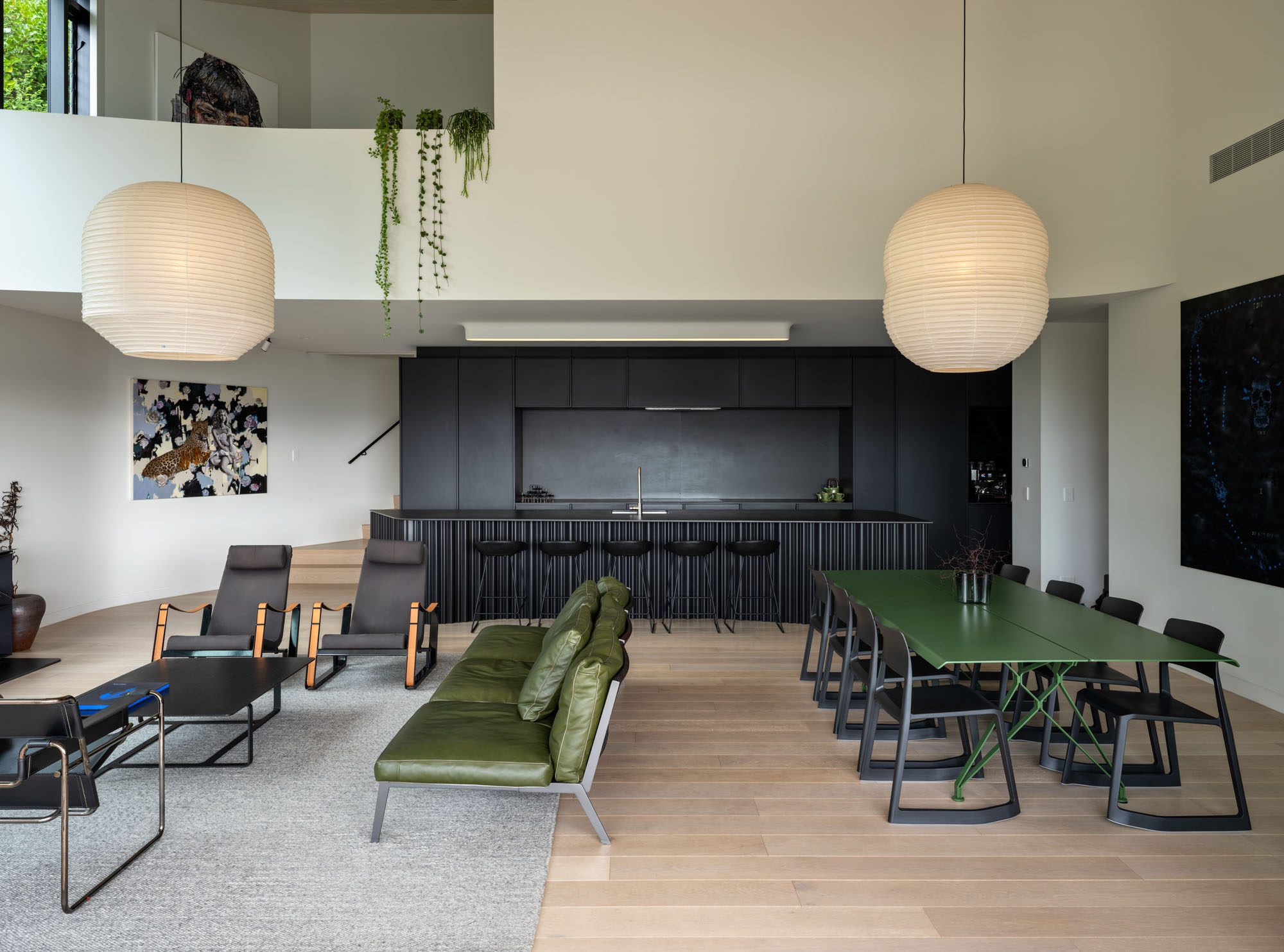
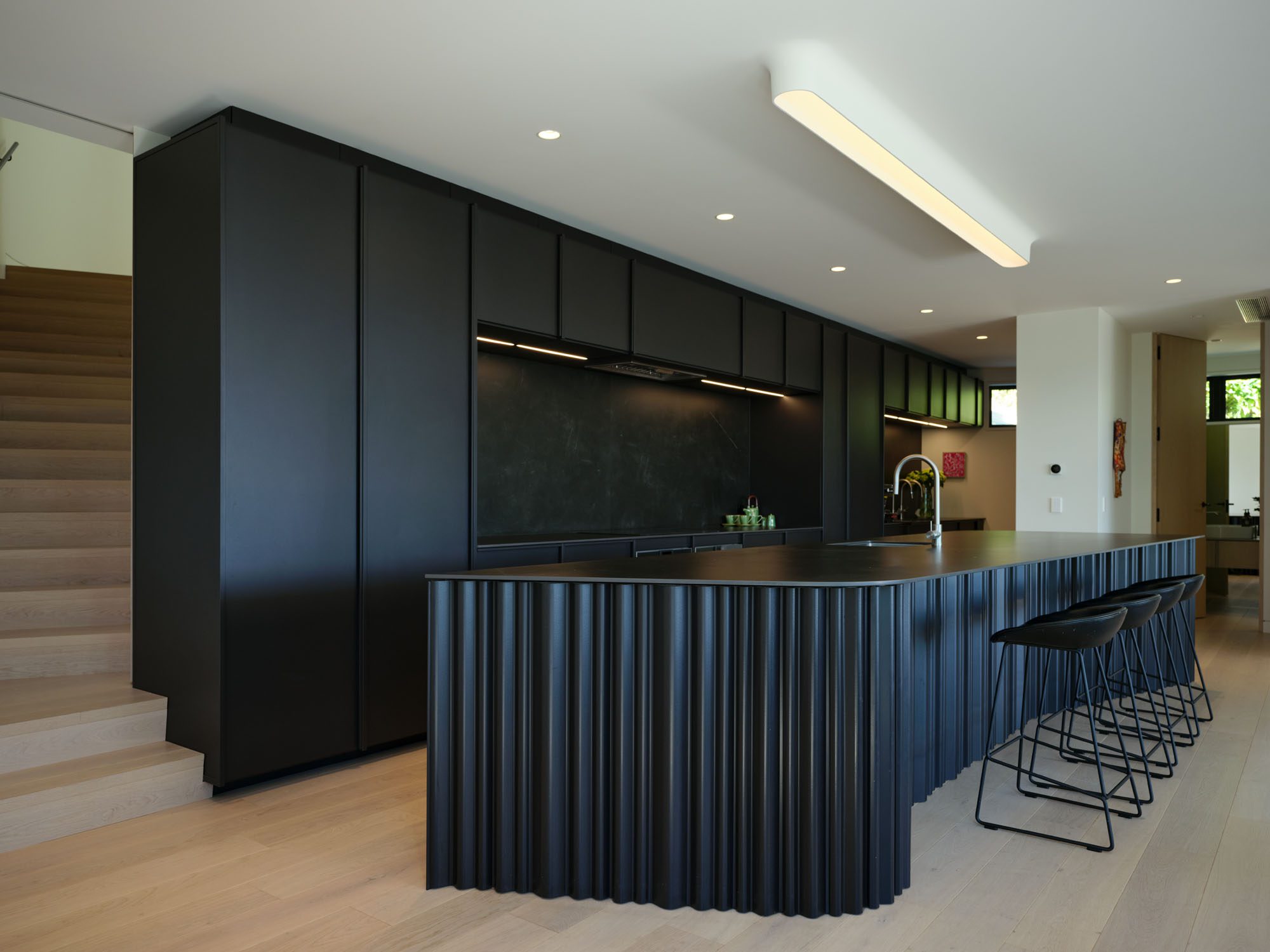
The third floor houses the impressive social area, where double height and plenty of high windows give the room largesse and gravitas. A customised IMO kitchen serves as a tonal backdrop for an SLA-designed island clad in the same terracotta tiles as the home’s exterior.

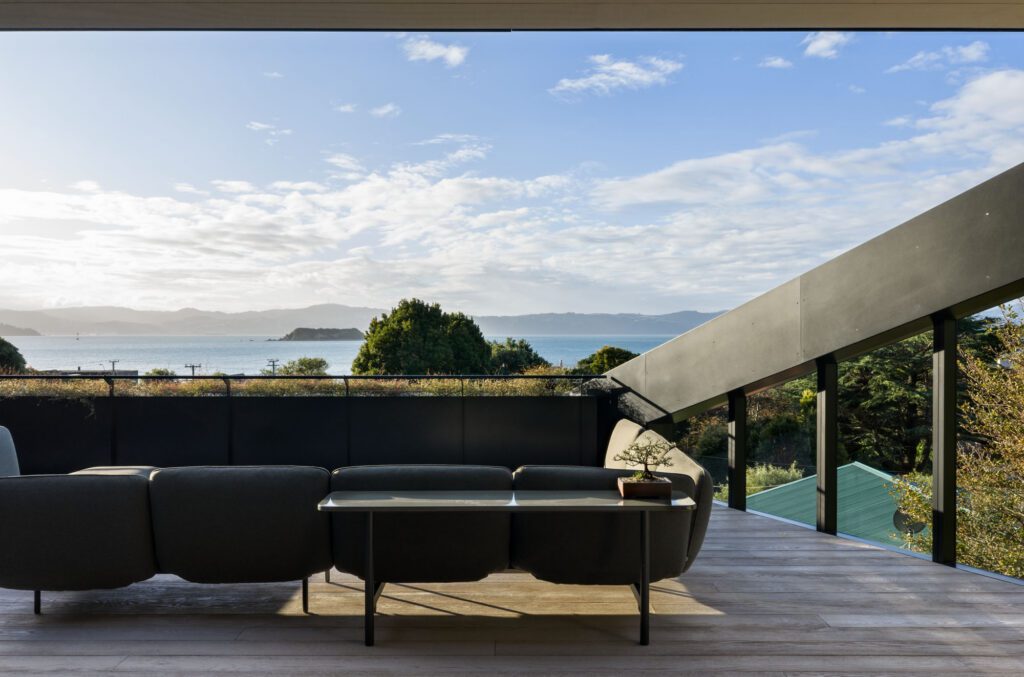
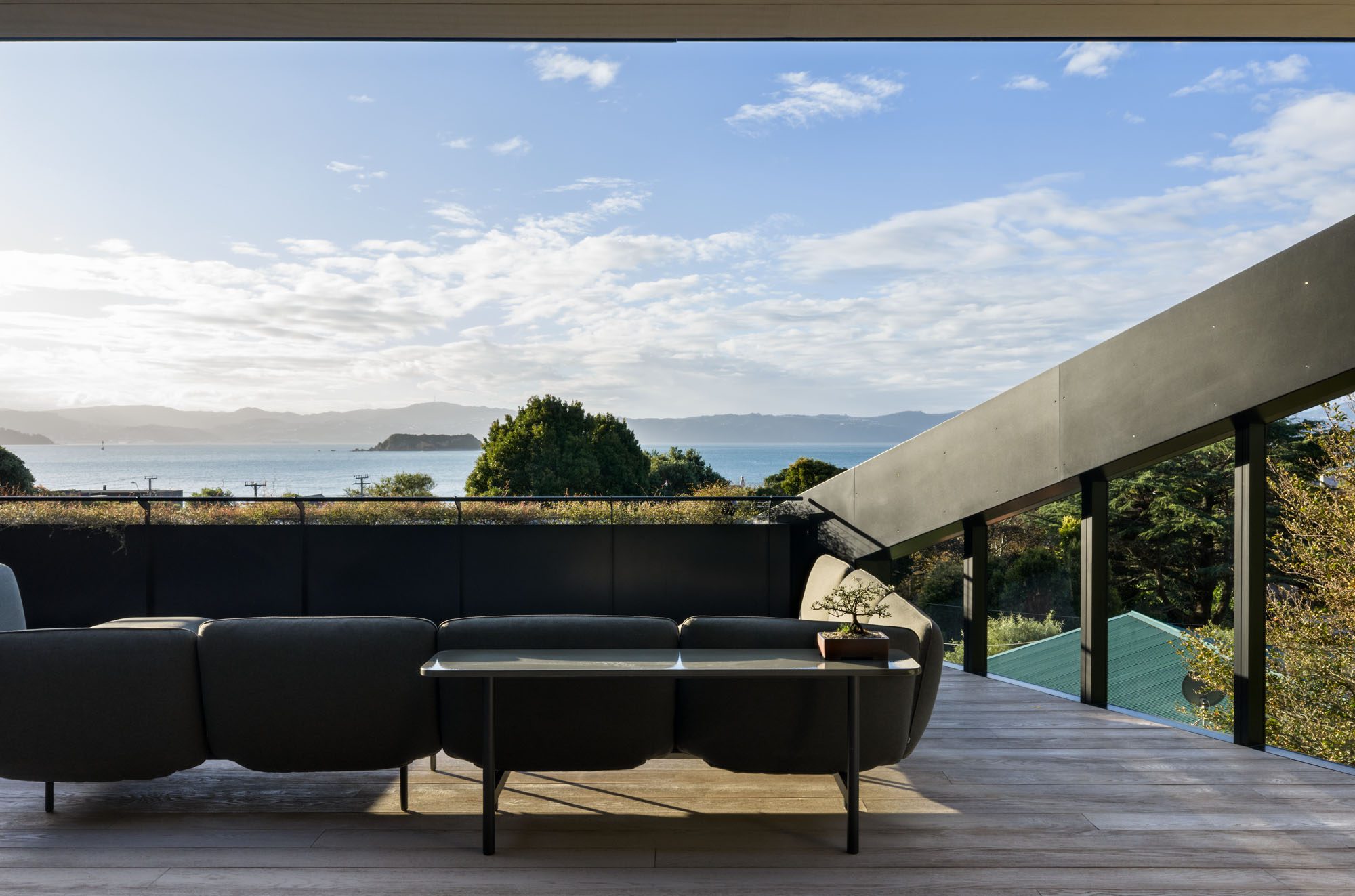
The embracing glazed arms of the deck echo those from the swimming pool area. Protection from the wind was paramount here and anecdotally, this has been well-accomplished. The Senja modular sofa is by Tribù and comes from Dawson & Co.

A jaw-dropping number of designer furniture pieces set the open plan’s considered tone, from the Bauhaus machine aesthetic of the Wassily chair through to the playful contemporary ergonomics of Barber & Osgerby Tip Ton chairs. 

“I got to indulge in a bit of furniture shopping,” smiles Nicholas — sofas by Antonio Citterio, the highly coveted Cité armchairs by Jean Prouvé, a dining table by IMO — “mostly pieces I have always admired.” 

There is not a single unifying philosophy or brand here; rather, an underlying penchant for modernism and structural honesty all made cohesive through restrained material and colour palettes. 

The kitchen is a customised version of an IMO modular set while the island, clad in the same material as the house, was designed by the architects.

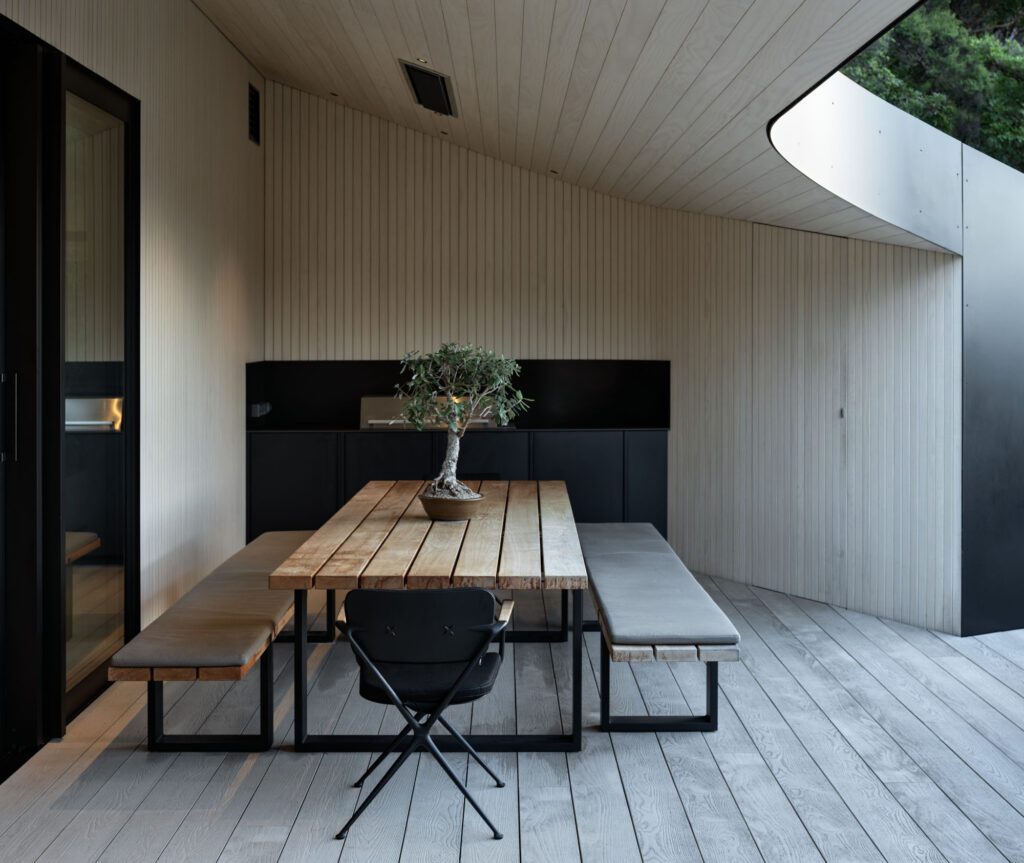
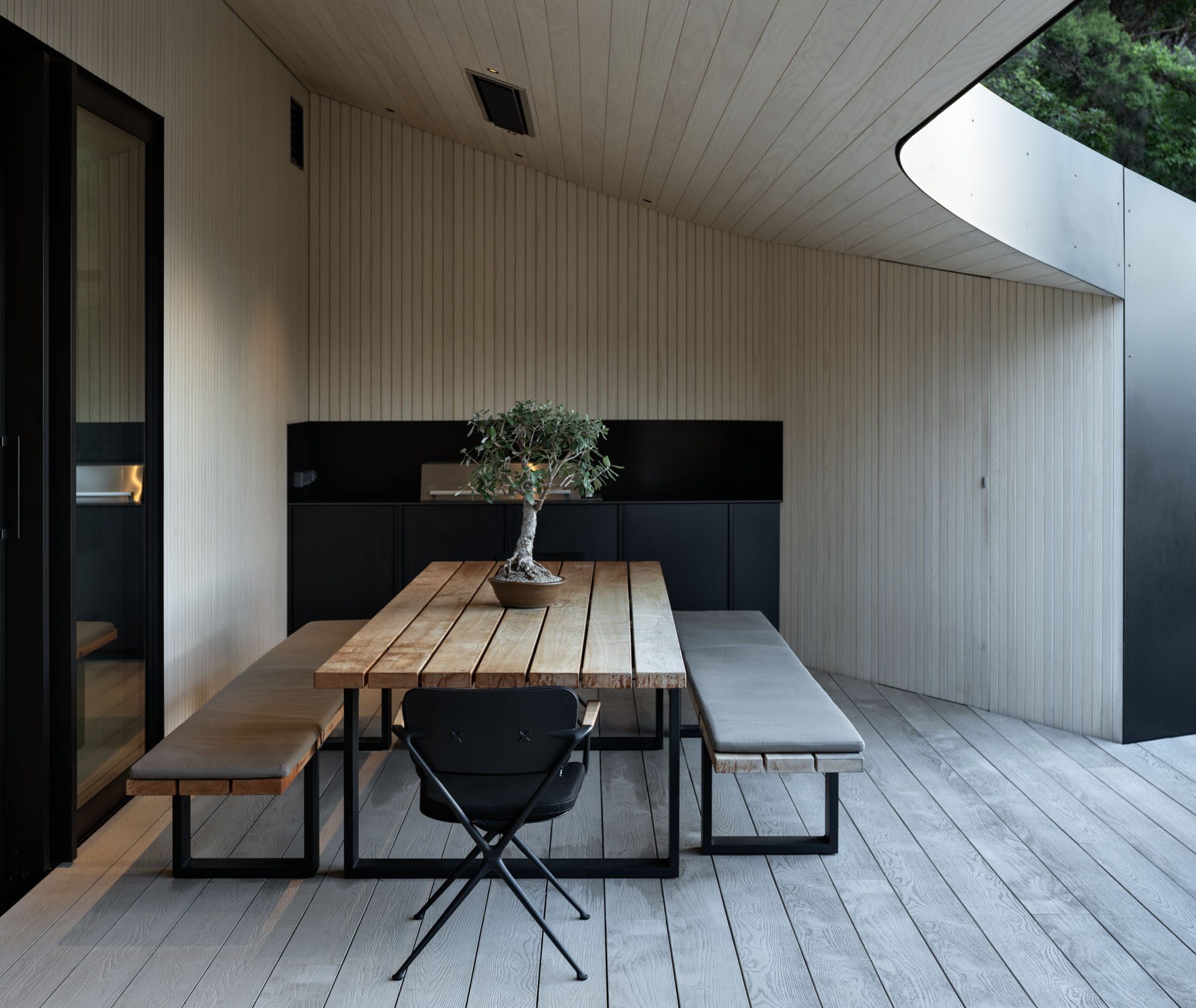
This space is bordered by an impressive barbecue and outdoor deck.

“Rather than a deck that just sticks out into space, this is hollowed out from the main form, like a cave,” Nicholas tells us. “This gives a more intimate effect and very good protection from the northerly.

“The headland takes out the southerly,” he continues, pointing out the land that jots out in the distance. “There can be a raging southerly here, and you can’t feel anything out on this deck.”

The staircase that connects three of the home’s levels has been described as a choreography of space. It was made in situ by Steel E.D. & Patton

There is something slightly nautical at play here, not just in the home’s ability to both take in and keep out the elements, but also in the materiality and curved-out forms. It is almost as if the balustrade could suddenly open up and, after a few steps on a walk-through transom, one would plunge into the vibrant Wellington Harbour. This, combined with the Tribù outdoor furniture, quietly alludes to contemporary yacht-deck designs — partly Italian with a touch of British; opulent yet restrained by its good manners.

An office, a cosy family lounge/media room, and a guest bedroom with an added deck crown the fifth level of this home — sixth if you count the garage — which, despite its size, still feels intensely liveable and non-cavernous.

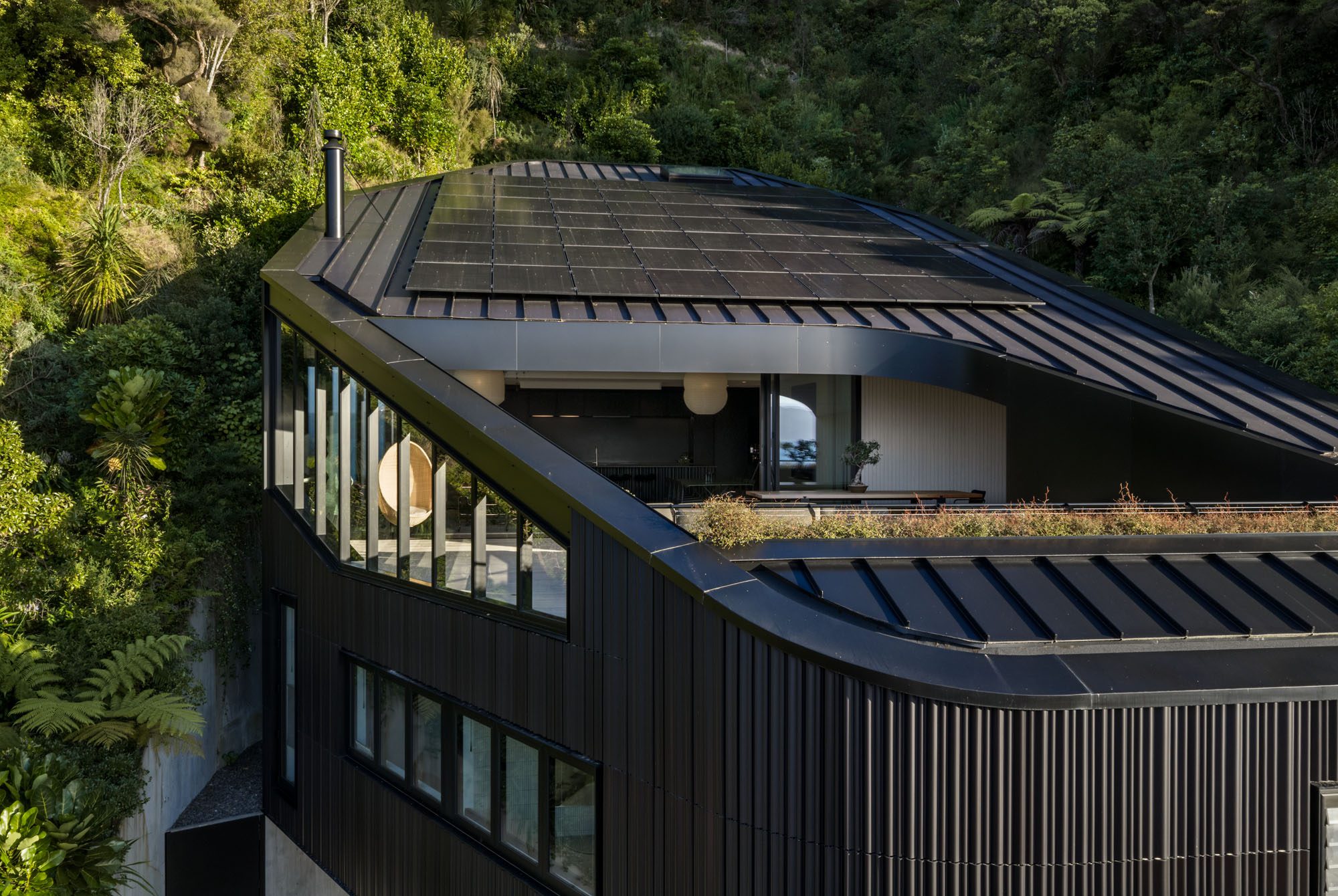
The home has several unexpected rooms and outdoor spaces that allow occupants to escape prevailing winds. The nature of the hillside site required a number of architectural gymnastics.
Plenty of photovoltaic cells on the roof give the home a certain level of self-sufficiency.

In a Home of the Year tour during which the judges had many a conversation on the perils of unnecessarily large abodes, Eastbourne House proves that ‘big’ can be done well. Largesse — with craft, wonderment, and discovery — can provide a variety of family spaces and experiences that remain deeply human in scale and avoid gratuitous magnitude.

On exiting this home through the main door, one sees a sprawling painting commissioned from John Reynolds. The artist’s large canvas shifts from black to purple to blue, while scattered broken white lines (a cartography or a precipitation?) slash the canvas vertically. Primary shapes in red, grey, and black seem to hang, for dear life, against this vibrant chaos of colour.

The undercroft and stone garden at the formal entrance. Its light timber ceiling, curvature, and glazing give the robust home a feeling of softness despite the main materiality of concrete.

“It’s quite extraordinary,” says Nicholas of the way the painting seems to glow like an abstract lighthouse for anyone arriving here at night. “It’s all based on Wellington’s wild weather and living on the edge; it’s a Wellington condition.”

Judges’ Citation

Sculptural not just in its overall form but in its details, this five-storey home sought to burrow and nest while also expressing sinuous forms and cutouts, cantilevers, and balanced forms that are as stylised and elegant as they are robust and unapologetically bold. Both cocooning and dramatic, the house is unique: unusual, unconventional, and beautiful all at the same time — a delightful surprise waiting around every corner. 

The home was designed in section, not in plan, and you can see why. The resultant stud heights make for dramatic spaces that were not treated apologetically but celebrated; spaces that make you feel incredibly secure in the connection to the hillside, yet simultaneously uplifted.

Its unique materials seem chiselled by the notorious winds of Wellington Harbour; yet, although they allude to a vernacular, the design pushes the form into entirely new territories.

Architectural intent, builder’s craft, client’s trust, and a touch of luck all conspired to create this year’s overall winner; an instrument for living, partly musical, partly kinetic, and entirely impressive. You can’t help but feel the pull of it — the way it holds you close while opening up around you, dramatic and sheltering in equal measure.

Project Credits

Architecture: Stevens Lawson Architecture
Build: Planit Construction
Engineers: Sullivan Hall
Words: Federico Monsalve
Images: Simon Devitt, Mark Smith
Furniture: Studio Italia, Matisse, IMO 
Poolside Furniture: Jardin
Outdoor Sofa: Dawson & Co
Stair: Steel E.D and Patton
Kitchen: IMO

Latest video features

In the Coromandel, a home with a humble profile and a thoughtful design makes the most of a stunning location.

Built with awe-inspiring attention to detail, this Arrowtown home is a fresh interpretation of a familiar Otago rural vernacular.

This sculptural Northland bach is a perfect north arrow on a remote farm high above the sea.

With the sun on its bow and the community at its stern, this is a house in which the elements are always front of mind.

Trending articles

Arts and Books

An Exhibition of Chinese Contemporary Art

An exhibition of Chinese contemporary art arrives in Auckland, tracing decades of cultural transformation through works that span performance, installation and digital media.
Design News

Lasting Grain

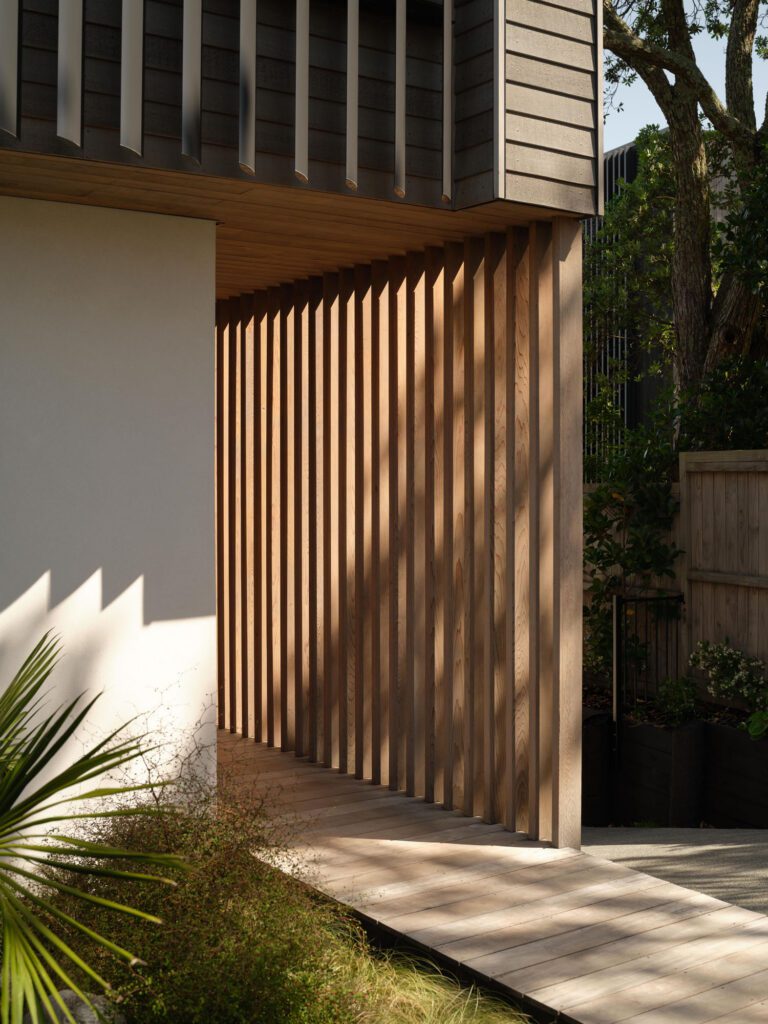
Set into a suburban site in Kohimarama, Clay Block House by Daniel Marshall Architects is a study in materiality and environmental performance.

Arts and Books

Introducing Architecture Aotearoa

A new architecture magazine, Architecture Aotearoa: New Zealand’s Buildings, Cities, and Culture will launch in late May 2026 as a collaboration between Te Kāhui Whaihanga
Design News

Written in Stone

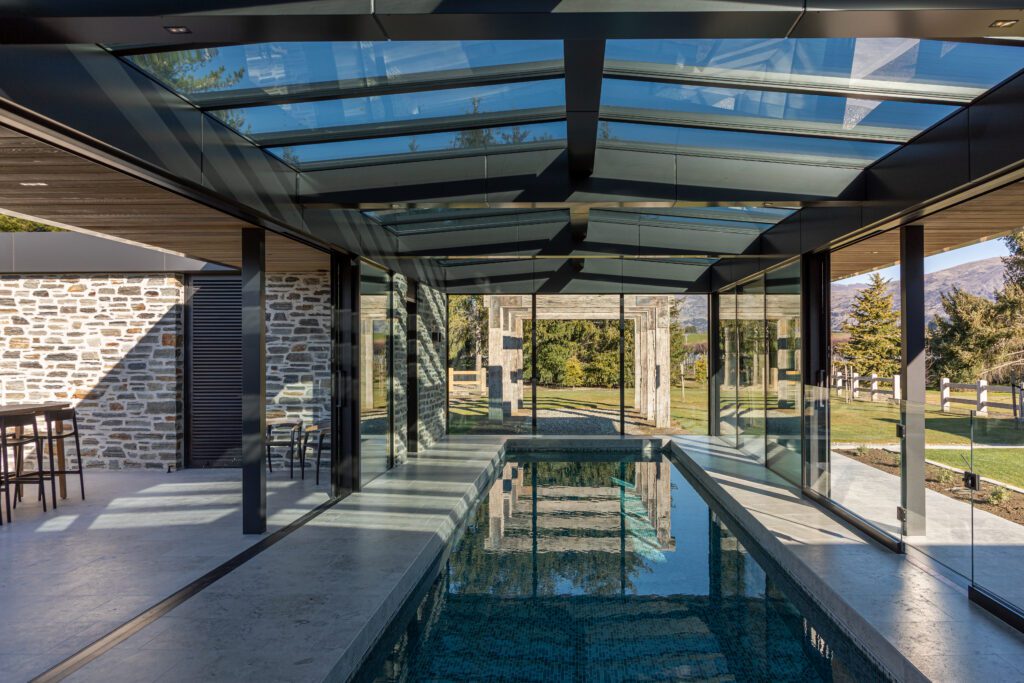
At the heart of this Wānaka home by Johnston Architects is the enduring presence of Jura Grey limestone from Quantum.