


Green Home of the Year 2026

This home on Kāpiti Coast knows its place, not just as a shelter for its people but as a small part of a much wider whole.

Set a kilometre or so from the Tasman Sea, on the rural edge of the Kāpiti Coast, this abode by Studio Pacific Architecture has all the accoutrements that ignite the imagination many city slickers project onto country living: pastoral walks serenaded by native birdlife and the roaring sea in the distance, orchard harvests, slow rural time surrounded by paintings, good food, and boisterous acquaintances.

Of course, there are setbacks. The passionfruit vines had just shed their leaves in anticipation of the incoming season, a gang of pūkeko had demolished an entire crop of nearly ripe nectarines and plums, and, after days of steady rain, a large water tank remained inexplicably empty, thanks in part to a blocked filter discovered too late.

As architect and owner Stephen McDougall notes with a laugh, “It’s all a little Felicity Kendal in The Good Life around here!” 

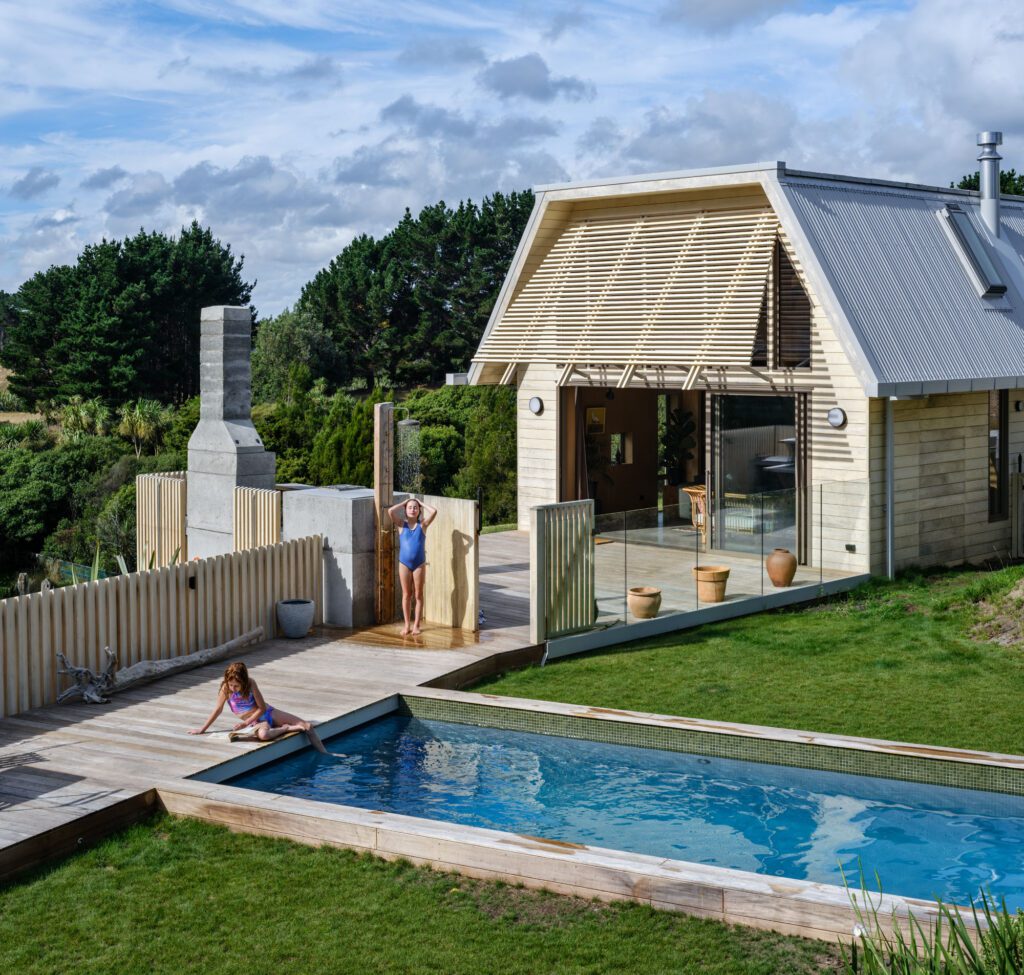
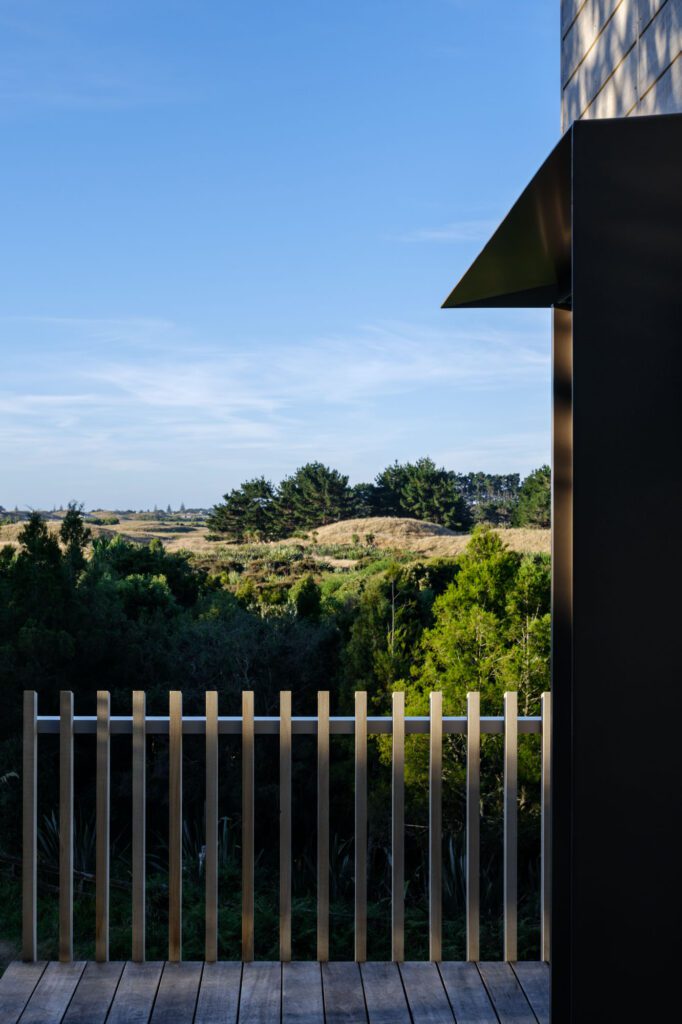
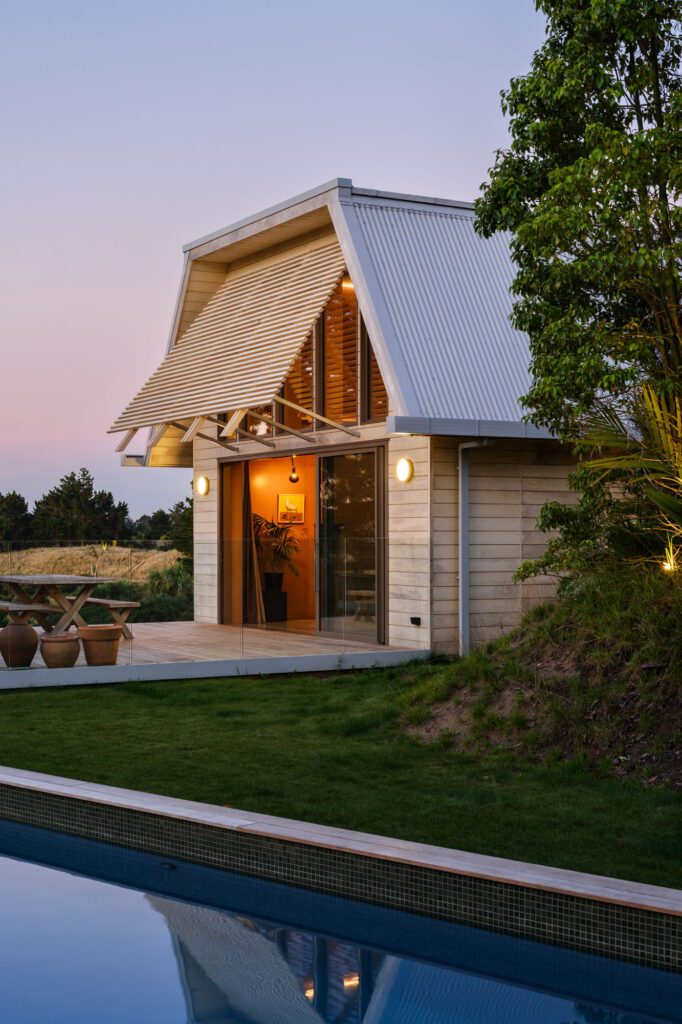
The main forms were imagined as a roof-meets-wall concept that adds extra sun protection to the interior. The cladding is from Accoya.

Stephen stumbled upon the property during a walk along the Waikanae River and remembers saying, “Wow … what is this long, extraordinary road?”

Well before the current house appeared, the 16-acre site and cottage had been meticulously tended to by the previous owner, who lived here for roughly four decades. She had set out to regenerate a unique ecosystem that is protected by local covenants as well as by the QEII National Trust.

The resulting form is part Herzog & de Meuron, part Japanese barn, and part Dutch rural architecture.

According to official documents, this property is on a living remnant of an ancient landscape that once stretched between Levin and Paekākāriki. Across the sandy plain, the land gathers water and attracts an amazing array of natives, some obscure, others less so.

Harakeke clumps in sharp green swathes, while reed beds sway in the shallows. Among them grow mingimingi shrubs and kānuka trees, forming scattered pockets of low woodland that anchor the wet ground. Together, they create a living mosaic of swamp and fen habitats shaped by sand, water, nutrients, and time.

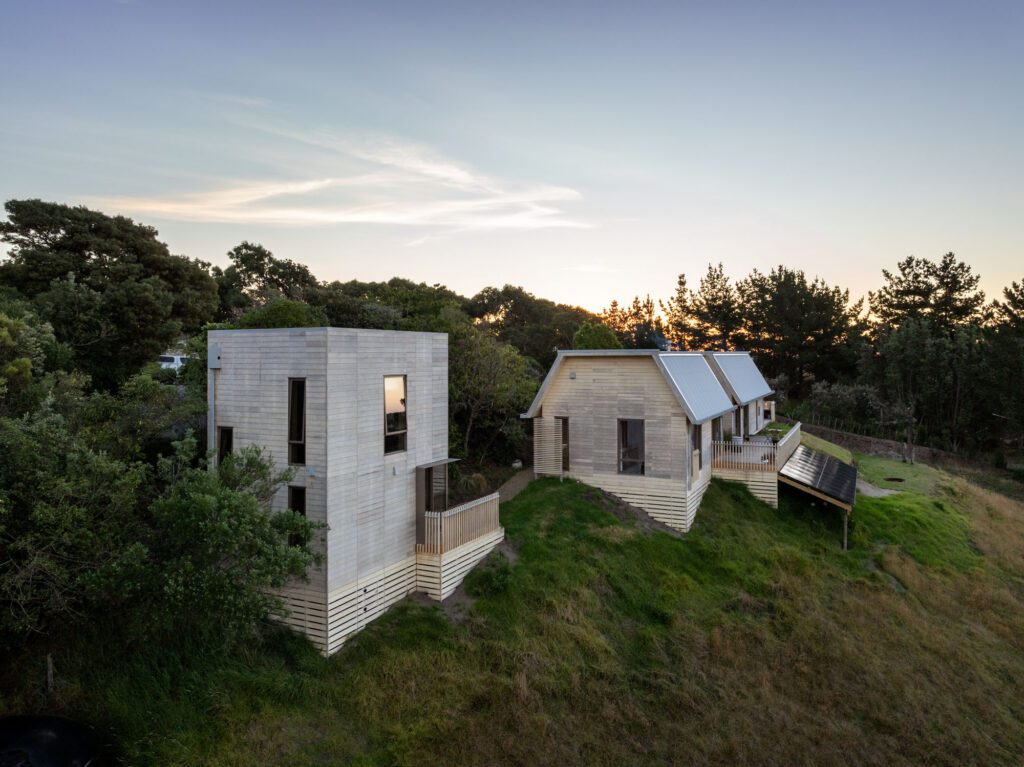
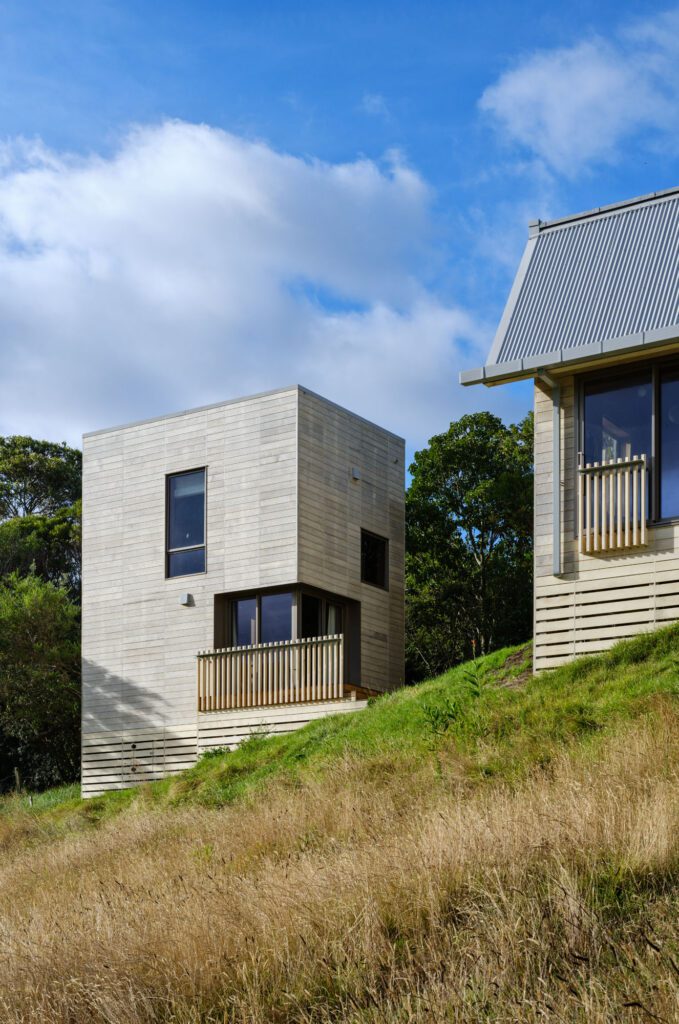
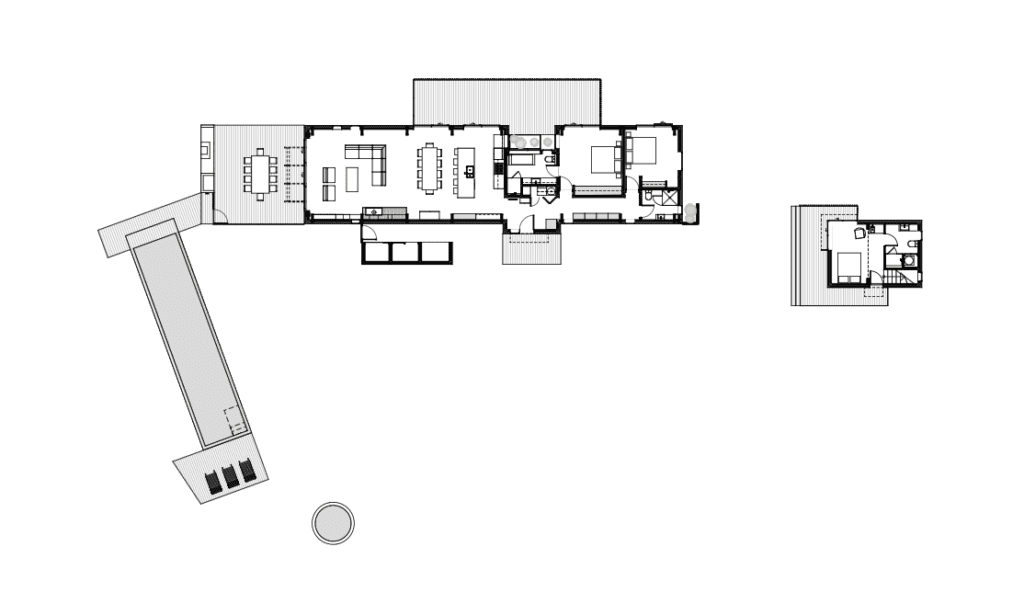
One larger 'barn' form contains the primary living spaces; a smaller tower-like structure provides independent accommodation for guests. The slope leads to the protected wetlands where the old cottage has been relocated to and where permaculture gardens have now been planted.

Botanists have recorded a number of uncommon plants around this area, including the delicate swamp buttercup, several regionally scarce sedges, and the sand-loving kānuka relative, Kunzea amathicola, a species considered at risk. Other unusual wetland plants — from tiny herbs to distinctive rushes and sedges — find a foothold in these saturated soils. 

The shy New Zealand dabchick and the elusive spotless crake move quietly through the reeds, while the call of the golden bell frog has been heard around these parts, adding another voice to the local dawn chorus.

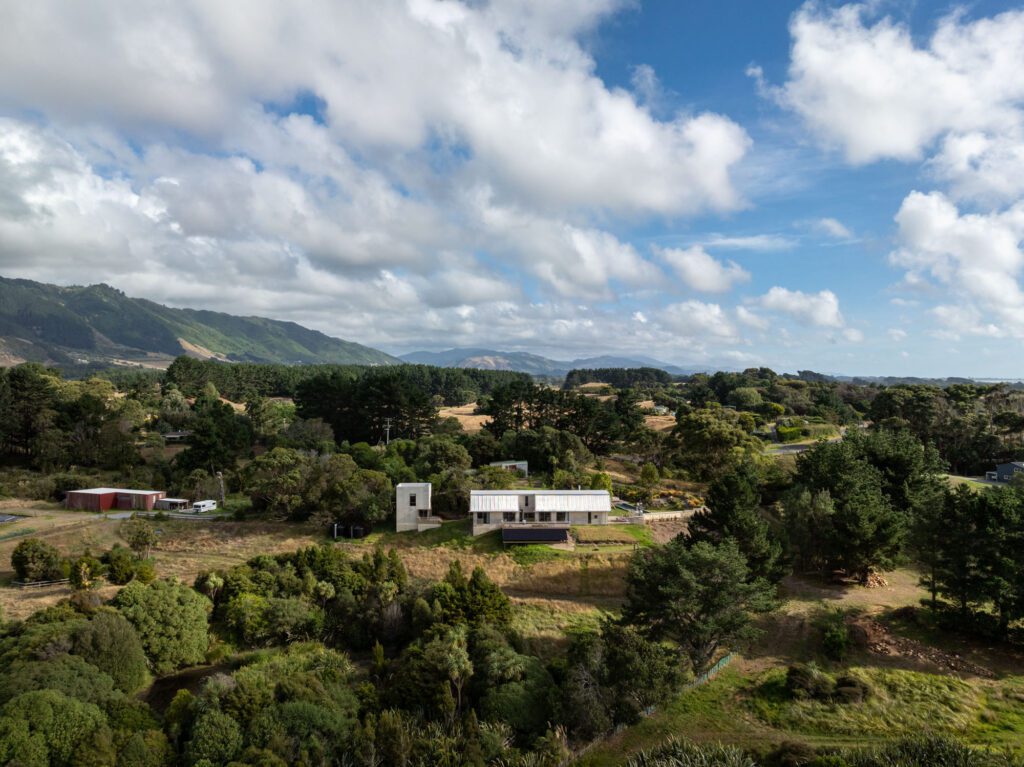
The house sits on the upper terrain as a pair of simple volumes observing down the slope and onto the wetlands.

So, when the architect found out that his offer to purchase this land had been accepted, he “nearly fell off the chair” and quickly took on the task, knowing that this was “not just a house, but a whole property, and we’re just short-time guardians of it”. 

After significant gymnastics to ensure trees were not affected, the existing cottage was relocated down the slope, preserving both material resources and the narrative of habitation on the site. Around it, a permaculture garden and orchard have been expanded, producing fruit, vegetables, and seasonal abundance — although, as the pūkeko demonstrate, not always for the intended audience. The idea, Stephen says, is eventually to use the permaculture gardens at the bottom of the property as an education space for kids to learn about land and growing food on it.

The new house sits on the upper terrain as a pair of simple volumes observing the slope and precious wetlands. One larger ‘barn’ form contains the primary living spaces; a smaller tower-like structure provides independent accommodation for guests. 

Between them, sheltered outdoor areas — including a swimming pool — adapt to the site’s contours and frame views toward the surrounding hills.

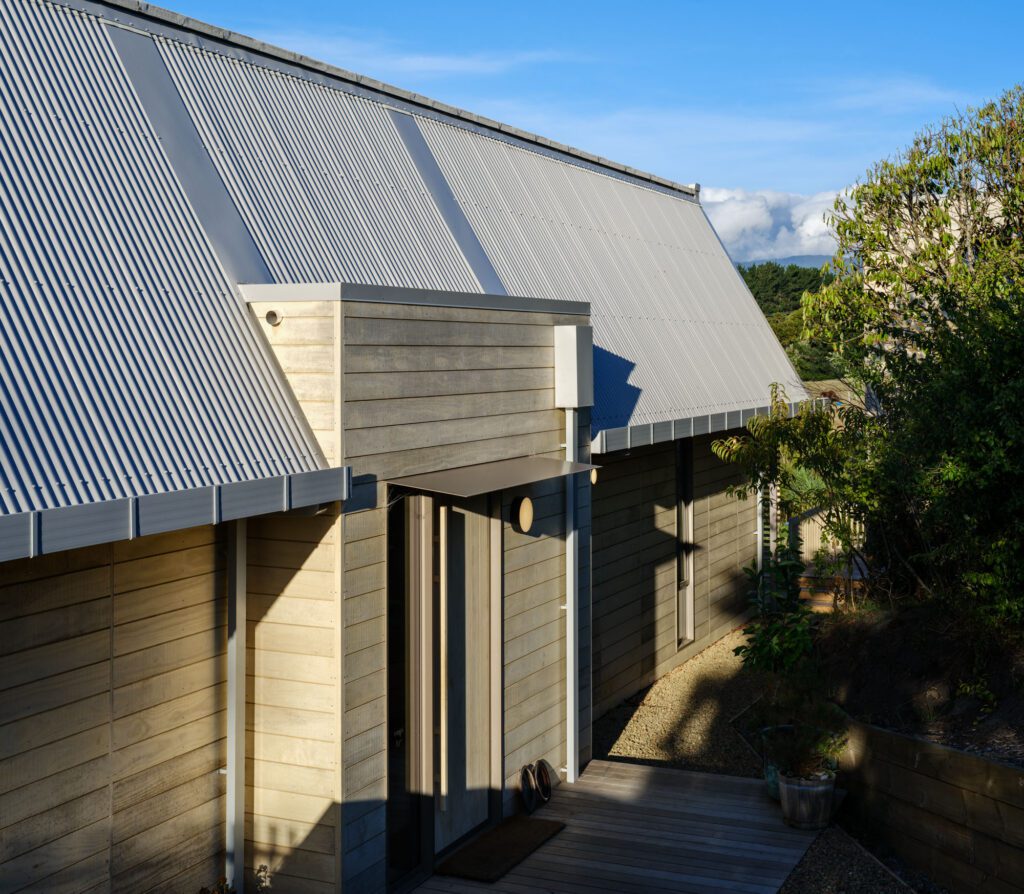
Architecturally, the composition is deceptively simple. The roof planes fold downwards to become part of the walls, creating a continuous envelope that wraps the buildings in a single material language. 

The furnishings are a mix of existing and recycled with a few new pieces from Simon James and Dawson & Co.

“Where does the form come from?” Stephen asks. “Who knows! Some people have mentioned the calmness of the barn as being Japanese; some say it is Dutch and Scandinavian; others American.” 

He does admit a Herzog & de Meuron moment of “trying to pull the roof down the walls to give us that solar gain”.

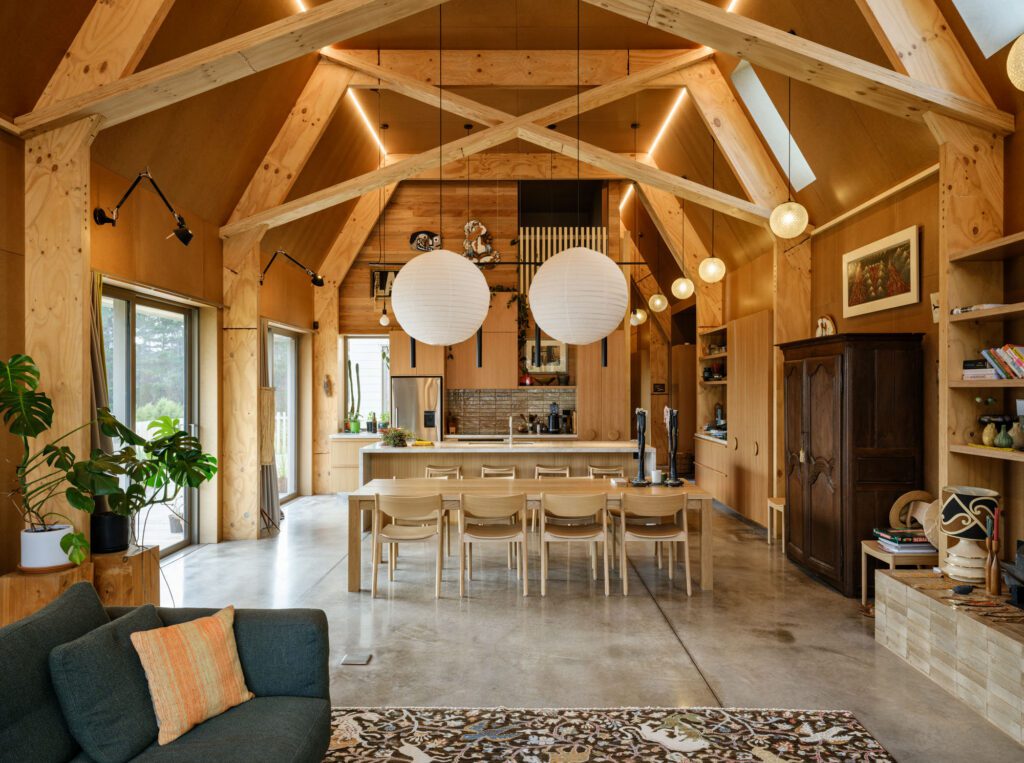
Structurally, cross-laminated timber panels and trusses span the primary volumes. Recycled timber is used extensively for interior finishes, allowing the grain, tone, and texture of the material to remain visible.

Cross-laminated timber panels and trusses span the primary volumes. Recycled timber is used extensively for interior finishes, allowing the grain, tone and texture of the material to remain visible.

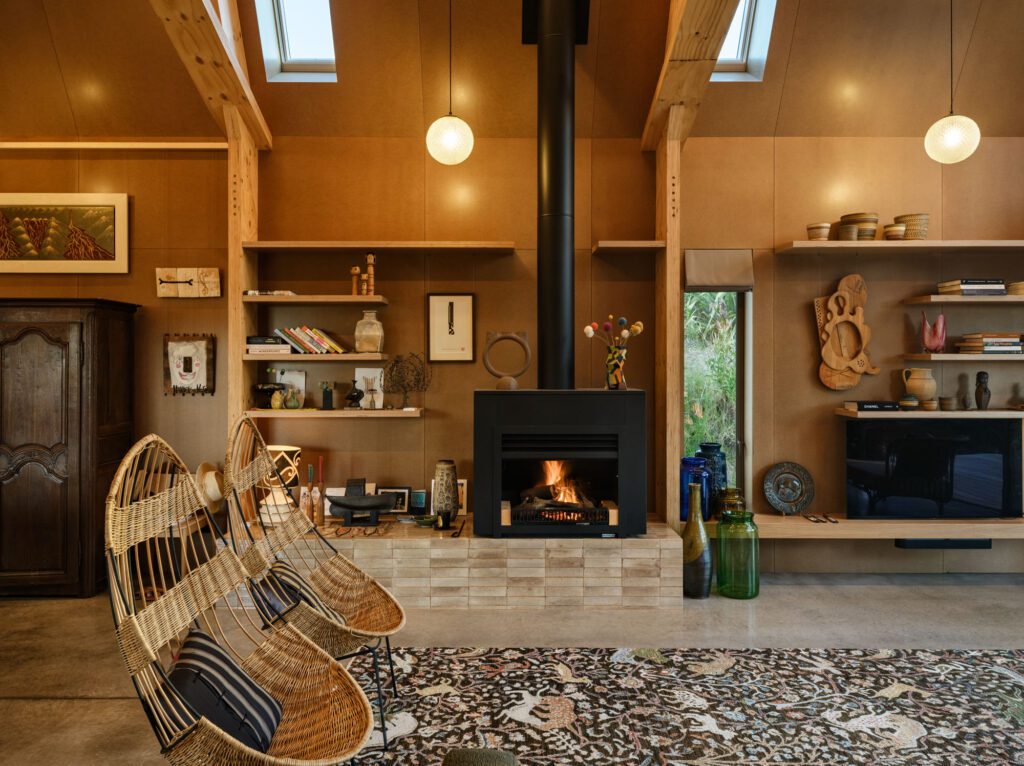
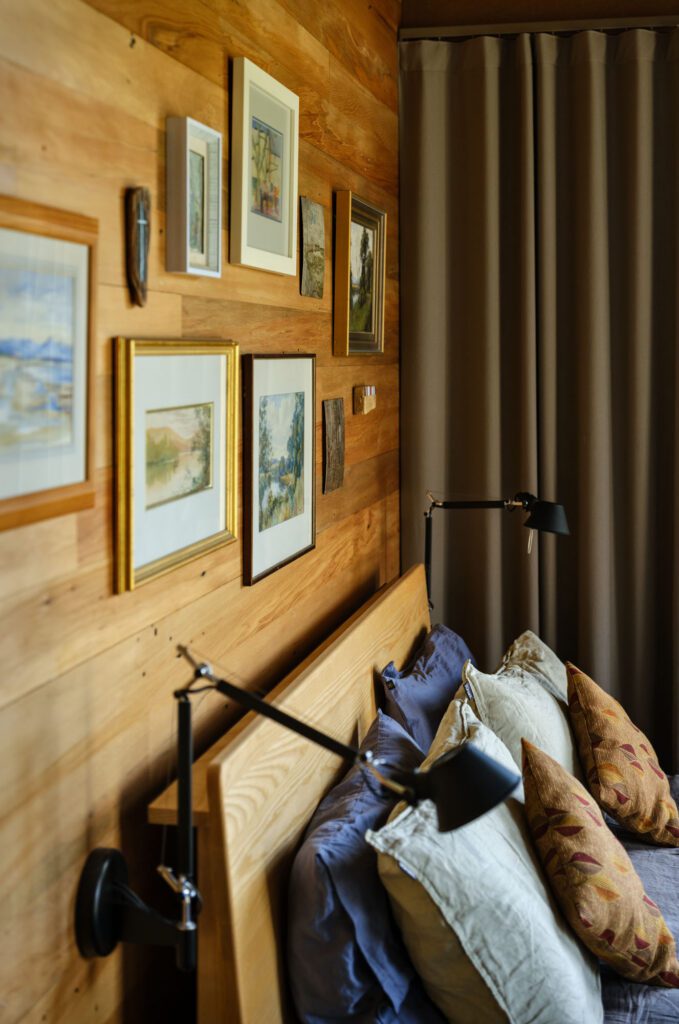
The decor and the furniture also speak of the ethos of circular economy at play here. Every object has a story: colourful pieces of textile that were purchased on the side of the road on East Asian holidays; a motley crew of trinkets and decor from Laos and Indonesia; old glass orbs from the Czech Republic; vintage objects and furniture that have always been in the family or purchased from Webb’s auctions. 

“The kids laugh because we’ve never had any new furniture, ever,” says Stephen, “so, when we ordered a couch from Dawson’s, and some Simon James, they became things they really relish. They love it.”

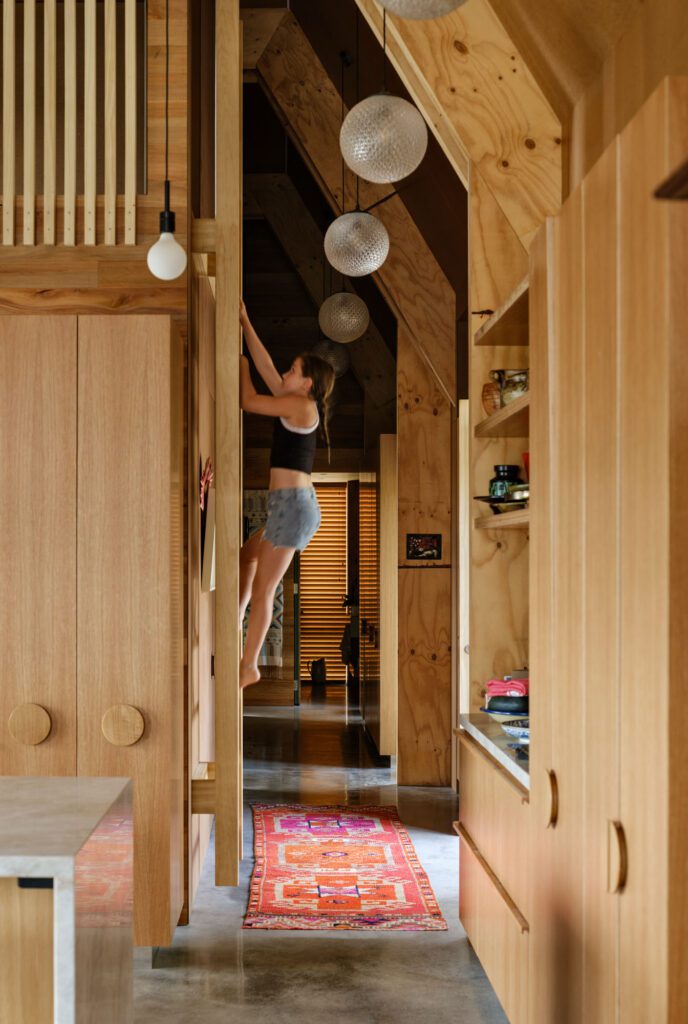
A playful mezzanine level off the main social area is a favourite of visiting children and teenagers, and is sometimes used as a yoga space.

There is a highly relaxed atmosphere here, a soothing feel of lived-in comfort that is both bohemian and highly detailed while eschewing flashiness or newness, opting instead for patina and depth. 

“People often come in and just say ‘Ahhh’ as if suddenly relaxing,” Stephen comments. 

If the architectural and interior language of Kāpiti House are deliberately low key, its environmental ambition is anything but. The building was conceived from the outset as a high-performance rural family home capable of operating largely off-grid, with sustainability embedded at every step, from landscape planning to material source tracing and construction detailing.

Recycled materials and vintage furnishings drive forward the desire to adhere to circular economy principles.

Passive design forms the backbone of the building’s performance. The house is carefully oriented to maximise winter solar gain while limiting summer heat. Deep eaves and carefully placed shading elements block high summer sun but admit lower winter light. Limited glazing on exposed elevations further controls heat gain.

Ventilation is handled through a combination of cross-flow openings and stack-driven convection, allowing the house to purge warm air naturally. Together with the thermal mass of the concrete floor slab, these strategies stabilise interior temperatures without mechanical cooling. 

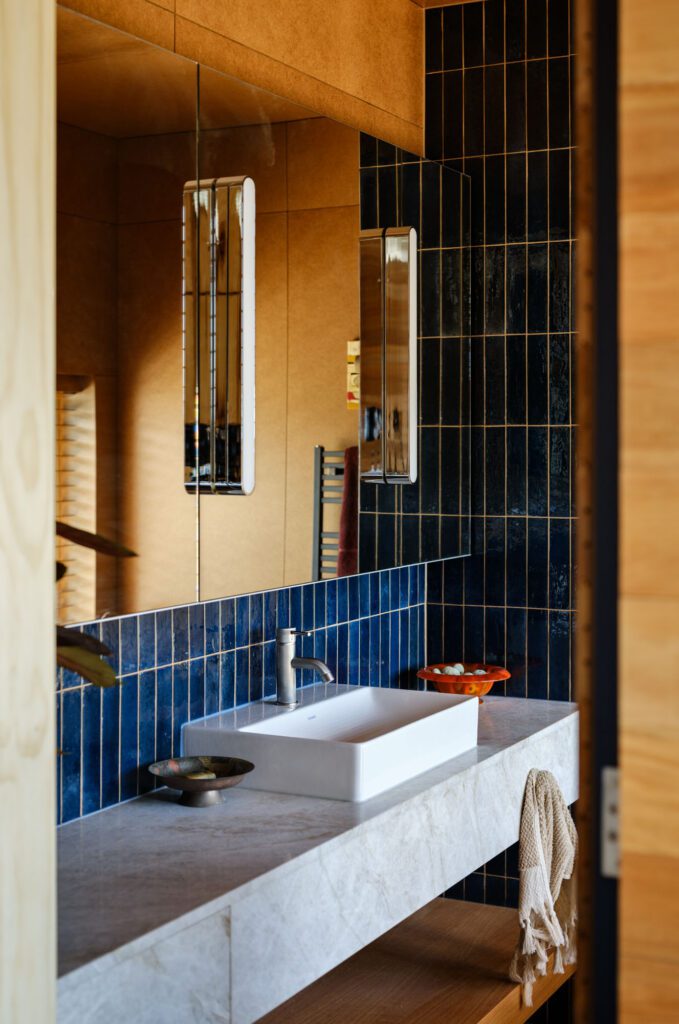
Tactility and pops of colour abound throughout this home.

A high-performance building envelope completes the passive system. Continuous external insulation wraps the structure, while thermally broken aluminium joinery is carefully aligned with the insulation layer to eliminate thermal bridging. 

Renewable systems extend this efficiency further. Photovoltaic panels supply on-site electricity, rainwater harvesting provides the primary water supply, and a biological wastewater treatment system processes effluent on site. 

The owners have not been in the house for over a year yet, but energy modelling predicts a heating demand of just 6.98 kWh/m² annually, comfortably within Passive House thresholds, and a total predicted energy use of roughly 20.9 kWh/m² per year — far below the 60–120 kWh/m² typical of conventional houses.

Heat management has been paramount here with orientation, openings, awnings, and overhangs all working in tandem to ensure an energy-efficient home.

High above the kitchen’s back wall, a hoya plant hangs gingerly over the range hood’s timber cabinetry. 

“It was from my childhood,” says Stephen, pointing out that the indoor plant has been with his family since the early ’60s. “It went to my parent’s house, and, after they died, we moved it up to be with us.”

According to him, the old tropical vine has these incredible pink and white clusters of flowers that burst out “when it’s happy” — a reminder, perhaps, that the most sustainable homes are those designed to hold and adapt to generations of life, be it flora, fauna, human, or otherwise

Judges’ Citation

This rural home approaches sustainability not as a checklist of technologies but as a holistic way of living. Architecture, landscape, and daily life are intertwined, creating a place that feels incredibly joyful, generous, and deeply personal. 

Set lightly within a rural clearing, the buildings sit among wetlands, gardens, and productive landscapes that support both biodiversity and food growing. The house itself can operate off-grid, with careful material choices, low embodied carbon, and passive environmental design guiding every decision. 

Inside, the spaces are warm, lively, and full of artefacts gathered through a life of travel — a reminder that the most sustainable homes are those designed to hold, and adapt to, a lifetime of living.

Project Credits

Architecture: Studio Pacific Architecture
Build: Pinnacle Construction
Words: Federico Monsalve
Images: Simon Devitt
Cladding: Accoya

Latest video features

In the Coromandel, a home with a humble profile and a thoughtful design makes the most of a stunning location.

Built with awe-inspiring attention to detail, this Arrowtown home is a fresh interpretation of a familiar Otago rural vernacular.

This sculptural Northland bach is a perfect north arrow on a remote farm high above the sea.

With the sun on its bow and the community at its stern, this is a house in which the elements are always front of mind.

Trending articles

Arts and Books

An Exhibition of Chinese Contemporary Art

An exhibition of Chinese contemporary art arrives in Auckland, tracing decades of cultural transformation through works that span performance, installation and digital media.
Design News

Lasting Grain

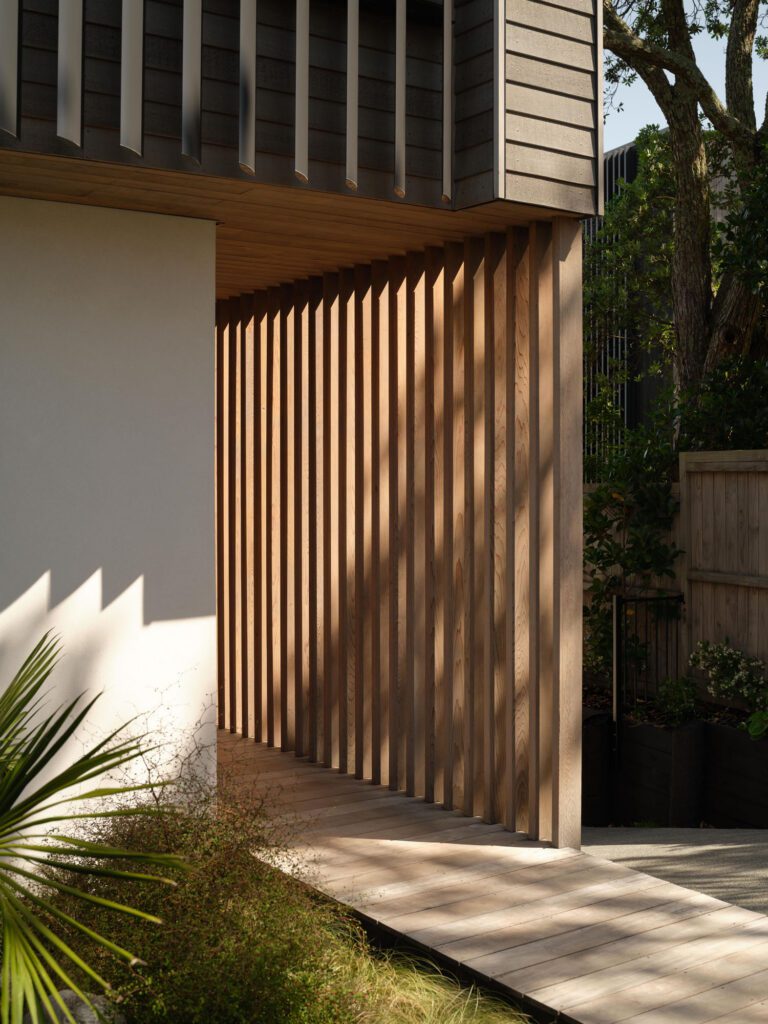
Set into a suburban site in Kohimarama, Clay Block House by Daniel Marshall Architects is a study in materiality and environmental performance.

Arts and Books

Introducing Architecture Aotearoa

A new architecture magazine, Architecture Aotearoa: New Zealand’s Buildings, Cities, and Culture will launch in late May 2026 as a collaboration between Te Kāhui Whaihanga
Design News

Written in Stone

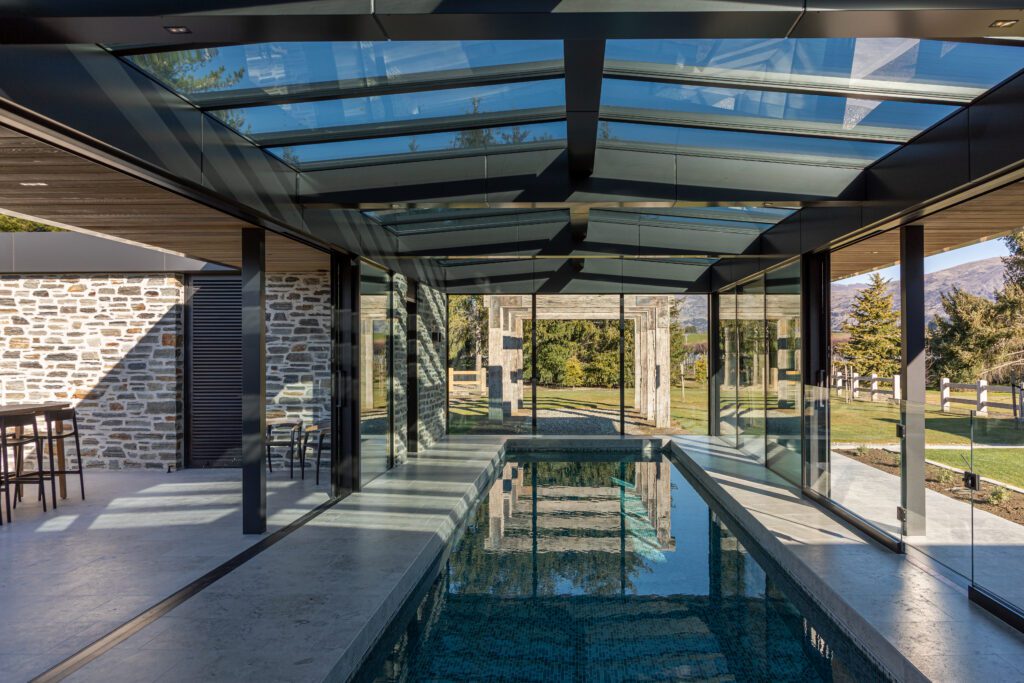
At the heart of this Wānaka home by Johnston Architects is the enduring presence of Jura Grey limestone from Quantum.