


City Home of the Year 2026

On a tight, steep inner-city site, this four-storey home reimagines urban living with rare generosity, layering multiple outdoor living spaces and a rooftop terrace into its vertical form.

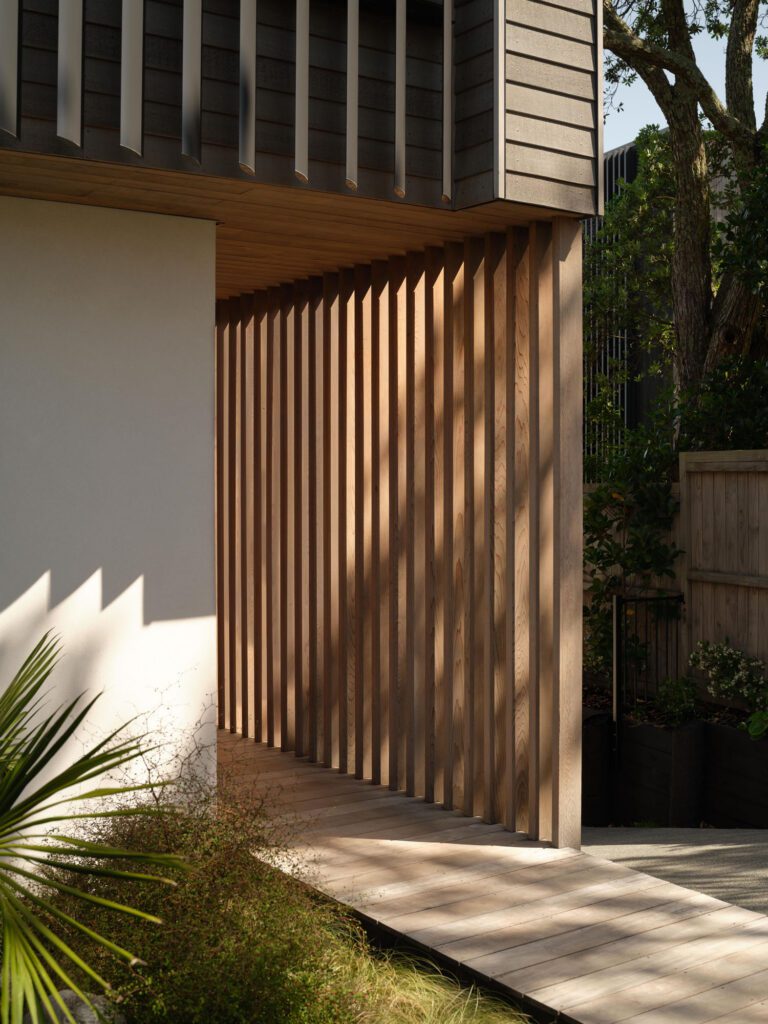
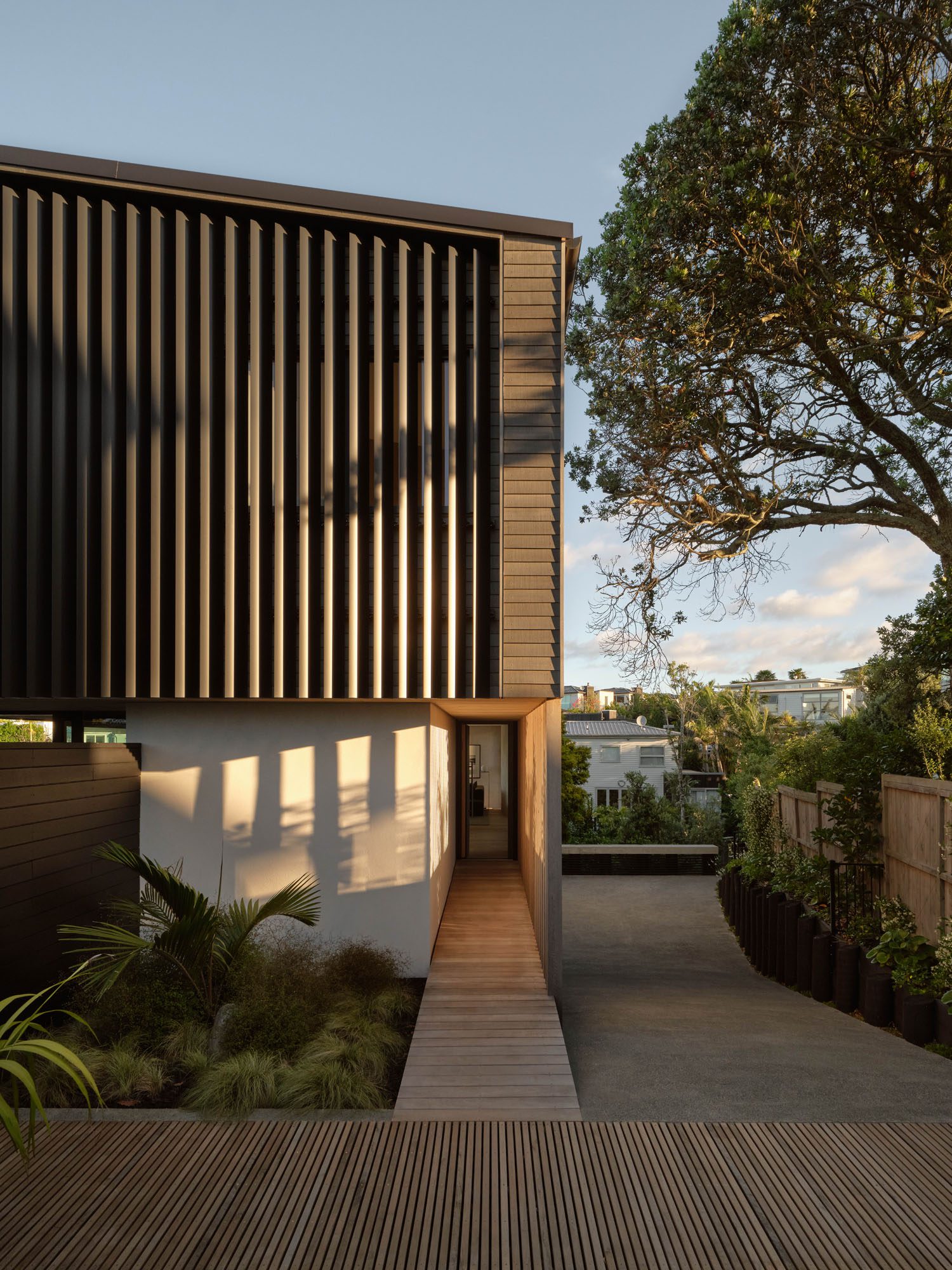
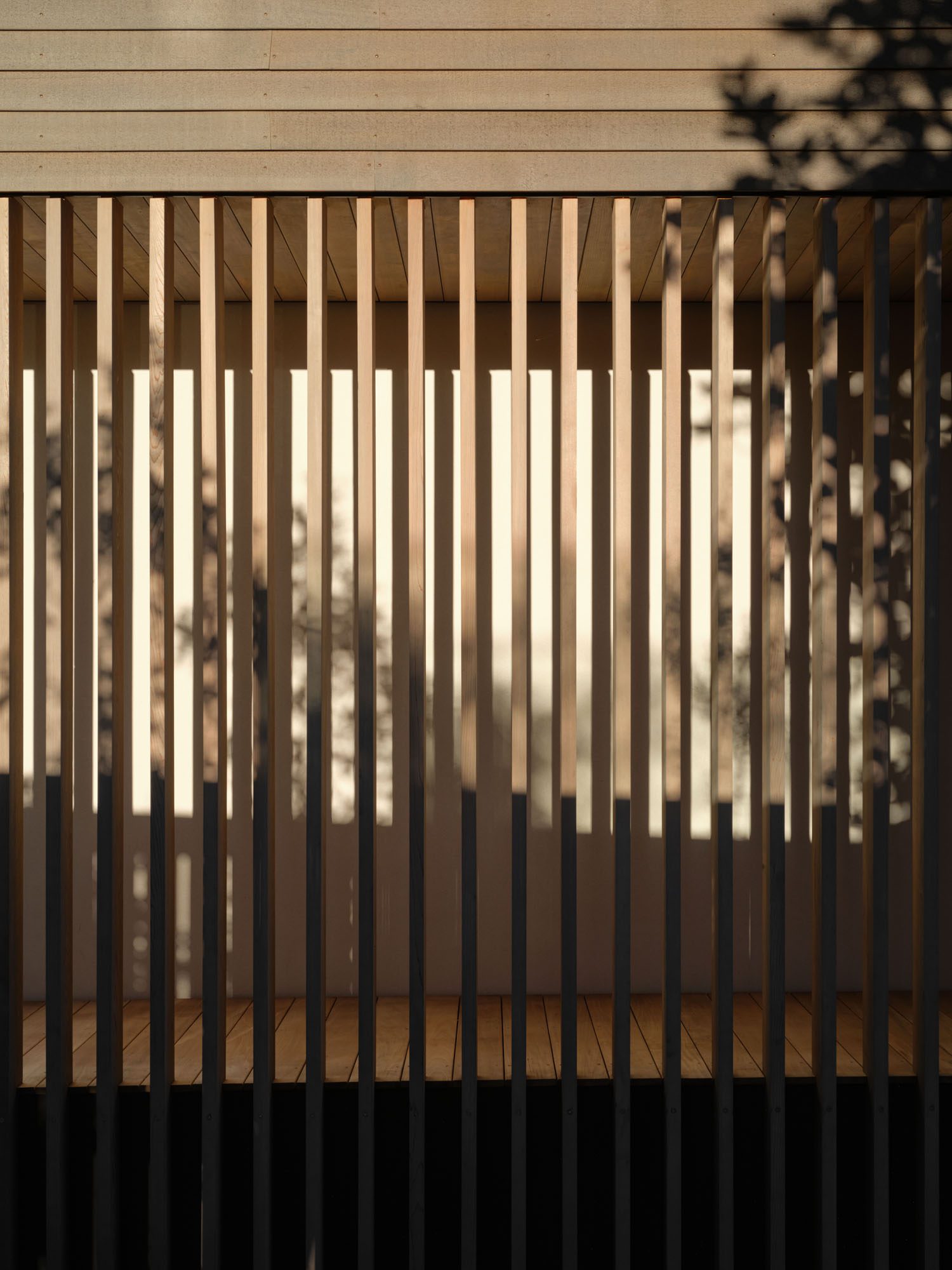
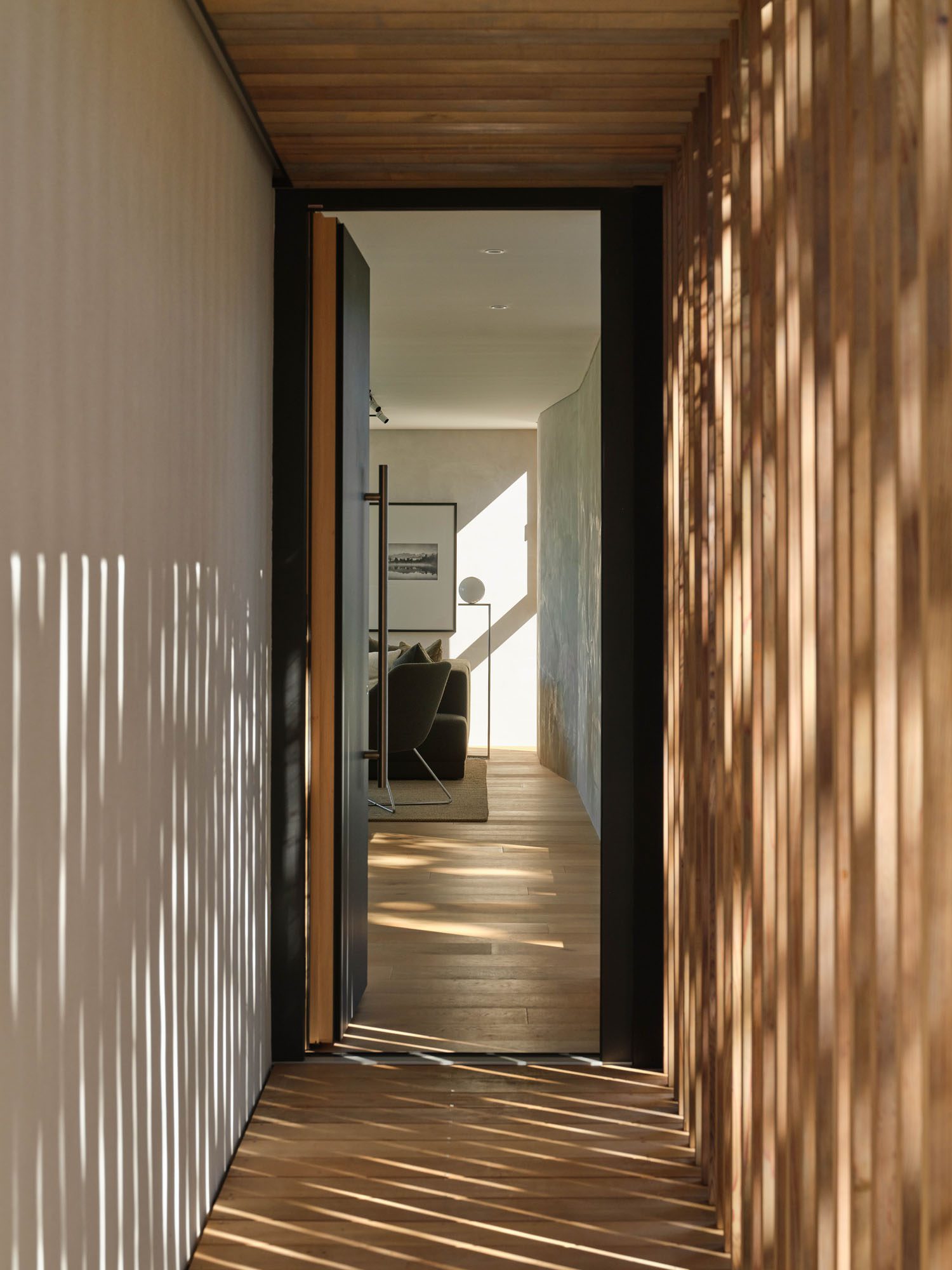
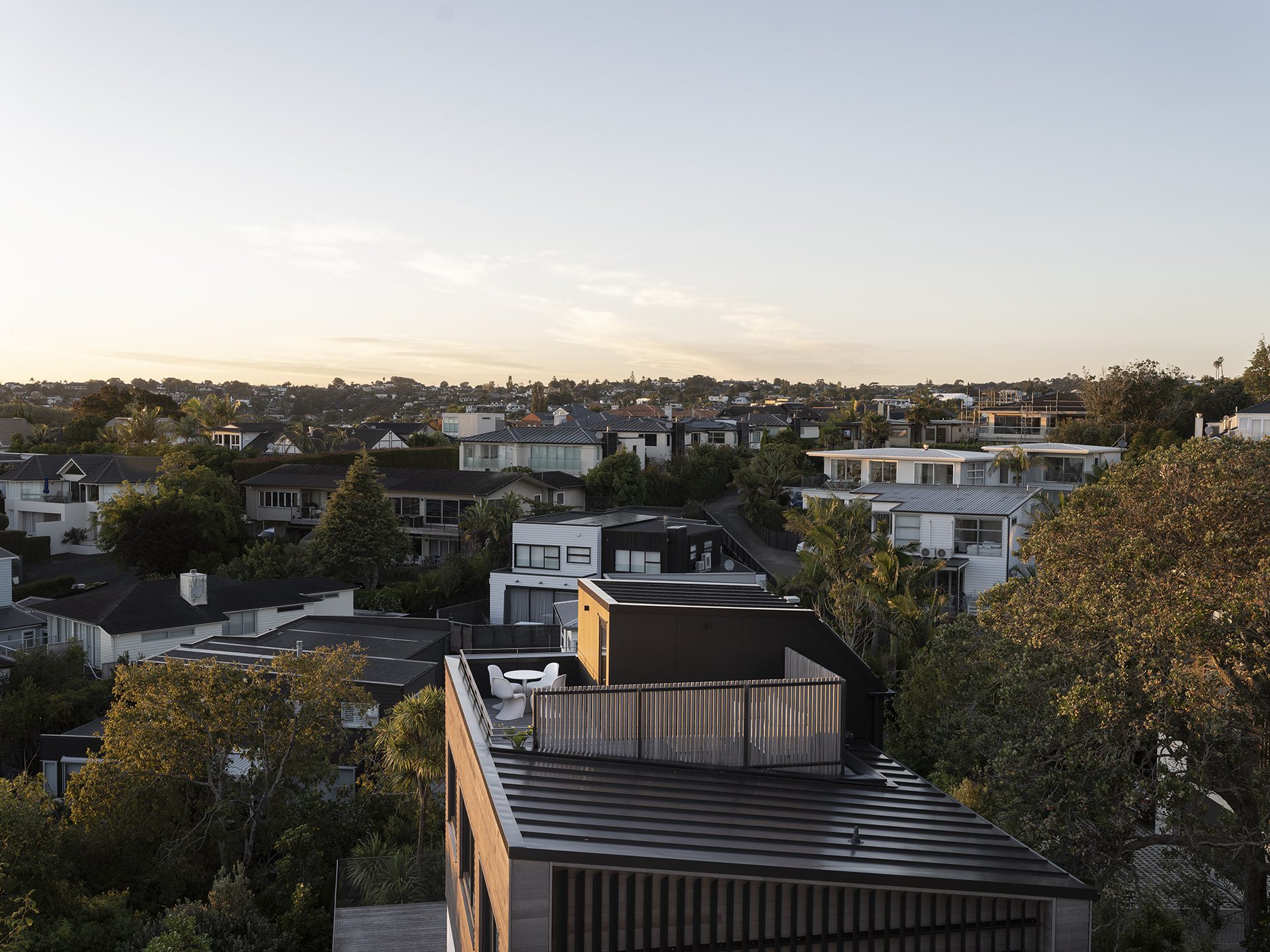
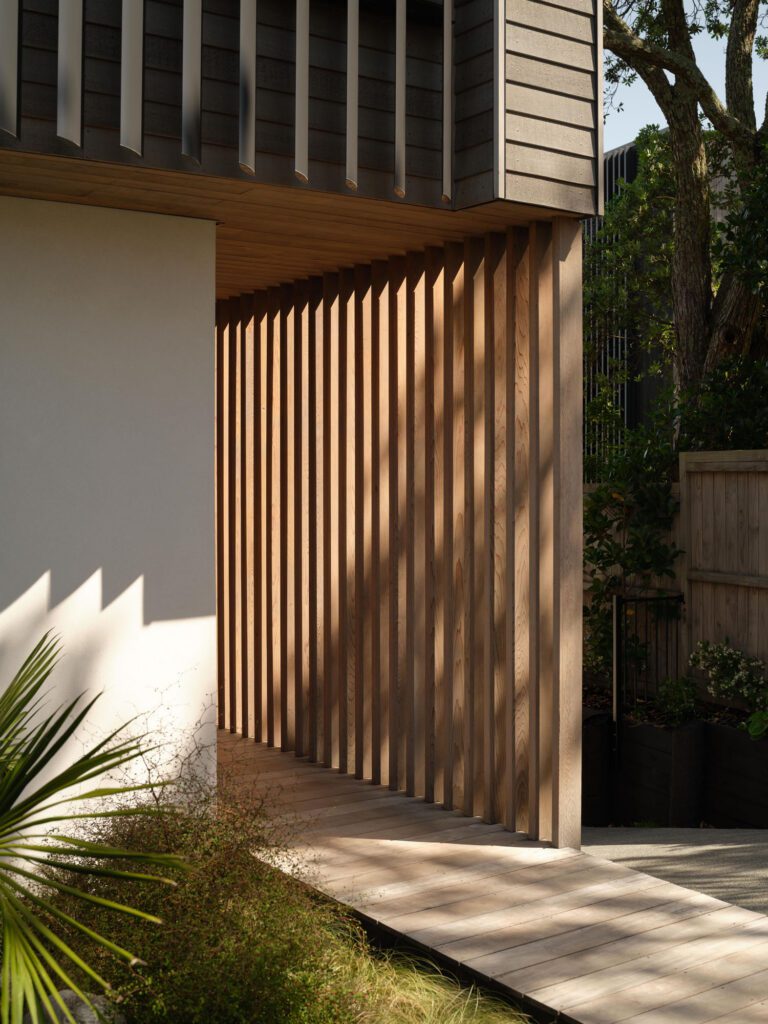
Almost midday: The overhead sun slices through bladed screening to cast palisade shadows onto a plaster entry wall. Alongside, an elegant timber bridge fords a dip in the land and leads to the front door. Nestled between neighbours and a suburban stream, this home in Kohimarama, Auckland, is a masterful manipulation of space in a material palette that speaks the language of its built surrounds — but tells its own story.

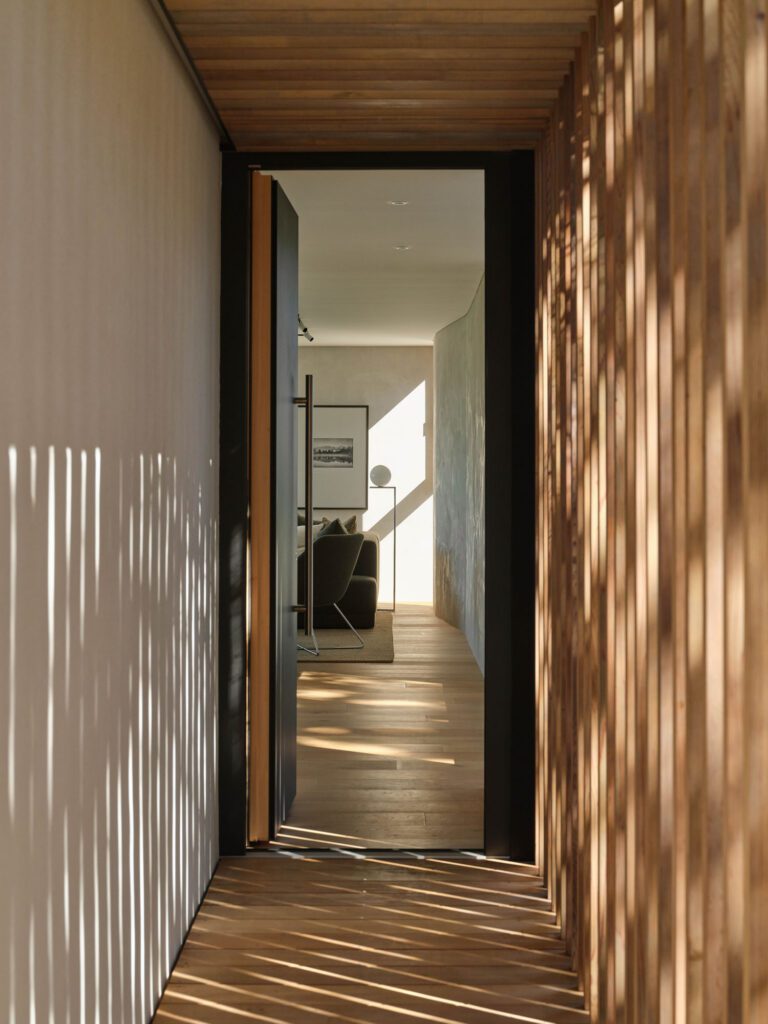
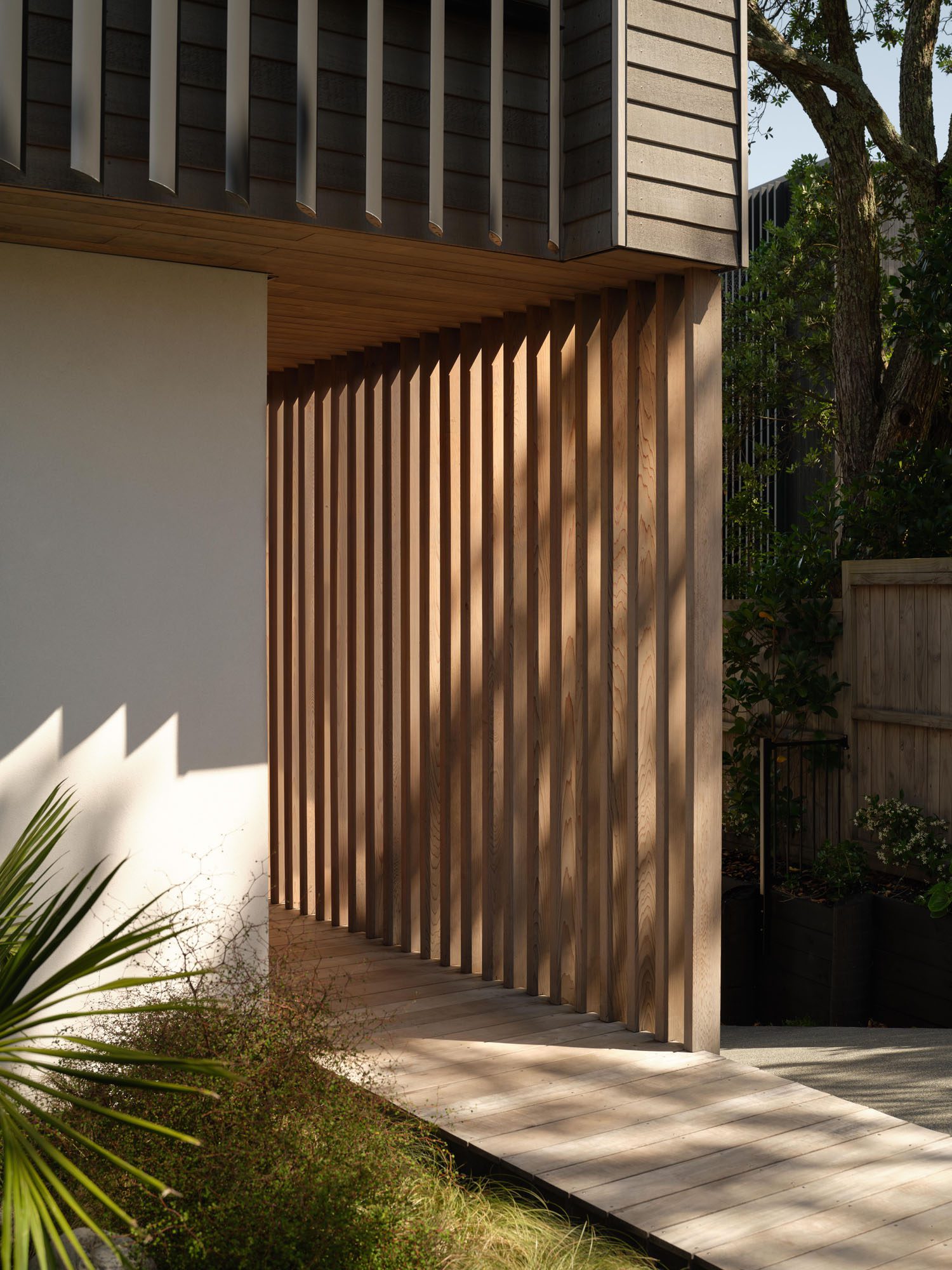
A mature tree casts dappled light onto the entrance, which is filtered again through bladed timber screening.

The charm of transforming a 1960s house soon faded in the harsh slap of an Auckland winter spent with three young children and buckets of paint. That’s when the owners, not long returned from living in Melbourne, asked architect Daniel Marshall of DMA for his thoughts. He delivered a clear-eyed interpretation of the expensive reality of renovation, then came up with the idea of moving the driveway to the southern edge of the 1780 square metre section — and subdividing. 

“Dan made it sound simple. My husband loves a big plan, and I happily went along for the ride,” says one of the owners.

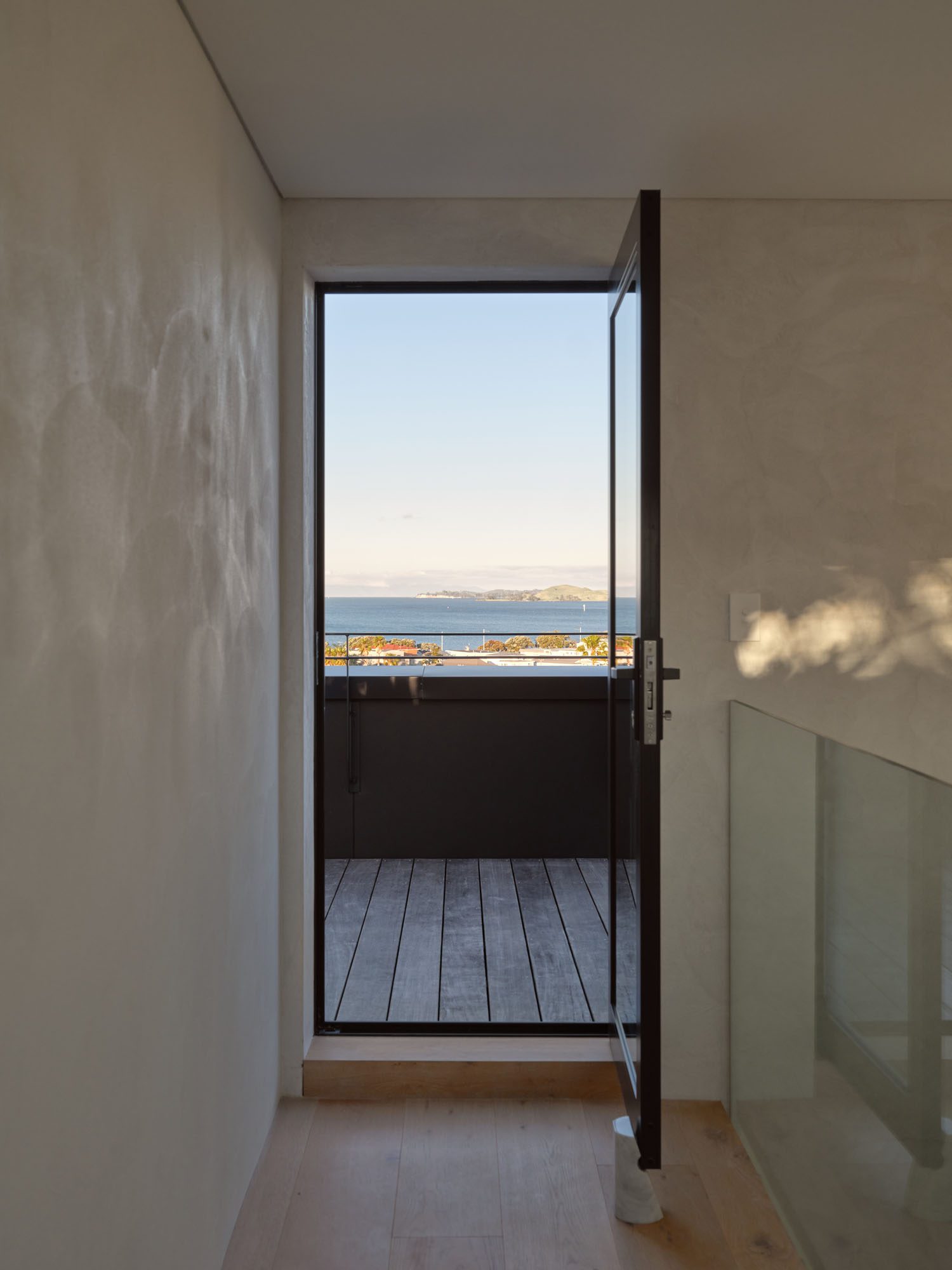
A five-year ride — but worth it. The multilevel dwelling that now tucks in alongside pōhutukawa, karaka, and a magnificent golden tōtara captures views across a jungle of rooftops to the dark trace of the Coromandel Peninsula on the horizon. Oriented for sun and sea, it’s light, resilient for family living, and, best of all, warm.

Yet, as modern Kiwi as this property looks from the outside, its bones are foreign. The owners had clocked thermo-clay brick houses on their travels through Spain and requested something similar. Here, Ziegel blocks from Germany — which they imported directly due to the complexities of constructing during the pandemic — became the framework. 

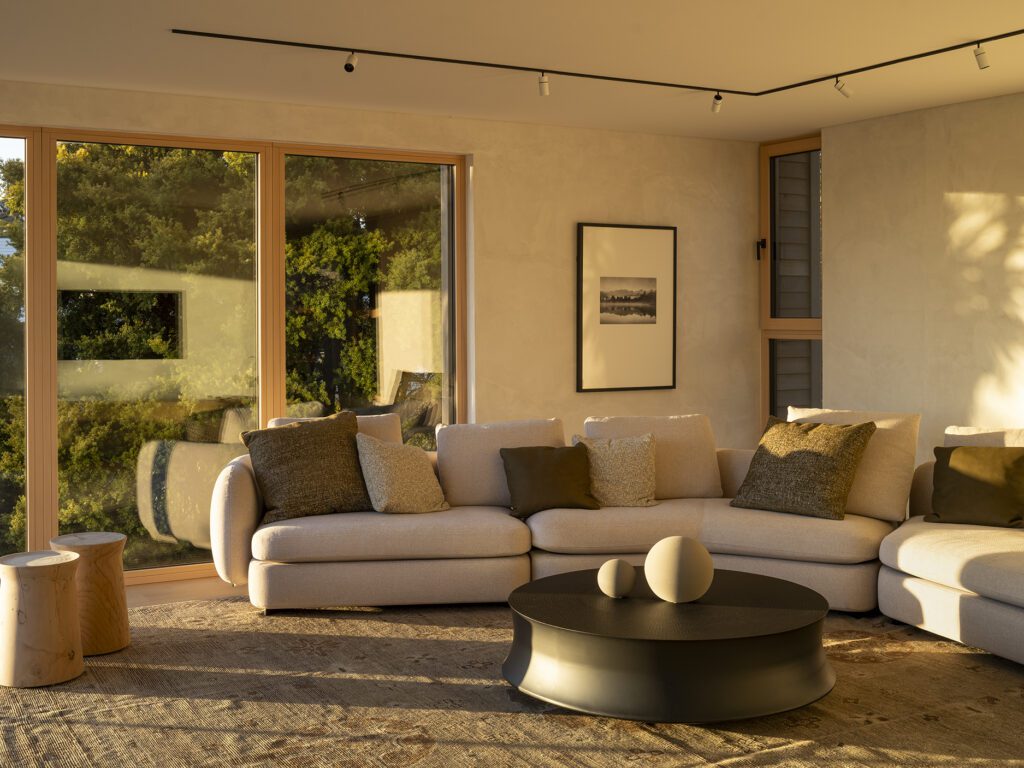
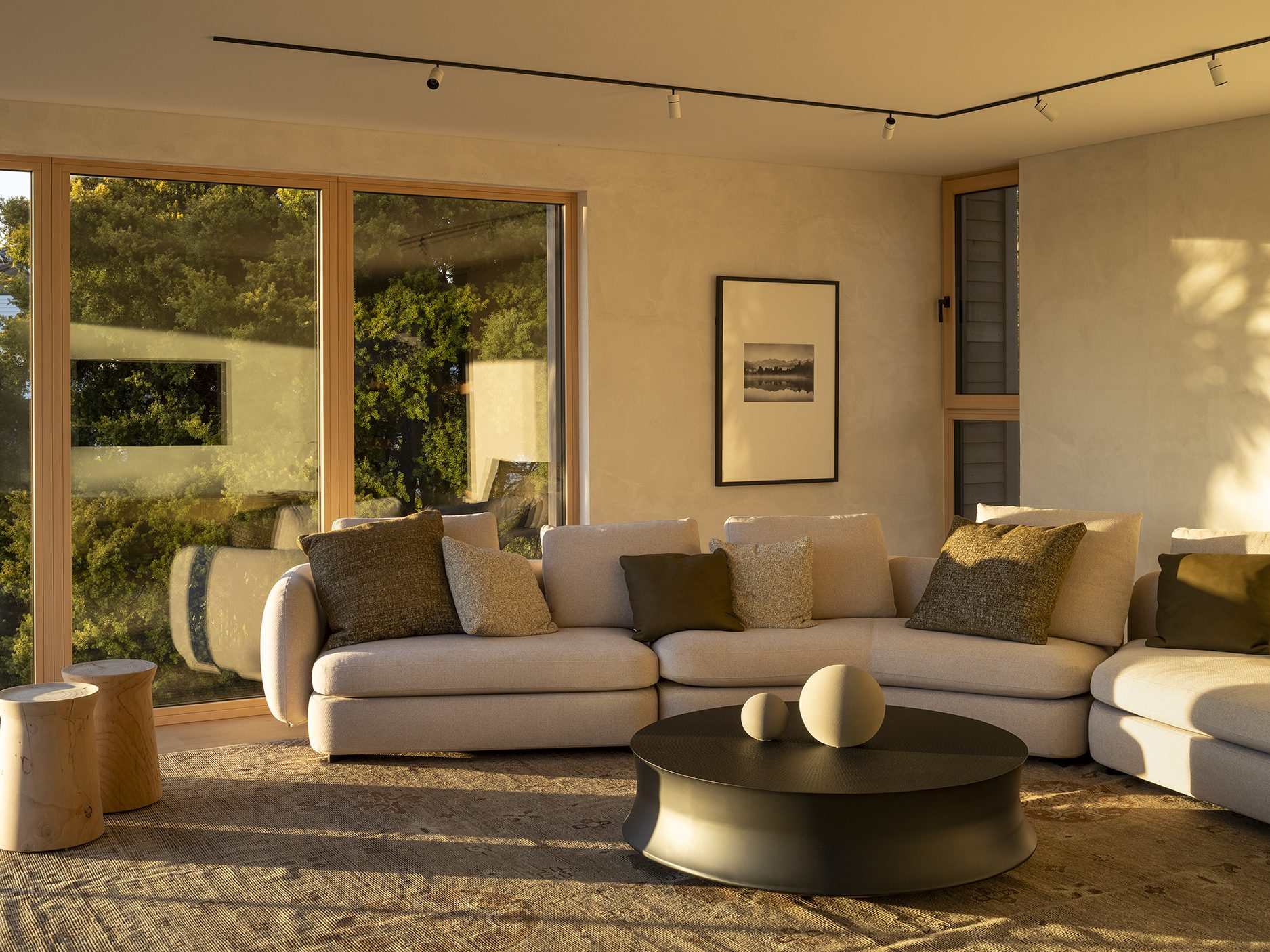
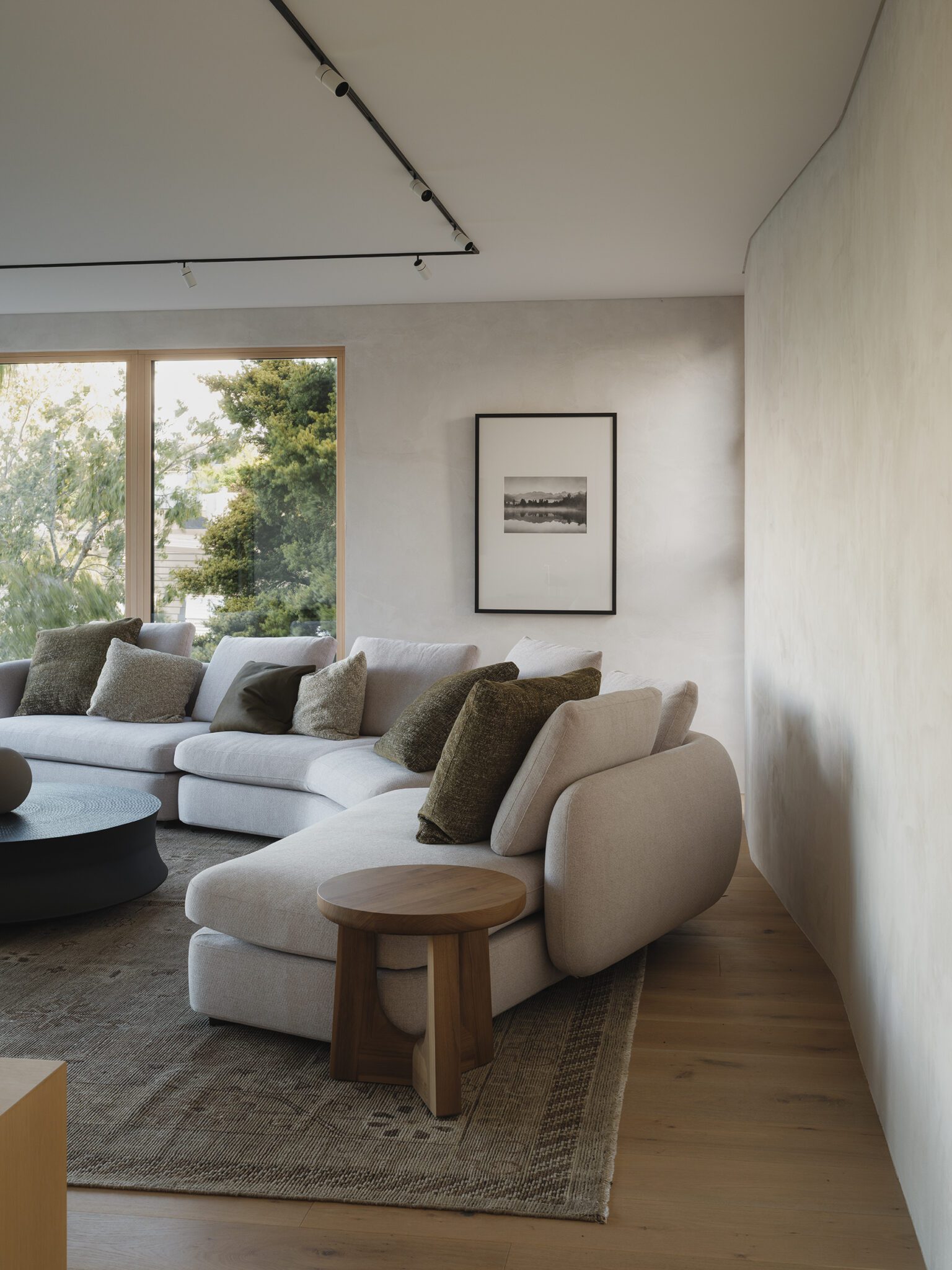
Morning light pools in the main living room, where extensive glazing, European joinery, and textured walls combine to create a space of alluring calmness. Dama coffee tables by Poliform reinforce the natural textures of the detailing, while the curving Saint-Germain sofa echoes the tonal palette of the walls. The Soori coffee table by Poliform is a visual centrepiece — dark in shadow and almost golden when bathed in light. All are from Studio Italia.

“The clay blocks are quick to build with and have superb insulation,” explains Daniel, “but they did arrive with instructions in German.” 

No worries. A German builder was found to assemble them. This was a theme set to continue. The same builder then lime-plastered the block walls in a Sto system (from Weizen, Germany, near the Swiss border). Triple-glazed joinery units (again German) with beautiful Nordic spruce frames completed the picture.       

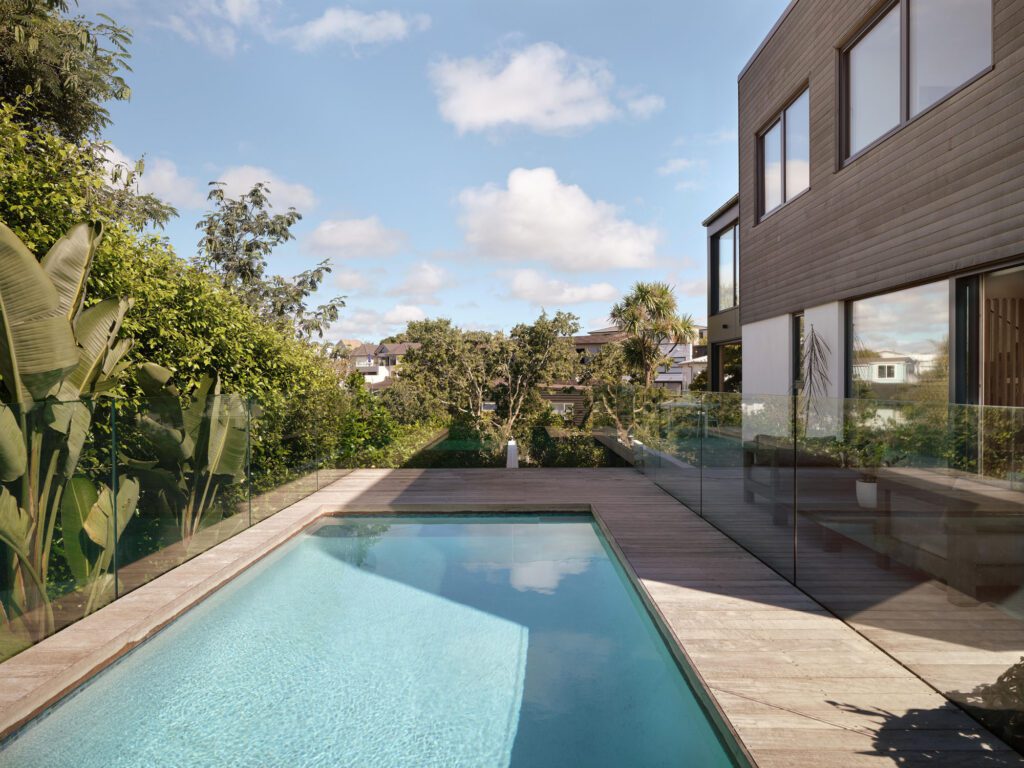
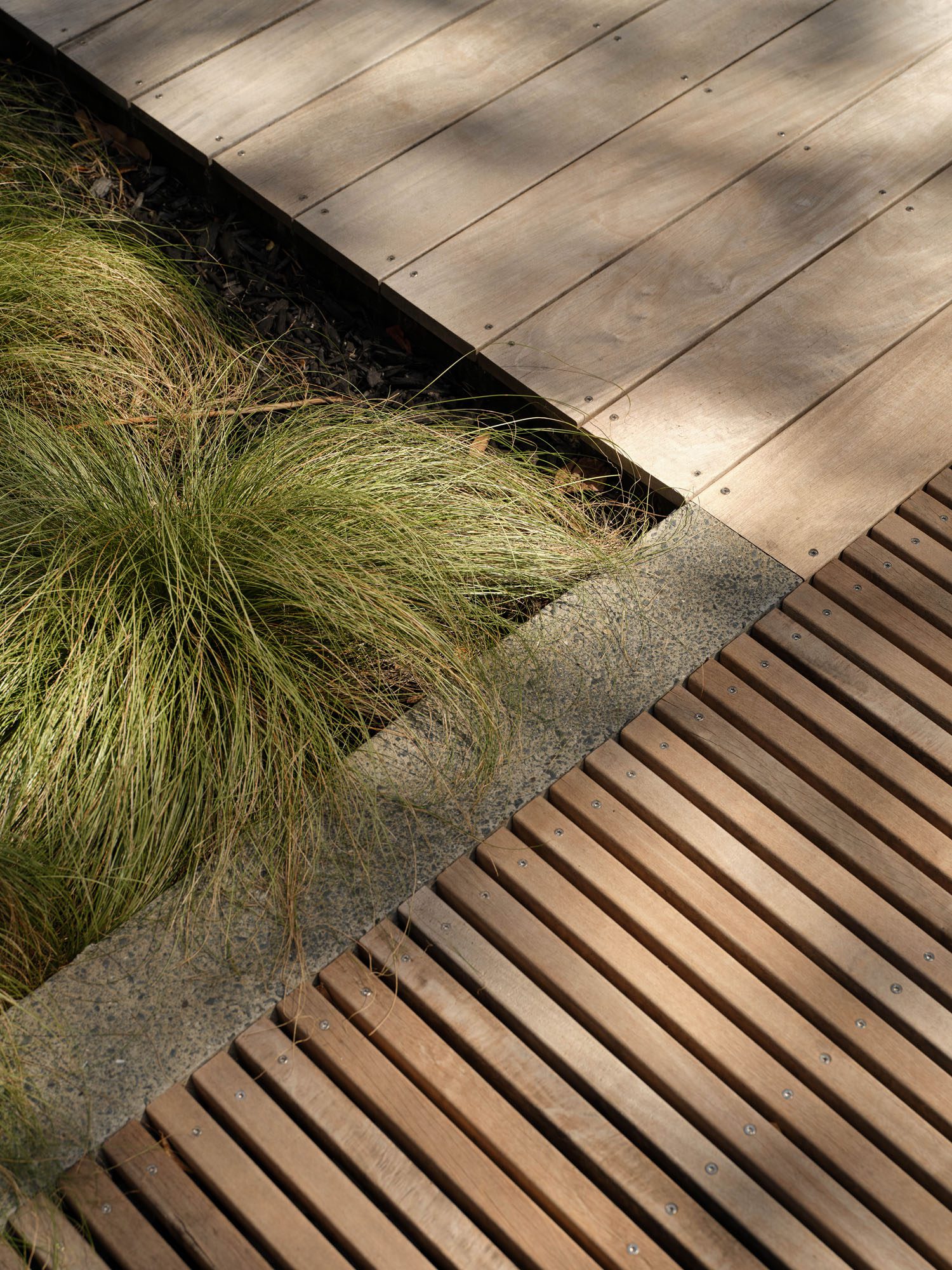
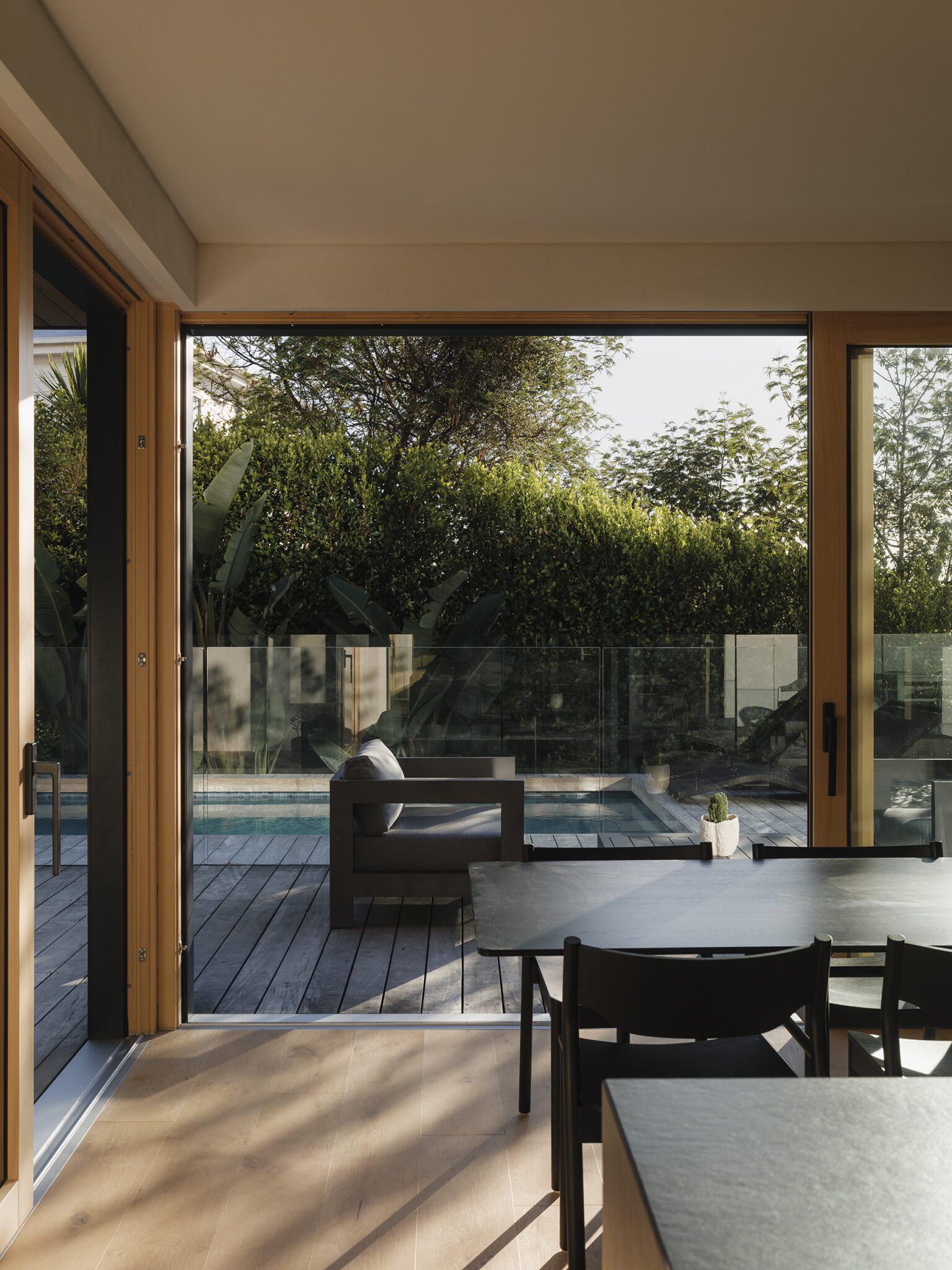
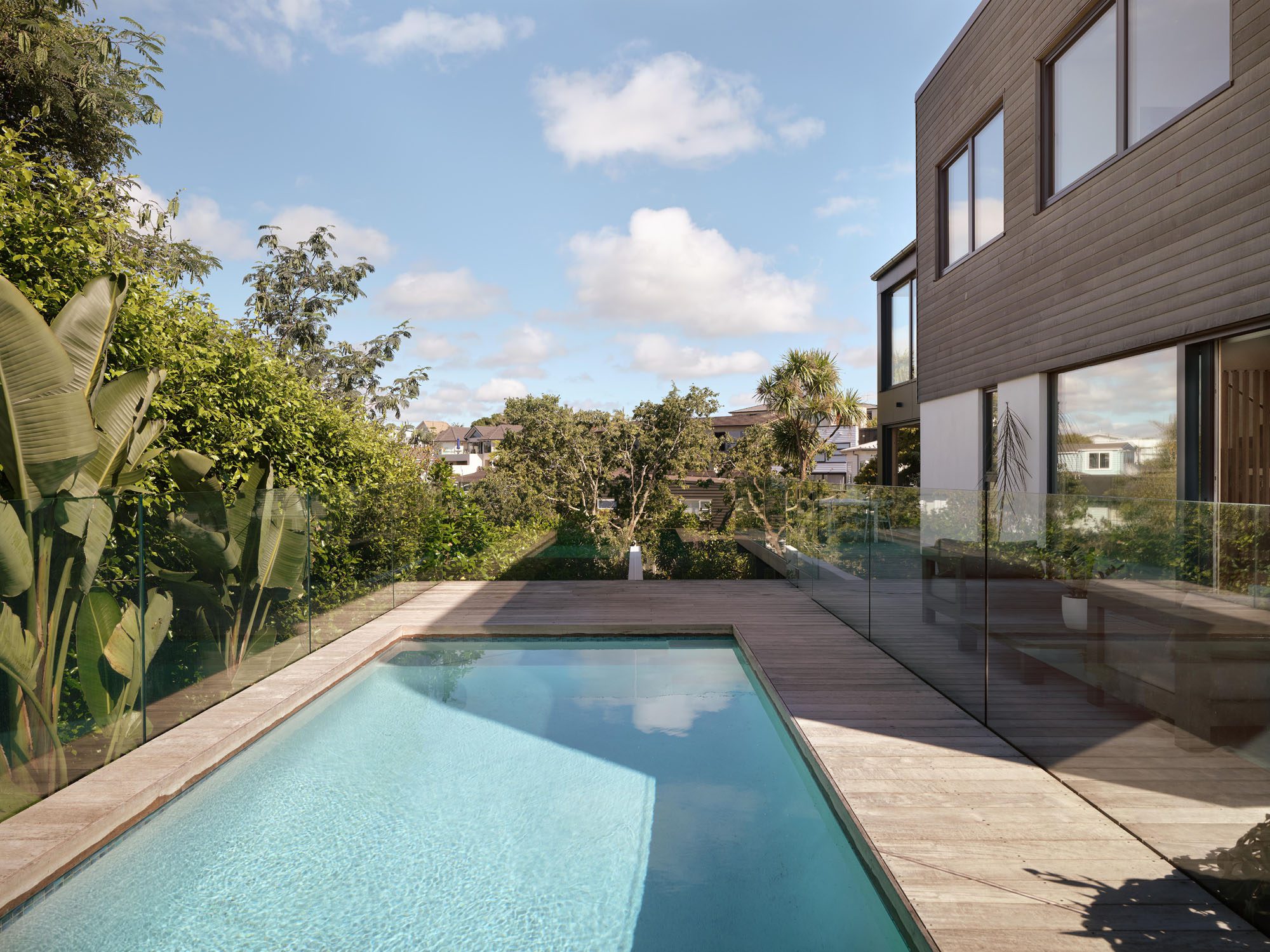
The kitchen and dining area open onto a lush poolscape; vast decking extends the length of the home.

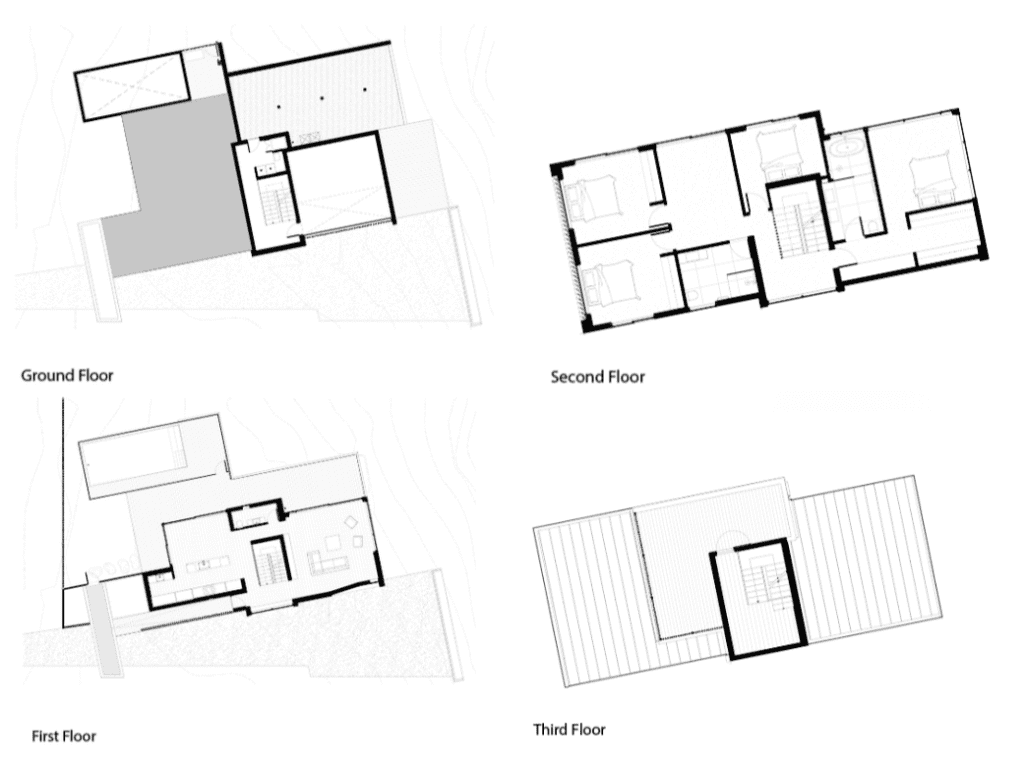
Daniel describes the layout as essentially two six-metre squares set around a central staircase that travels up three flights to a roof terrace. This belies the sweet complexity of the arrangement. Each space has a sense of connection and intimacy. 

Entry to the living room is to one side of the stairwell, where a curved wall lends movement to the plan. The owners call it a “Daniel flourish” but, he says, the curve also serves a secondary purpose: to modulate the façade externally. 

“It’s that idea of compositional play, and, on a sloping site, crafting angles to meet height-to-boundary restrictions.” 

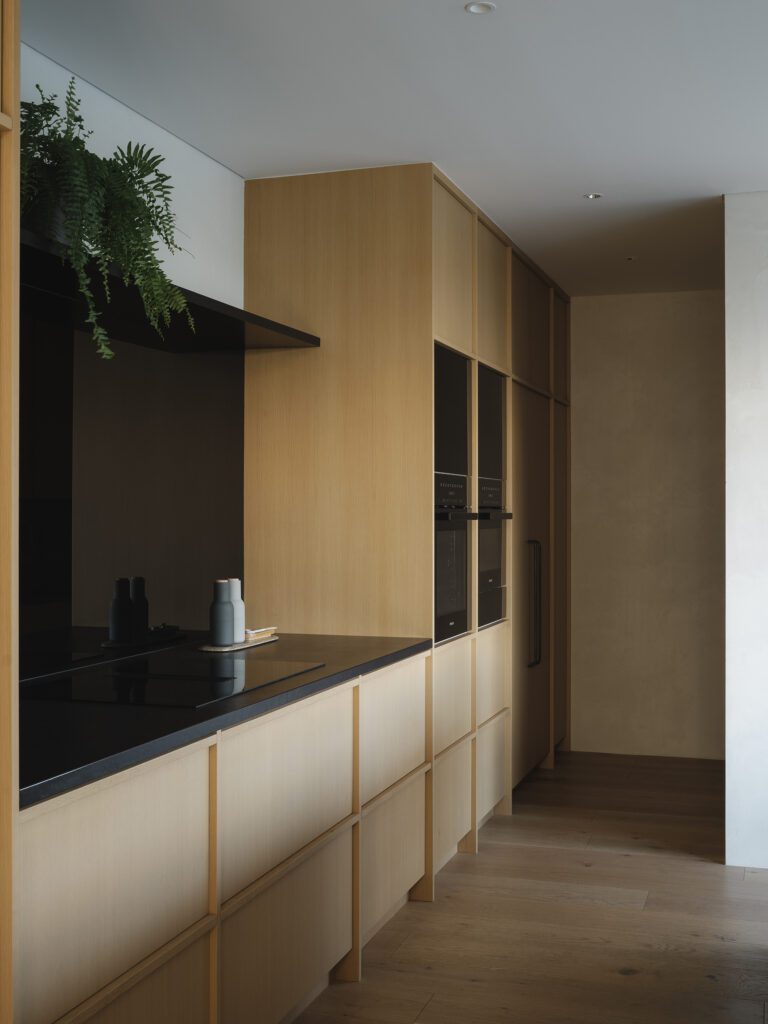
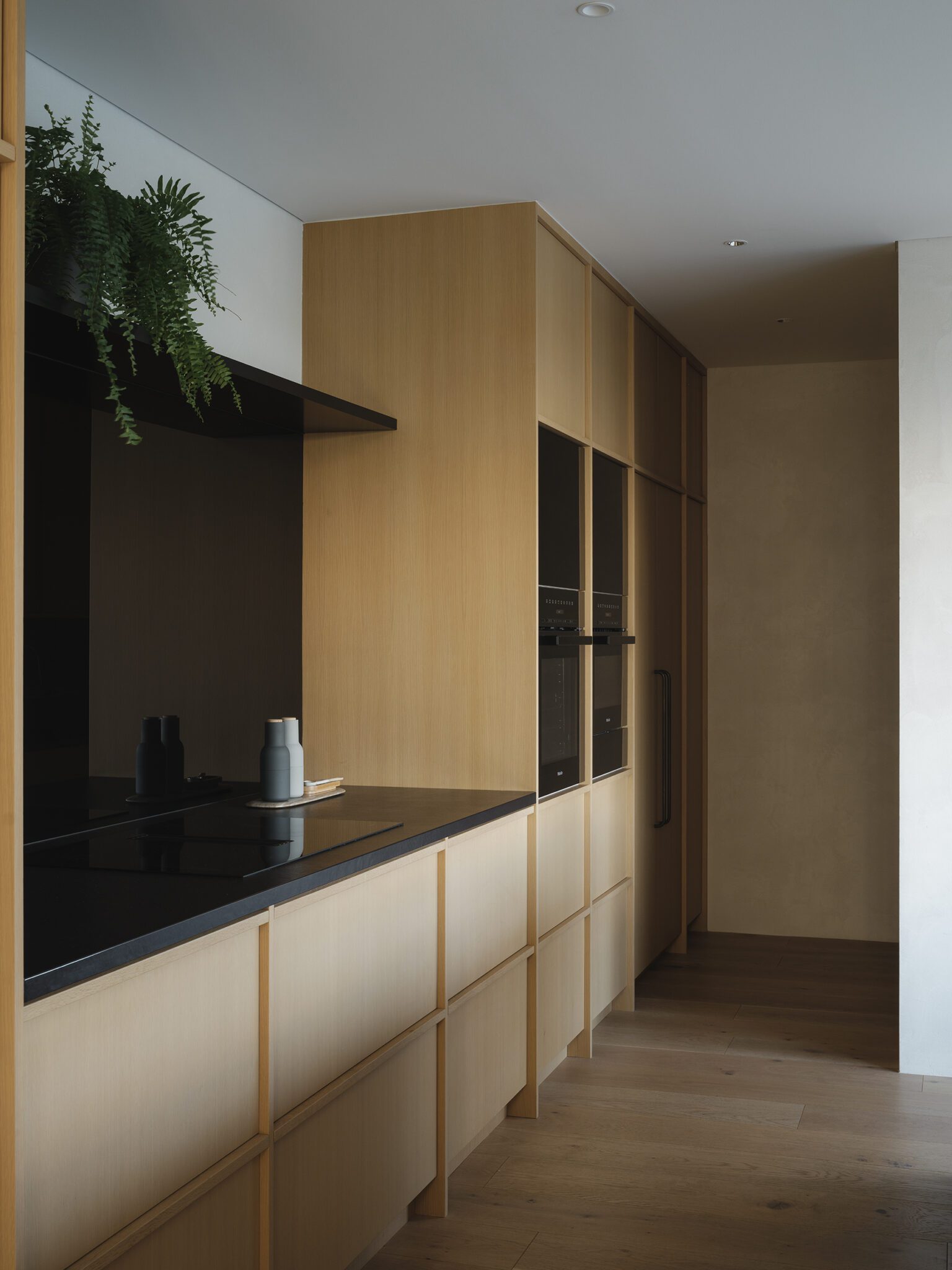
The kitchen is elegant and minimal; dark benchtops juxtaposed with light timber cabinetry.

A narrow vertical window on the same elevation as that sinuous intervention ensures privacy, while to the north and east picture glazing puts the sky, cabbage trees, and the golden tōtara in the frame. 

A short passageway leads to the kitchen/dining zone. Human scaled, it pairs the right measure of comfort and visual interest. A galley continues to a hidden scullery that ticks the box for functionality for this family of five, and modern-classic black Dekton benchtops team with American white oak cabinetry. 

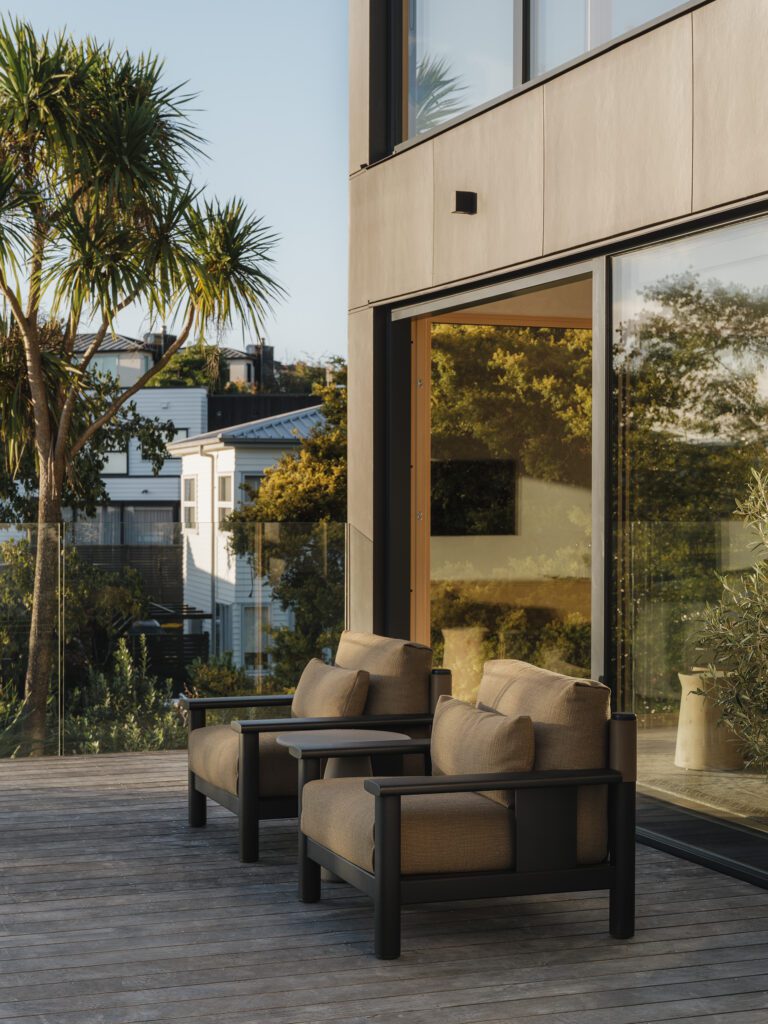
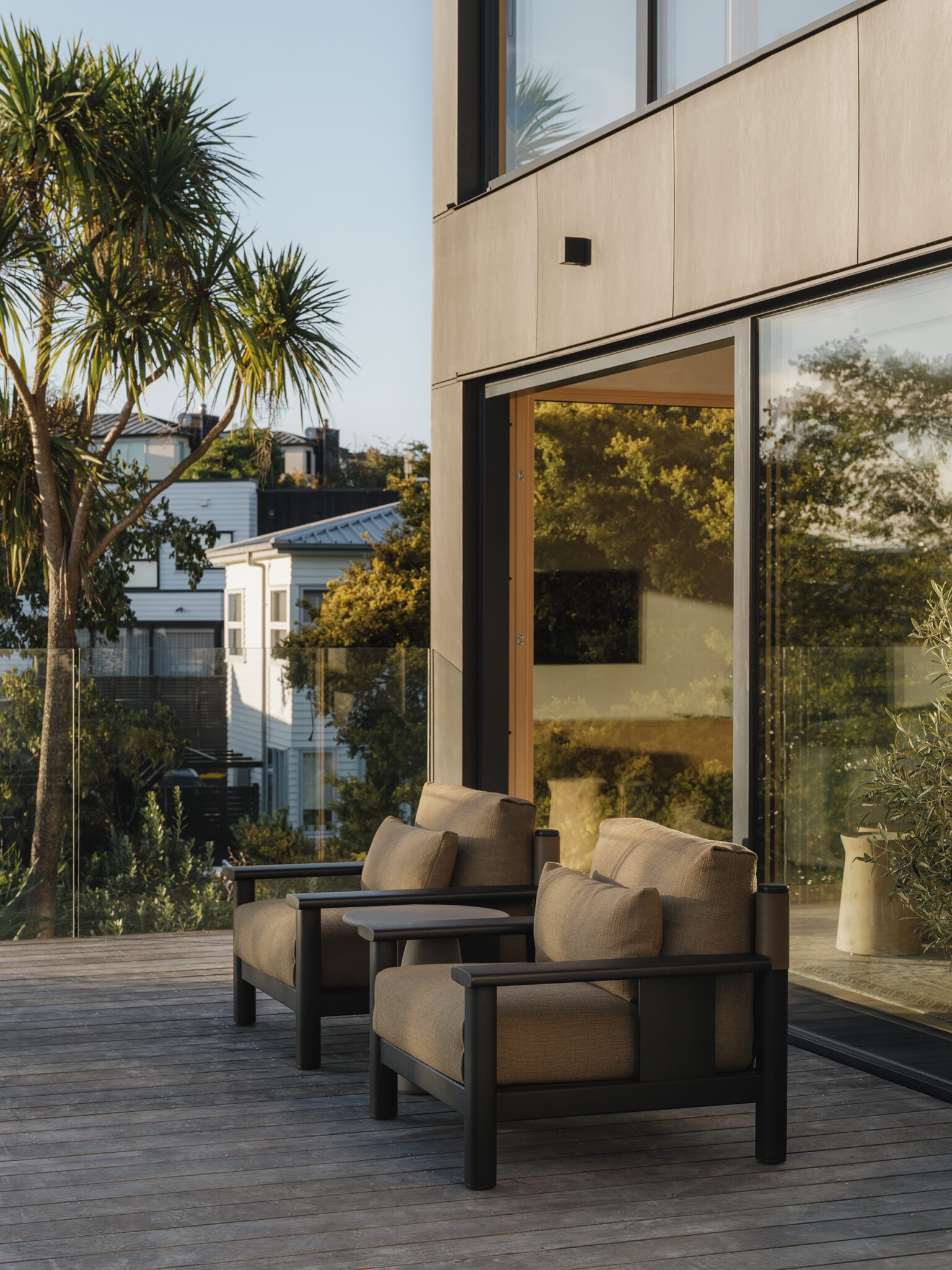
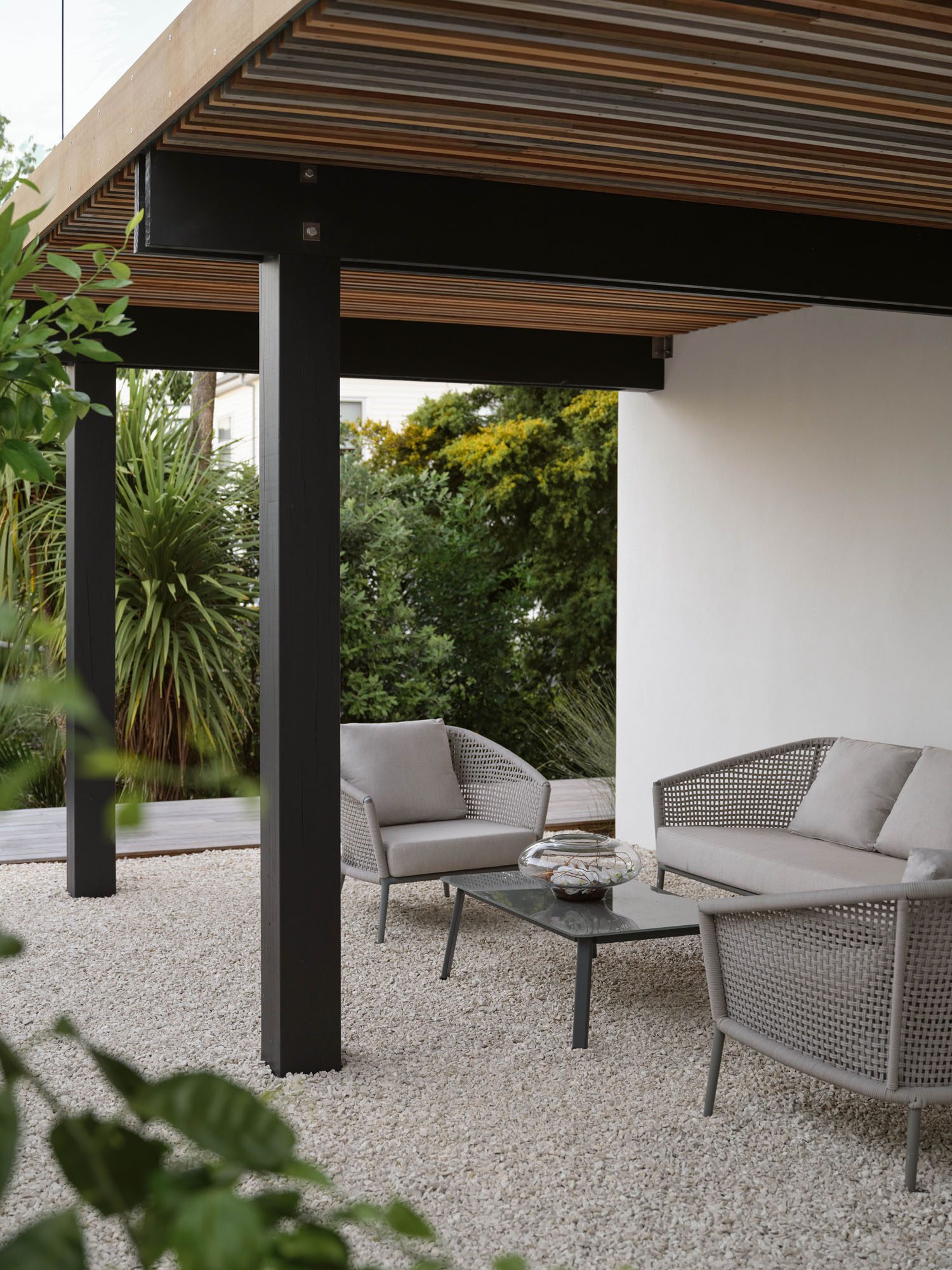
One of many outdoor seating areas, this one provides the perfect place for a late afternoon moment of quiet luxury. The Ketch chairs by Jean-Marie Massaud for Poliform are from Studio Italia.

Daniel believes art is “a series of controlled accidents” — delightfully illustrated here, where happenstance mixes with the fully directed. 

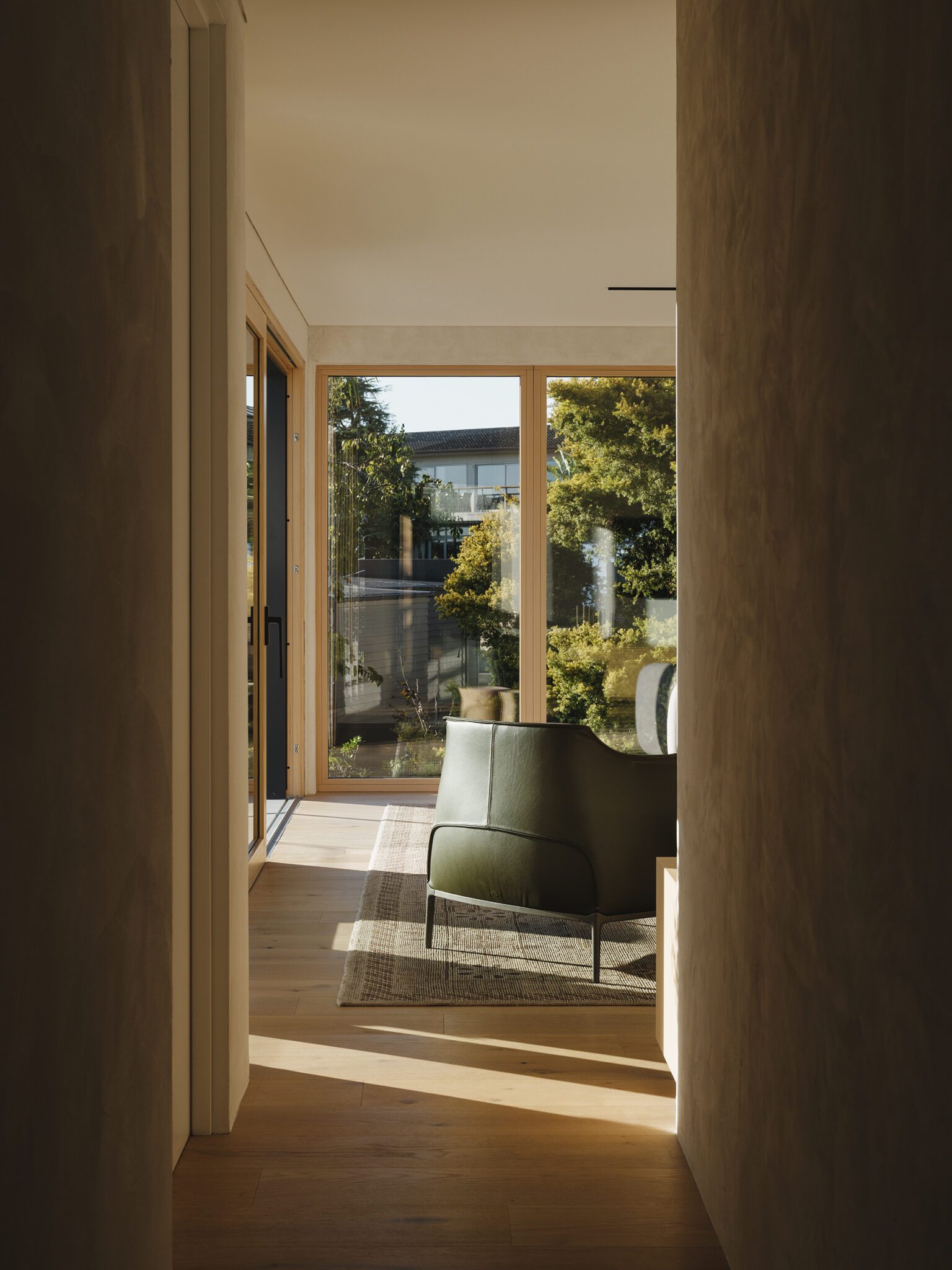
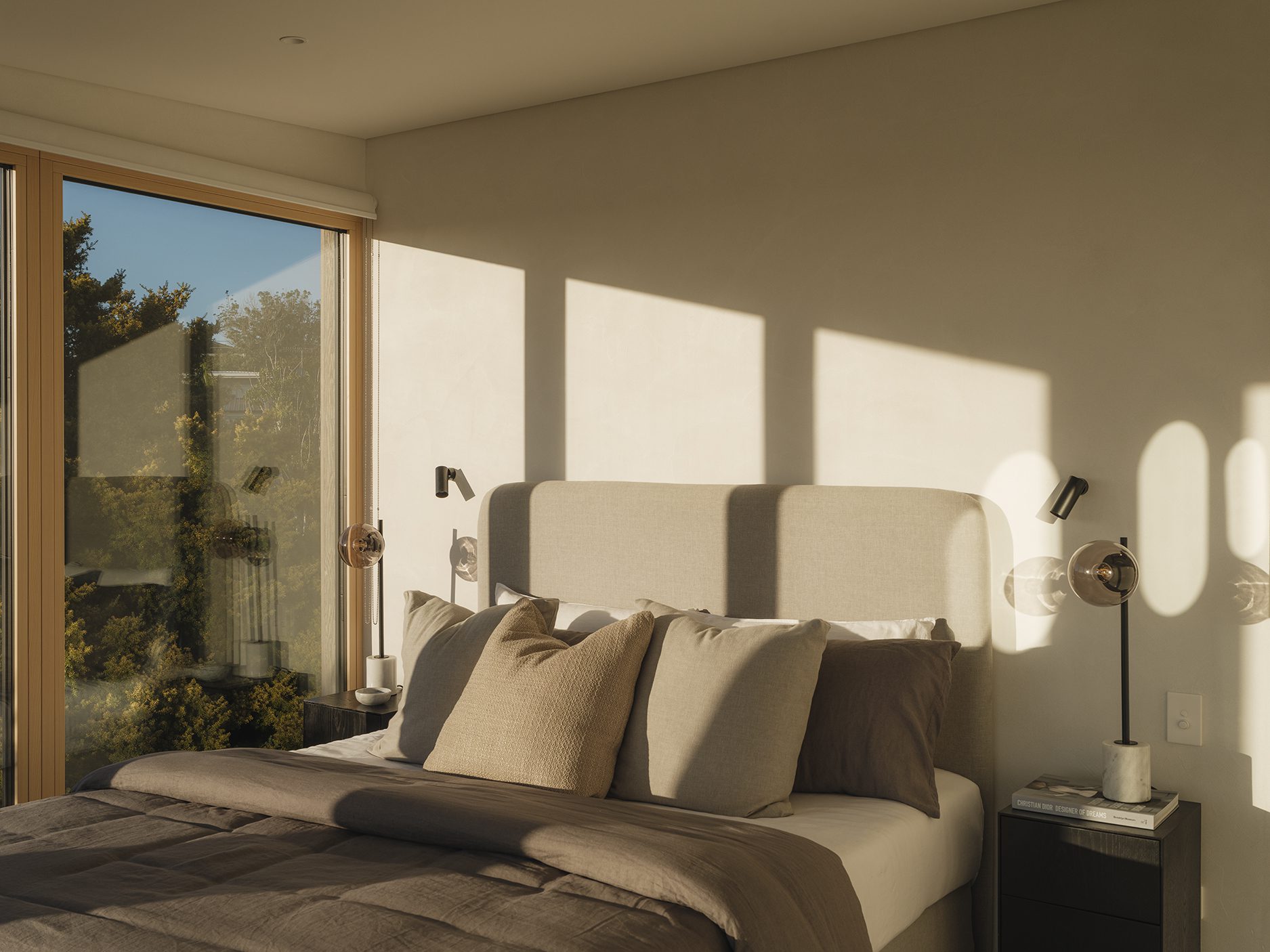
Plastering the walls in an organic fashion was deliberate — “I wanted more imperfection, and then even more,” says one of the owners — but it would have been hard to imagine how such texture would truly affect the light. As the day progresses, it washes over the gently undulating surfaces in ever-shifting moments. 
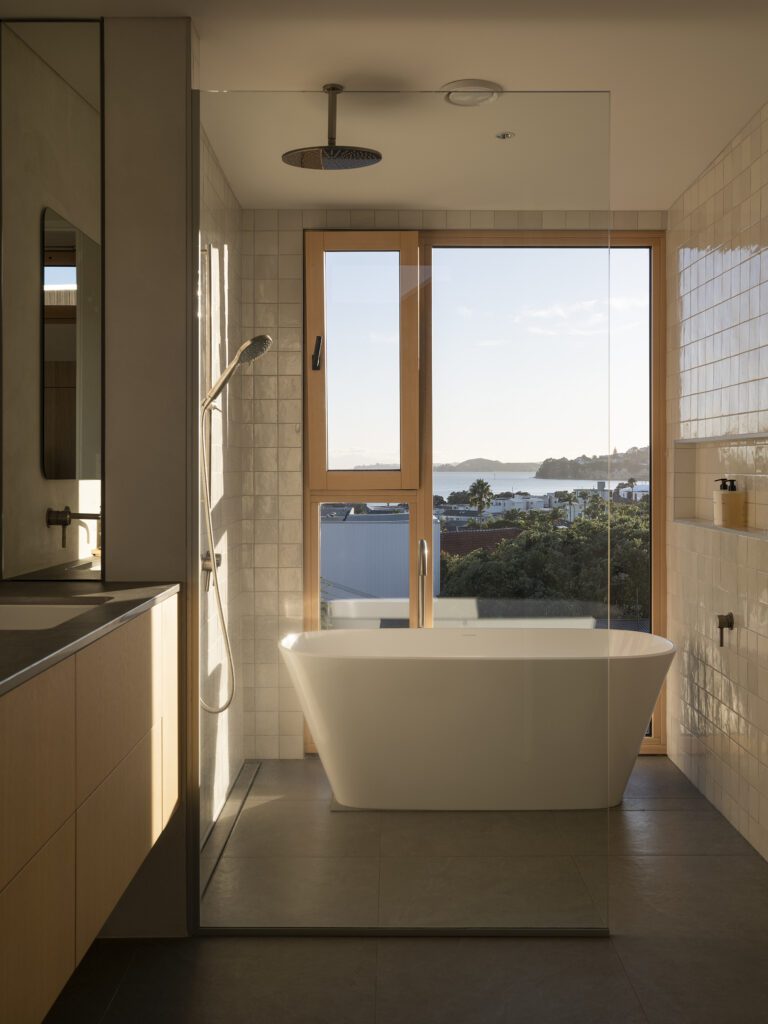
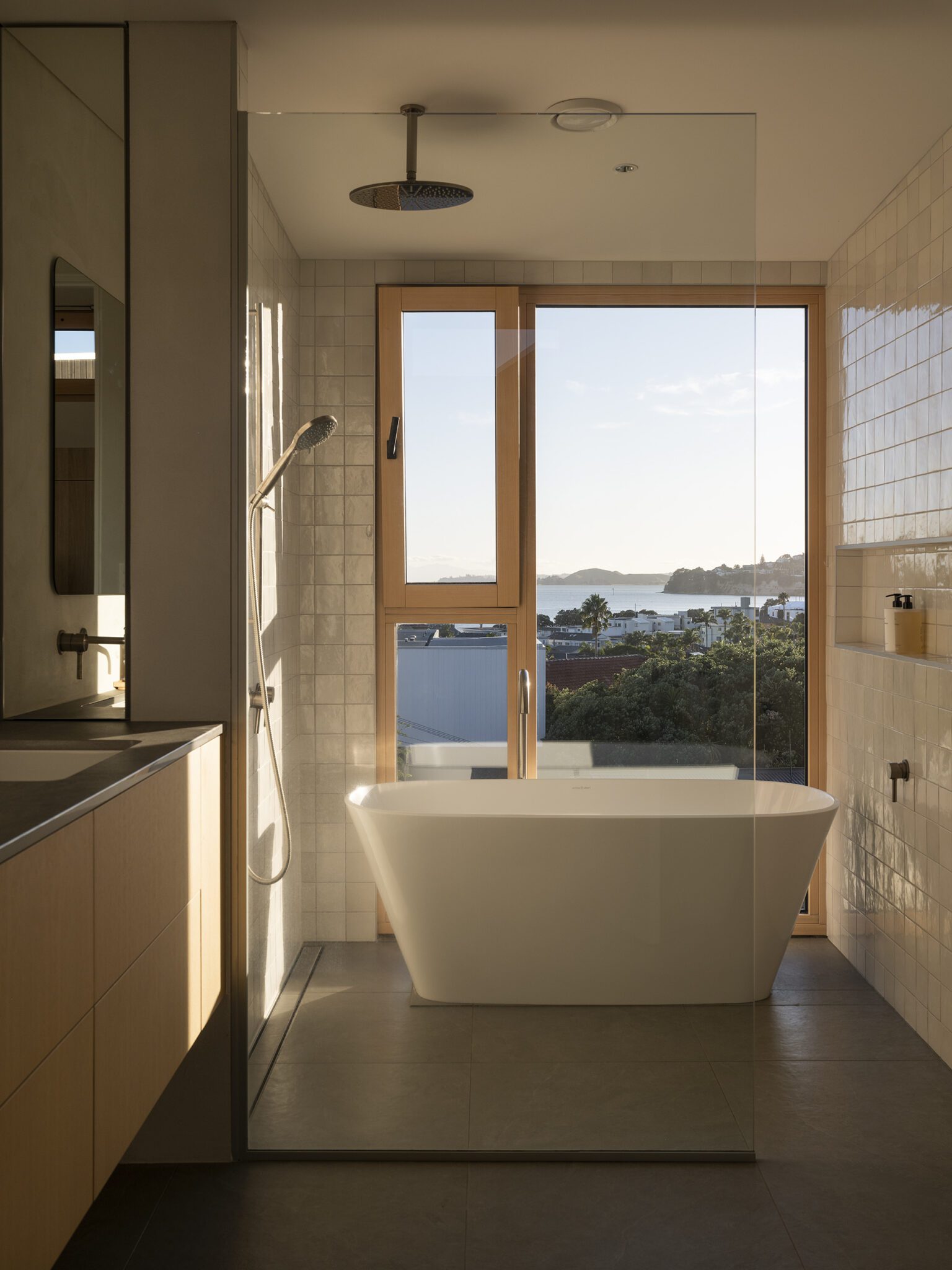
Tilt and turn windows are used throughout, while triple glazed joinery with Nordic spruce frames offer a high-performing but tactile element to every room.

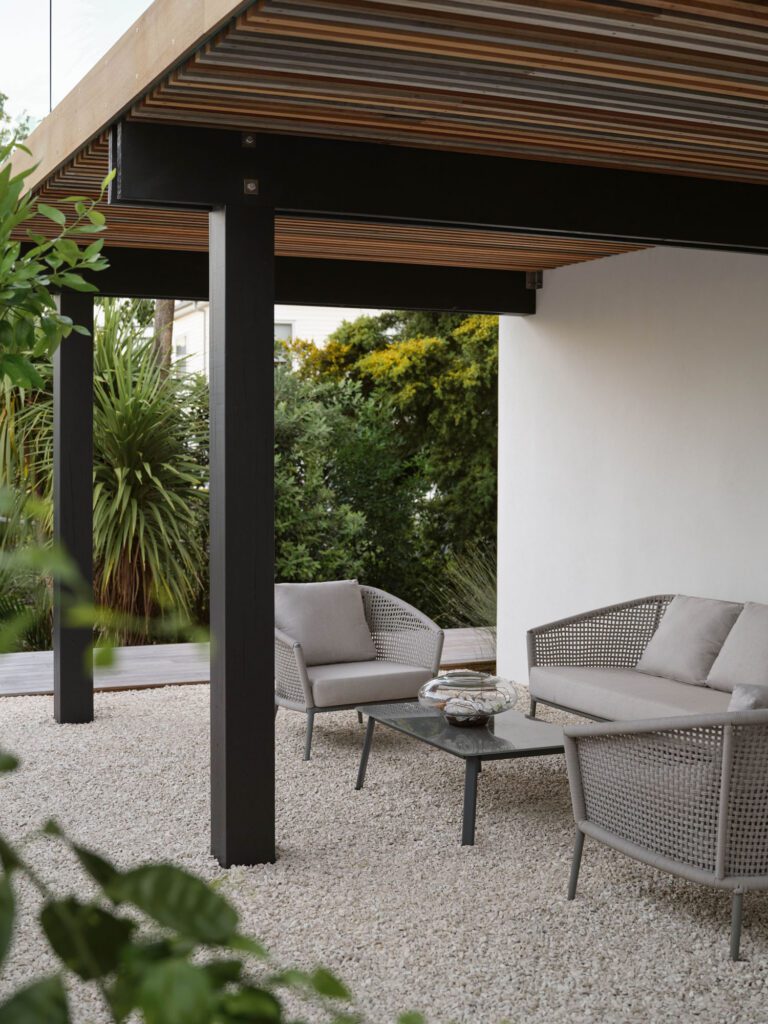
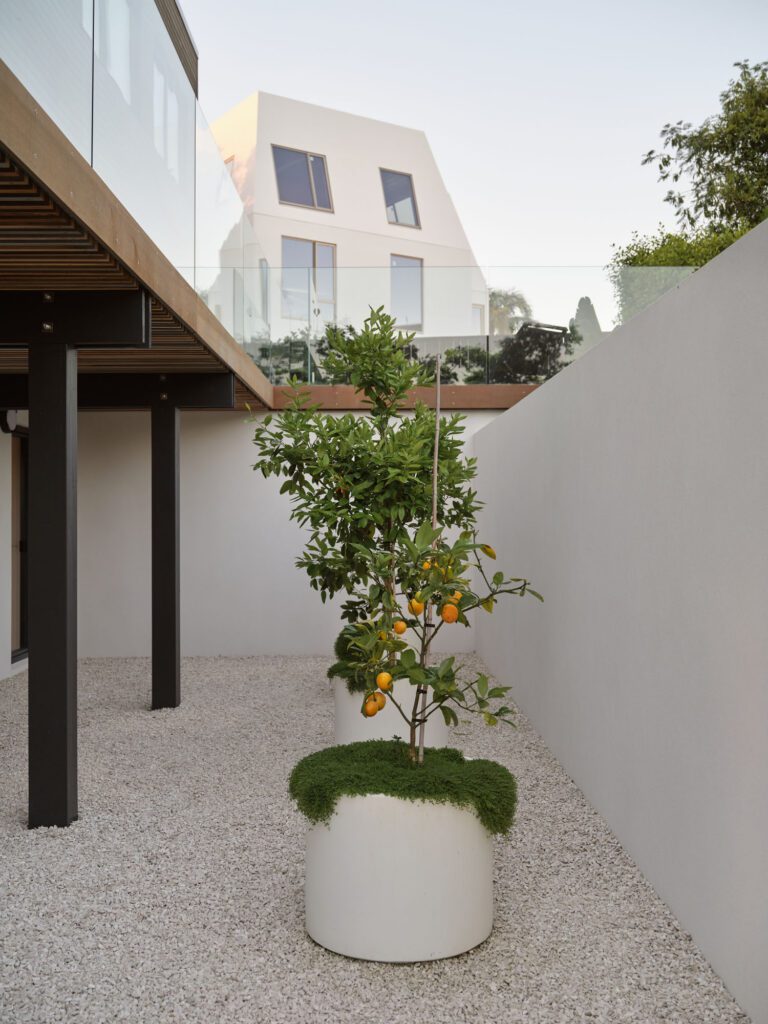
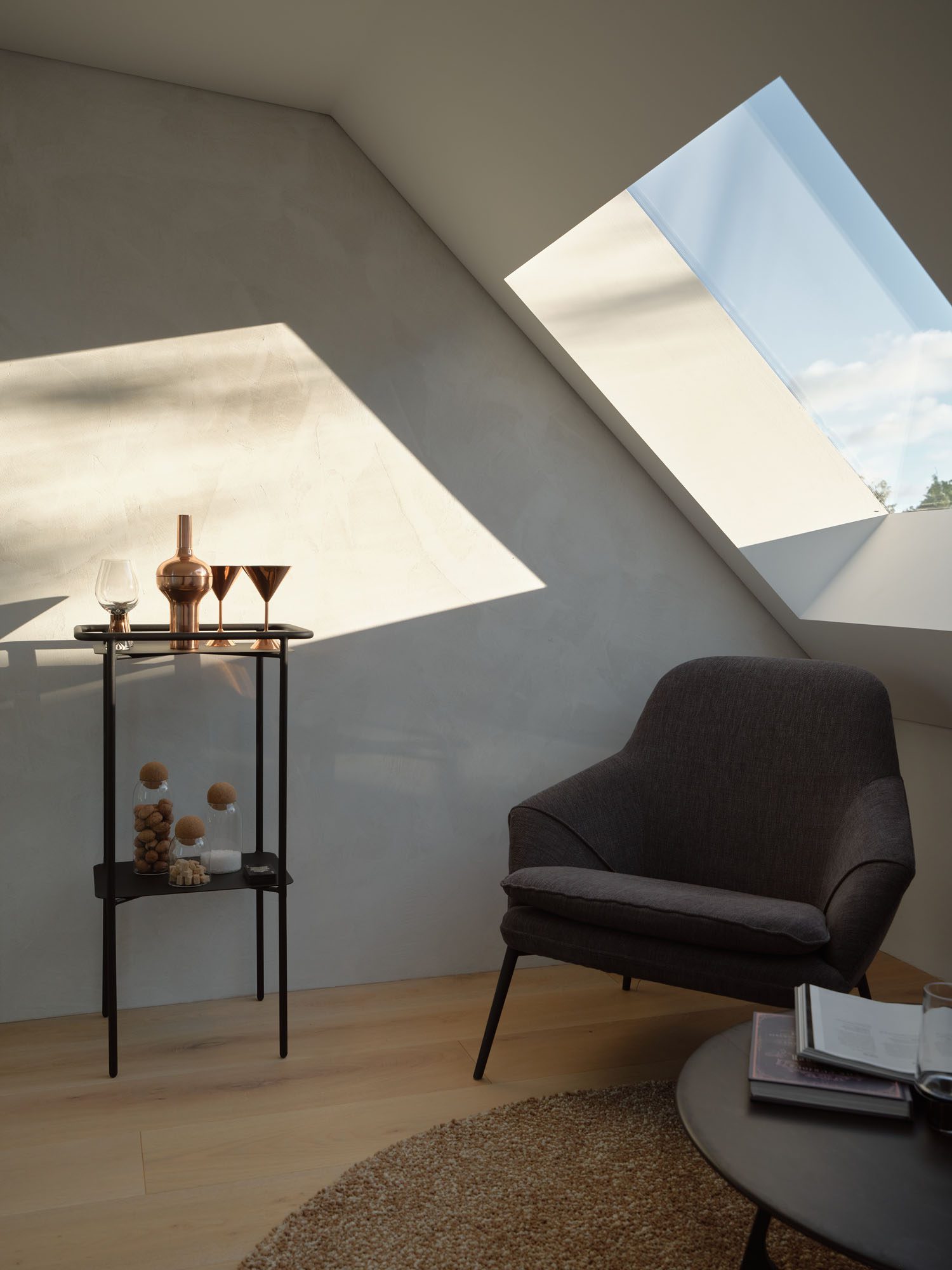
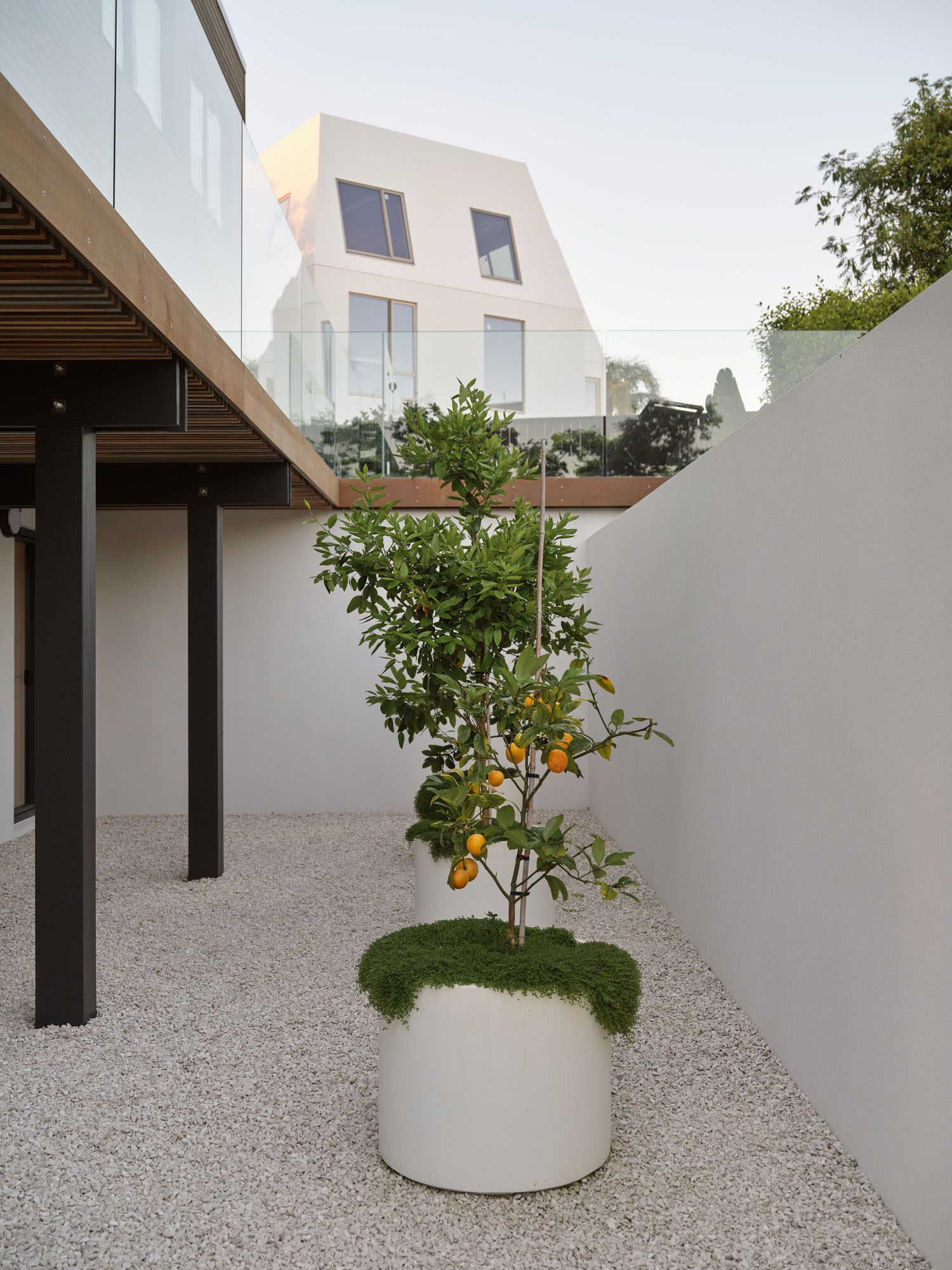
Surprises, too, are found in those places that were never meant to be heroes. A small gravel courtyard leading off the downstairs laundry and initially envisaged as an infill space is planted with citrus and feels European in flavour. A landing lounge with just enough room for a chair and a side table is a place to escape for a winter read. The roof deck, protected from the wind by the parapet, is a secret oasis of calm. 

“It’s great when a house is not a one-liner and offers lots of different experiences,” comments Daniel.

Despite the constraints of the subdivided site, the architect has made the most of available space, with a stacked plan, allowing for a multitude of outdoor areas. At the lowest level is a European-style courtyard where citrus flourishes and regenerated native bush meets its edge where the land slopes away. 

The owners, who are sustainability minded, appreciate the cross-ventilation properties of the high-level windows, and love the thermal performance of the construction methodology and the low-energy heat-pump boiler that runs the underfloor heating, warms the pool, and provides hot water. 

Having underplanted the area around the stream with 500 natives, including rengarenga lilies that one of the owner’s mums nurtured specially, the owners are hoping to attract more birdlife to this populated corner of their suburb. The regenerated stream and its surrounding bush might be the perfect adventure playground for Easter egg hunts but the first time a kererū alights in the karaka will be cause for a true celebration.

Judges’ Citation

Built on a tight and steep inner-city site, this project demonstrates how careful design, intelligent planning, and confident architectural moves can transform limitation into opportunity. The architect considered the entire site, suggesting subdivision and verticality over unnecessarily large spaces. 

The home’s interior flows seamlessly from one space to another, punctuated by moments of awe that balance openness with intimacy, while small details constantly ignite delight. 

The use of thermally efficient Ziegel block construction, triple glazing, and carefully controlled ventilation delivers impressive environmental performance without sacrificing comfort or character. 

Warm, solid, and quietly luxurious, the house stands as a confident flourish within the city — proof that sustainable thinking and architectural generosity can coexist on even the most compact urban sites.

Project Credits

Architecture: Daniel Marshall Architects 
Build: Mario Koch
Words: Claire McCall
Images: David Straight, Hamish Melville
Joinery: Internorm
Wood Oil: Dryden 
Furniture: Studio Italia 


Latest video features

In the Coromandel, a home with a humble profile and a thoughtful design makes the most of a stunning location.

Built with awe-inspiring attention to detail, this Arrowtown home is a fresh interpretation of a familiar Otago rural vernacular.

This sculptural Northland bach is a perfect north arrow on a remote farm high above the sea.

With the sun on its bow and the community at its stern, this is a house in which the elements are always front of mind.

Trending articles

Arts and Books

An Exhibition of Chinese Contemporary Art

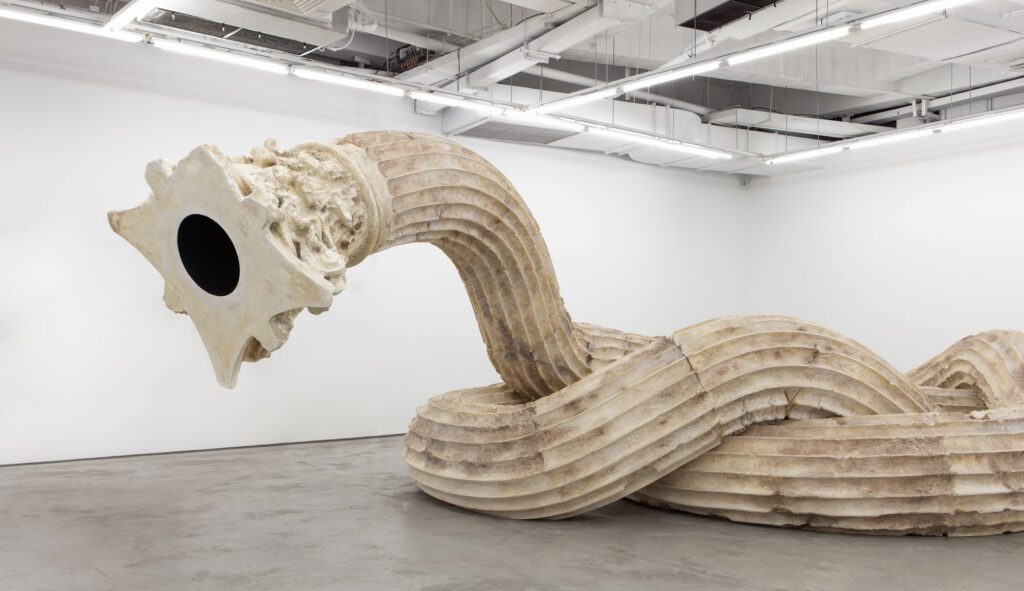
An exhibition of Chinese contemporary art arrives in Auckland, tracing decades of cultural transformation through works that span performance, installation and digital media.
Design News

Lasting Grain

Set into a suburban site in Kohimarama, Clay Block House by Daniel Marshall Architects is a study in materiality and environmental performance.

Arts and Books

Introducing Architecture Aotearoa

A new architecture magazine, Architecture Aotearoa: New Zealand’s Buildings, Cities, and Culture will launch in late May 2026 as a collaboration between Te Kāhui Whaihanga
Design News

Written in Stone

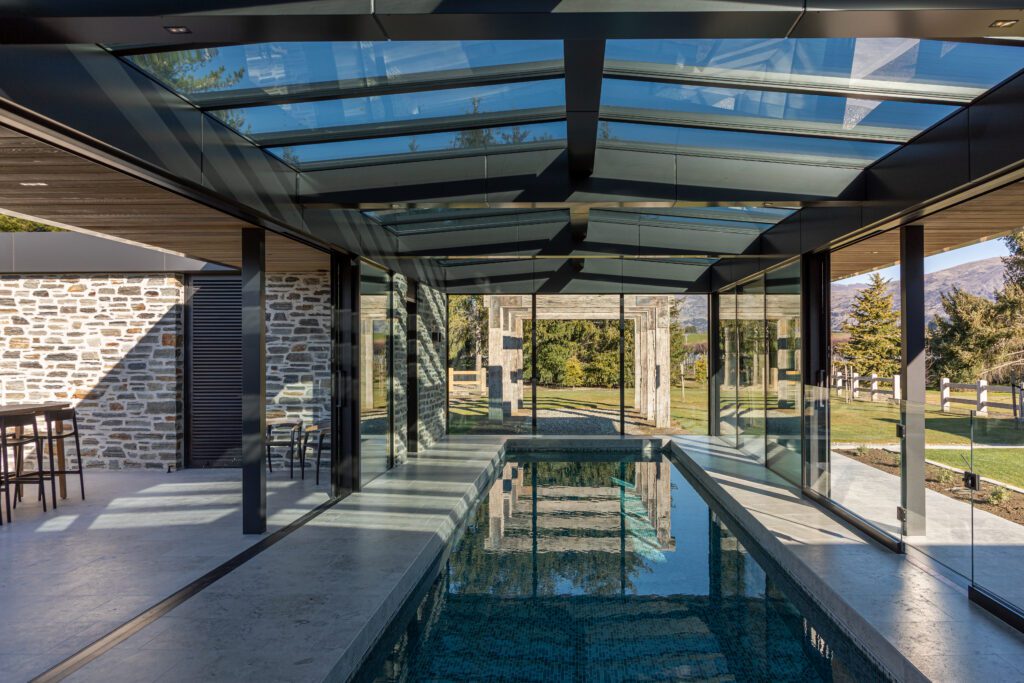
At the heart of this Wānaka home by Johnston Architects is the enduring presence of Jura Grey limestone from Quantum.