

A Work of Art

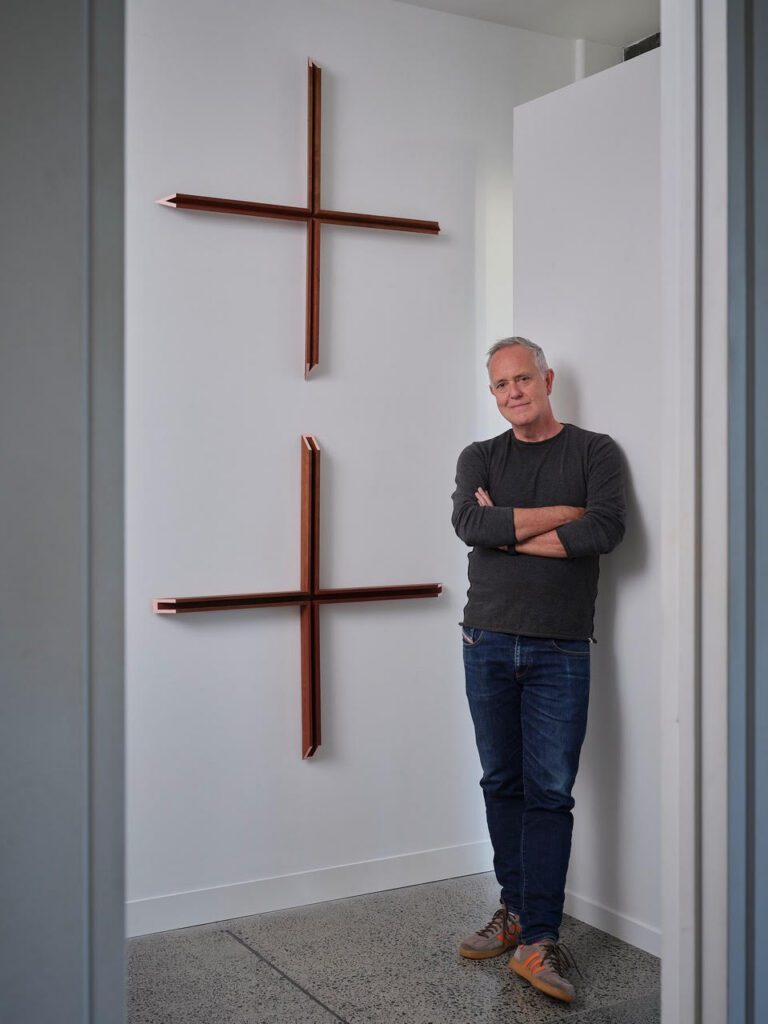
Perched above a Tauranga cliff edge, where parkland softens into water, this reworked 1980s home is less a renovation than a careful act of continuation. For architectural graduate Naomi Robbins, the project began not with walls or plans, but with a person — her grandmother — and a desire to shape a home that felt entirely, unapologetically hers.

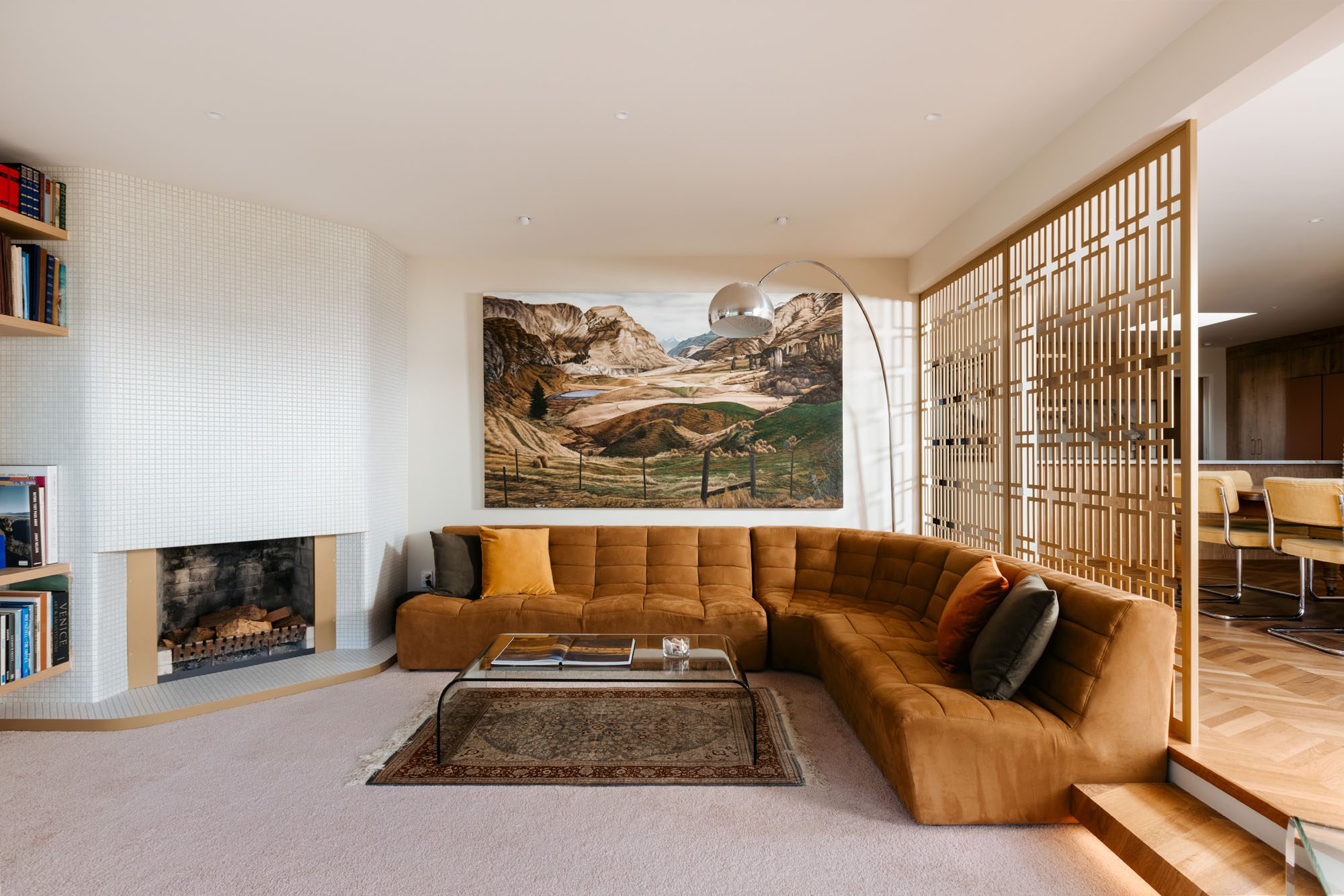
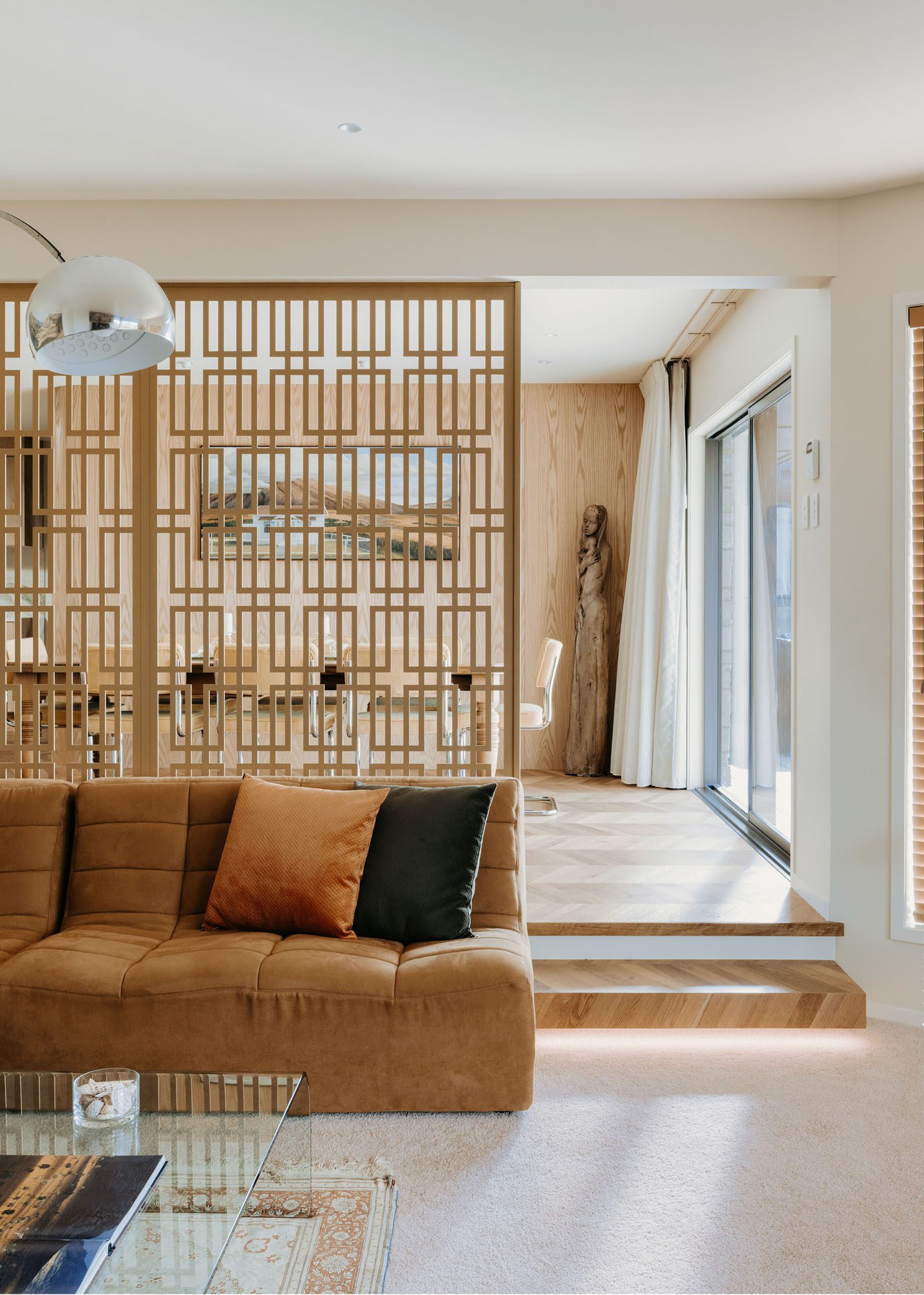
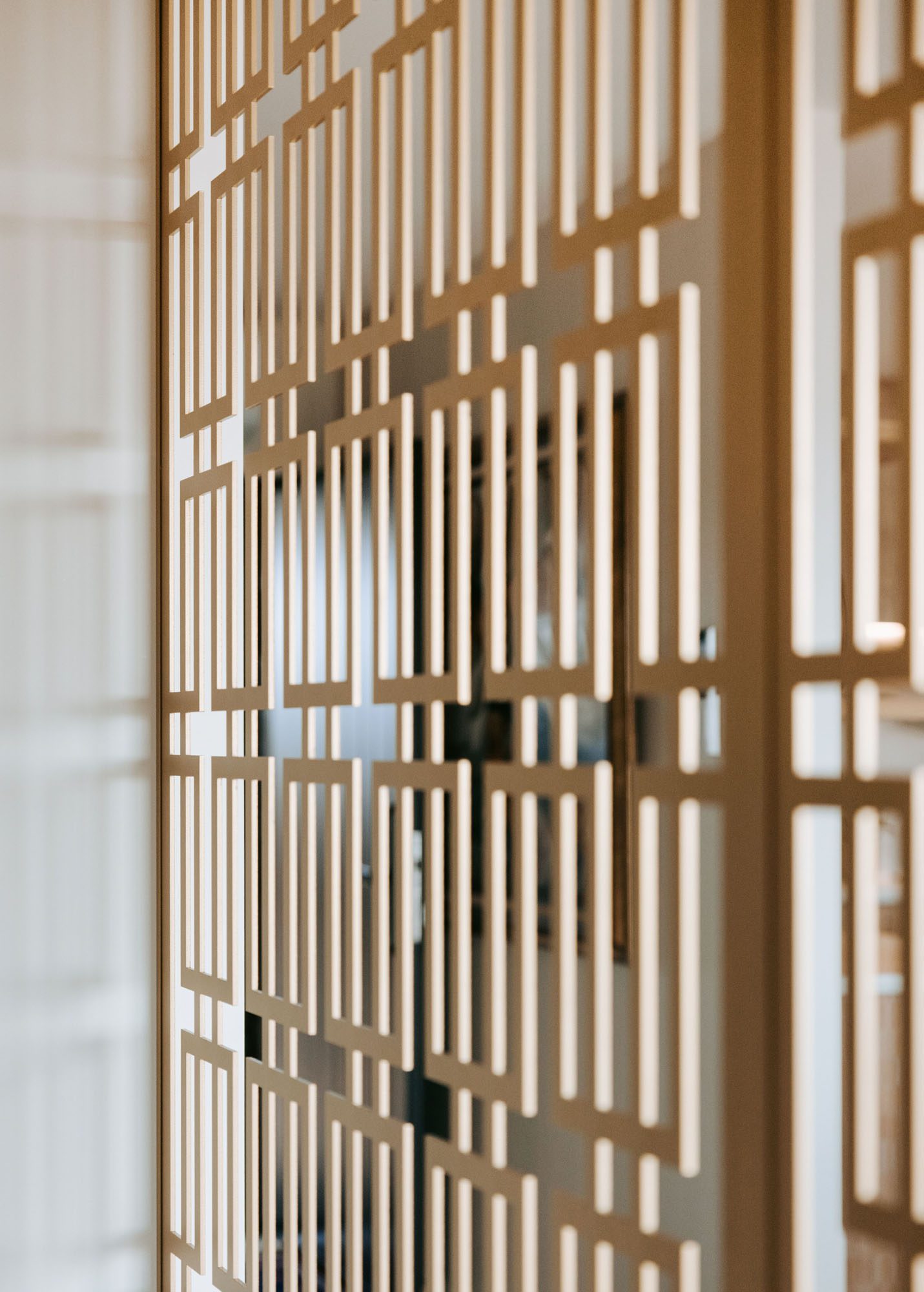
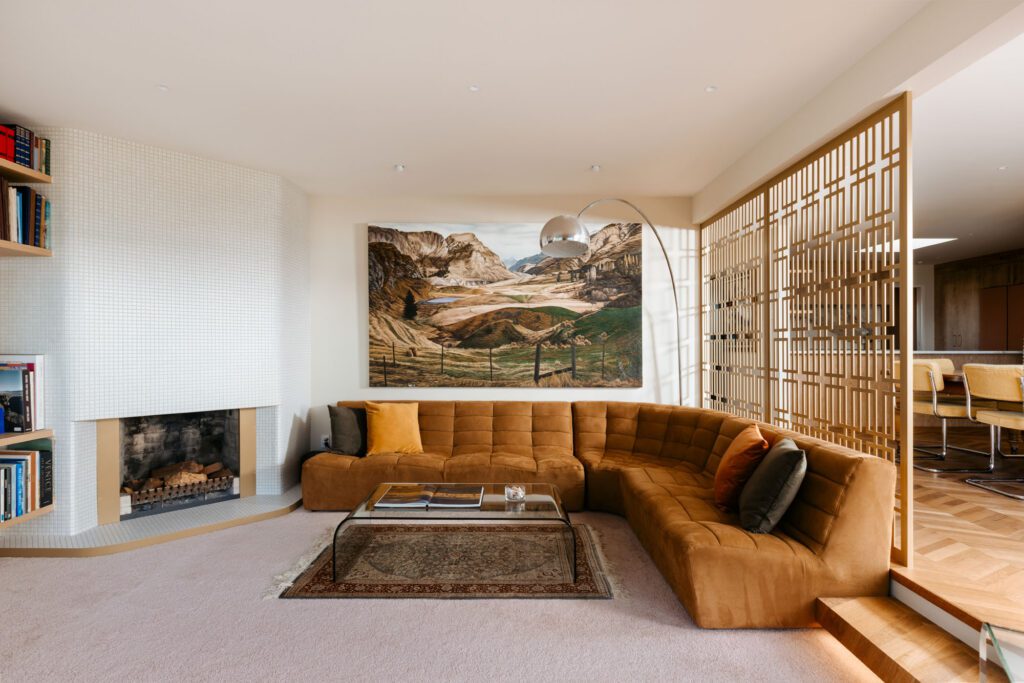
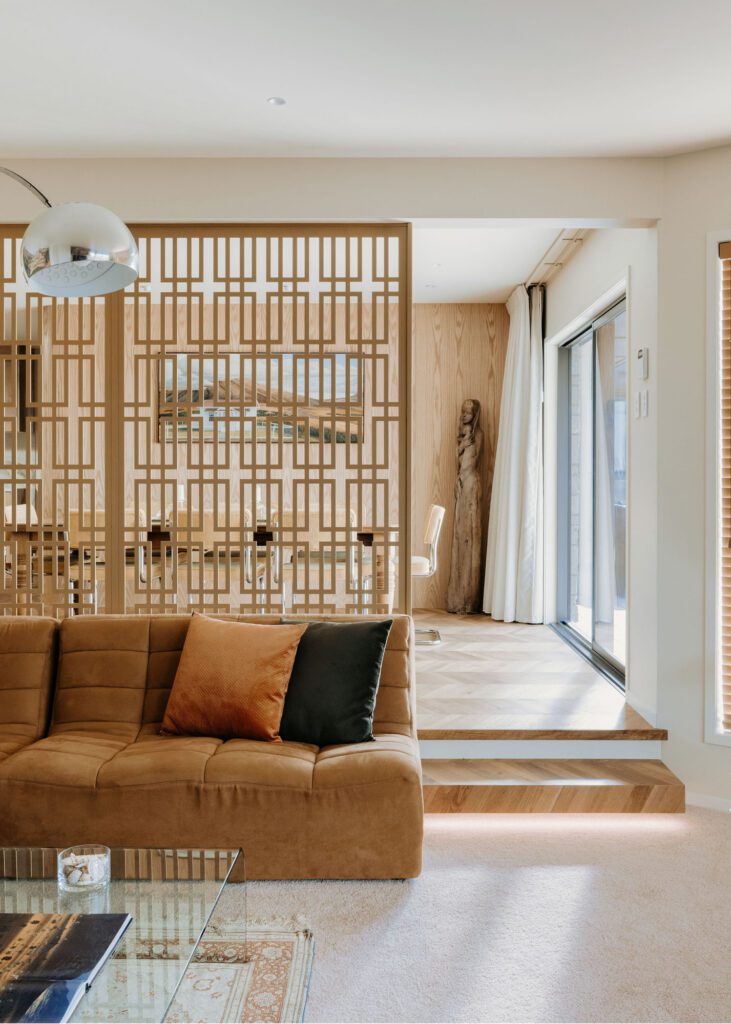
The sunken lounge draws its palette from a large Dick Frizzell landscape; a mosaic fireplace with organic curves introduces warmth, while an aluminium screen separates living and kitchen zones without interrupting sightlines.

“I was lucky enough to be involved before the house was even purchased,” Naomi explains. “We chose it because we both fell in love with the building — the mid-century design, the sandstone, the sunken living room. It already had something special.”

That instinct to recognise and retain what already existed became the project’s guiding principle. Rather than overwrite the home’s original character, Naomi approached it as a process of elevation — amplifying its inherent qualities while introducing a contemporary sensibility.

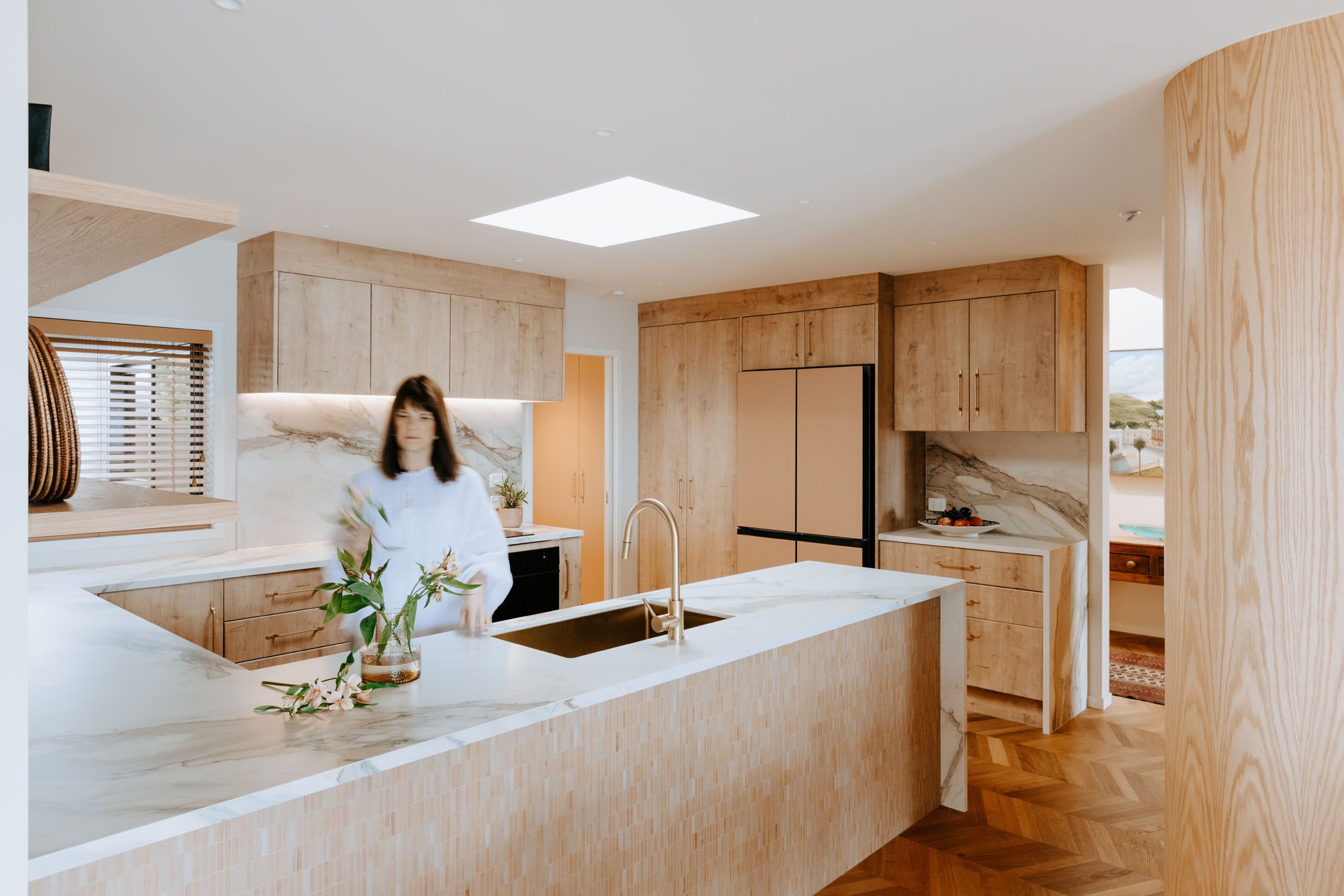
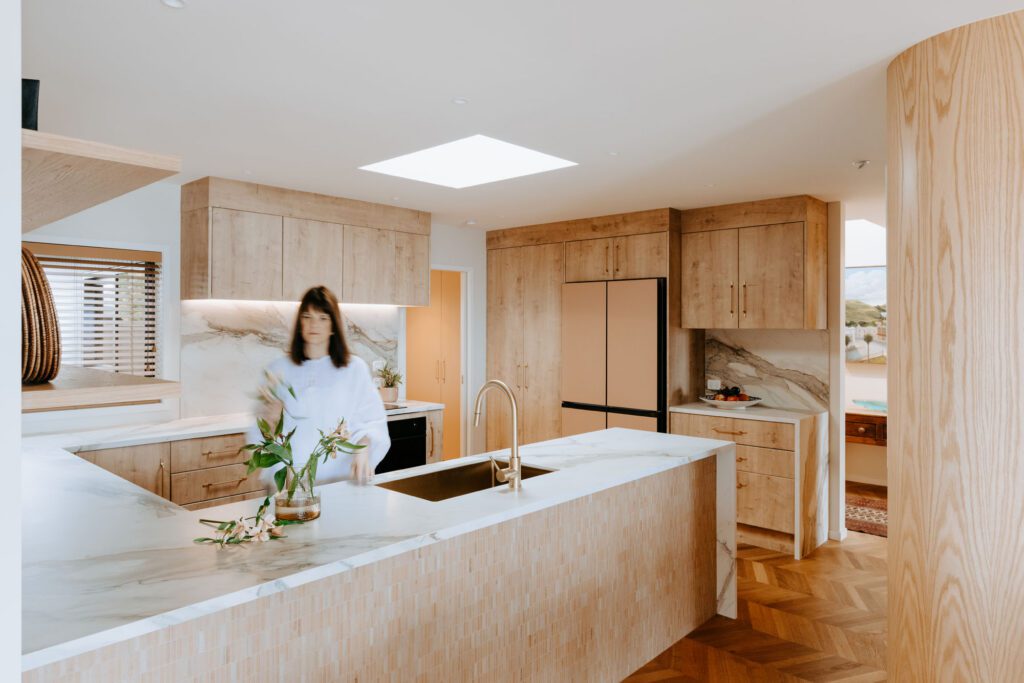
Custom skylights introduce natural light into the kitchen.

At the heart of the home, the original sunken lounge remains — a now-rare spatial gesture that anchors the interior. Once enclosed, it has been opened up, allowing it to participate more fluidly in the broader living environment. A custom screen introduces a subtle threshold, maintaining a sense of intimacy without disrupting the visual continuity.

The open fireplace — another relic of an earlier era — was non-negotiable. “Every time you find one in New Zealand, it’s like a pot of gold,” Naomi notes. Rather than competing with it, she softened its presence: a sculptural, gently curved form clad in small, pale tiles that catch and diffuse light, allowing it to sit harmoniously within the room’s broader composition.

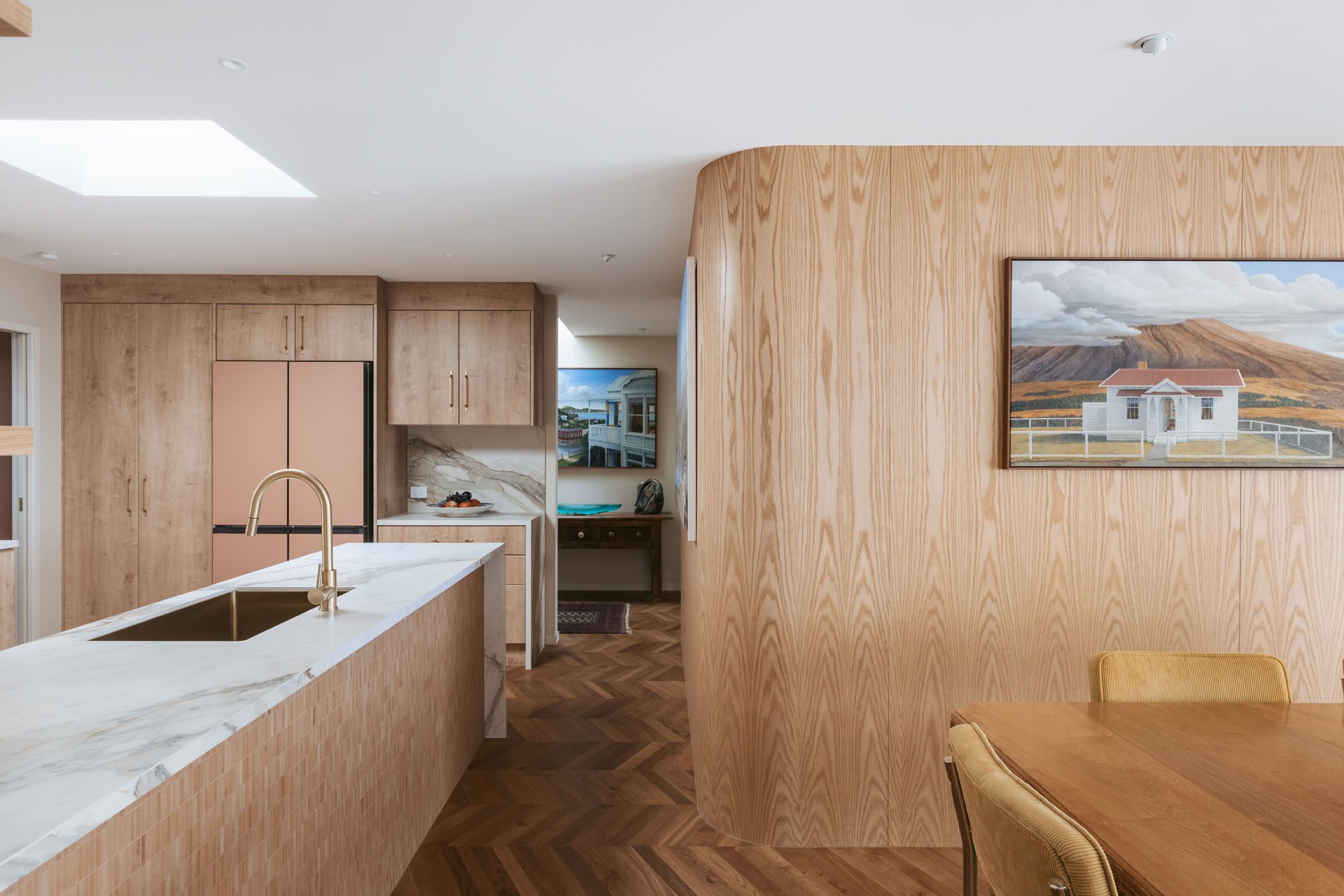
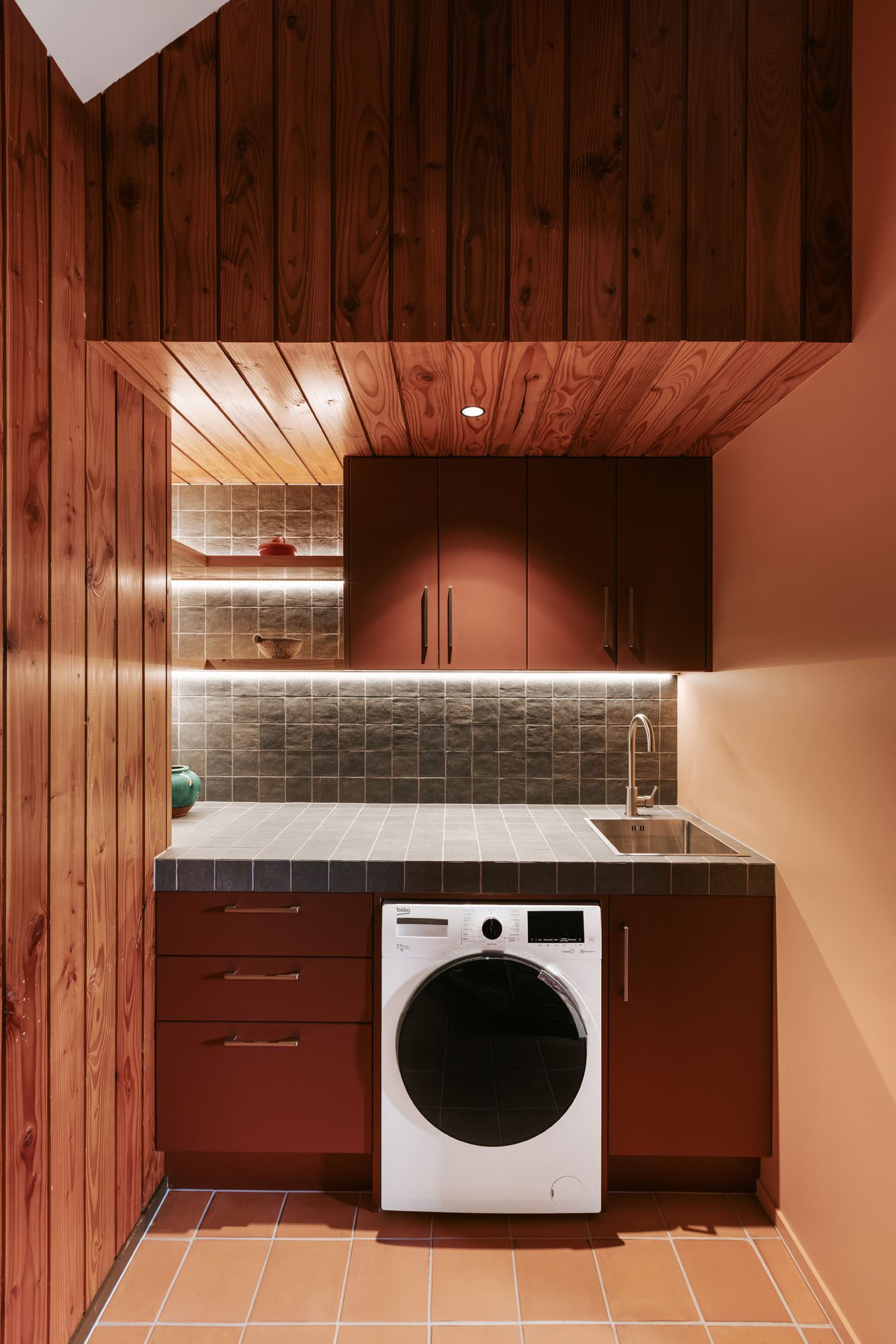
This approach repeats throughout the home. Original elements aren’t erased, but recalibrated. Timber panelling in the former billiards room is retained and repurposed in the kitchen; sandstone removed during construction is carefully reused or matched from the original quarry to ensure continuity.

The original sunken lounge was the defining feature that drew both homeowner and designer to the project.

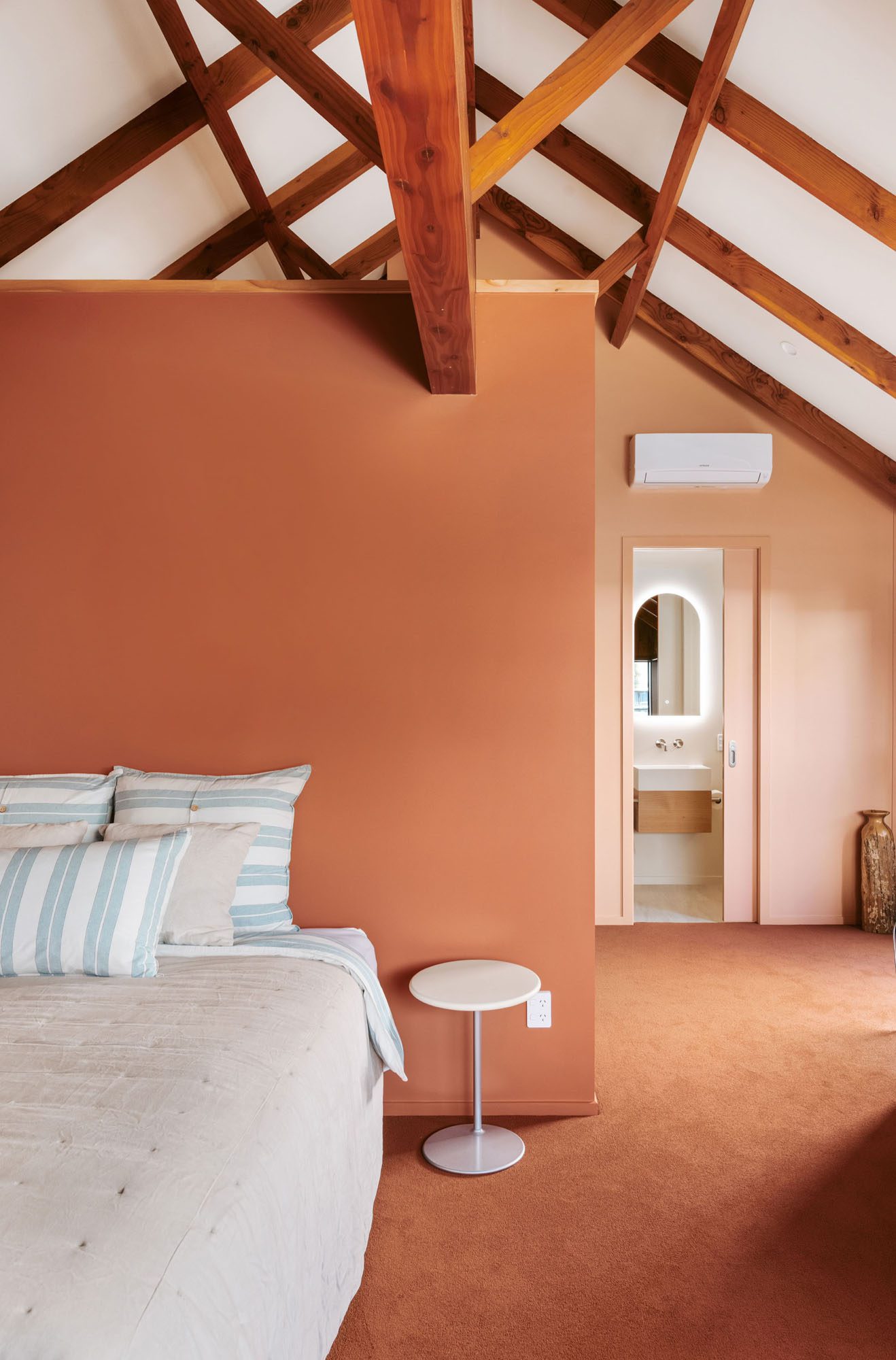
Conceived as a home for a single occupant later in life, it resists many of the default assumptions of residential design. “My grandmother had never really had a place that was inherently hers,” Naomi says. “So I wanted it to feel feminine, warm — almost like a bachelorette pad, but for the later years of life.”

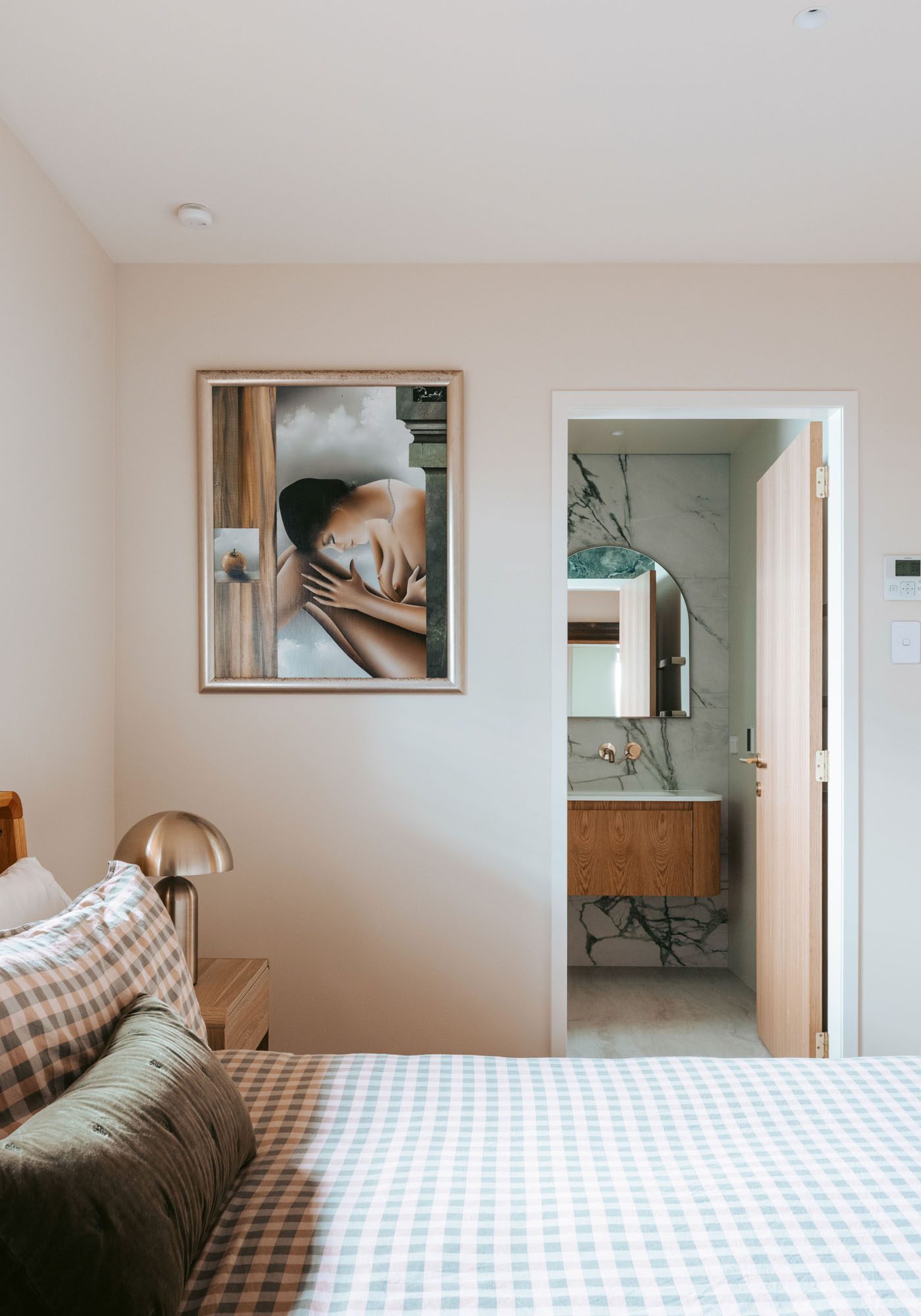
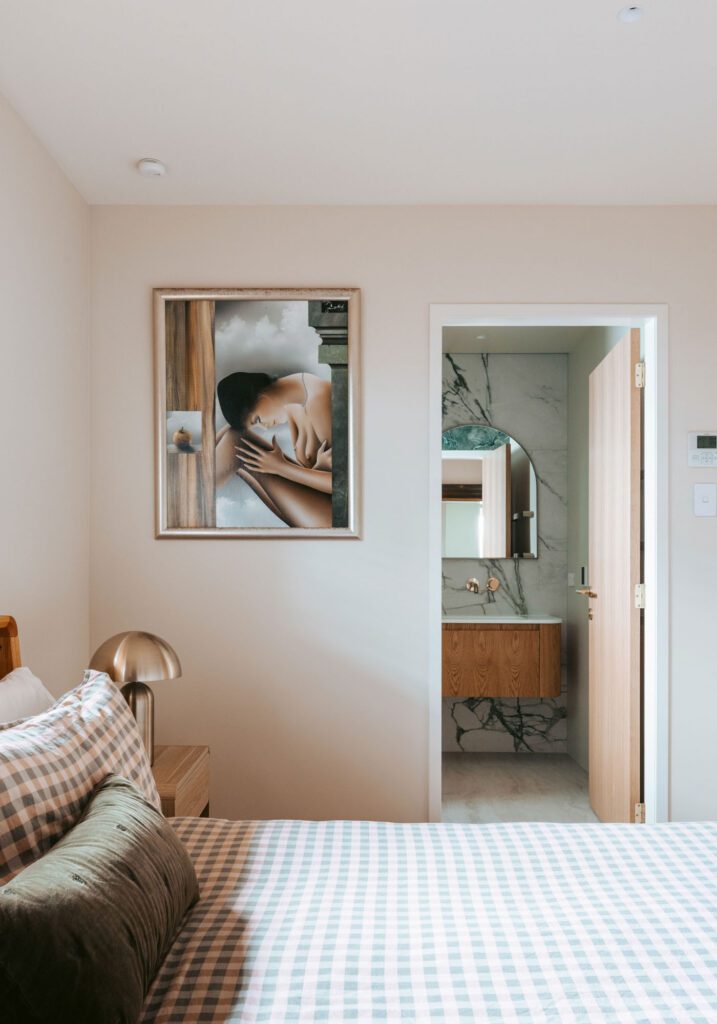
Before finalising layouts, Naomi mapped the placement of her grandmother’s art collection — ensuring each piece had a dedicated position. “We designed the house around the paintings,” she says. Walls become backdrops; colours and materials respond to individual works, allowing each piece to resonate within its setting.

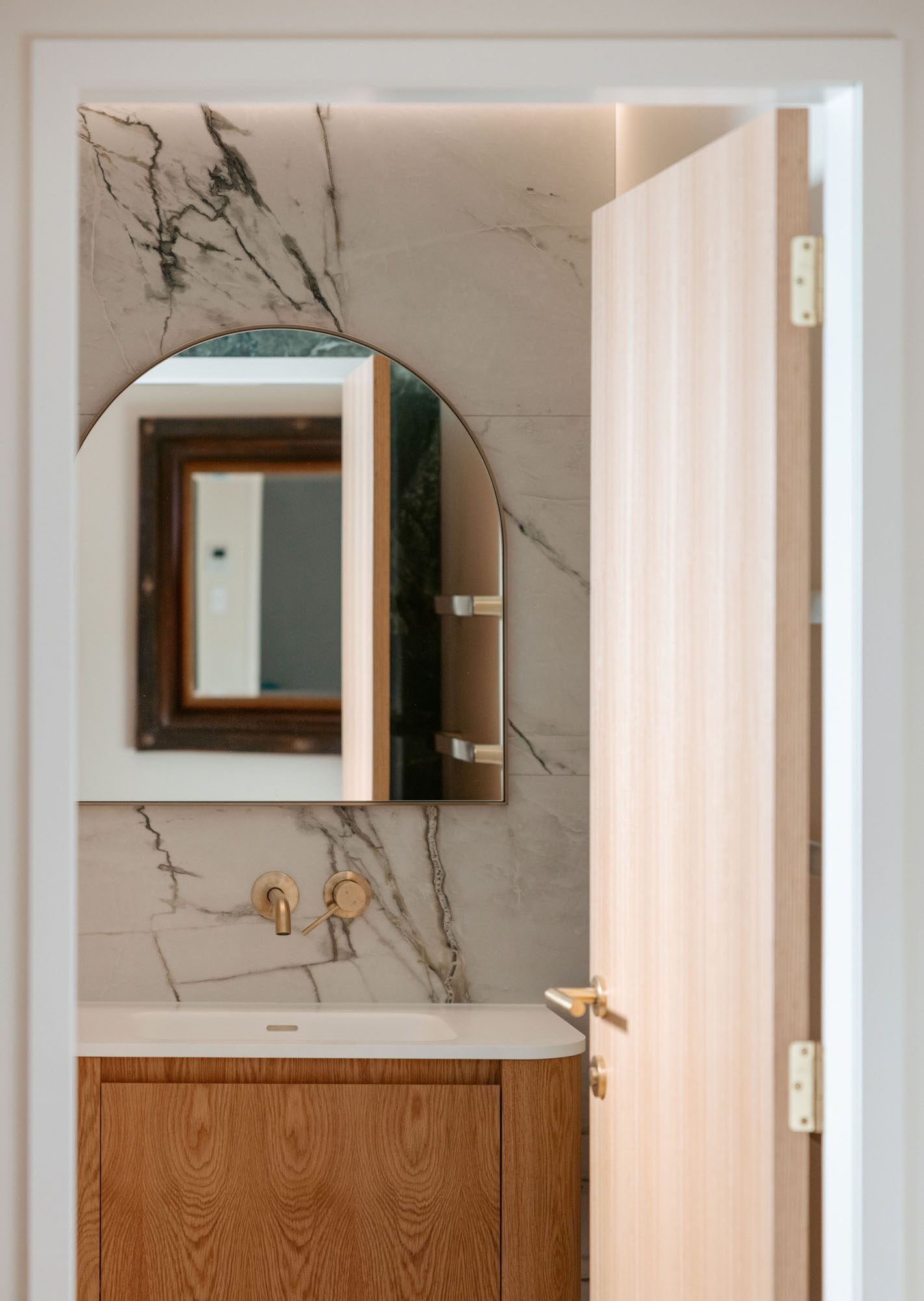
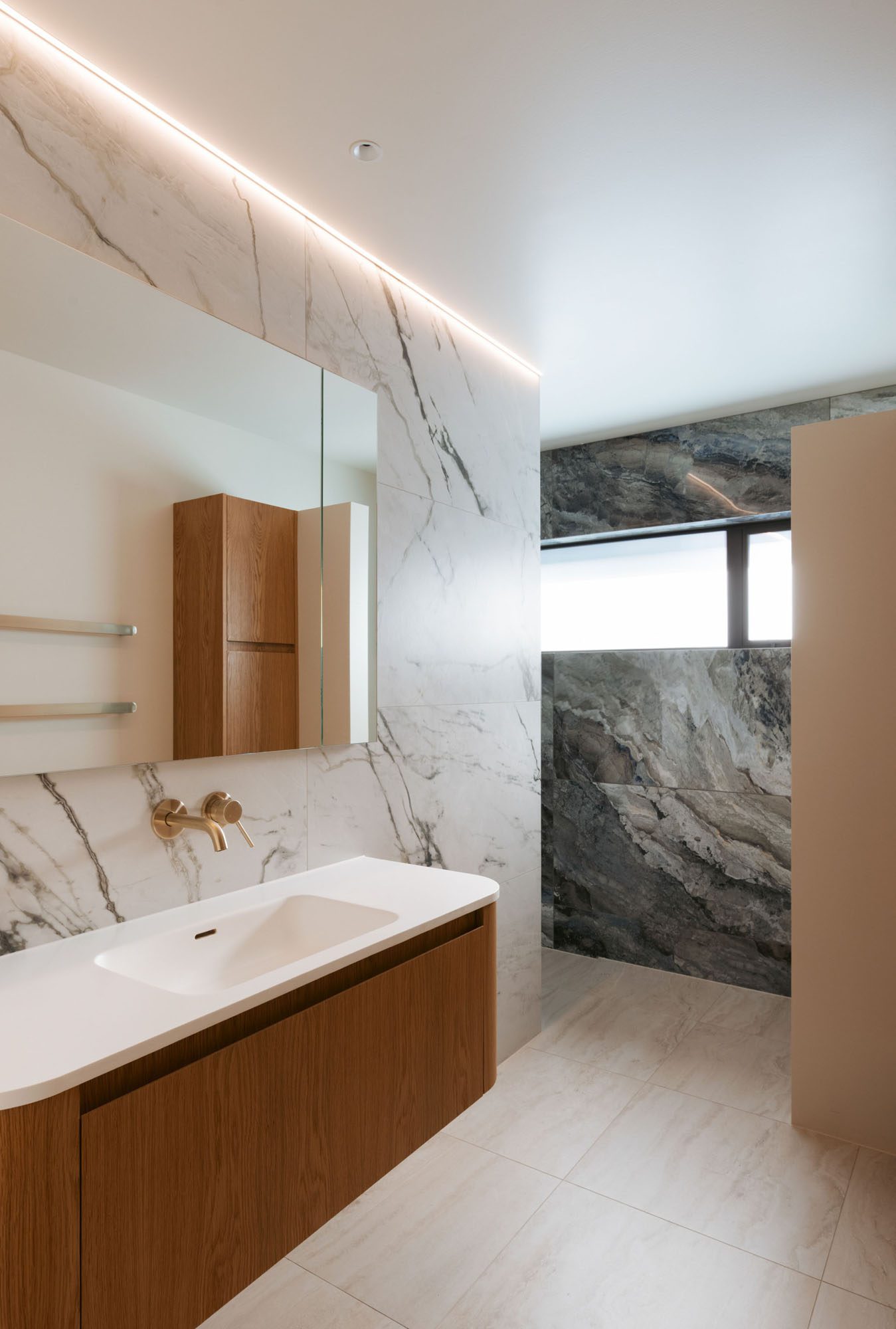
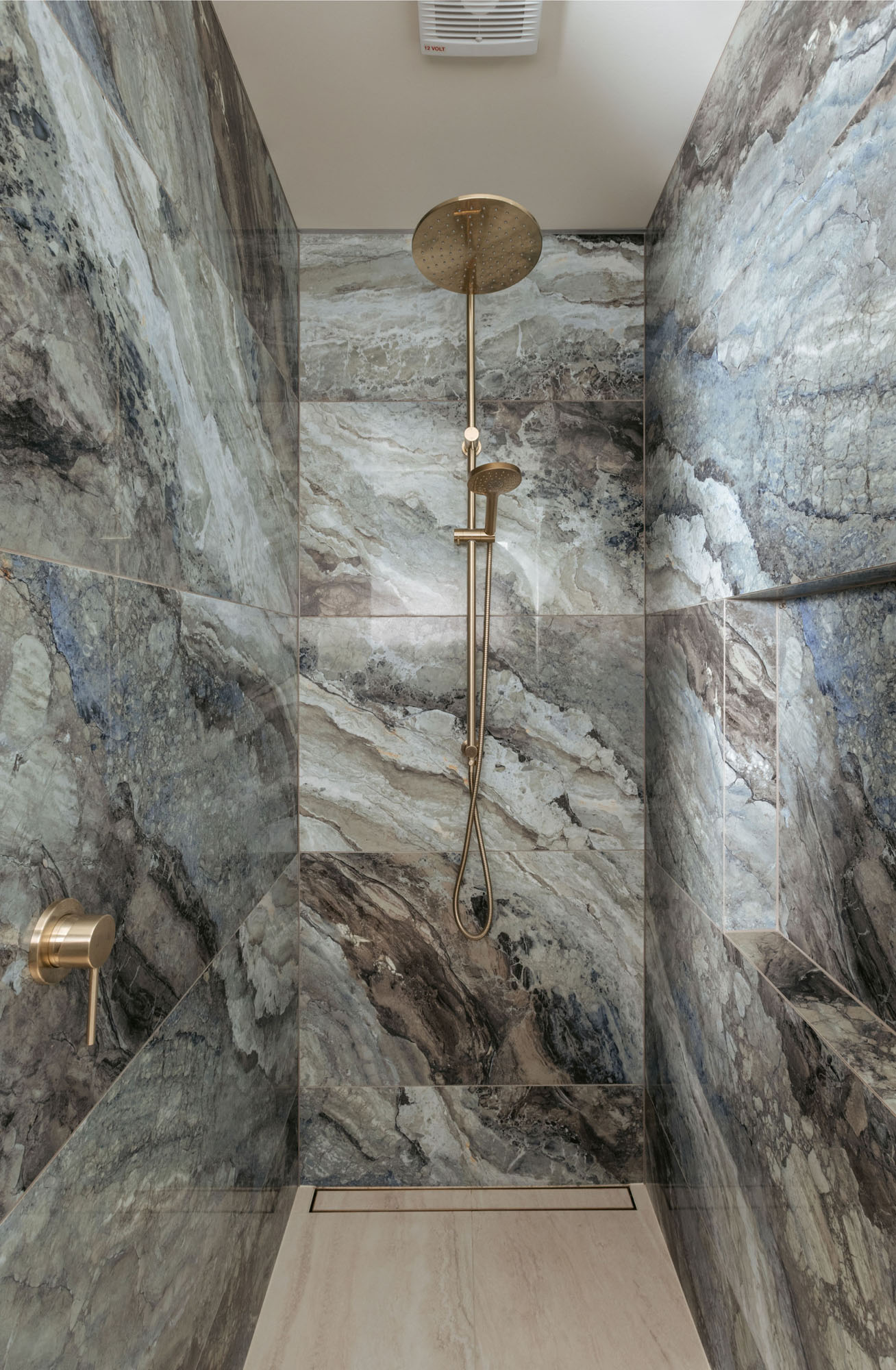
This is particularly evident in the living room, where a large Dick Frizzell landscape sits above a custom marigold sofa. Pink carpets, deep rose walls, burnt oranges, and soft blues create an interior that is layered, expressive, and deeply personal. Brushed brass — used consistently across fittings and details — threads through the spaces, offering a unifying warmth amid the diversity of colour and texture.

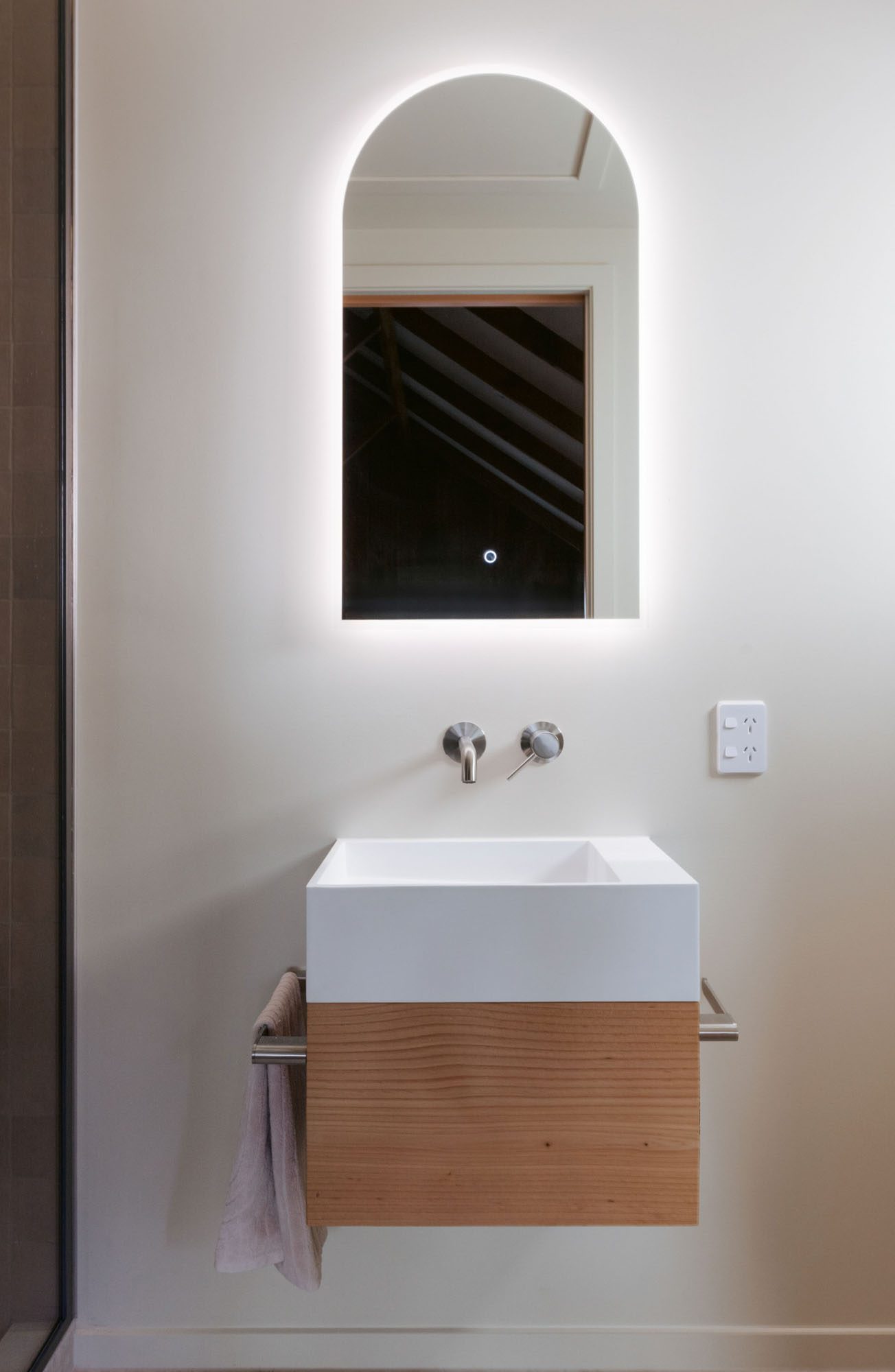
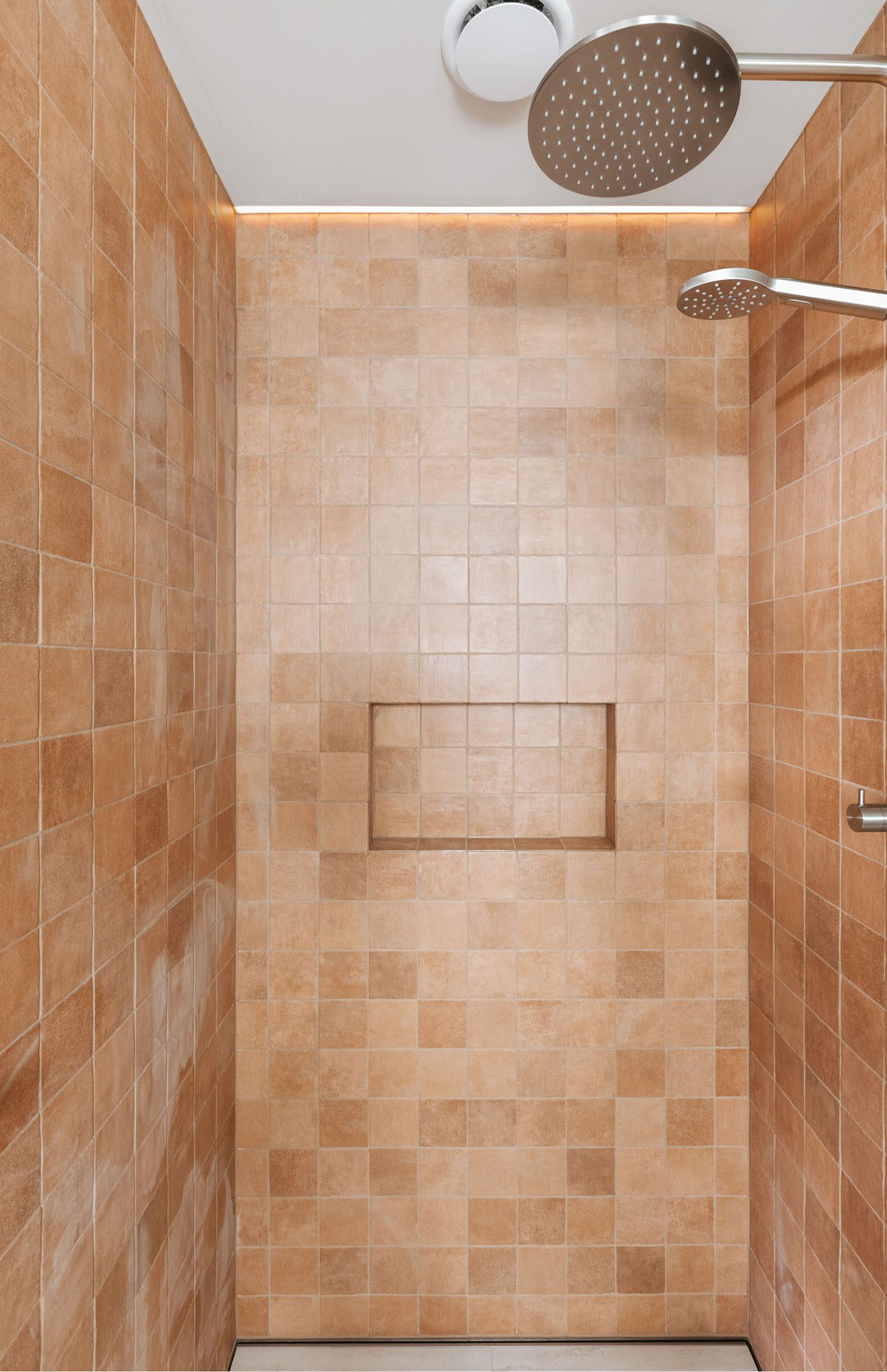
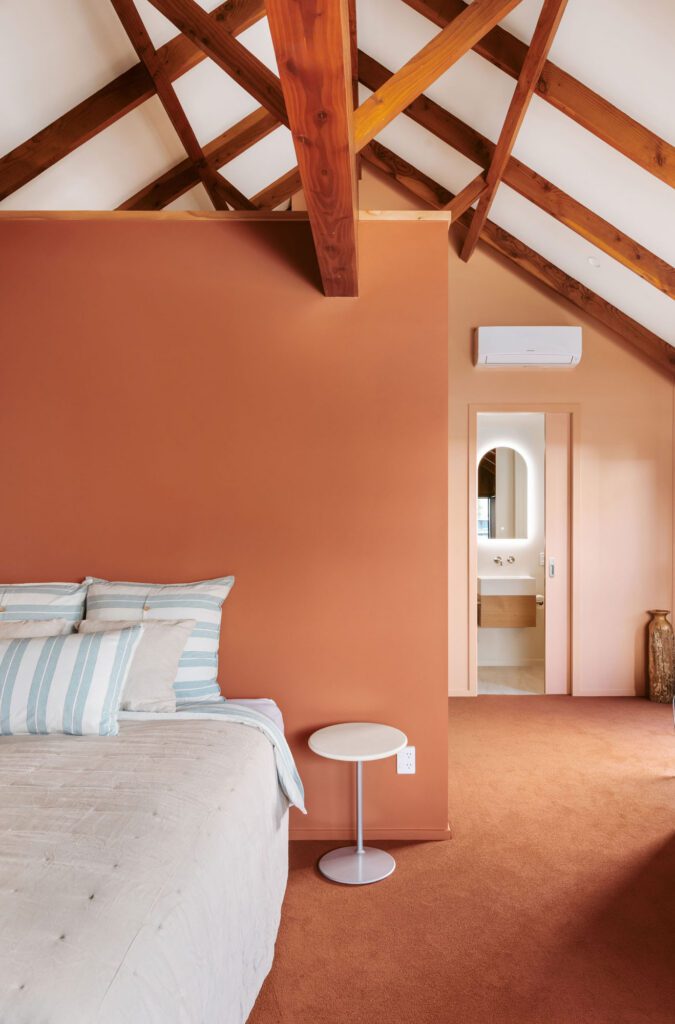
Each room is defined by a distinct palette, informed by artworks from the homeowner’s collection.

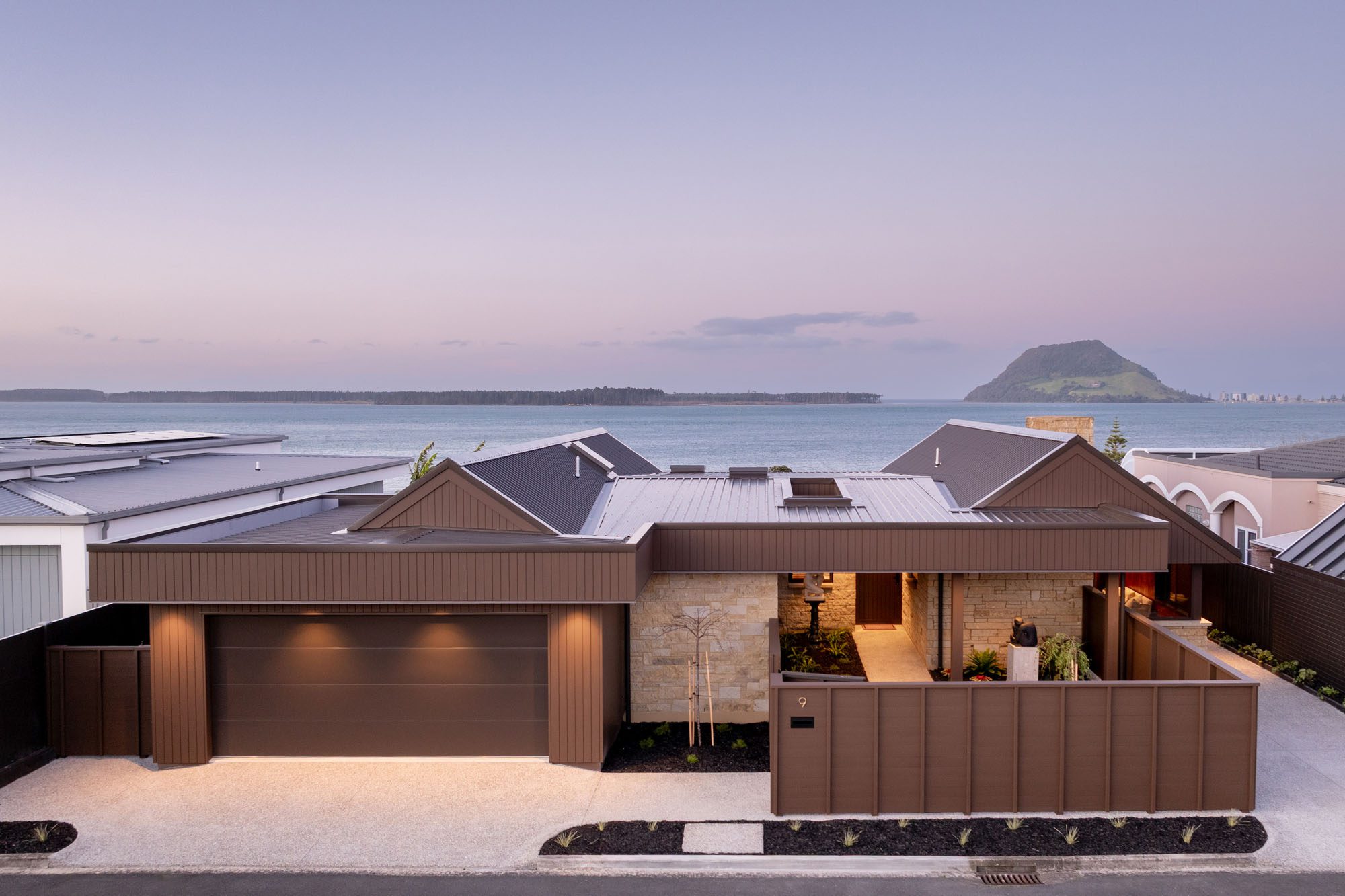
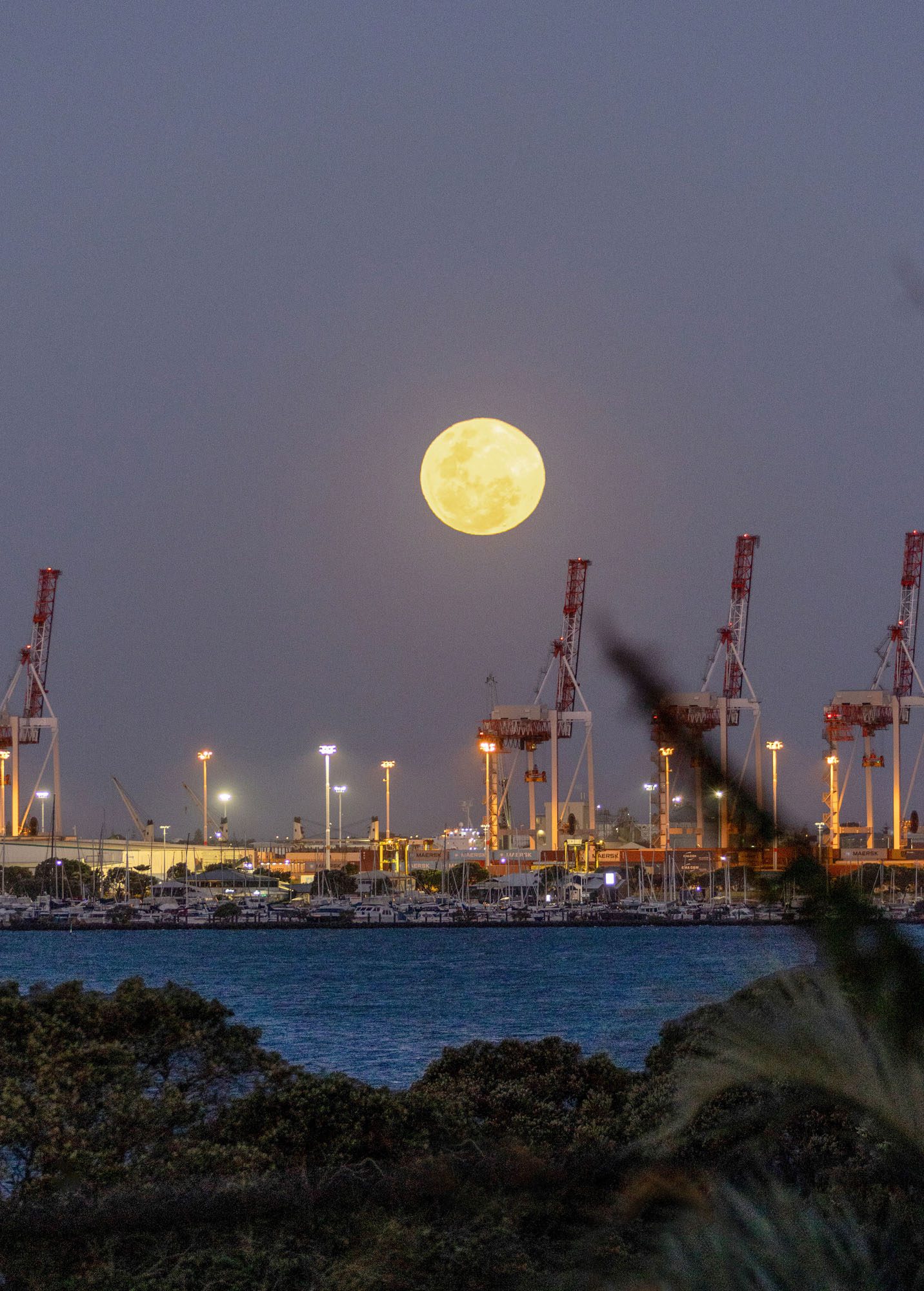
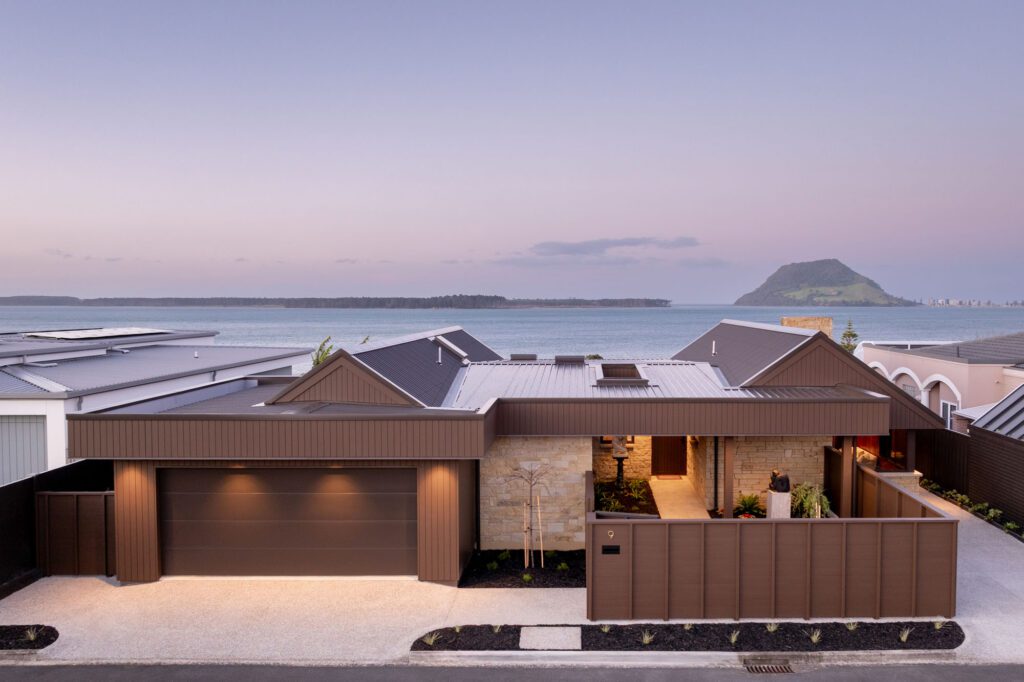
The site itself plays a defining role. Positioned on a cliff, with expansive views overlooking Tauranga Moana towards Mauao, the house is organised to draw the eye outward at every opportunity.

“I wanted you to be able to see the view from wherever you are,” Naomi explains.

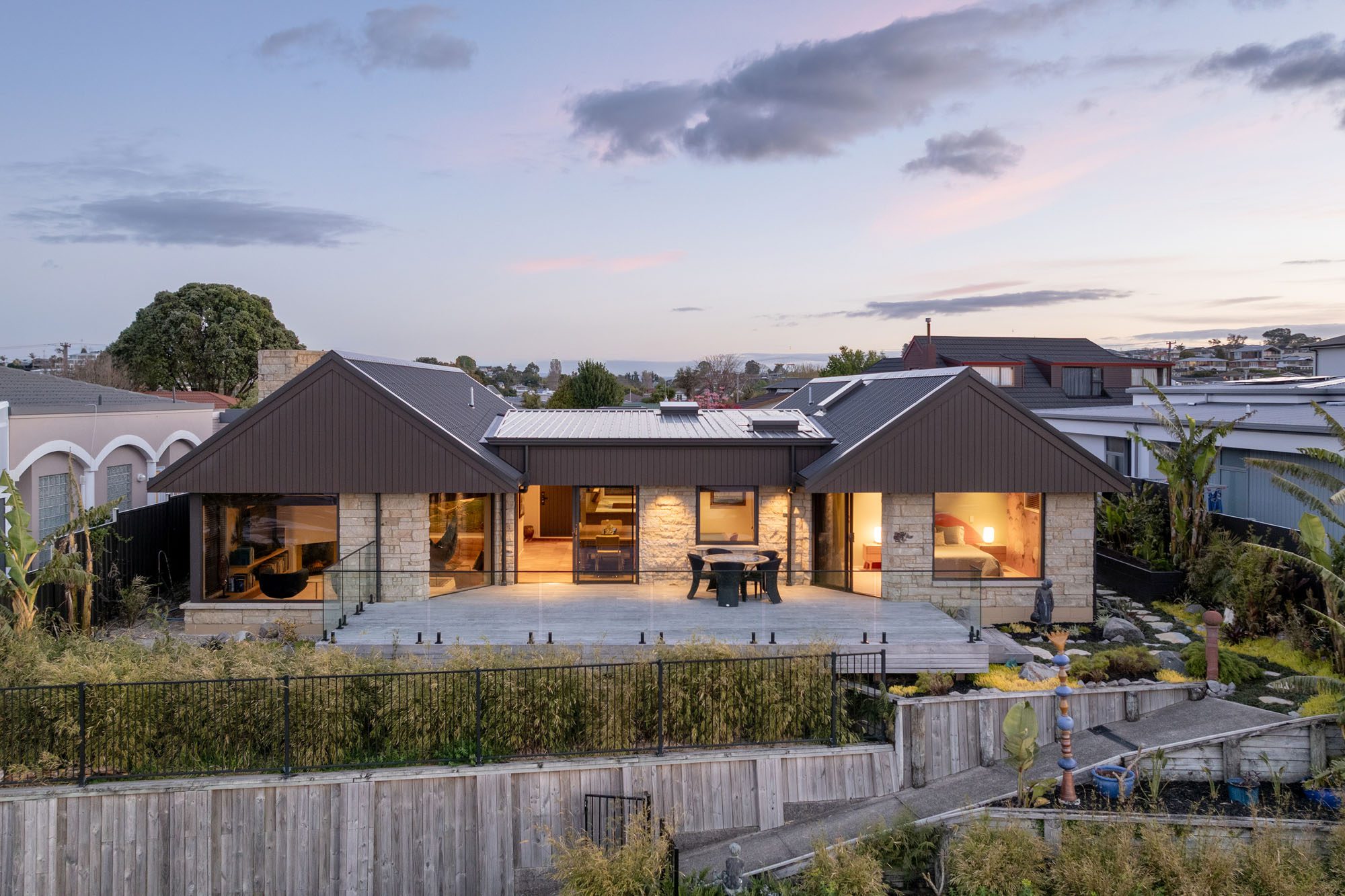
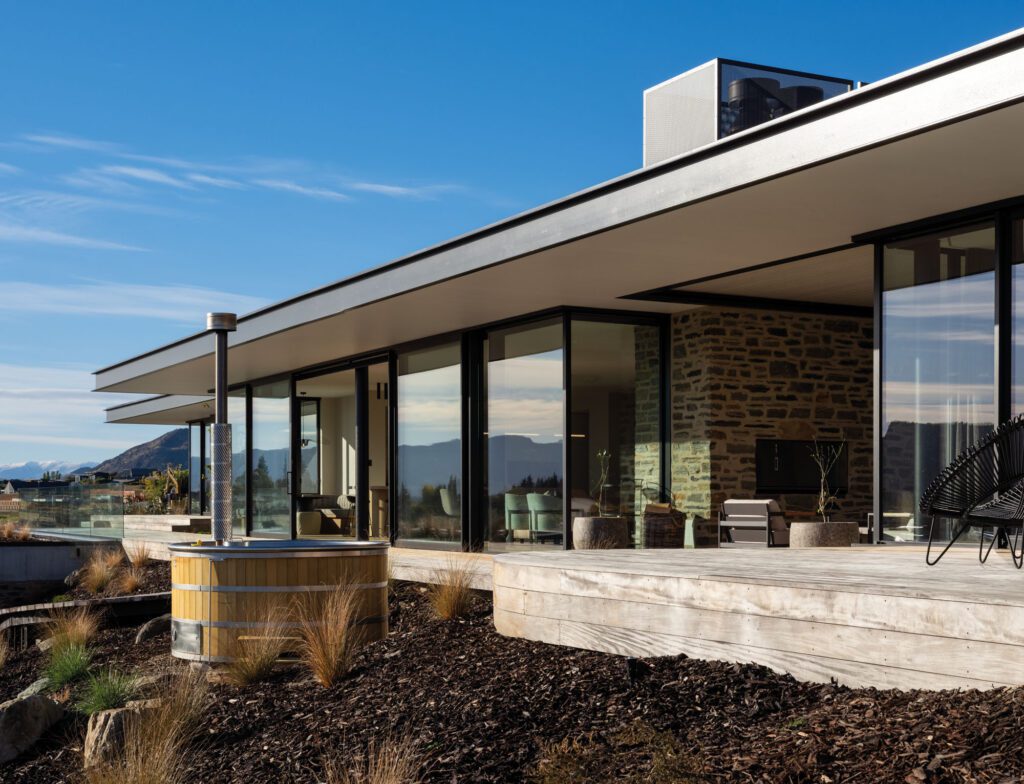
Original window openings are retained but upgraded with large, triple-glazed panes, their bronze frames chosen to recede into the surrounding stone. The effect is less of a window and more of a framed landscape — a deliberate compression of the surroundings into something almost painterly.

This idea of framing extends beyond the glazing. Internally, curved walls and strategically placed screens guide movement and sightlines, ensuring that the relationship between interior and exterior remains constant, yet varied.

With relatively low ceilings typical of the era, light became a critical design tool. Skylights and light wells are introduced throughout, not just to illuminate but to structure movement, drawing occupants through the house and marking transitions between spaces.

The kitchen, in particular, is treated as a central social and functional hub. Flooded with natural light, it reflects the rhythms of daily life, designed as much for conversation and hospitality as for use.

At night, the atmosphere shifts. Lighting is softer, more ambient — carefully positioned to highlight artwork and create a sense of intimacy. Much of the home’s furniture and lighting was collected in the 1970s, reinforcing a subtle continuity with the building’s origins.

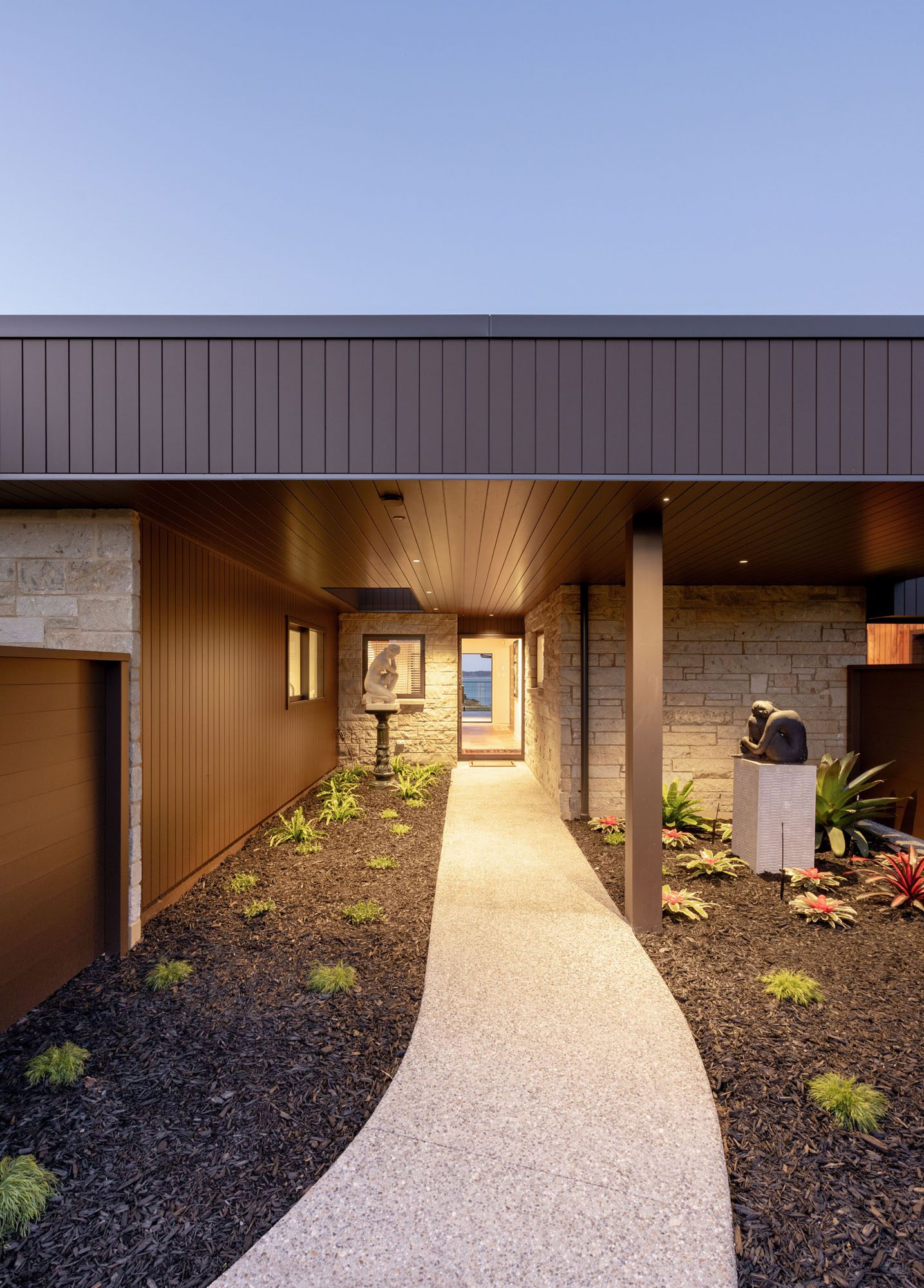
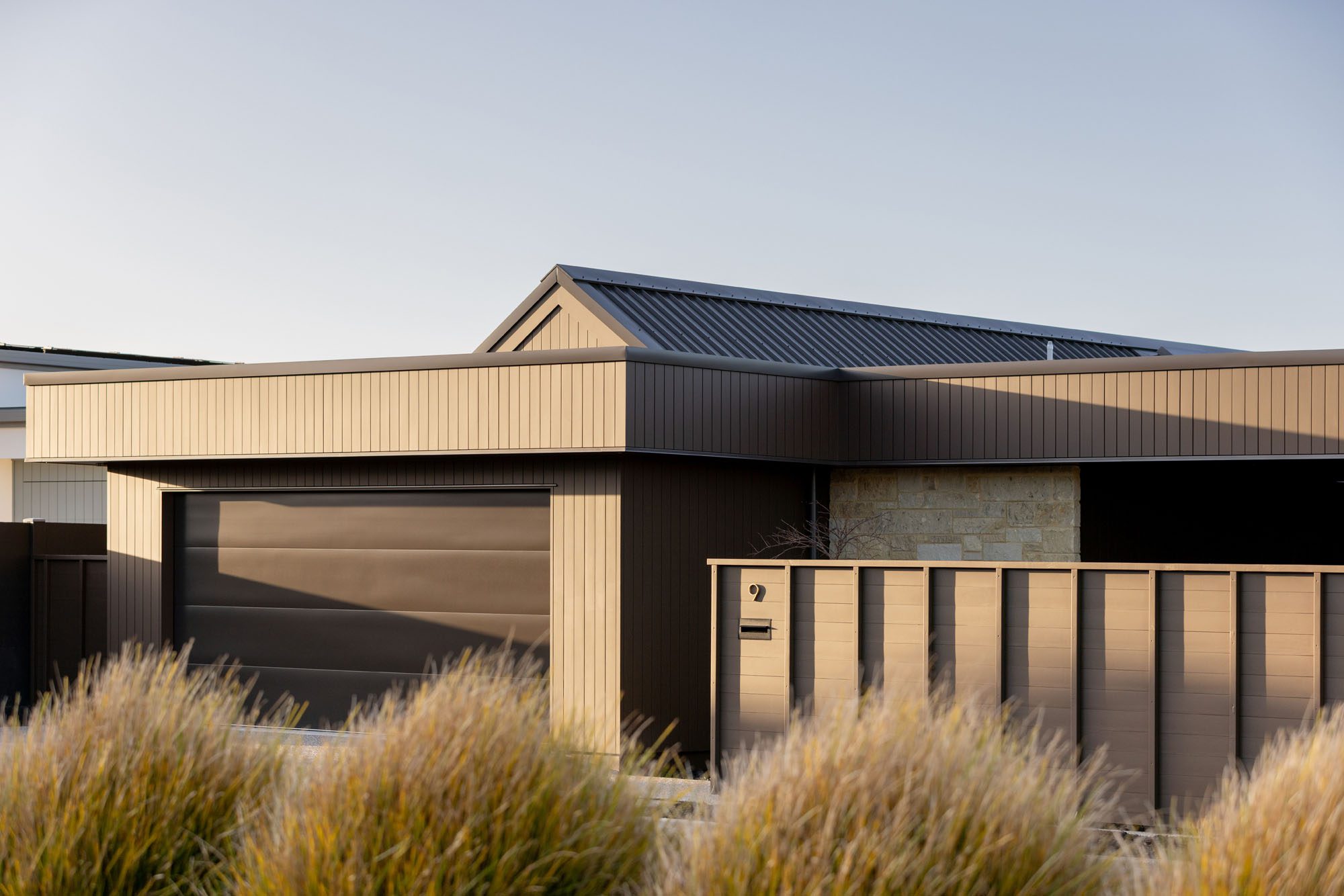
Restored Hinuera stone gives way to vertical shiplap cladding, with the exterior receding into the landscape, softened by planting.

Despite the scale of intervention — new joinery, roofing, extensions, and a reconfigured interior — the house resists any overt sense of transformation. From the outside, it remains recognisably itself.

“I didn’t want it to look too different from the original,” Naomi reflects. “Taking away from something already beautiful would be a shame.”

Instead, the project sits in a more nuanced territory, one where past and present are in dialogue. It is a house that understands its origins, revived and shaped by memory, personality, and care.

A Work of Art was a finalist in the 2026 Home of the Year Awards

Project Credits

Design: Omi Architecture 
Build: Falcon Build
Words: Katie Delany 
Images: Ruan Visser

Latest video features

In the Coromandel, a home with a humble profile and a thoughtful design makes the most of a stunning location.

Built with awe-inspiring attention to detail, this Arrowtown home is a fresh interpretation of a familiar Otago rural vernacular.

This sculptural Northland bach is a perfect north arrow on a remote farm high above the sea.

With the sun on its bow and the community at its stern, this is a house in which the elements are always front of mind.

Trending articles

Homes

Modernist Bunker Residence

A low-slung, linear form recessed into the foothills of the Southern Alps. A semi-subterranean minor dwelling, and a family home that creates a strong and

Design News

Social Gallery: Home of the Year 2026

More than 200 architects, designers, suppliers and homeowners gathered in Auckland to celebrate this year’s Home of the Year — an evening that brought together

Homes

A Work of Art

Perched above a cliff edge, where parkland softens into water, this reworked 1980s home is a careful act of continuation.