


Set within a vibrant Colombo suburb, this home by architect Vajini Pannila offers a contemporary reimagining of the tropical courtyard house.
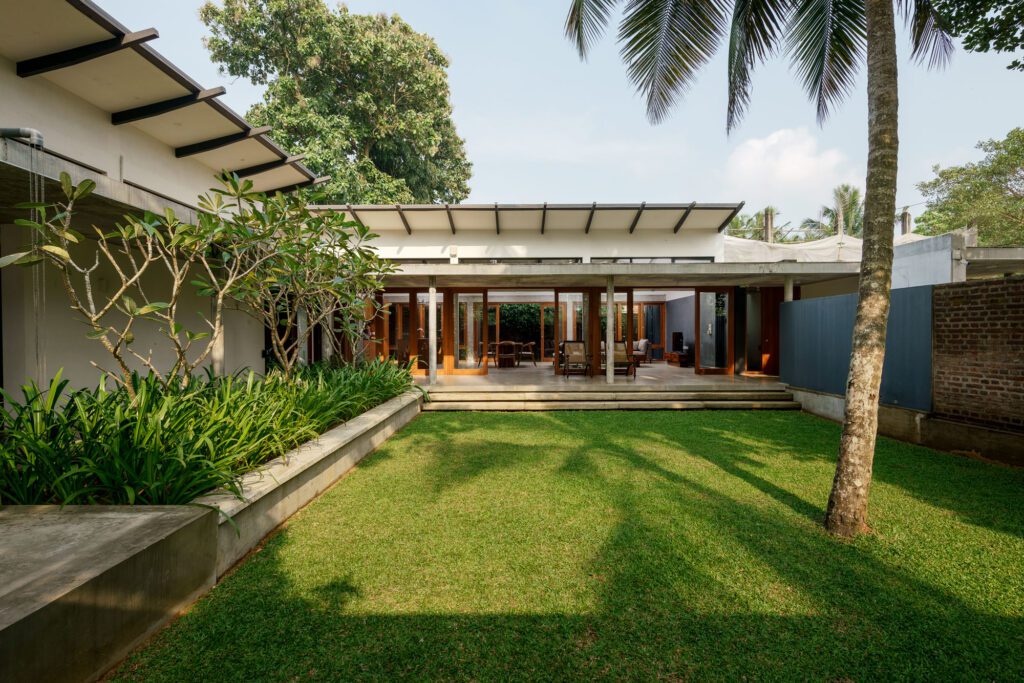
Here, a mature jackfruit tree anchors the corner of the site, a living remnant of what was once a cinnamon garden. This solitary tree shapes the L-shaped plan.
“The design embraces the tropical courtyard house typology, where architecture and landscape are deeply intertwined,” says Vajini. “The retained jackfruit tree became the starting point for the project, shaping the plan and creating a natural focal point around which family life unfolds.
Inspired by Sri Lanka’s tradition of courtyard houses, the design reframes a familiar architectural language for today. The home turns inward, gathering gardens, verandas, and shaded outdoor rooms into a sanctuary that invites natural ventilation and a gentler rhythm.
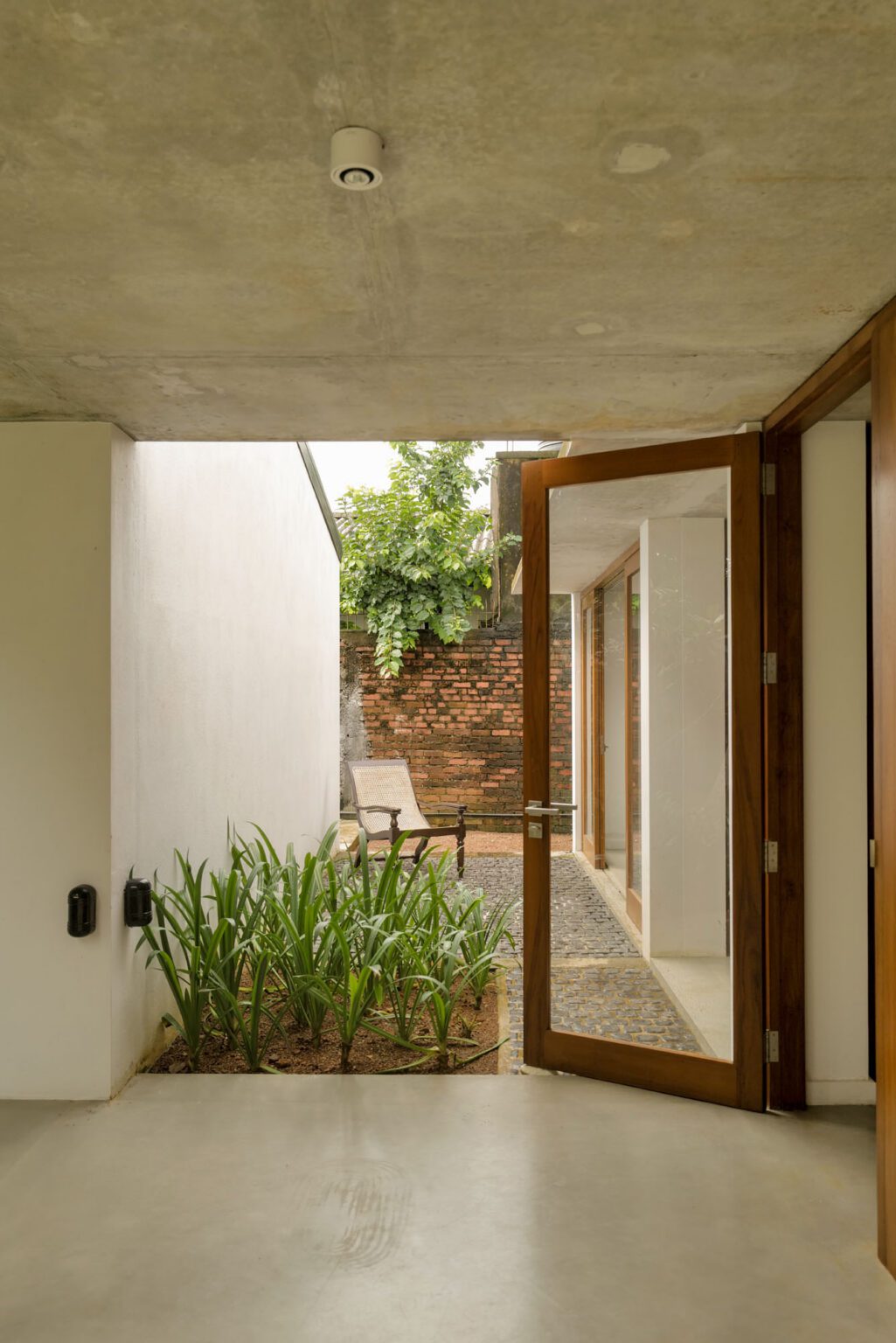
“The intention was to create a home that feels immersed in nature despite its urban setting,” says Vajini. “The courtyards bring light, ventilation, and greenery deep into the plan, allowing the boundaries between inside and outside to dissolve.” Arranged as a sequence of pavilions that move between open and secluded courtyards, the architecture carefully balances connection and retreat while maintaining a strong relationship with climate and landscape.
Perimeter walls, framed views, and layered rooflines offer privacy while sustaining a dialogue with the neighbourhood beyond. Spaces reveal themselves gradually, alternating between openness and enclosure to enrich the experience of moving through the home.
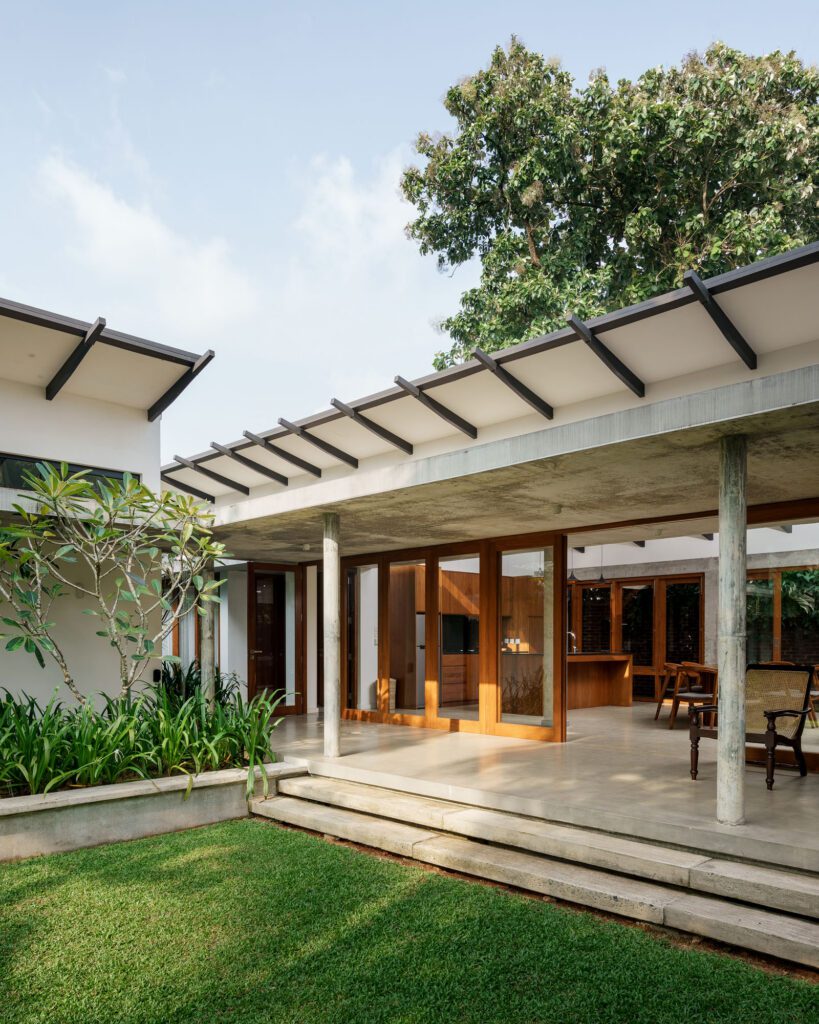
The open living wing extends from the main courtyard, its sloping ceiling shaping an intimate setting for movement and gathering, dissolving the threshold between inside and out. Clerestory windows above frame the canopy, drawing neighbouring trees into the heart of the home. This borrowed greenery expands the sense of space, immersing daily life in the quiet of treetops and birdsong.
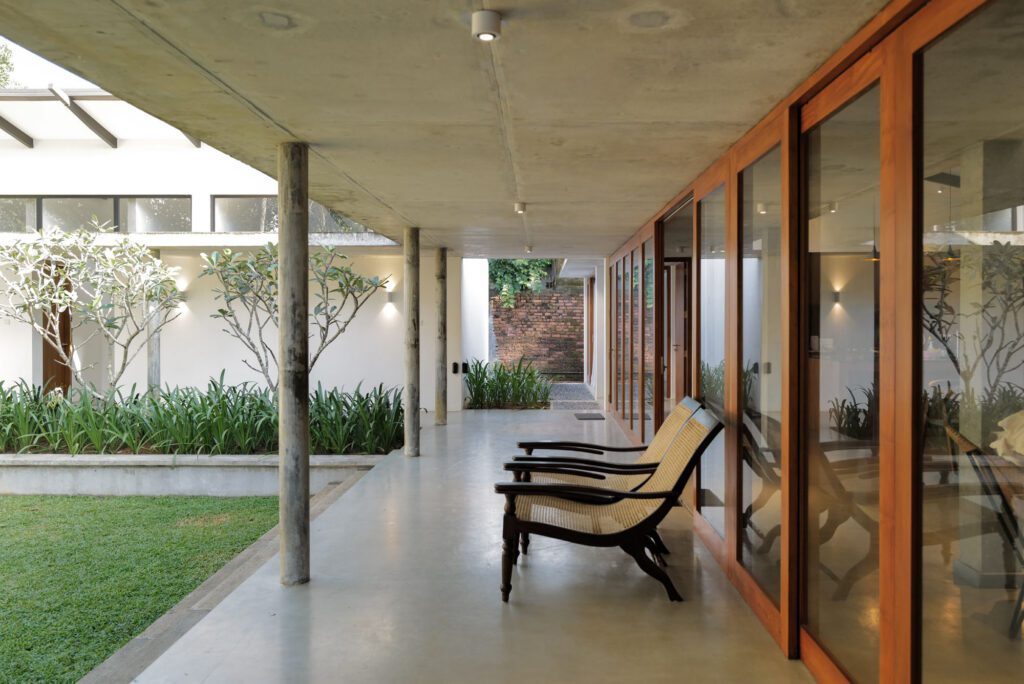
Material choices ground the project in its setting. Exposed concrete floors unify interior and exterior spaces, while cobblestones and red brickwork define a textured edge. Concrete walls offer thermal mass and durability, their solidity softened by teak-framed openings that introduce warmth and tactility. The restrained palette allows vegetation and shifting light to become the home’s defining elements.
The connection to landscape continues in the bathrooms, where private garden courtyards accommodate open-air showers and bathing spaces. Here, daily rituals unfold against a backdrop of planting, sky, and fresh air, reinforcing the home’s seamless relationship with nature.
Responding to Colombo’s hot, humid climate, the architecture employs passive environmental strategies. Deep overhangs and concrete canopies offer shade from the tropical sun, while cross-ventilation pathways encourage airflow throughout. High-level openings release warm air, reducing reliance on mechanical cooling and ensuring comfort year-round.
“More than a holiday retreat, the house is a contemporary interpretation of Sri Lanka’s enduring courtyard tradition — preserving a connection to landscape, climate, and community while creating a calm refuge for family and friends,” Vajini says.