


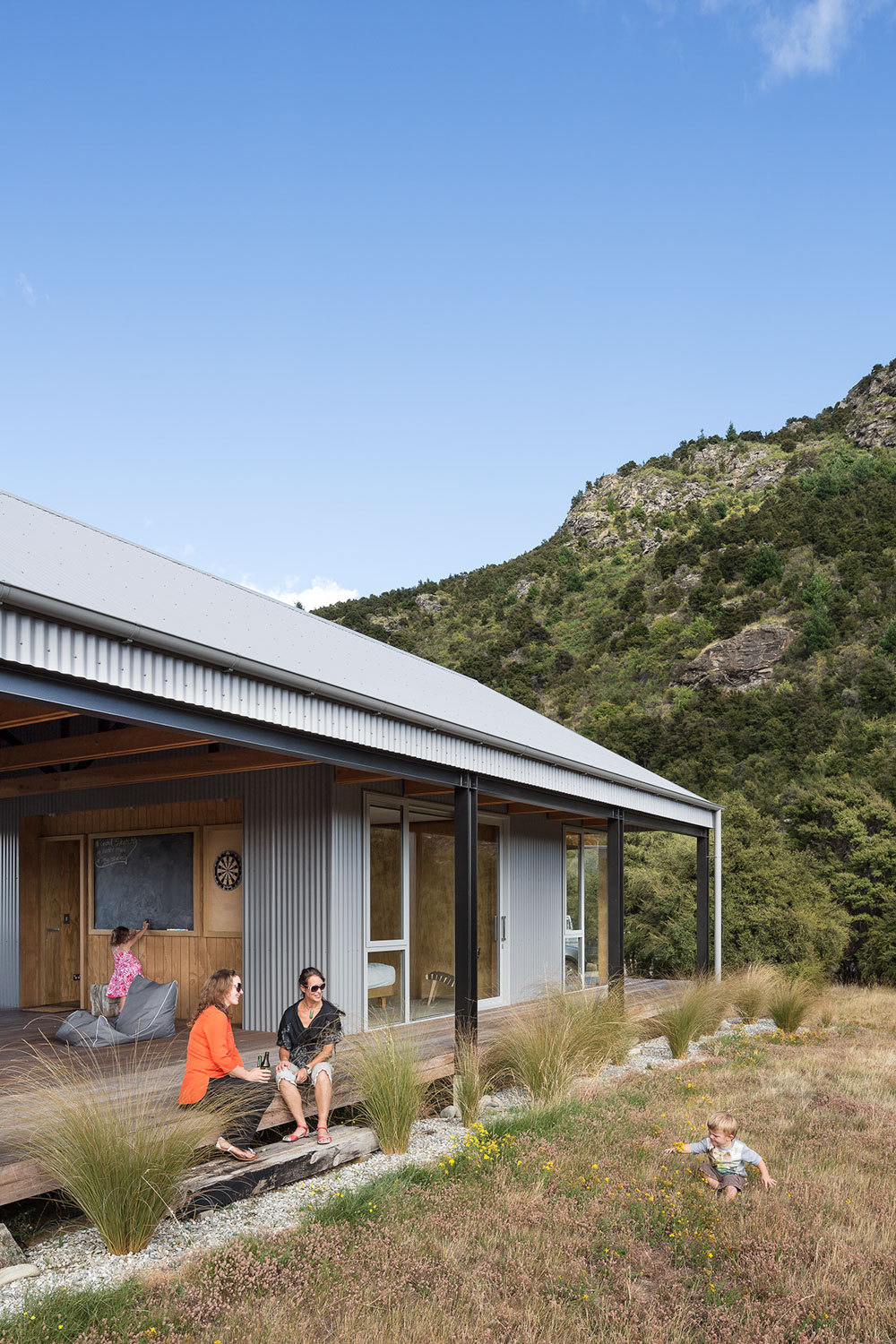
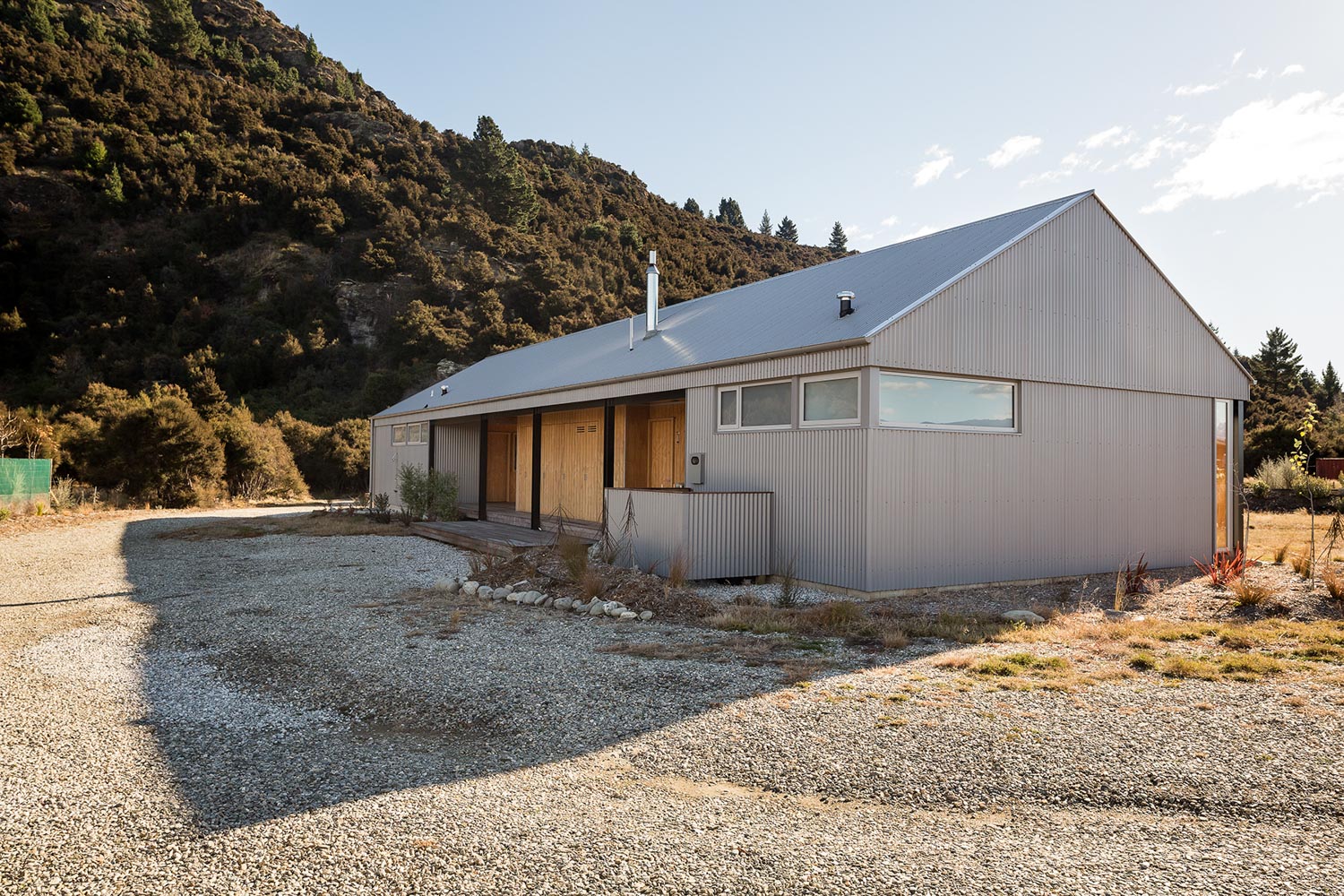
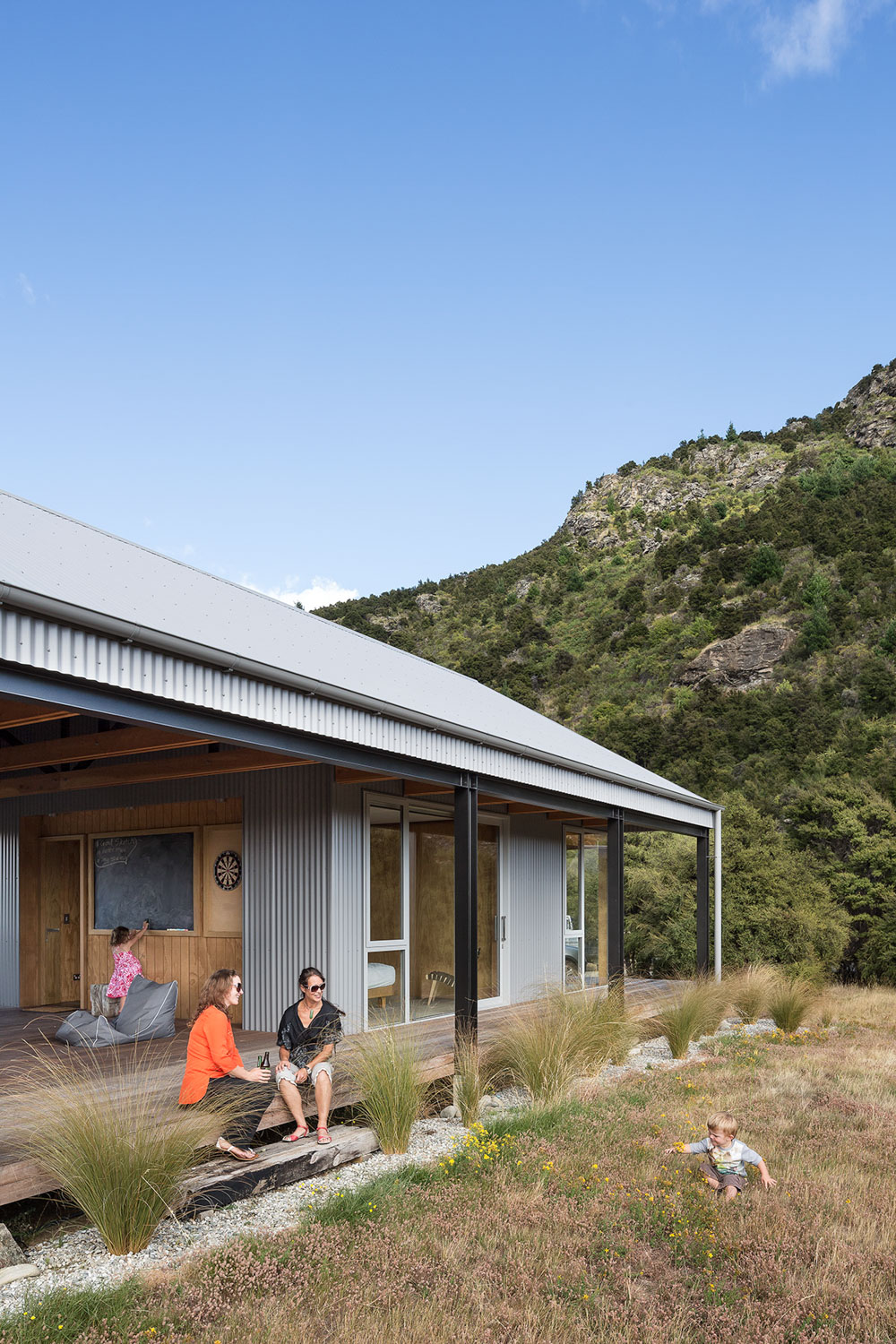
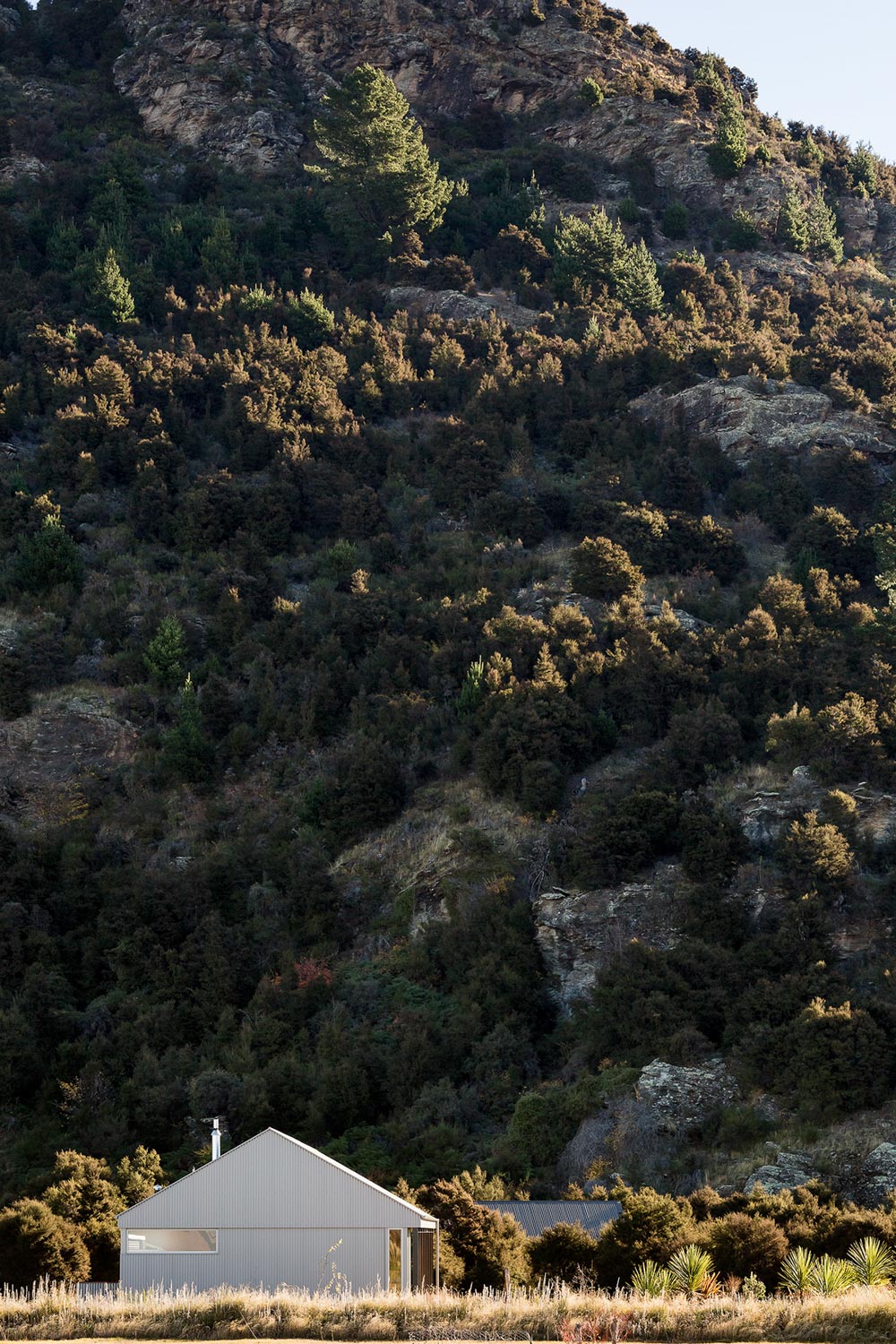
Located under the partial shadow of the bare schist outcrops of Mount Iron, the site, though within a medium-density subdivision, retains natural elements of this foothill grassland with kanuka scrub and the long dry grasses distinctive of the region.
The client, a relative of the architect, responded to this natural beauty, which includes views over neighbouring houses to the stunning mountain vistas beyond, and selected the site as the location of a family crib to be used for both winter and summer recreation. The site provided an opportunity reminiscent of camping, an expanse of grass and bare land on which to pitch the “tent” and shrubland that offers the potential of individual secluded camping spots located within the kanuka. A base camp for the family.
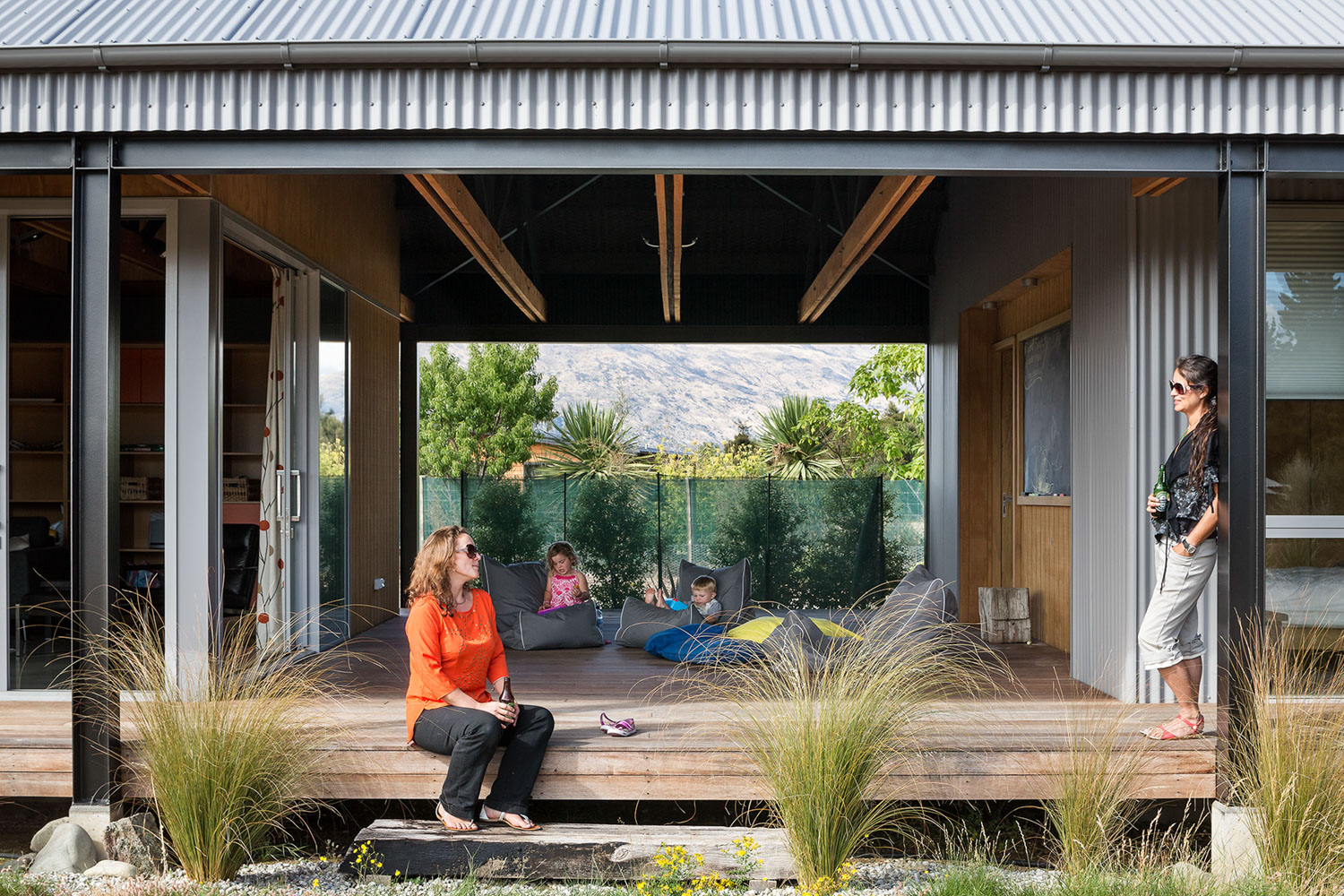
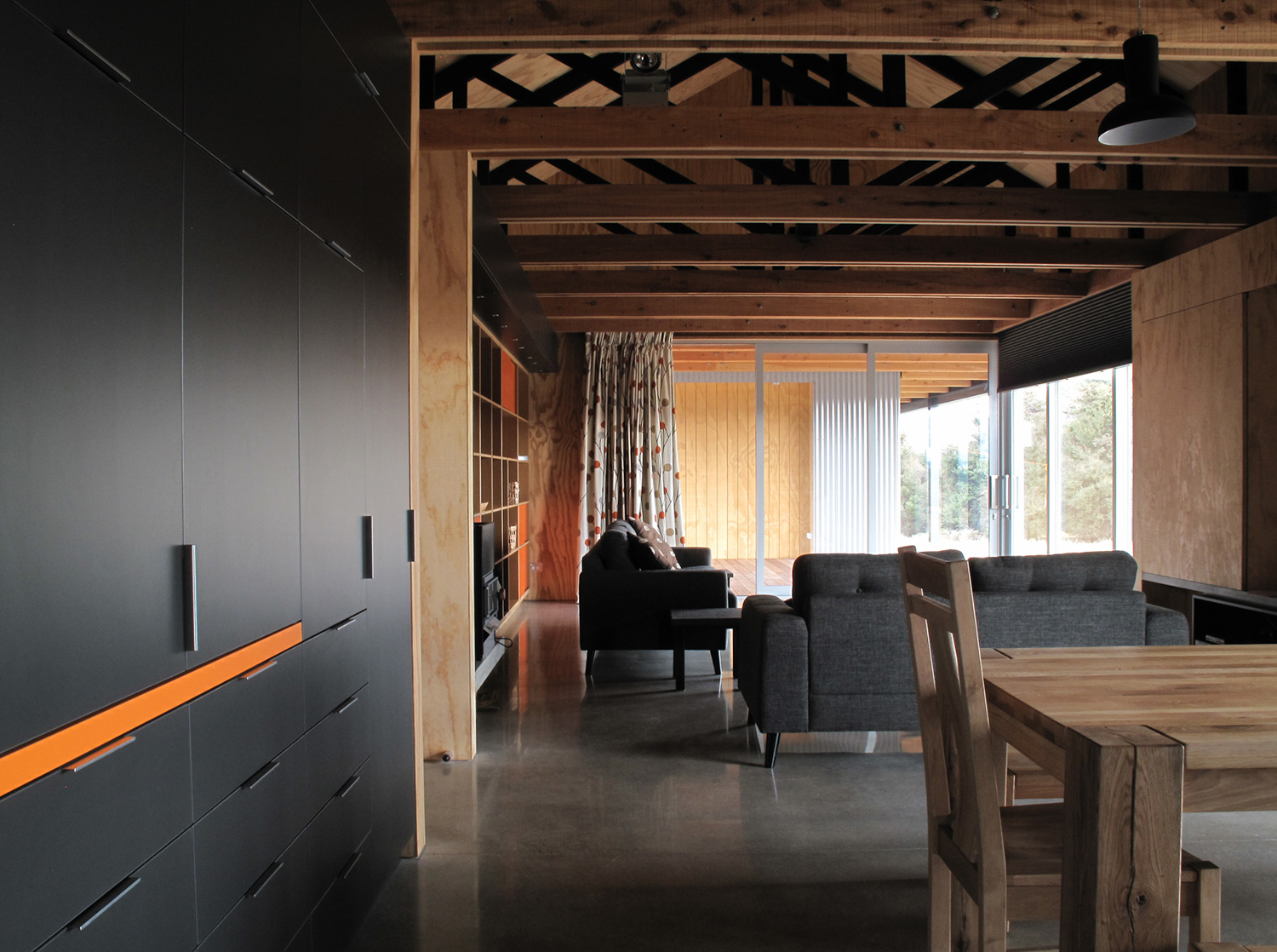
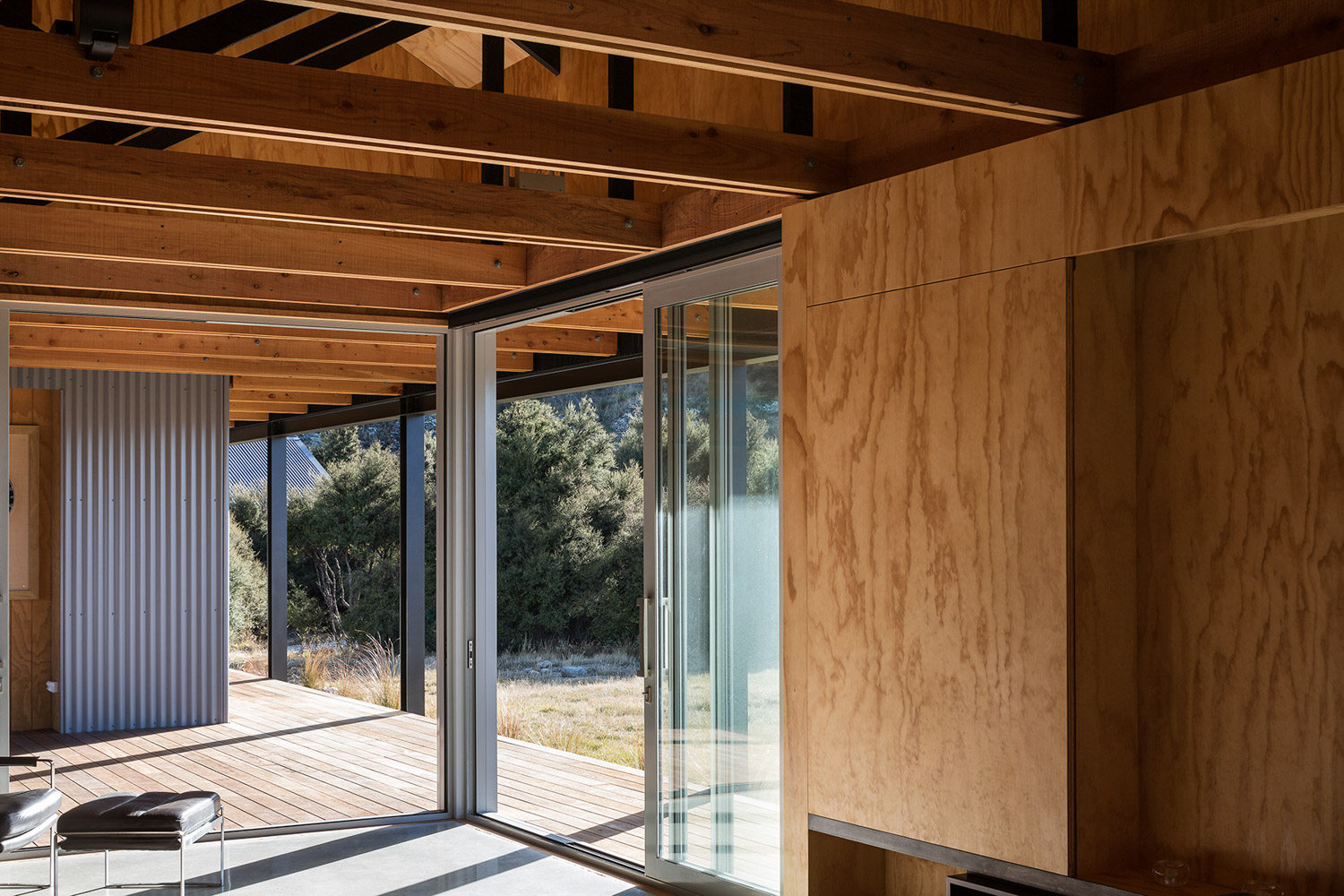
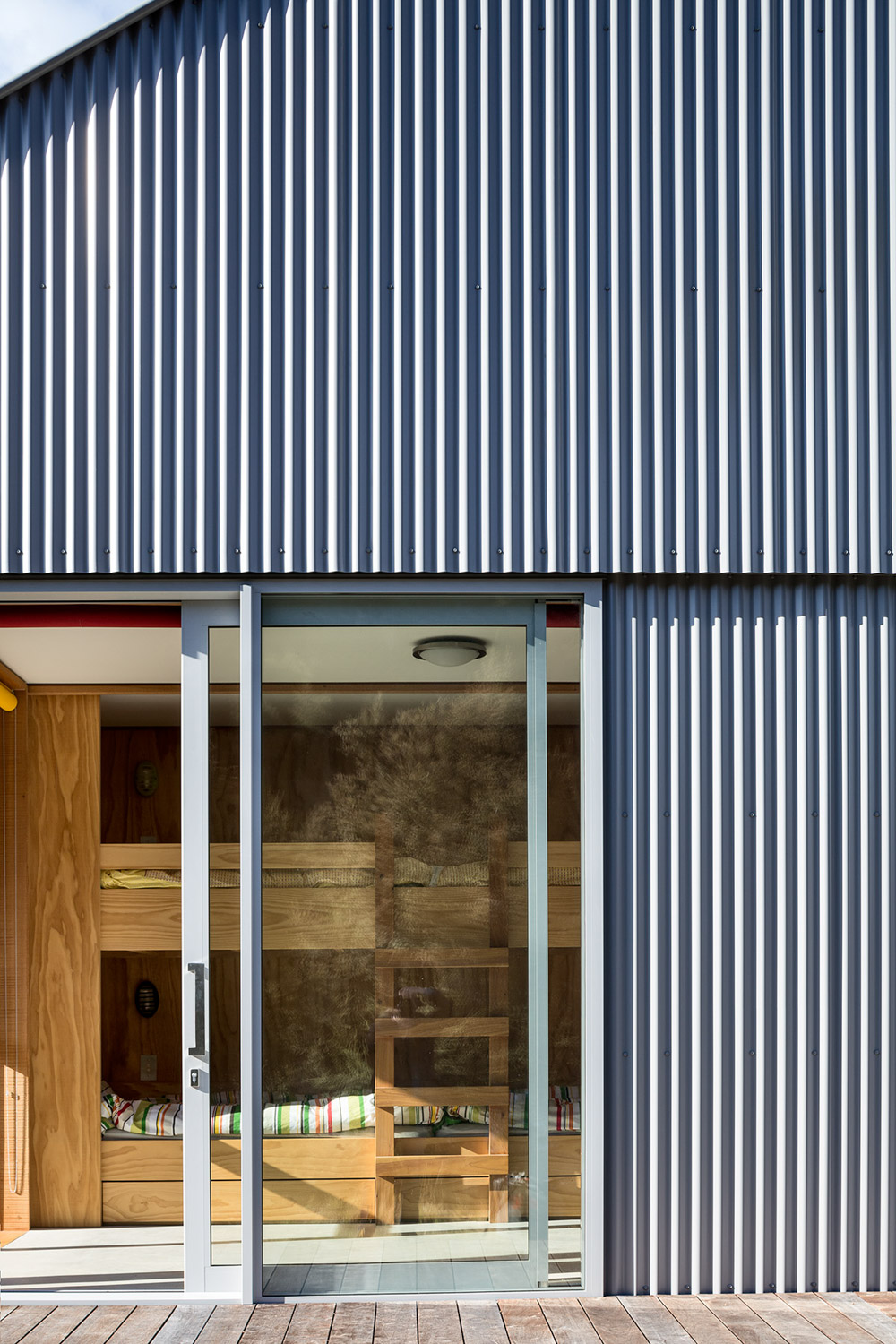
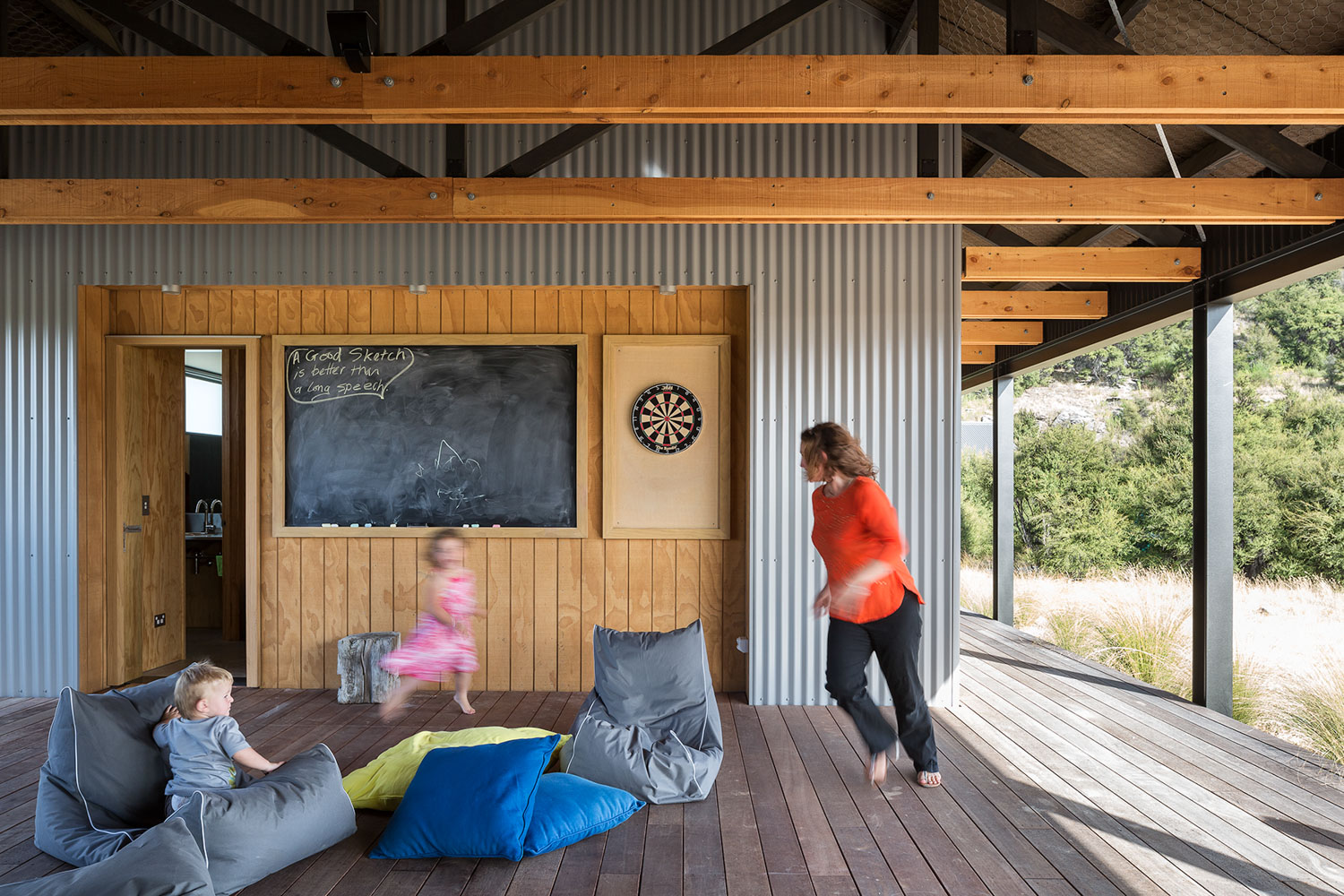
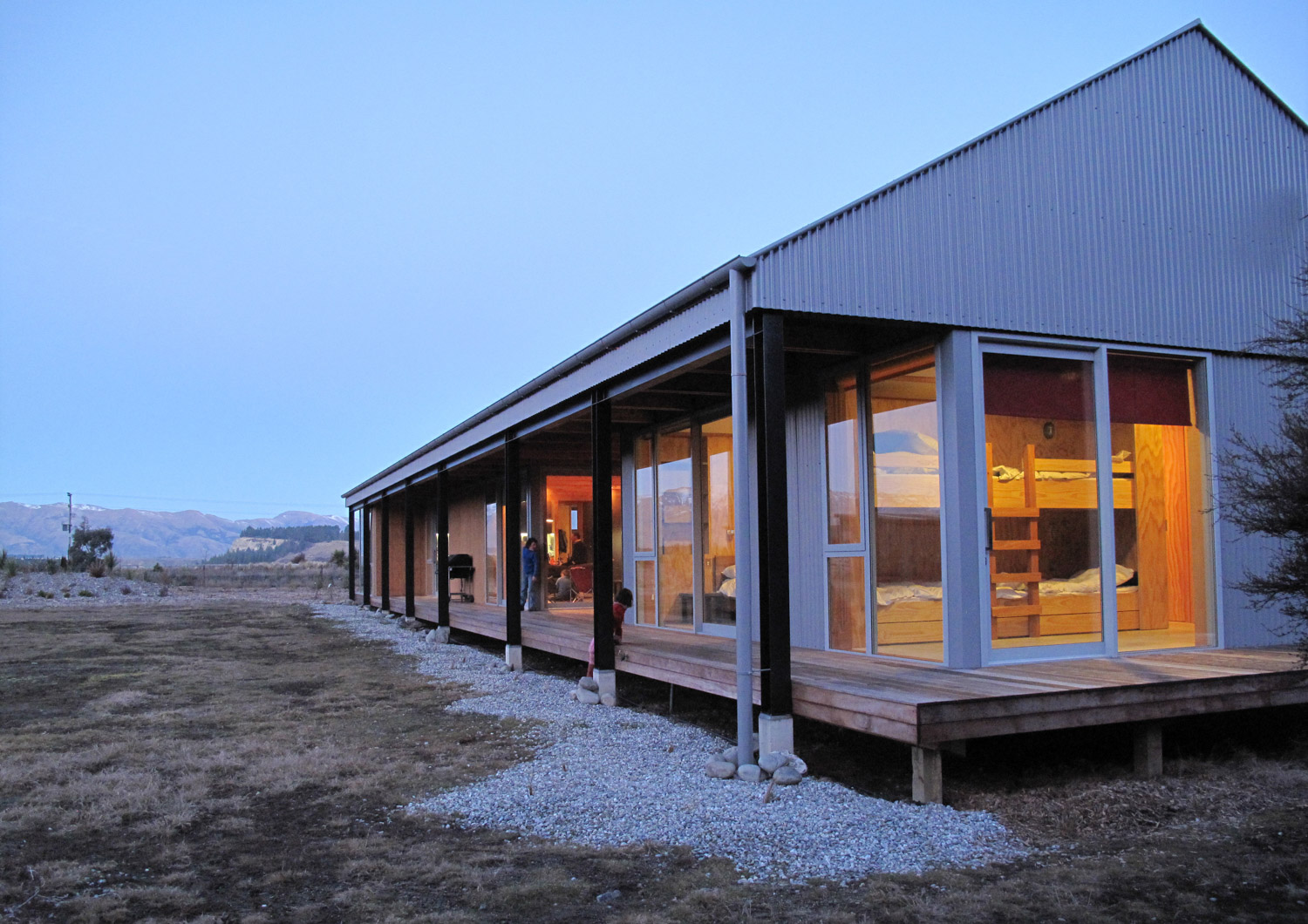
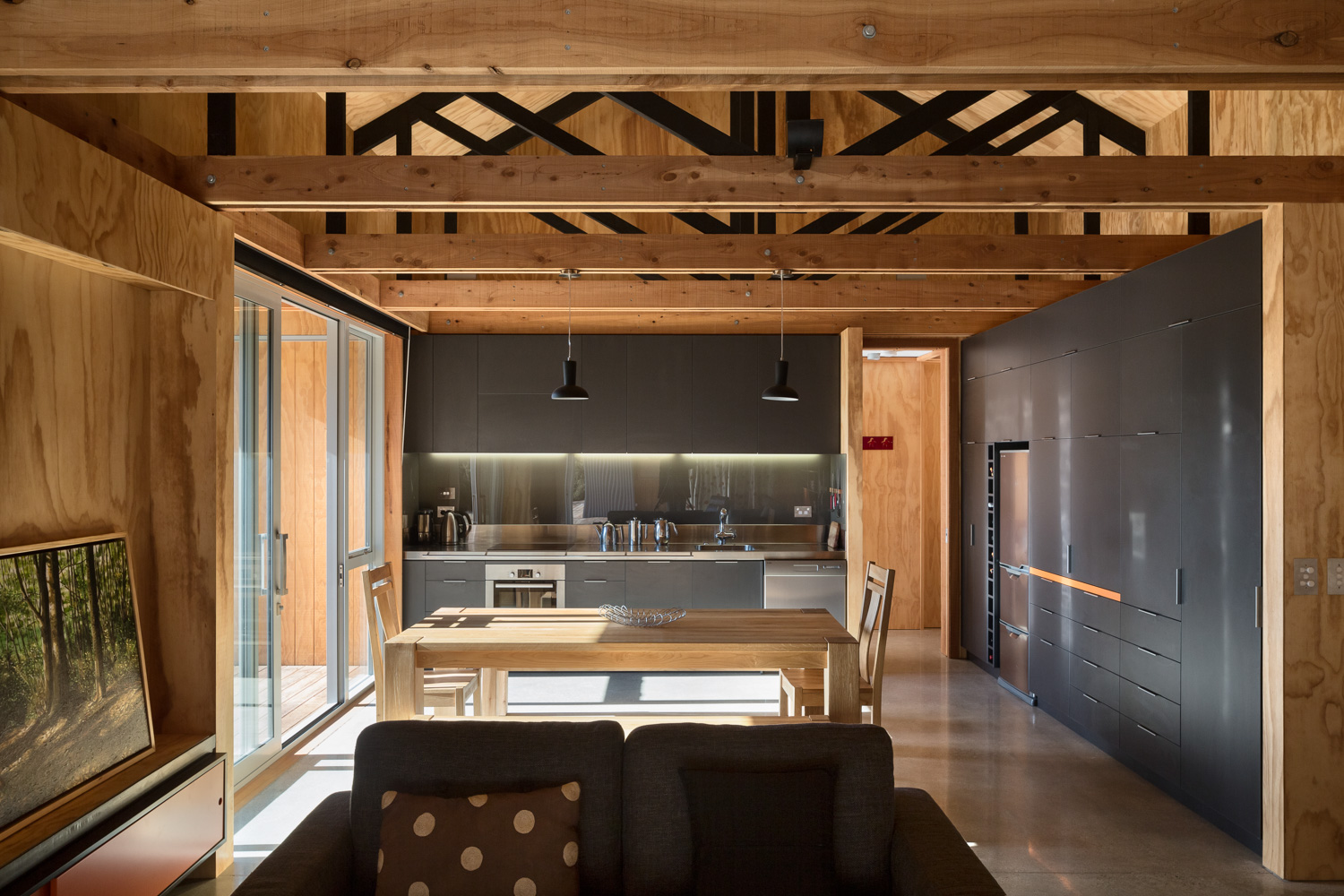
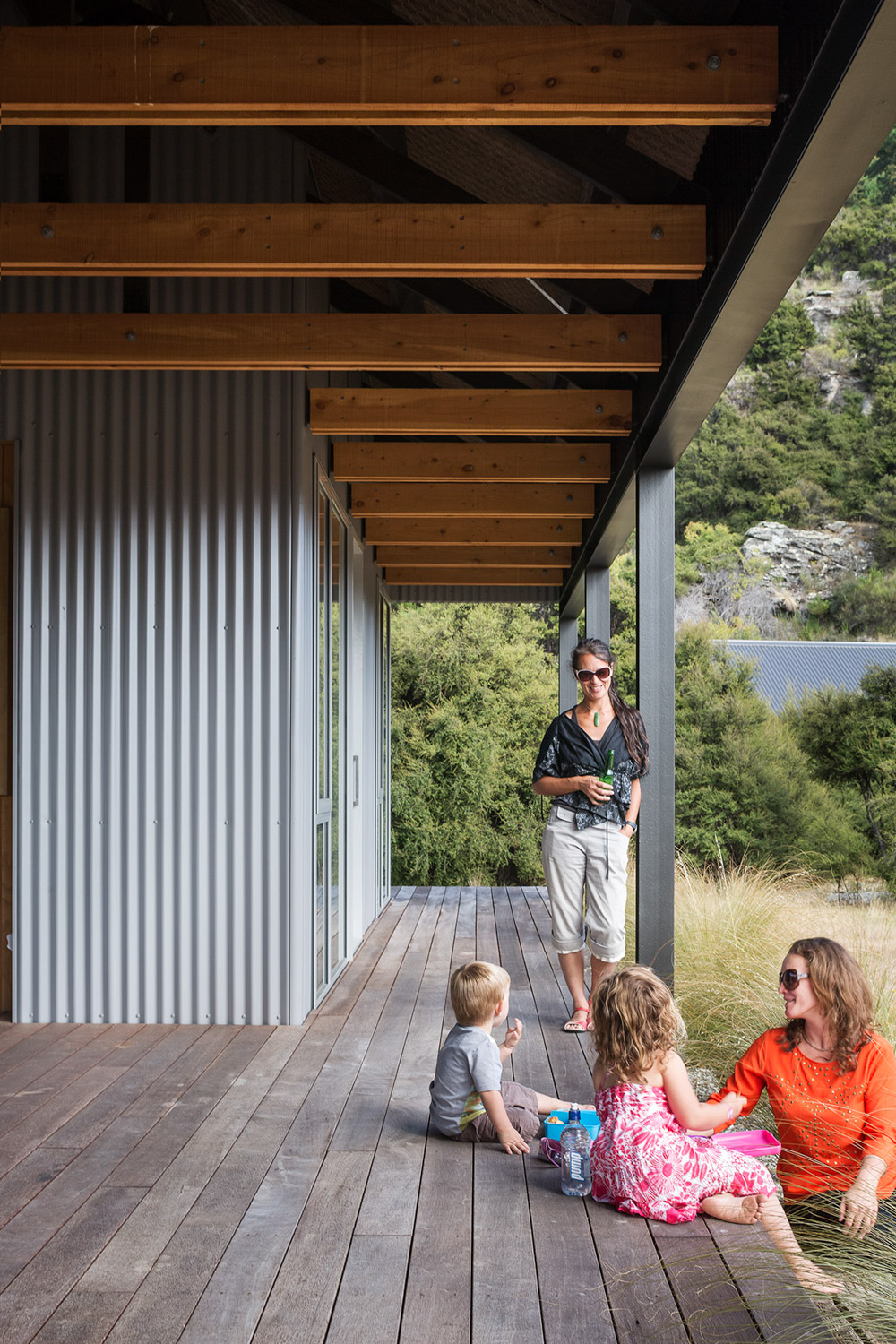
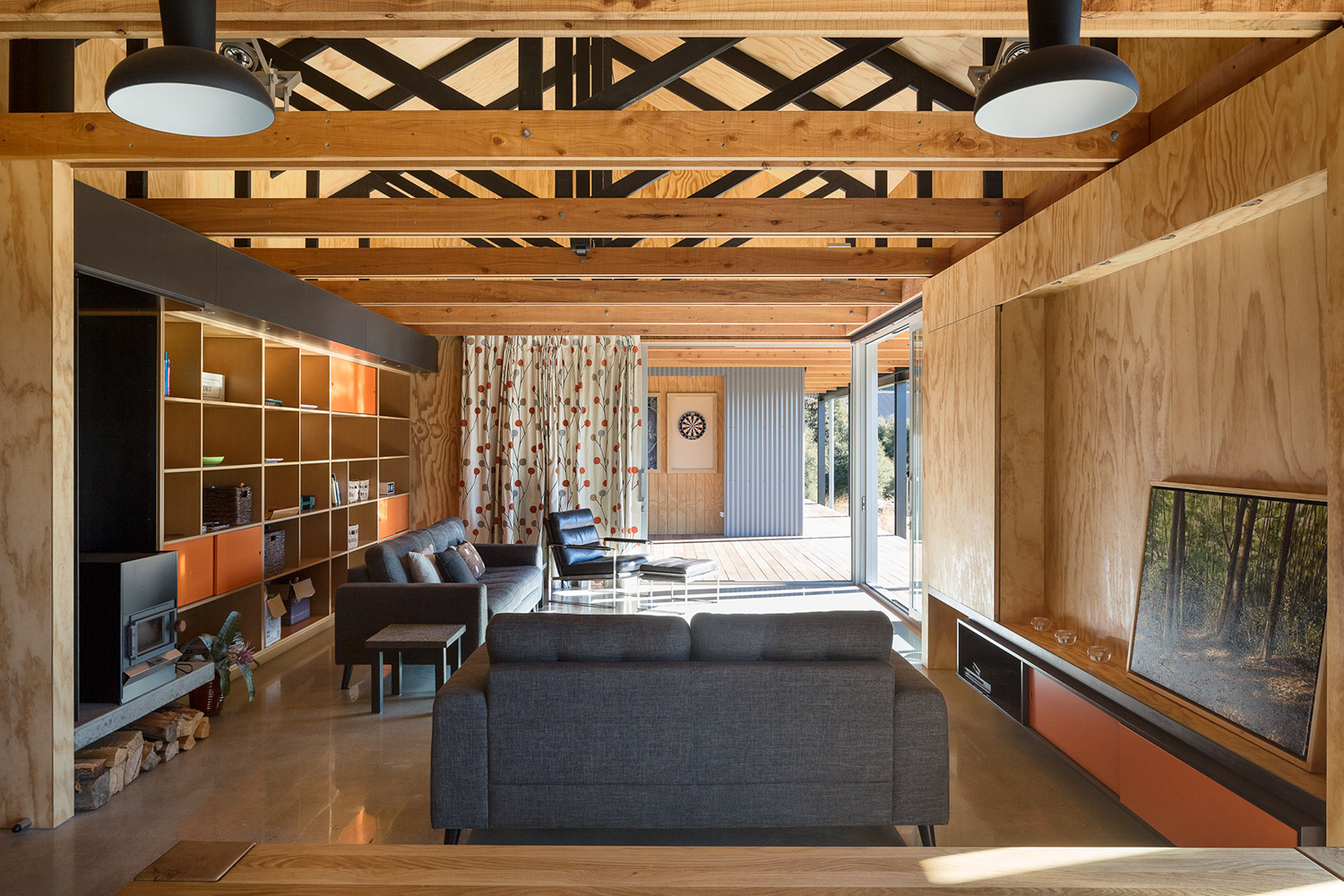
The architecture, in planning, form and materials, is reminiscent of the shearing shed; a structure both connected to and familiar in its natural surroundings. Consisting of two separate tin and plywood buildings, housing owner and guest ‘pods’ connected by an oversailing gable-form tin roof and an apparently floating ground plane of timber decking. This decking cleverly links the two elements and creates extensive outdoor verandahs for both owner and guest elements, as well as a covered inner courtyard shared by all. The simple, proprietary truss roof structure is left exposed to the outdoor decking areas and within the skillion-ceilinged Living area, creating a sculptural spatiality totally recognisable as the shed.
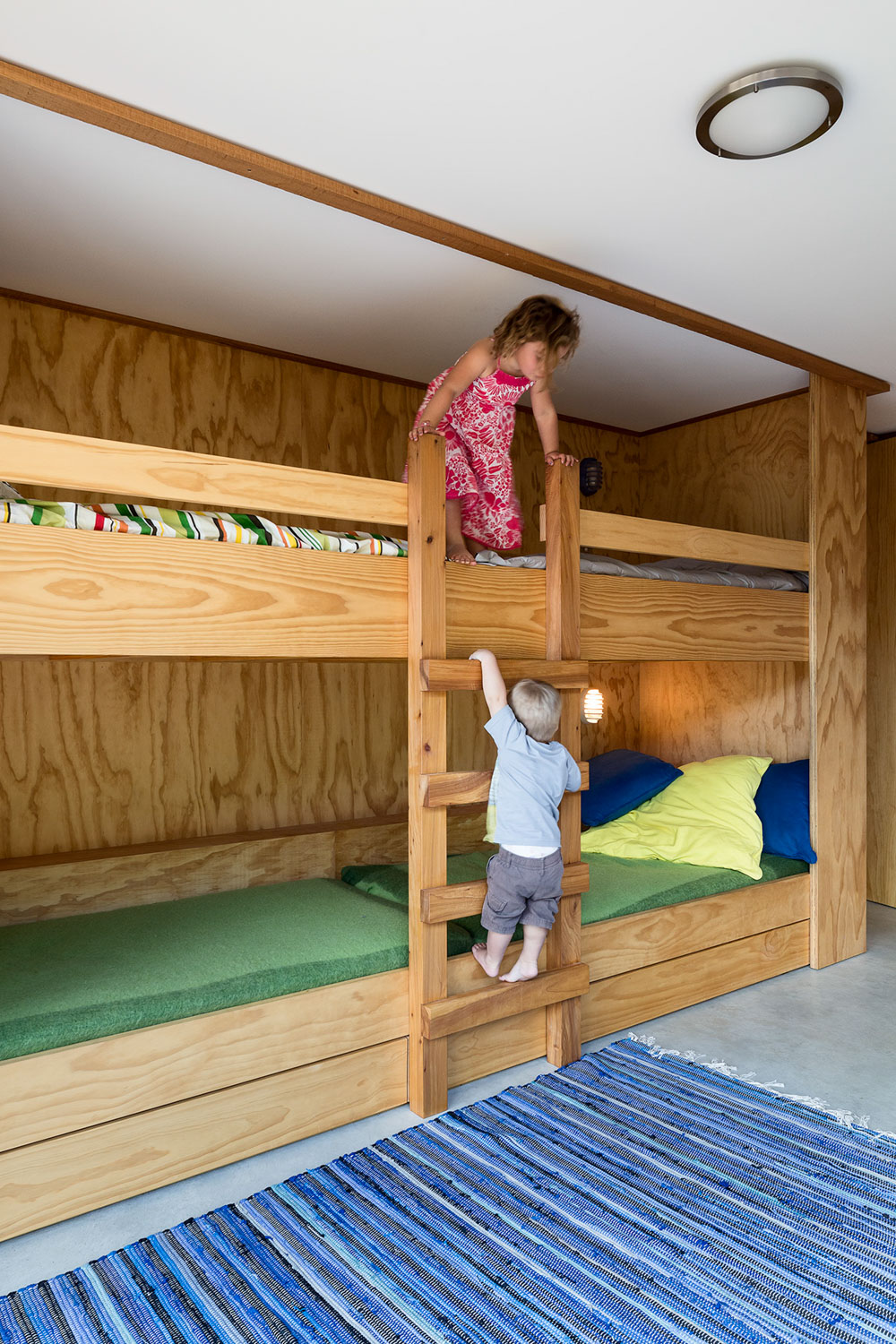
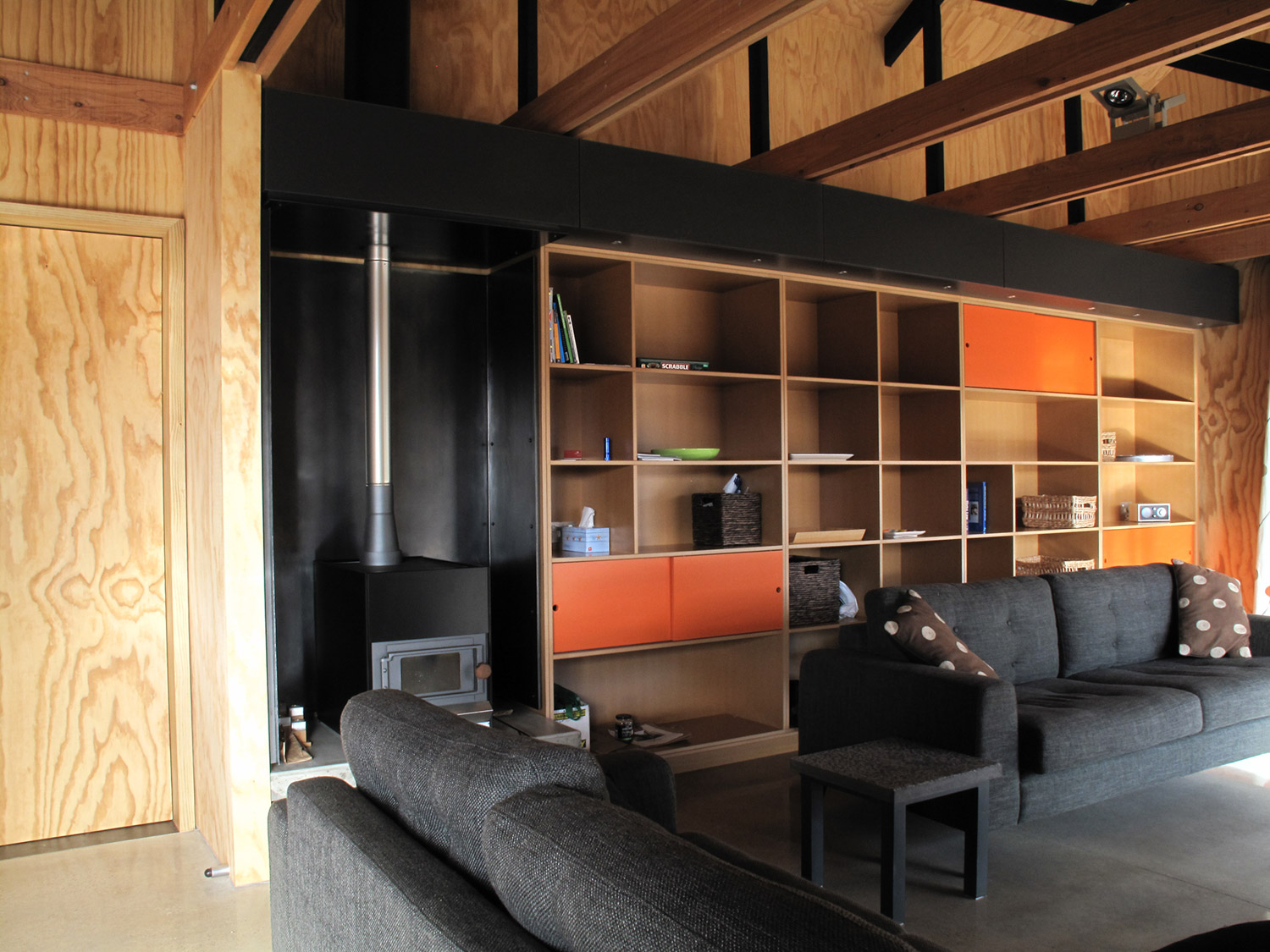
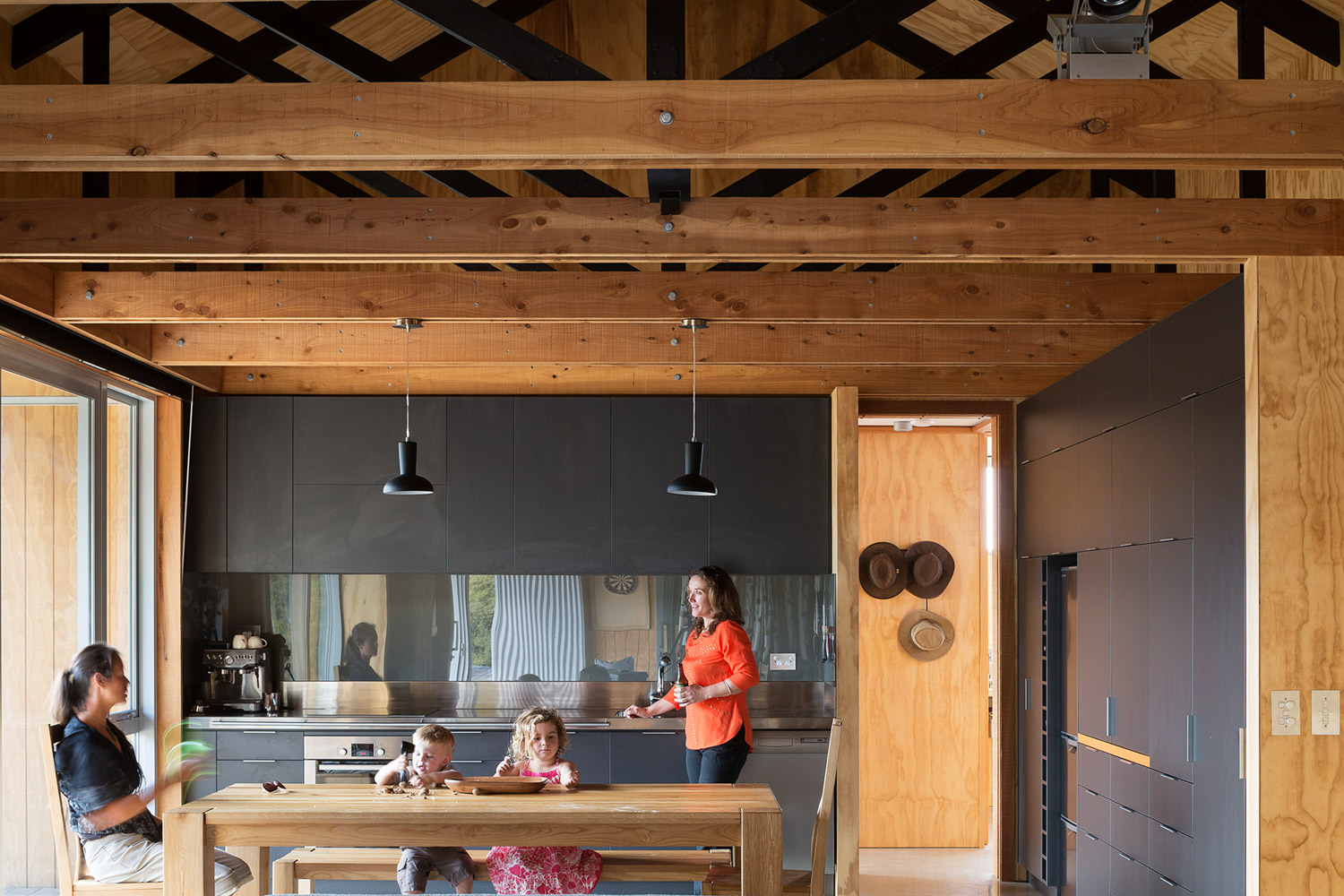
In keeping with this vernacular language, interiors are simple and robust, with material textures expressed and practical joinery elements forming a playful, yet functional, internal architecture fully connected to its surroundings.